business 3.2: managers, leadership and decision making
 Call Kai
 Learn
Learn Practice Test
 Spaced Repetition
 Match
Match Flashcards
 Knowt Play
1/42

There's no tags or description
Looks like no tags are added yet.
Name | Mastery | Learn | Test | Matching | Spaced | Call with Kai |
|---|
No analytics yet
Send a link to your students to track their progress
43 Terms
managerial functions
Tell it / risk adverse
planning - setting day-to-day business aims, deciding on strategies used and determoning timescales
organising - managers ensure resources e.g. equipment, workers, supervision are in place
directing - managers lead and motivate others, communicating clear expectations
controlling - track progress to make sure objectives are met
leadership attributes:
Sell It
vision - setting direciton and inspiring others
influence - creating a common goal
people - a focus on peopel’s needs and motivtion
long term vision and strategy
risk taker
creative - encourage
Autocratic leadership - definition
a leader who holds absolute power and authority
without seeking input, complete control over decision making process
Autocratic leadership - best situations for:
crisis situations - when quick and decisive decision making is required
hierarchical organisations - the need for coordination and efficiency, with clear and direct orders given e.g. McDonald’s
inexperienced / unmotivated teams - providing clear and close supervision to reach goals efficiently
Autocratic leadership - disadvantages
reduced employee moral as workers have no input in decision-making
limited creative - employees under strict instructions reduces problem-solving ideas and innovation
Paternalistic leadership - definition
when the leader takes on a parental role, making deciison in best interest of staff
this can involve explaining reasons for decisions
Paternalistic leadership - advantages
making decisions for the employees, showing concern can increase well-being and development of subordinates
leader takes responsibility for welfare of staff
can form employee obedience and sese of security
Paternalistic leadership - disadvantages
can still be seen as controlling, limiting creativity and innovation
can create dependency on leader
democratic leadership - definition
leaders actively involving employees in the decision making progress, encouraging discussion, although the leader will still have the final say
democratic leadership - adv
encourages participations, increasing employee engagement and job satisfaction
encouraging creativity and innovations, allowing sharing ideas and thinking outside the box
improved problem solving and innovation
democratic leadership - disadvantages
decision making progress is longer, making it time consuming
conflict may arise when different views are sought
can result in compromise on decisions, which may lead staff to be dissatisfied
Laissez-faire leadership - definition
leaders play a minimal role in managing their business team allowing for autonomy and freedom
normally most appropriate with a highly skilled / self motivated team
Laissez-faire leadership - adv
encourages creativity and innovation, giving employees freedom to explore ideas independently
employees are more empowered due to greater autonomy / ownership over work
flexibility to adapting to changing circumstances and decisions
Laissez-faire leadership - dis
the absence of guidance can lead to employees struggling with decision making
less efficient employees may have a lack fo co-ordination and productivity compared to others
can lead to the risk of inconsistency
harder to monitor aspects such as, progress, issues and goal achievement
influences on type of leadership used
leaders personality - a confident, risk-taking person may verdict others more e.g. Elon Musk
business traditions - history with sharing power prefer democratic leaders e.g. Google and Microsoft
nature of labour force - high skilled and long-term staff tend to be more democratically
nature of the task - routine, low-risk tasks can be delegated
external - pandemics, scandals, economy, competition
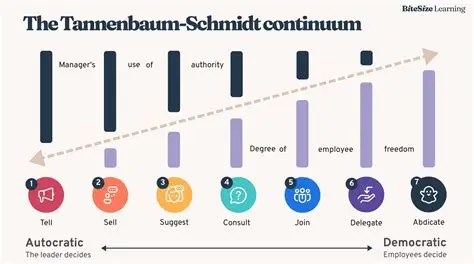
Tenenbaum-Schmidt continuum, 4 levels
tell - leader states decisions in full and how they will be done, with staff obeying with no proposal to question the plan
sell - the leader decides but explains the reasons to try and win commitment
consult - leader outlines a decision and then seeks ideas before making the final decision
join - leader presents problems and sets boundaries, co-deciding the group
delegate - leader define broad goal and hands full decision-making / execution to the team
types of decisions - strategic decisions
big, long-term decisions which set the overall direction of the business,
these use a large resources and involve high uncertainty, made by senior management and shape everything within a firm
types of decisions - tactical decisions
medium-term decisions, turning strategy into reality
made by middle managers to improve performance and keep strategy on track
types of decisions - programmed decisions
routine, repeat decisions handled by rules or software e.g. re-ordering stock
decision making often automated or delegated to junior staff
types of decisions - non-programmed decisions
one-off, unfamiliar and high risk decision, often responding to large data breach, merger or key changes during a crisis
make by senior management or crisis teams to rescue / transform the business due tot he large issue
difference between risk and uncertainty
risk - measurable using data and probability
uncertainty - cannot be measured, so good judgement are needed
e.g
Boeing Risk - rising design changes risked safety
uncertainty - set aside $4.9 billon to cover legal payouts
opportunity cost
the cost on missing out on the next best alternative
stages in scientific decision making
set objectives
gather information
choose an option
implement said option
review that decision
scientific decision makign example: Tesco
setting objectives - 4% sales growth
gathering info - mined 23 million club cards to spot which items most influence where people shop
choosing an option - expanding clubcard prices and alid price match introduced
implementing - rolled prices into stores, now with the use of a bold yellow Clubcard label
review - market share had grown over 4.1%
benefits and limitations - scientific decision making
benefits:
reduced risk - based on evidence, not guesswork
justifies investment
supports continuous improvement
limitations:
large cost and time involved, can be unaffordable for smaller businesses
overreliance - ignoring gut feeling or ethics can cause opportunity cost
data quality issues
intuition decision making - definition and best situations
intuition - when managers rely on gut feel, experience, or pattern spotting rather than data analysis for choosing an action
best situations
little time for data
no clear precedent
decision rests on human taste
adv and dis of intuitive decision making
adv:
speed
creativity
deep expertise used
dis:
bas and overconfidence
hard to justify
riskier for large decisions
adv and dis - decision trees
adv:
construction reveals options once not considered
managers forced to consider risks
required deep research to be carried out
dis:
data can be difficult to gain, needing time and can show bias
estimates may not be accurate
time lag between construction and implementation can reduce reliability
expected monetary value: Formula
(expected value of success X probability) ( Expected value fo failure X probability)
net value equation
EMV - initial cost
Internal influences on decision making
mission - the organisaitons purpose e.g. John Lewis commits ot ‘working in Partnership for a Happier World’
objectives - day-to-day decisions aiming to hit agreed targets e.g. Tesco’s 24/25 goals of 4% sales growth
ethics - ethical principles e.g. fairtrade, sustainability and social justice
resource constraints - fitting the monye, time, skills and capacity available e.g Arrival put it’s electric bus project on home due to lack of capacity
external influences on decision making
competition - e.g. Lidl’s reputation as a cheap supermarket has been determined due to competitor action
economic conditions (interest rates, GDP, inflation) - e.g. the Bank of England reported many firms cut investment plans due to rising interest rates
social change - shift in customer’s taste e.g. McDonald’’s Vegan menu
technological change - e.g. self-service machines
internal stakeholders and their objectives:
owners - often provide an income for a business, in return, will want a share of profits and a successful business
employees - have job security, be paid fairly and be in a safe working environment
management - operate businesses efficiently, maximise profits and meet company’s goals and objecitves
external stakeholders + their objectives
customers - want high quality, but as a fair price with good customer service
shareholder’s - maximise their return on investment
suppliers - quick payments with long-term trade arrangements
local community - a positive impact e.g. providing jobs, environmentally responsible and contributing to local causes
government - operate within the law, have people in employment
pressure groups - promoting their specific cause / agenda and taking action on issues
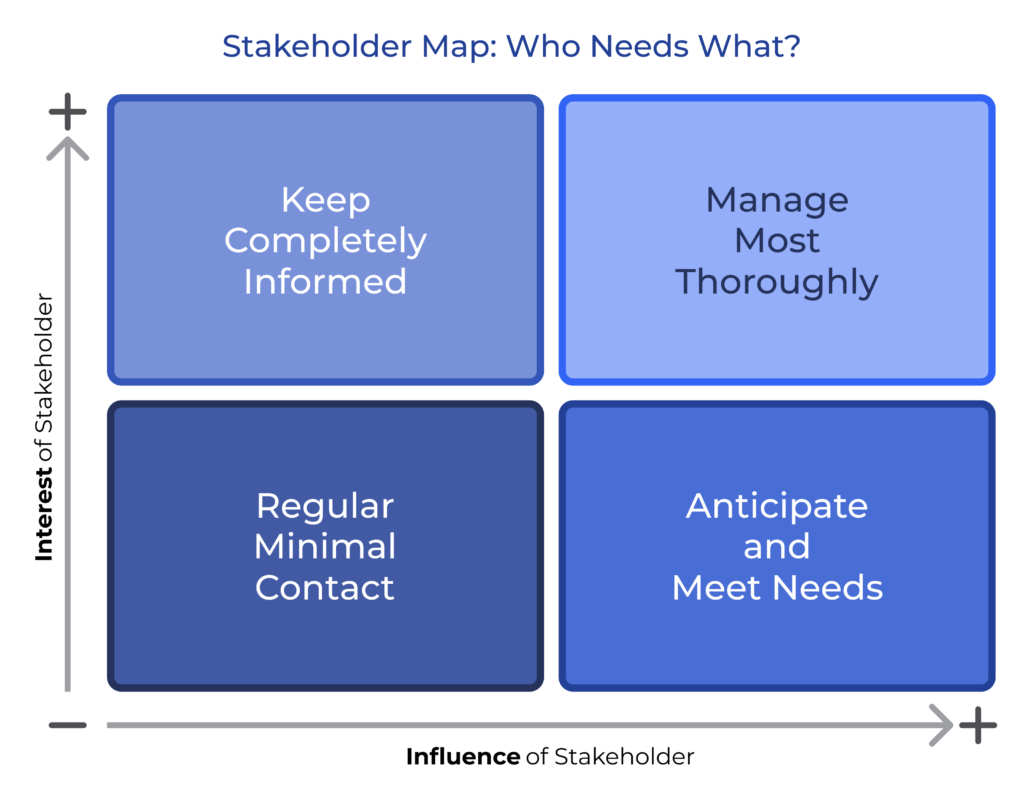
stakeholder mapping - summary
the strategic process used to identitfy and analyse individuals or groups interest in a business
it looks at level of interest as well as degree of power, with appropriate strategies being used for each
Stakeholder mapping case study - low interest + power - Universal Bedford
they may not engage until the teme parks opening
they are counted in the long term vistors being over 8 million
use of light-touch monitoring of travel trend data and social meddia
Stakeholder mapping case study - high interest, low power - Universal Bedford
Keep informed
concerns over traffic, flooding, and house prices have been seen in the local press
regular newsletters an dpublic engagement websites have been set up
Stakeholder mapping case study - low interest, high power - Universal Bedford
keep satisfied
coverage in national media e.g. the sun and daily mail can affect public mood and investor confidence
regular visual updates and proactive press days planned
Stakeholder mapping case study - high interest, high power
key players
Bedford council - cotrols local planning and concerned with impact on local services
UK government - signed investment deal and wants a £50bn economic boost
stakeholder conflict definition and example
when stakeholders have conflicting interests and objectives, which can create challenges for businesses to balance the competing demands of different stakeholder groups
examples:
employees and employers - steelworkers protesting against job losses
pressure groups and government
local communities and developers - e.g. HS2 opposition
managers and employees - e.g. Royal Mail scandal
internal factors that influence stakeholder relationships
leadership styles - ;leaders decide on how much they listen to stakeholders or decide to follow their advice
business aims and objectives - certain stakeholder groups oppose the overall aims and objectives of businesses
business size - smaller firms can talk to stakeholder one-to-one, with larger ones needing formal systems and policies
business ownership - who owns the company has the largest stakeholder voice
external factors that influence stakeholder relationships
stakeholder group power - groups with financial, public power can force changes
market conditions - booms, slumps and inflation can shift barganing power
government policy - new lawsand subsidies can add to the need of stakeholder groups
social / technological change
the 5 approaches to improving stakeholder relationships
partnership - the organisation and stakeholders share decision making and responsibility
consultation - a business seeks views before deciding
push communication - sending out news to stakeholders in a one-way systems
pull notification - information is made available to access when they choose