8b - Memory encoding processes
 Call Kai
 Learn
Learn Practice Test
 Spaced Repetition
 Match
Match Flashcards
 Knowt Play
1/21

There's no tags or description
Looks like no tags are added yet.
Name | Mastery | Learn | Test | Matching | Spaced | Call with Kai |
|---|
No analytics yet
Send a link to your students to track their progress
22 Terms
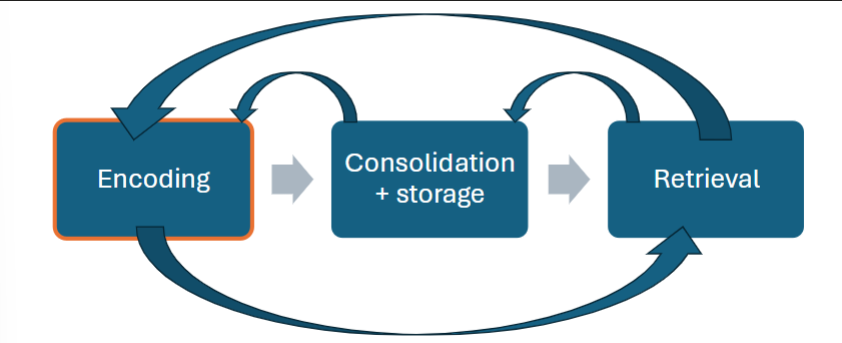
how do memory stages tend to be represented?
encoding → consolidation +storage → retrieval
Zeigarnik effect
the tendency to remember uncompleted/interrupted tasks better than completed ones
what is the total time hypothesis
Ebbinghaus → learnt a list of nonsense syllables every day, practise makes perfect
practice drives brain plasticitiy
outline evidence for how practice might change brain plasticity
London taxi drivers required to take ‘the knowledge’ test → posterior hippocampus of the taxi drivers was consistently larger, correlated with how much time they spent as taxi drivers
medical students scanned at 3 intervals, before, during and after extensive exams → increase in gray matter volume in the parietal cortex and posterior hippocampus (remained even after 3 months of studying
what is the relationship between repetition and learning
generally, repetition improves learning (repetition effect), but simple repetition with no attempt to organise the material might not lead to learning especially if information is complex and not percieved as useful
memory and attention are very selective
what is spaced repetition
distributing learning trials sparsely across a period of time, leads to faster improvement rates of learning and less forgetting
allows for consolidation between trials → memory becomes more firmly established
HOWEVER: does take more time which isn’t always practical or convenient
what is some experimental evidence for spaced repetition
Kornell & Bjork : when students tried to learn the style of 12 artists, they were much more effective when interleaved, even when tested on novel paintings by the artists
outline testing effect
testing yourself produces better learning than simply reviewing/re-studying materials
errors in recall when training may affect later recall unless corrective feedback is provided
erroneous retrieval may be strengthened in memory
delayed feedback (end of test) produces highest retention rates
what did Karpicke and blunt find about testing
4 groups studied a science text, studying the text and testing it immediately produced superior memroy in a test a week later than other forms of studying
also helped with being able to answer inferential questions from the text
what are 2 ways in which motivation might make learning more efficient
automatically: external (e.g. reward,novelty) or internal (e.g. curiosity) motives prior to exposure to stimuli improves memory even when time spent studying or strategies used are controlled
e.g. Gruber et al found curiosity made memory better
strategically: people use deeper and more elaborate memorisation strategies for high value items
how might novelty enhance memory
being in a novel environment can facilitate enhanced memory encoding
this is facilitated by dopaminergic release in the ventral tegmental area (VTA) that engages hippocampal encoding of the novel informstion
like curiosity, novelty also has a long-lasting effect that can improve encoding of unrelated information
what is some experimental evidence for novelty
memory in school children was improve by an unrelated novel experience before or after being taught a story
ballarini et al (2013)
how do we know the hippocampus is encoding?
meta-analysis of 72 studies → areas more active during encoding for items later remembered compared to items later forgotten (Brewer et al)
what did Tulving find regarding organisarion
memory is benefitted by subjective organisation - chunking together seperate words for recall even if not encoded together
items chunked together if they are linked to a common associate, come from the same semantic category, form a logical hierarchical structure or matrix
what did Bartlett find about meaning
ascribing meaning to a stimuli can modulate encoding of information and hot it is stored in memory, studied using abstract or ambiguous stimui that can be interpreted in different wats
what is Paivio’s dual-coding hypothesis
more imageable words (e.g. concrete nouns) are more memorable
high imageability = apple, church etc, → can be encoded in terms of verbal meaning and visual appearance
low imageability = history, silence, hope → can ONLY be encoded in terms of verbal meaning
what is Craik & Lockhart’s levels of processing model
challenges traditional memory theories that separate memory into short-term and long-term stores.
Instead, it emphasizes how information is processed rather than where it is stored, suggesting that the depth of mental engagement during encoding determines memory retention
the lowest level is visual (most forgettable), then phonological (acoustic) and semantic (meaning)
evidence for craik and lockharts levels of processing model
pps presented with different words to rememeber
visual: is TABLE in uppercase
phonological: does dog rhyme with log
semantic: does field fit in the sentence: …
remembered them in that order
what are limitations in the levels of processing model
difficult to define and measure
deeper is not always more memorable
what are schemas
structured representation of knowledge about the world, events, people or actions
can be used to make sense of new material, to store and later recall them
influenced/determined by social and cultural factors
experimental evidence for schemas
pps learned to associate visual objects to specific locations within an array over almost a year
on 2 occaisions, they were exposed to 4 new objects in new locations
these were presented either in the schematised array or empty
novel objects learned within the learned array were recalled better than those within the empty array
experimental evidence for the effect of prior knowledge on learning
prior-knowledge triggers an additional evaluatiove smenatic or episodic-binding process that supports encoding
when pps encoded associations between faces and houses they remembered double the amount of pairs when the faces were famous, compared to not
this integration of new information with prior knowledge is supported by interactions between vmPFC and hippocampus