APAH Neoclassicism, Romanticism, Realism
 Call Kai
 Learn
Learn Practice Test
 Spaced Repetition
 Match
Match Flashcards
 Knowt Play
1/22

There's no tags or description
Looks like no tags are added yet.
Name | Mastery | Learn | Test | Matching | Spaced | Call with Kai |
|---|
No analytics yet
Send a link to your students to track their progress
23 Terms
Neoclassicism
1760 - 1860
Reaction AGAINST Rococo
Rococo is immoral and frivolous - ew TO French high society, needs to be reformed
Industrial Revolution (American and French Revolutions occurring)
appeal to Greek and Roman ideals (democracy) - classicism
Classicism also occurs because Pompeii is discovered
Artwork should have a moral
focus on liberty and sacrifice (liberty for one’s country - France - sacrifice oneself for the good of the country, country comes first), and noble deeds of the past
Enlightenment - knowledge (build cool buildings, people will learn about them and have more knowledge) → more civic/gov’t participation
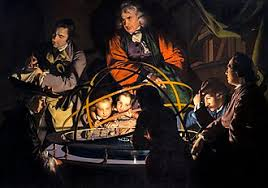
“Philosopher Giving a Lecture at the Orrey” Joseph Wright of Derby; Neoclassical; 1765; oil on canvas
During the British Industrial Revolution
a lot of advancement of science
Enlightenment - thru scientific method
this enlightenment is similar to those from religious experiences, seen by artworks such as Calling of St. Matthew, but the focus instead is on science
TENEBRISM - Influence by Caravaggio (who made Italian Baroque - Calling of St. Matthew)
In Calling of St. Matthew, the light comes from Jesus choosing Levi/St. Matthew
Here, the light comes from the solar system model. This emphasizes the intesity of scientific discovery and how science can lead to enlightenment
Painted scientists like Biblical heroes and Greek gods (classicism, further makes science look great)
also a red that was often used in Renaissance art, a time where people would also practice classicism
SCIENTIFIC METHOD
an EXTENSION of empirical science (empirical science = observing the natural world - people would paint what they saw as they saw)
in scientific method, a testable hypothesis would be formed, followed by tests and results, which would lead to theories
Based on writings of Keplar and Galileo
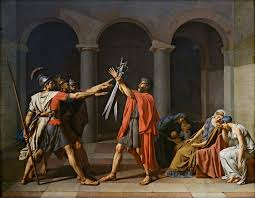
“Oath of the Horatii” Jacques Louis David; Neoclassical; 1785; oil on canvas
Narrative -
Roman legend recounted by historian Livy
City states of Rome vs Alba
Brothers = Rome, wives (related to the Curatii brothers from Alba who fought the Roman brothers) originally from Alba
“Conquer or Die” - Sacrifice for the good of your country
Passion - rigid stance of the males and the stark lighting
Call to Action - people of France should sacrifice for your country
French identity seen in the color of the clothing (red, white, and blue) that match the color of the French flag
Difference btwn males and females
males = rectilinear, emotionless, warriors, athletic
females = curvilinear, emotional
CONTEXT - JLD was an ardent (passionate) French revolutionist
Classicism
Doric columns, barrel arches
Setting - Roman atrium
Idealized naturalism, athletic male soldiers
Neo
oil on canvas painting
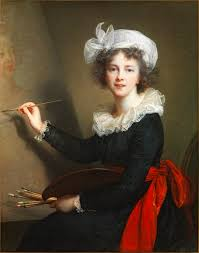
“Self Portrait” Elisabeth Louise Vigee-Lebrun; 1790; oil on canvas
Choice of content - the artist - elevate status of the artist
like Velasquez’s Las Meninas
artist - a woman
Reaction by the public - bad, called her vain because she is a woman
Lots of self portraits - Rembrandt
theatrical outfit, lively expression
Soft light, Ghost of Marie A. - more Rococo
Colors of French Flag (Red, blue, and white) - French identity
Trying to reenter French society
Painted for Ducal Gallery of Uffizi - Duke is Marie Antoinette’s brother → Marie Antoinette is hated → Elisabeth is also exiled due to her relations → trying to reenter French society by attempting to elevate her status. She does this by showing that she is a talented and good artist and that her aristocratic connections are in the past.
Official portraitist to Marie Antoinette - hated and executed
Then exiled into Rome for a decade due to her connections with Marie A.
Competed with male colleagues
people believed she was talented but vain (narcissistic)
Rise of the “Paris Salon”
Begin a 2x a year art exhibit in the 1600s
Becomes a royally sanctioned art patronage where artists would create art to be accepted by the Paris Salons.
If accepted, artists could receive commissions from rich patrons
Becomes the Standard of excellence for artists
Salons set the rules for what is considered “good art”
Opens to foreign artists after French Revolution 1780s
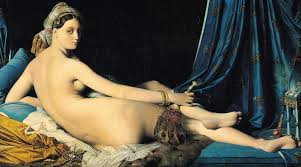
“La Grande Odalisque” (Harem Concubine); Neoclassical; Jean-Auguste-Dominique Ingres 1814; oil on canvas
Studied under JLD (worked tg on Madame Recamier Portrait)
Commissioned by Napoleon’s sister, Queen of Naples
Inspired by Giorgione and Titian’s Venuses
ARTIFICIAL ideal female - proportion is off (the legs, like Mannerism)
Eroticism through exoticism - material references the Orient, where people would travel and participate in sexual tourism. These materials, such as the hookah, peacock, and the textiles/jewelry were foreign, thus identifying the female as also foreign. This allows the woman to be a Harem Slave, sexual, and disloyal because she is NOT European
Jean:
French Neoclassical painter
Obsessive quest for IDEAL beauty
Influenced by artifacts uncovered at Pompeii and Herculaneum

“Monticello” Thomas Jefferson; Virginia; 1800; Brick, glass, stone, wood
Context - Jefferson
Governor of Virginia, author of Declaration of Independence, 3rd president
AMATEUR architect
Dissatisfied with British Baroque architecture that surrounded him because he wanted independence and his own American identity, not a British identity
BELIEFS:
Perfect architecture → people will see the architecture and be amazed, leading them to seek education → When the people are more educated, people will participate in the government more (civic participation)
Classical elements - its similar to the PANTHEON
Doric columns
Pediment
Dome w/ Occulus
Symmetry
Appears as 1 story (but its actually 2 - through the windows)
Neo
windows for air circulation in Virginia heat
Brick, local material → to show pride in the country and not have to import from Britain
Private home, actually 2 story, but wants to appear 1 story in order to reference the classical buildings like the Pantheon
WHY? (Neoclassical)
Embodies democracy (by being similar to classical architecture, TJ references the birthplace of democracy) → He is the Governor of VA and wants to link America to those democratic ideals
French ambassador → he saw a lot of Neoclassical architecture and was inspired by it
Hated British Baroque → he wanted a new identity for America even tho British Baroque was very popular → doesn’t want that → chooses Neoclassical architecture
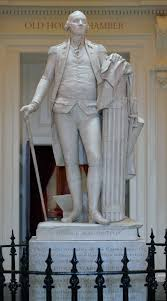
“George Washington” Jean-Antoine Houdon; 1790; Marble; Neoclassical
CONTEXT - HOUDON
French Neoclassical sculptor
Thomas J. saw him → He is Recommended to GW by TJ
Big advocate of civic duty
Educated by copying marble statues
Idealized naturalism
Roman Column of Authority with 13 rods → 13 colonies
OG SCULPTURE =
Nude
Oratory Stance (Like Augustus of Prima Porta)
Idealized Naturalism
In a Toga
Instead of a toga, GW wanted a contemporary dress
Revolutionary army badge + contemporary badge → combines the private citizen and the public soldier → call to action and urge for civic participation because some people were used to a monarchy and someone else making political decisions, not them participating
Roman elements = marble, contrapposto stance
Function = Commemorate American Revolution War + Inspire civic participation (audience relates to clothing = Fra Filippo Lippi, Calling of St. Matthew)
Romanticism
1800-1850ish Europe
Criticized ENLIGHTENMENT & Industrialization
led to homogenization, but Romanticism focused on individuality
PASSIONATE/ARDENT, lots of emotional expression (NOT Romantic)
More GROTESQUE than ideal
Reason → FEELING
Saw mans inhumanity to man (war and slavery) → questions the existence of God
Francisco Goya
Spanish Romantic painter
Court painter to Spanish crown in 1786
Most known for “Disasters of War” series of prints about the Peninsula War - Napoleon (France) vs. Spain/Portugal
Used to be allies, France gets greedy and invades Portugal, turned on each other, France inhumane
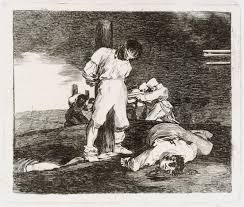
“Y No Hai Remedia” from Los Desastres de la Guerra (Disasters of War) by Goya; 1820
Originally commissioned to illustrate Spanish heroes → but Goya represents defeated heroes (The Spanish King does not approve because this shows Spanish as weak and defeated - but Goya wants to include these actual events to honor the sacrifice the heroes made in the inhuman war)
Drypoint etching - more raw and a rough, violent technique, similar to how violent war is
Gruesome emotional intensity (Prisoners being executed)
Tenebrism - emphasizing the Spanish prisoner
Alter Christus (The SPanish Prisoner) - other Chrits (The prisoners also made a sacrifice, a sacrifice for their country)
Hidden enemy - no face = taking away the executors/enemies humanity, depicts them as violent, monstrous, and barbaric
LOS DESASTRES DE LA GUERRA
Protested French Occupation of Spain by Napoleon because they were inhumane
Condemned all levels of society due to man’s inhumanity towards the man - this included the royals because the royals hid behind the soldiers that they sent to fight and die
Series hidden until 1863 - Goya worked for the royals, the royals would not approve of this because this also called them out
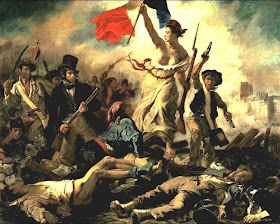
“Liberty Leading the People” 1830; oil on canvas; Eugene Delacroix
French Rev. in 1790s, Overthrow Napoleon in 1815, retyr a monarchy with Charles X, but it doesn’t go well so they overthrow Charles X in 1830
Blackade of furniture in narrow Paris streets → intimate chaotic violence where people are stepping on each other and engaging in h2h combat
Depicts CURRENT events - seen from Delacroix’s window (Current events unlike Oath of Horatii - Horatii was a Roman legend)
shows REAL PEOPLE rising
Man beaten in nightshirt then dragged into street to show everyone what happens if you oppose the monarchy; however, this only fuels people’s rage and leads them to join the Revolution
Rough brush strokes → shows emotional patriotism
makes the feeling more intense, emphasizing the strong emotion of urgency to join the revolution
Repetitive color of French flag (red, white, and blue)
FORMAL ANALYSIS
Liberty’s stance is similar to Athena’s in Victory of Samothrace - dramatic movement and wet drapery (Hellenistic Greece)
bringing back EMOTIONAL classicism
Woman looking back at the fighters → call to action
Wears hat signifying freed slaves, but on white people → signifies freedom from monarchy
Inspires statue of liberty (a gift from France → US)
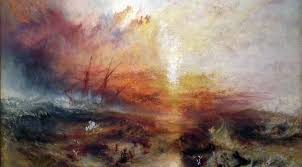
“Slave Ship” Joseph Mallord William TUrner; 1840; oil on canvas; Romanticism
Full name = Slaves Throwing Overboard the Dead and Dying, Typhoon Coming On
Inspired by “History of the Abolition of the Slave Trade” by Thomas Clarkson → the idea of throwing sick slaves for insurance money
Insurance: sick slave = no money, however, since slaves were deemed property, any dead slaves resulted in money
While sick, sick slaves were thrown over, they were still alive and their hands were reaching for God (who should be saving them)
LOOSE brush strokes, often unblended
emphasis on color contrast
muted vs. vivid color - creates drama
Shows violence of nature and human nature
the slaves should be saved by the Typhoon is going to kill everyone
Nature’s indifference - the typhoon will destroy both the ship and the slaves int he water
where is God to save
Vivid sky contrasts muted water
Emphasis on the colors is greater than lines and contour because this was not made to be naturalistic, but about conveying emotion and feelings
Realism
Real = CURRENTLY happening, not the past
neoc. was all about classical and past ideals
now, realist want to see real, current things
Back to empirical science
look at what they are painitng as they paint
Seen a lot in France Late 19th century
EVERYDAY life, not Gods/Royals/Heroes
But NOT Genre because it didn’t depict a household setting
GOUSTAVE COURBET - Didn’t paint angels because they were not based in reality and he didn’t know what they looked like
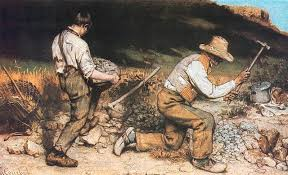
“The Stone Breakers” Gustave Courbet; OIl on Canvas; Realism; 1849
Type of people = Poor, people in POVERTY
Rough brush strokes, muted colors (depressing mood), awkward composition (candid - looks like a realistic moment of time)
Cycle of poverty shown through the contrast between the young person and the old man, which demonstrates that no matter how hard you work, you will still grow up to be stuck in this cycle of poverty just like the old man
Isolated figures in black void demonstrates how they are trapped in poverty
NOT as emotional
Depressing mood - faces not shown, shadow on the face, and the oppressive black void → muted colors
Equality - rocks get same attention to detail as people
LARGE - 5’ X 8’ = GRAND size as if GRAND subject matter
→
Salons reacted by calling it ugly because of the unidealized figures, depiction of poor people, and the fact that Courbet painted with a palette knife, which they believed should have only been used to mix paint. Called him untalented and hated it, but he was experimenting
CONTEXT:
1848 Revolution: Laborers against bourgeois (rich ppl.)
Karl Marx wrote about Communist Manifesto, which described the plight of working-class individuals → inspires him to paint about this
Edouard Manet
French painter
Realist who later becomes Impressionist
Influenced by:
Caravaggio→ dark background, everyday sinner
Titian - reclining erotic nude
Goya - rough strokes
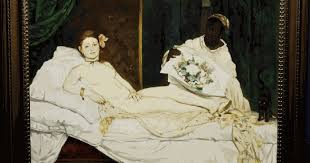
“Olympia” Edouard Manet; 1863; Realism; oil on canvas
Realism seen by the unidealized female
but has no chiaroscuro or warm tones
Olympia = name for prostitutes
NOT Venus, but a FRENCH prostitute
pale = European = Salons think it’s bad
Flat lack of shading, cadaver paleness, flat expression, stiff/straight neck = unsettling
Paris Salon’s had a bad reaction because the prostitute was French European and there was a depiction of a slave
black cat pendant = unloyal
"Inspired by “Modern Life” by Baudelair → modern life is bad and immoral
Orchid in hair = flower of prostitutes
Bouquet - gift from client for her services
Highlights Paris’ gross norm of continued slavery
Louis Daguerre
Partners with Niepce
FOUNDER of Photography 1838
develops the science to cure the image
Originally a French Romantic painter
but it’s too emotional, but he likes the experimentation aspect
Daguerrotype - based off of camera obscura
camera obscura was used by Vermeer’s Woman Holding Balance
Photography allows for the creation of art that depicted the actual real
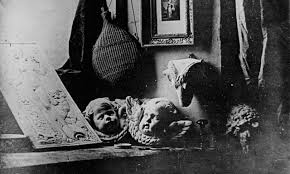
“Still Life in Studio” Daguerre; 1837; Daguerrotype
Photograph required 8 hours of exposure
shutter had to open and let in light for 8 hours, had to be the SAME set up
Did a still life because the objects had to be still for 8 hours
Captures moment in time (modern technology)
Through experimentation, later able to cut down exposure to 10-15 minutes
Niepce creates light sensitive surface that enables photography (original surface = asphalt), but Dag creates the chemistry that cures the image permanently
Inspired by Dutch Vanitas still lifes
Reaction - the art is fraudulent and demonic and less artistic because the artists did not make the art, the technology did
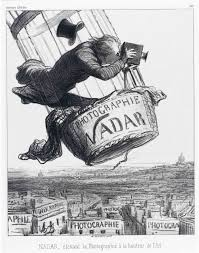
“Nadar Raising Photography to the Height of Art” Honore Daumier; 1862; lithograph
RAISING photography → hot air balloon → scientifically and artificially raising photography
Daumier - does NOT like photography
SATIRE art - about artificially raising the status of photography to high art
Nadar is the mad scientist, too caught up in capturing the perfect shot, shown by losing his hat
like The Swing, frivolity, carelessness
Foreshadows modern surveillance of society/
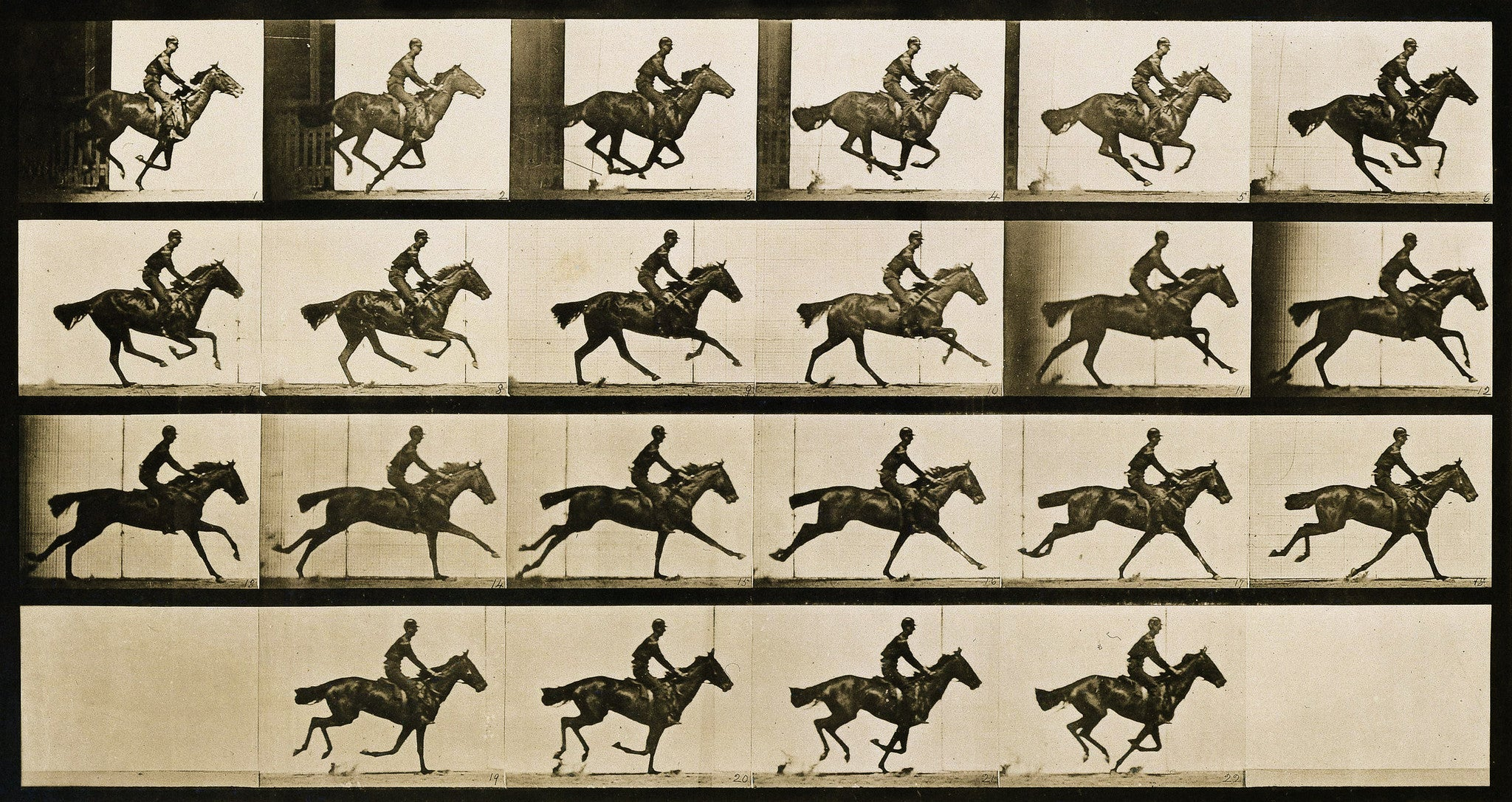
“The Horse in Motion” Eadweard Muybridge; 1878; Albumen print
Concept commissioned by Leland Stanford to see if horses become “airborne” (all 4 hooves leave the ground)
String of 12 lines with twelve cameras, the horse runs through, every time it passes a camera, it trips the wire and the camera takes a picture → images seconds apart in succession
A way for technology to identify TRUTH
some distrust with tech.
Paved the way for film
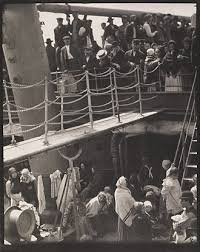
“The Steerage” 1907; Alfred Stieglitz
Jagged white diagonal of bridge
separates the upper and lower classes
the lower has more tattered clothing and they wree disorganized/chaotic, higher = nicer clothing and more organized
Alfred does NOT like poor people → chaotic and uneducated
Wanted to elevate artistic status of photography
Abstraction over Pictorialism
no single subject matter but rather the general idea
Elevate the status of Photography as a fine art by focusing on the composition and lighting
shapes = jagged line to divide; circle on rope in the hat → reject pictorialism and more about abstraction → trying to make photography a high art
About immigrants coming to America - class distinction important to Stieglitz
only supported immigration of RICH white people because he thinks only they are educated and could improve society
the bottom are immigrants who are being rejected and having to emigrate
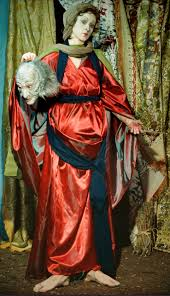
“Untitled #228” 1990; Cindy Sherman; Photography
Narrative - Judith beheading Holofernes (biblical narrative)
General Holofernes invading Bethulia
Judith seduces him and beheads him
the narrative painted a lot during Renaissance
Renaissance ideals - gold, bue, and red colors (the clothing)
The Renaissance liked the triumph over tyranny → likes this story
Kitsch (from Trade) - tacky, commercial → intentional, represents the artificiality of photography and artwork
Comment on HIGHLY ARTIFICIAL SOCIETY/TECHNOLOGY - this is a set up, artist herself in costume, exaggerated costuming (Halloween mask), photography, dollar store textiles
when setting up her cosplay, she did not go to museums, she looked it up in BOOKS, not interacting with the actual culture, just reproductions
Red represents the contrast between lust and blood
Innovative: Brightly lit space, no contrast/Tenebrism to create Drama - looks artificial and unnatural
violent things typically happen in the dark
The woman’s expression is neutral, representing the desensitization to violence seen in contemporary society
so many action fillms and videogames that it desensitized herself
Her herself in there, but she does NOT consider it a self portrait because she is taking on a character, Judith, and she loses her identity
Intentional desexualization - enlarged fake feet, caked on make up
society highly sexualizes women
Context - looked at photos of Renaissance artworks in books, NOT museums, commentary on consumer print culture where people only interact with reproductions
Intended reaction - Deeply unsettled and anxious
unidealized, kitsch, neutral emotion
like Olympia