Aegean Bronze Age: Cycladic Culture
 Call Kai
 Learn
Learn Practice Test
 Spaced Repetition
 Match
Match Flashcards
 Knowt Play
1/33

There's no tags or description
Looks like no tags are added yet.
Name | Mastery | Learn | Test | Matching | Spaced | Call with Kai |
|---|
No analytics yet
Send a link to your students to track their progress
34 Terms
Early Cycladic I
3100 - 2700 BCE. Materials mainly come from cemeteries, settlements are scarce (made from decomposable material like mud)
Early Cycladic II
2700-2200 BCE. Height of the culture, increase in settlements and trade
Early Cycladic III
2200-2000. Decline in habitation, increase in fortification (signs of upheaval and conflict).
Early Cycladic I Burials
Cist graves (small, tomb/pits in the ground with stones, covered with a lid), cemeteries of clusters of 12-15 on a hill. 1 body in a contracted position. Few grave goods, platforms for offerings.
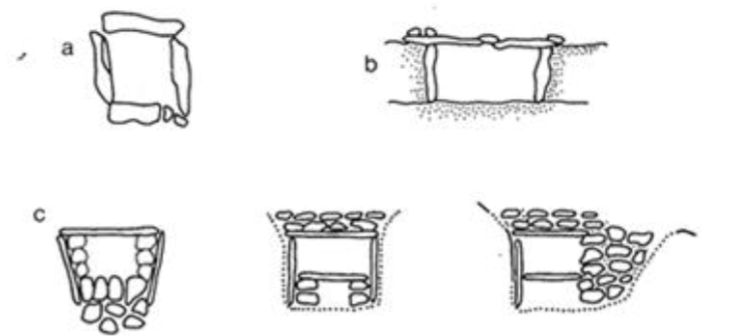
Slab and or built cist graves
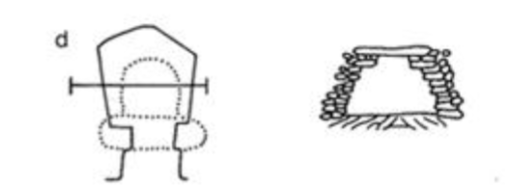
Corbelled cist graves
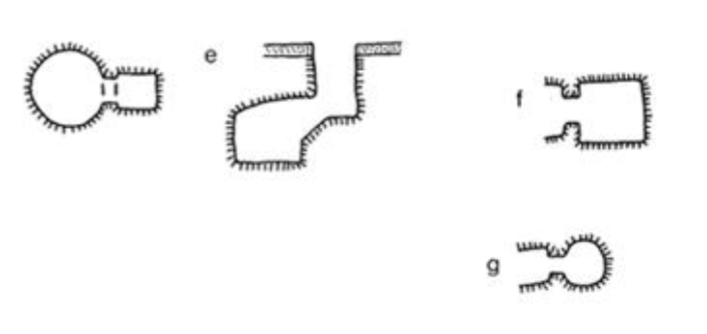
Rock cut chambers
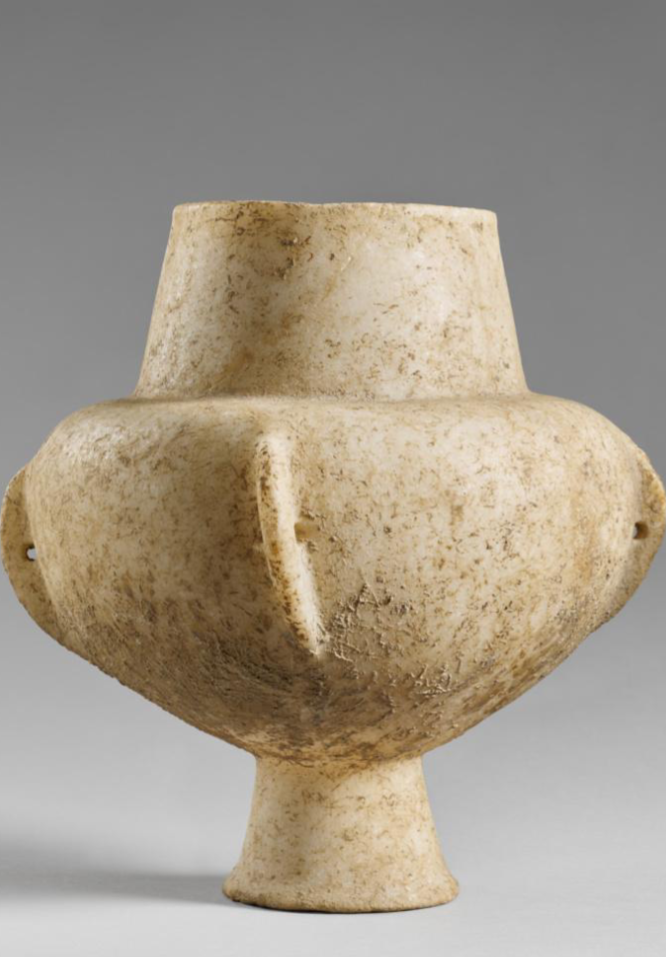
Collared jar, marble (Kandila). 3100-2700 (Early Cycladic I). Marble is important to the culture. Pierced lugs to hang or attach a lid. Not everyday use, religious/domestic/funerary. Carved with obsidian and smoothed with pumice. May have a specific sculptor known as Kandila Sculptor B who is credited with 40 vessels.
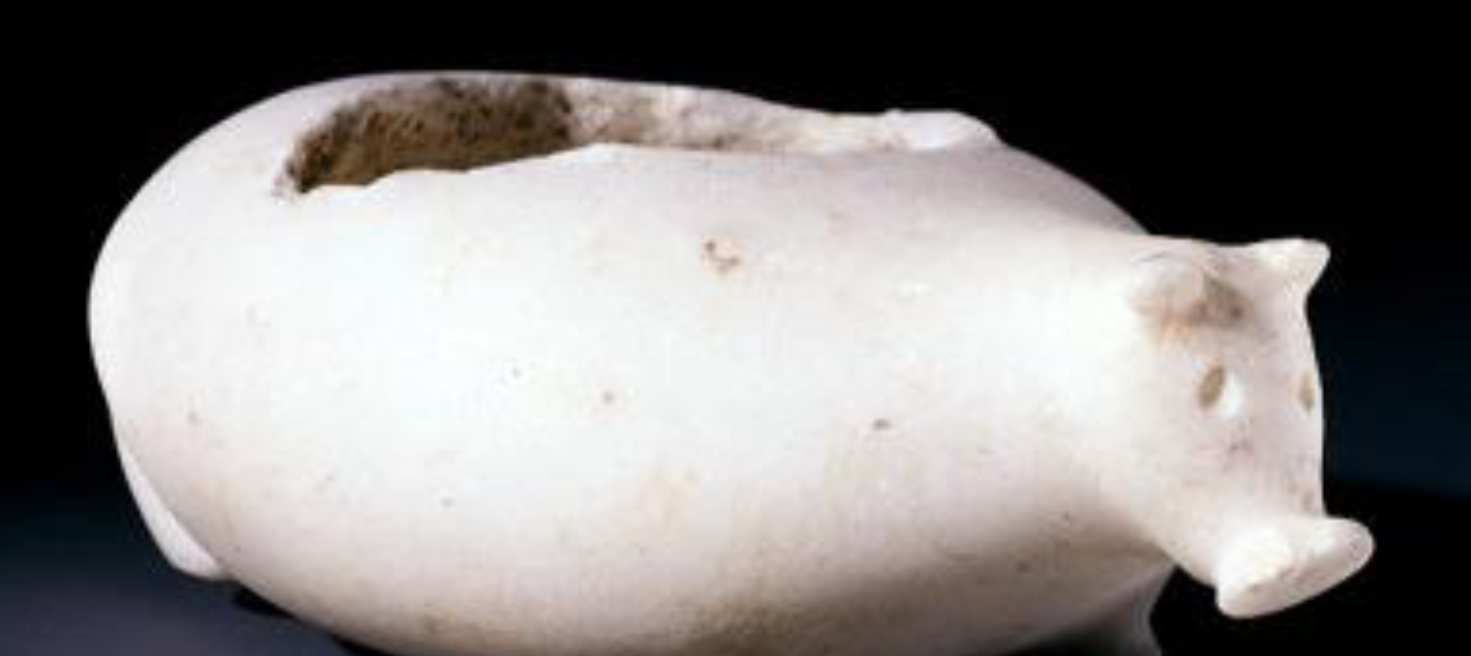
Pyxis in shape of a pig, marble. 3200-2300 BCE (EC I) A small, squat jar with a lid. Stored makeup, jewelry, votive offerings, etc. Maybe also toys. Some are made of clay, some take on zoomorphic shapes.
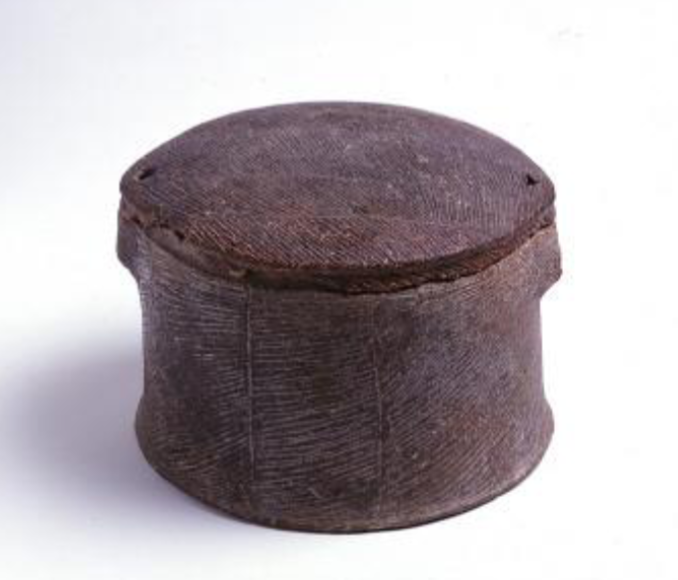
Cylindrical Pyxis, clay. c. 3200-2800 BCE (EC I). Type of pyxis, common in burials, textured to resemble a wooden pyxis, baskets, or sea urchins
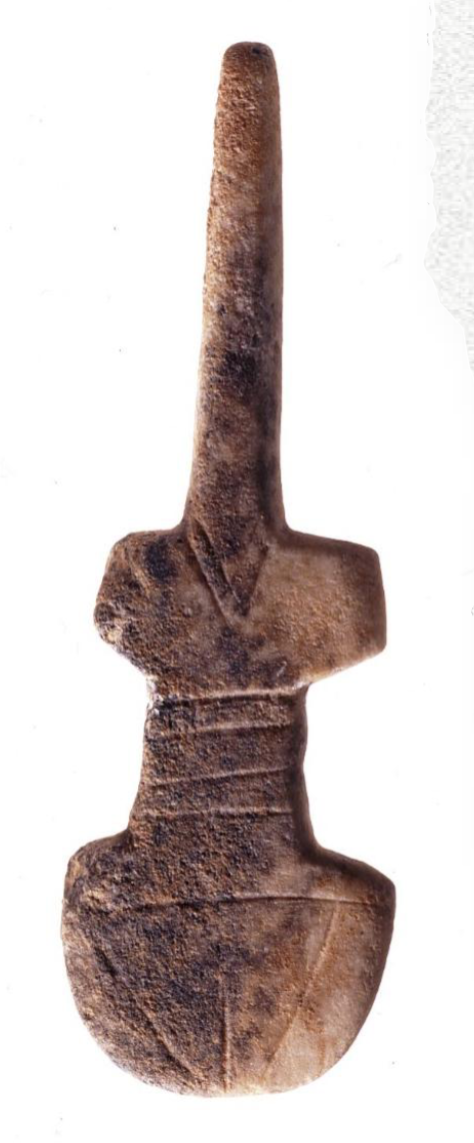
Violin-shaped female figuring, marble. 3200-2800 BCE (EC I). Phallic shape, female genitalia. Violin shape evolves from the neolithic, horizontal lines show crossed arms, or post partum marks
Early Cycladic II Burials
Characterized by more cemeteries and thus more burials = increased population, cist graves remained in use, but altered to accommodate multiple burials (corbelled cist graves are found at Chalandriani on Syros), increased with is apparent with some burials as they contain weapons, jewelry, cosmetic items, marble vessels, figures, and pottery.
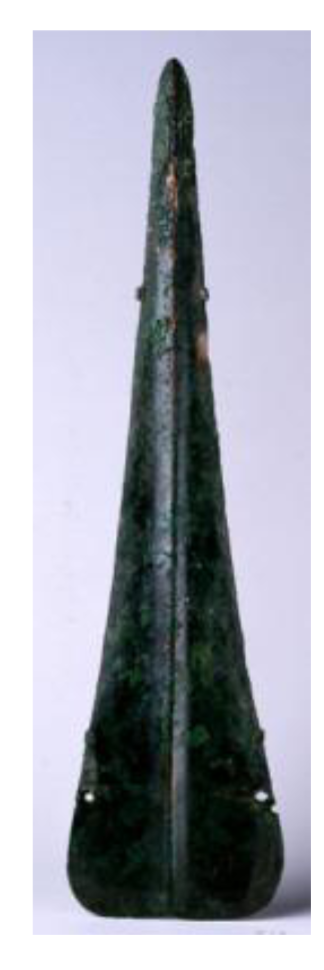
Bronze Dagger, 2700-2200 BCE (EC II). Rare but indicative of development of metal working, it is during this time that metal weapons first make an appearance. Likely fixed to bone or wood handle
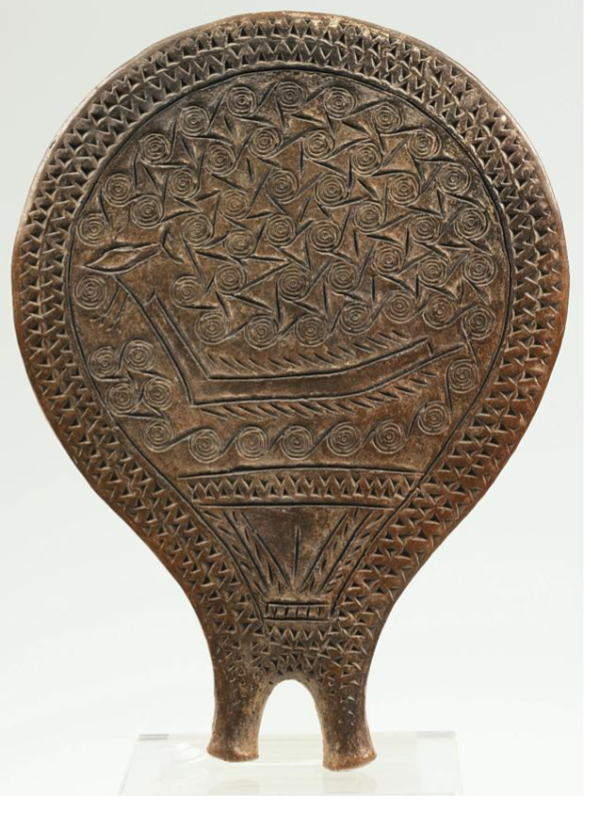
“Frying Pan”, clay, 2700-2200 BCE (EC II), Chalandriani cemetery. Evidence of pottery and ceramics, called frying pans due to their shape, vessels appear both in graves and in settlements, incised and impressed decoration, possible uses include ritual offerings/libations to the dead, plates for food, musical instruments, or cosmetic vessels. This depicts a boat on the sea under the stars.
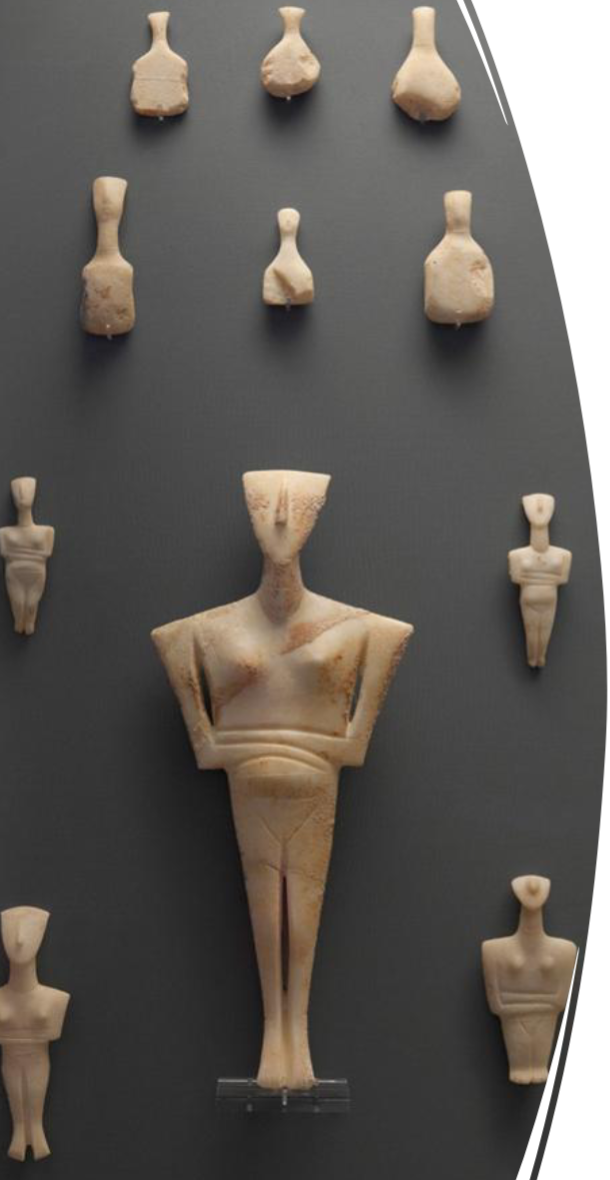
Female figures, marble, Chalandriani Cemetery, 2700-2200BCE (EC II). many are made with marble, some with ceramic or lead, both male and female, but female is the most common, often associated with fertility.
Early Cycladic III Burials
Many cemeteries abandoned = decreased population, may also indicate movement of populations to urban coastal centres, information is limited since only a few cemeteries have been excavated, cist graves continued to be used, but rock cut tombs also emerged.
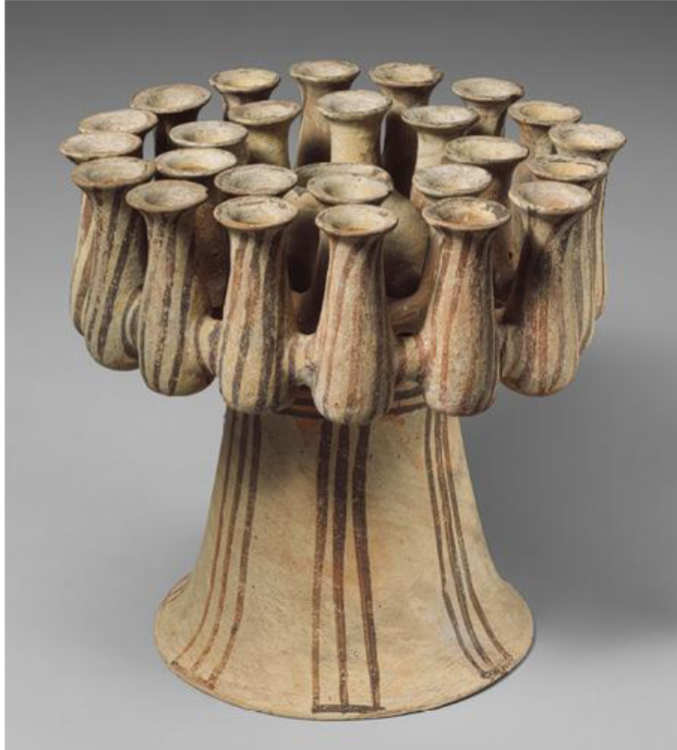
Kernos vase, terracotta, Melos, 2300-2200 BCE (EC III). Kernos was common among funerary vessels and used for multiple offerings (seeds, fruit, liquid).
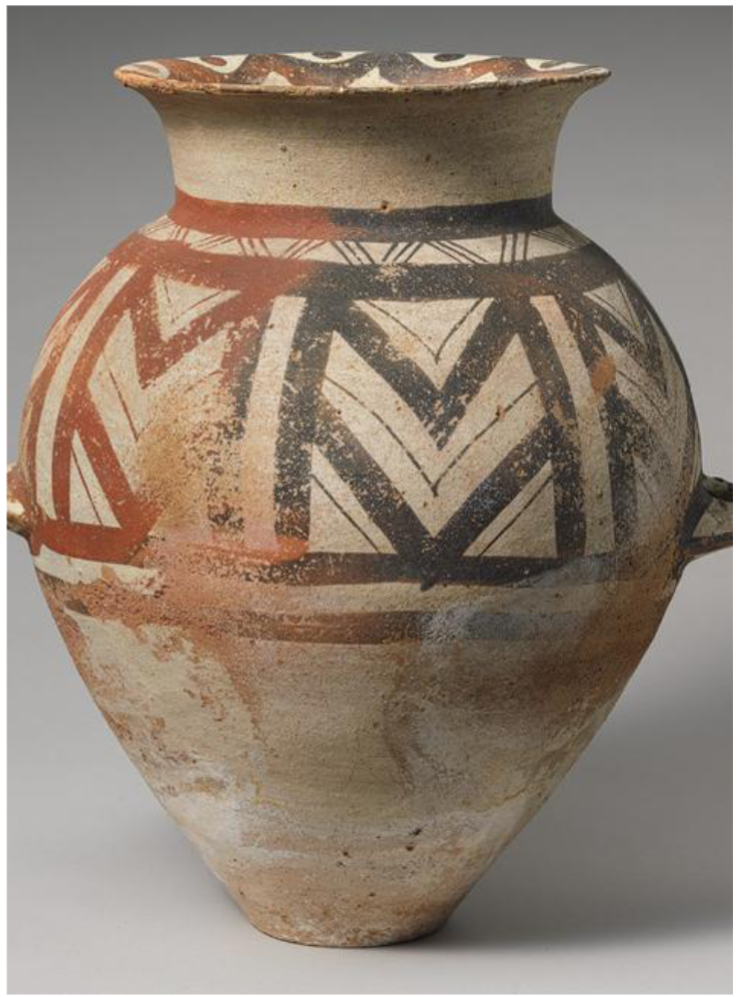
Jar, terracotta, Melos 2300-1900 BCE. Note stripe and chevron decoration, this vessel was found with the kernos.
Cycladic Figurines
Most famous of the Cycladic art. Surprisingly modern, simplistic style. Both male and female figurines. Range in size from miniature to life size. Purpose is uncertain and widely debated among scholars (loss of context thanks to early archaeologists). 2 D form, squat, flat, surface carvings. Found in grave and settlements. Originally called rude, grotesque, barbaric (Winkellmann influenced led to this idea). Traced back to the neolithic period.
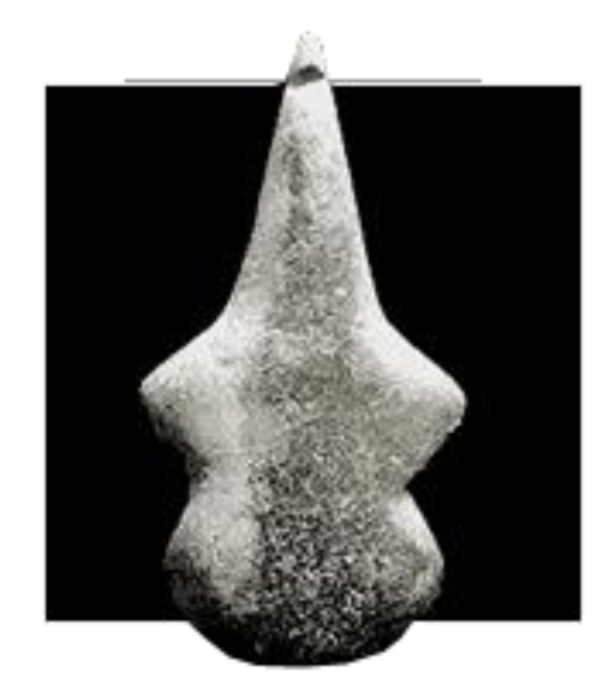
Schematic figurine, marble, saliagos culture 4500-4000 BCE (Neolithic). Simple, violin esque shape.
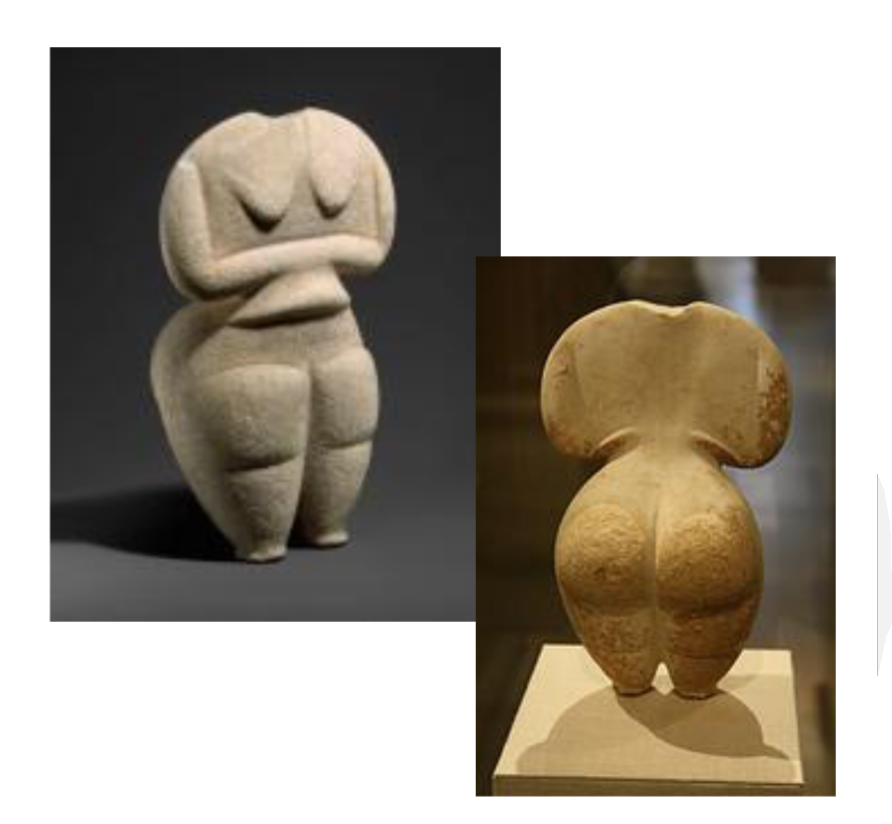
Steatopygous figurine, marble, Saliagos culture, 4500-4000 BCE (Neolithic). Wholesome female shape, no discernable figure, more detailed, curvy, voluptuous.
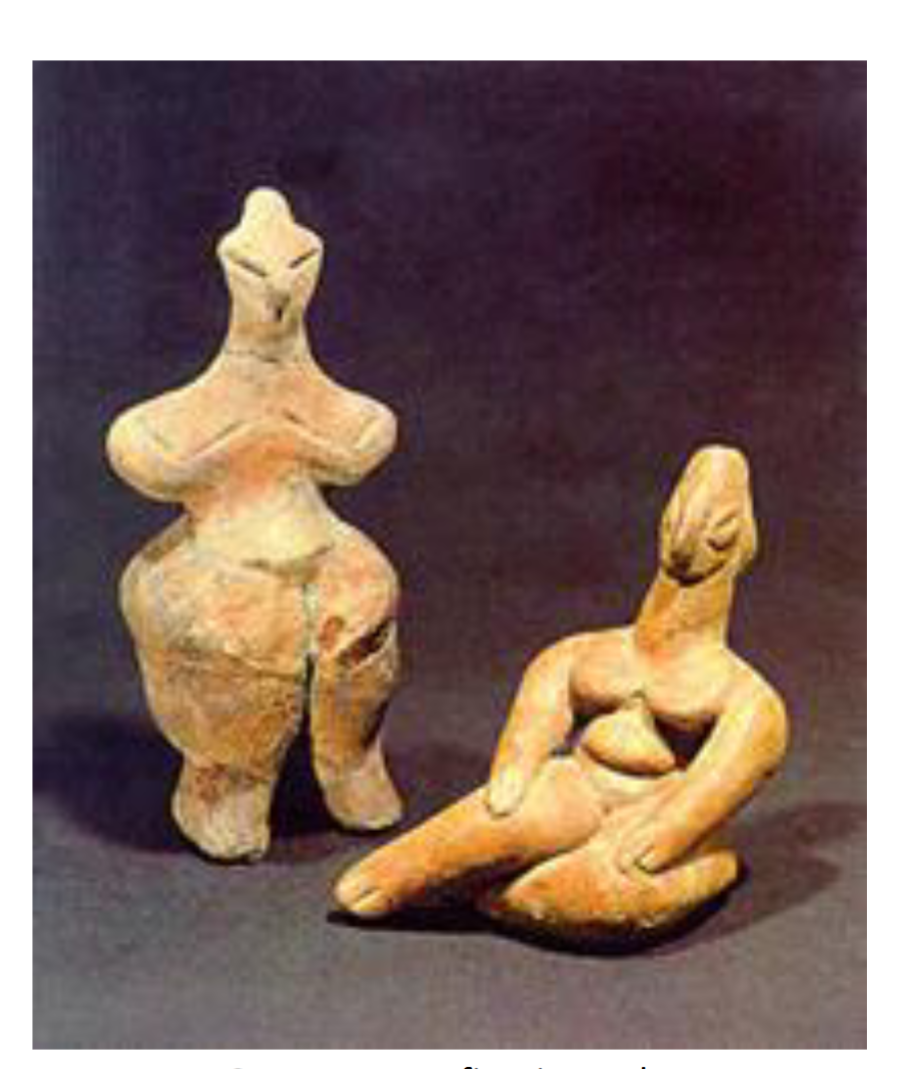
Steatopygous figurines, clay, 5th. millennium BCE.
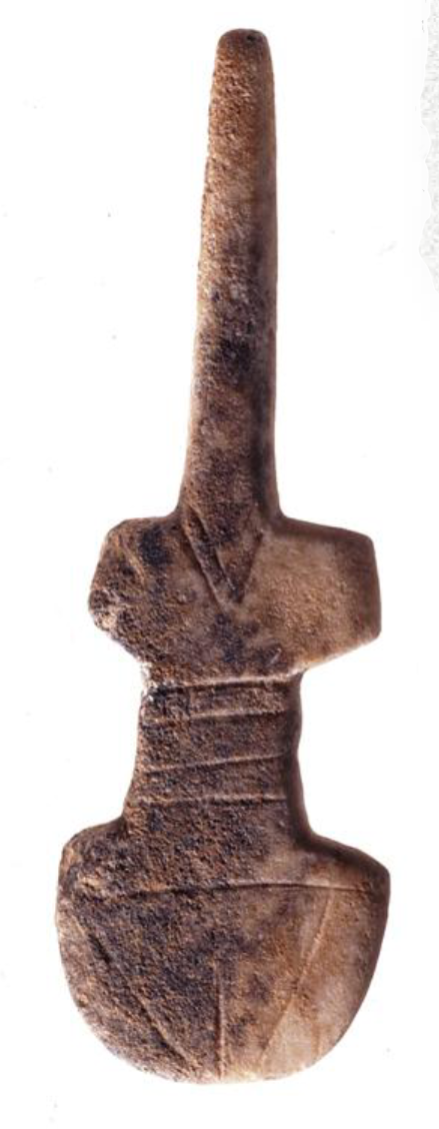
Violin type Cycladic figurine 3200-2800 BCE (Archaic Cycladic). An extension of neolithic figurines. No defined breasts, but a pubic triangle is present, marking this a female figurine. Horizontal lines could be interpreted as postpartum marks.
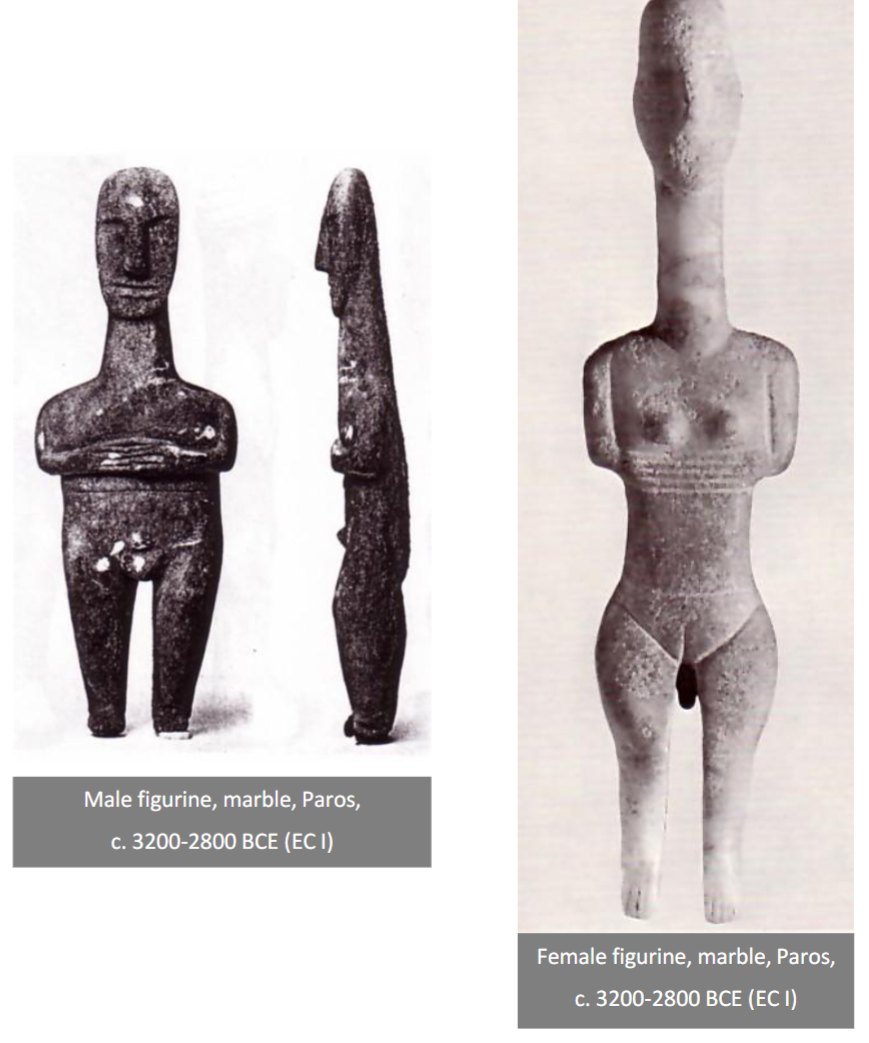
Plastiras Type Cycladic figurine, 3200-2800 BCE (Archaic Cycladic). Contemporary with violin type. More naturalistic (hands, arms, pubic region), folded arm figure (FAF), female predominant to male.
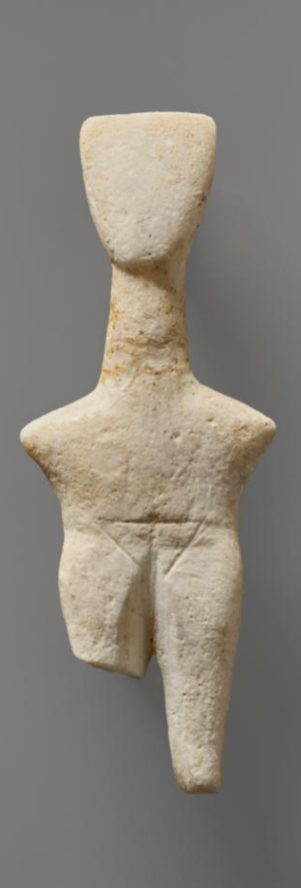
Louros type. Female figurine, marble, Naxos, 2800-2700 BCE (Transitional Cycladic). Seems to take a step back, likely a stylistic choice, movement to classical phase, Lyre head, defined legs, flat, no arms or facial features.
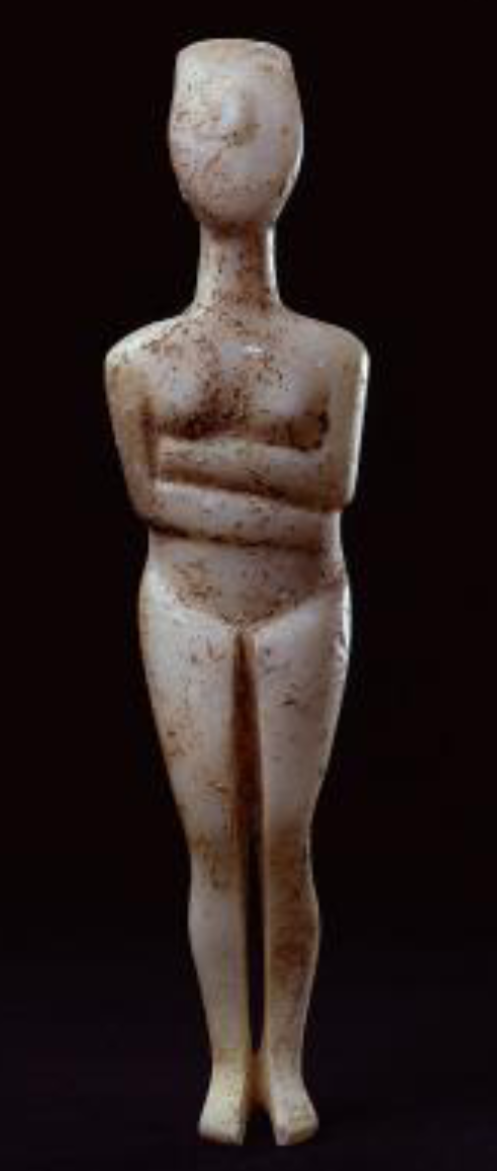
Kapsala type, female figurine, marble, 2800-2300 BCE (Classical Cycladic). rise of the Keros-Syros culture. Canonical features of the classical period include folded arms, defined legs, tilted back head, feet pointed downwards, possibly domestic or funerary. Right arm under left, round, naturalistic, slim appearance,
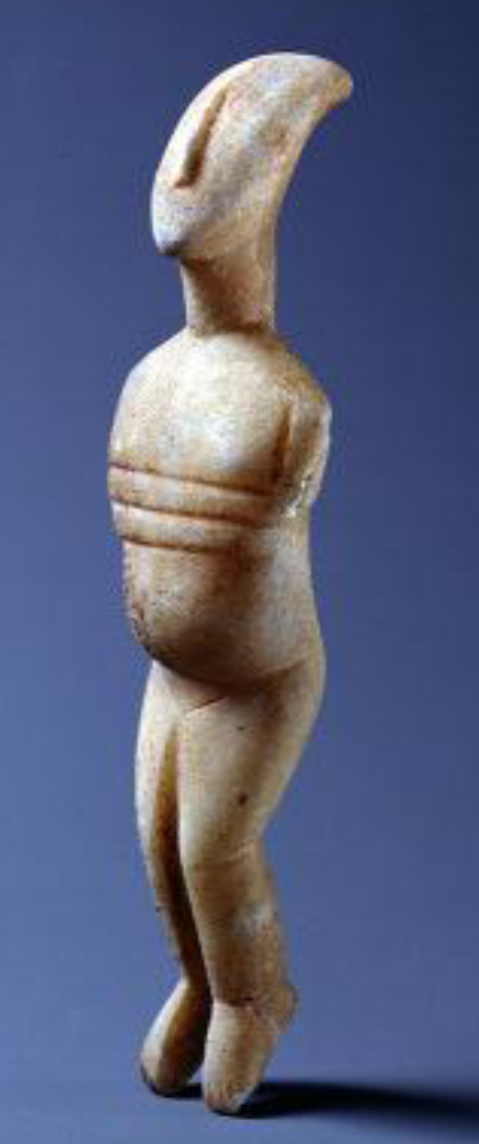
Spedos typ. female figurine, marble, 2800-2300 BCE (Classical Cycladic). More details, surface incisions, has a more lyre shaped head, small to life like, swollen abdomen in both male and female.
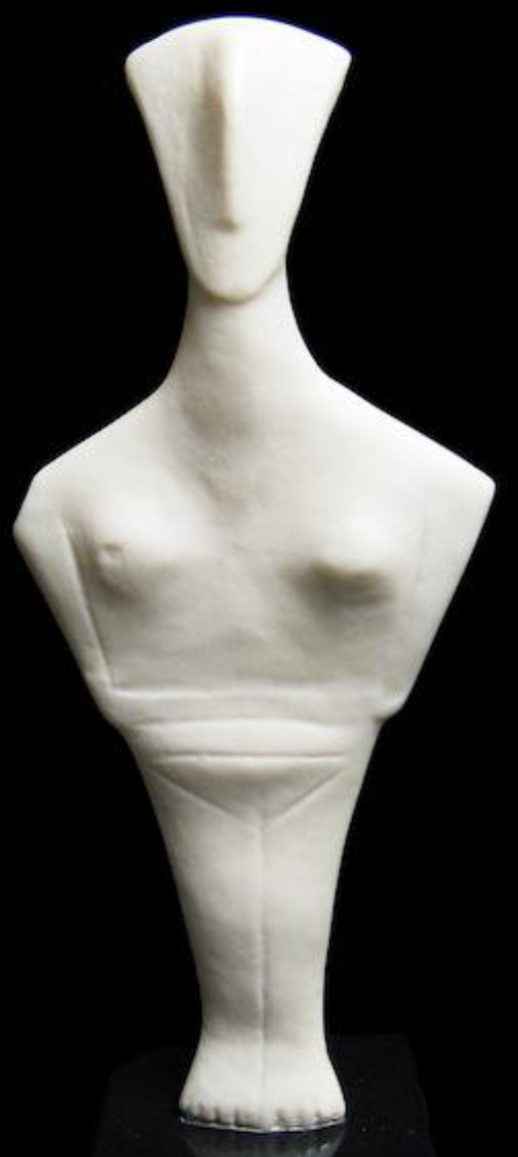
Dokathismata type. female figurine, marble, 2800-2300 BCE (classical Cycladic). Geometric, pubic triangle, most popular in the 19th c.
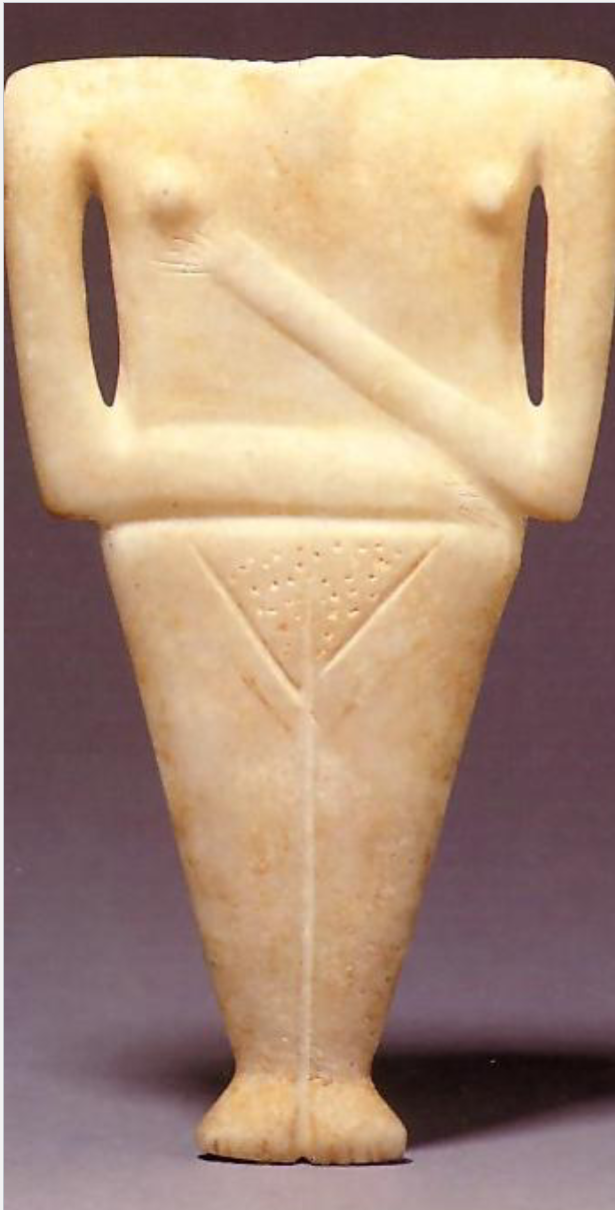
Chalandriani type, female figurine, marble, 2400-2200 BCE (Classical Cycladic). Post canonical, change in folded arms, dotted pubic triangle, loss of harmonious symmetry of the previous types.
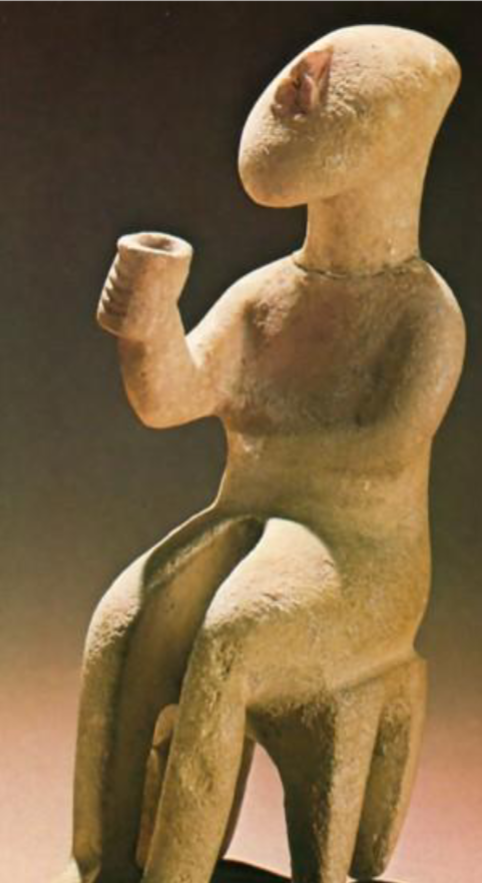
cup-bearer figurine. 2800-2300 BCE. Rare, possible fakes.
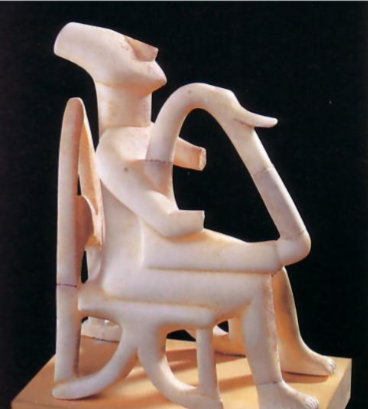
Lyre player figurine. 2700-2600 BCE.
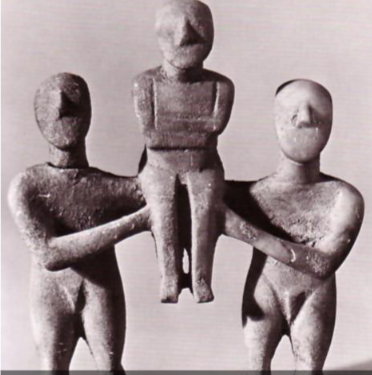
Acrobatic trio figurine, 2600-2500 BCE.
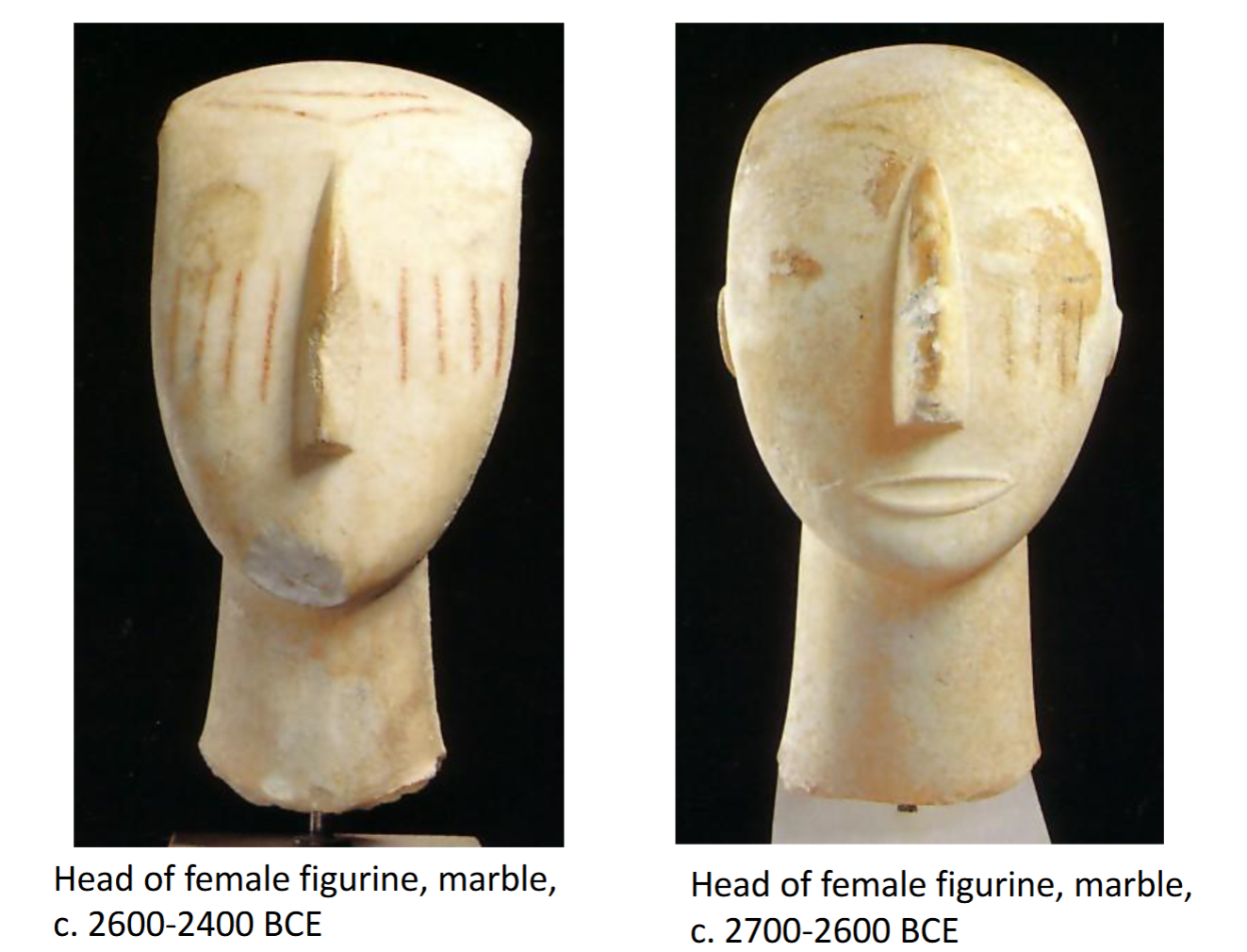
Striations could indicate these are mourners.
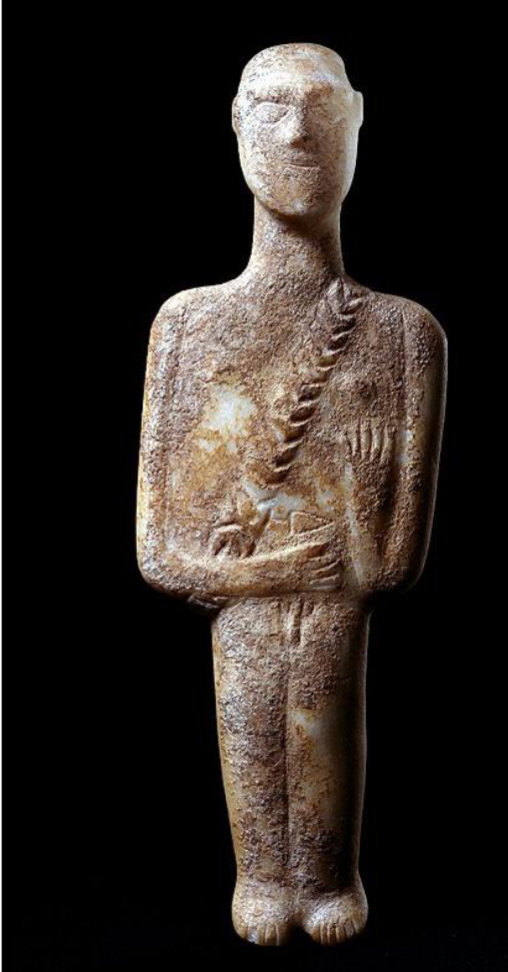
Male hunter figurine, marble, Chalandriani type, 2400-2200 BCE.