Clean Sport For Masters Athletes
 Call Kai
 Learn
Learn Practice Test
 Spaced Repetition
 Match
Match Flashcards
 Knowt Play
1/53

Earn XP
Description and Tags
March 23rd
Name | Mastery | Learn | Test | Matching | Spaced | Call with Kai |
|---|
No analytics yet
Send a link to your students to track their progress
54 Terms
“It is a sad commentary on human nature and society that so much effort is spent trying to detect and deter drug abuse among athletes. But a big-money, winning-is-everything mentality grips much of our social life. Since sport mirrors society, the field of competition is a stage where athletes enact social values. And if winning is everything, some athletes may try anything to win."
R.E. Eichner (1997, p.70)
World Anti-doping Association (WADA) Prohibited List 1
The WADA Prohibited List may include any substance and methods that satisfy any two of the following three criteria:
It has the potential to enhance or does enhance sport performance
It represents an actual or potential health risk to the athlete
It violates the spirit of sport (this definition is outlined in the Code).
Substances or methods which mask the effect or detection of prohibited substances are also prohibited. In addition, a substance which has not been approved for human use is likely to be prohibited as well.
World Anti-doping Association (WADA) Prohibited List 2
The Prohibited List is reviewed annually in consultation with scientific, medical and anti-doping experts to ensure it reflects current medical and scientific evidence and doping practices. The Prohibited List comes into effect on January Ist of each year and is published by WADA three months prior to coming into force; however, in exceptional circumstances, a substance may be added to the Prohibited List at any time.
Masters Athletes
Aging typically = Decrease in lean muscle mass
Masters Athlete:
IMGA (International Masters Games Association) - founded 1995
Masters-Level Athletics Participants compete in 5-year age brackets
Challenge – many seniors on prescription medications
Most meds are not banned substances, but some have ingredients that are.
Masters Athletes
Aging typically = Decrease in lean muscle mass
Masters Athlete:
typically older than 35
train and involved in athletic competition for older adults
many are experienced athletes
Age depends on sport
25 swimming
30 track and field
35 weight lifting
40 long distance running
50 senior games
IMGA (International Masters Games Association) - founded 1995
Recognized by IOC
Organizes:
World Masters Games
Winter World Masters Games
European Masters Games
Pan-American Masters Games
Asia-Pacific Masters Games
Masters-Level Athletics Participants compete in 5-year age brackets
35-39; 40-44; 45-49; 50-54; 55-59; etc.
Challenge – many seniors on prescription medications
65.7% of seniors prescribed 5 or more drug classes
26.5% of seniors prescribed 10 or more drug classes
8.4% of seniors prescribed 15 or more drug classes
Most meds are not banned substances, but some have ingredients that are.
Aging typically
Decrease in lean muscle mass
Masters Athlete:
typically older than 35
train and involved in athletic competition for older adults
many are experienced athletes
Age depends on sport
Age depends on sport (masters)
25 swimming
30 track and field
35 weight lifting
40 long distance running
50 senior games
IMGA
(International Masters Games Association) - founded 1995
Recognized by IOC
Organizes (IMGA)
World Masters Games
Winter World Masters Games
European Masters Games
Pan-American Masters Games
Asia-Pacific Masters Games
Masters-Level Athletics Participants compete
in 5-year age brackets
35-39; 40-44; 45-49; 50-54; 55-59; etc.
Challenge (Masters athletes)
many seniors on prescription medications
65.7% of seniors prescribed 5 or more drug classes
26.5% of seniors prescribed 10 or more drug classes
8.4% of seniors prescribed 15 or more drug classes
Hormones
Hormone replacement therapy (HRT)
Human Growth Hormone (HGH)
Hormone replacement therapy (HRT)
Estrogen (help menopause)
Testosterone (help andropause)
Human Growth Hormone (HGH)
Controversial (harms vs benefits)
Estrogen
With menopause
Estrogen Combats
With menopause (Estrogen)
Less estrogen
Menstrual cycle ceases
Estrogen Combats (Estrogen)
Vaginal dryness
Night sweats
Hot flashes
Insomnia
Difficulty concentrating
Testosterone
Declines with age (serum testosterone)
Changes in:
Lean muscle mass
Muscle strength
Physical function
Exercise performance
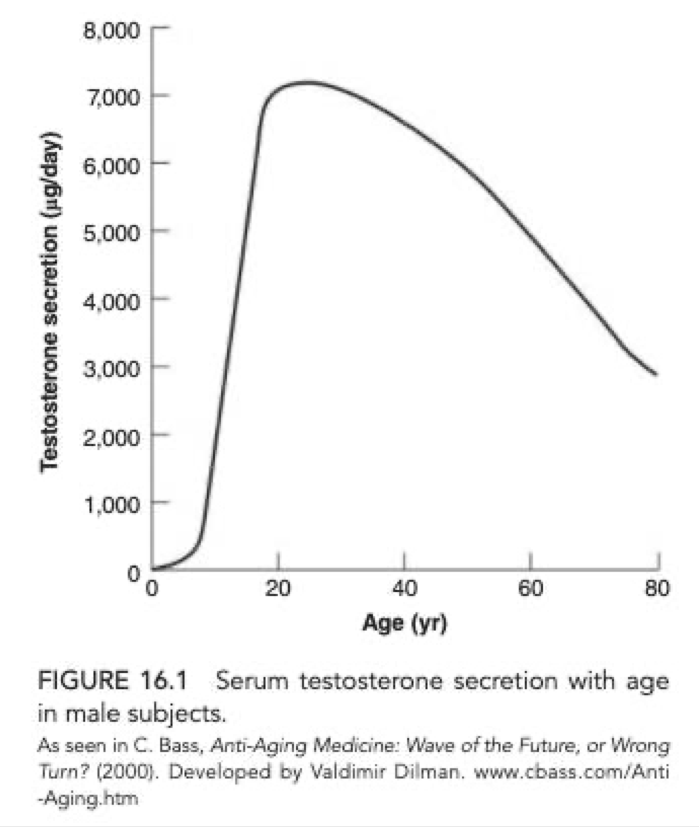
Testosterone (age)
Changes in:
Lean muscle mass
Muscle strength
Physical function
Exercise performance
Human Growth Hormone (HGH)
Exercise stimulates GH
Response to that GH decreases over time
Secreted by the pituitary
Stimulates liver and other tissues to make IGF-1
Promotes bone growth
Promotes muscle growth
Reduces body fat (lipolytic)
Detriments: cardiac instability, hypertension, insulin resistance
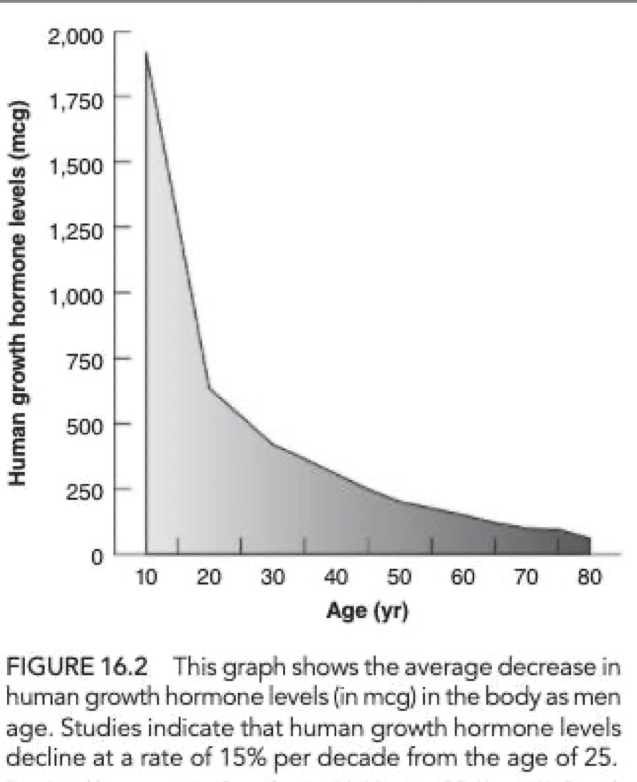
(HGH) stimulates liver and other tissues to make IGF-1
Promotes bone growth
Promotes muscle growth
Reduces body fat (lipolytic)
Anabolic Steroids
Derivatives of testosterone
Enhance athletic performance
Needed for asthma and rheumatologic conditions
Serious side effects
Athletes should be counselled on prevention
Anabolic Steroids - Enhance athletic performance
Strength gains of 5-20%
Increase lean body mass 2-5kg
Anabolic steroids - Serious side effects:
Unhealthy cholesterol profile (increase overall, decrease HDL); Heart Attack (from BP and atherosclerosis); stroke; blood clots; liver failure; hepatic neoplasms; ligament/tendon injury; hairloss, acne
Psychological side effects: aggression; confusion; disordered sleep; anxiety; paranoia; hallucinations
Anabolic steroids - Psychological side effects
aggression; confusion; disordered sleep; anxiety; paranoia; hallucinations
Male specific side effects - Anabolic steroids
atrophy of the testes, decreased sperm production, erectile dysfunction, gynecomastia, prostate issues
Female specific side effects - Anabolic steroids
inhibition of ovulation, irregular menstrual cycle, lower voice, facial hair, breast atrophy
Analgesics & Anti-Inflammatories
Wanting to compete “Pain Free”; pain is very common after 50
Narcotic Analgesics (opioids)
Adverse effects: drowsiness, mental fog, nausea, vomiting, dizziness, constipation, trouble with urination
High doses: respiratory depression, apnea, circulatory depression, hypotension (low BP), muscle rigidity, coma, shock, cardiac arrest
Non-Steroidal Anti-Inflammatories (NSAIDS)
Narcotic Analgesics (opioids)
Euphoria; false feeling of invincibility
Increase pain threshold – may ignore early warning of injury (more damage)
Physical and psychological dependence
Adverse effects: (Analgesics & Anti-Inflammatories)
drowsiness, mental fog, nausea, vomiting, dizziness, constipation, trouble with urination
High doses: (Analgesics & Anti-Inflammatories)
respiratory depression, apnea, circulatory depression, hypotension (low BP), muscle rigidity, coma, shock,
cardiac arrest.
Non-Steroidal Anti-Inflammatories (NSAIDS) {Analgesics & Anti-Inflammatories}
Useful for mild to moderate pain and inflammation
Commonly used for DJD and OA
Available OTC
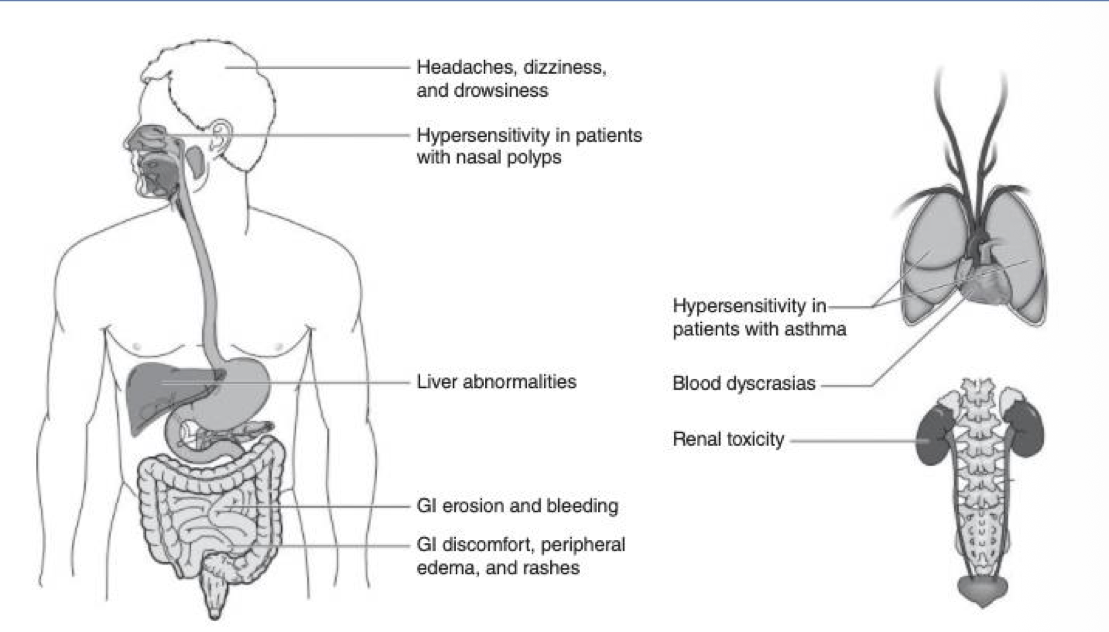
Complications/toxicity: GI bleeding, dyspepsia, peptic ulcer disease, acute renal failure (due to renal vasoconstriction), worsening of hypertension, and congestive heart failure
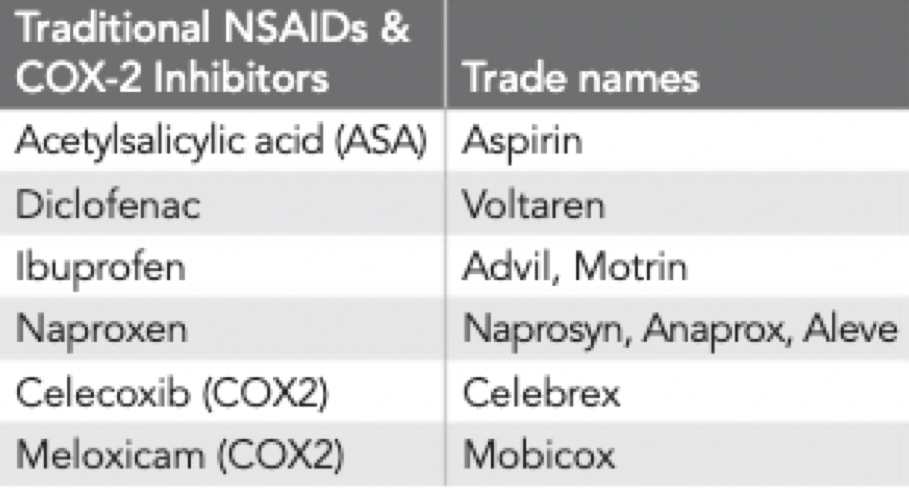
NSAIDs and COX-2 Inhibitors
Adverse effects of nonsteroidal anti-inflammatory drugs
Hypertension Medications
Common in general population
Often not as big a problem for endurance athletes (exercise keeps blood pressure down)
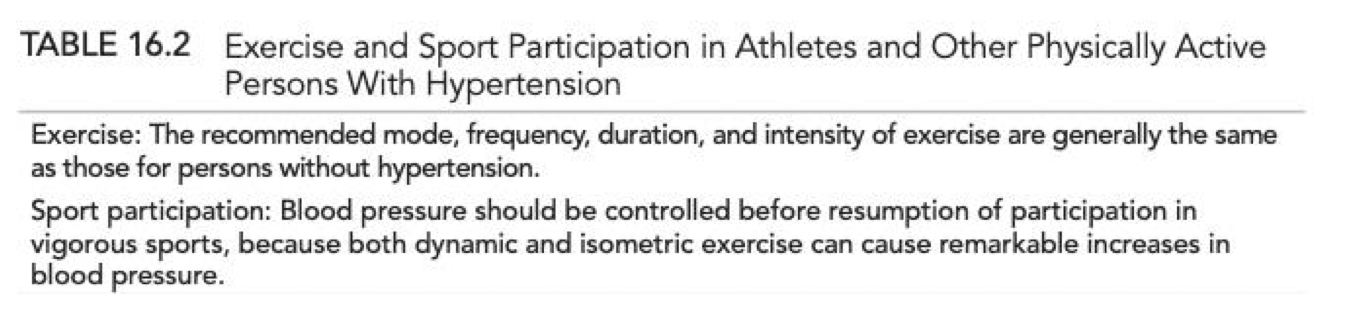
Exercise and sport participation in athletes and other physically active persons with hypertension
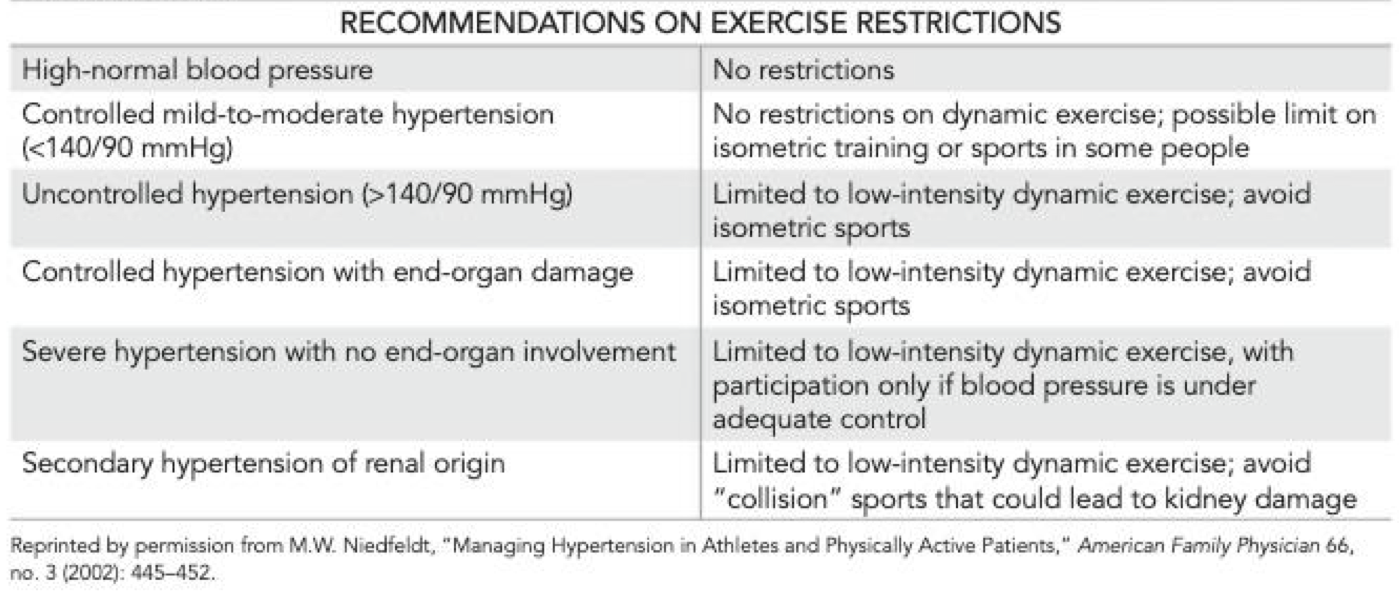
Recommendations on exercise restrictions
Diuretics
Less desirable in distance athletes – dehydration
Effective way to lower HBP
Misuse – forces weightloss (used for making weightclass)
Can lead to muscle cramps
Angiotensin Converting Enzyme Inhibitor (ACE)
High blood pressure medication
No negative effect on training or competition
Sanctioned by WADA
Calcium Channel Blockers
Well tolerated for physically active patients
Effective blood pressure medication
Should not impact performance
Beta Blockers
Decreases BP
Can inhibit Glycogenolysis (causing hypoglycemia post intense exercise)
Anti-tremor effects – banned in high accuracy sports
Archery, shooting, diving, ice skating
Eryhthropoietin
“Blood Doping”
Increase oxygen carrying capacity
Popular for endurance athletes
Increased risk of MI or stroke
Dietary Supplementation and Ergogenic Aid
The changing needs that occur with age
The changing needs that occur with exercise
The presence of chronic illness or disease
The level of competition
Consequently supplements may
Intentionally contain prohibited substances
Unintentionally be contaminated with prohibited substances (eg. contaminated source ingredients, erroneous source ingredients, cross-contamination during manufacturing)
Be mislabeled
additionally, supplements may:
Not accurately list the ingredients (eg. falsify, omit)
Not accurately list the relative amounts of each ingredient per dose
Make false certification claims (e.g., "WADA-approved")
Make false health benefit claims
Not list important cautionary information (eg, health side effects)
Alcohol
Inhibits Antidiuretic Hormone (ADH) and is therefore a diuretic
Post exercise exacerbates fluid loss
May limit glycogen replenishment
So fatigue and dehydration may occur during subsequent exercise bout
Increased blood pressure, and heart rate.
Cannabis
Under review
Little is known
Possibly pain relief?
On WADA prohibited list since 1984 (still there for THC)
CBD (non psychoactive) no longer prohibited since 2018
Caffeine
Most frequently used drug in the world
CNS stimulation
Enhanced muscular force (strength and endurance), concentration, energy levels, less reported fatigue, enhanced alertness
No negative performance effects
Increased time to exhaustion
For doses exceeding 200mg
Removed from WADA Prohibited list in 2007
Can lead to insomnia, increase BP, HR
Creatine
Taken to “bulk up” muscle mass
Increase strength and mass, explosive power
Decrease fatigue
Not banned, may impact renal health
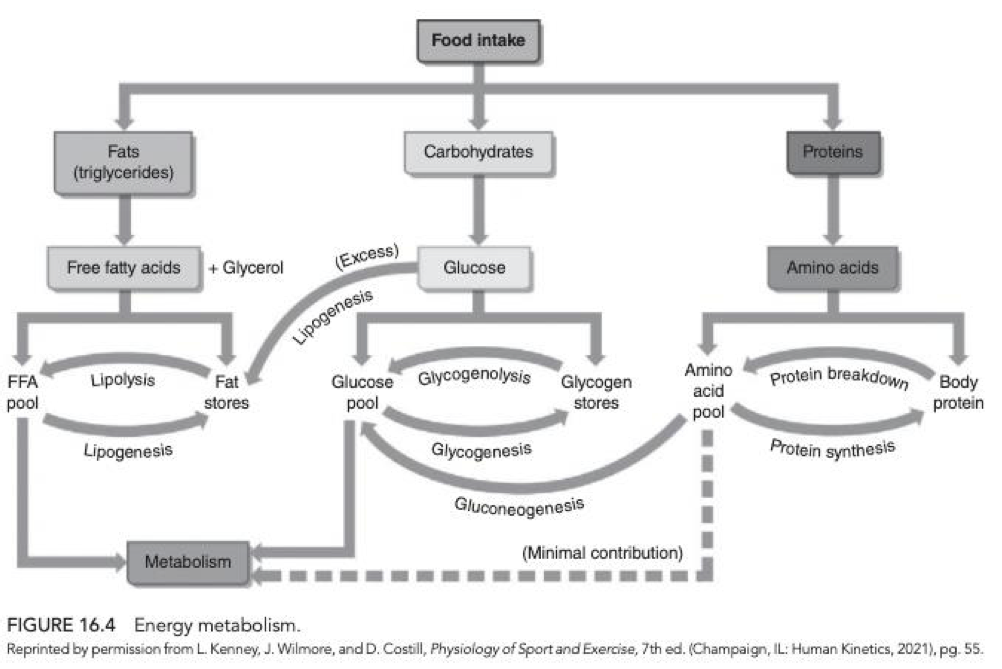
Energy metabolism
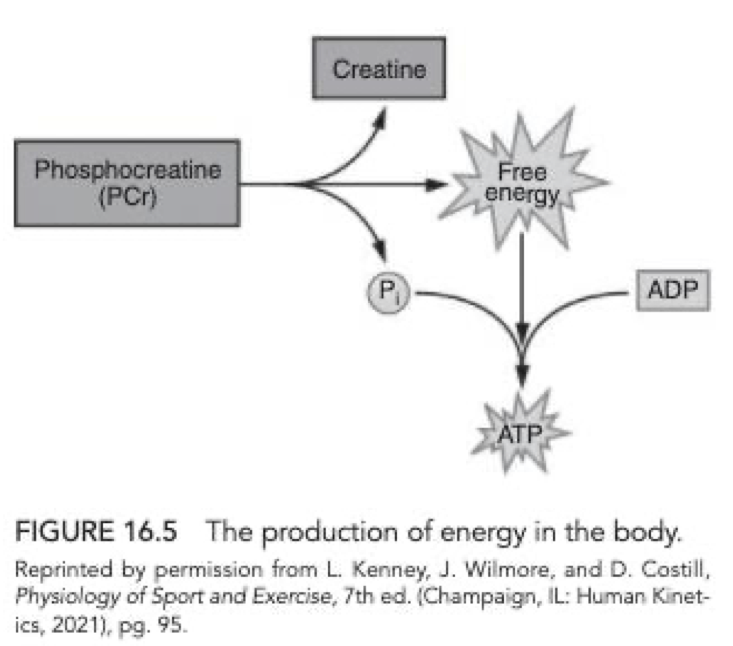
The production of energy in the body
Glucosamine
To minimize joint degeneration
Retain hyalin cartilage
Summary
Every health professional working with older competitive athletes should, at a minimum, be familiar with the following facts:
Drug use and abuse is a major problem facing sport today.
Taking performance-enhancing drugs, or "doping," has a long history in sport.
The elderly athlete has certain elevated nutritional needs compared to younger athletes.
Estrogen in women may prevent osteo-porosis, maintain physical vitality, treat postmenopausal symptoms, and reduce depression —but certain HRT drugs are banned.
High doses of testosterone, especially when combined with strength training, increase fat-free mass, muscle size, and strength in men.
Performance-enhancing drugs can have a deleterious effect on the prostate.
Anabolic steroids can cause an unhealthy cholesterol profile, heart attack, stroke, liver failure, and type 2 diabetes.
HGH can cause hypertension, pedal edema, carpal tunnel syndrome, and a prediabetic condition.
Caffeine causes increased alertness, shortened reaction time, and improved concentration.
Older athletes do not respond to creatine supplementation to the same extent as young athletes.