Deviance Final Exam Notes
 Call Kai
 Learn
Learn Practice Test
 Spaced Repetition
 Match
Match Flashcards
 Knowt Play
1/18

There's no tags or description
Looks like no tags are added yet.
Name | Mastery | Learn | Test | Matching | Spaced | Call with Kai | Chat |
|---|
No analytics yet
Send a link to your students to track their progress
19 Terms
What, according to Stanley Cohen, is a moral panic? Please know his original case, along with the “media inventory” for moral panics, what “folk devils” and “moral entrepreneurs” are, etc.
Moral Panic:media and other people spread fear which leads to panic about events that are not as widespread as they’re made out to be. A group that emerges quickly and becomes demonized before quickly falling away.
Media Inventory for Moral Panics:Exaggeration/distortion, Prediction, and Symbolization
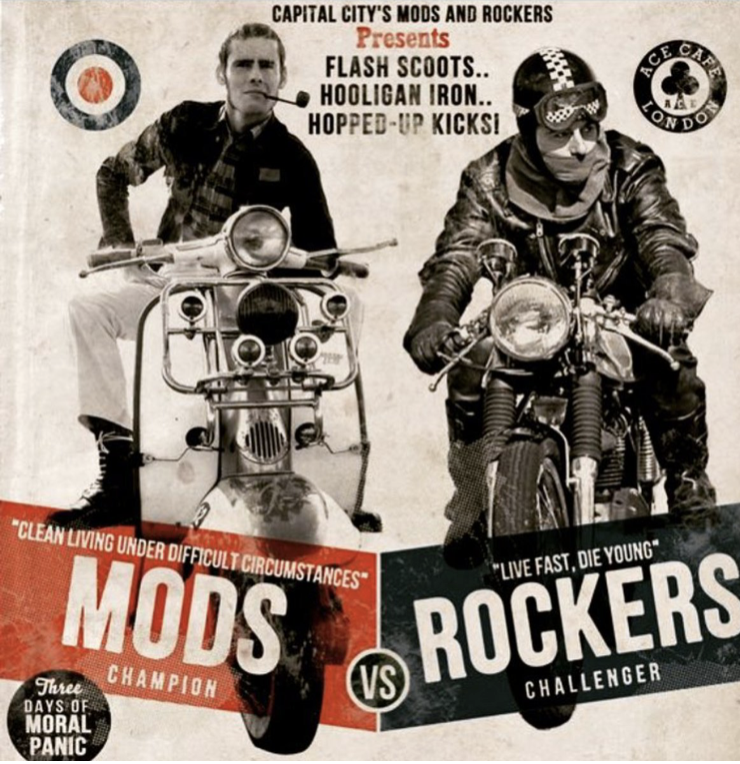
Original Case: The British Mod’s N Rocker’s gangs that originally evolved from a small beach fight, the main issue was really about parental fears about losing control/out of touch from their kids.
Folk Devils: the image of a group is condemned and the media profits off of this evil image of a group
Moral Entrepreneurs: activists, law enforcement, politicians, the media, etc., but often includes people who make their living stoking the controversy
How can we understand (a) human trafficking and (b) drug scares as specific kinds of moral panics?
Human Trafficking Panic: the victim numbers are often exaggerated because moral entrepreneurs want people to take the issue seriously, and larger numbers are more attention grabbing
Drug Scare Panic: often targets black (crack epidemic) and Mexican (weed epidemic) people and demonize the issue so political action can be taken to oppress these people and drugs
Both Panics involve..
a) a “kernel of truth,” but then are
(b) magnified by the media,
(c) attract the attention of moral entrepreneurs and interest groups,
(d) become linked to a “dangerous class” who are
(e) scapegoated for problems.
What, according to Joseph Gusfield, is a “symbolic crusade?” How is prohibition an example of this?
-Symbolic Crusades involve fights over status, and are about whose norms, values, lifestyles, beliefs, etc., are given priority in society.
Prohibition: was an early example of gender status politics where women could try and be politically influential and gain status in a society that viewed them as second class citizens, later was used for the powerful Protestants to rally against Catholic immigrants
What does Gusfield mean by “status politics,” and what are the three kinds of deviant he discusses?
-Class politics are about the distribution of resources in society. Status politics are about the distribution of prestige and honor in society.
3 ways a deviant can be understood in a symbolic crusade:
The repentant: the deviant admits they are wrong, supporting the superiority of dominant norms.
The dominated: the deviant hides what they do, leaving dominant norms unchallenged.
The enemy: the deviant challenges the legitimacy of dominant norms.
What is “power devaluation” and how does it relate to moral panics?
Power devaluation occurs when what one group offers is devalued as a result of less demand or greater supply, can involve economic, political, or status
In moral panics, they are about maintaining the status quo against the rising status of marginalized/othered groups by casting them as deviant, dangerous, etc.
What is the “sick role?”
Sick Role: people who enter a period of sanctioned deviance where they are granted leeway on certain norms while also being expected to act in certain ways (trying to get well, seeking medical treatment).
What is “medicalization?”
defining a problem in medical terms, using medical language to describe a problem, adopting a medical framework to understand a problem, or using a medical intervention to ‘treat’ it”
How does the history of ADHD demonstrate the effects of medicalization on a particular issue?
ADHD is understood as being a recent diagnosis that has influenced the pharamecuetical industry to target people with this diagnosis to sell their drugs to, however there is a barrier for certain people based on gender, race, SES, etc..
Overall this example shows:
Pathologizing of behavior.
Individualistic and consumeristic ways of dealing with an issue.
Increasing power of the medical industry.
Differing levels of diagnosis for dominant and marginalized groups.
How can we understand the connection between mental health and “stigma,” in Goffman’s sense of the word.
Goffman’s Own and Wise: The own are those who share the same stigmatizing condition, while "the wise are normal individuals who are sympathetic and understanding towards the stigmatized person
Mental health stigma can be lowered if someone is exposed to a loved one who has mental illness or education about it, or has it themself
How can the experiences of men athletes and women bodybuilders help us understand deviance of the body?
Women Bodybuilders: had experienced gendered assumptions about women’s bodies and backhanded compliments
Male Athletes: they saw a thin body as an accomplishment, it represented the application of science, effort, rationality, etc..this causes them to “other” less-thin bodies and try to achieve thinness as a mechanism of self-control and shame-avoidance
perspectives on bodily deviance derive from understandings of what the body is for, and whose body should look like what
How do bodily modification and BDSM suggest examples of the body as a kind of “achieved deviance.”
Achieved Deviance: Participants derive personal and psychological benefits, including “fun, spirituality, community, self-challenge, empowerment, and healing
-It’s a kind of “serious leisure” that provides skills and competencies and “achieved” deviance is reframing “deviant” practices as beneficial.
-BDSM and Bodily Modifications both fall outside of the societal norms and so they use achieved deviance to put a positive frame on it
Why might we suggest that body modification isn’t deviant anymore?
People with body modifications were more likely than people without to do volunteer work, vote, donate to charities, and regularly exercise, they don’t do deviant things and they represent middle-class norms that see tattoos as a prosocial way to express yourself
What is folklore and how does it connect to deviance?
Folklore is the traditional customs, wisdom, stories, jokes, myths, legends, and art of a group of people. Folklore is also both a space to engage in deviance and a way to tell stories which reinforce norms and impose boundaries.
What are Bascom’s “four functions of folklore?”
Four Functions of Folklore:
-Alleviating frustrations through attempts to escape in fantasy stories from the repression imposed on them by society
-Validating culture, in justifying its rituals and institutions to those who perform and observe them
-Education, particularly on beliefs, values, morals, and history
-Maintaining conformity to the accepted patterns of behavior
How can we understand internet hoaxes and “creepypasta” as a kind of modern folklore about deviance?
Creepypastas, such as Slenderman and Momo have become a kind of digital folklore which we can see as representing the anxieties we have about the modern world, as well as contemporary boundary maintenance around deviance.
What is “ostension?”
trying to make a folkloric story occur in the real world
What defines “true crime?”
-True crime is a genre which purports to be about the actual details of specific crimes.
8 Components of True Crime:
-Truth (the stories are purported to be true)
-Justice (they present themselves as caring about justice for the victim)
-Subversive (they ask the viewer to reconsider evidence or assumptions)
-Crusader (they have a “call to action” for some kind of change)
-Geographic (they are deeply contextual and place-bound)
-Forensic (they focus on the evidence-based details of the case)
-Vocative (they are presented as authoritative, with a voice, not neutral)
-Folkloric (they are presented as instructional)
How does the gender composition of who consumes true crime indicate something about it to us?
Women watch true crime more than men because they are typically more fearful of crime than men, and enjoy the thrill of true crime and see it as educational. Additionally, because much true crime is also produced by and about women, many women who consume it feel empathy with the victims, while also feeling that it centers women’s voices and experiences.
How can we understand these kinds of folklore as representing ambiguity about deviance in our society?
We have deep ambivalence about deviance:
-Deviance is both a site of revulsion and fascination.
-We like stories about deviance both because they allow us to critique society and because they reinforce the status quo.
-The deviant is both the rebel, speaking truth to power, and the folk devil, whom we must destroy to set things right.