Lecture 2 - Cognitive Aging
 Call Kai
 Learn
Learn Practice Test
 Spaced Repetition
 Match
Match Flashcards
 Knowt Play
1/38

There's no tags or description
Looks like no tags are added yet.
Name | Mastery | Learn | Test | Matching | Spaced | Call with Kai |
|---|
No analytics yet
Send a link to your students to track their progress
39 Terms
multidirectionality
-even within a single domain of human experience, development can involve changes in different directions
-diversity or pluralism are evidence in the directionality of ontogenetic change
-even within the same developmental period, some systems of behaviour show increases in functioning, while others show decreases
lifespan perspective (multidirectionality)
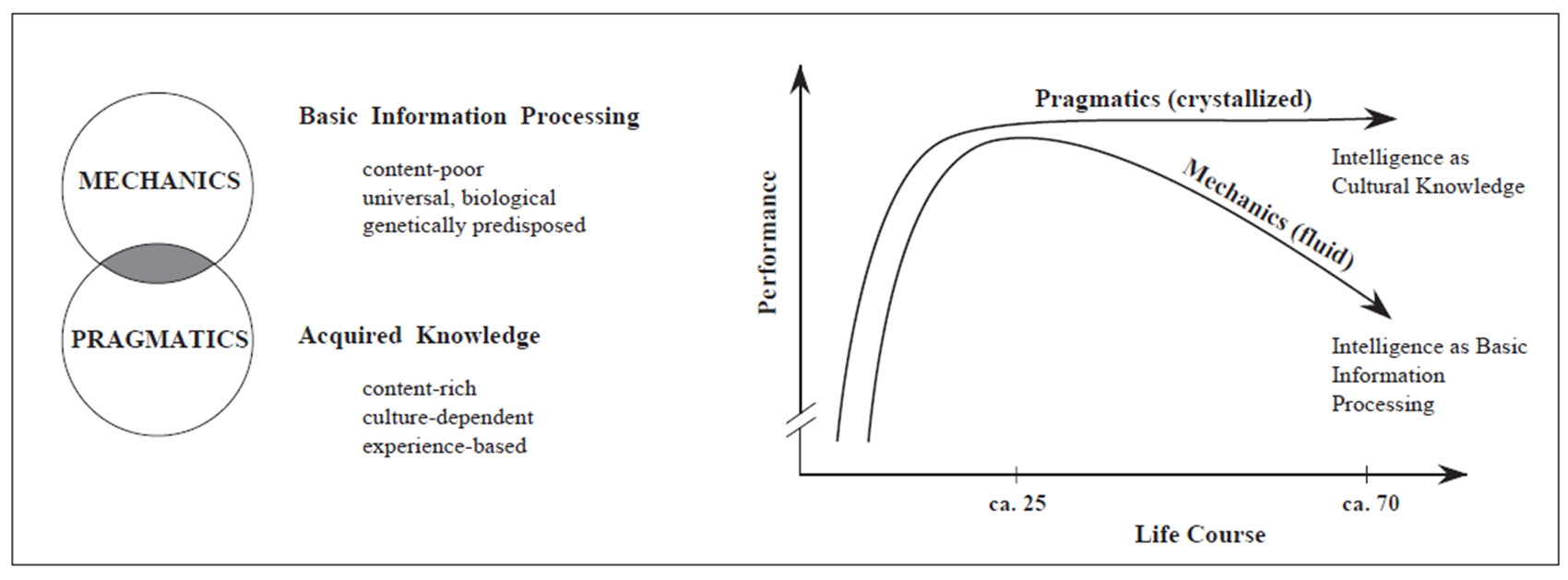
-distinction between crystalised and fluid intelligence
-fluid abilities → on the spot, mechanics
-crystalised → acquired/factual knowledge, pragmatics
cross-sectional vs longitudinal studies
-longitudinal studies have more organised people take part compared to less unorganised people
-type of people who remain part of study for long time have certain characteristics and people who drop off have certain characteristics compared to cross-sectional studies
semantic memory
-older adults substantially outperform younger adults on vocabulary tests
-especially on multiple-choice tests
-older adults have had more time and opportunity to learn things compared to younger people
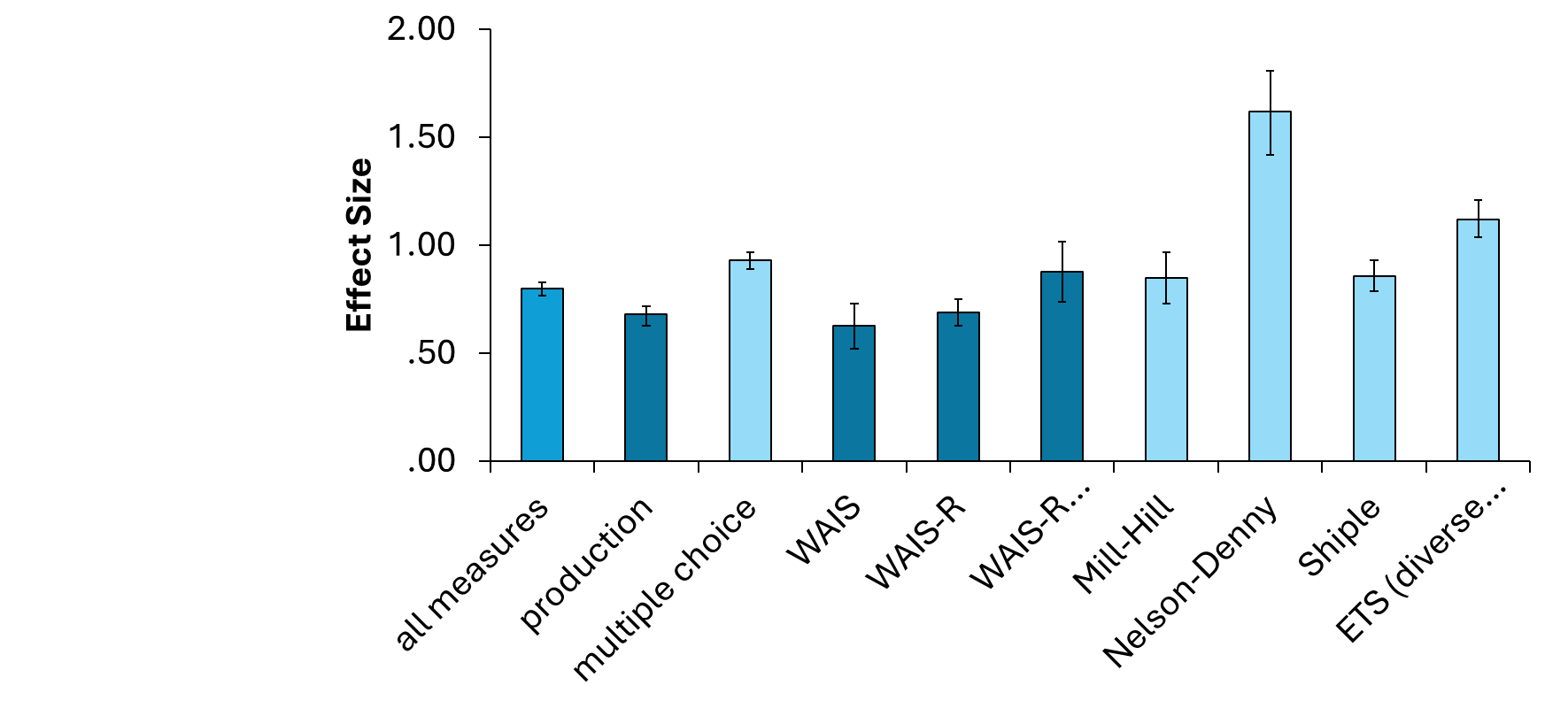
verhaeghen (semantic memory)
-meta analysis
-older participants perform more than 1 SD than younger participants
Eich & Sitzman questions (semantic memory)
Eich & Sitzman (semantic memory)
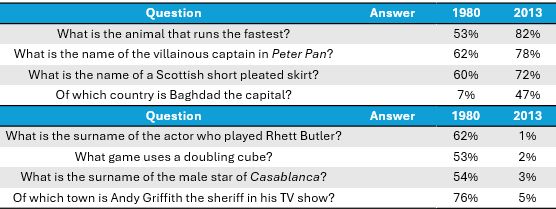
-questions assessing general awareness of cultural factors
-found that older adults substantially outperform younger adults on general knowledge tests/crystalised knowledge
-some questions would be common knowledge in cultural sphere of understanding in 80s
-but comparing performance from 80s to 2013 find reasonable spread within questions
→ what counts as general knowledge changes significantly across time and location and social group
→this same knowledge is not discussed and so is not acquired
Mayor - method (semantic memory)
-mastermind contestants answer questions on their chosen specialised subject and then answer general knowledge questions
-see how well performance correlates with age
-age range 25-78
Mayor - results (semantic memory)
specialised subject → .085 correlation with age, weak and not significant
general knowledge → .343 older people did significantly better because have been around longer so more time to learn
laver & burke - method (semantic memory)
-non-word decision tasks → priming tasks
-have to say if word or non-word
-given word and this sparks associated words in head
-quicker to identify neighbouring words as primed for access
laver & burke - results (semantic memory)
-older adults have more experience and opportunities so they have more densely populated semantic network
-speed of response tends to increase with age which is surprising as older adults tend to perform worse on RT tasks
-semantic priming intact in older age and slightly improves
-people respond faster to semantically associated words
binder & desai (semantic memory)
-semantic memory is enabled by a diffuse network of different brain regions
-these brain regions are shared with other sensory/perception and motor areas
-semantic memory is less dependent on brain areas known to decline in older age like the hippocampus
fluid intelligence (Gf)
-use abstract reasoning in novel situations
-requires us to process and make inferences about novel information
-so cannot rely on previously acquired knowledge to give us the correct answer
episodic memory (EM)
-example of Gf
-type of LTM that allows us to recall specific personal experiences
-can be measured in two ways:
recollection
familiarity
recollection (EM)
-retrieving the specific, contextual, associative, perceptual
familiarity (EM)
-memory in the absence of retrieving specific details
McCabe - method (EM)
-show words in encoding phase to be memorised
-during retrieval phase asked if it is an old word that was seen before if it was a new word not seen before
-follow-up question about whether they know for sure or if they just feel that they know it
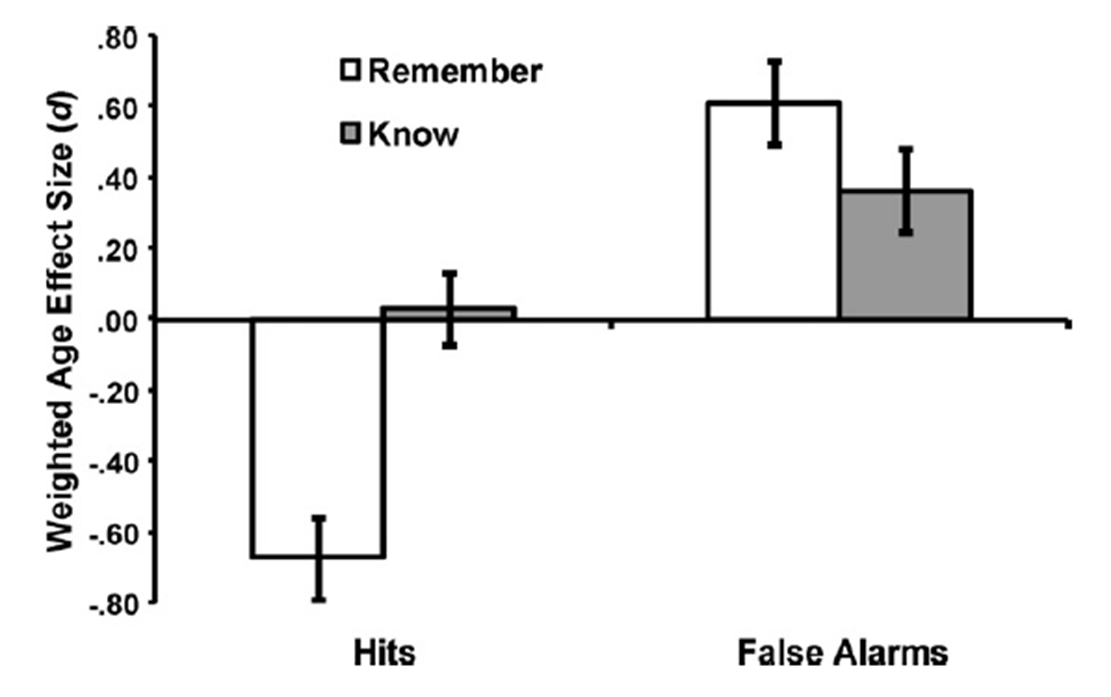
hit → correct answer
false alarm → say yes when had not seen before
McCabe - results (EM)
-accurate recollection declines in older age → but accurate familiarity is intact
-false recollection and false familiarity both increase in older age
dual process theory and aging (Raz)
-brain regions like the hippocampus and caudate nucleus decline in structural integrity → necessary for episodic memory
-whereas the entorhinal cortex remain stable → necessary for semantic memory and recognition
reflects difference in episodic memory and semantic memory performance
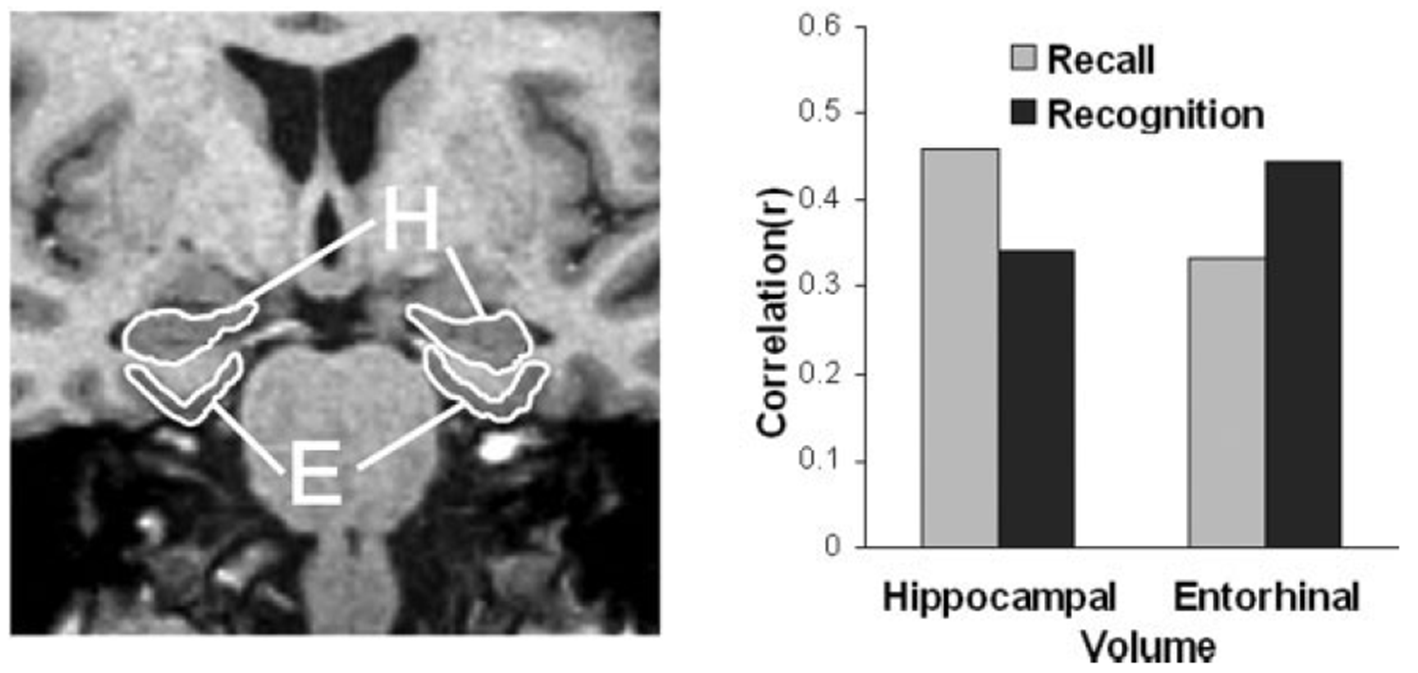
hippocampus (dual process theory and aging)
-measured the volume of specific memory-relevant brain areas
-and took measures of recall memory and recognition memory to see whether the two things were associated
-found double dissociation→ semantic memory being preserved and episodic memory performance decreasing with age
-hippocampal volume was strongly associated with recall
-entorhinal cortex volume was strongly associated with recognition
theories of aging and episodic memory
-different backgrounds, perspectives and tasks leading to same phenomenon being studied through contrasting frameworks:
dual process theory
associative deficit hypothesis
source monitoring framework
dual process theory (theories of aging and episodic memory)
-distinction between the ability to recall information explicitly and recognise information
-recollection more deficient than familiarity
associative deficit hypothesis (theories of aging and episodic memory)
-forming associations between information
-how do people make links to contextualise new information
-memory for associations more deficient than memory for individual items
source monitoring framework (theories of aging and episodic memory)
-when retrieving a piece of information can we link it to where we originally heard it
-memory for source and context more deficient than memory for specific content/items
jarjat - method (interactions between memory systems)
-compare memory performance in younger adults and older adults
-looks at episodic memory and semantic memory together
-asked to study pairs of words:
had to remember the pairs
and decide whether the words in each pair were semantically related
then given recognition test → have to determine if novel word and say whether it appeared on left/right and if it was part of a related or unrelated pair
jarjat - results (interactions between memory systems)
-memory for meaningful source information is preserved in older age
-when determining if word was part of semantically related pair → older adults performed as well as younger adults
-when determining if word was shown on left or right → older adults performed much worse
jarjat - conclusion (interactions between memory systems)
-older adults using intact semantic memory to offset effects of declining episodic memory → compensation using intact cognition
-semantic element helps preserve source memory in older adults
digit symbol test (processing speed)
-doesn’t require reasoning or manipulating information
-simple basic activity repeated many times
-faster your basic processing speed → the more symbols you can draw out in the time allowed
processing speed
-basic property of cognitive systems
-not an ability we can practice to improve
-all cognitive tasks reflect the processing speed of that system
-key constraint on cognitive processes and declines as we age
processing speed constrains cognition
-only limited time to execute cognitive operations on information in WM before information is lost
-slower processing speed means fewer cognitive operations get carried out in that time
-means there’s a reduction in the amount of simultaneously available information
-so as processing speed declines, it impacts cognition
salthouse (processing speed constrains cognition)
-as age tend to do poorer on visual reasoning tasks
-if account for processing speed and remove this as a variable → then will find a decline but is much less significant
-reasoning doesn’t decline but processing speed does
-shows that processing speed underpins cognition
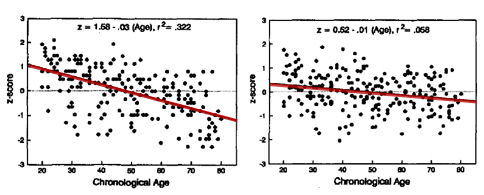
chen (processing speed)
-measures of processing speed vary in complexity
-as processing speed tasks get more complex, the correlation with age increases
-speed difference may not be the cause but rather a consequence of the age difference in WM capacity
-speed-accuracy trade-off → older adults typically prioritise accuracy over speed compared to younger adults
working memory (WM)
-memory from moment to moment
-older adults tend to have lower WM capacity than younger adults
Park & Payer - method (WM and aging research)
arrow span task measures STM
→ have to store information over a sequence of directions e.g., span of 3 or 4 or 5 arrow directions
can also measure letter orientation span
→ same as arrow task but the arrow function is the top of the letter
→so have to process information and make judgements so WM rather than passive memory
Park & Payer - results (WM and aging research)
-steeper decline in M tasks compared to STM tasks as get older
-steeper decline in letter rotation task as it involves WM components whereas arrow span is simply STM with no manipulation
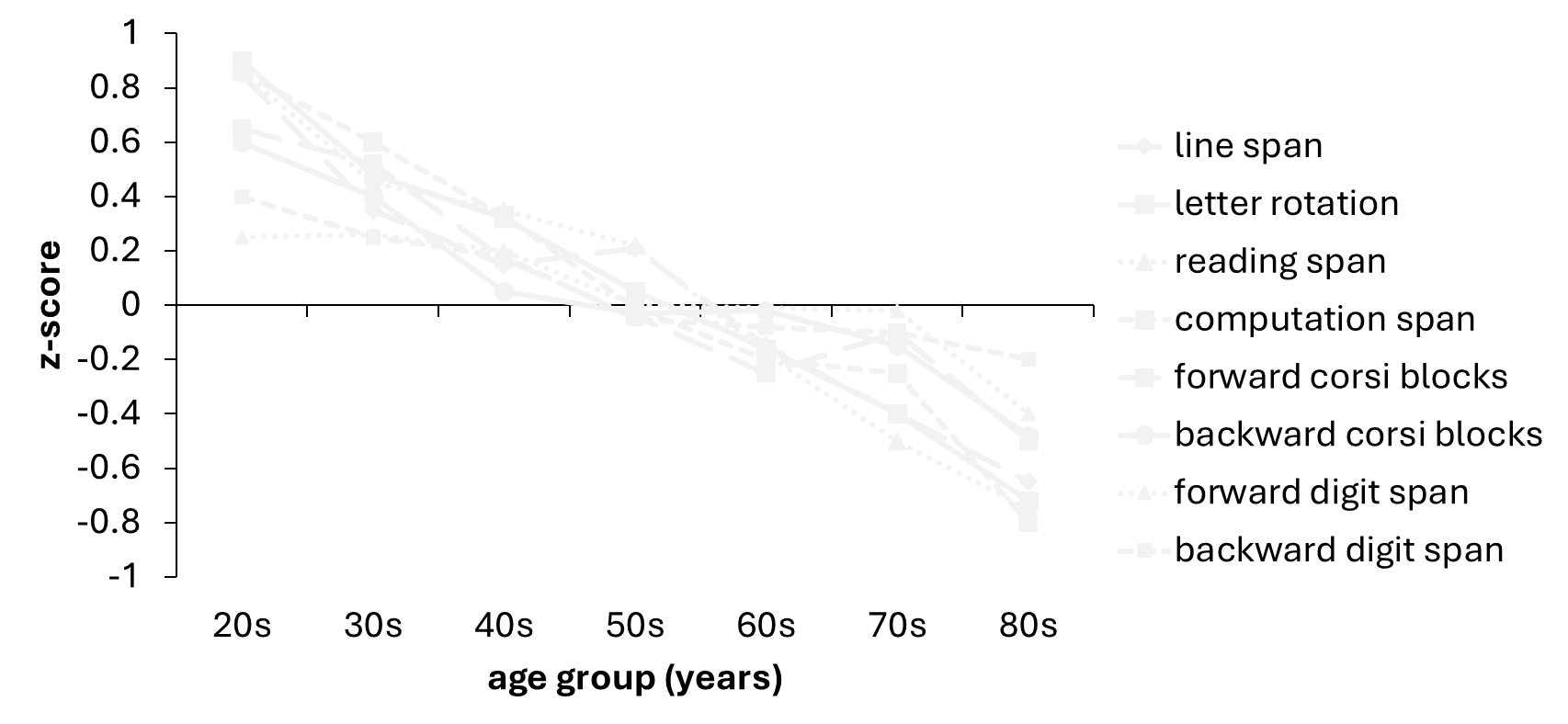
large individual differences studies (age differences in WM and other cognition)
-WM capacity accounts for age-related variability in cognition over and above processing speed
-negative correlation between episodic memory and age
-but when we add processing speed → the amount of variance attributable to WM decreases (but still present)
-deficits in episodic memory attributable to processing speed
large individual differences studies - conclusions (age differences in WM and other cognition)
-not that episodic memory decreases
-it’s that domain general processes tend to slow with age
-WM and processing speed have a recursive and interactive relationship
interaction of WM and other variables
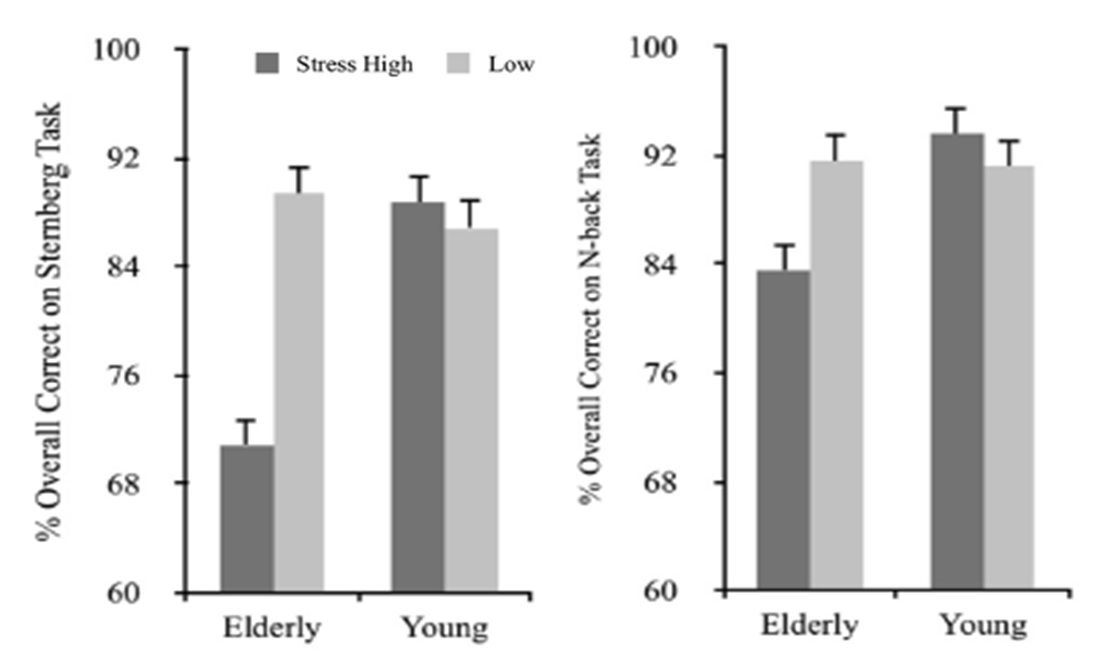
-association between cumulative stressful experiences and WM
-cumulative stress over life strongly impacts WM performance in older age
-older people with high levels of cumulative stress perform worse than people of a similar age with much less stressful life events
aging in the real world
-meta analysis on how information spreads through different age groups
-people over 65 are 7x more likely to share fake news stories
-not linked to education
pragmatic factors → if lack knowledge but think something is plausible will accept it as truth
socioemotional factors → if something is appraising more likely to spread it to receive feedback and social connection
older people more likely to experience source confusion