AOS 2 Unit 1 Chapter 5 Bio
 Call Kai
 Learn
Learn Practice Test
 Spaced Repetition
 Match
Match Flashcards
 Knowt Play
1/163

There's no tags or description
Looks like no tags are added yet.
Name | Mastery | Learn | Test | Matching | Spaced | Call with Kai |
|---|
No analytics yet
Send a link to your students to track their progress
164 Terms
The purpose of the endocrine system
responsible for the production and secretion of hormones, which regulate body processes such as:
Growth and development
Metabolism
Reproduction
Homeostasis
signalling molecule
a molecule which can interact with and initiate a response in a target cell
When is a signalling molecule used?
If one cell detects a change in the environment, communication allows other cells to respond.
-signalling molecules can be used
hormone
a signalling molecule released from endocrine glands that regulates the growth or activity of target cells
They travel to target cells, where they bind to specific receptors.
This binding triggers a specific cellular response such as:
Altering gene expression
Changing enzyme activity
Regulating transport across membranes
Only cells with the correct receptor respond to a hormone.
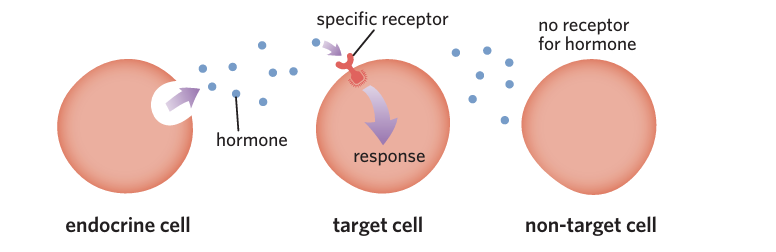
How the Endocrine System Works
Endocrine gland produces hormone
Hormone released into bloodstream
Travels throughout body
Binds to receptors on target cells
Causes a specific response
gland
a group of cells that secretes chemical substances to regions of the body or discharges them into the surroundings
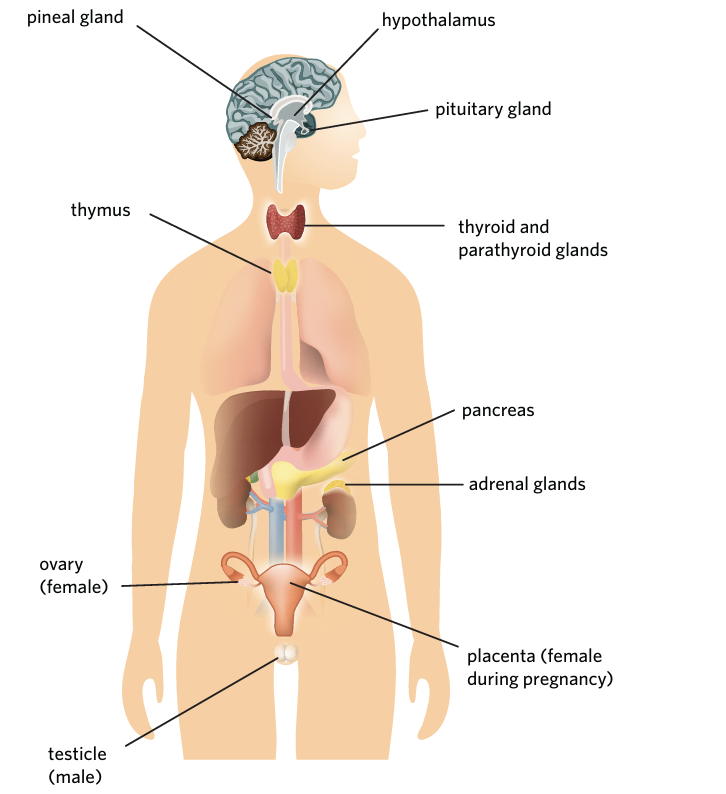
Which glands are located in the brain
Hypothalamus
Pituitary gland
Pineal gland
Glands in neck
Thyroid gland (butterfly shaped gland)
Parathyroid glands base of neck 4 small glands |
Hypothalamus ( small region in brain)
Maintains homeostasis (e.g. temperature) and regulates the pituitary gland via releasing hormones
Pituitary gland (pea sized area in brain)
“Master gland”; secretes hormones that control other endocrine glands (e.g. thyroid, adrenal glands, gonads)
Pineal gland |
Secretes melatonin; regulates sleep–wake cycles and circadian rhythms
Thyroid gland (butterfly shaped gland in neck)
Produces thyroxine; regulates metabolic rate, growth, and development
Parathyroid glands (base of neck) (4 small glands)
Regulate calcium levels in blood, important for muscle contraction and nerve function
Thymus (between lungs)
Produces thymosin; involved in development of immune cells (active mainly before puberty)
Pancreas (sits across the back of the abdomen)
Regulates blood glucose levels via insulin and glucagon; also has digestive (exocrine) functions
(Found above the kidneys)
Adrenal glands |
Produce hormones (e.g. adrenaline, cortisol) involved in stress response, metabolism, blood pressure, and immune function |
Ovaries |
Produce oestrogen; regulate female reproductive system and secondary sexual characteristics
Testes
Produce testosterone; regulate male reproductive system and secondary sexual characteristics
Placenta |
Produces hormones that maintain pregnancy and support foetal development
Growth hormone (Pituitary)
Stimulates protein synthesis, cell division, and growth of bones and muscles
Thyroxine (Thyroid)
Increases metabolic rate by stimulating cellular respiration
Increases ATP production
Adrenaline(adrenal glands)
Increases heart rate, blood pressure, breathing rate; redirects blood to muscles
Insulin Pancreas (beta cells)
Promotes uptake of glucose into cells and storage as glycogen, lowering blood glucose
Glucagon (Pancreas (alpha cells))
Stimulates breakdown of glycogen to glucose in liver, increasing blood glucose
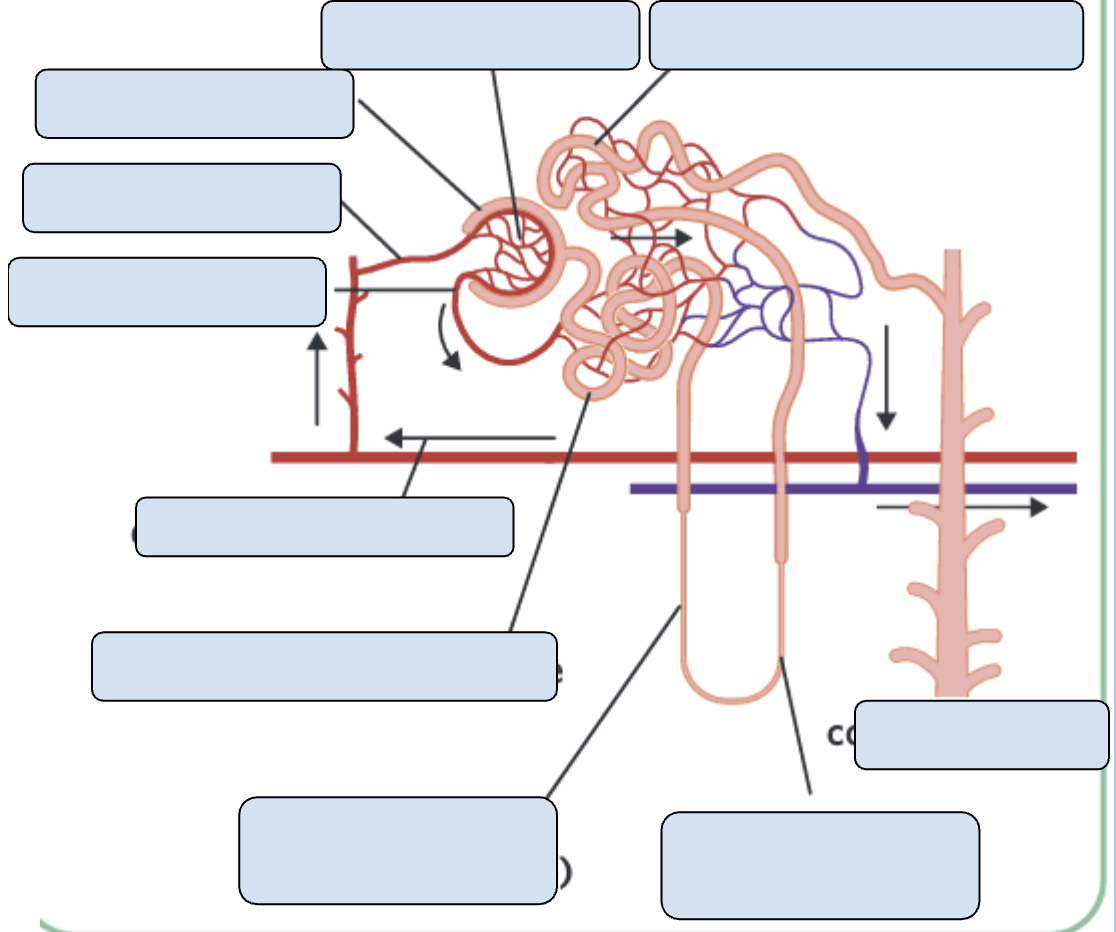
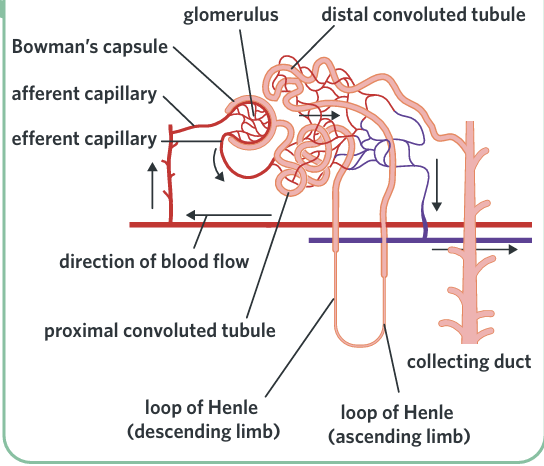
Nephron
Hormone Types
Protein (peptide) → hydrophilic, cannot cross membrane (e.g. insulin)
Steroid (lipid) → hydrophobic, can cross membrane (e.g. testosterone)
Endocrine vs Nervous
Endocrine = slow but long-lasting
Nervous = fast but short-lived
Hormones travel in blood → widespread effects
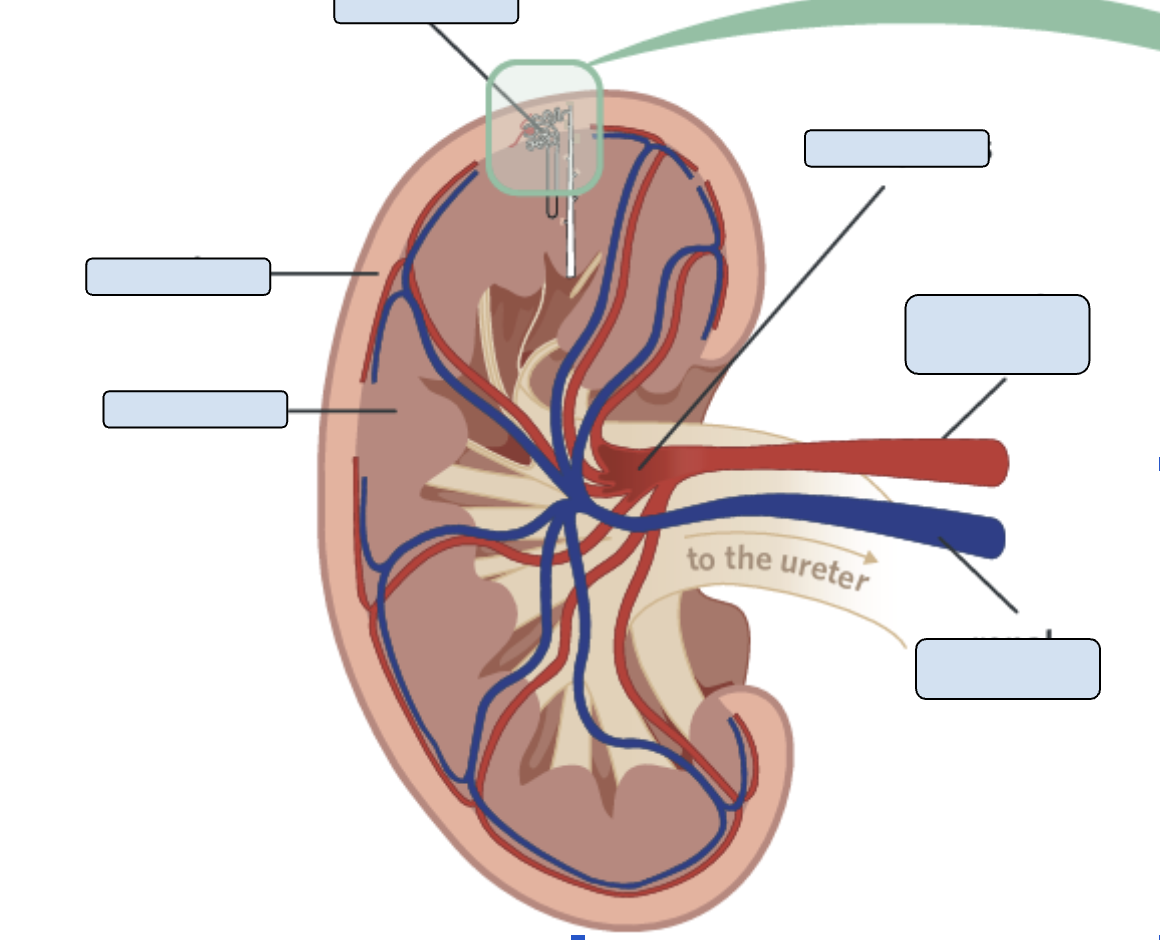
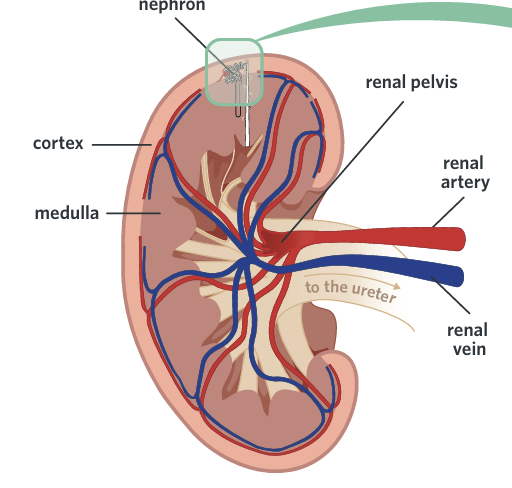
Kidney
Purpose of Excretory system
Removes waste substances from the body
Maintains homeostasis (stable water + ion balance)
What is the excretory system?
Removes waste substances from the body
Maintains homeostasis (stable water + ion balance)
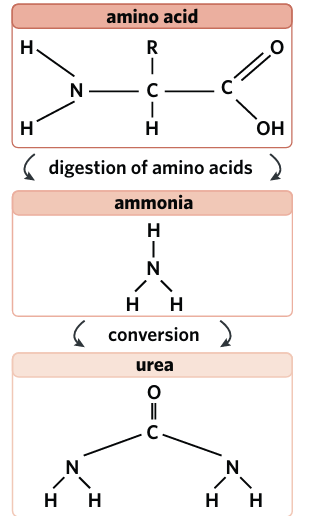
What is Nitrogenous waste?
Proteins are broken down into amino acids, which are used to build new proteins (e.g. muscle, enzymes).
Excess amino acids cannot be stored and must be removed quickly, as they become toxic if they accumulate.
Nitrogenous waste is produced from the breakdown of proteins.
It is the role of the excretory system to remove this waste before it damages cells.
Process of amino acids being excreted
In the liver, amino acids undergo deamination:
The amine group (–NH₂) is removed
Forms ammonia (NH₃) + energy
Ammonia is highly toxic and requires large amounts of water to excrete.
In humans, ammonia is converted into urea (less toxic) in the liver.
Urea is transported in the blood to the kidneys, where it is filtered and excreted as urine
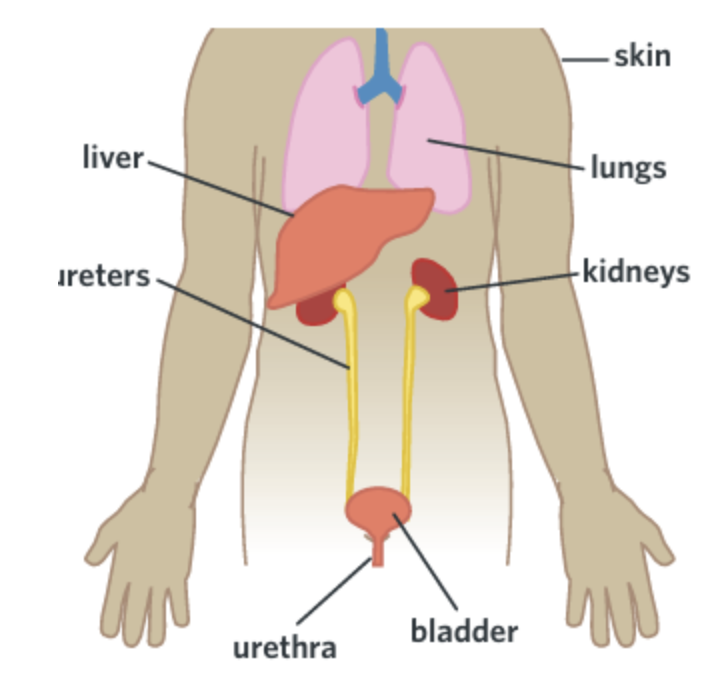
The urinary tract
the series of channels in which urine is produced and excreted from the body
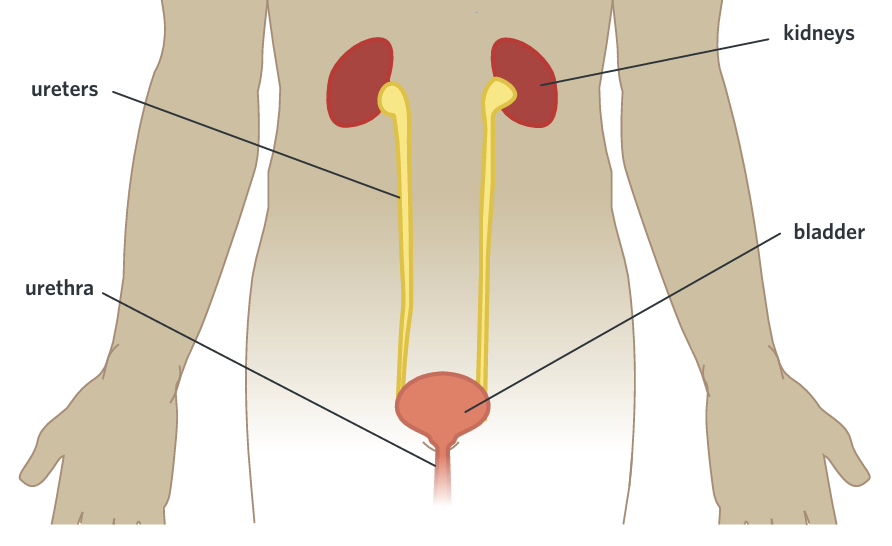
Liver
large organ found in the abdomen that is involved in many metabolic processes including the breakdown of toxins
urea
the main nitrogenous product of protein breakdown in mammals. Excreted in urine
kidneys
a pair of bean-shaped organs that are responsible for removing waste substances from the blood and the production of urine
-The role of the kidneys is to filter blood, reabsorb the useful substances within the filtrate, and secrete the unwanted ones.
urine
a fluid formed by the kidneys and stored in the bladder. One of the body’s major ways to remove excess water, solutes, and waste substances from the blood
renal arteries
arteries that deliver blood from the heart to the kidneys
afferent capillary
incoming capillaries that deliver blood to the glomeruli of nephrons
efferent capillary
outgoing capillaries that carry blood away from the glomeruli of nephrons
Nephron structure
Glomerulus → Bowman’s capsule → PCT → Loop of Henle → DCT → Collecting duct
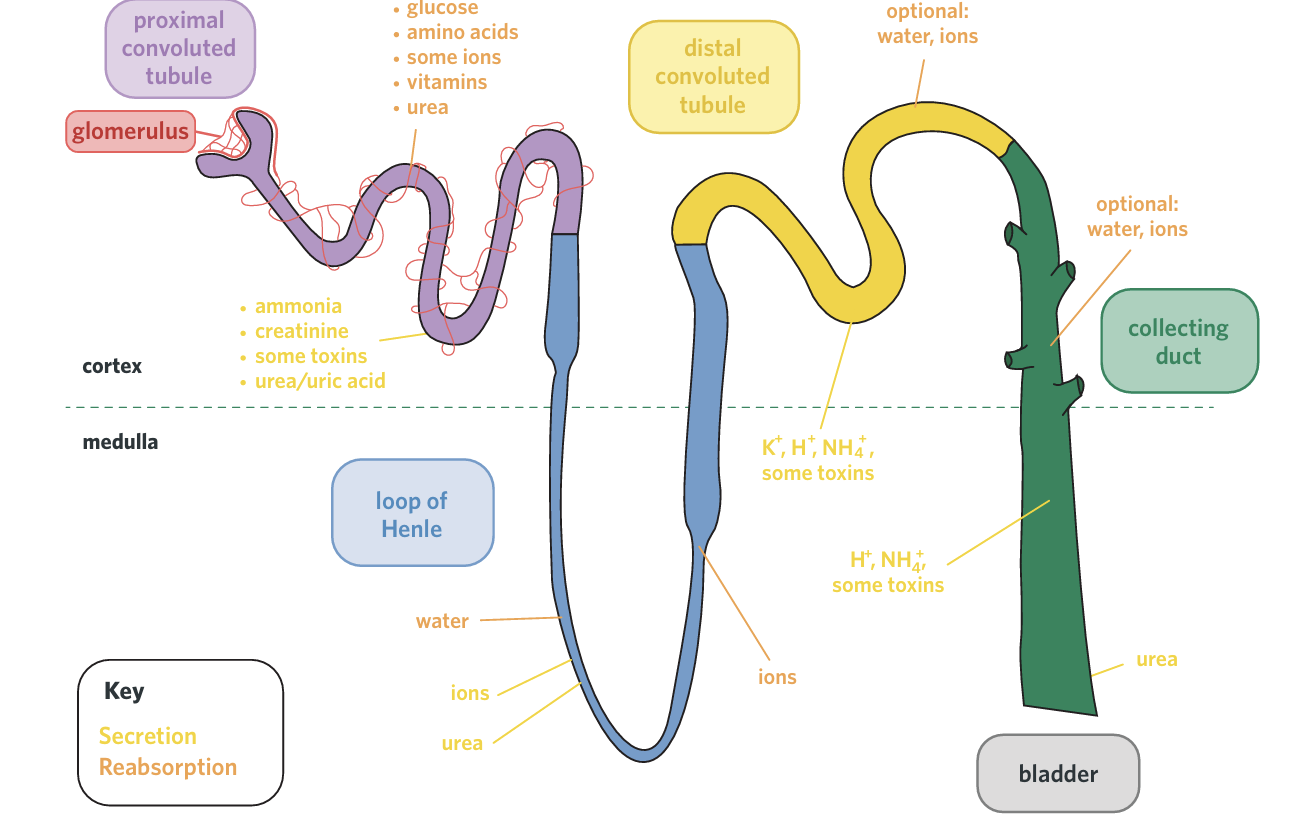
Kidney has 2 main regions:
Cortex (outer layer) → contains:
Glomerulus
Bowman’s capsule
Proximal Convoluted Tubule (PCT)
Distal Convoluted Tubule (DCT)
Medulla (inner layer) → contains:
Loop of Henle
Collecting Duct
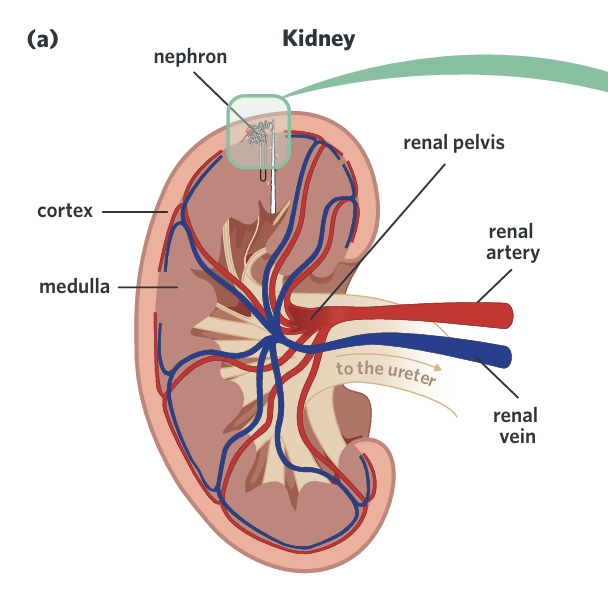
Renal Capsule
thin protective layer covering the kidney’s outer surface.
Cortex
granular tissue forming the outer portion, between capsule and medulla; where filtration starts (glomerulus, PCT, DCT).
Medulla
inner portion; contains Loop of Henle and Collecting Duct, where urine is concentrated
Nephron Processes 1.Filtration (Bowman’s capsule)
The renal artery delivers blood to the kidney for filtration.
1.Filtration (Bowman’s capsule)
Filtration occurs at the glomerulus, where high pressure forces small molecules into the Bowman’s capsule,
forming primary filtrate
(Only small molecules pass:
✔ water, glucose, ions called glomerular capillaries.
✖ proteins, blood cells remain in glomerular capillaries.
2. Reabsorption (PCT, Loop, DCT, Collecting duct)
The filtrate enters the proximal convoluted tubule (PCT), where the majority of reabsorption occurs:
Glucose, amino acids, ions → active transport
Water → osmosis
3.Loop of Henle
Descending limb → water reabsorbed via osmosis
Ascending limb → ions pumped out (no water)
👉 creates concentration gradient
4.. Secretion (= DCT, Collecting duct)
Selective reabsorption and secretion occurs depending on the body’s needs
water
Excess ions
Toxins
5.Collecting duct
-Further fine-tunes filtrate composition.
-May reabsorb more water.
• Secretes waste like ammonia into the duct. urea and then urine forms
Other Excretory Organs
Organ | Waste Removed |
Lungs | CO₂ + water vapour |
Skin | Sweat (water, salts, small urea) |
Liver | Detoxifies, produces urea |
Digestive tract | Some waste in faeces |
Purpose of the digestive system
Breaks down food into small molecules for absorption by cells.
Provides energy (from carbohydrates, fats, proteins) and nutrients (vitamins, minerals) for survival, growth, and reproduction.
Animals are heterotrophs – they cannot make their own food so eat other organisms to obtain organic molecules
Carbohydrates
Provide a source of immediate energy
Provide a source of immediate energy
Provide a source of immediate energy
Proteins
Structural components of cells, cell receptors, enzymes
Vitamins
While required in small amounts, many vitamins are used to make enzymes
Minerals
While required in small amounts, minerals are used in many structural components of organisms
digestion
The process of breaking down a substance into its basic components
digestive system
the collection of specialised tissues and organs responsible for the digestion of food and absorption of nutrients
Physical (or mechanical) digestion
the processes whereby the mechanical movement of organs and tissues causes this breakdown of food into smaller pieces.
-These movements include chewing, muscle contractions and peristalsis.
Chemical digestion
-food pieces undergo chemical digestion by enzymes and stomach acid, producing smaller molecules that are capable of being absorbed.
The three major types of digestive enzymes
amylases (which act on carbohydrates), proteases (proteins), and lipases (lipids).
What do enzymes do?
split food molecules in hydrolysis reactions, by adding water molecules.
subunit of amylase
amino acids
subunit of protease
amino acids
subunit of lipase
fatty acids and glycerol
Steps of Digestion IDAE i dig all eggs
Ingestion – taking food in (mouth: teeth, saliva, tongue).
The teeth physically break down food into smaller pieces, whilst enzymes in the saliva chemically break down the food pieces into a soft mass that can be swallowed.
2.Digestion – occurs along the digestive tract, where the soft mass travels from the mouth into the body of the organism chemically and physically
3.Absorption – nutrients absorbed through plasma membranes into blood. Energy used by body
4.Elimination/Egestion – undigested food removed as faeces.
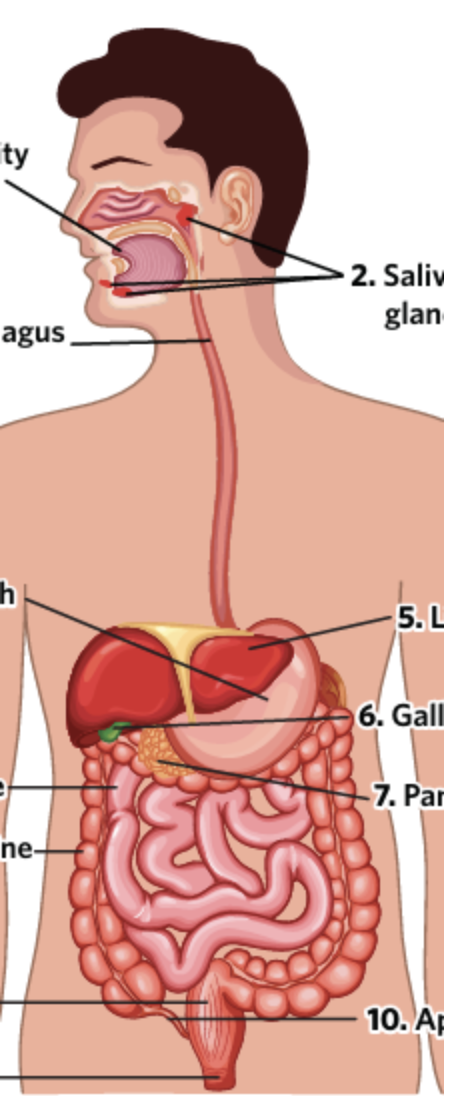
Name all 12 organs
oral cavity (mouth)
salivary glands
oesophagus
stomach
liver
gallbladder,
pancreas
small intestine
large intestine
appendix
rectum
anus
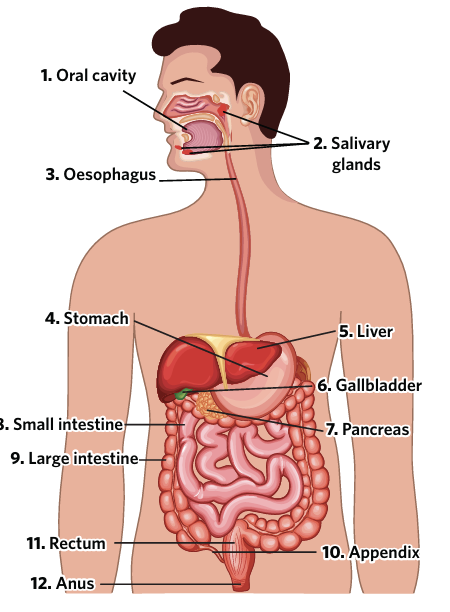
Oral cavity
-The beginning of the digestive system
--site of ingestion
-Teeth mechanically break food into small pieces
-digestive amylase enzymes in saliva start the breakdown of carbohydrates,
-lipase enzymes in the mouth start the breakdown of fats.
-The chewing of food occurs here.
Salivary glands
that produces and releases saliva into mouth and oesophagus
Oesophagus
foods pushed down A hollow tube connecting the oral cavity to the stomach
by (peristalsis)
Stomach
-A temporary storage tank where food is mixed by muscular movements known as churning.
-Protease enzymes Eg pepsin are secreted by the stomach and begin the digestion of protein .
- Digestive juices HCL are released by the stomach membrane, which creates an acidic environment.
-Peristalsis of the stomach muscles helps push food along to the small intestine.
liver functions and process
The liver is the site of bile production
roles in regulating metabolism, toxin removal, and processing nutrients.
-The liver stores excess glucose in the form of glycogen, which can be converted back to glucose when needed for energy.
6. Gallbladder
After being produced in the liver, bile is stored and further concentrated in the gallbladder before it is released into the small intestine
7. Pancreas
-Digestive enzymes (insulin and glucagon) are produced in the pancreas and are released when food reaches the first part of the small intestine.
-regulates blood sugar levels and is responsible for secreting bicarbonate, which neutralises acids in chyme.
8. Small intestine
The main function of the small intestine
(divided into three sections: the duodenum, the jejunum, and the ileum) is to absorb nutrients from food. (why it has enormous surface area)
function: enzymes produced in small intestine + enzymes from pancreas + bile from gallbladder AID the breakdown of food in chyme
-further breakdown of carbohydrates, proteins and fats
9.large intestines
(cecum, colon and rectum) function and process
final absorption of water, minerals and vitamins
process:
- water is reabsorbed from undigested food
- food becomes more solid and compact
- faeces ready for egestion
10Appendinix
ocation: sits at the junction between small and large intestines.
role: acts as a 'safehouse' for beneficial gut bacteria and immune cells.
11.rectum
final area of the large intestine that stores faeces for elimination.
12.anus
the end of the digestive tract where faeces are expelled from the body.
chyme
mixture of partially digested food and digestive juices that passes from the stomach to the small intestine
peristalsis
coordinated muscular contractions and relaxations of the digestive tract wall that move food along the system
Digestion Process (Pizza Example)
. Ingestion (Mouth → Oesophagus)
Teeth physically break pizza into smaller pieces.
Saliva (amylase + lipase) starts chemical digestion (carbs + fats).
Food swallowed → moves down oesophagus by peristalsis.
2. Digestion (Stomach → Small Intestine)
Stomach:
Churning = physical digestion
Acid (pH 1–3) + proteases break down proteins
Forms chyme
Small intestine (duodenum):
Bile (liver → gallbladder) → breaks fats into smaller droplets
Pancreas:
Enzymes → digest carbs, proteins, fats
Bicarbonate → neutralises acid
3. Absorption (Small Intestine)
Nutrients fully broken down:
Carbs → glucose
Proteins → amino acids
Fats → fatty acids + glycerol
Absorbed into bloodstream through villi & microvilli (↑ surface area)
4. Elimination (Large Intestine → Anus)
Water + remaining nutrients absorbed
Waste becomes faeces
Stored in rectum → exits via anus
omnivores
medium digestive tract
- digest plant + animal material
Carnivores digestive system?
Shorter, meat easy to digest
Herbivores digestive system?
Long, specialised for cellulose digestion
alimentary canal digestive tract
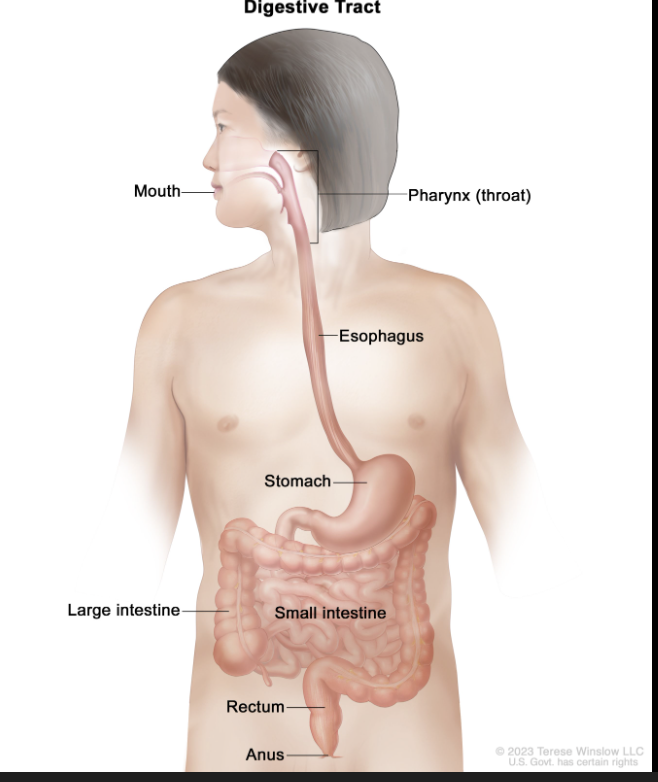
What do large plants need to move water, minerals and glucose
specialised tranport systems amd is achieved through vascular tissues
xylem and pholem
The importance of water in plants
-photosynthesis metabolic processes
-transport of nutrients and waste
-cooling via evaporation (transpiration)
-maintaing turgor pressure (prevents wiliting/dehydration)
-maintaining correct cell toncity
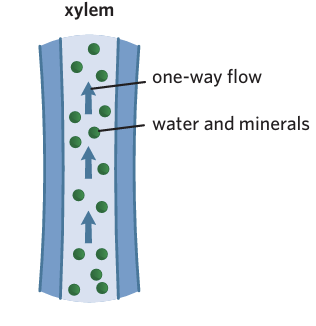
What is the xylem tissue?
Tubes that transport water and minerals in 1 direction from the roots to the leaves of a plant.
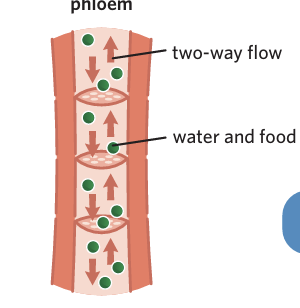
What is the phloem tissue?
Tubes that transport sugars and other nutrients around a plant in 2 directions.
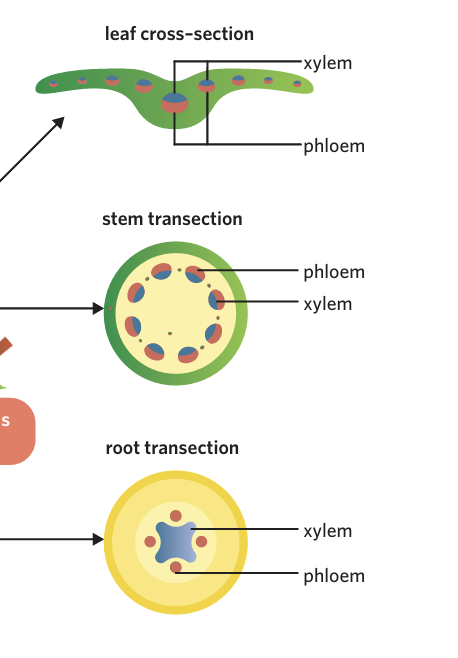
Vascular bundles
Xylem+pholem grouped
Location
-roots >centre
-stems> near outer layer (under bark)
-Leaves>veins
Roots do what?
Provide structure and are a anchor in a ground preventing them from toppling over
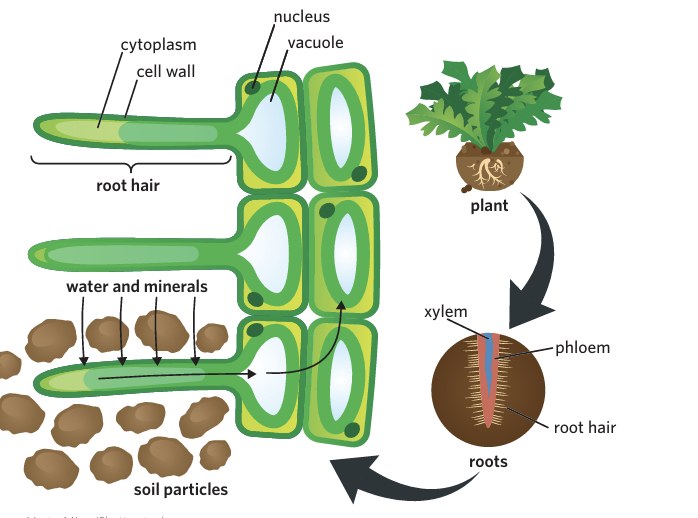
Adapation for absorbption
-highly branched roots for increases surface area to volume ratio
root hair cells-cell with hair like extensions that absorb water/minerals from soil into root
What are the 2 pathways in the root system that water and nutrients can move through?
1) Extracellular pathway
2) Cytoplasmic pathway
What is the extracellular pathway?
Pathway with water and solutes dissolved in it, diffuses into gaps between cells
-roots absorb the majority of water from the soil.
-reaches hydrophobic casparian strip, water and solutes forced to enter cells
Fast passive diffusion
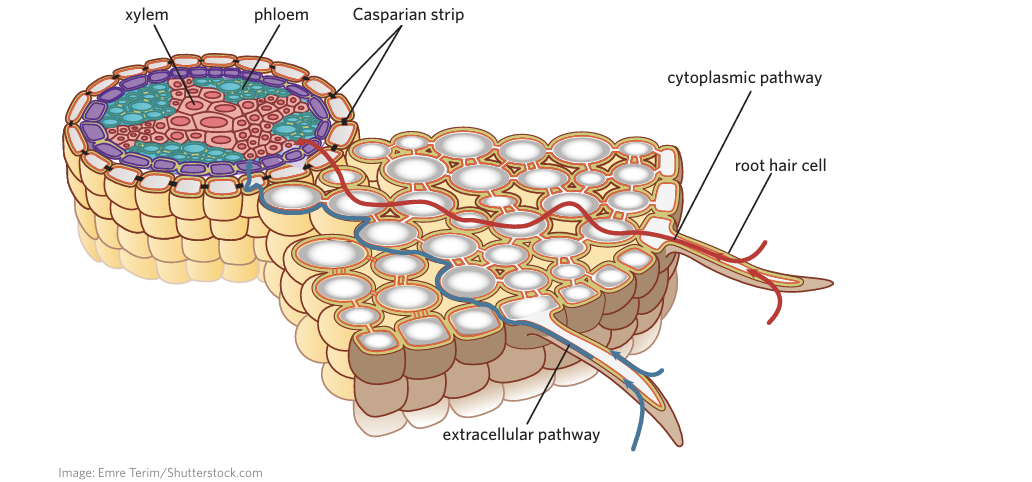
What is the cytoplasmic pathway?
-The pathway by which roots absorb the majority of nutrients and essential minerals from the soil.
- mineral ions (and bit of water) diffuse into the cytoplasm
Via
-Diffusion-passive
-Active transport
Ion concentration inside root cells can be 100x higher
This helps draw water via osmosis
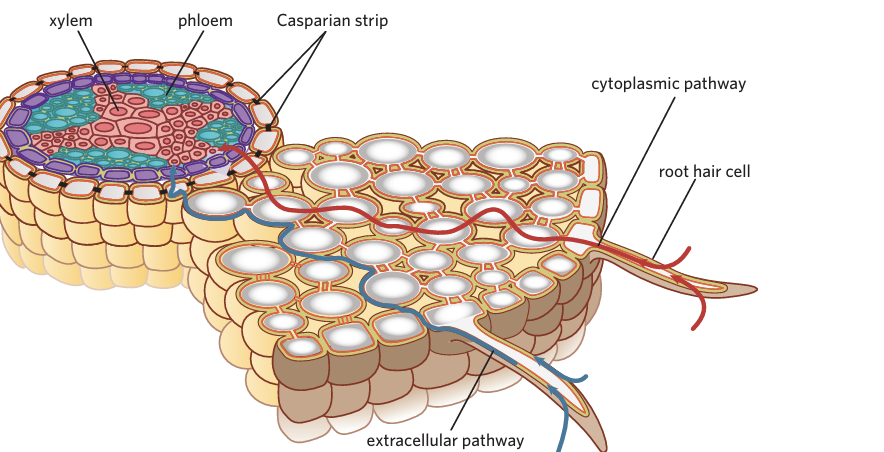
Casparian strip
-Water proof barrier in roots
-forces selective entry into xylem
-ensures harmful substances filtered out
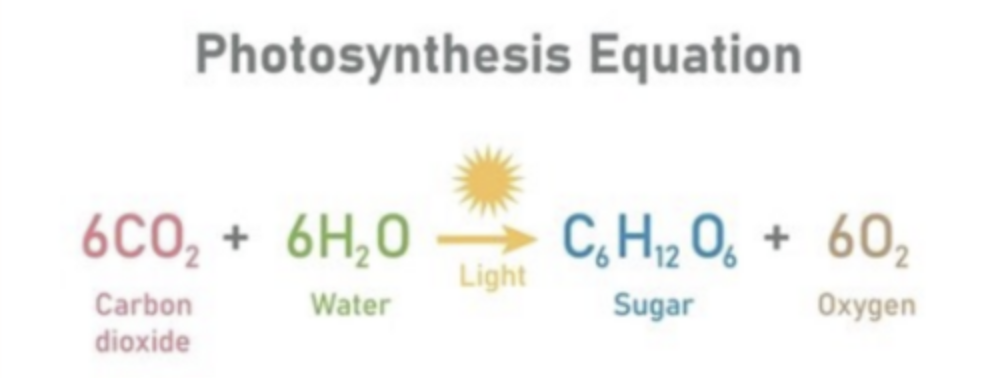
What is the equation for photosynthesis?
6CO2 + 6H2O ------> C6H12O6 + 6O2
What is transpiration?
evaporation of water from plant leaves/pores/surface/stoma