Small mammal dental disease
 Call Kai
 Learn
Learn Practice Test
 Spaced Repetition
 Match
Match Flashcards
 Knowt Play
1/54

There's no tags or description
Looks like no tags are added yet.
Name | Mastery | Learn | Test | Matching | Spaced | Call with Kai |
|---|
No analytics yet
Send a link to your students to track their progress
55 Terms
what do grases contain lots of that aid hypsodontal animals?
silica phytoliths
what is a very important behaviour for hypsodont?
gnawing
what kinds of animals are elodonts?
guinea pigs
chinchillas
degus
rabbits
what does elodont mean?
continuously growing teeth
large occlusal surface for grinding
herbivorous diet
what animals are anelodonts?
rats
mice
hamsters
gerbils
squirrels
what does anelodont mean?
short crowned
rooted cheek teeth
don’t grow
tend to be grain eaters, omnivores
out of elodonts and anelodonts which animals tend to present with more dental disease?
elodonts
which teeth are most commonly affected in
elodonts
anelodonts
cheek teeth mostly, incisors too
incisor teeth
what is the rabbit dental formula?
upper - 2, 0, 3, 3
lower - 1, 0, 2, 3
which teeth are missing in the modified triadan system in rabbits:
upper
lower
103, 203, 104, 204, 105, 205
302/3, 402/3, 304, 404, 305, 405
what are adaptions of the chisel shaped teeth in rabbits?
these are the incisor teeth
they have uneven wear
a sharp cutting edge
where do we find enamel on rabbit incisors?
more on the labial side
softer dentine on the lingual aspect
how do rabbits keep their teeth in shape?
eating
gnawing
occasional grinding
what does the enamel fold create in rabbits?
interlocking of teeth
creates a grinding surface
what does ‘cheek teeth’ refer to?
molars and premolars as one functioning unit
what are peg teeth?
2 extra incisors in rabbits that are found behind their upper incisors
these rest the against lower incisors as the mouth shuts (aka rabbits have an underbite)
this aids with occlusion and wear
do rabbit cheek teeth touch at rest? why?
no because the mandibular arcade = narrower than maxillary
what edges of which teeth occlude in rabbits?
lingual edge of maxillary teeth
with the buccal edge of mandibular teeth
in rabbits do we distinguish between the crown and root?
no, the entire tooth is known as the crown
the tooth within the jaw = reserved crown
what is the shape of the surface of rabbit teeth?
not horizontal - they have natural curvature
what are some consequences of continuously growing teeth?
high calcium is required
we can see rapid changes very quickly
dental disease exists often as a secondary disease, as well as first
what is important to note about rabbit nasolacrimal ducts?
they’re in very close association with the teeth
therefore likely will see blockage, inflammation and infection - especially fi we have underlying teeth problem
what are rat and mice dental formulae:
upper
lower
1,0,0,3
1,0,0,3
what is guinea pig, chinchilla and degu dental formula?
upper
lower
1,0,1,3
1,0,1,3
in non rabbit rodents, outline the incisors:
open/closed root?
pigmentation?
where dow e find enamel
open
yes, a superficial layer of enamel
on the cranial aspect
what causes tongue entrapment in guinea pigs
maxillary cheek teeth angled outwards, mandibular inwardly
what is a leading problem for rabbit and rodent pet dental disease?
DIET
what can go wrong in the diet that can cause dental issues?
not enough vegetation
selective eating
sugary treats and fruit
deficiencies in vitamin C, D and selenium
Ca/P imbalance
what breeding related conditions can cause dental issues?
inherited predisposition
brachycephalic conformation
how do we measure rabbit acquired dental diseas?
grading system 1-5
what is the progression of symptoms we see as rabbit dental disease gets progressively worse?
apical elongation
crown elongation and curvature
enamel spurs
acquired malocclusion
enamel hypoplasia
dental abscesses
what is apical elongation?
what we see in rabbits with grade 2 acquired dental disease
where eruption stops/slows due to reduced wear
what does apical elongation lead to?
pressure on the nasolacrimal duct and nerves
can lead to bone penetration
when asking owners about diet, what is important to be asking?
how much is being eaten
WHAT IS BEING EATEN - anima could be eating lots, but only of pellets
what is acquired malocclusion?
what we see with grade 3 acquired dental disease
where the teeth change shape and position due to malocclusion
what does acquired malocclusion lead to with the teeth?
crown elongation and curvature
enamel spurs
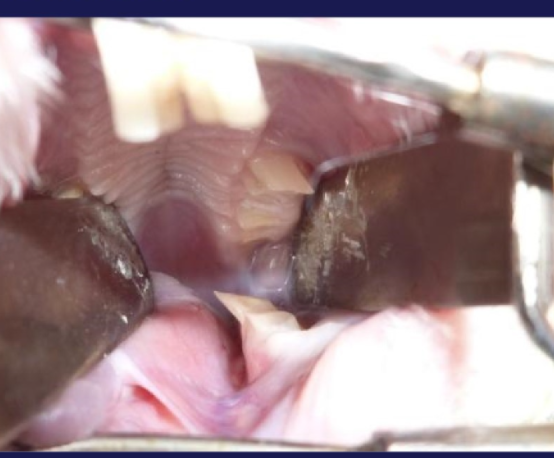
consequences of enamel spurs?
soft tissue damage
inflammation
pain
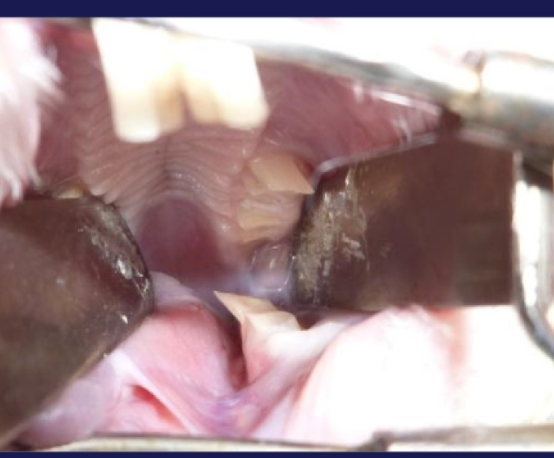
what will happen with grade 4 acquired dental disease and why
teeth stop growing - DON’T CONFUSE AS A GOOD SIGN
this is due to destruction of germinal tissue
what will happen with grade 5 acquired dental disease?
periodontal loosening leading to tooth rotation
loss of alveolar bone which may cause abscesses
what views do we take for dental radiography?
lateral - open mouth, closed mouth
latero-oblique
dorsoventral
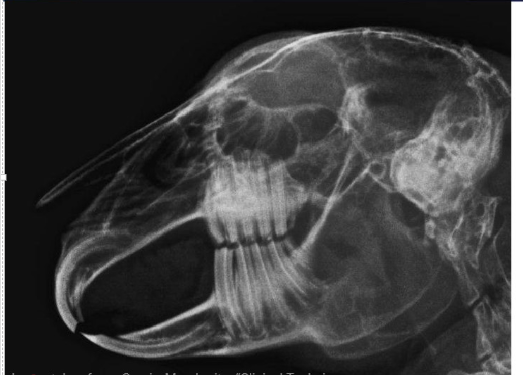
what angle is this
is this normal
what structures can be identified?
lateral
yes
diastema = gap between incisors and cheek teeth, enamel folds, hard palate, tympanic bulla
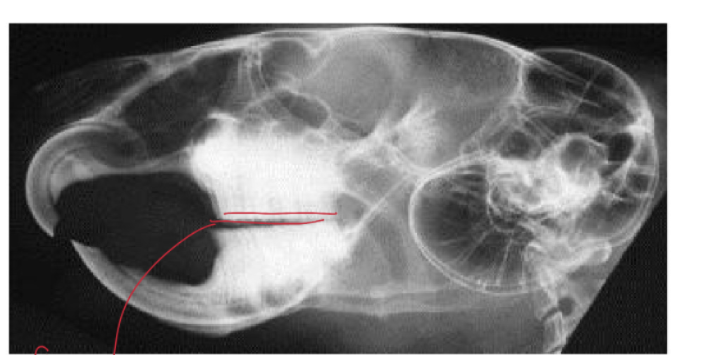
What animals’ radiograph is this? How can we identify that?
chinchilla
flat, horizontal surface for the teeth, not bumpy like in rabbits
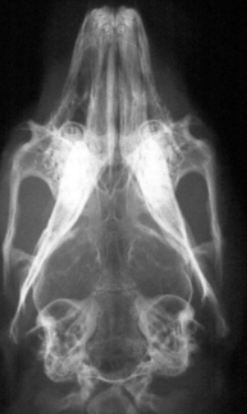
what view is this
what animal is this
is this a normal radiograph
what structures can we identify?
dorsoventral
rabbit
yes
cheek teeth, orbits, tempanic bulla - easy to spot any abnormalities!!
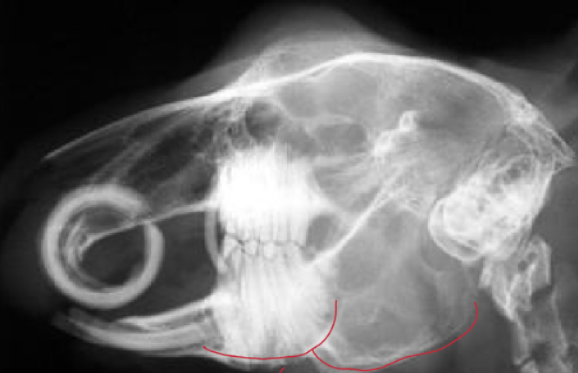
What abnormalities can we identify on this radiograph?
incisors are incredibly overgrown of both the anatomical and reserve crown
we have malocclusion which is severe
the mandibular bone is deformed ventrally
roughly how large should incisors look on radiographs?
1/3 of a semicircle
what are indications for performing dental burring?
incisory overgrowth
cheek tooth overgrowth
what is the aim of dental burring?
removing spikes/points
restore normal anatomy
what are disadvantages of dental burring?
not a long term solution
need to find and treat the underlying problem
not enough for abscesses
why may we extract teeth in rabbits?
to reduce the stress of routine dental practice, reduce costs for owners and reduce anaesthesia risk
what is the difference between coronal reduction and spur removal?
coronal reduction = removal of entire exposed crown - no normal shape returned
spur removal = only remove spurs, rest is in tact
what does spur removal maintain that coronal reduction does not?
the occlusal surface
what is the longest amount of time you’re allowed to burr for in one go?
5 seconds → gets too hot!!!
how can we prevent dental disease in rabbits and rodents?
lots of grass and good quality hay
only some pellets → NO MUSELI
age, species and life stage feeding
weeds, wild plants and fibrous veg
only root veg and fruit as a treat
no sugary treats
what are 3 focuses for preventing dental disease
encouraging gnawing behaviours
selectively breed and cull
good diet practice
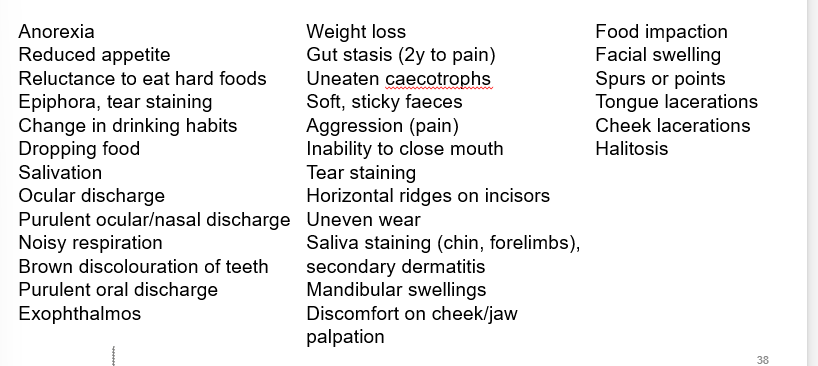
what are some key clinical signs of dental disease:
anorexia and accompanied weight loss
reduced appetite
saliva staining
soft, sticky faeces = uneaten caecotrophs!!
mandibular swellings
halitosis
ocular symptoms
aggression - behaviour change
gut stasis (secondary to the dental issue)
oral wounds