NUR 3121 Unit #2: Head, Face, Neck, and Regional Lymphatic Assessment
 Call Kai
 Learn
Learn Practice Test
 Spaced Repetition
 Match
Match Flashcards
 Knowt Play
1/96

There's no tags or description
Looks like no tags are added yet.
Name | Mastery | Learn | Test | Matching | Spaced | Call with Kai |
|---|
No analytics yet
Send a link to your students to track their progress
97 Terms
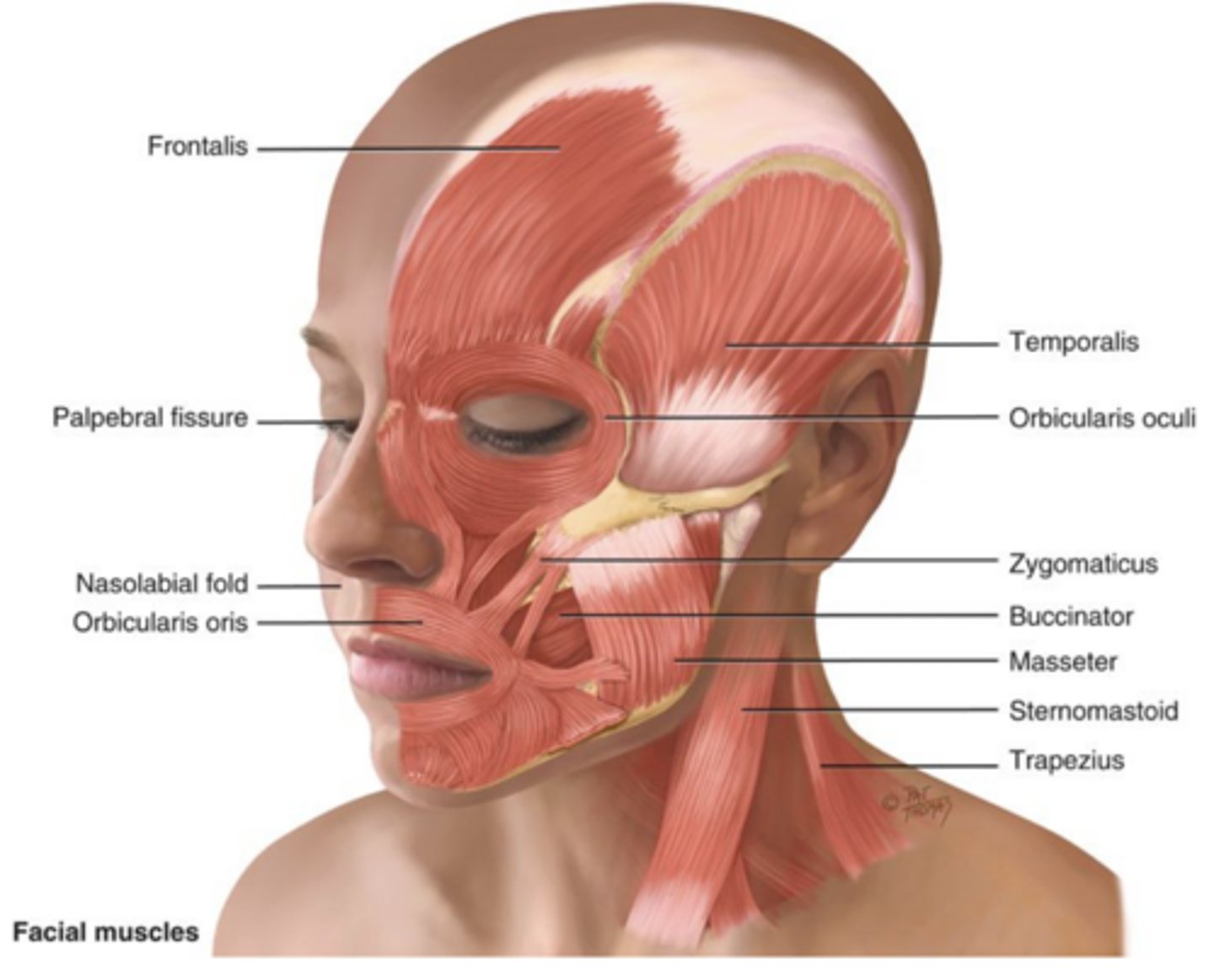
Facial Muscles
Review this.
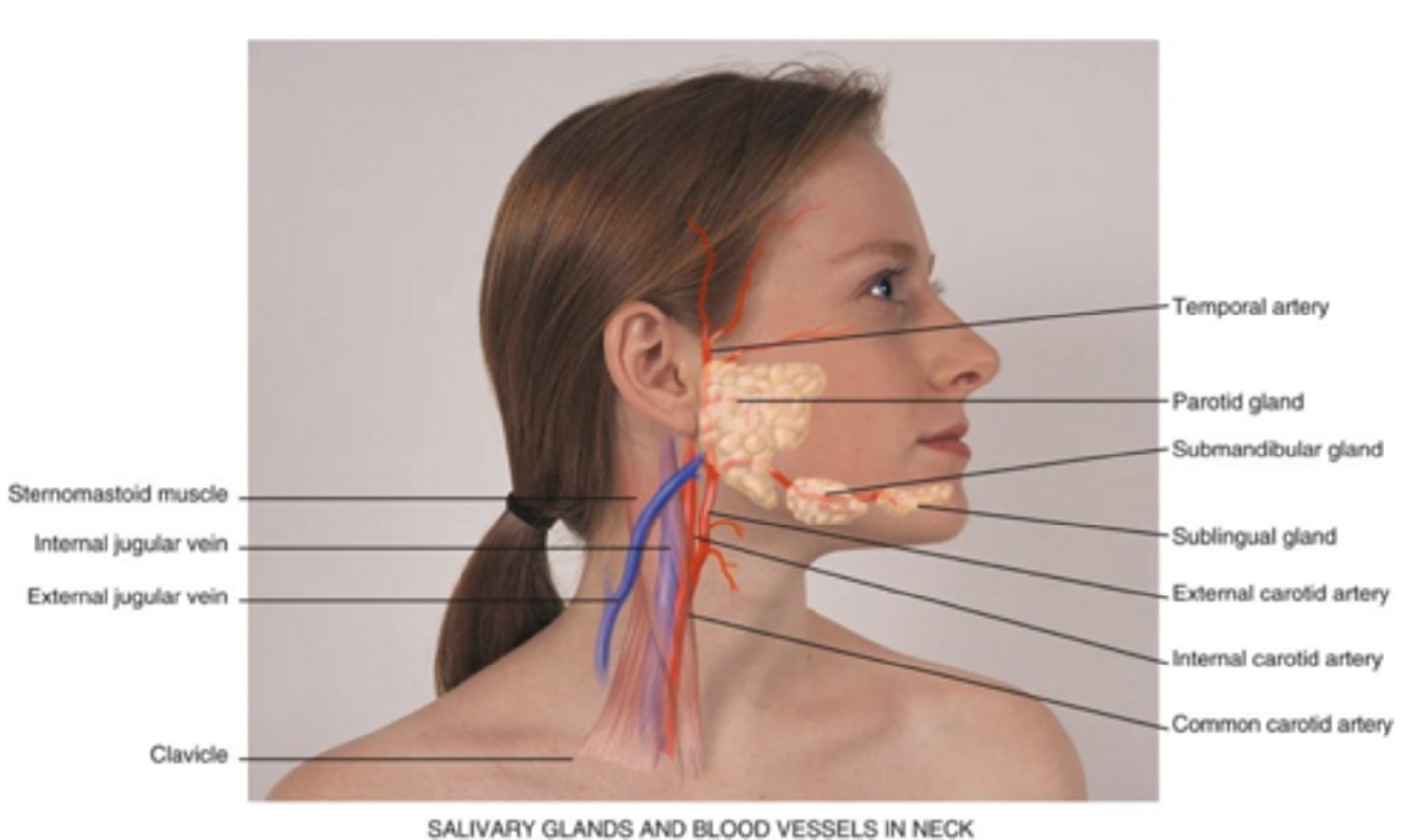
Salivary Glands and Blood Vessels
Review this.
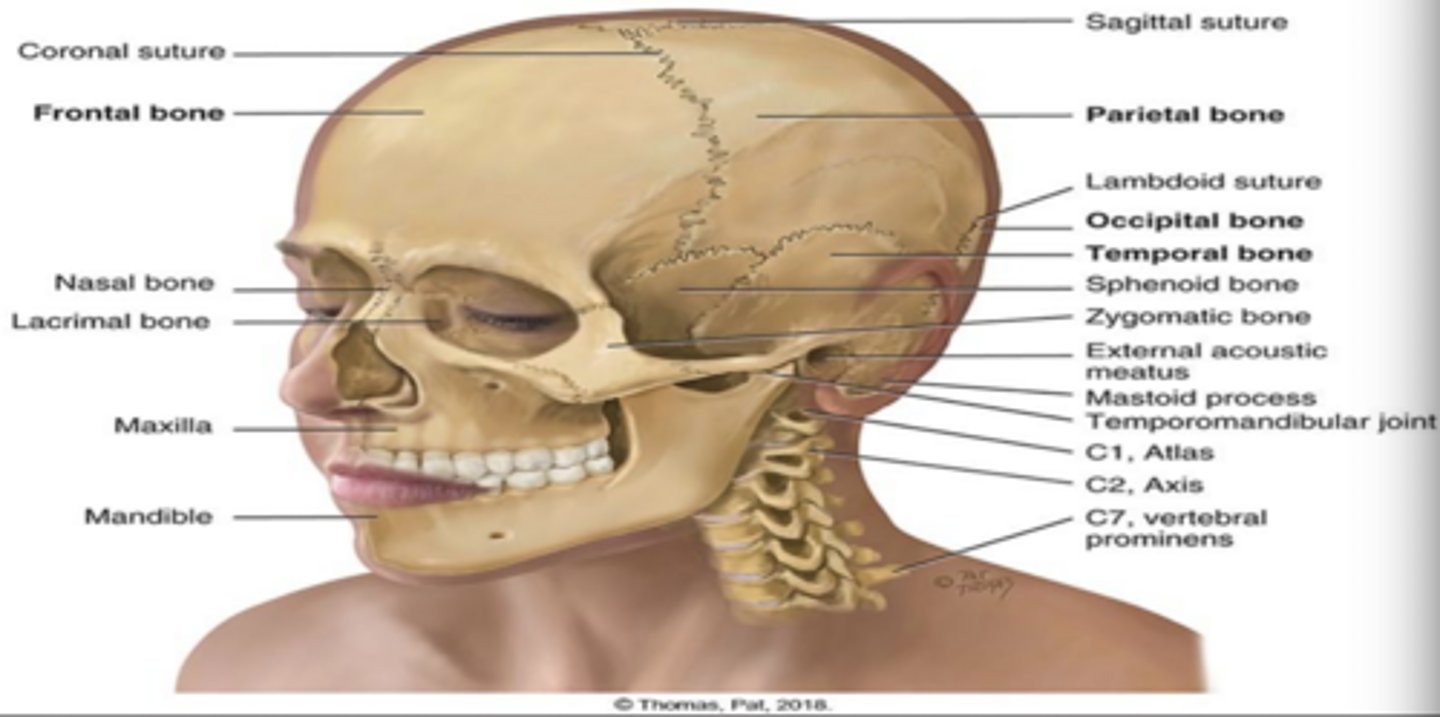
Cranial Bones and Sutures
Review this.
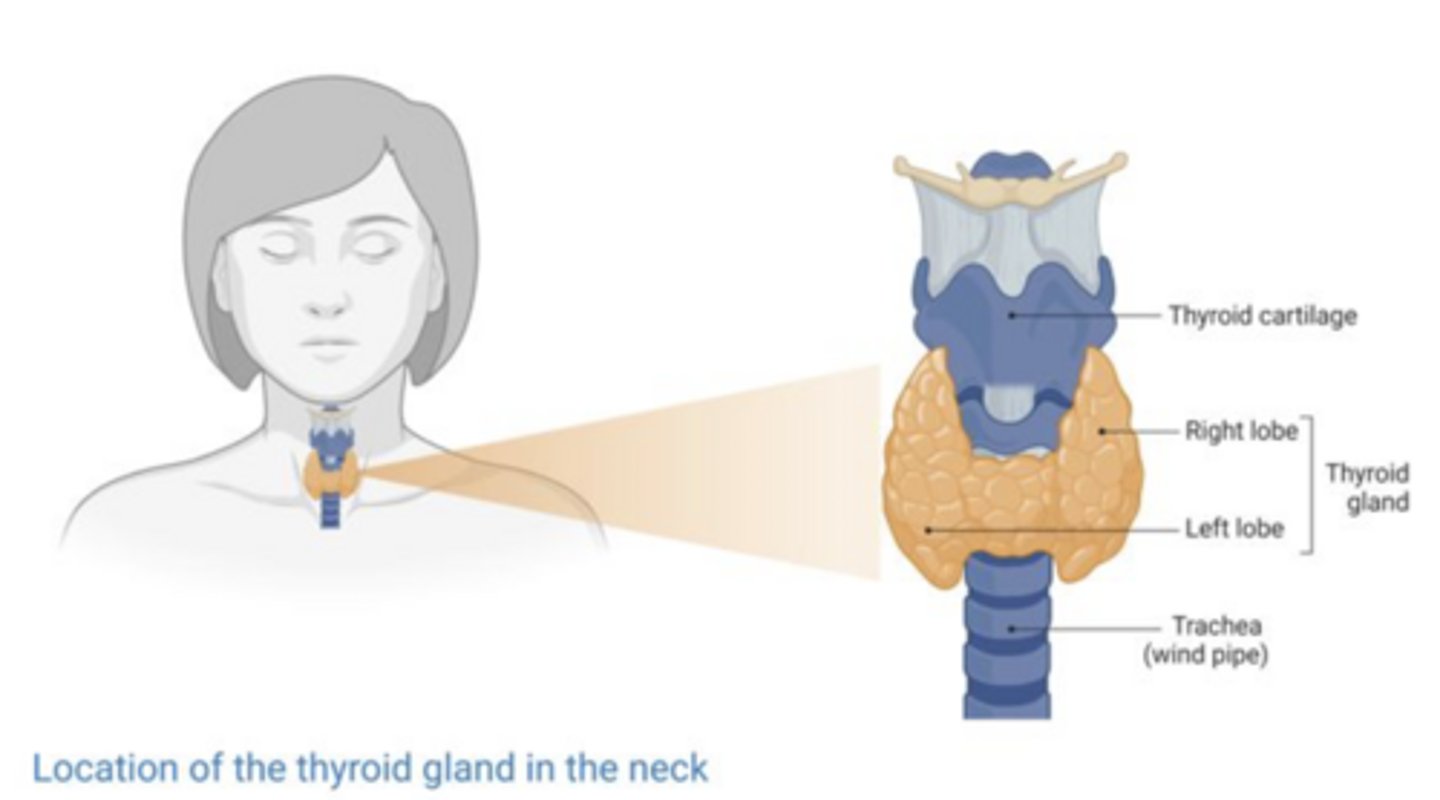
Thyroid Gland (and Other Structures)
Review this.
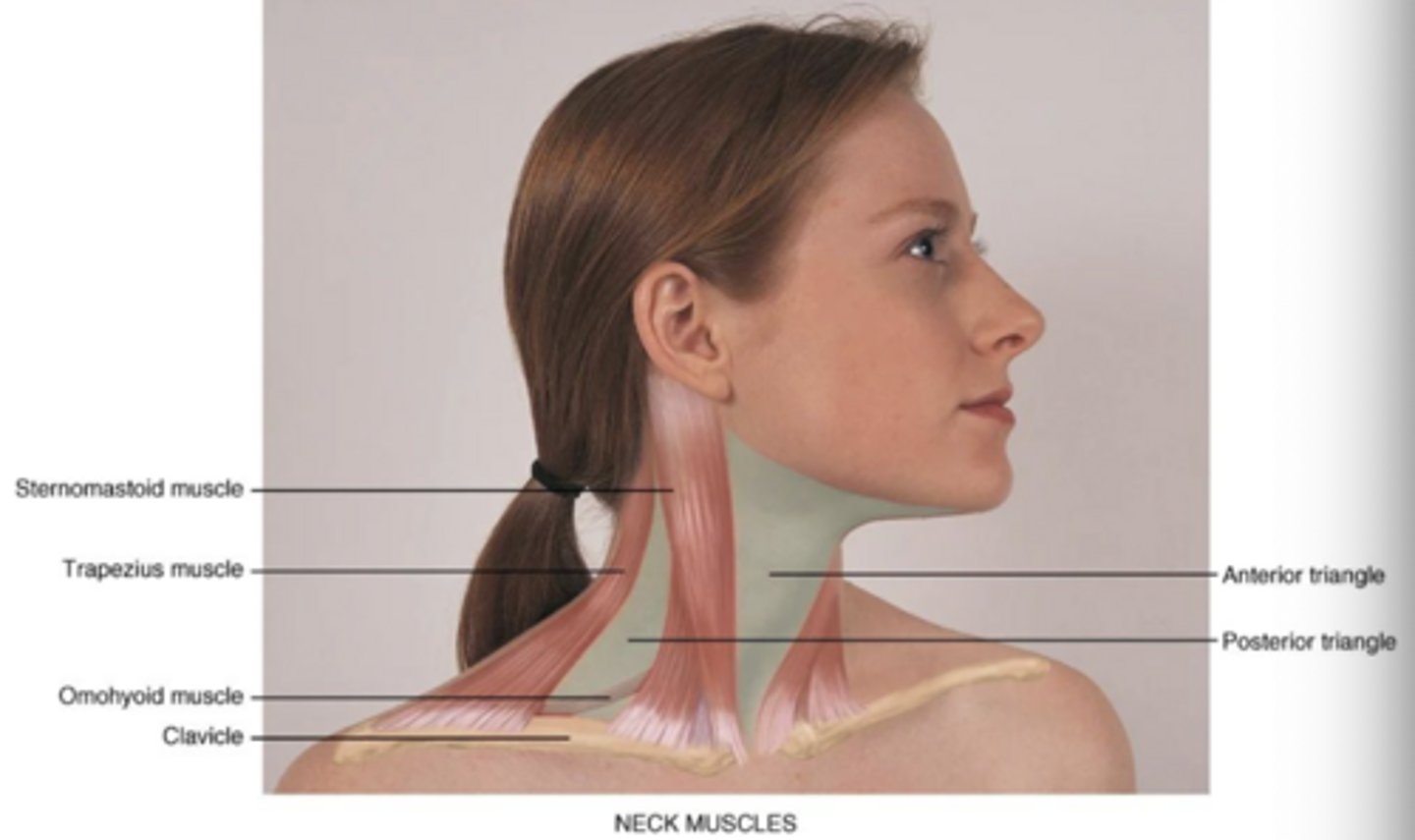
Neck Muscles
Review this.
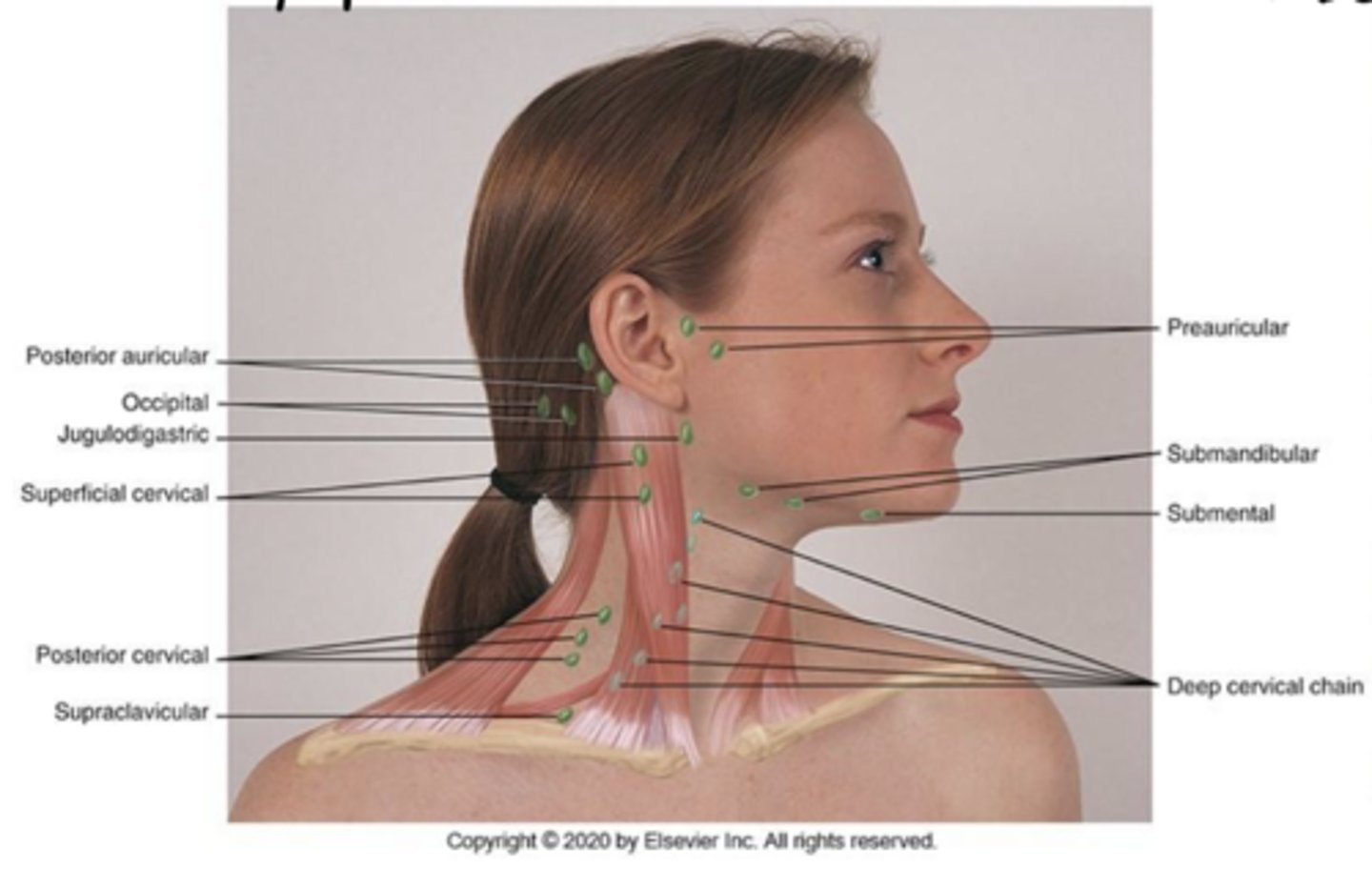
Lymph Node Locations
Review this.
Inspection of the Skull
- Assess size and shape: normocephalic
- Assess protrusions of cranial bones: normal = forehead, lateral edge of parietal bones, occipital bone, and mastoid process)
Normocephalic
- Used to describe the normal size and shape of the skull.
- Round and symmetric.
Palpation of Skull
- Place fingers in person's hair and palpate scalp.
Cranial Bones w/ Normal Protrusions:
- Forehead
- Lateral Edge of Parietal Bones
- Occipital Bone
- Mastoid Process behind each ear
Palpation of the Temporal Area
Palpate temporal artery above zygomatic (check) bone between eye and top of ear.
Facial Structure Inspection
- Should be symmetric.
- Note facial expressions and appropriateness to behavior or reported mood.
Abnormal Facial Structures
- Coarse facial features.
- Exophthalmos (bulging eyes)
- Changes in Skin Color/Pigmentation
- Abnormal Swelling
- Tics (Involuntary Movements) in Facial Muscles
Head and Neck Symmetry
- Centered in Midline.
- Accessory neck muscles should be symmetric.
Head and Neck Range of Motion (ROM)
- Up/Down
- Side/Side
- Are there any limitations?
- Observe for enlargements of glands and/or pulsations.
Lymph Nodes
- Abnormal = firm, fixed, non-tender, and >1 cm.
- Palpate noting location, size, shape, delimitation, mobility, consistency, and tenderness.
- Use circular movements to feel/move around (if palpable).
- Palpable at baseline in children.
Down
Lymphatic fluid flows ______.
Thyroid Palpation
- Displace with right thumb, palpate with left thumb.
- Vice versa.
Infant Head and Neck
- Have open sutures and fontanels to allow for brain growth/development.
- "Soft spots."
- At birth: Head > Chest
- Measured at each appt. until ~2 years old; then, annually until ~6 years old.
Dehydration
_______ can be seen through dipped-in fontanels.
Back
Babies should sleep on their _______.
Anterior Fontanel
Fontanel that closes between 9 months and 2 years of age.
Posterior Fontanel
Fontanel that closes between 1 to 2 months of age.
4 Months of Age
The time during which children gain full control of their head and neck.
Caput Succedaneum
- Swelling across suture lines.
- Looks like a cone/cap.
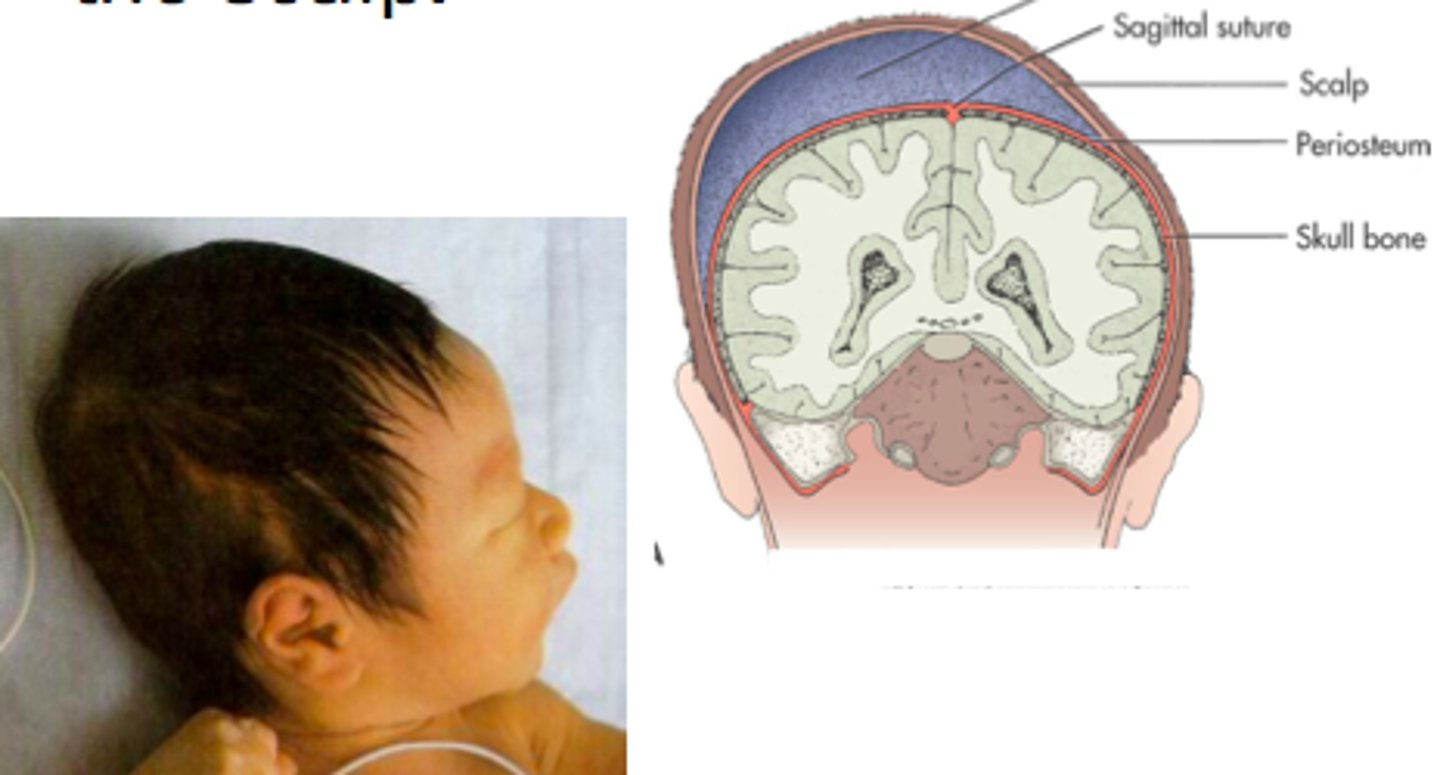
Cephalohematoma
A collection of blood that pools between a newborn's skull bone and its outer covering.
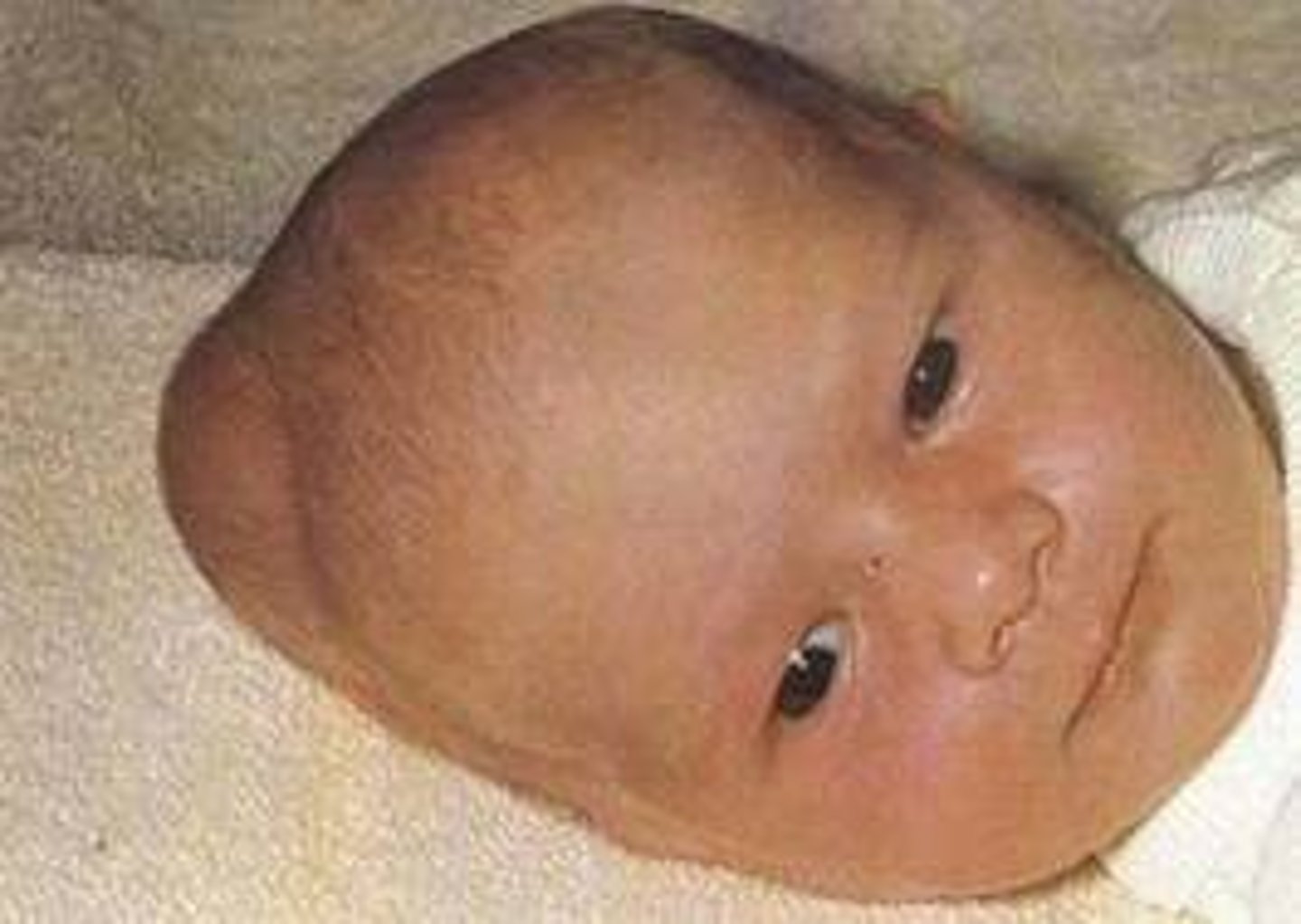
Molding
- An abnormal head shape that results from pressure on the baby's head during childbirth.
- Can be caused by sutures crossing over each other.
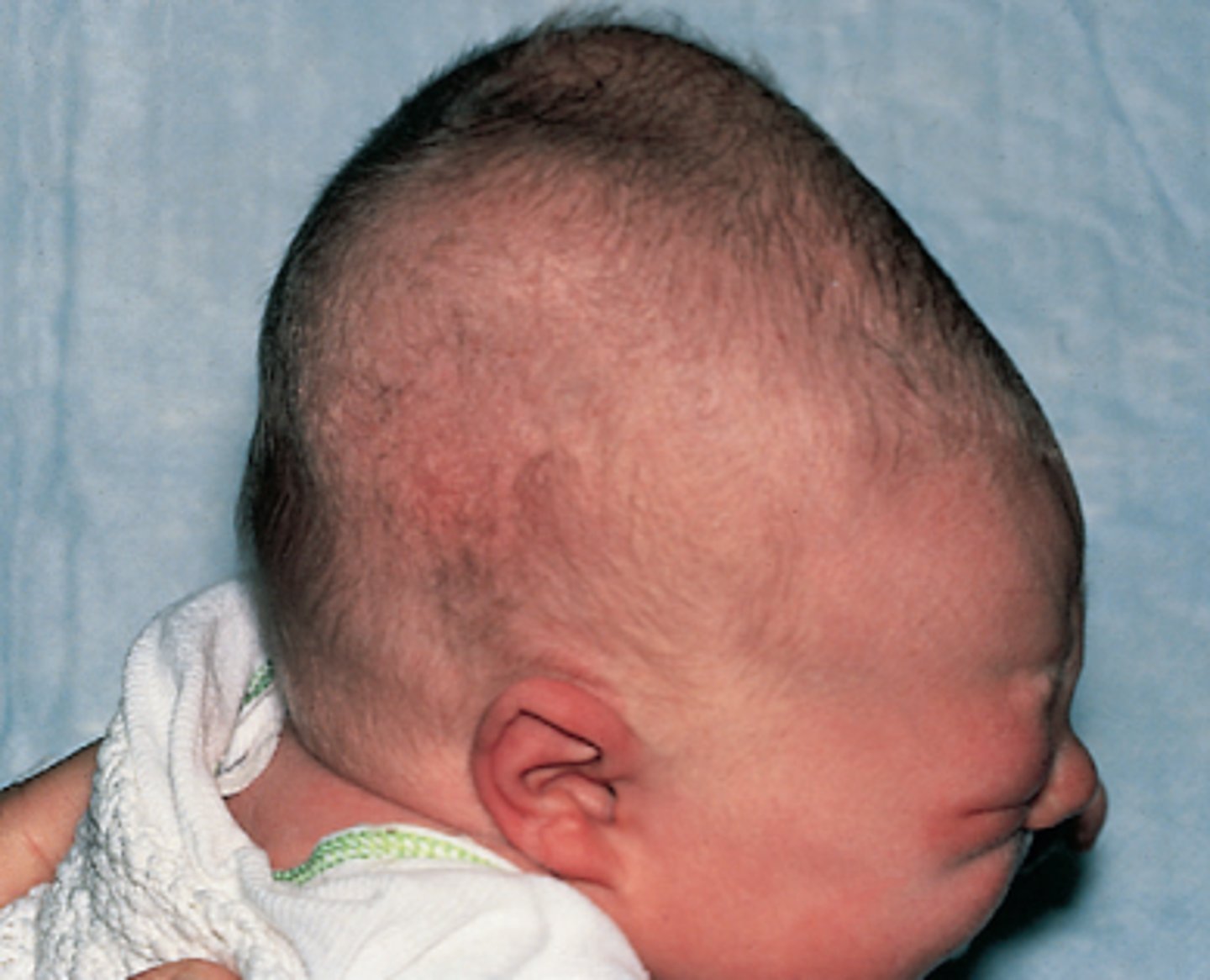
Developmental Variations During Pregnancy
- Hyperplasia: increase in # of cells in tissue.
- Increased vascularity.
- Chloasma: symmetrical brown/gray-ish spots on the skin of the head.
Developmental Variations in Aging Adults
- Isolated head tremors (Think: bobble head).
- Loss of teeth --> sunken appearance in the lower face.
- Concave neck to compensate for kyphosis (hunch back).
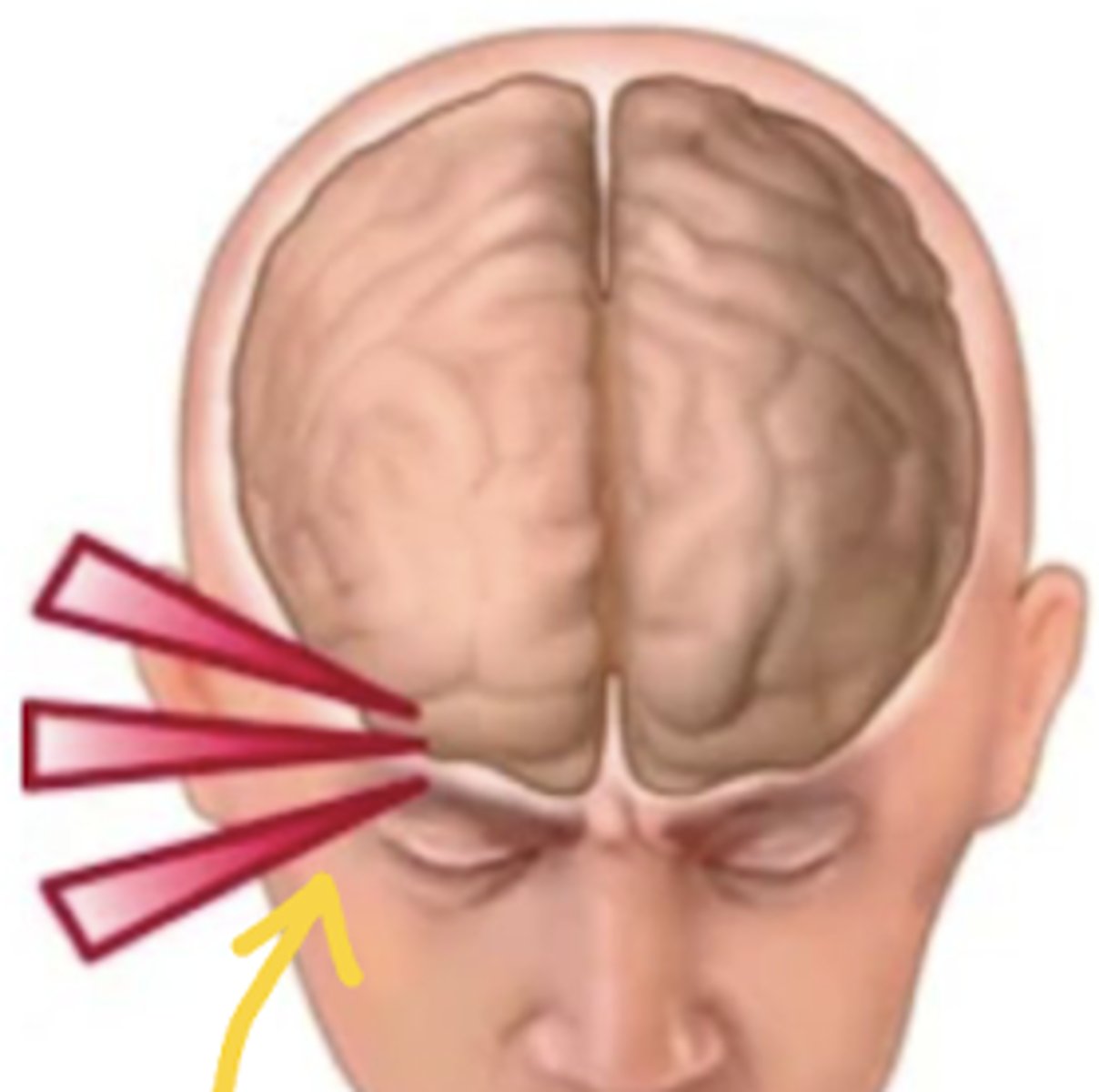
Migraine
- Think: "migrates."
- Rapid Onset: 1-2 hours
- Time it Lasts: 4-72 hours
- Pain Type: throbbing and pulsating
- Sx: nausea, vomiting, photophobia
- Tx: rest, NSAIDS, and non-pharm
- Causes: A LOT
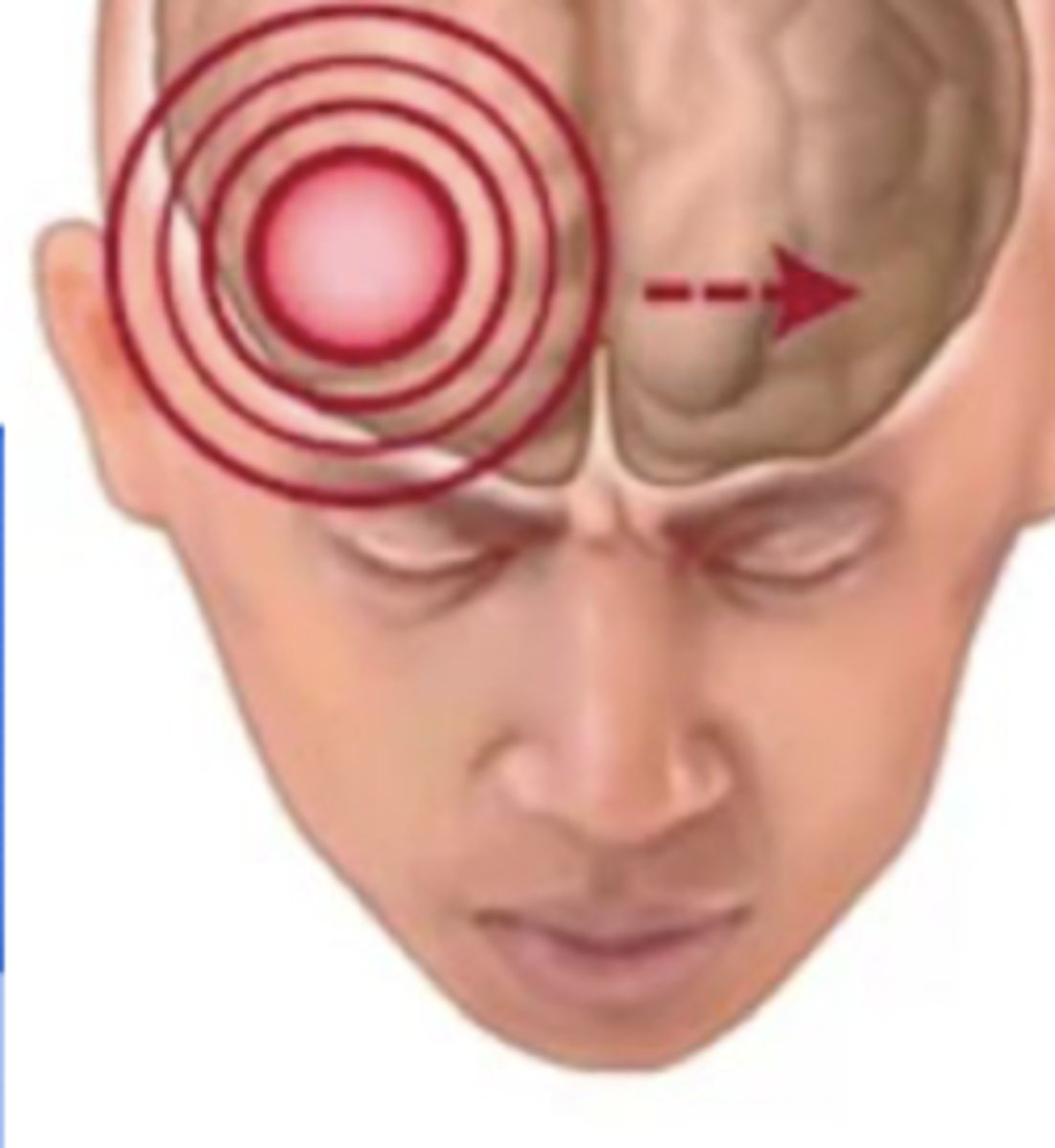
Cluster
- One spot, in "clusters."
- Abrupt onset, peaks in minutes.
- Can occur multiple times a day, and can last weeks.
- Cause: alcohol, nitroglycerine, histamine, organic compounds (paint, perfume, gas?).
- Pain: continuous, sharp, burning, piercing, and excruciating.
- Tx: preventative meds
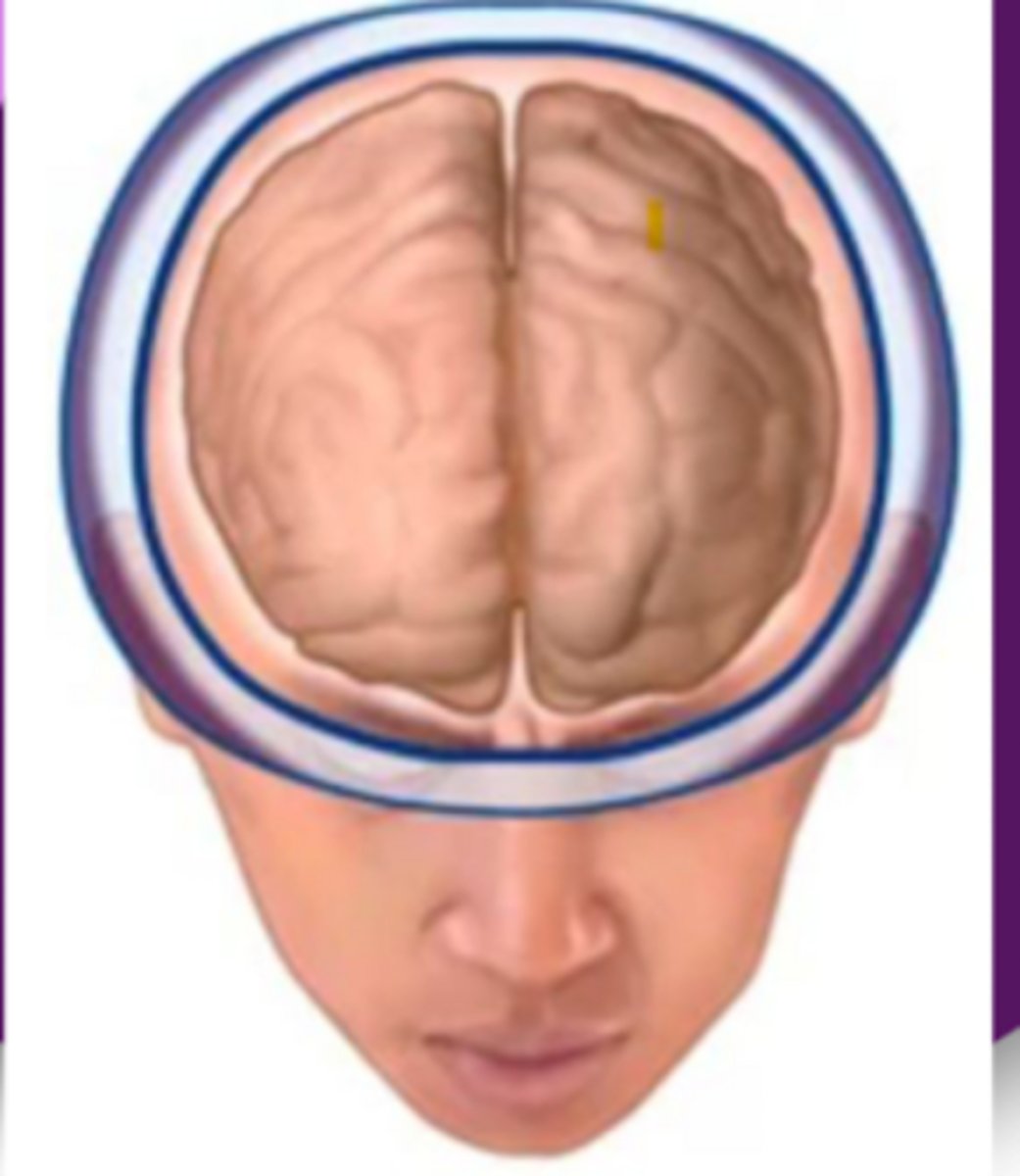
Tension
- Everywhere
- Gradual onset, lasts 30 mins to 7 days.
- Pain: band-like tightness and non-throbbing
- Cause: stress, anxiety, depression, poor posture, poor sleep, screen time
- Tx: NSAIDs, stress reduction, and non-pharm
Features of Fetal Alcohol Syndrome
- Wider eye separation
- Smaller nose bridge
- Thin upper lip
- Smaller ears
- Flat midface
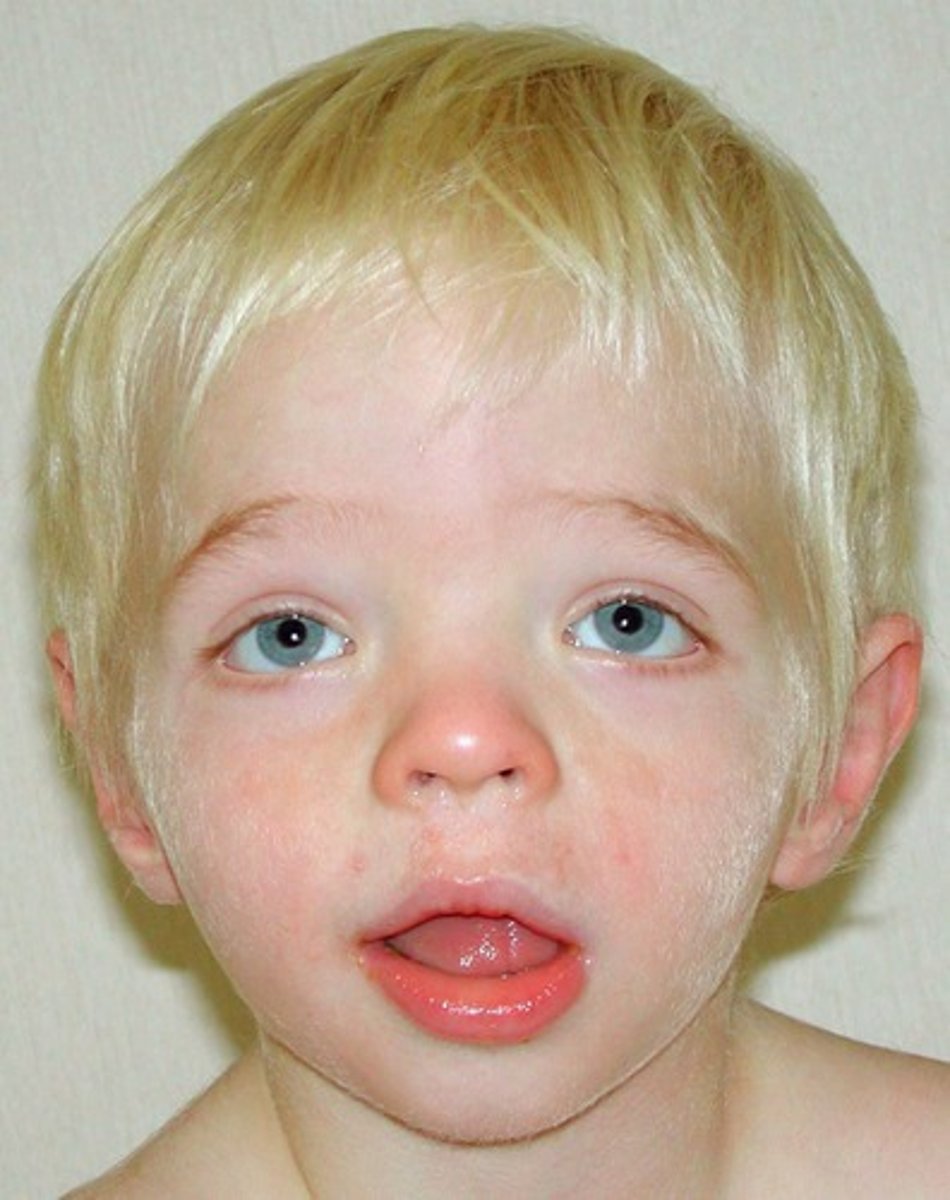
Features of Down Syndrome
- Up-slanted eyes
- Slightly off-set ears
- Webbed hands and feet
- Broader neck
Hydrocephalus
- Excess fluid in head/brain ventricles.
- Greater pressure in the head.
Hypothyroidism
- Puffy edematous face
- Periorbital edema
- Coarse (larger, broader, fuller, swollen) facial features.
- Coarse hair and eyebrows.
Graves Disease
- Goiter: abnormal enlargement of the thyroid gland.
- Eyelid retraction
- Exophthalmos
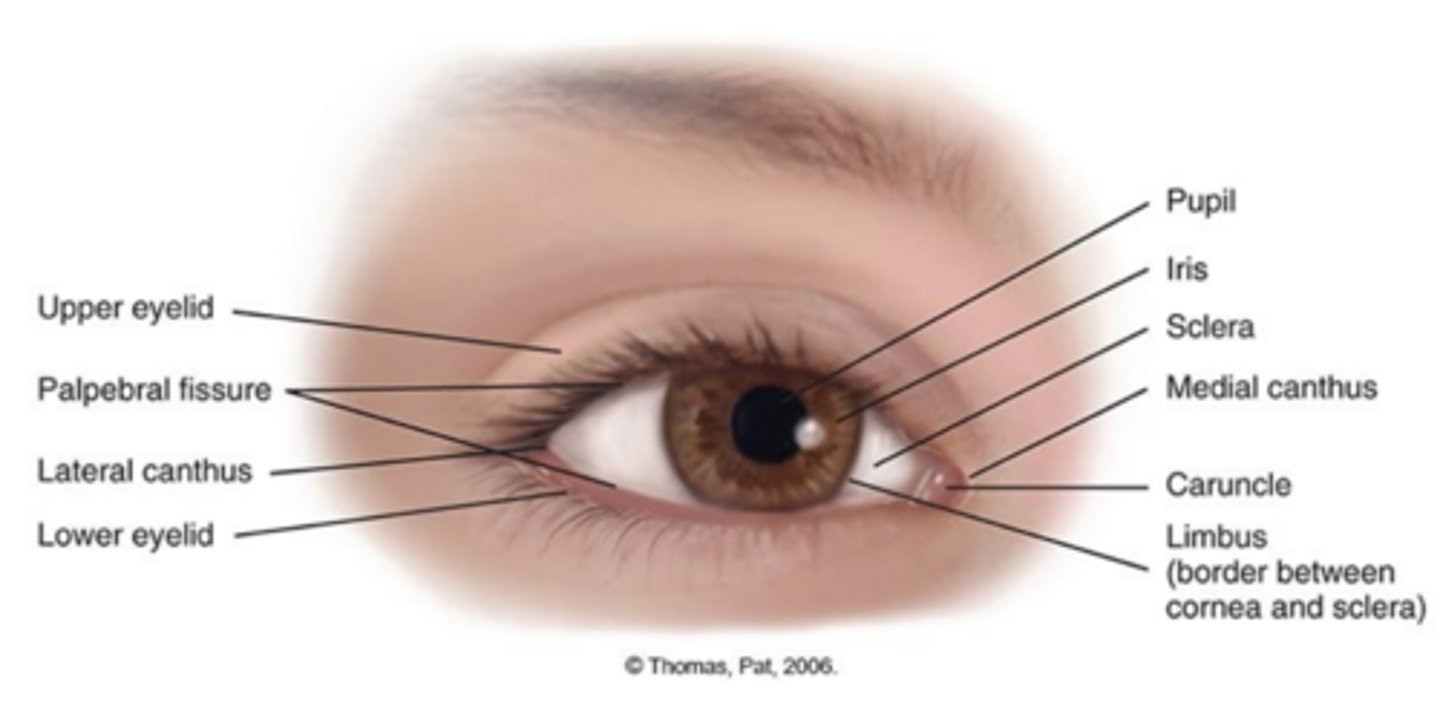
External/Anterior Eye Structures
Review this.
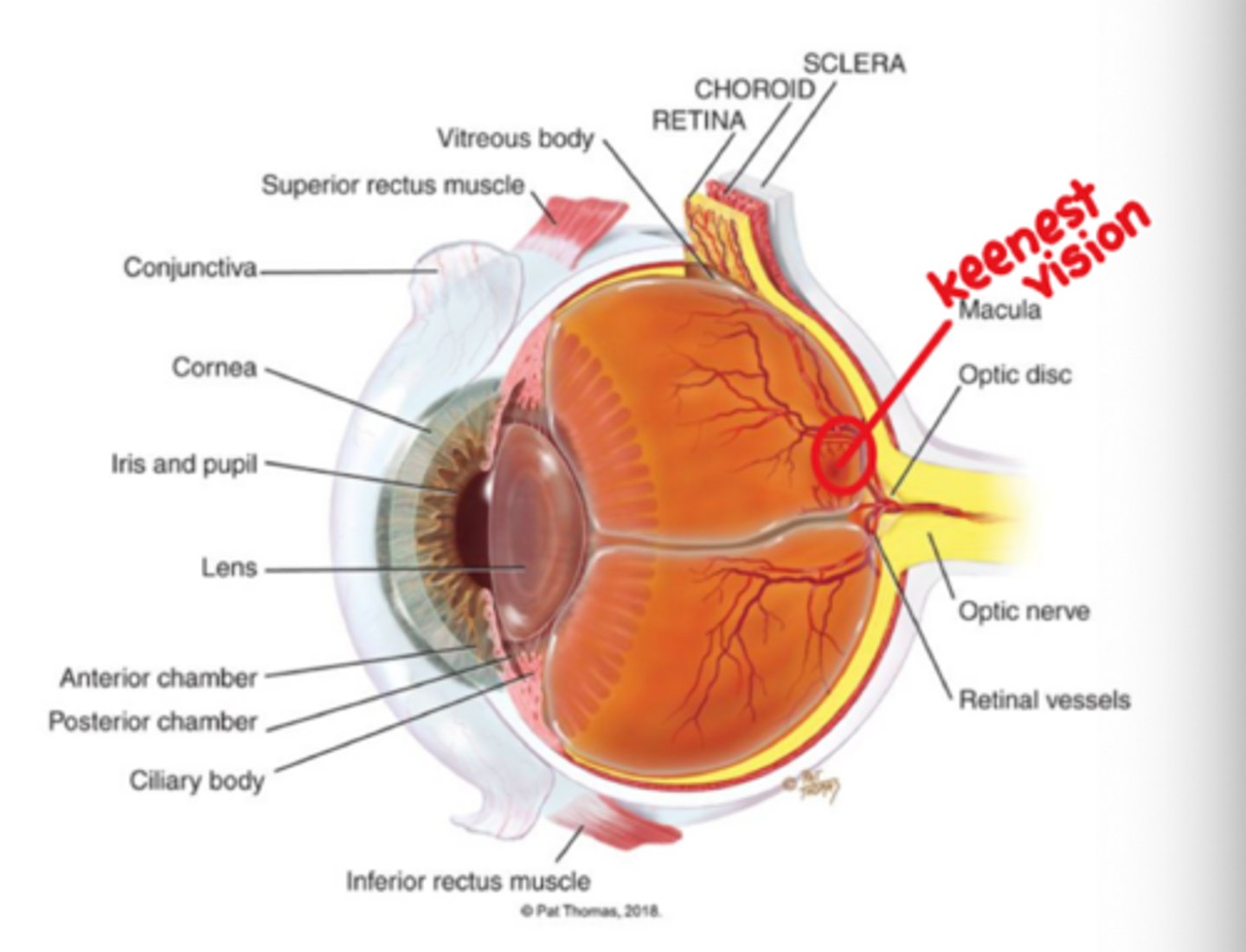
Internal Eye Structures
Review this.
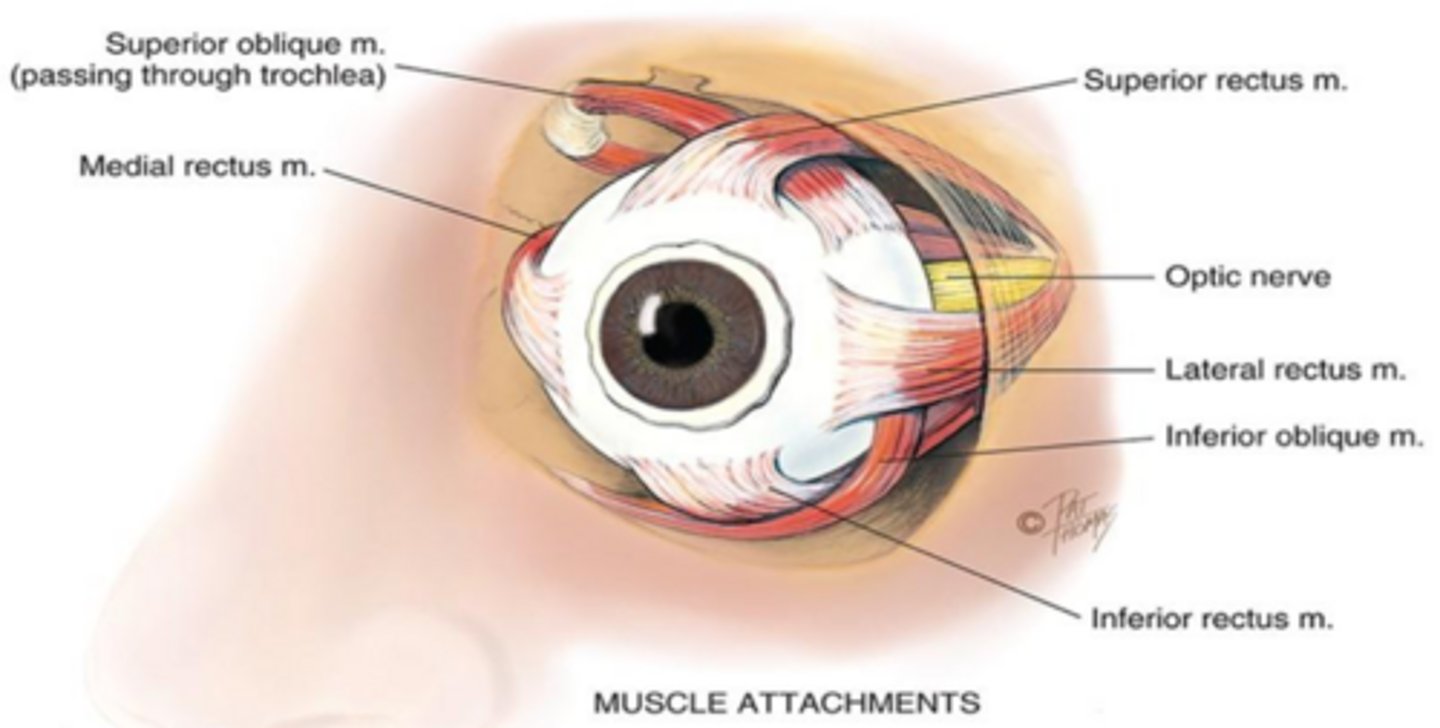
Eye Muscles
Review this.
Snellen Eye Chart Assessment
- Measure of the eye's visual acuity (sharpness).
- Looks at the eye's clarity and ability to recognize fine details.
- Ex: 20/20
Inspection of the Eyes
- Glossy
- Teary
- Color of Sclera: white
- Pupil Size: 2 to 4 mm in light, 4 to 8 mm in the dark.
Confrontation Test
- Assesses the eye's visual fields.
- Stand at the same level w/ 2 feet of distance.
- Cover your own eye opposite of patient.
- Check peripheral vision.
Extraocular Muscles Testing
- Corneal Light Reflex: light should be medial to the eye in both
- Diagnostic Positions Test: aka Cardinal 6 Positions Test (tests strabismus).
Color Blindness
- More common in males.
- Should be tested in children between the ages of 4 and 8 years old.
Macula
Should be fully developed by 8 months.
Assessment of the Pupil
- Testing pupillary light reflex.
- Check for dilation (in dim light) and constriction (in bright light).
Exophthalmos
Protrusion of the eyes (due to sunken-in eye sockets).
Enophthalmos
Sunken eyes.
Ptosis
Drooping upper eyelid.
Anisocoria
Unequal pupil size.
Cataract
Cloudy lens.
Conjunctivitis
- "Pink eye"
- Usually in one eye.
- Both eyes = allergies
Strabismus
Cross-eyed
Nystagmus
Rapid, uncontrollable eye movements
Ears
Review this.
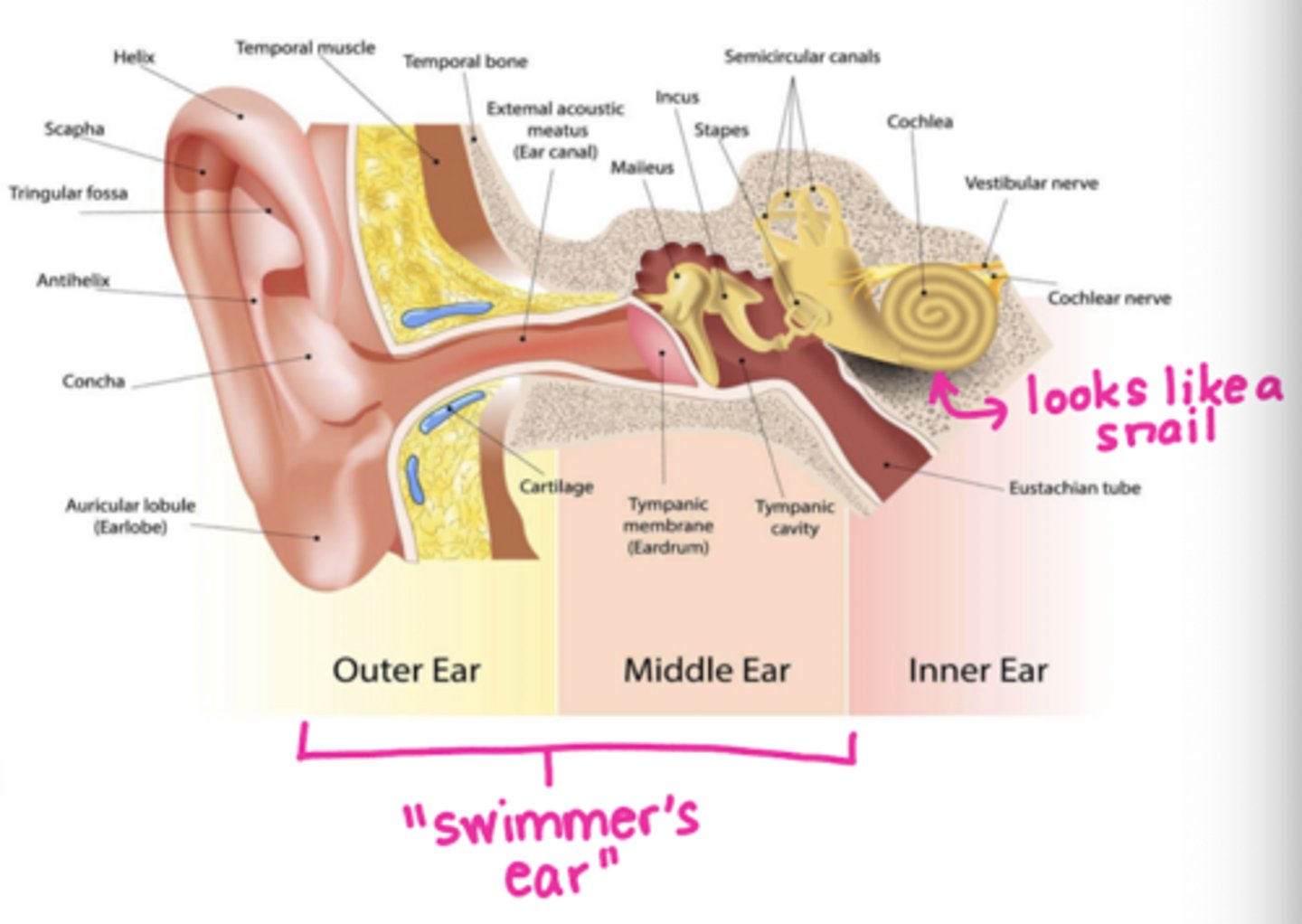
Ears of Children
- Top of pinna should line up with the corner of the eye.
- An otoscopic is required for any infant/child requiring care for illness or fever.
- External auditory canal is shorter and has a slope opposite of adults'.
- To inspect in <3 years old: pull ear straight down.
Ears of Aging Adult
- Pendulous (hanging) earlobes.
- Earlobe is more opaque (cloudy) and whiter.
- High-tone frequency loss associated with presbycusis (normal with old age).
Inspection of the Ears
- Normal: no swelling or thickness; uniform pigmentation w/ the head.
- Look at external and internal portions.
- Cone of Light: between 4:00 and 5:00 (right ear) and 7:00 and 8:00 (left ear).
Palpation of the Ears
- Feel pinna.
- Feel mastoid process.
- Feel tragus.
- Normal: non-tender, smooth, firm (in bony areas).
Otitis Media
- Inflammation/infection of the middle ear.
- Most common in infants and young children, frequently after upper respiratory infections.
- Sx: ear pain, fever, malaise (feeling "off"), pressure, fullness, and impaired hearing.
- Complications (if untreated): tinnitus, vertigo, mastoiditis, hearing deficits, etc.
Otitis Externa
- Inflammation/infection of the outer ear.
- Known as "swimmer's ear."
- Sx: inflammation, itching, swelling, clear to purulent drainage, and pain with earlobe retraction
- Tx: topical antibiotic drops, corticosteroids, and pain management
Auricular Hematoma
- Known as "cauliflower ear."
- Trauma to external ear with blood collection beneath skin.
- Risk: perichondritis (infection of the tissue that surrounds and nourishes your ear cartilage) if not aspirated.
- Can cause permanent ear deformity without treatment.
Battle Sign
- Postauricular bruising behind the ear (around mastoid process).
- Indicates basilar skull fracture or significant head trauma (e.g. Shaken Baby Syndrome).
- May include otorrhea (ear drainage).
- Requires immediate medical attention for potential intracranial injury.
General Hearing Test
- Asking the patient basic interview questions and observing their responses.
- Do they follow up with "what?" or "huh?"
- Abnormal: the patient cannot follow instructions/answer questions or loses interest.
Whispered Voice Test
- Have the patient occlude one ear.
- Whisper a phrase behind your hand and have the patient repeat it (raise voice level gradually if the patient cannot repeat the phrase).
- If patient wears hearing aids, have the patient remove them.
Tuning Fork Test
- If hearing loss is detected, use this test to further assess.
- Vibrate the tuning fork with the palm of one hand.
- Ask the patient when they can no longer hear the tuning fork.
Romberg Test
- Assesses the vestibular apparatus in the inner ear, which helps to maintain standing balance.
- Assesses intactness of the cerebellum and proprioception (the body's awareness of position and movement).
Mouth
Review this.
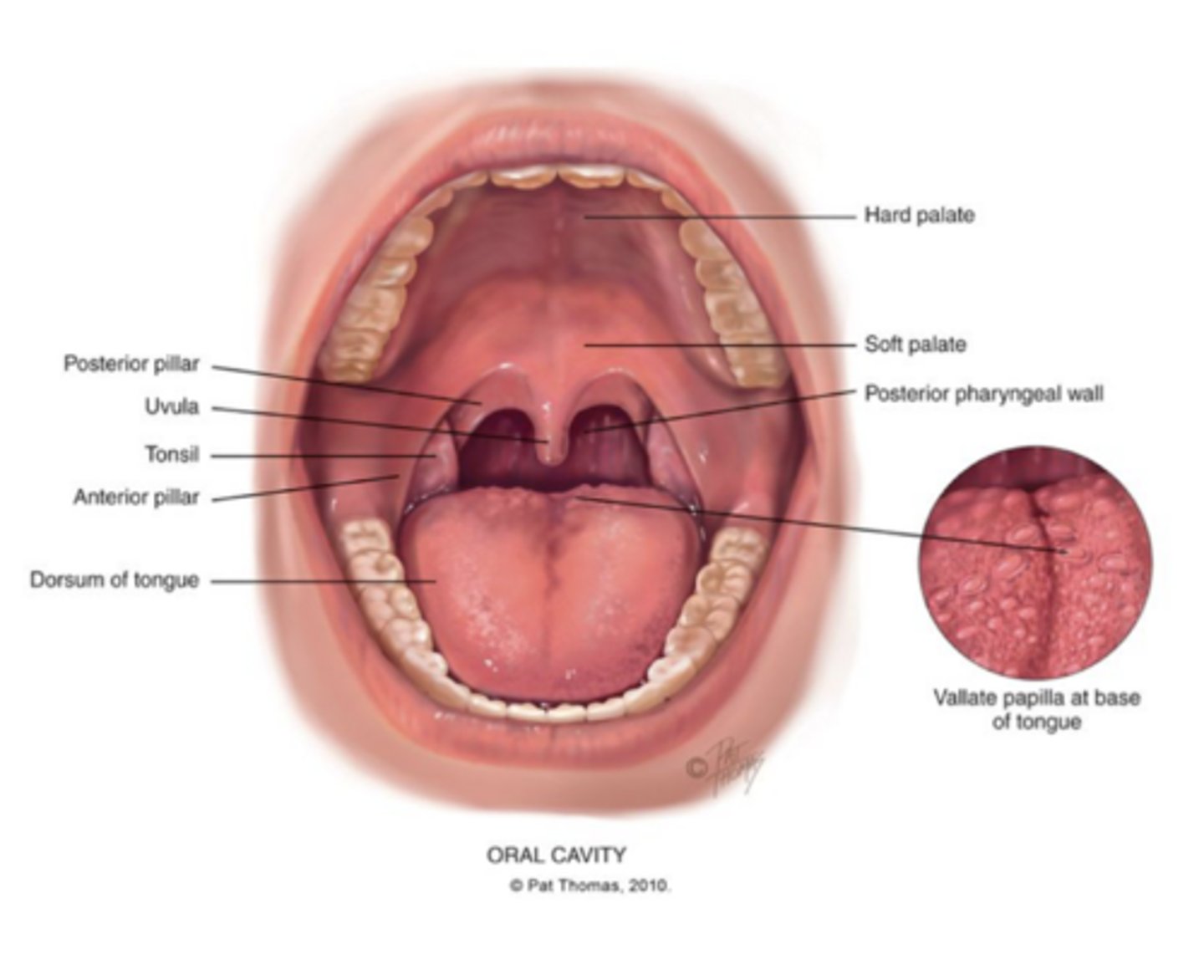
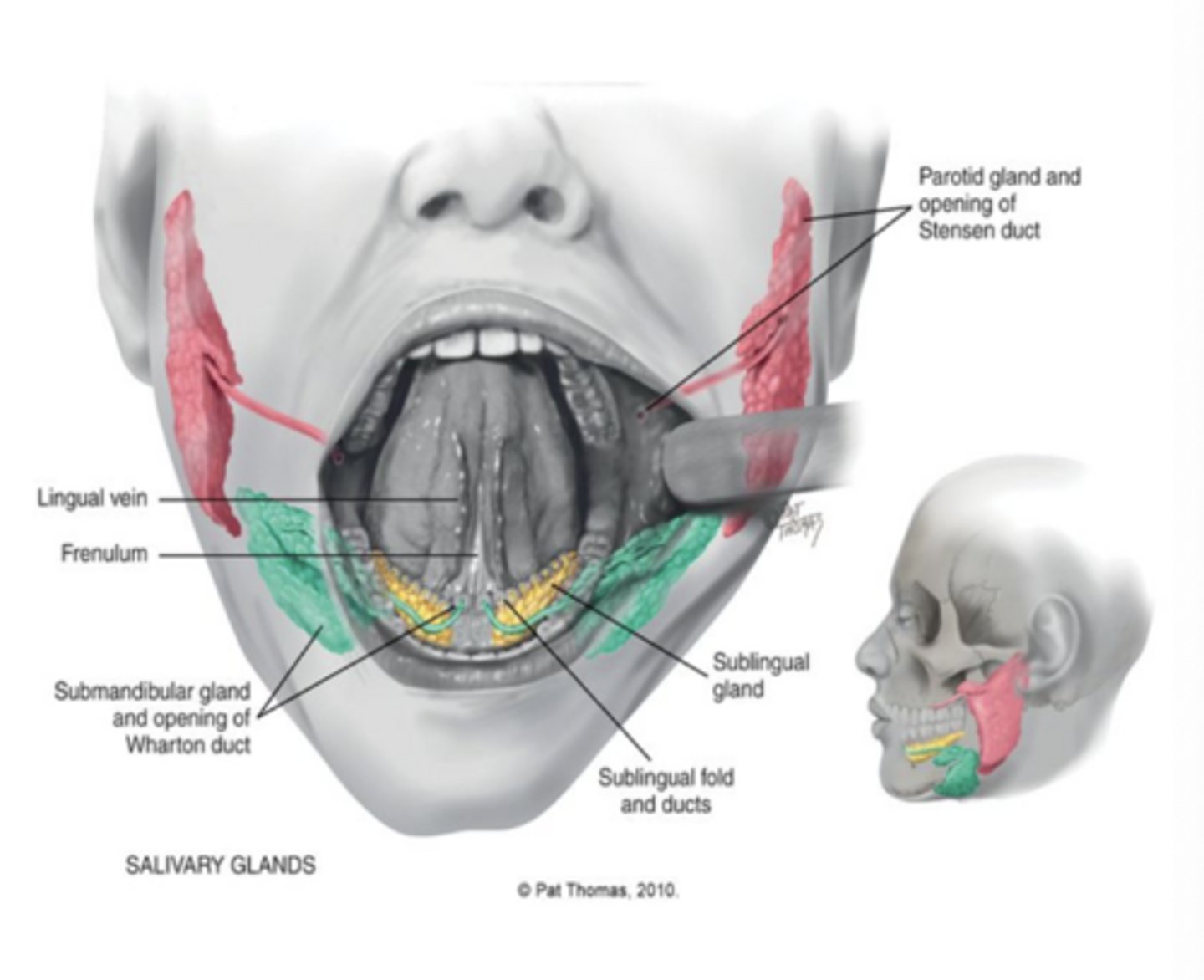
Glands
Review this.
Mouth of Children
- Salivation: begins at 3 months; periodically for a few months before learning to swallow saliva.
- Teeth begin to develop in utero.
- "Baby teeth:" grow between 6 months and 2 years (lost between 6-12 years old.
Ankyloglossia
- Known as a "tongue tie."
- A congenital condition where an unusually short, thick, or tight band of tissue tethers the underside of the tongue to the floor of the mouth.
Candidiasis
- Also known as "thrush."
- The most common fungal (yeast) infection in the mouth.
- Signs: white spots/white coating of the tongue, red and tender mucous membranes, and bleeding when plaques are removed.
Poor Dental Hygiene
- Cavities
- Bad breath
- Yellowed teeth
- Can lead to more serious problems, like endocarditis (infection of the endocardium; can affect the valves/ventricles).
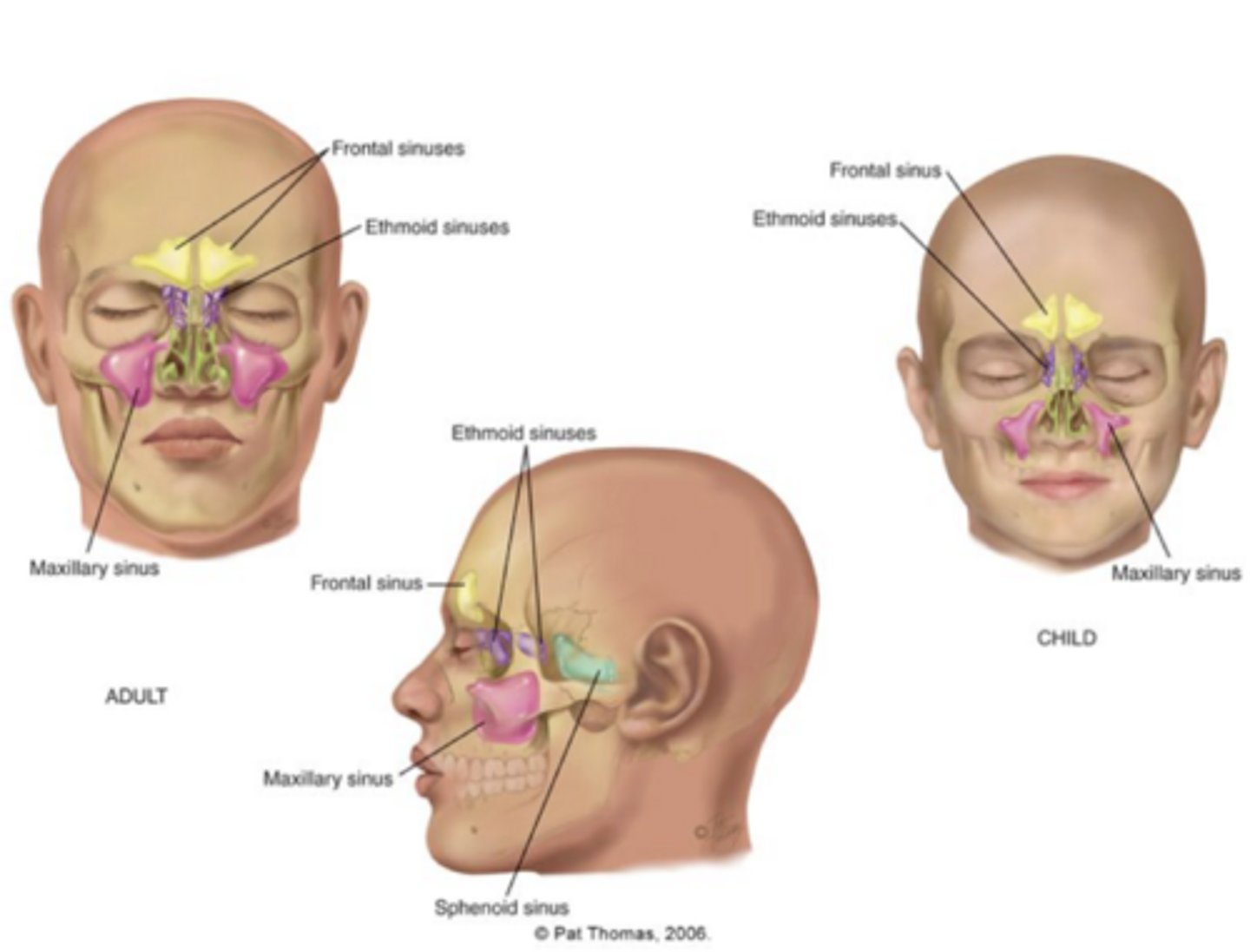
Sinuses
Review this.
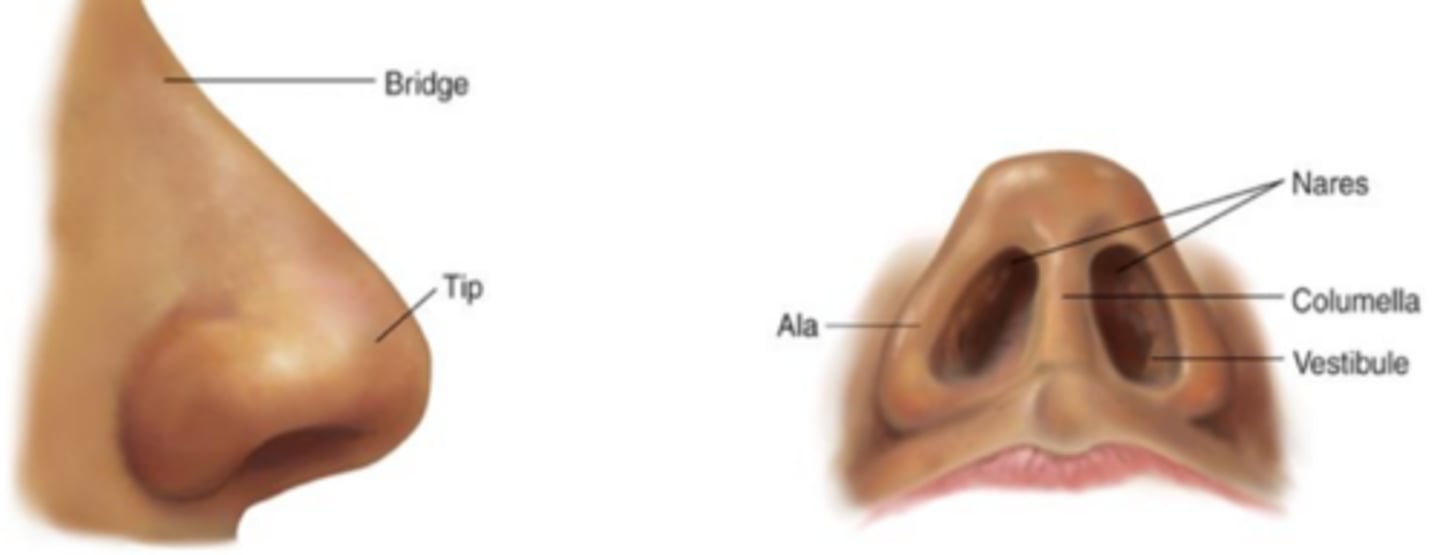
External Nose
Review this.
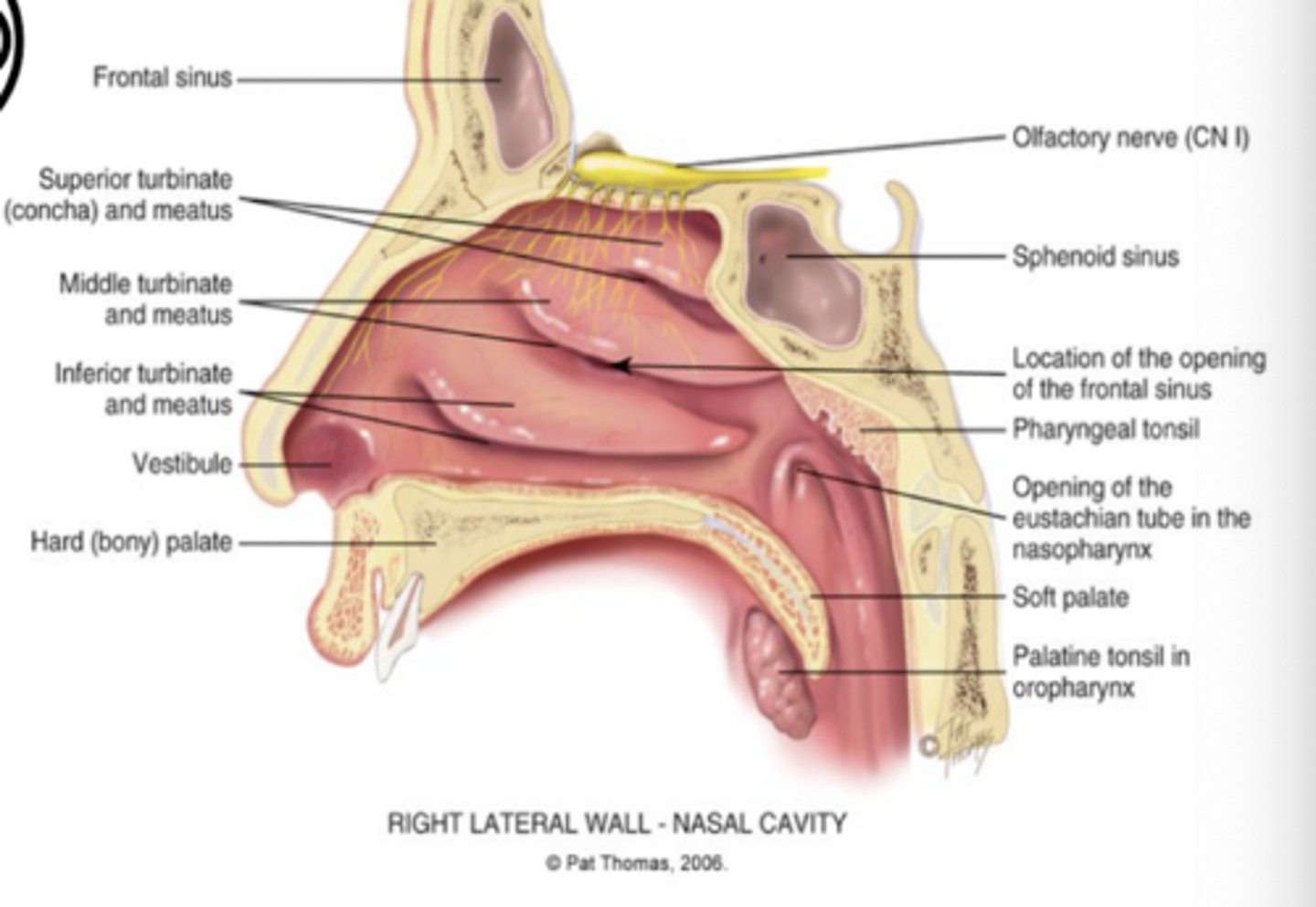
Structures of the Internal Nose
Review this.
Nose of Aging Adult
- Decreased sense of smell (~60 years)
- Nasal Hairs: coarse and stiff + increased irritation
- Dry, thinning mucosa + increased risk of nosebleeds
Inspection of the Nose/Sinuses
- Assesses CN I (olfactory).
- Look for polyps (abnormal growths of tissues), pockets, and/or tumors.
Palpation of the Nose/Sinuses
- Press on the nose/sinus area with the thumbs.
- Assess for abnormal inflammation in the "T zone."
Mouth of Aging Adult
- Decreased taste of sweet and salty.
- Xerostomia (dry mouth)
- Tooth loss, gum recession, worn surface, etc. (higher-risk w/ tobacco and nicotine).
- Thinner Mucosa: increased injury/infection risk.
Throat of Aging Adult
- Muscle Atrophy: swallowing becomes more difficult (dysphagia).
- Weakened tongue/throat muscles: speech/chewing issues
- Immune defenses decrease: increased risk of oral infection (e.g. candidiasis - yeast infection of the mouth).
Mouth During Pregnancy
Hypertrophy of the gums and other mouth muscles.
Inspection of the Mouth/Throat
- Assess appearance and smell.
- Abnormal Appearance: white patches, red spots, and/or tonsil stones.
- Abnormal Smell: hygiene? / halitosis?
Palpation of the Mouth/Throat
- Test gag reflex, which assesses CN IX (glossopharyngeal) and X (vagus).
- Is there any loss of movement?
- Is there any evidence of tremor?
Tonsillar Grading Scale
- +1: tonsils are visible, but occupy less than 25% of space behind the tonsillar pillars; Seen in healthy individuals.
- +2: Tonsils occupy between 25-50% of oropharyngeal space and extend past the tonsillar pillars; Can be seen in healthy individuals (specifically children).
- +3: Tonsils occupy between 50-75% of oropharyngeal space and have extended significantly toward the midline of the throat.
- +4: Known as "kissing tonsils;" Tonsils occupy more than 75% of the oropharyngeal space; Can obstruct the airway.
Olfactory
- Cranial Nerve I: sensory
- The ability to smell/identify familiar odors
- Abnormal: anosmia (inability to smell)
Optic
- Cranial Nerve II: sensory
- Controls vision: visual acuity, visual fields, light reception, etc.
- Abnormal: impairment of central vision, peripheral vision, lack of reflex to light, papilledema (swelling of CN II), optic atrophy (damage/death to the fibers of the optic nerve), and retinal lesions.
Oculomotor
- Cranial Nerve III: motor
- Extraocular muscle movement, pupil dilation/constriction, and opening of eyelids.
- Abnormal: dilated pupils (long periods), ptosis, "lazy" eyes, etc.
Trochlear
- Cranial Nerve IV: motor
- Down and inward eye movements
- Abnormal: failure to turn eye down or out.
Trigeminal
- Cranial Nerve V: sensory and motor
- Controls chewing muscles and sensation of face/scalp/cornea and mucous membranes of mouth/nose.
- Abnormal: absent touch/pain, "pins and needles," lack of blinking, and weakness of masseters and temporalis muscles.
Abducens
- Cranial Nerve VI: motor
- Lateral eye movements
- Abnormal: failure to move eyes laterally, diplopia (double vision) on lateral gaze.
Facial
- Cranial Nerve VII: motor and sensory
- Controls facial muscles, closes eyes, speech, and closes mouth; Controls 2/3 of taste.
- Abnormal: absent/asymmetric facial movement or loss of taste.
Acoustic
- Also known as "vestibulocochlear."
- Cranial Nerve VIII: sensory
- Hearing and equilibrium
- Abnormal: Decrease or loss of hearing
Glossopharyngeal
- Cranial Nerve IX: motor and sensory
- Controls phonation (ability to make sounds) and swallowing; Controls 1/3 taste and gag reflex
- Abnormal: uvula deviates to the side.
Vagus
- Cranial Nerve X: motor and sensory
- Controls talking and swallowing; Controls general sensation of the carotid body/sinus, pharynx, and viscera (organs).
- Abnormal: uvula deviates to the side, speech is hoarse/brassy/husky, nasal twang, dysphagia (inability to swallow), and fluid regurgitation through nose.
Spinal Accessory
- Cranial Nerve XI: motor
- Movement of trapezius and sternomastoid muscles.
- Abnormal: Inability to move the head or shrug the shoulders.
Hypoglossal
- Cranial Nerve XII: motor
- Controls tongue movement
- Abnormal: tongue deviates to the side, slowed rate of movement, inability to wiggle/stick out the tongue.