chapter 27: introduction to animal diversity
 Call Kai
 Learn
Learn Practice Test
 Spaced Repetition
 Match
Match Flashcards
 Knowt Play
1/46

There's no tags or description
Looks like no tags are added yet.
Name | Mastery | Learn | Test | Matching | Spaced | Call with Kai |
|---|
No analytics yet
Send a link to your students to track their progress
47 Terms
features of the animal kingdom
-multicellular eukaryotes - many have complex bodies
-heterotrophy
-active movement
-reproduction
-embryonic development
-body plan
cells joined together
by: protein-rich extracellular matrix (ECM) with collagen (protein unique to animals), protein junctions
internal organ systems
most animals have integrated organ systems, exchange chemicals with external environment, maintain internal homeostasis through feedback mechanisms, if key system fails, animal dies
ingestive heterotrophs
most animals are ingestive heterotrophs (but some parasites are absorptive!)
somatosensory and motor
most animals have nerve cells (neurons) & muscle cells, unique to animals, sensory receptors detect stimulus, motor response produces movement
sensory neuron --> interneuron --> motor neuron --->muscle
sexual reproduction
animal life cycle in almost all, most: separate sexes (but sex may change) some: hermaphroditic
hermaphroditic
an organism that has both male and female reproductive organs
asexual reproduction
animal life cycle in some, fragmentation & regeneration
budding, rare: parthenogenesis
parthenogenesis
virgin females produce eggs that develop into offspring
ploidy
diploid life, except sperm & egg, (except some: all males are haploid!)
larval stage
most animals have a larval stage before adulthood, larva differs in form, function & often habitat from adult (often a dispersal stage), goes through metamorphosis to adult form
embryonic development
most animals have similar genes that control development, including "Hox" genes, zygote --> cleavage --> blastula stage
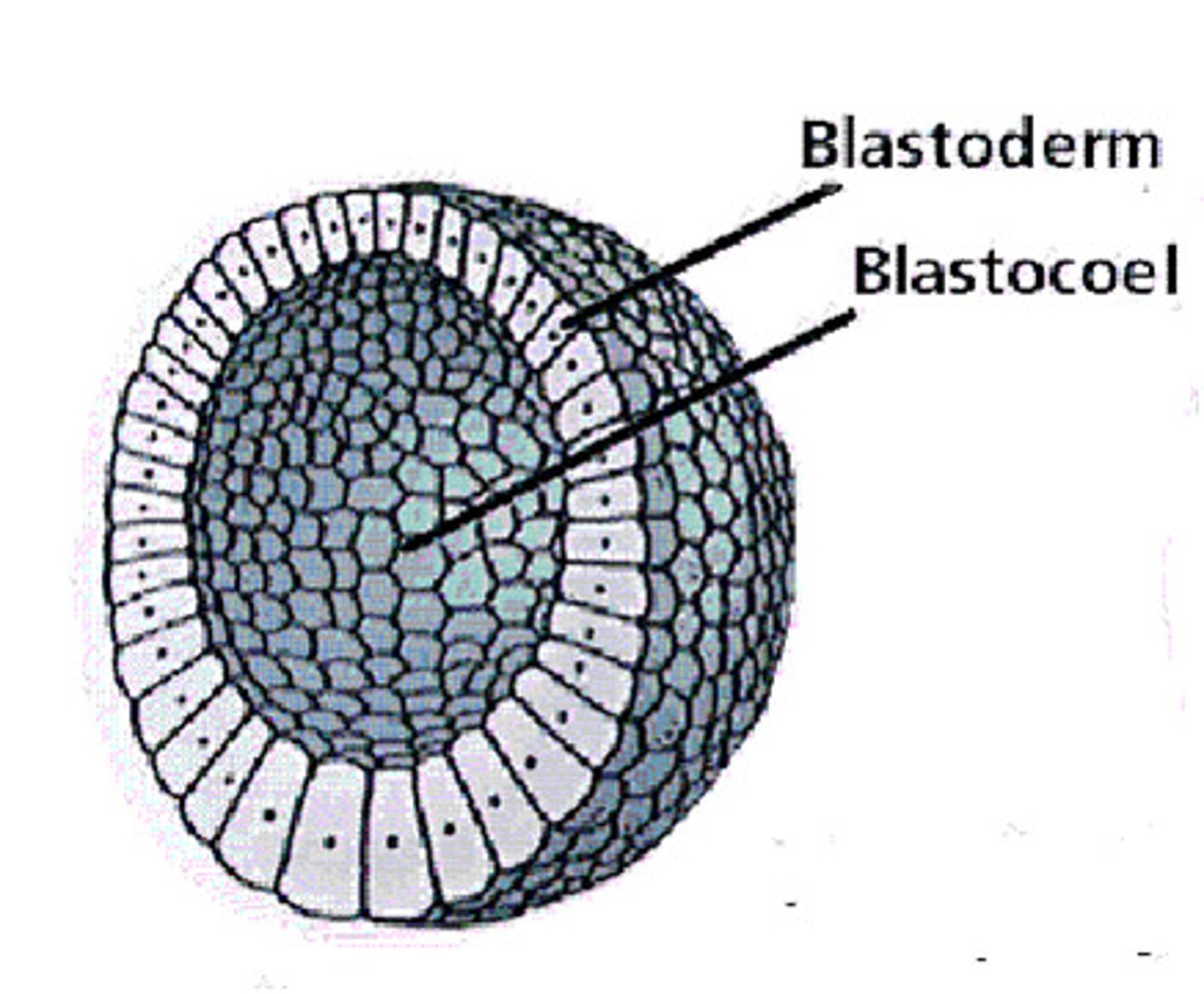
blastula
the hollow ball of cells marking the end stage of cleavage during early embryonic development
gastrula
an embryonic stage in animal development occurring because of gastrulation, encompassing the formation of germ layers (origin of tissues)
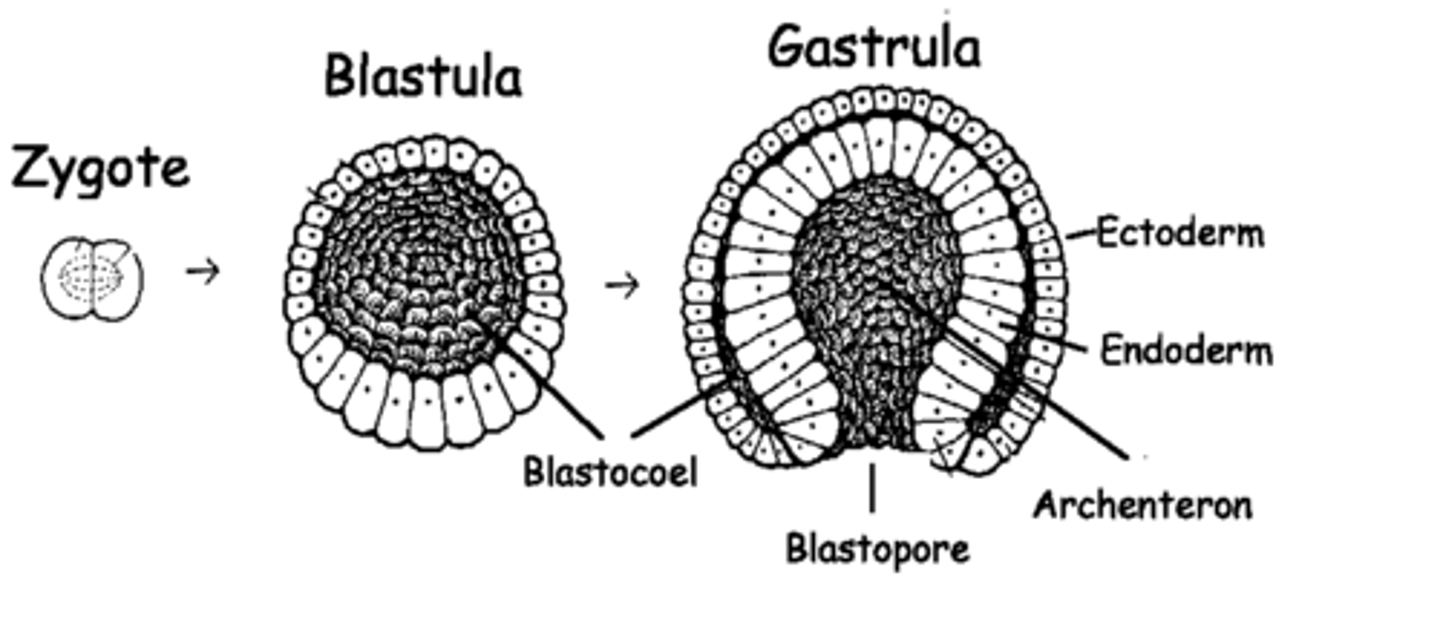
blastospore
the first opening made during gastrulation
archenteron
the endoderm-lined cavity, formed during gastrulation, that develops into the digestive tract of an animal
diploblastic
animals with 2 germ layers, endoderm and ectoderm
ectoderm
the outer germ layer that develops into skin and nervous tissue
endoderm
the inner germ layer that develops into the lining of the digestive and respiratory systems (internal organs)
triploblastic
animals with 3 germ layers, ectoderm and mesoderm and endoderm
mesoderm
middle germ layer; develops into muscles, and much of the circulatory, reproductive, and excretory systems
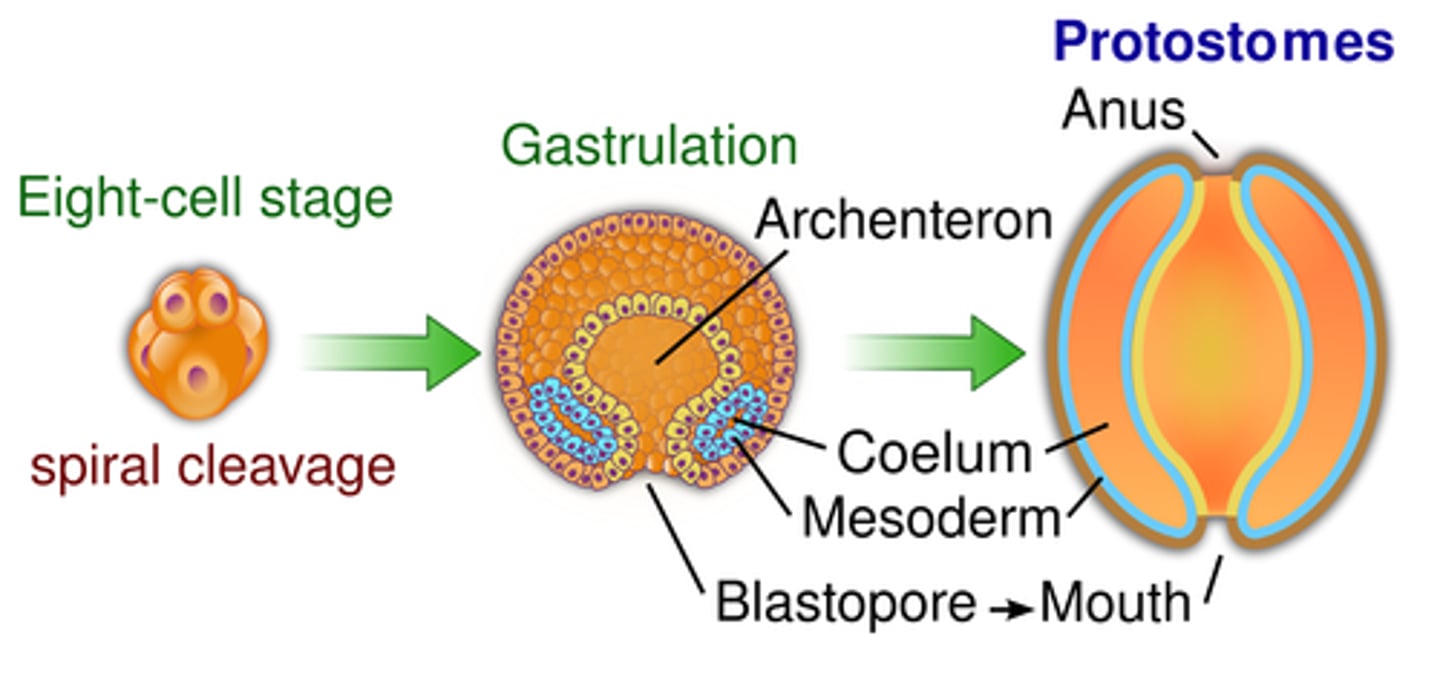
protostomes
the coelom forms from splits in the mesoderm, the mouth forms from the blastopore
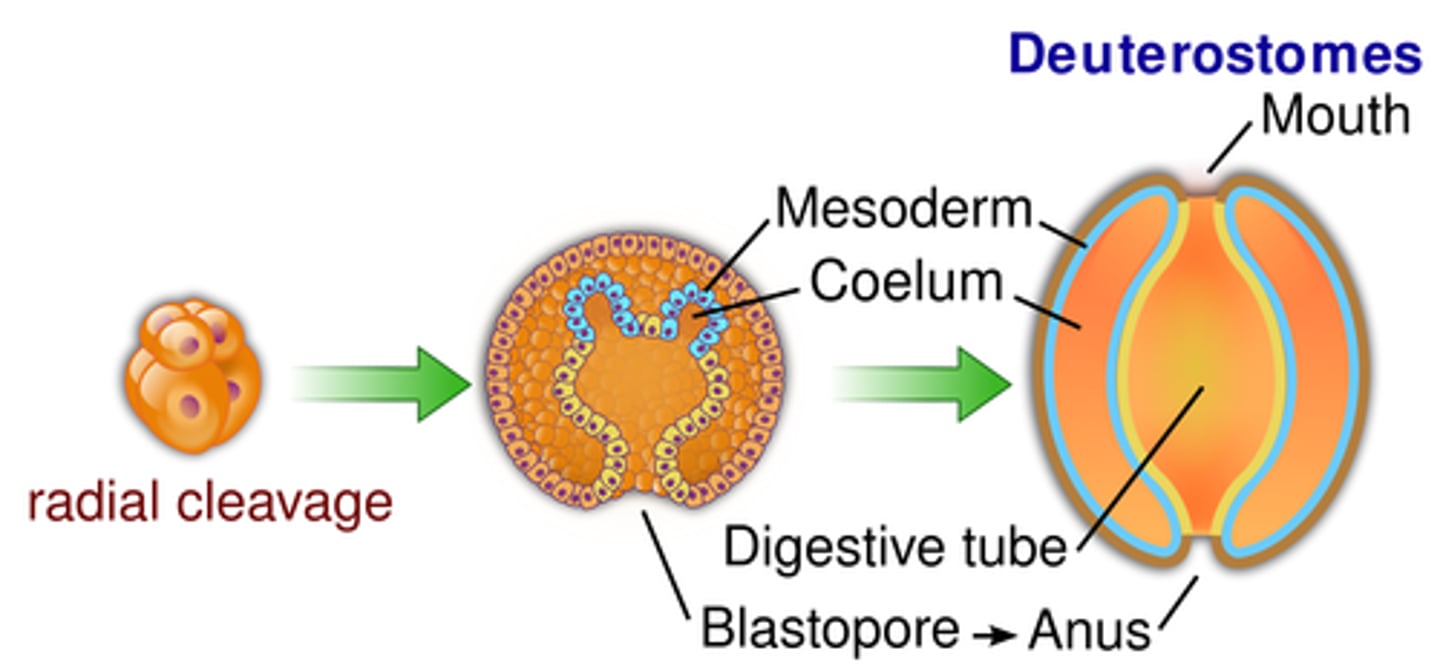
deuterostomes
the coelom forms from mesodermal outpocketings of the archenteron, the mouth forms from a secondary opening, the anus develops at the site of the blastopore, ex: humans
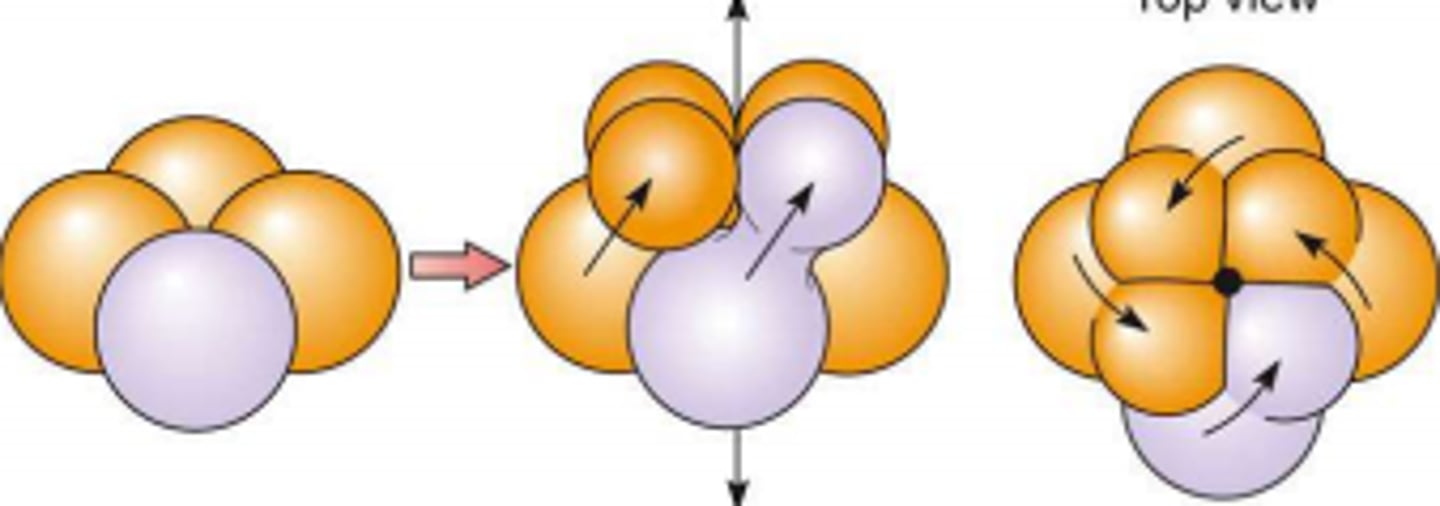
protostome development
embryonic development where cleavage is spiral and determinate, early embryonic cells "fated" to become certain body parts, lose any early cell results in defect or death
spiral cleavage
planes of cell division are at oblique angles to the axis of embryo
deuterostome development
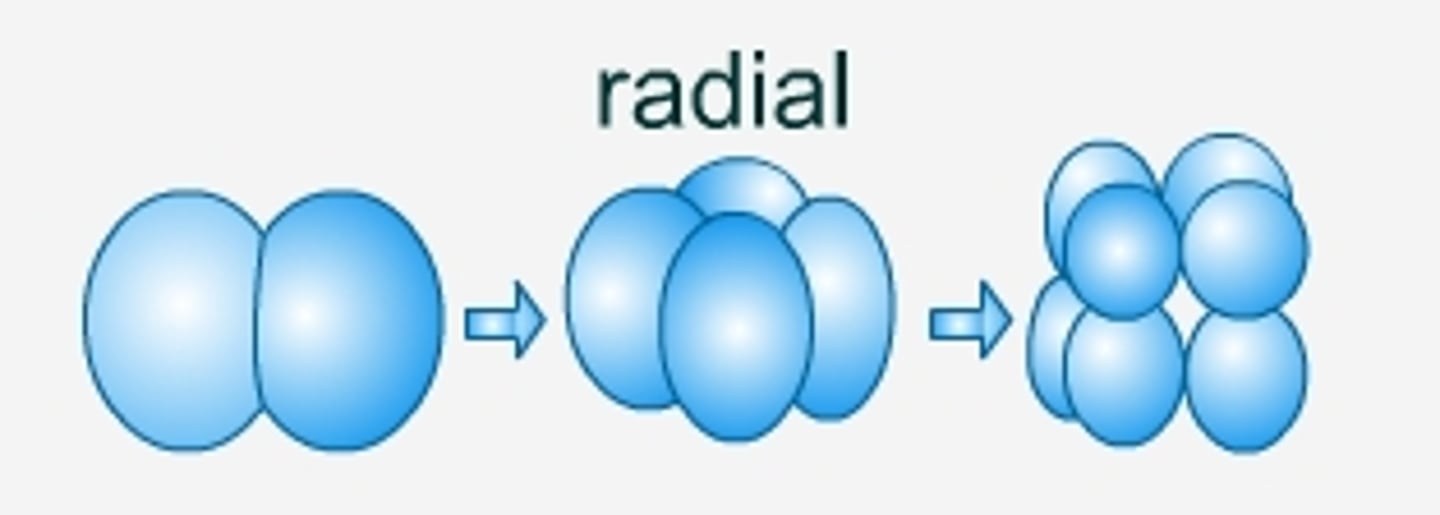
embryonic development where cleavage is radial and
indeterminate, any early cell can become complete organism
radial cleavage
planes of cell division are parallel or perpendicular to the axis of embryo
body plans
general structure of an animal, the arrangement of its organ systems, and the integrated functioning of its parts
body plan features
-symmetry
-body cavities
-segmentation
-presence and function of appendages
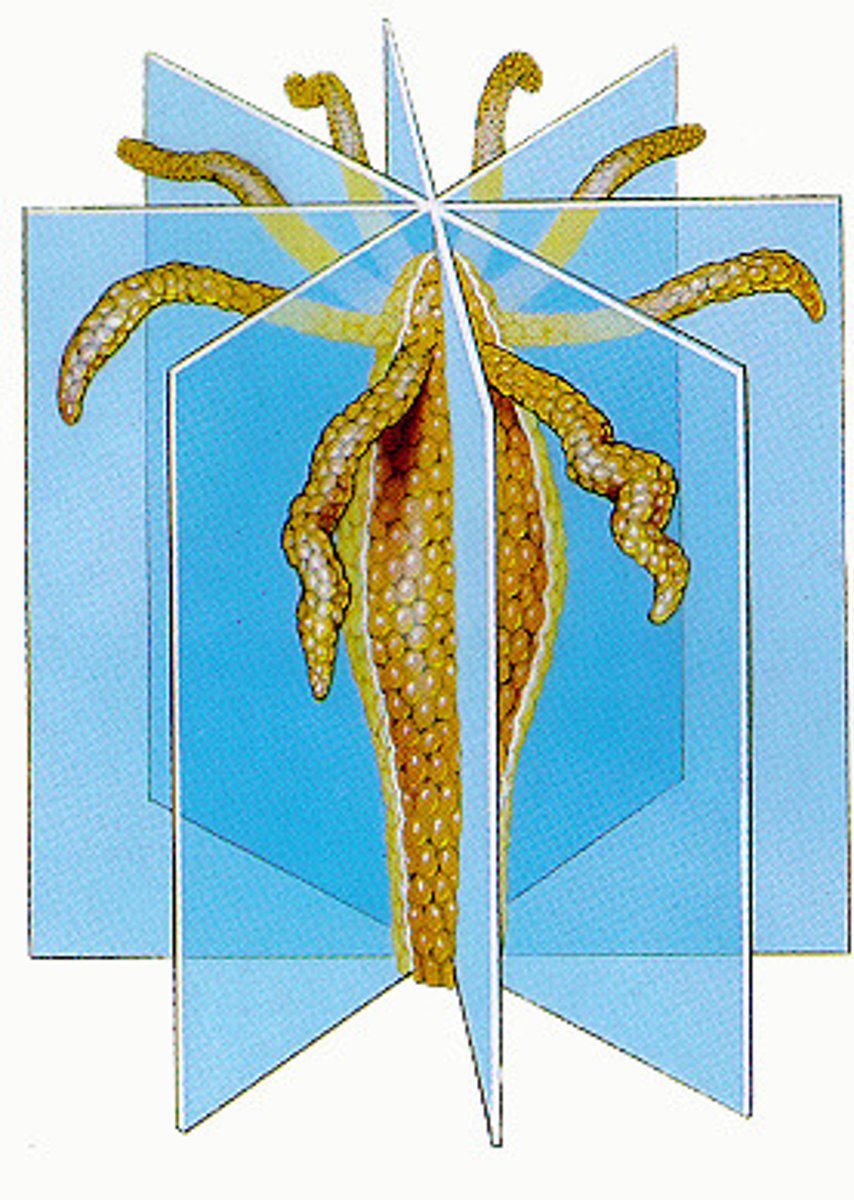
radial symmetry
arrangement of body parts around a central axis, usually sessile (attached) or planktonic (drifting) life, no left and right sides, nor front or back, equips sea creatures to experience the environment equally from all directions
bilateral symmetry
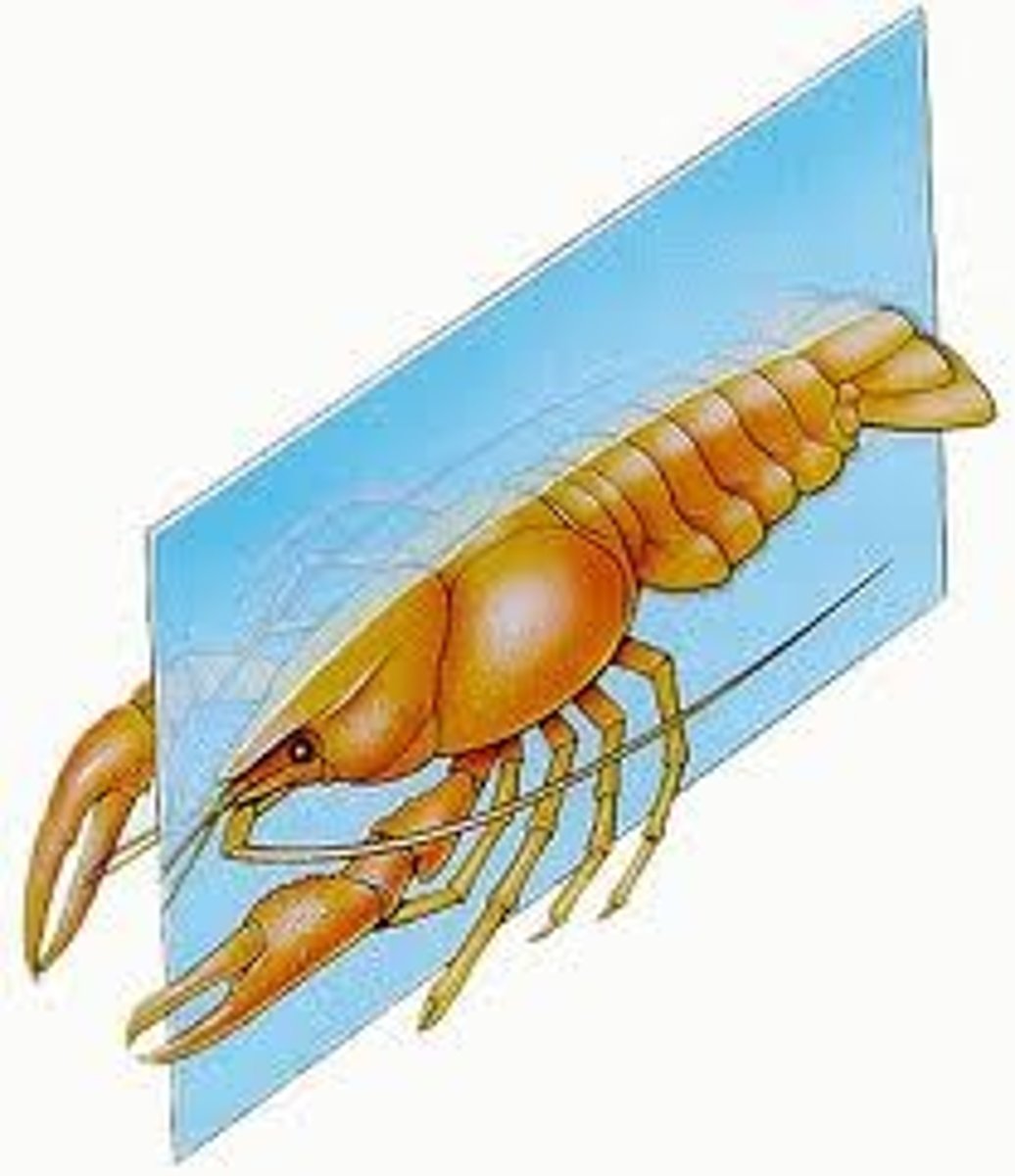
a bilateral animal has two axes of orientation: front to back and top to bottom, usually w/ "head" = concentration of sensory organs at anterior (cephalization), active lifestyle
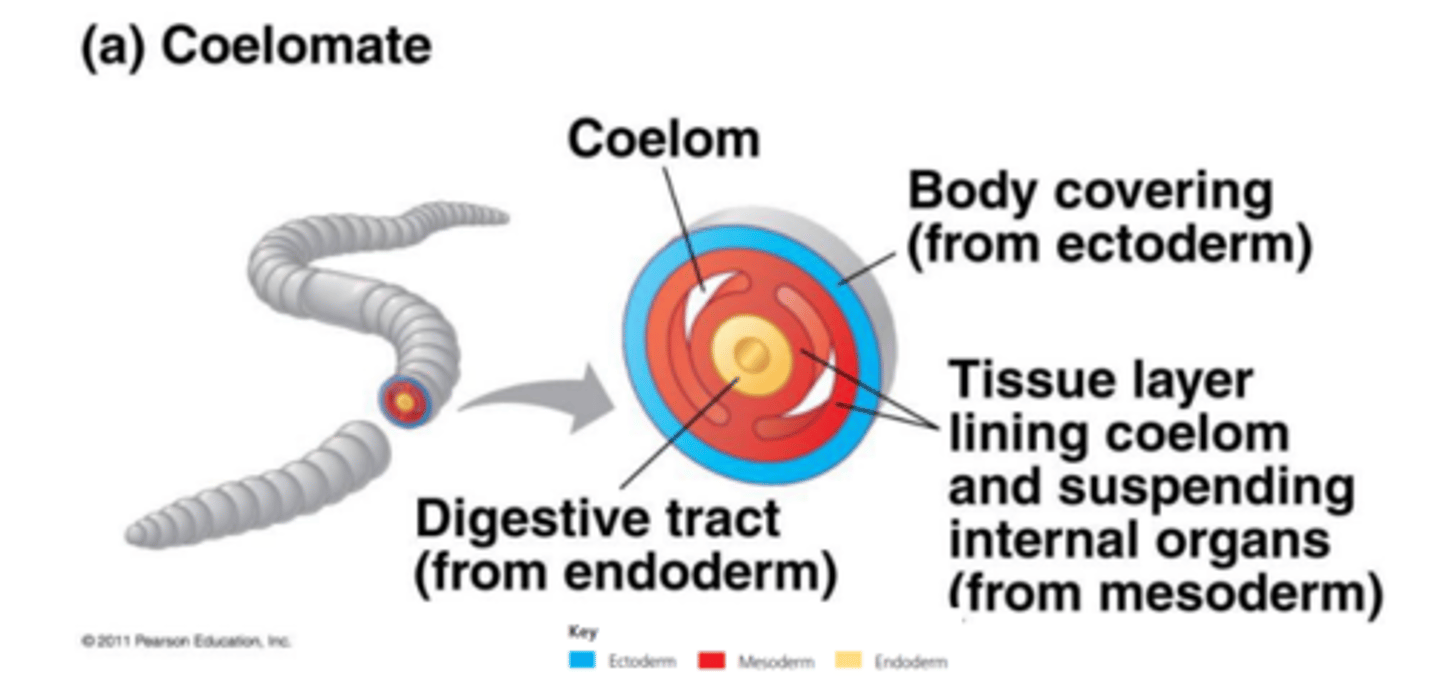
coelom
body cavity, fluid-filled space between body wall and digestive tract, cushions internal organs, allows internal organs to grow and move independently of the outer body wall
true coeloms
most body cavities, completely surrounded by the mesoderm, forms from tissue derived from mesoderm
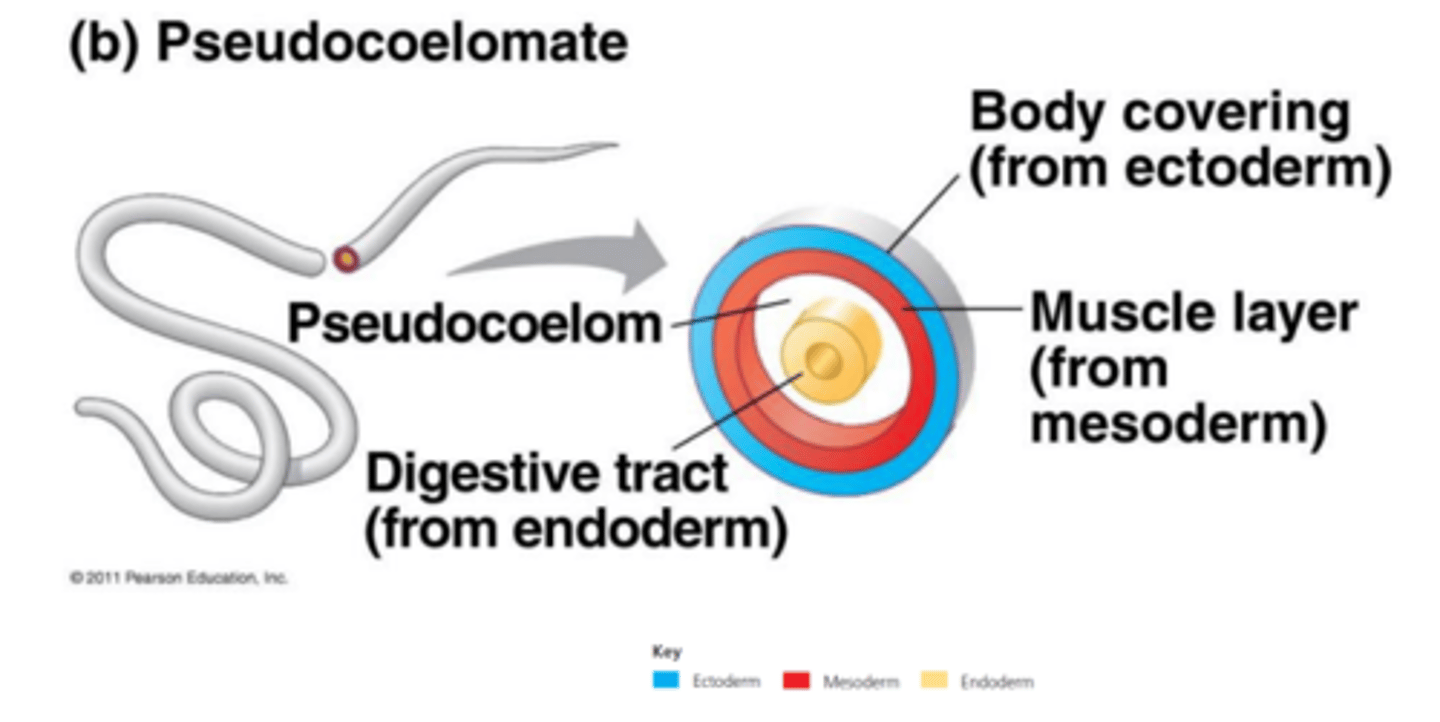
pseudocoeloms
a body cavity that is formed from mesoderm and endoderm
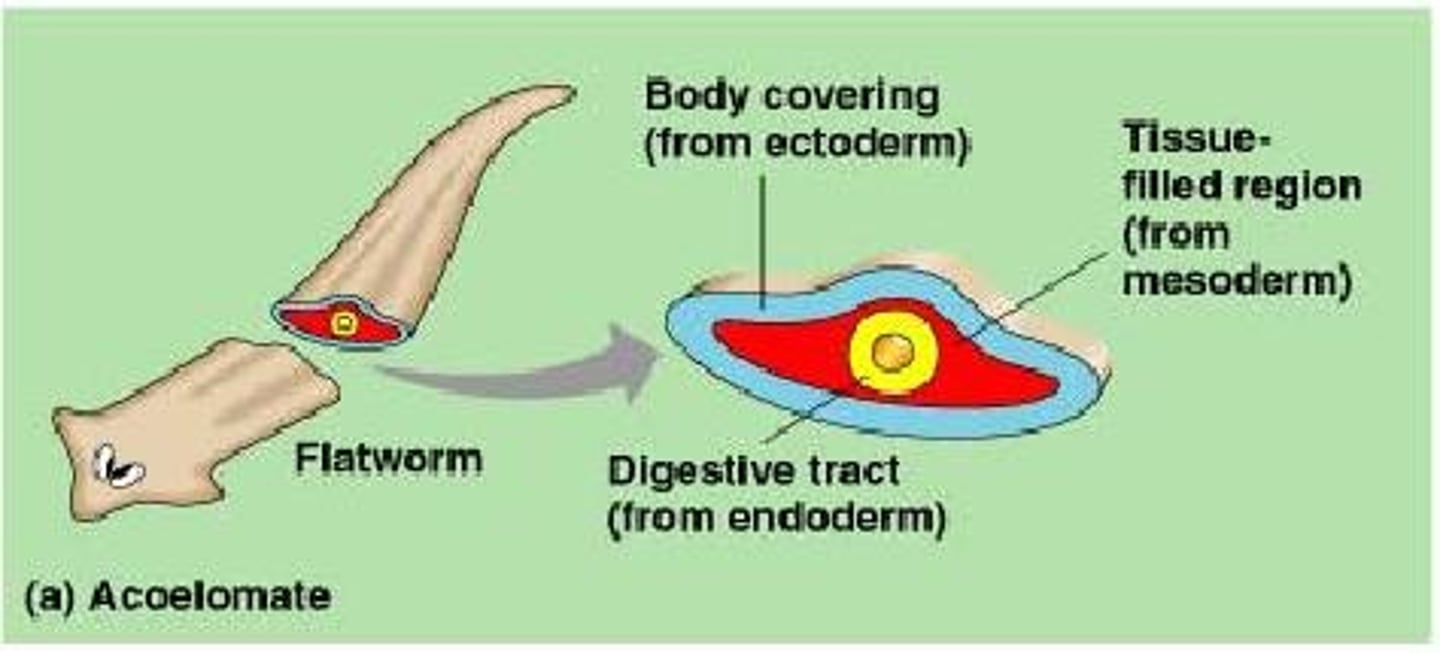
acoelomates
no body cavity
hox genes
series of genes that controls the differentiation of cells and tissues in an embryo, determine body plan, segmentation, number and placement of appendages etc,
hox genes characteristics
highly conserved genes, encode transcription factors, in vertebrates, the genes have been duplicated into four clusters: Hox-A, Hox-B, Hox-C, and Hox-D, genes within these clusters are expressed in certain body segments at certain stages of development
one common ancestor of animals
choanoflagellates are closest protist group to animals, first animals were sponge-like (710 mya?)
proterozoic (pre-cambrian) animals
ediacaran biota, ~565mya, earliest known animal fossils; many extinct! soft-bodied: sponges; jellyfish-like; worm-like
paleozoic era animals
"Cambrian explosion" ~535 mya, dramatic animal diversification, almost all major phyla (+ other extinct ones)
first mineralized skeletons, shells
later paleozoic era
vertebrate fishes dominate seas, arthropods invade land, later vertebrates invade land (amphibians), finally first reptile-like amniotes
mesozoic era animals
dinosaurs, pterosaurs, aquatic reptiles, origin of birds and mammals
cenozoic era animals
diversification of modern groups
extinctions
mass extinctions have occurred repeatedly over geological time
animal phylogeny based on
-analyzing whole genomes
-morphological traits
-ribosomal RNA (rRNA) genes
-hox genes
-protein-coding nuclear genes
-mitochondrial genes
inferences from the animal phylogenetic tree
-all animals share a common ancestor
-sponges are the sister group to all other animals
-eumetazoa is a clade of animals with tissues
-most animal phyla belong to the clade Bilateria
3 major clades of bilaterian animals
deuterostomia, lophotrochozoa, and ecdysozoa