4. Physical Health and Aging
 Call Kai
 Learn
Learn Practice Test
 Spaced Repetition
 Match
Match Flashcards
 Knowt Play
1/44

There's no tags or description
Looks like no tags are added yet.
Name | Mastery | Learn | Test | Matching | Spaced | Call with Kai |
|---|
No analytics yet
Send a link to your students to track their progress
45 Terms
Maximum Life Span
The maximum number of years a member of a species can live
(110-125 years for humans; same for the past 100,000 years)
Life Expectancy
The number of years at birth an average member of a population can expect to live
(22 years in Ancient Rome to 75-80 years today)
How much longer do women live than men?
4 years longer
Study of Personal Health and Illness has 2 goals
What are they?
1) to understand changes in the body that come with age
2) to apply this knowledge to extend and improve human life
Canadian Community Health Survey (2013-14):
What % of Men aged 65+ in private household reported “good” - “excellent” health
About 78.6%
Education and Reports of Good Health (Turcott, 2011)
High education = high rate of good health
(in this study)
Turcott predicts a future increase in the proportion of senior women who will report very good/ excellent health.
Why?
As more women graduate from university
Patterns of Chronic Illness vs. Acute Illness in an Aging Society
Chronic Illness: rates increase (increased rate of noncommunicable diseases and chronic illnesses as people age)
Acute Illness: rates decrease (children surviving infancy, chance to grow into older age)
WHO (2018):
Chronic Diseases Represent ___ of all deaths worldwide
71% of all deaths worldwide
Deaths will increase as worldwide populations age
Epidemiological Transition
The transition a society makes when it moves from a high rate of acute illness (mostly in youth) to a high rate of chronic illnesses (most in older age)
Canada has made this transition
Chronic Illness
A condition that has lasted or is expected to last 6 months+ and has been diagnosed by a health professional
Reported Percentages of Senior Women and Men Who Have At Least One Chronic Health Problem
Women: 84.4%
Men: 82.2%
Specific Groups Report Higher Rates of Chronic Conditions…
What Groups?
poorer people
women have higher rates (arthritis and rheumatism in particular)
women use more healthcare services
Health Deficit Accumulation
The accumulation of medical conditions, disabilities, and chronic diseases over time as a person ages
Zimmerman (2020):
3 Reasons for the Increased Death Rate Among Seniors
1) immune cells in the body decrease with age
2) chronic low-grade inflammation increased with age
3) some medications (including corticosteroids) may inhibit the immune system
What undermines immune function?
Lifestyle choices
(obesity, etc.)
Functional Disability
Limitation on a person’s ability to perform normal daily activities due to illness or injury
Chronic illness can lead to functional disability
Hughes and Colleagues (2018):
Activity Limitation due to Disability ____ with Each Older Age Group
Women vs. Men
Increases
Women have higher rates of disability than men
Biggest Health Issues in Seniors
foot problems
arthritis
cognitive impairment
heart problem
vision
Construction worker injures a knee while on the job (pathology)
Impairment
Functional Limitation
Disability
I: injury may lead to arthritis and stiffness in the joint in later life
FL: difficulty walking or getting up from a chair
D: person may ultimately need to use a wheelchair
Does every medical condition follow a clear path from disease to disability?
NO
disability can happen suddenly (i.e. car accident) rather than illness
recovery from disability/ improvement of functional ability is possible (physio, etc.)
influence of social conditions and personal factors
Do all chronic conditions turn into function disability?
NO
more than ¾ of elderly people have at least 1 chronic condition
less than ½ experience some functional disability
Sense Thresholds
“Points at which a person can begin to perceive a stimulus)
begin to increase as early as age 30
changes are noticed in the 60s
For aids to be useful, 3 things are necessary
1) people have to know about them
2) people have to understand their usefulness
3) products have to be affordable and accessible
Changes in Lifestyle:
Smoking
one of the leading causes of serious disease and death in Canada
immense economic burden on the healthcare system
older people show lower rates of smoking
Sedentary Behaviour and Death
There is a relationship
BUT some sedentary behaviours are better suited than others
The Blue Zones: 9 Keys to a Long and Healthy Life:
Buettner (2010)
1) move
2) plan de vida (purpose in life)
3) down shift (work less, slow down, take vacation)
4) 80% rule (stop eating when you’re 80% full)
5) plant-power
6) red wine (consistency and moderation)
7) moderation (healthy social network)
8) beliefs (spiritual and religious)
9) your tribe (family as a priority)
Disability-Free Life Expectancy
Years of remaining life free of any disability
Dependence-Free Life Expectancy
Measures the number of years of remaining life a person will live in a state free of dependence on others for daily tasks
Health-Adjusted Life Expectancy (HALE)
Number of years a person can expect to live in good health
Biological Aging:
Intrinsic vs. Extrinsic
Intrinsic: normal wear and tear; variations in speed, but a universal occurance
Extrinsic: environment; depends on lifestyle and contextual factors
Mortality vs. Morbidity
Mortality: number of deaths in a population during a given time
Morbidity: any depature from ‘health’
Life-Course Models:
Critical Period Model
exposure during a specific period of life has lasting or lifelong effects
vulnerable ages are fetal, adolescence, and early old age (65-75)
the influence of socioeconomic status
example: Dutch ‘Hunger Winter’
Life-Course Models:
Accumulation of Risk Models
increase in number and/or duration of exposure, cumulative damages, higher risk for disease
example: relationship between smoking and lung cancer (younger start to smoking = higher chance of developing lung cancer)
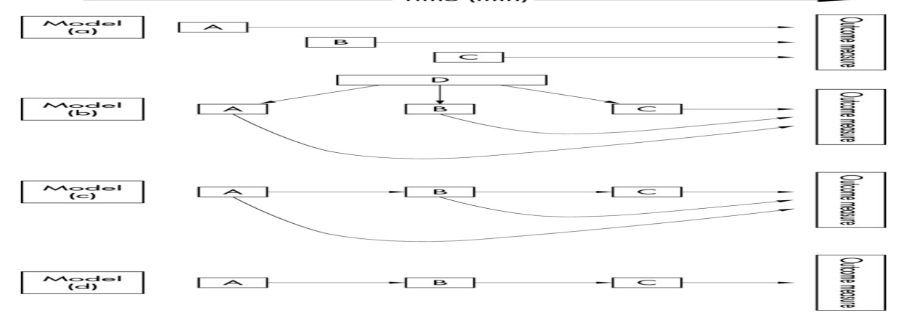
Life-Course Models:
Chain of Risk(s) Model
a by itself has no effect, only when it’s been mixed with b and c
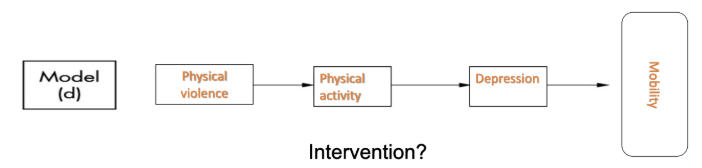
Example of Chain Risk Model
experiences of physical violence at any point of life were associated with mobility decline in old age
possibly through physical activity and depression pathways
Gerontology
Systematic study of aging
(bio-psycho-socio-cultural aspects)
Why is disability an important issue in gerontology?
Disability causes dependency
A Standard Measure of Disability:
Activities of Daily Living (ADLs)
eating
bathing
toileting
getting dressed
getting around inside
getting out of bed
A Standard Measure of Disability:
Instrumental Activites of Daily Living (IADLs)
grocery shopping
money management
medicine
telephone use
going places outside of walking distance
preparing meals
laundry
housework
getting around outside
A Standard Measure of Disability:
Short Performance Battery (SPPB)
Composite measure of balance + gait + speed + rise from a chair
A Standard Measure of Disability:
Nagi Scale
Self report of walking, lifting, and handling objects
A Standard Measure of Disability:
Late-Life Disability Instrument (LLDI)
Frequency of and limitations in performing mostly social activities
(family, travel, going out, etc.)
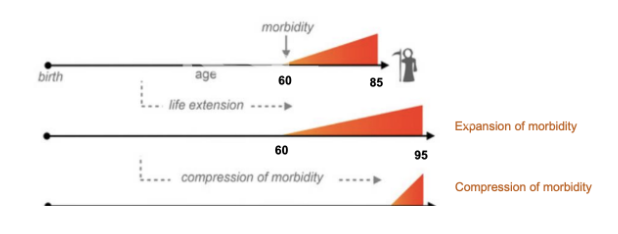
Compression of Morbidity
Same number of morbidity (on average), but compressed in a shorter time
Successful Aging
does not mean not experiencing the natural process of aging
lower chance of chronic conditions and disability (less, but not none)
high mental, physical, and social functioning… think of WHO definition of health