plant disease and immunity
 Call Kai
 Learn
Learn Practice Test
 Spaced Repetition
 Match
Match Flashcards
 Knowt Play
1/20

There's no tags or description
Looks like no tags are added yet.
Name | Mastery | Learn | Test | Matching | Spaced | Call with Kai |
|---|
No analytics yet
Send a link to your students to track their progress
21 Terms
what are the symptoms of plant disease?
Fungi:
grown as thread like structures (hyphae)
spread via spores
cause things like mould, rot and leaf spot
fungi like microorganism - oomycetes - spread via water
bacteria:
single celled organisms
cause leaf spots, rot, wilting, ooze
viruses:
spread by insects (vectors)
cause discolouration, stunted growth, deformed leaves
nematodes:
attack roots
tiny worms in the soil
cause poor growth, root damage, swelling
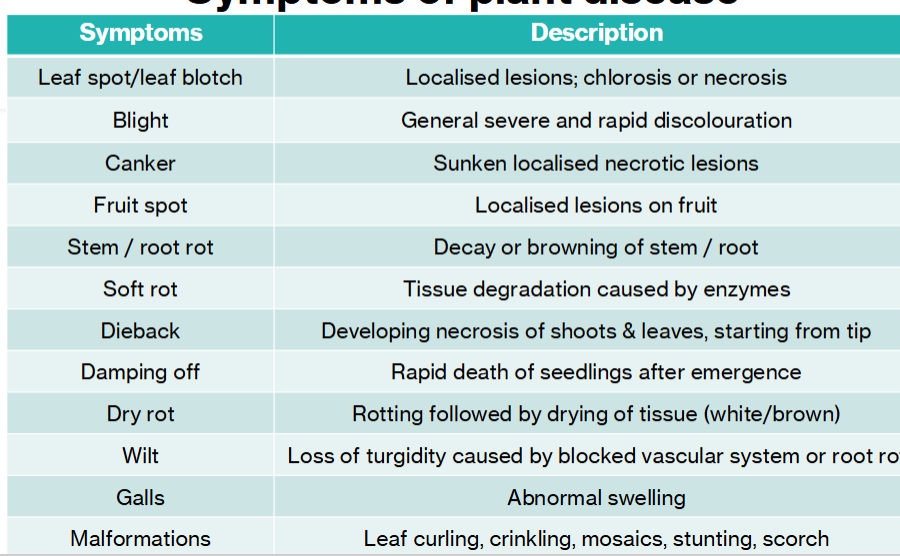
what are the signs of plant disease?
symptoms = visible or detectable abnormalities arising from the disease
signs are the visible pathogen itself
rusts spores
smut spores
powdery mildew
mycelium and sclerotia
what are fungal disease symptoms?
Eukaryotic
• Heterotrophic
• Hyphae
• Mycelium
• Fruiting bodies
• Spores
symptoms:
soft rot
dry rot
leaf spots/scald
leaf curl
signs:
powdery mildew
rust
smut
mycelium
fruiting bodies
what are bacterial signs and symptoms?
leaf spots
wilts
cankers
diebacks
rots
galls
scorch
ooze - most distinctive sign
viruses
transmitted by vectors
rna or dna wrapped in protein coat or sometimes lipid membrane
symptoms:
necrosis
mosaics
chlorosis
stunting
crinkling
nematodes
unsegmented small worms
microscopic
some feed on bacteria some on plants
ecto- and endo parasites
signs and symptoms;
stunting
discolouration, decline
dieback
necrosis
chlorosis
local lesions
galls
cysts
very similar to oomycete symptoms
how can plant disease be diagnosed
kochs postulates
suspected causal organisms should be consistently associated with symptoms
organism is isolated from diseased host and grown in a pure culture
healthy host is infected with isolated organism and should show same symptoms
reisolate organism and should show same symptoms
molecular techniques
dna extraction followed by pcr - expensive equipment
take time to develop initially
knowledge of potential pathogen required
fast and efficient
what are the pathogen lifestyles
commensal - lives on plant but doesnt affect it
mutualistic - both plant and microbe benefit
pathogenic - cause disease
types of pathogen
biotroph - feeds on living plant cells, keeps plant alive
necrotophs - kill plants cells and then feed on them
hemibiotrophs - starts of a biotroph then become a necrotoph
saprotroph - feed on dead material
how pathogen cause disease
toxins - damage plant cells
ezymes’s - help enter plant
effectors -trick plant defences
hormones - alter plants growth
how do we manage plant disease
cultural methods: (prevention)
clean tools
remove infected plants
crop rotation
use healthy seeds
chemical control:
use fungicides
must be used carefully
problems - expensive, harmful, pathogens can evolve resistance
biological control:
use natural organisms to fight pathogens
resistant plants
breed plants that are resistant
biotechnology:
GM crops
add resistance genes
use tools like CRISPR
physical defences
strengthen the cell wall locally
close stomata
formation of tyloses
chemical defences
defensins
antimicrobial metabolites
hypersensitive responses
systemic acquired resistance
induced systemic resistance
what are the two components of immune system
basal resistance - recognises microbes, triggers generalised defence response
specific resistance - gene-for-gene hypothesis, triggers localised then generalised
Basal resistance
generalised defence response
pathogen recognition receptors (PRR) recognise MAMP’s/PAMP’s and DAMP’s
also known as pattern triggered immunity
triggers production of defensins and phytoalexins
defensins are toxins, anti microbial properties
phytoalexins are alkaloids, cyanide etc
specific resistance
plants have a resistance gene
pathogens have an avirulence gene (Avr)
the plants R protein interacts with the pathogens Avr protein to signal the pathogens presence
R/Avr interaction is an example of co evolution
what is the gene for gene hypothesis
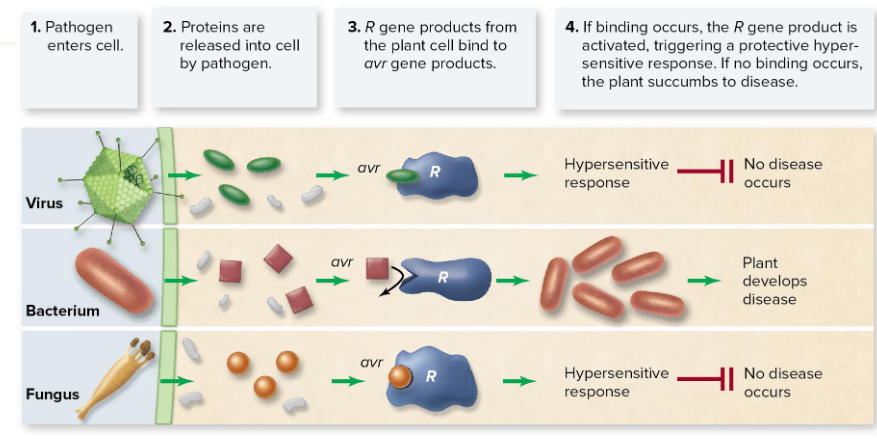
whats the hypersensitive response
plant cells produce large quantities of reactive oxygen species which induce rapid cells death around site of the attack
what is systemic acquired resistance (SAR)
Triggered by pathogen attack
uses salicyclic acid - produces defence proteins
long lasting protection
biotrophs and hemibiotrophs
what is induced systemic resistance
triggered by helpful microbes in the soil
uses jasmonic acid and ethylene
prepares plant for attack
necrotrophs and insects