Economics of Money and Banking 270 Final
 Call Kai
 Learn
Learn Practice Test
 Spaced Repetition
 Match
Match Flashcards
 Knowt Play
1/57

Earn XP
Description and Tags
Covers Chapter 9, 12, 15 which are Banking Management Principles, Financial Crises, and Tools of Monetary Policy
Name | Mastery | Learn | Test | Matching | Spaced | Call with Kai |
|---|
No analytics yet
Send a link to your students to track their progress
58 Terms
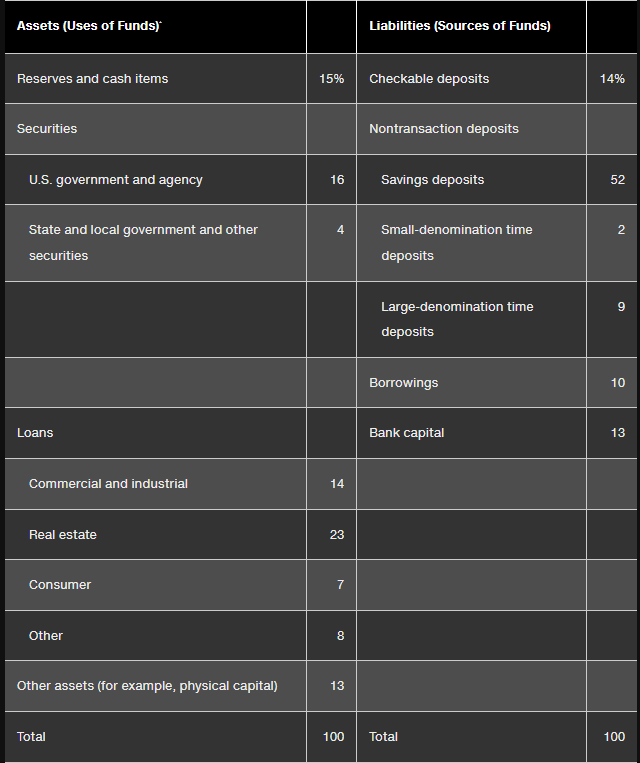
Assets (use of funds for banks)
RECALL total assets = total liabilities + capital
Banks make profits by earning interest on their asset holdings and securities and loans that is higher than the interest and other expenses on their liabilities
assets include loans* , securities, reserves and other cash assets
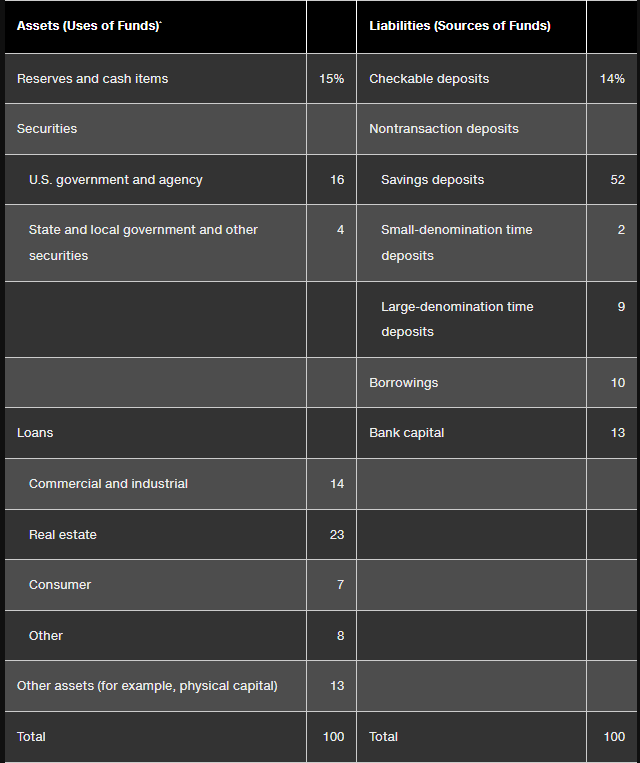
Liabilities (POV of a bank)
RECALL total assets = total liabilities + capital
banks acquire funds by issuing/selling liabilities. The funds are then used to buy income earning assets.
including deposits*, borrowings, other liabilities, and bank capital
NOW (Negotiable order of withdrawal) accounts
checking accounts that pay interests
Checkable deposits/transaction deposit
Bank accounts which allow the owner of the account to write checks.
They are a liability to banks therefore making it an asset to household and firms.
Nontransaction Funds
The primary source of bank funds. Owners CANT write these to third parties. In exchange for this the interest rate paid on these deposits are higher.
Saving Accounts
A type of nontransaction deposit acount
Funds can be added/withdrawn ANY time. Transaction/interest payments recorded in a monthly or passbook of the owner
Timed Deposits
Fixed maturity length months-5 years
Substantial penalties for early withdrawals
Small Timed Deposits (Less than $100,000)
Less liquid for the depositor than passbook savings, earn higher interest rates, and are a more costly source of funds for the banks.
Small Timed Deposits (More than/Equal $100,000)
-typically bought by corporations or other banks.
-negotiable; like bonds, can be resold in a secondary market before maturity.
-held by corporations, money market mutual funds, and other financial institutions as alternative assets to Treasury bills and other short-term bonds.
NOW accounts
Non Transaction Deposits
Saving Accounts
Money Market Deposit Accounts
Time Deposits
Borrowings
Federal Funds
Repurchase Agreements (REPOS)
Discount Loans
Loans from parent company
Bank Capital
Shareholders Equity
Bank Net Worth
Assets
Reserves
Vault Cash