Anatomy of the Pharynx
 Call Kai
 Learn
Learn Practice Test
 Spaced Repetition
 Match
Match Flashcards
 Knowt Play
1/68

There's no tags or description
Looks like no tags are added yet.
Name | Mastery | Learn | Test | Matching | Spaced | Call with Kai |
|---|
No analytics yet
Send a link to your students to track their progress
69 Terms
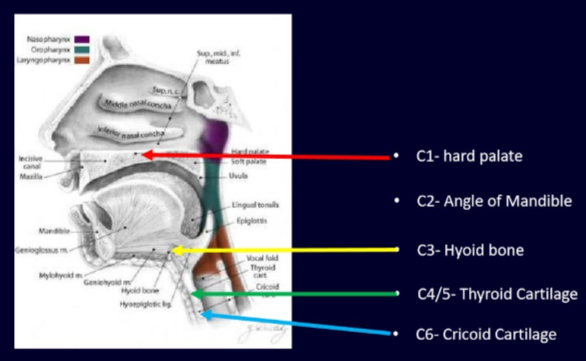
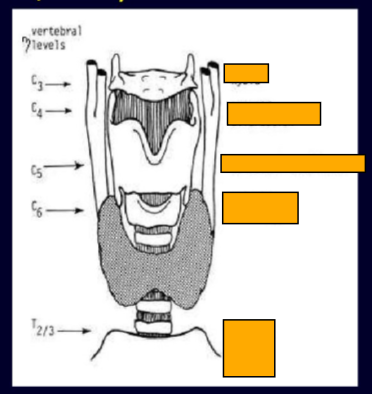
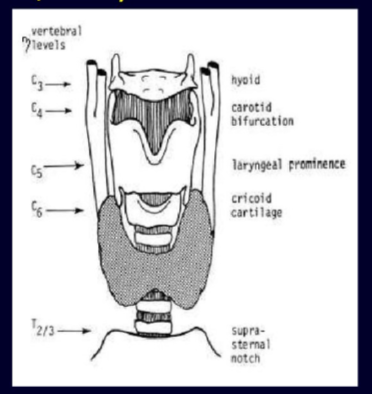
Vertebral level of the hard palate
C1
Vertebral level of the angle of the mandible
C2
Vertebral level of the cricoid cartilage
C6
Vertebral level of the thyroid cartilage
C4/5
Vertebral level of the hyoid bone
C3
What is the pharynx
common superior muscular chamber of the aero-digestive stream
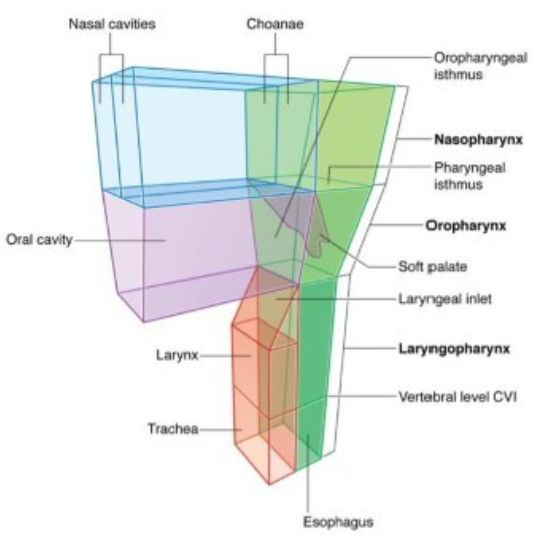
How can we enter the pharynx anteriorly
via the nose or mouth
Which vertebral level does the pharynx split
C6
What does the pharynx split into
larynx- airways
oesophagus -digestive stream
What happens to the digestive stream and airways in the pharynx
-they cross over one another
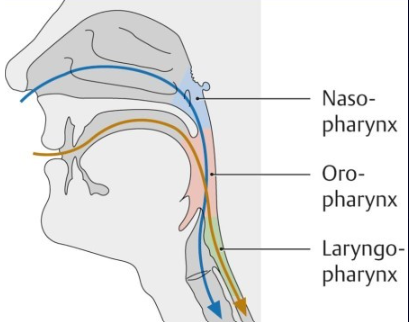
Which vertebral level does the digestive stream and airways cross
C6
Explain why the crossing of pathways is important clinically
disorders of swallowing such as injury to the brain and trauma to intra-oral structures makes the crossing of pathways dangerous and increase risk of aspiration int he airways
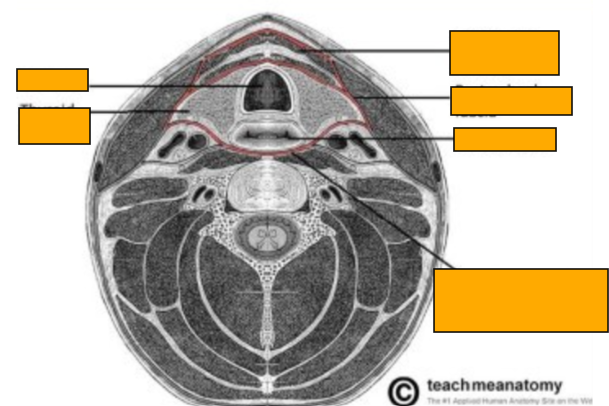
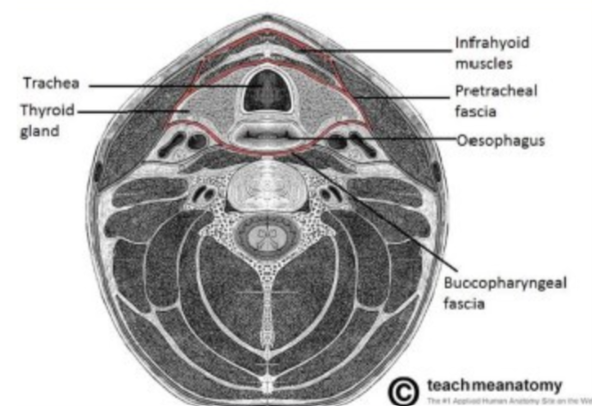
Why is it important that the pathways cross
Where does the pharync begin
base of the skull
Where does the pharynx terminate
lower border of the cricoid cartilage
Describe the shape/dimensions of the pahrynx
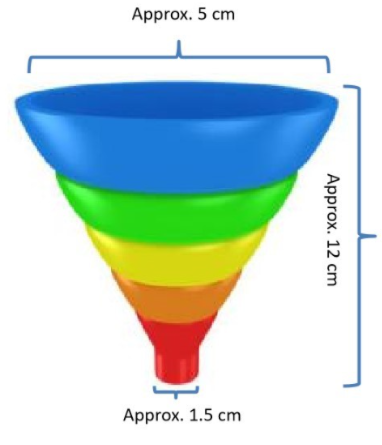
-funnel shaped
-12 cm long
-greatest width of 5cm, tapers to a width of 1.5cm at the upper oesophagus
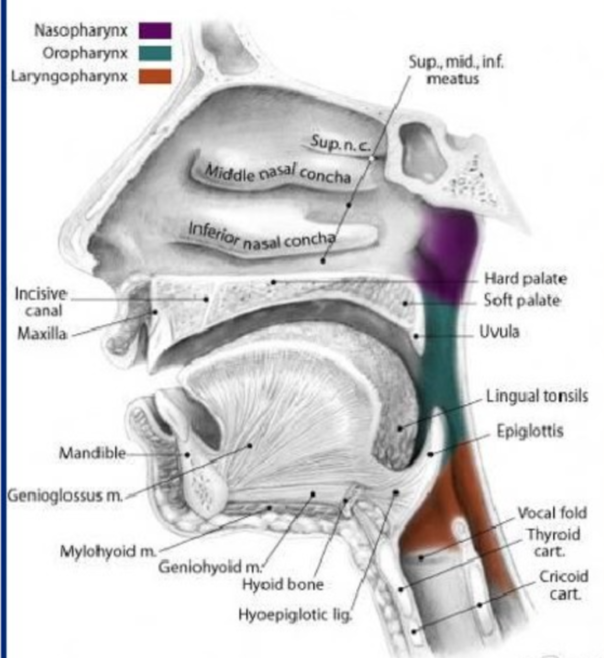
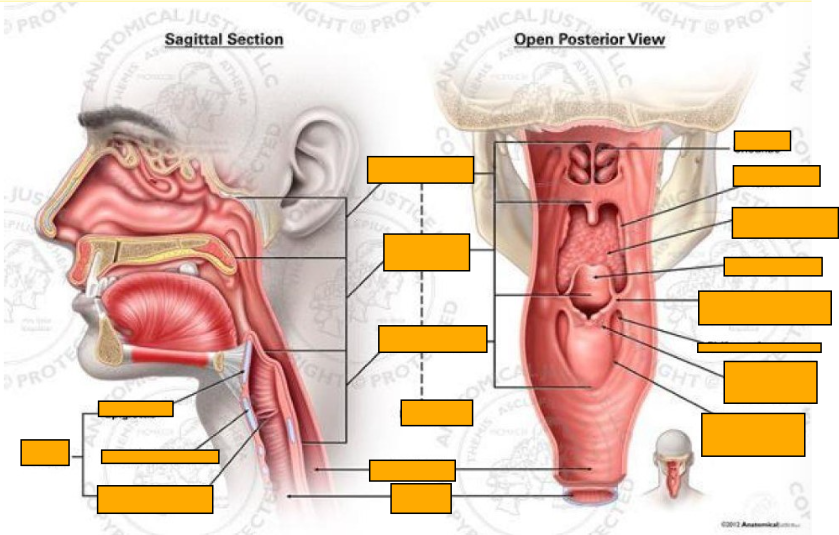
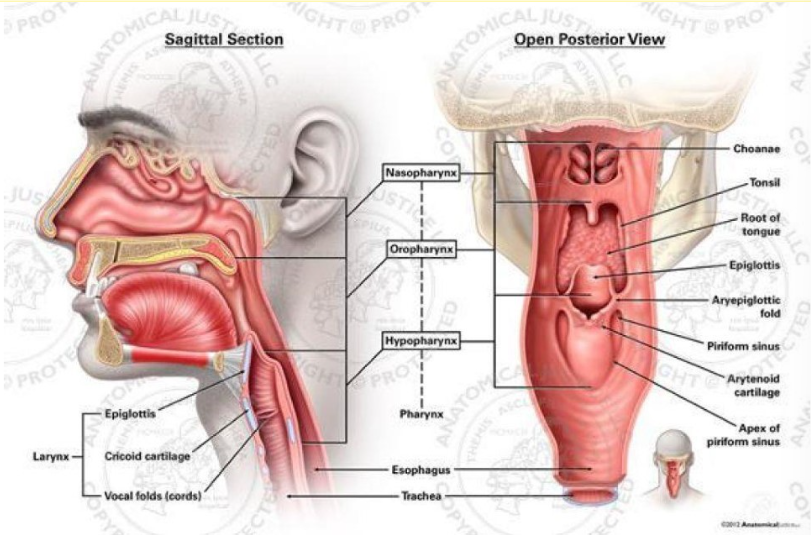
What are the 3 main divisions of the pharynx
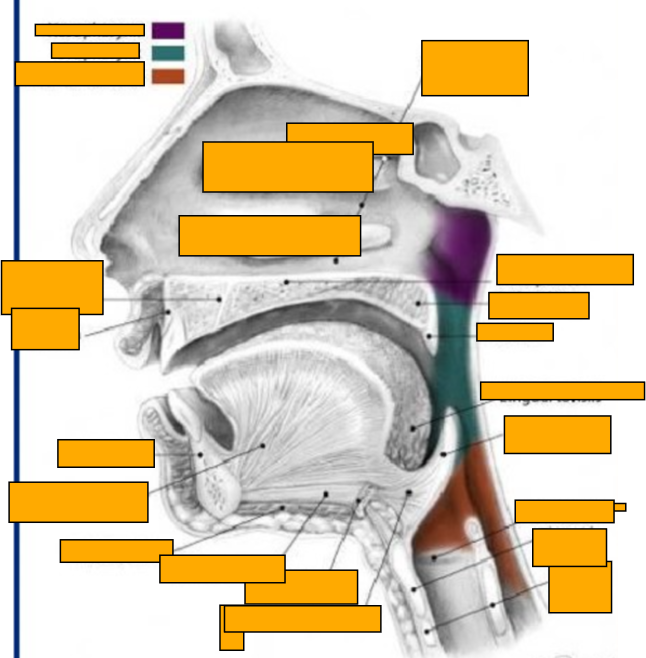
nasopharynx
oropharynx
laryngopharynx/ hypopharynx
Location of the nasopharynx
above the soft palate
Superior and inferior boundary of the nasopharynx
superior- skull base
inferior- level of the soft palate (superior border of the uvula)
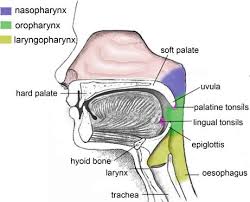
Anterior and posterior boundary of the nasopharynx
anterior- choanae (posterior nares/ posterior nasal aperture)
posterior- pharyngeal wall/ nasopharyngeal tonsil, C1 vertebral level
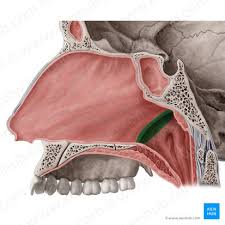
What are adenoids
-nasopharyngeal tonsilds that become enlarged
What is the nasopharynx lined with
ciliated pseudostratified squamous epithelium/ upper respiratory epithelium
Location of the oropharynx
behind the oral cavity and tongue
superior and inferior boundary of the oropharynx
supeior- inferior border of the soft palate
inferior- superior edge of the epiglottis
anterior and posterior border of the oropharynx
anterior- oropharyngeal isthmus/ oral cavity
posterior- pharyngeal wall C2/C3 vertebrae
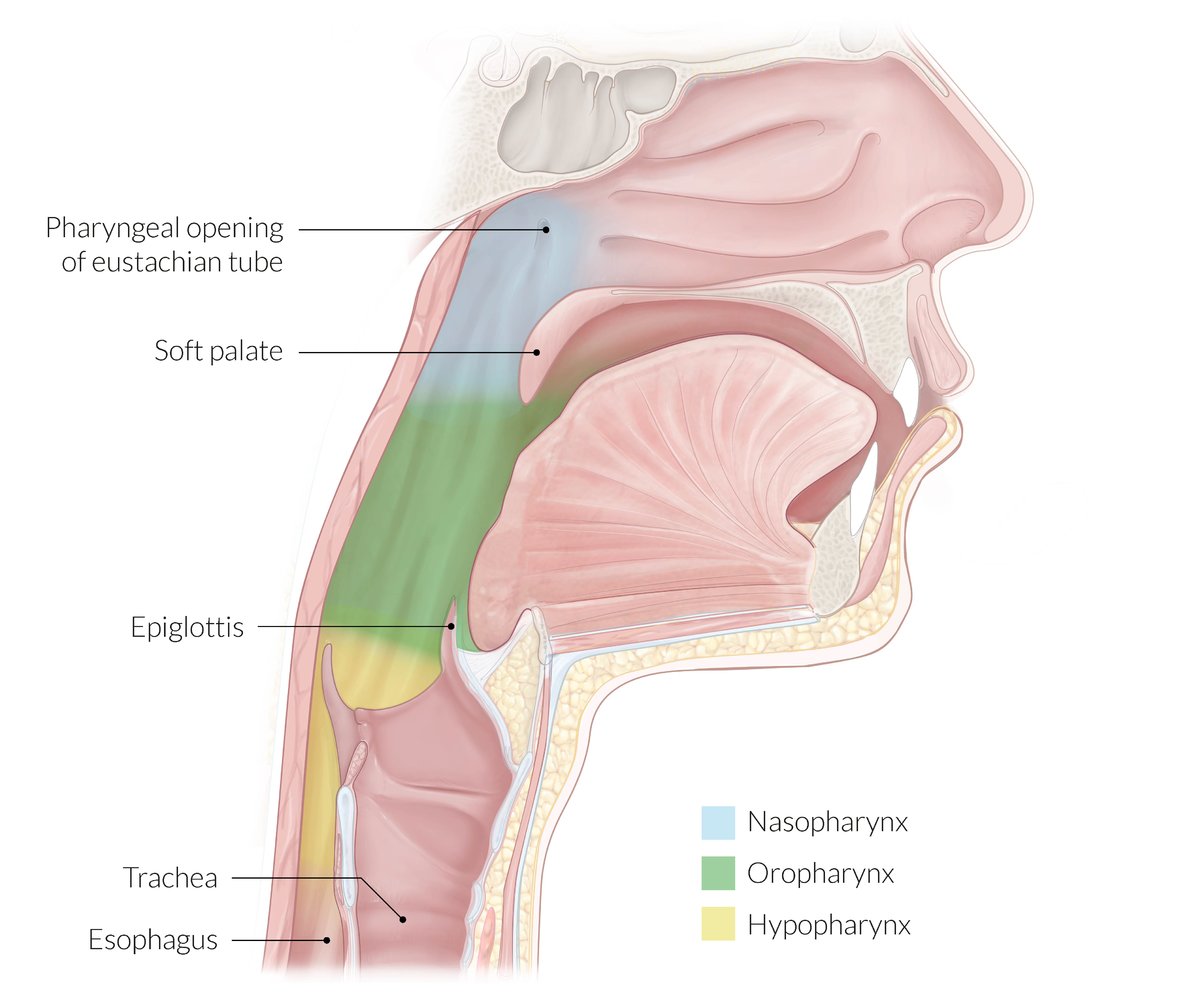
Borders of the laryngopharynx
superior- inferior border of the epiglottis
inferior- lower border of the cricoid cartilage
anterior- larngeal inlet
posterior- pharyngeal wall
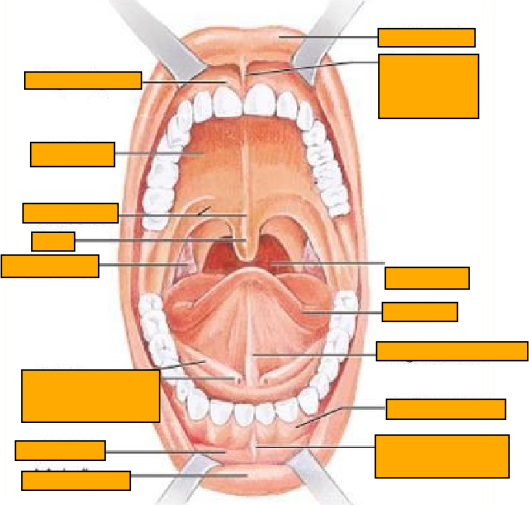
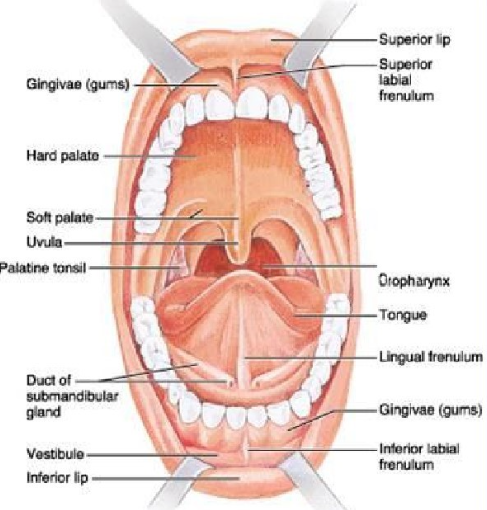
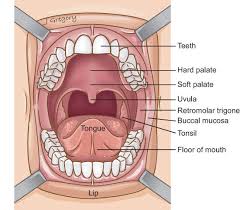
Contents of the oropharynx from anterior to posterior
anterior tonsialla pillar (palatolossal arch)
palatine tonsil (sits in the tonsillar fossa)
posterior tonsiallr pillar (palatopharyngeus arch)
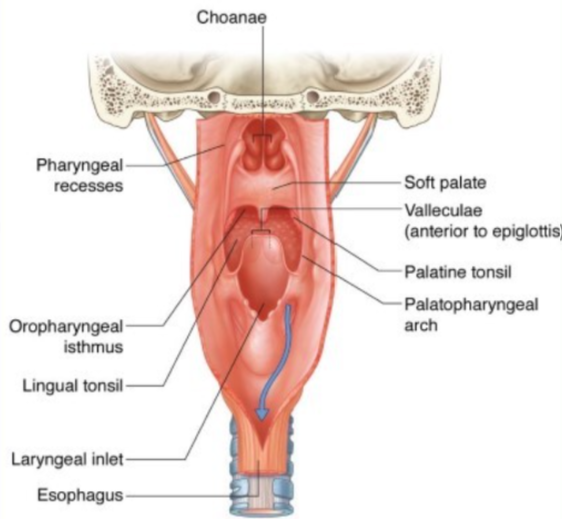
What lines the pharynx
lineed by mucous membranes which are continuous with all the chambers with which it communicates
What is the submucosa of the pharynx known as
-pharyngobasilar fascia
-strong fibrous sheet which lines the muscles of the pharynx internally
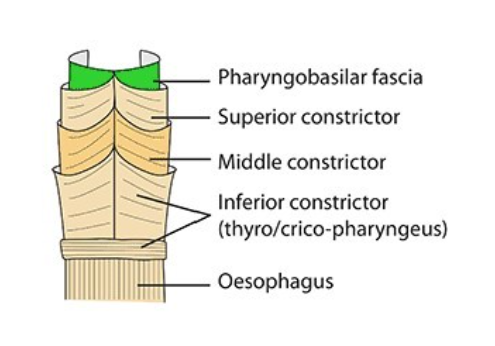
Which fascia covers the muscles of the pharynx externally
buccopharyngeal fascia
How is the pharynx separated posteriorly from the vertebral column and prevertebral muscles and fascia
-by loose areolar tissue of the retropharyngeal space
How many muscles of the pharynx are there
6 muscles
What are the 6 muscles known as collectively
the pharyngeus complex of muscles
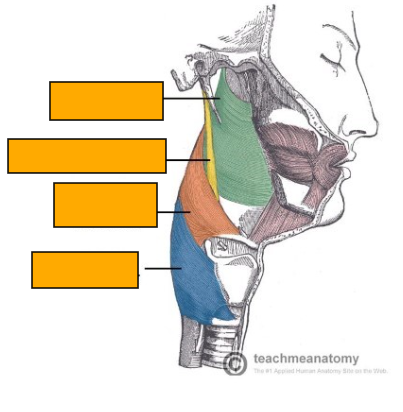
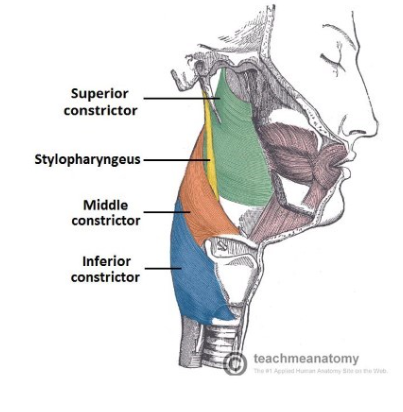
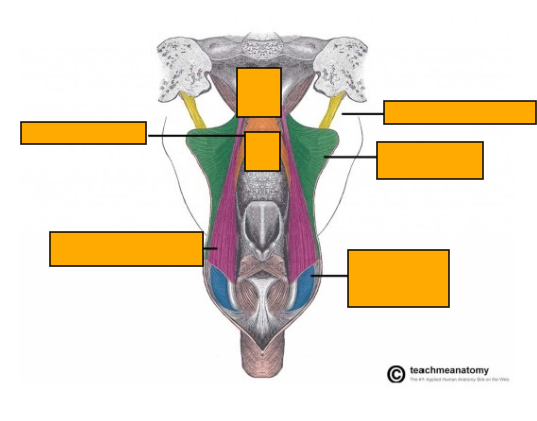
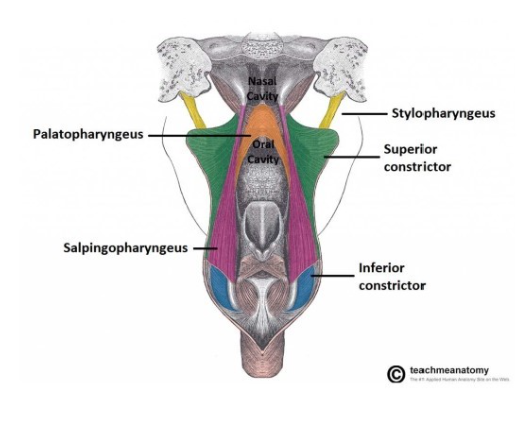
What are the 6 muscles of the pharynx
superior constrictor
middle constrictor
inferior constrictor
stylopharyngeus
palatopharyngeus
salpingopharyngeus
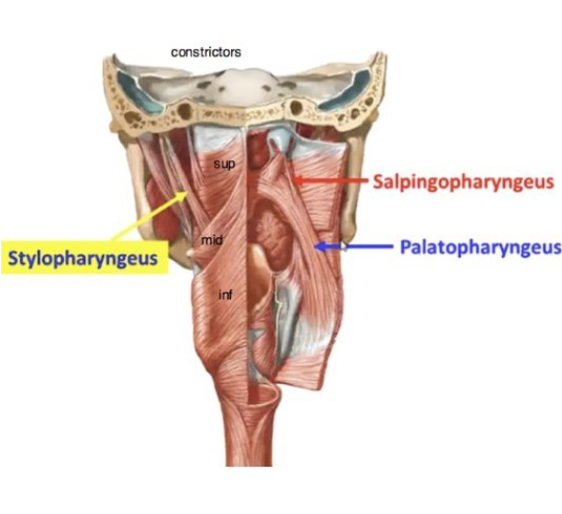
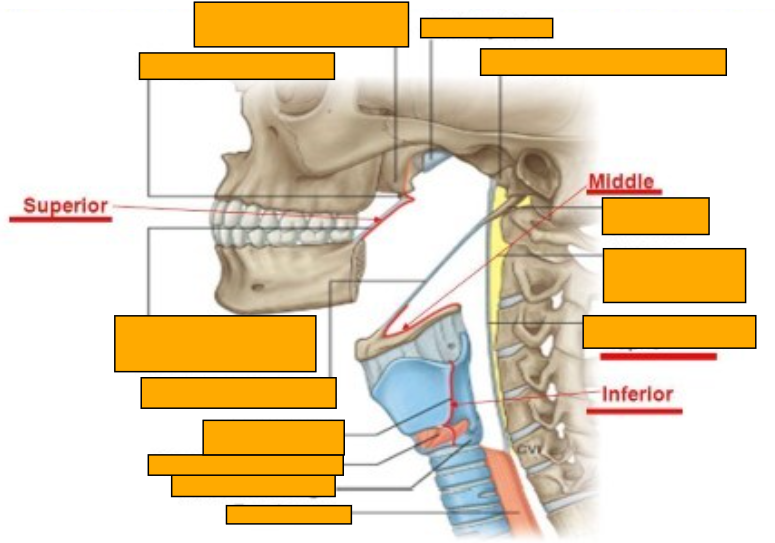
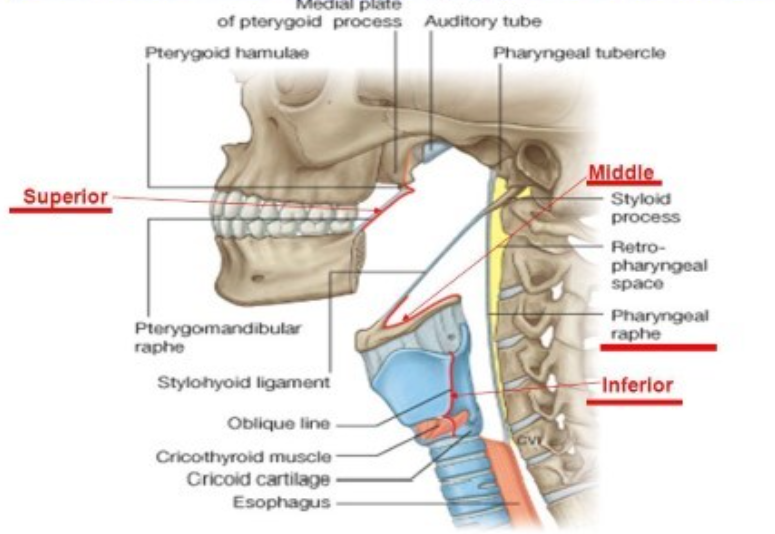
Origins of the superior constrictor muscle
-lower 1/3 of the posterior border of the medial pterygoid plate and its hamulus
-pterygomandibular raphe
-mylohyoid line of the mandible
-side of the root of the tongue
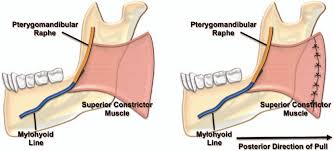
Describe the direction of the fibres of the superior constrictor muscle
-the fibres radiate upwards and downward
Insertion point of the superior constrictor muscle
-inserting in the pharyngeal raphe and by the upper most fibres into the pharyngeal tubercle
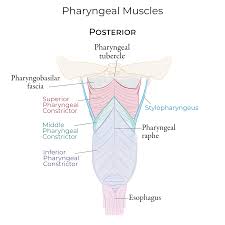
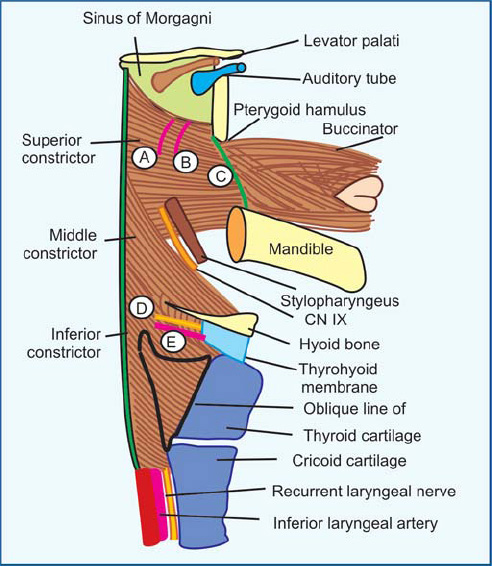
What is the sinus of morgagni
-non muscular area lateral to the pharyngeal tubercle in which the pharyngeal wall is made up mostly of the pharyngobasilar fascia
-occurs as the upper border of the superior constrictor doesn’t reach the skull base except at the midline
Origin of the stylopharyngeus muscle
-medial aspect of the base of the styloid process
What passes between the superior pharyngeal constrictor and middle pharyngeal constrictor?
-stylopharyngeus muscle
-glossopharyngeal nerve
Describe the arrangement of the constrictor muscles and stylopharyngeus muscls
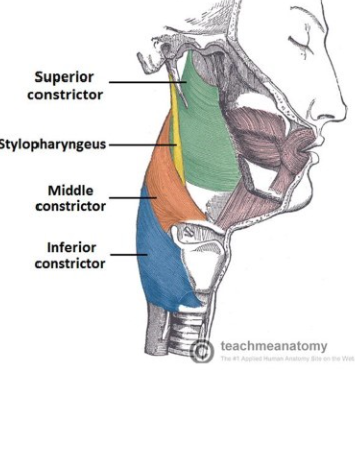
-lower part of the superior constrictor is overlapped by the middle constrictor
-stylopharyngeis muscle passes between the superior and middle constrictors at the lateral pharyngeal wall
Direction of the fibres of the stylopharyngeus muscle
downwards
medial
Insertion of the stylopharyngeus muscle
-posterior and superior borders of the thyroid cartilage and spreads out under the mucosa of the pharynx
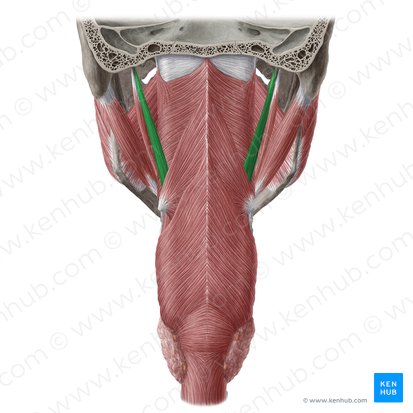
Which nerve innervates the stylopharyngeus muscle
the gloospharyngeal nerve
What is the significance of the palatopharyngeus muscle in relation to the oral cavity
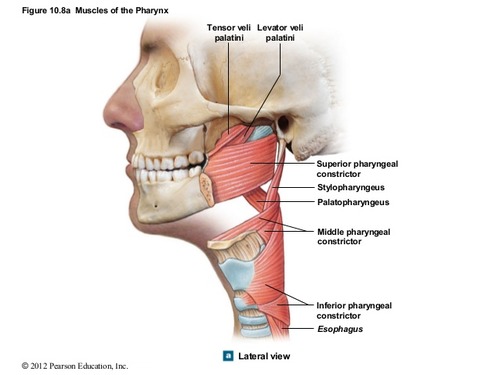
-forms the palatopharyngeal arch
What are the 2 layers of the palatopharyngeus muscle in the palate
-1 layer that sits posterosuperior to the levator veli palatini
-1 antero-inferior to the levator veli palatini
Insertion of the palatopharyngeus msucle
-inserts into the posterior border of the thyroid cartilage and into the posterior wall of the pharynx
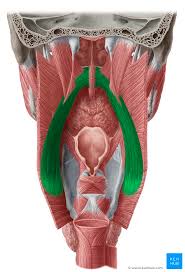
Origin of the salpingopharyngeus muscle
-arises from the lower border of the auditory tube
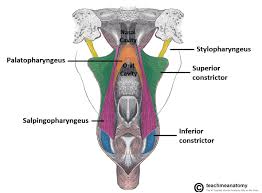
Insertion of the salpingopharyngeus muscle
-converges on the palatopharyngeus muscle and blends with it in the pharyngeal wall
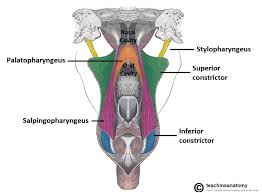
Which nerve innervates the muscles of the pharyngeal wall
-the pharyngeal plexus
-except the stylopharyngeus which is innervated by the stylopharyngeus nerve (CNIX)
-the inferior constrictor also receives additional innervation from the external branch of the superior laryngeal nerve (CNX)
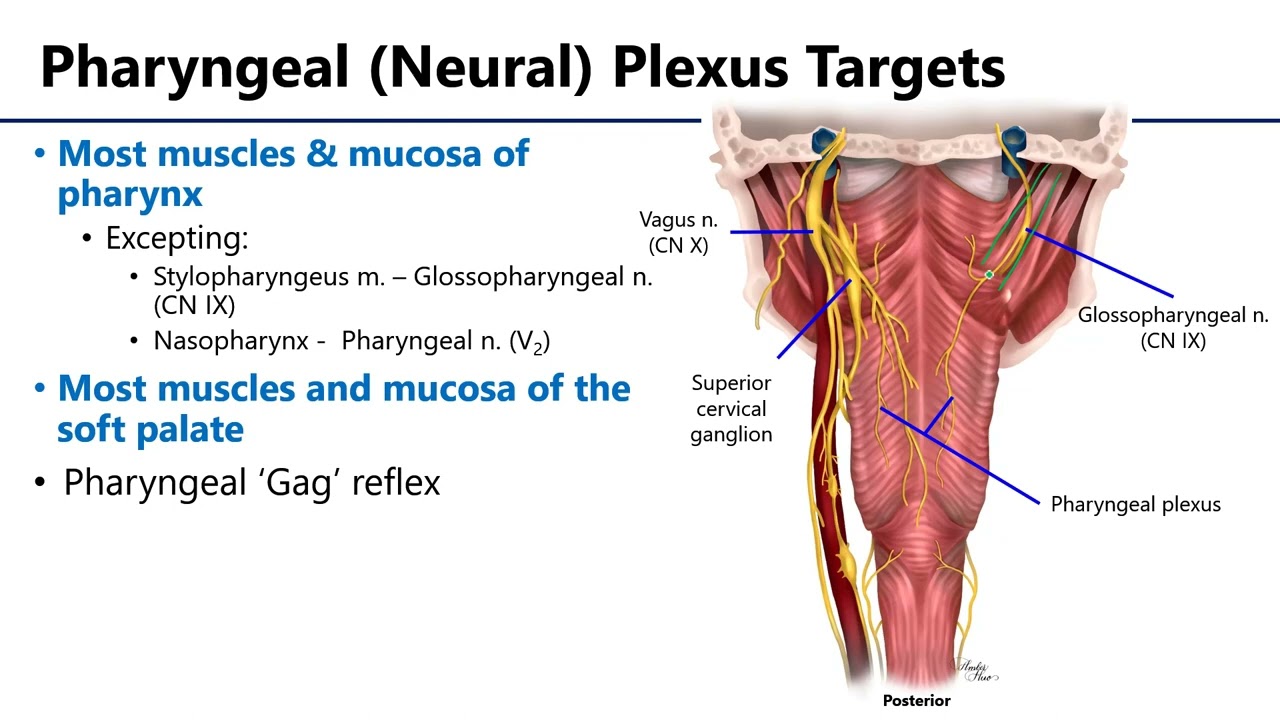
Location of the pharyngeal plexus
-formed on the middle constricotr muscle
-opposite the greater horn of the hyoid bone
What is the pbaryngeal plexus formed by
-CNIX
-CNX
-superior cervical ganglion
What are the 3 phases of swallowing
-oral phase
-pharyngeal phase
-esophageal phase
Explain the mechanims of swallowing
-food is pushed from oral cavity to the oropharynx (tongue and suprahyoid muscles elevate hyoid and larynx, soft palate elevates and seals off the nasopharynx, superior constrictors contract)
-food bolus passes into laryngopharynx by aid of middle and inferior constrictors
-larynx protected by (overhanging tongue, epiglottis, vocal cords)
-cricopharyngeus (upper oesophageal sphincter) relaxes
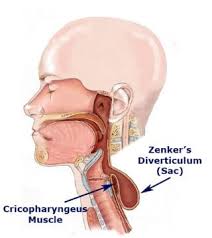
What is Zenker’s Diverticulum
-mucosal outpouching through a weak area just above the upper oesophageal sphincter (cricopharynegus muscle) in the posterior wall of the pharynx
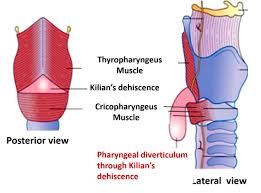
What is Killian’s Dehiscence/triangle
-a triangular area in the posterior wall of the pharynx, located just above the upper oesophageal sphincter (in the same spot where zenker’s diverticulum)
-a potential weak spot where Zenker’s diverticulum is most likely to occur
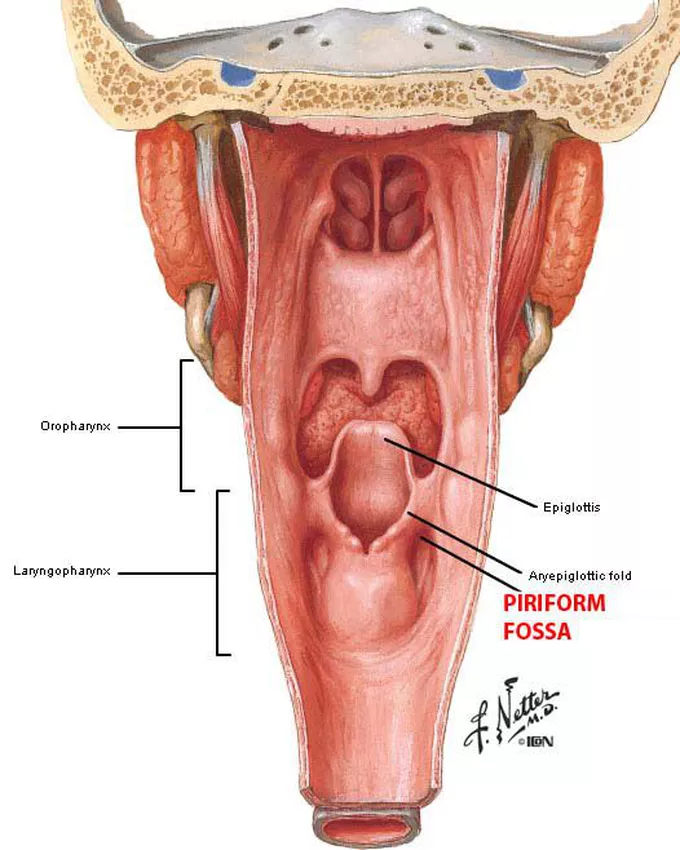
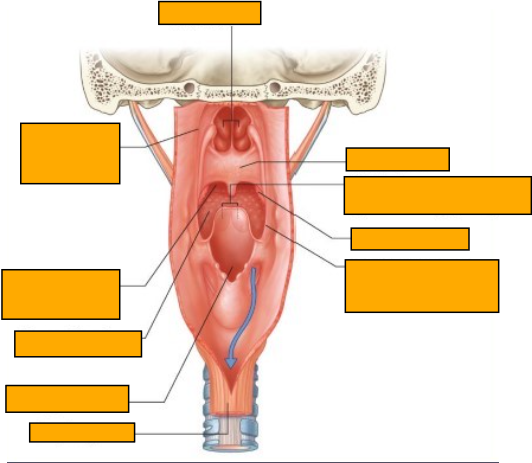
What is the piriform fossa
-a recess on either side of the laryngeal inlet
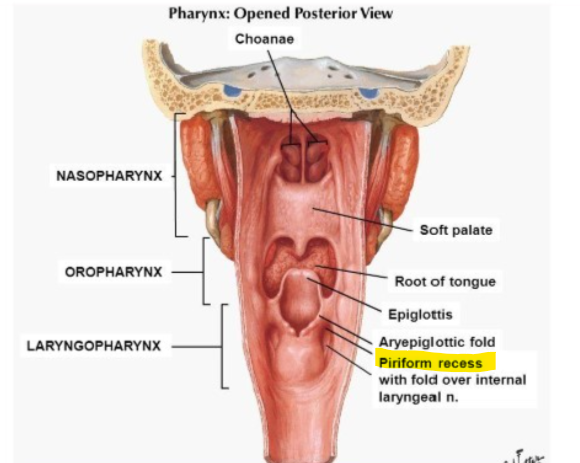
Clinical significance of the piriform fossa
-foreign bodies such as fish bodies often get stuck there
What is the piriform fossa bounded by
medially by the aryepiglottic fold
laterally by the thyroid cartilage and thyrohyoid membrane