Arterioles alter the distribution of blood in tissues
 Call Kai
 Learn
Learn Practice Test
 Spaced Repetition
 Match
Match Flashcards
 Knowt Play
1/8

There's no tags or description
Looks like no tags are added yet.
Name | Mastery | Learn | Test | Matching | Spaced | Call with Kai |
|---|
No analytics yet
Send a link to your students to track their progress
9 Terms
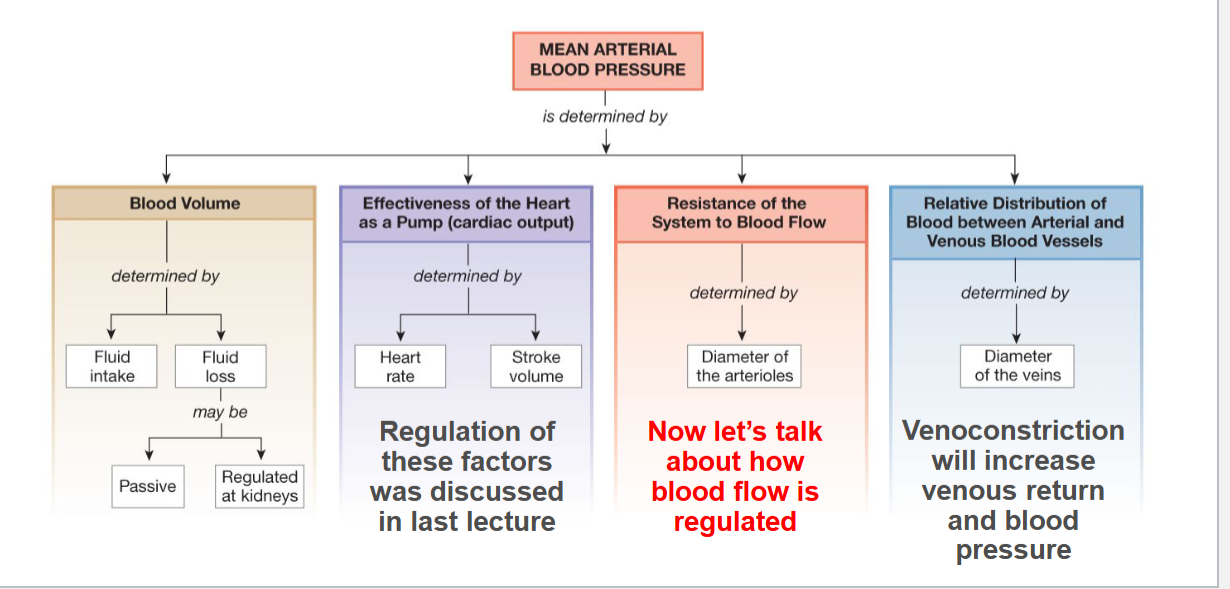
Factors affecting blood pressure
Blood pressure control involves both the cardiovascular sys (CVS) and the urinary sys
Fast control by the CVS
Slow control by the kidneys
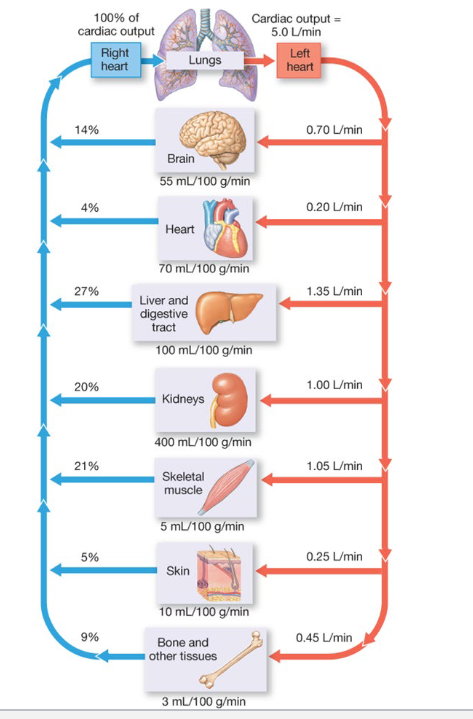
Distribution of blood during rest
During rest, most of the blood is going to the systemic veins
During exercise, it is most advantageous to direct blood flow to the active skeletal muscles, heart, and skin, which is achieved at the level of arterioles primarily through vasodilation (widening) in these tissues, driven by local metabolic demands and functional sympatholysis, alongside concurrent vasoconstriction (narrowing) in non-essential organs.
Arteries, arterioles, and veins all contain smooth muscle cells that are under….
autonomic control
BUT, (arteries/arterioles/veins) are the most numerous of these three types of vessels
arterioles
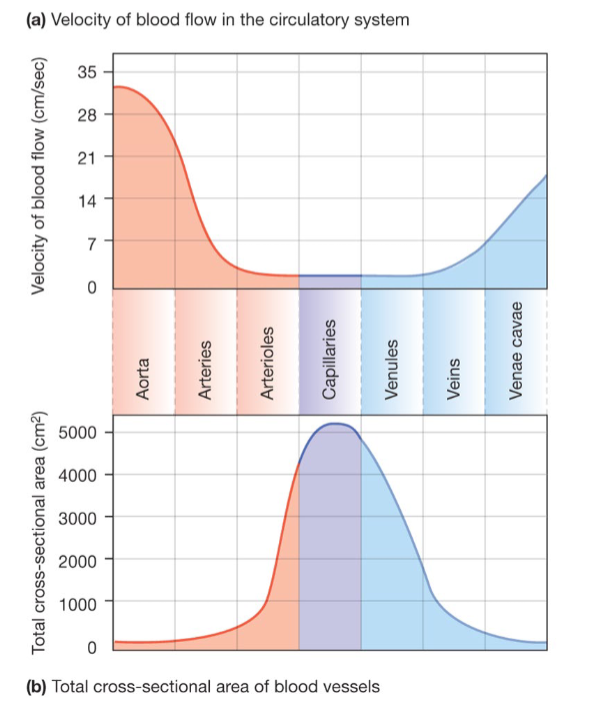
So, adjustments to arteriole diameter have the largest, systemic impact on total peripheral resistance and blood pressure overall
That’s why we are focusing on how the sympathetic nervous system alters the diameter of arterioles even though arteries and veins also have smooth muscle
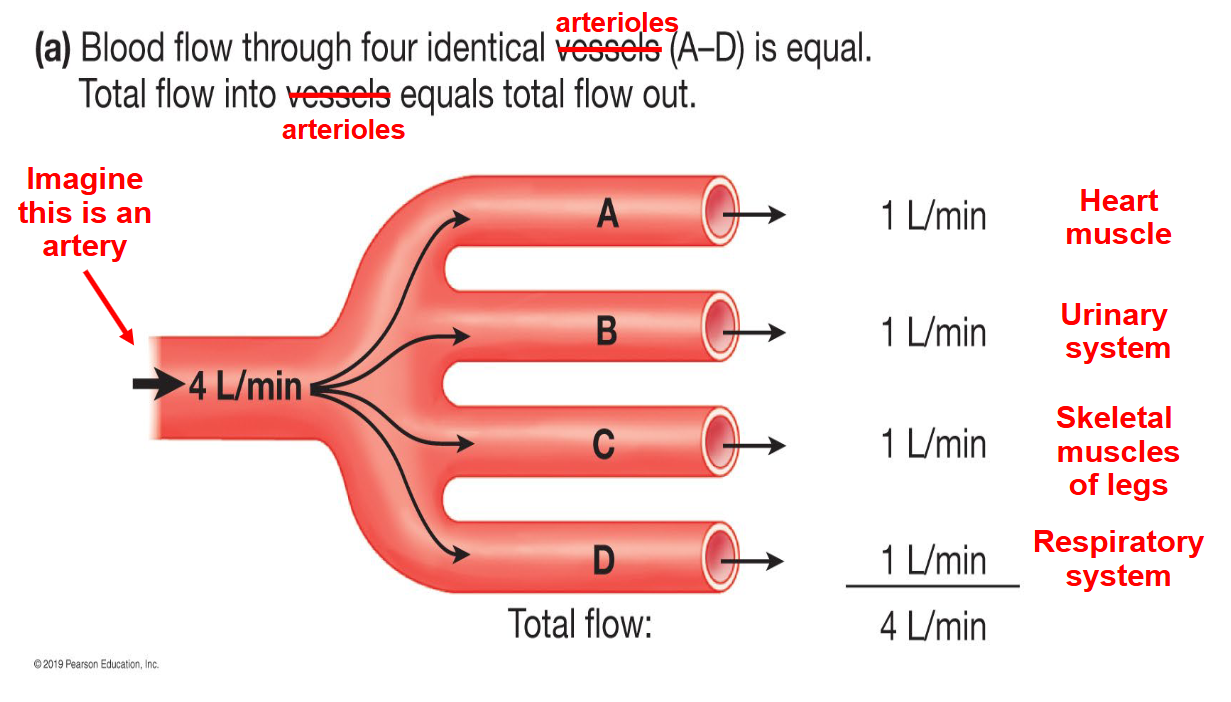
Blood distribution through arterioles
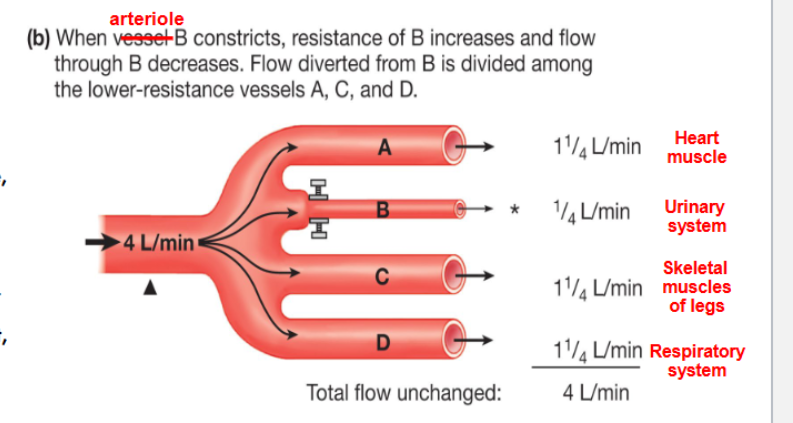
Activating the sympathetic efferent pathways…
Reduced blood flow to areas where it’s not needed in times of activity/stress
high lvls of norepinephrine binding to apha-1 receptors on smooth muscle cells constricts arterioles leading to the digestive, urinary, and reproductive systems
these arterioles are more numerous
Sends more blood to areas that need it
high lvls of epinephrine binding to Beta-2 receptors on smooth muscle cells dilates arterioles leading to skeletal muscles, heart, and lungs
these arterioles are less numerous
Leads to an overall increase in blood pressure AND a more strategic distribution of blood flow to hard-working areas of the body
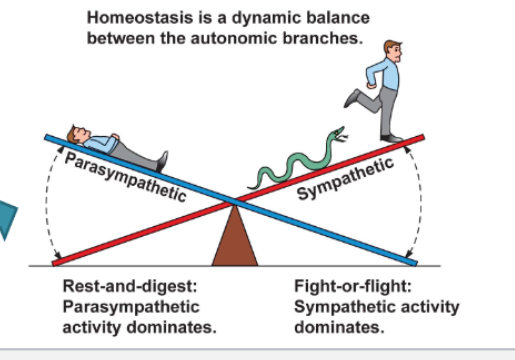
The opposite pattern of changes would occur when levels of these sympathetic signal molecules decrease (you enter a parasympathetic state)
remember, if sympathetic activity is low, then parasympathetic activity is high — vise versa
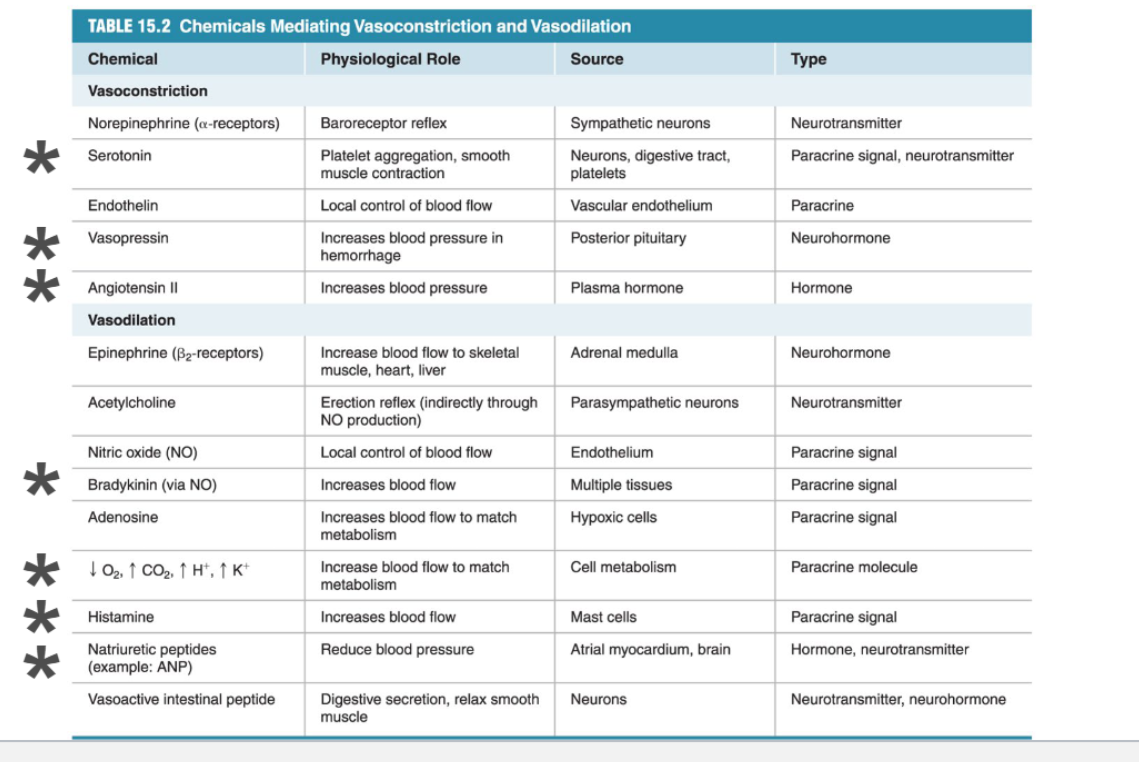
Arteriole smooth muscle also reacts to other chemical signals
Beyond the ANS, many other signal molecules affect arteriole smooth muscle