FANR 3400 Wildlife and WUI
 Call Kai
 Learn
Learn Practice Test
 Spaced Repetition
 Match
Match Flashcards
 Knowt Play
1/8

There's no tags or description
Looks like no tags are added yet.
Name | Mastery | Learn | Test | Matching | Spaced | Call with Kai | Chat |
|---|
No analytics yet
Send a link to your students to track their progress
9 Terms
Why might people’s perceptions of the risk from wildlife differ from the “objective” level of risk?
Media can influence the perception of wildlife
Location (urban vs rural) can influence exposure to wildlife
Livelihood, like kids and jobs, can influence perception
What is a “disproportionate response” to wildlife conflict? What might be an example? What explains this kind of response?
Disproportionate Response: inherently irrational response to conflict
Removal of wolves from natural areas
It is due to the perception of wildlife risk, it can be a cultural response
What other “social factors” might influence people’s responses to wildlife conflict?
cultural beliefs, religious affiliations, and personal experience
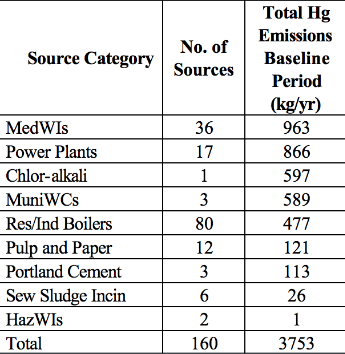
What are some of the principal sources of mercury contamination of the Savannah River watershed?
What are some of the reasons that dietary mercury exposure levels may be higher in Black and Hispanic populations than in White, non-Hispanic population?
Black and Hispanic populations consume more fish than other populations due some populations relying on fish as a meat source
What are some of the reasons that official government advisories may not reach the populations that have the greatest exposure mercury from fish consumption?
What is the “Wildland-Urban Interface” (WUI)? Why might resource managers care about the expansion of the WUI?
Ecological damage, wildfire risks, water quality degradation

Why are eastern forests considered to be at higher risk of experiencing housing density-related decreases in water quality than are western forest?
a greater proportion of eastern forests are privately owned, highly fragmented, and located in watersheds that provide essential drinking water to high-population areas
There is much more development in the area due to many moving to the areas
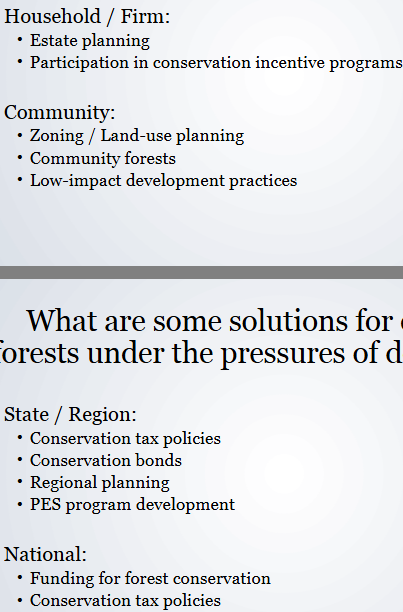
What are some tools that have the potential to help conserve forests and their associated benefits under the pressures of development?
Conservation Easements: egally binding agreement between a landowner and a third party (land trust, government agency) to protect land for conservation. The landowner sells specific rights (e.g., right of development) while retaining title to the property.