BIOL 445 Chapter 17
 Call Kai
 Learn
Learn Practice Test
 Spaced Repetition
 Match
Match Flashcards
 Knowt Play
1/23

There's no tags or description
Looks like no tags are added yet.
Name | Mastery | Learn | Test | Matching | Spaced | Call with Kai |
|---|
No analytics yet
Send a link to your students to track their progress
24 Terms
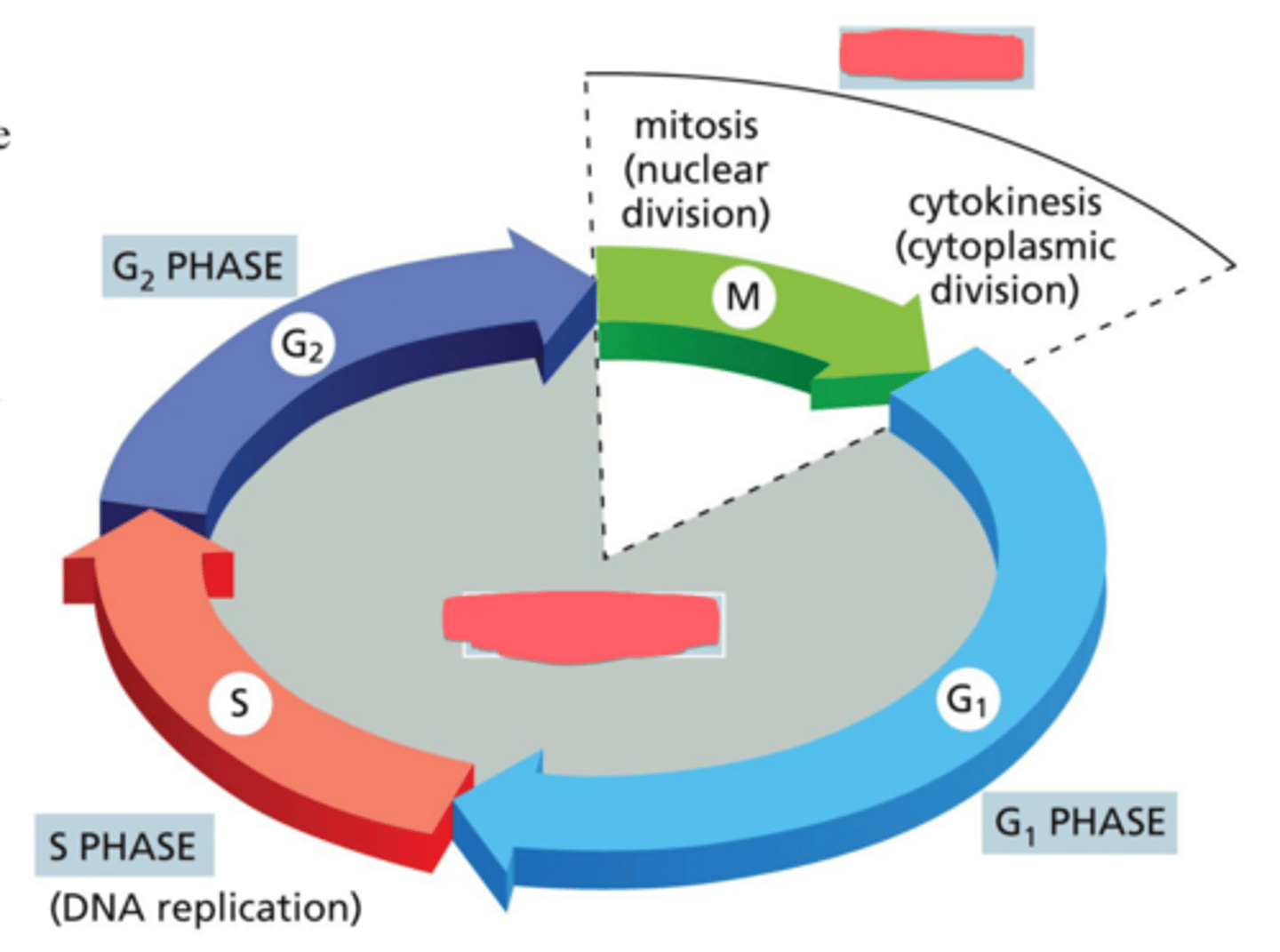
They cycle between Interphase and M-Phase. They spend most of their time in Interphase ~96% (23 Hours) of the time while their only spend ~4% (1 Hour) of their time in M-Phase.
What are the 2 most general phases that cells cycle between?
o How much time do cells spend in each of these phases?
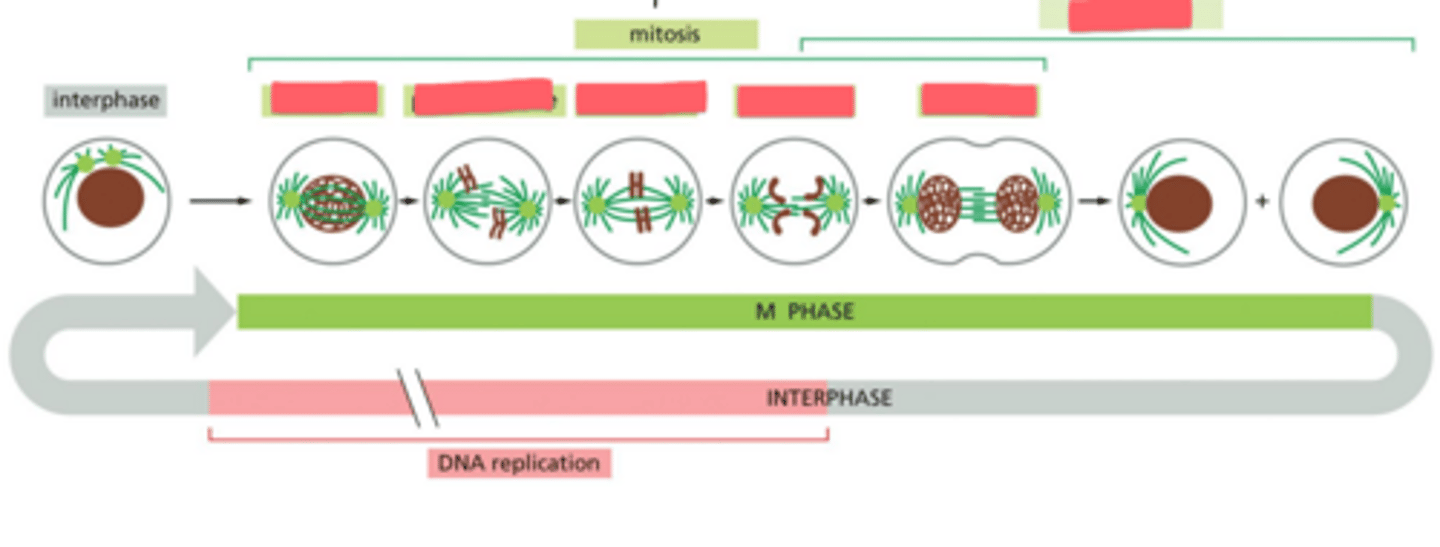
1. Prophase
2. Prometaphase
3. Metaphase
4. Anaphase
5. Telophase
6. Cytokinesis
(Memory Trick: PPMAT)
What are the phases of mitosis? Write them in the correct order!
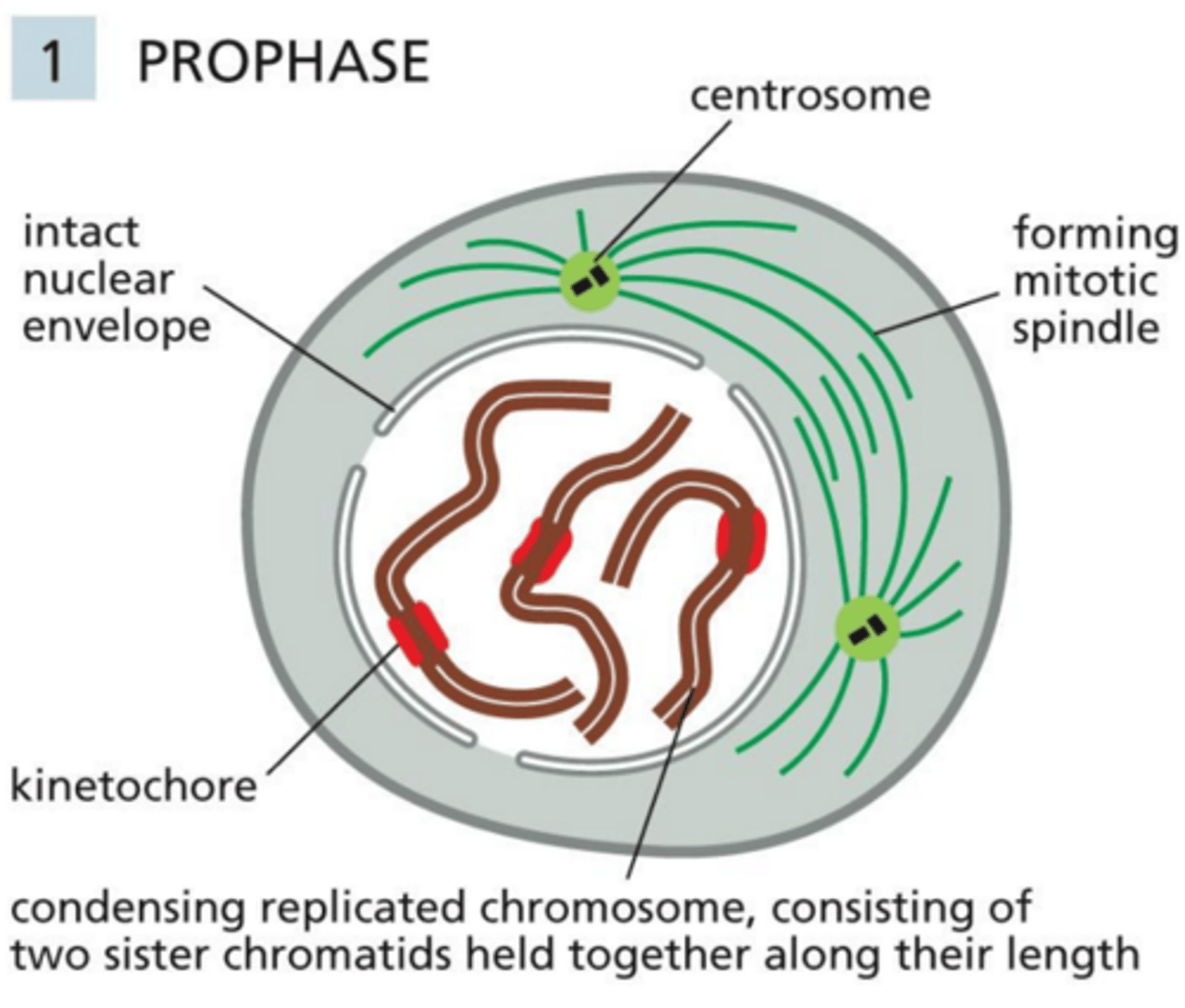
Condensation of the DNA and the formation of the mitotic spindles in the cytosol
Prophase
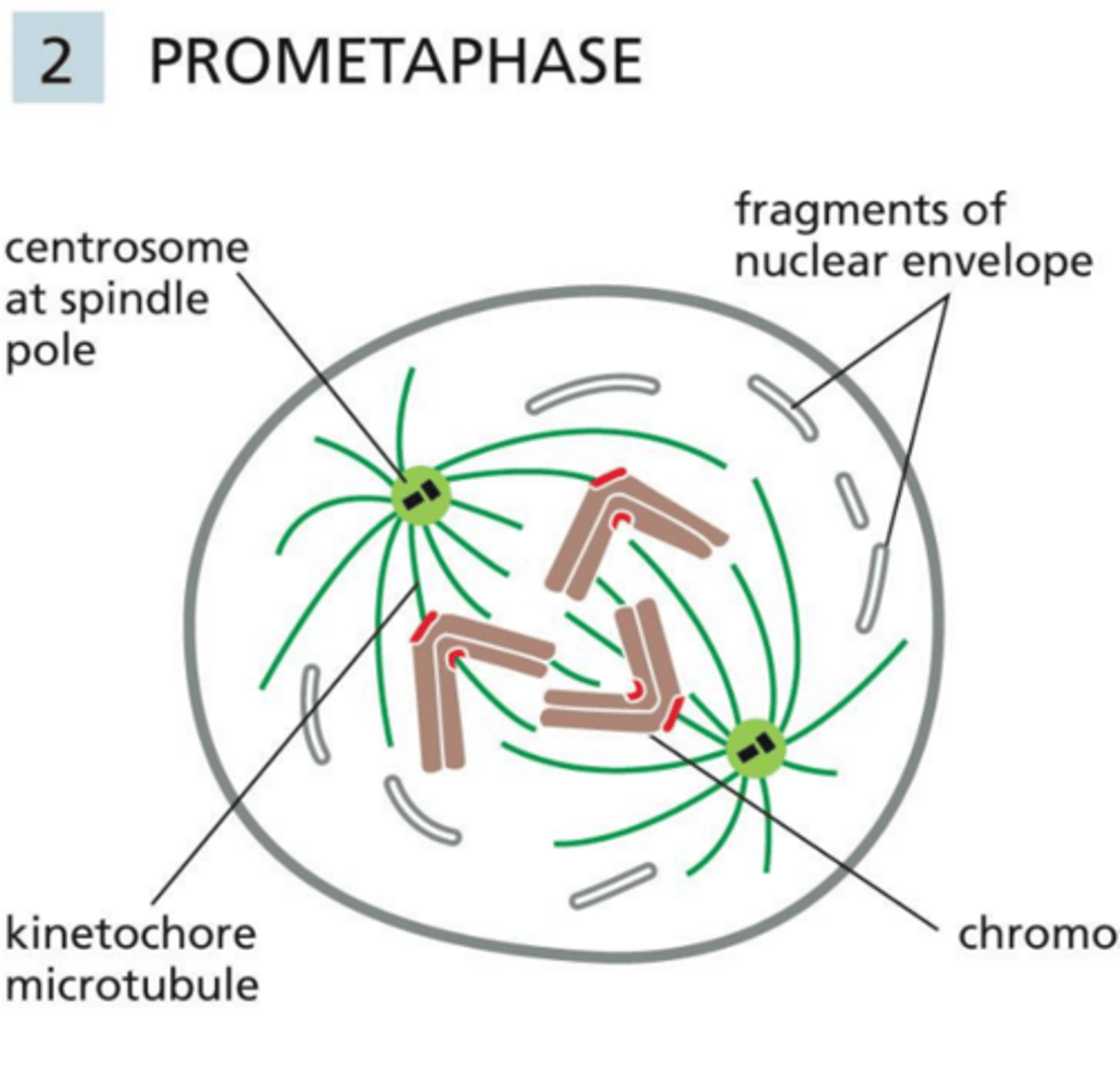
The nuclear envelope breaks down allowing for the microtubules to attach to the chromosomes.
Prometaphase
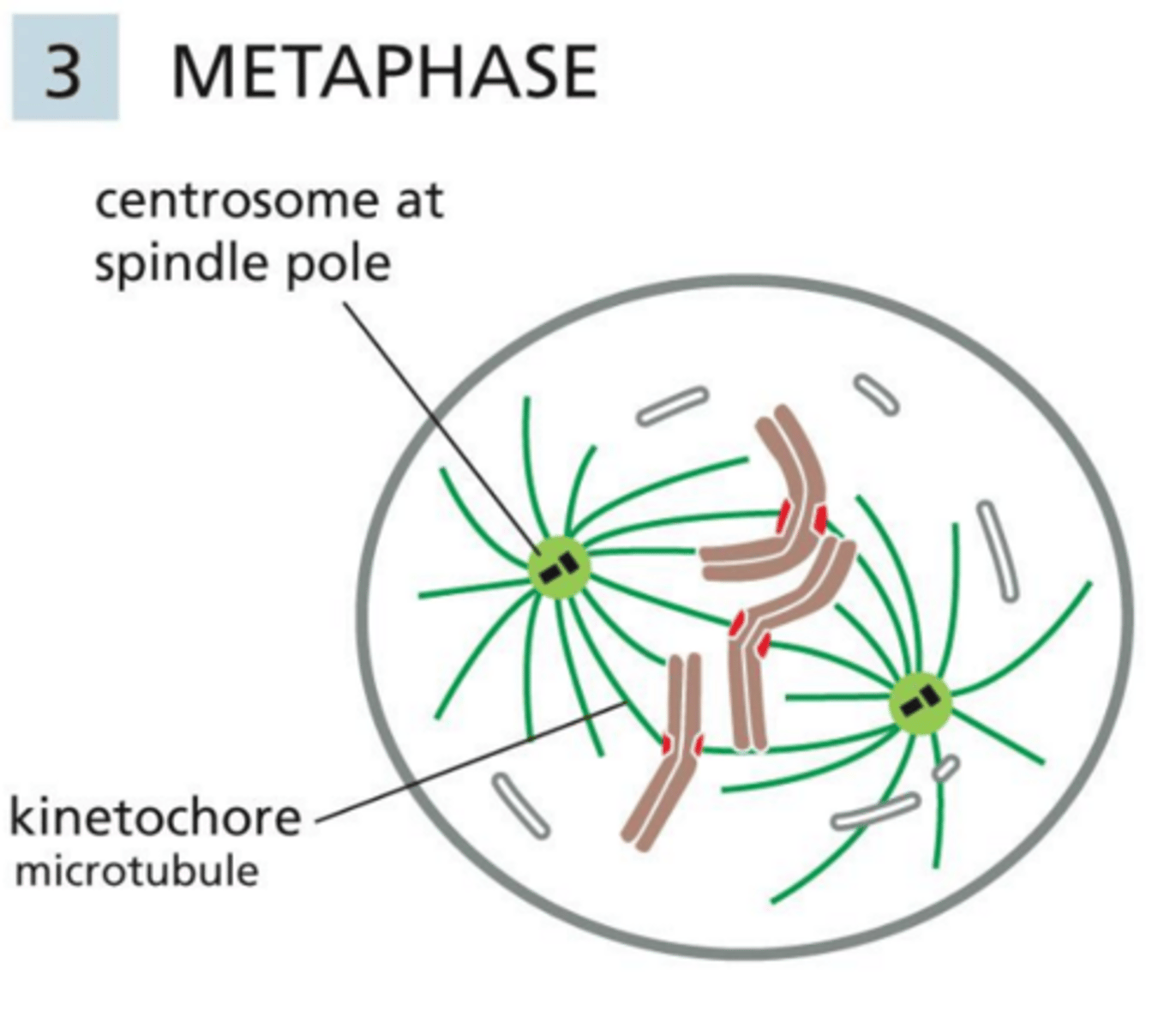
Chromosomes are lined up down the middle of the cell relative to the poles of the spindles.
Metaphase
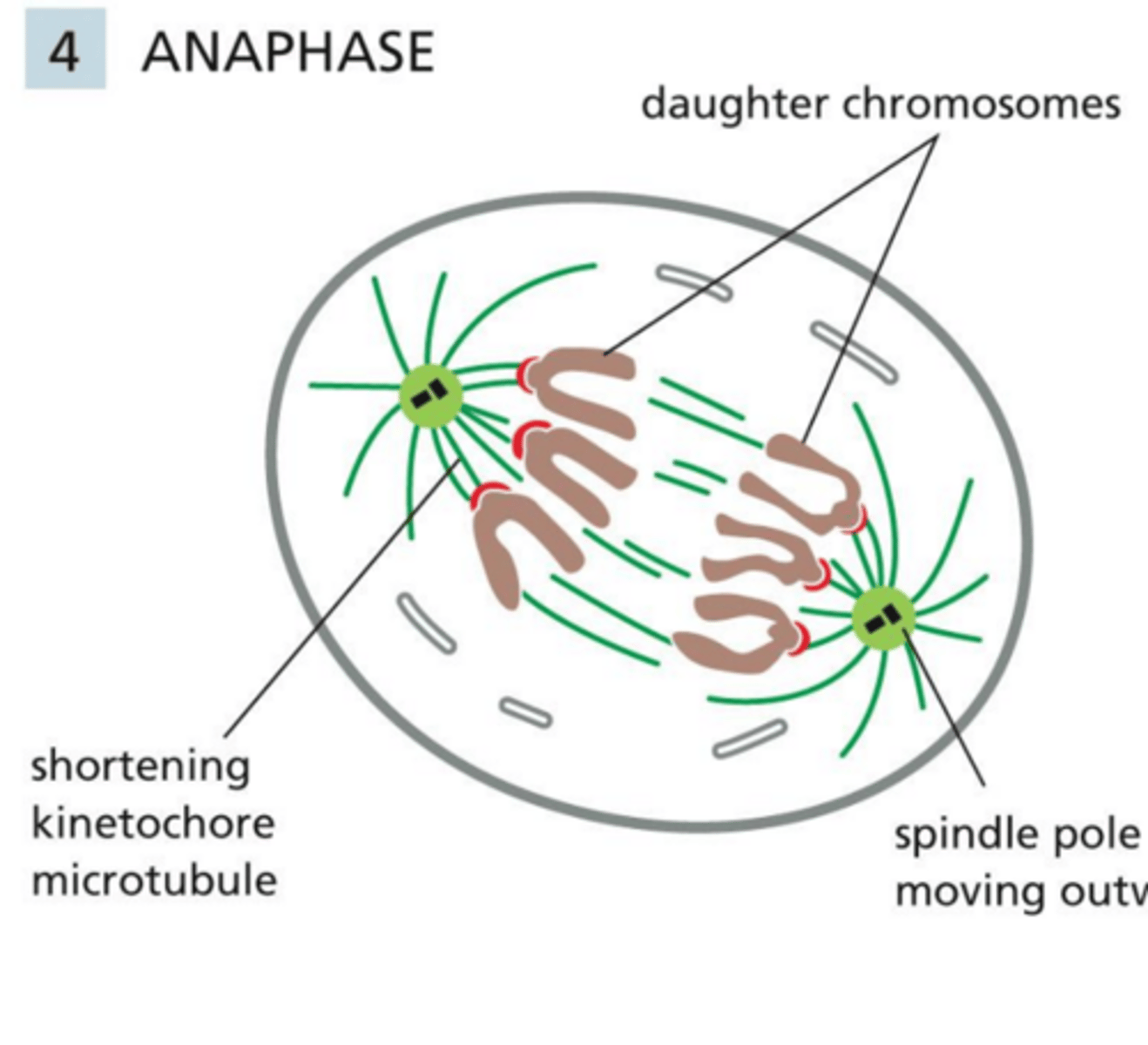
The sister chromatids are pulled apart (becoming daughter chromosomes) towards their respective spindle pole which are also moving apart.
Anaphase
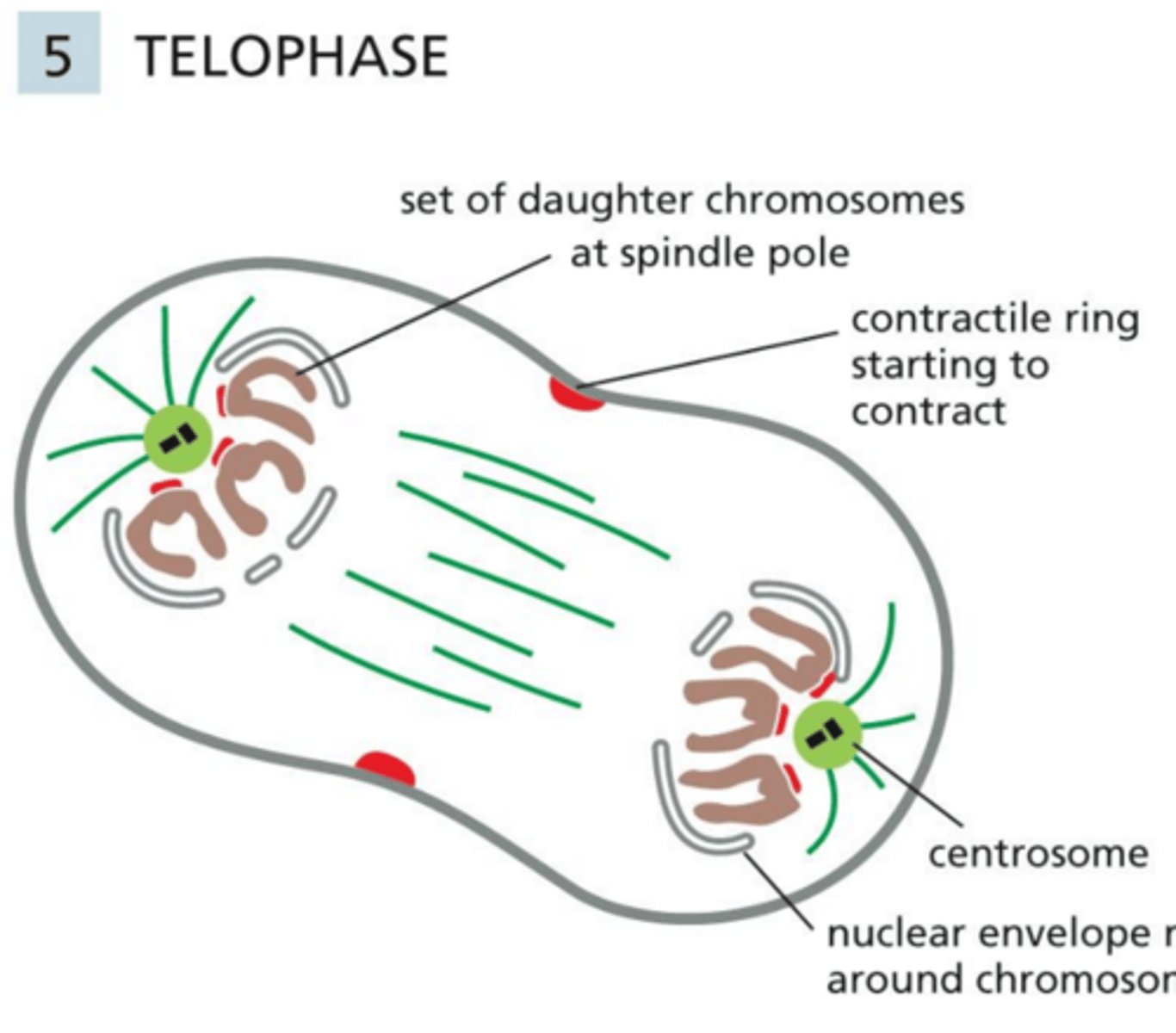
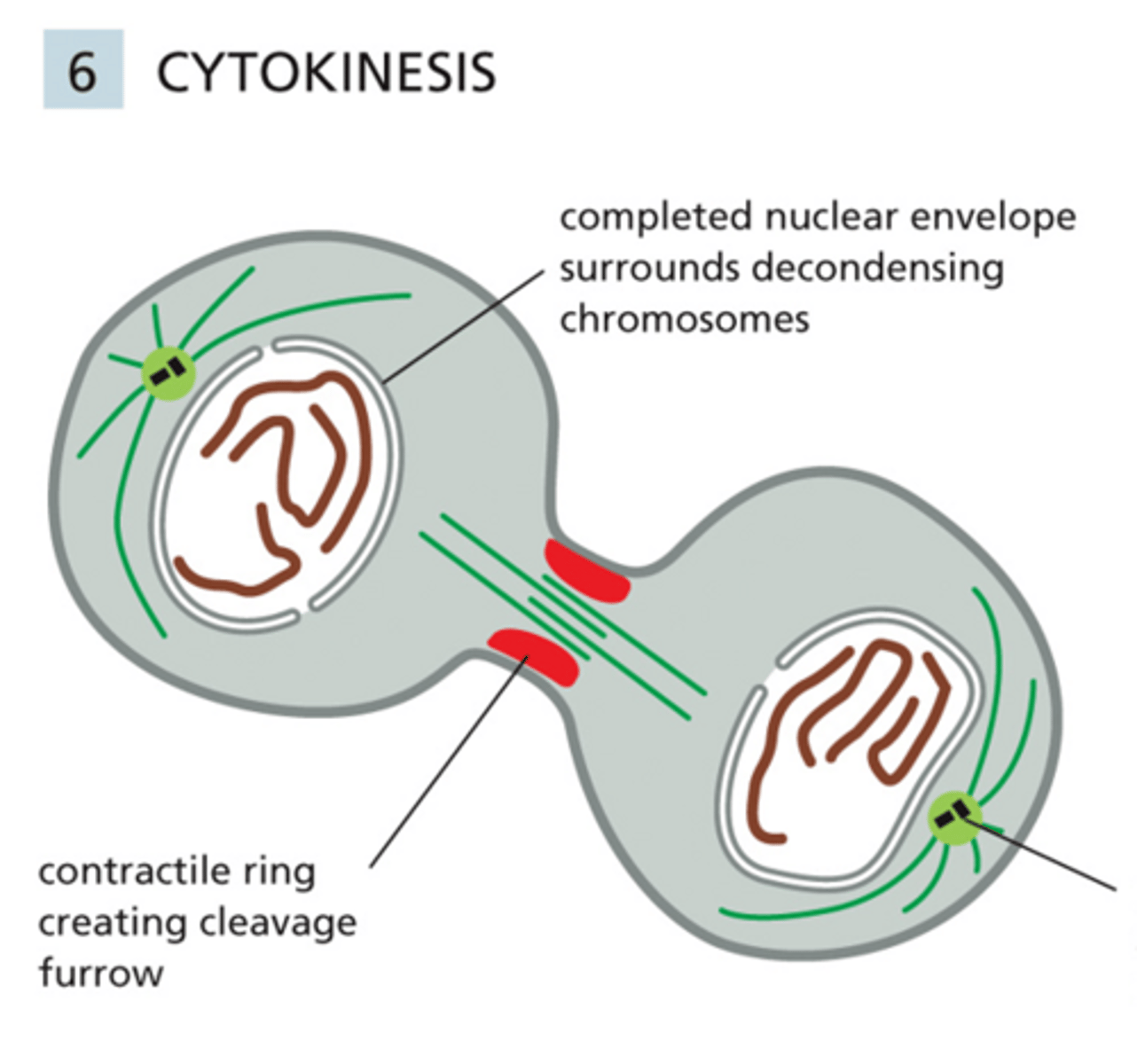
Daughter chromosomes arrive at their spindle poles where a new nuclear envelope wraps around the decondensing chromosomes.
Telophase
Everything else that isn't the chromosome is being divided into each daughter cell (not perfectly half) with the cytoplasm also being divided by a contractile ring.
Cytokinesis
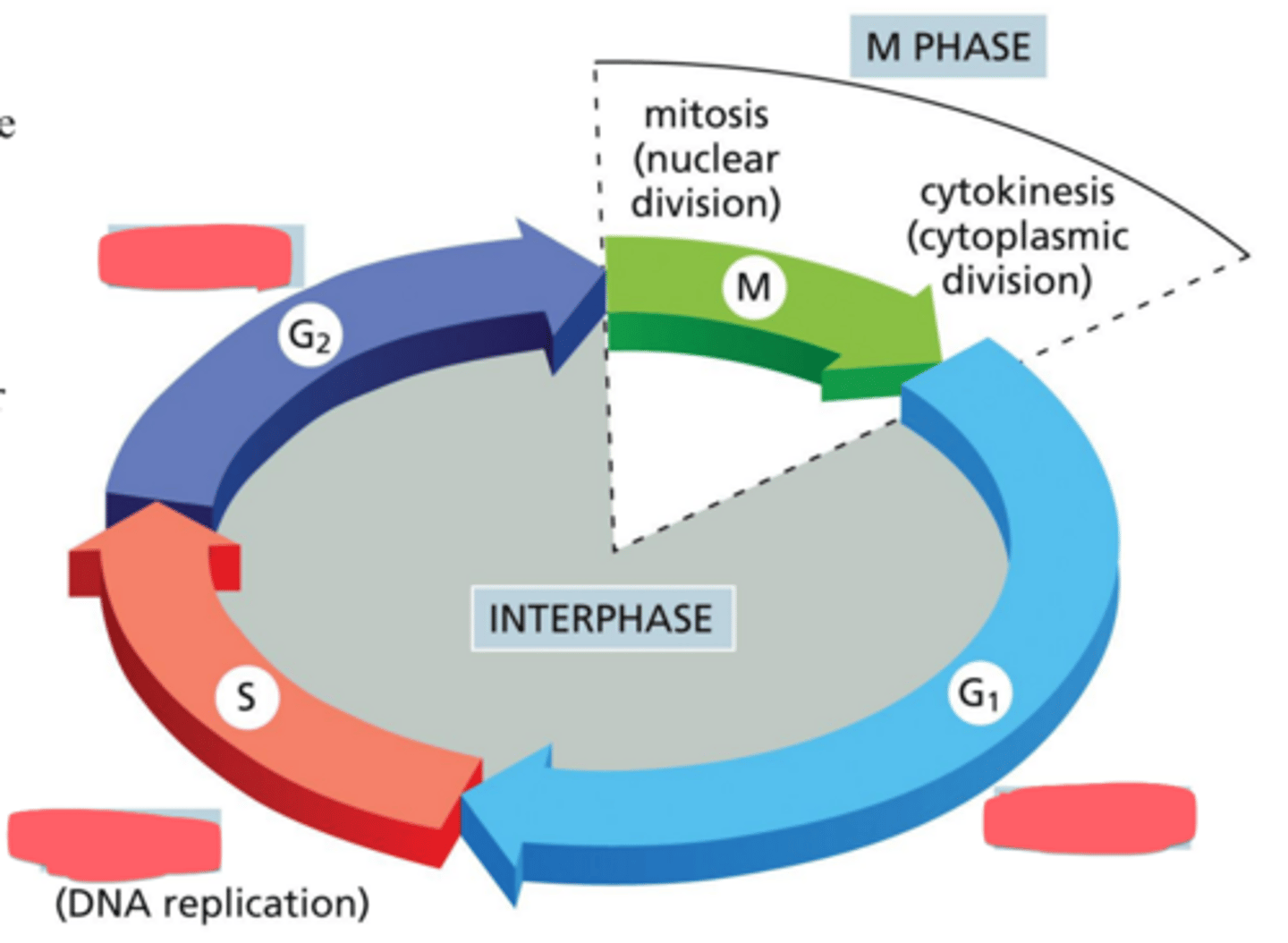
G1, S, and G2 (sometimes)
What phases are included within interphase? What major events occur in each phase?
- Yeast
- Mammalian Cultures
- Flow Cytometry
- Xenopus (frog) eggs / Drosophilla (fruitfly) work too!
- Labeling S-phase cells
How can cell cycle events be investigated?
o Give a few examples of different species and experimental approaches used.
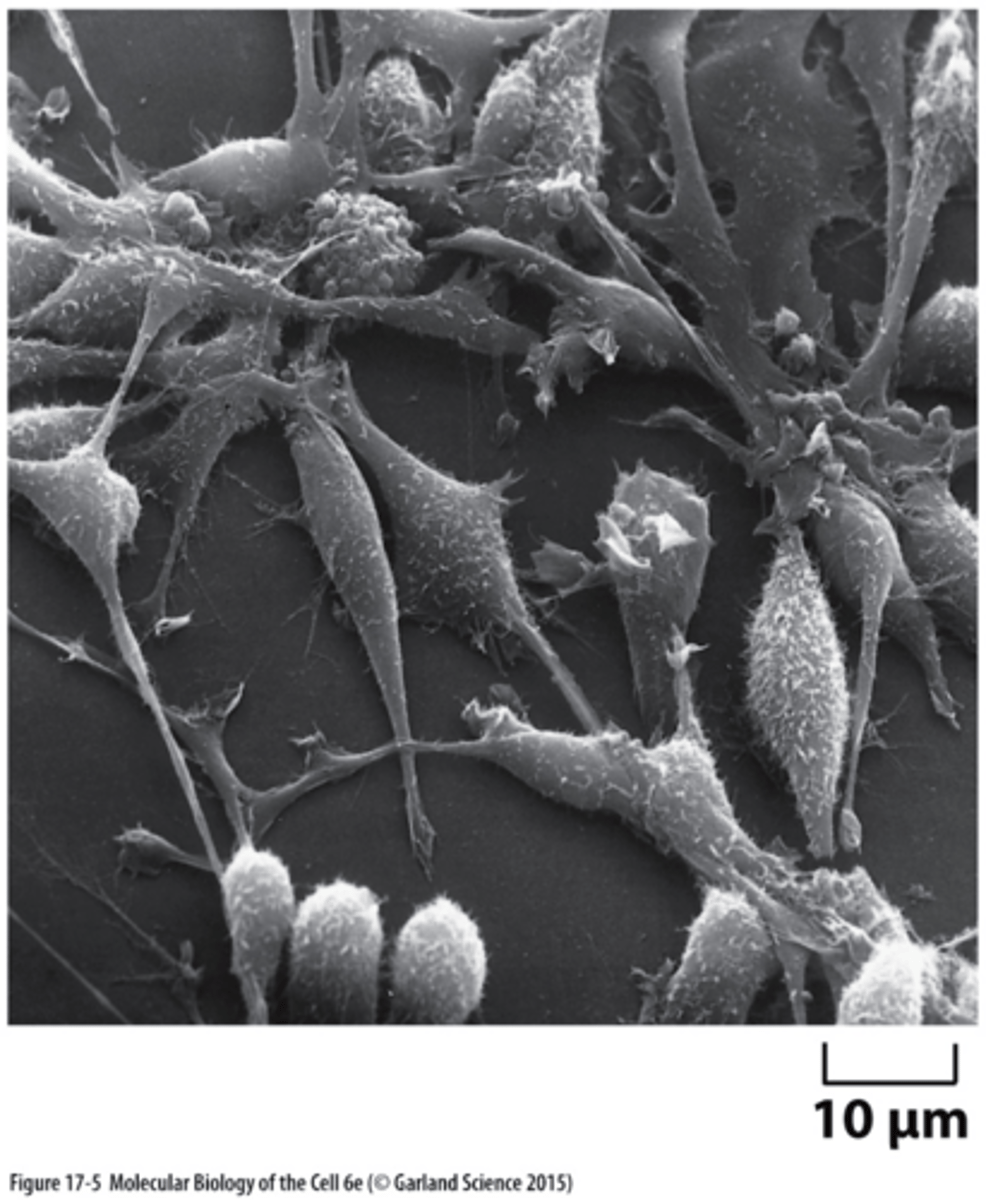
They are simple eukaryotes that can divide, grow quickly, and are haploid. Their haploid nature allows for easy observation of new traits that may show up. Temperature sensitive
Why are yeast a powerful experimental system?
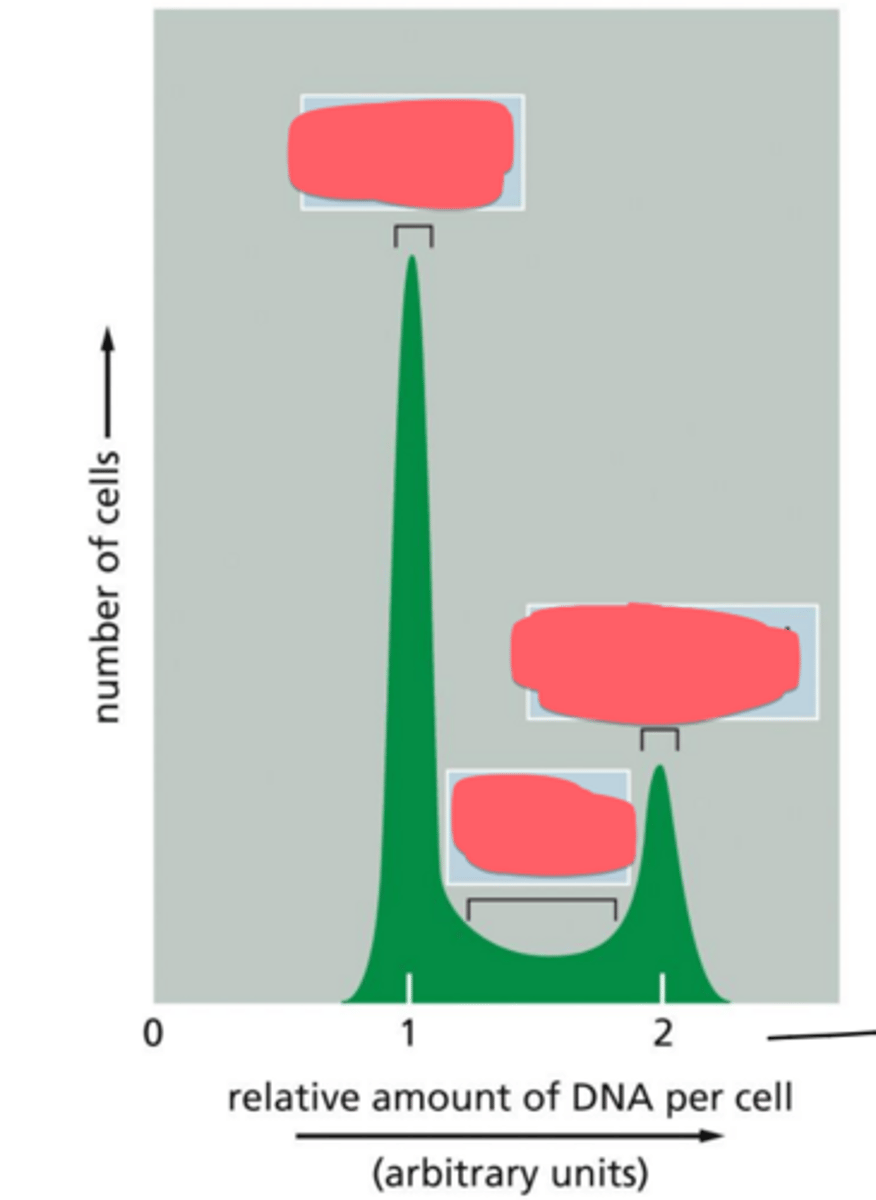
They quantify the number of cells that have either 1 set of chromosome, 2 pairs of chromosomes, or a value in between. Cells are in G1 if they have only 1 pair , S phase if it's anywhere in between, and G2 if they have 2 pairs of chromosomes.
How are flow cytometry results interpreted?
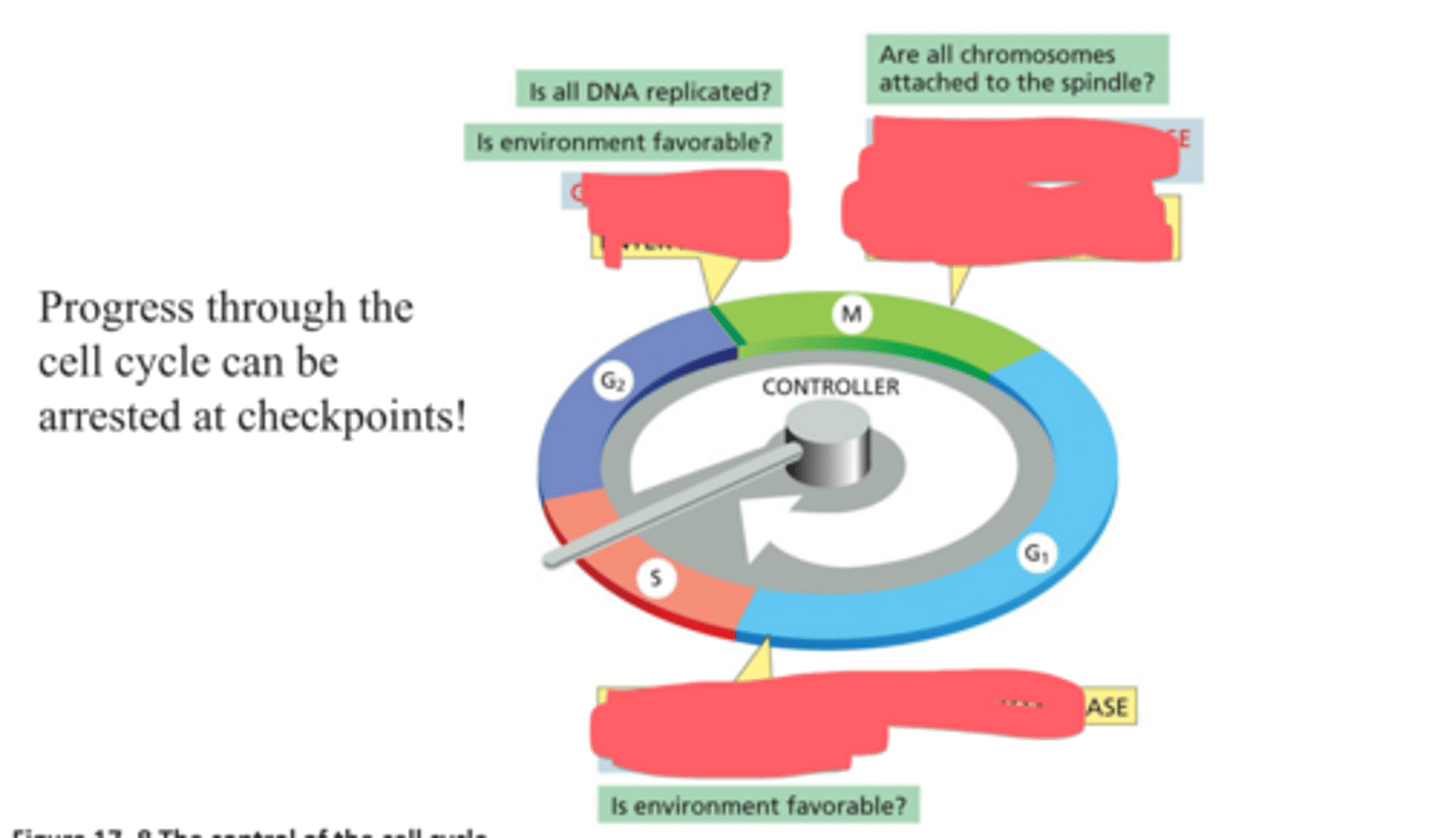
1. G1/S (Start Checkpoint)
2. G2/M (Mitosis Checkpoint)
3. Metaphase to Anaphase
Name the 3 major checkpoints and describe the events that occur at each checkpoint.
Cyclins can activate Cyclin dependent kinases (Cdk) by binding onto them, however,
How do cyclin-Cdk complexes regulate progression through the cell cycle?
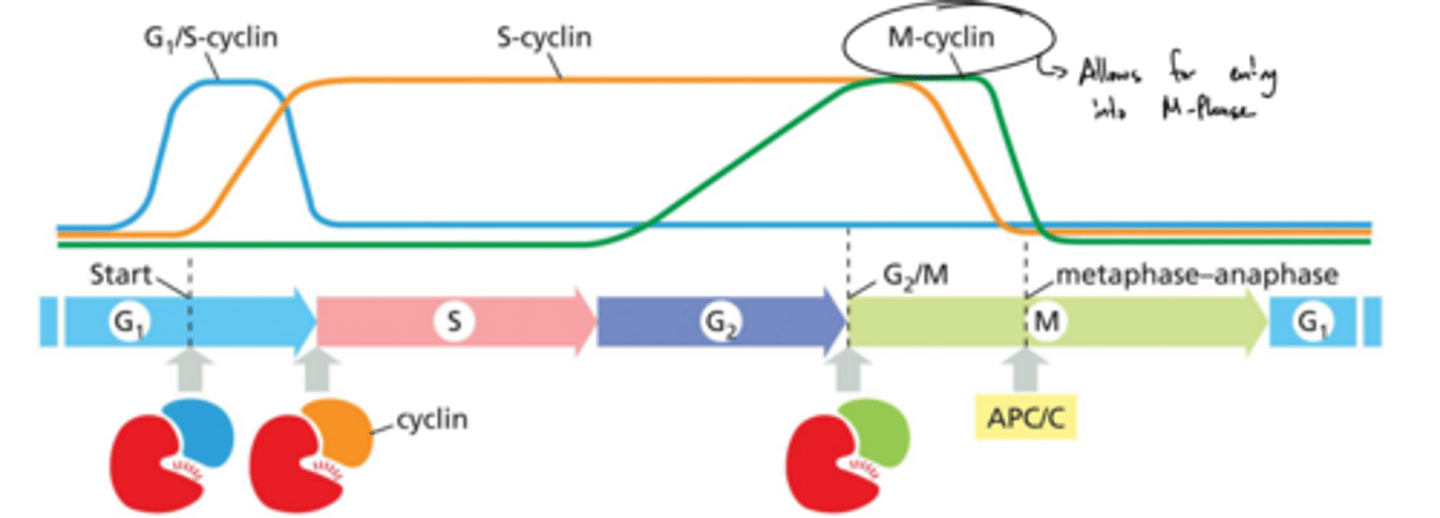
1. G1/S-Cdk - Regulates the progression into the Start transition
2. S-Cdk - Regulates DNA replication
3. M-Cdk - Regulates entry into Mitosis
What are the 3 major classes of cyclins-Cdk complexes? What events do they regulate?
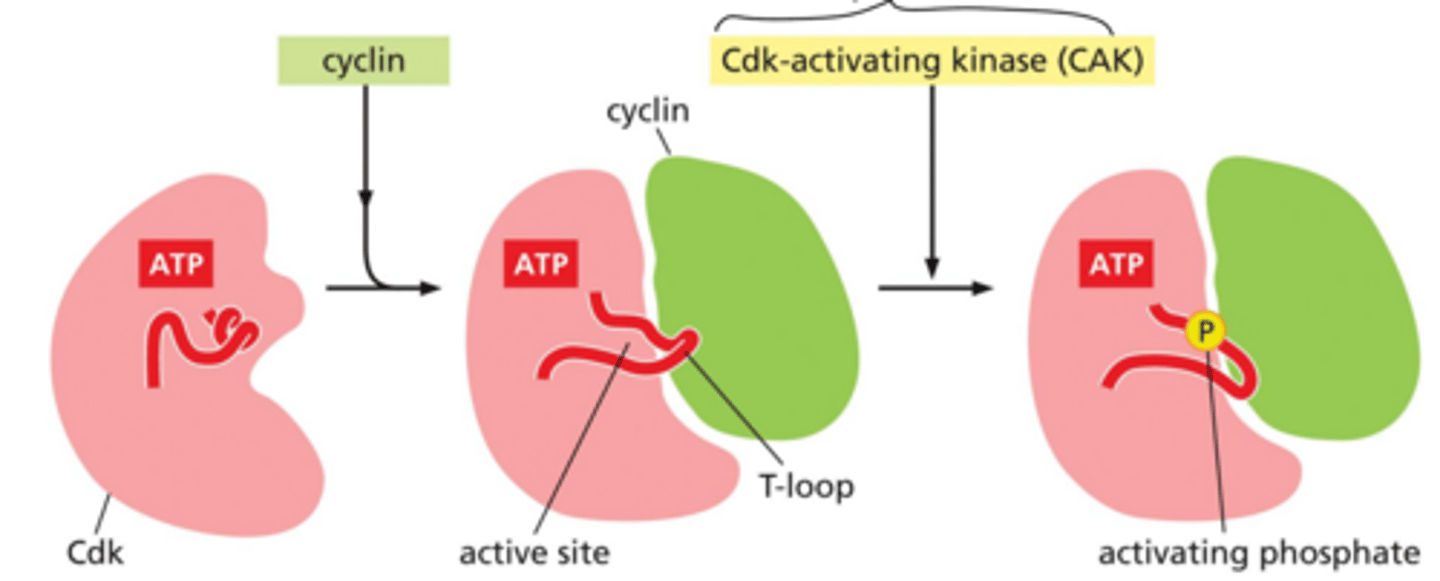
1. Inactive - No binding
2. Partially inactive - Cyclin binding
3. Fully active - Addition of an activating phosphate
What are the 3 levels of Cdk activity? What drives transition from one level to the next?
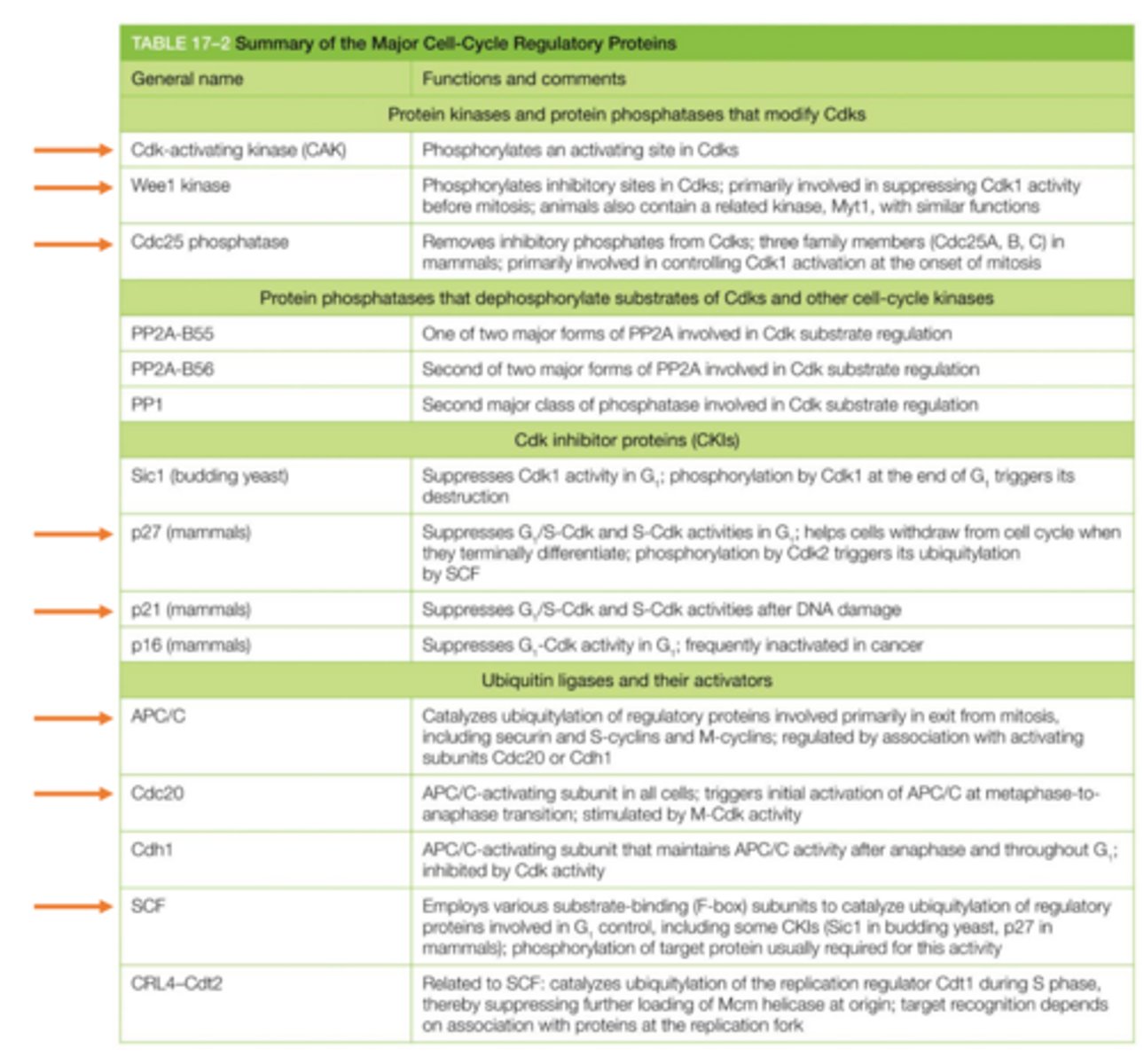
1. Wee1 Kinase - Adds an inhibitory phosphate
2. Cdc25 phosphatases - Removes the inhibitory phosphate
3. p27 Inhibitory protein - Binds to the active Cdk-Cyclkin complex and inactivates it.
How can the activity of a cyclin/Cdk complex be regulated? (use the table as a reference)
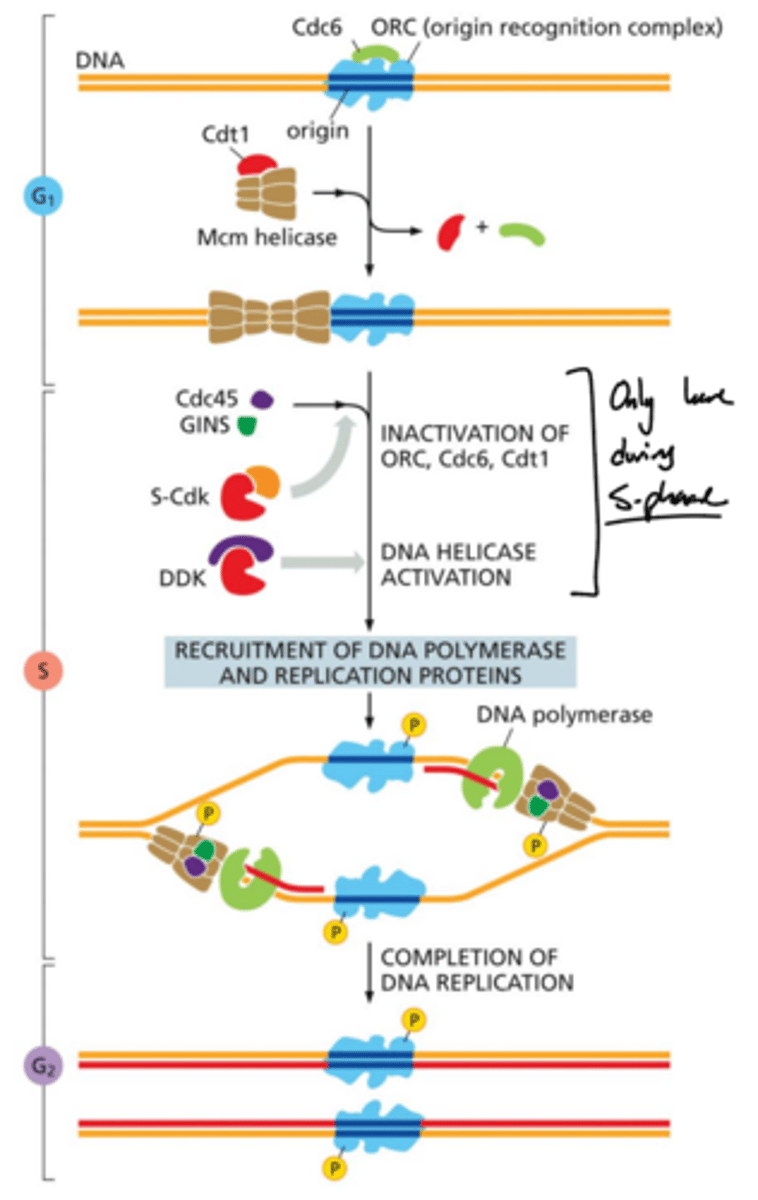
initiation of replication is divided into two steps that occur at different times. First in G1 and Second in S
How is DNA replication controlled so it only occurs once per cell cycle?
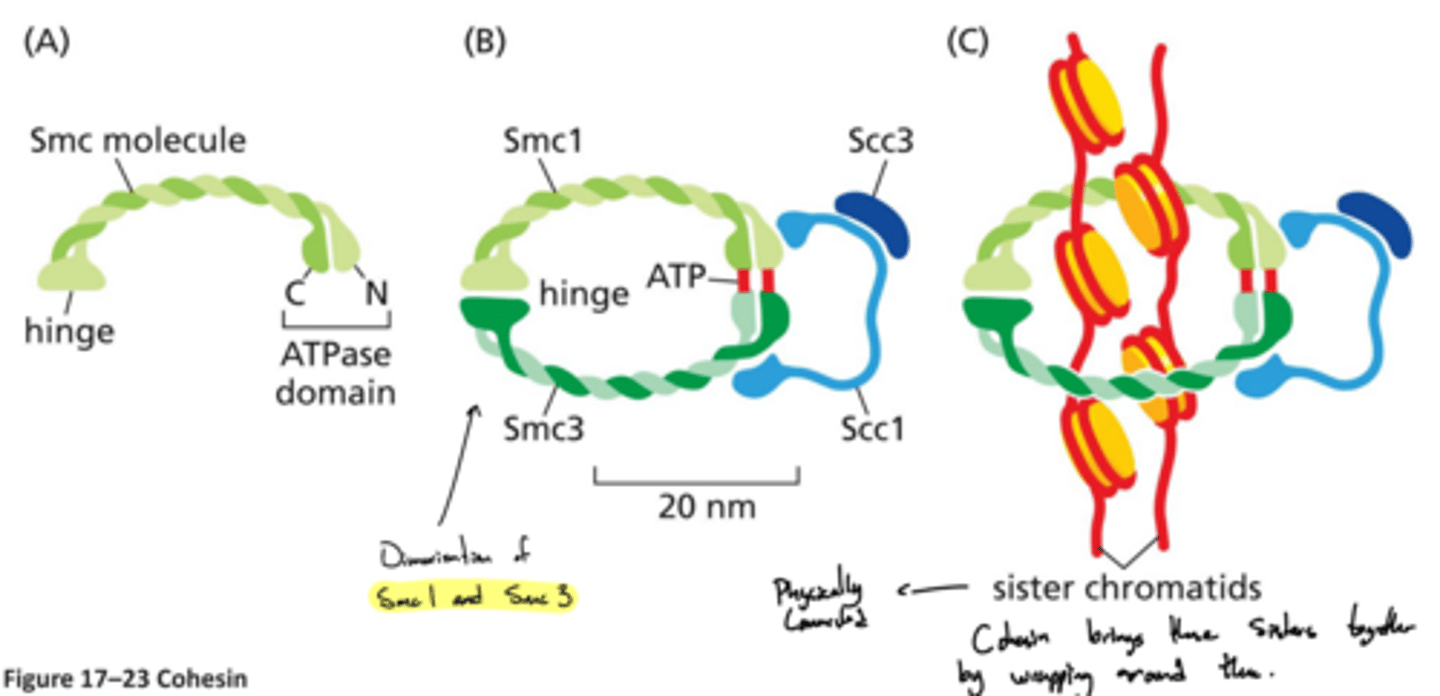
A dimer complex called Cohesins wrap around sister chromatids and keeps them bound together
Following DNA replication, how are sister chromatids held together?
M-Phase (PPMAT) events
- Chromosome condensation
- Mitotic spindle assembly
- Reorganization of the golgi
- Nuclear envelope breakdown
- Actin cytoskeleton rearrangements
What events are regulated by M-Cdk?
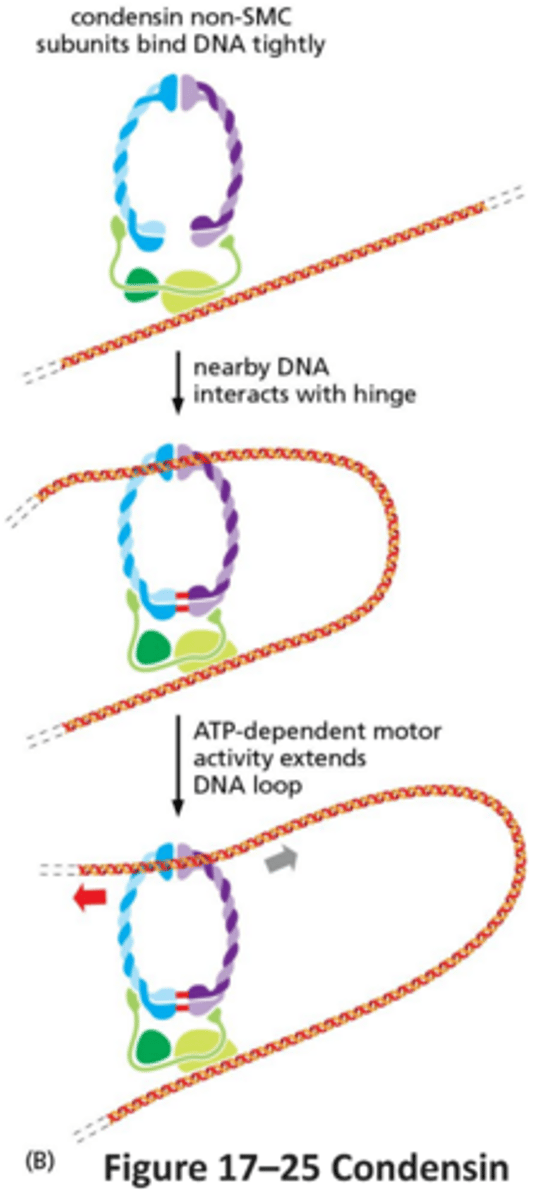
Cohesins keep sister chromatids together after DNA Replication while zmake DNA loops that condense the chromosome further
How do cohesins and condensins structure mitotic chromosomes?
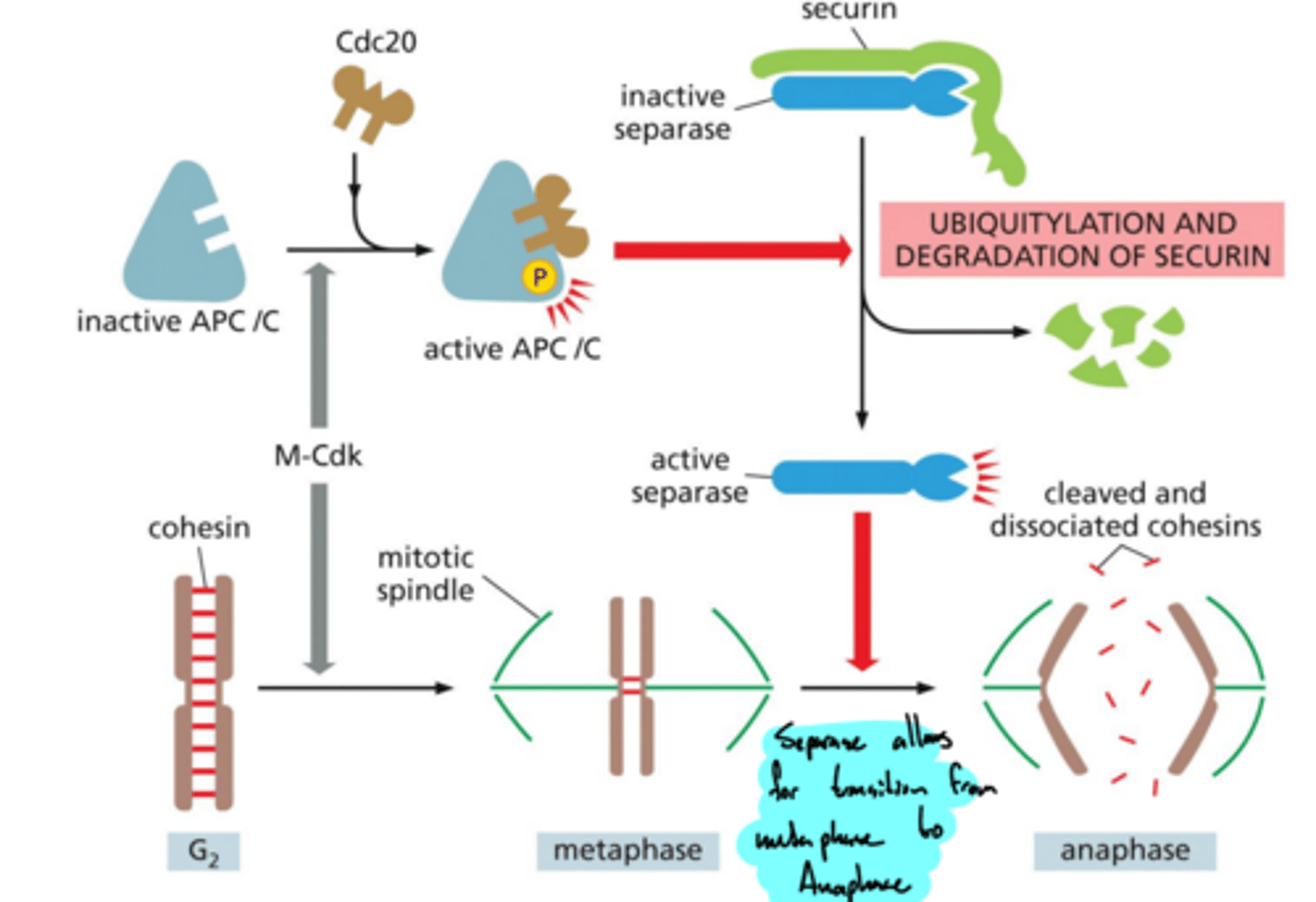
Active APC/C will ubiquitylate and degrade Securin which frees Separase to cleave and dissociate cohesins that are keeping sister chromatids bound together.
How does APC/C activation lead to anaphase?
They can allow for the expression of specific regulatory proteins such as Cyclins to active Cdks that are needed to get past a Cell-Cycle stage.
How does cell signaling control entry into the cell cycle?
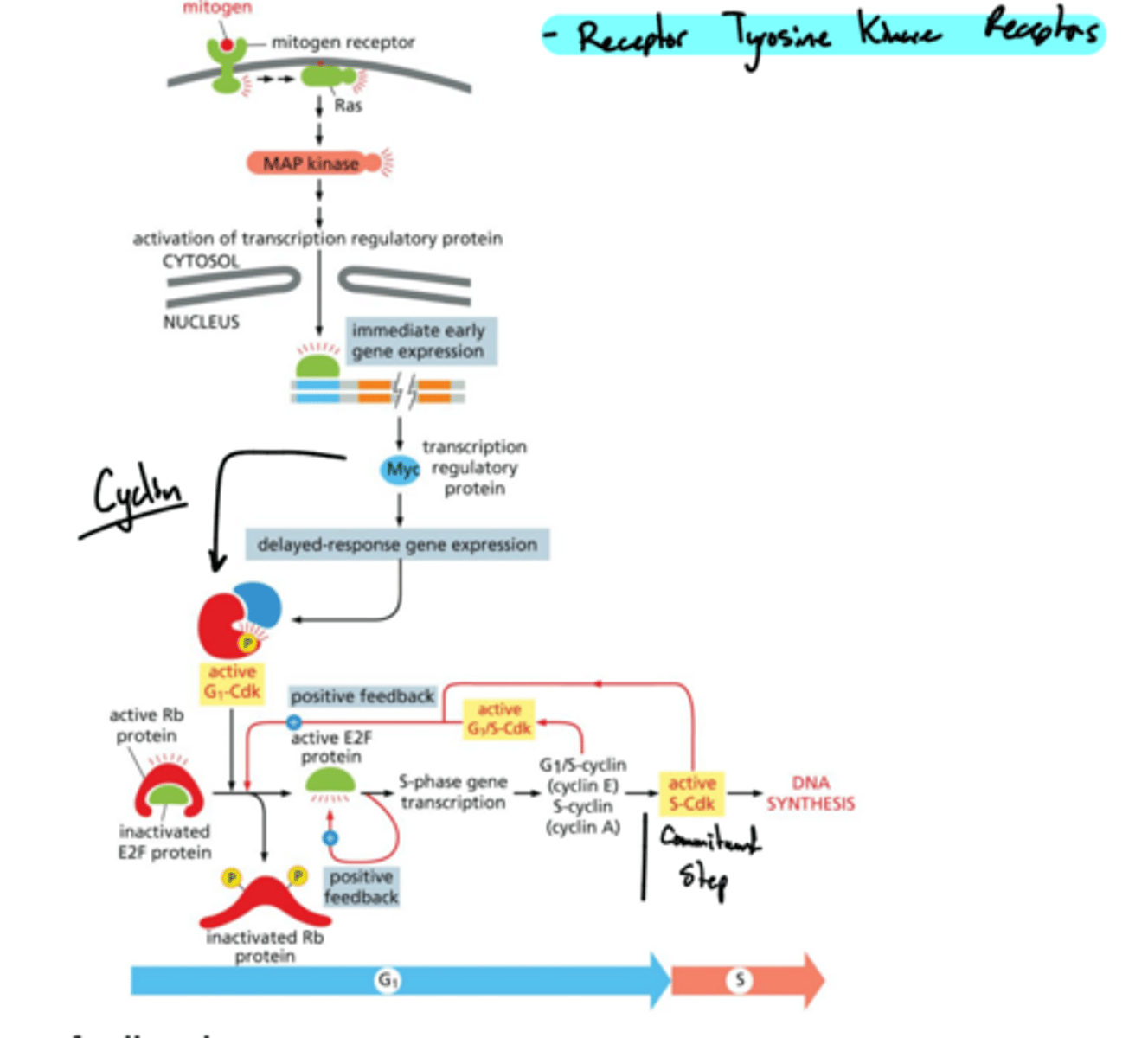
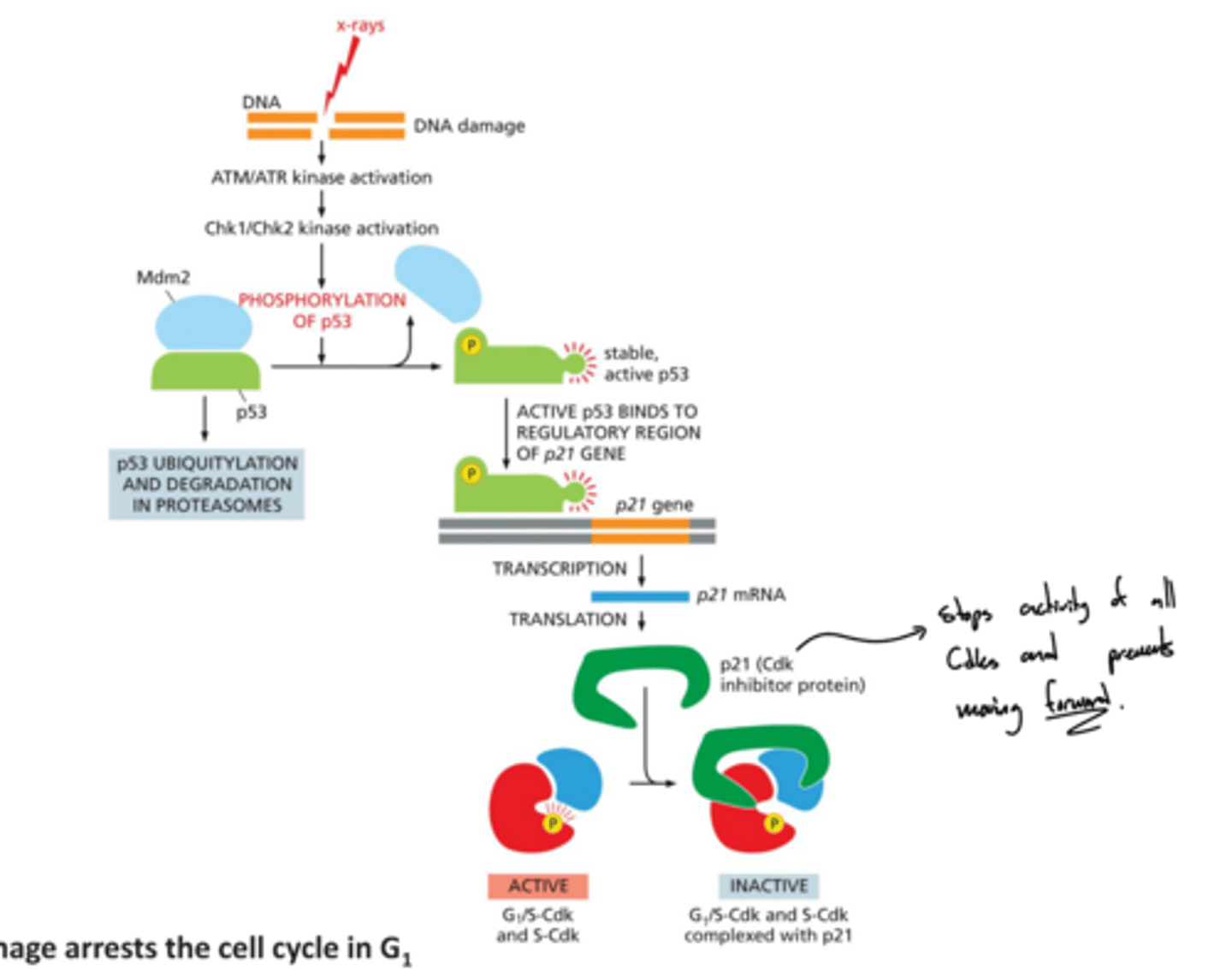
It can result in a signal transduction pathway that transcribes and translates for an inhibitory protein such as p27 to bind to an activated Cdk to deactivate it.
How does DNA damage lead to cell cycle arrest?