C- Vertebral Spine Chap. 8
 Call Kai
 Learn
Learn Practice Test
 Spaced Repetition
 Match
Match Flashcards
 Knowt Play
1/146

There's no tags or description
Looks like no tags are added yet.
Name | Mastery | Learn | Test | Matching | Spaced | Call with Kai |
|---|
No analytics yet
Send a link to your students to track their progress
147 Terms
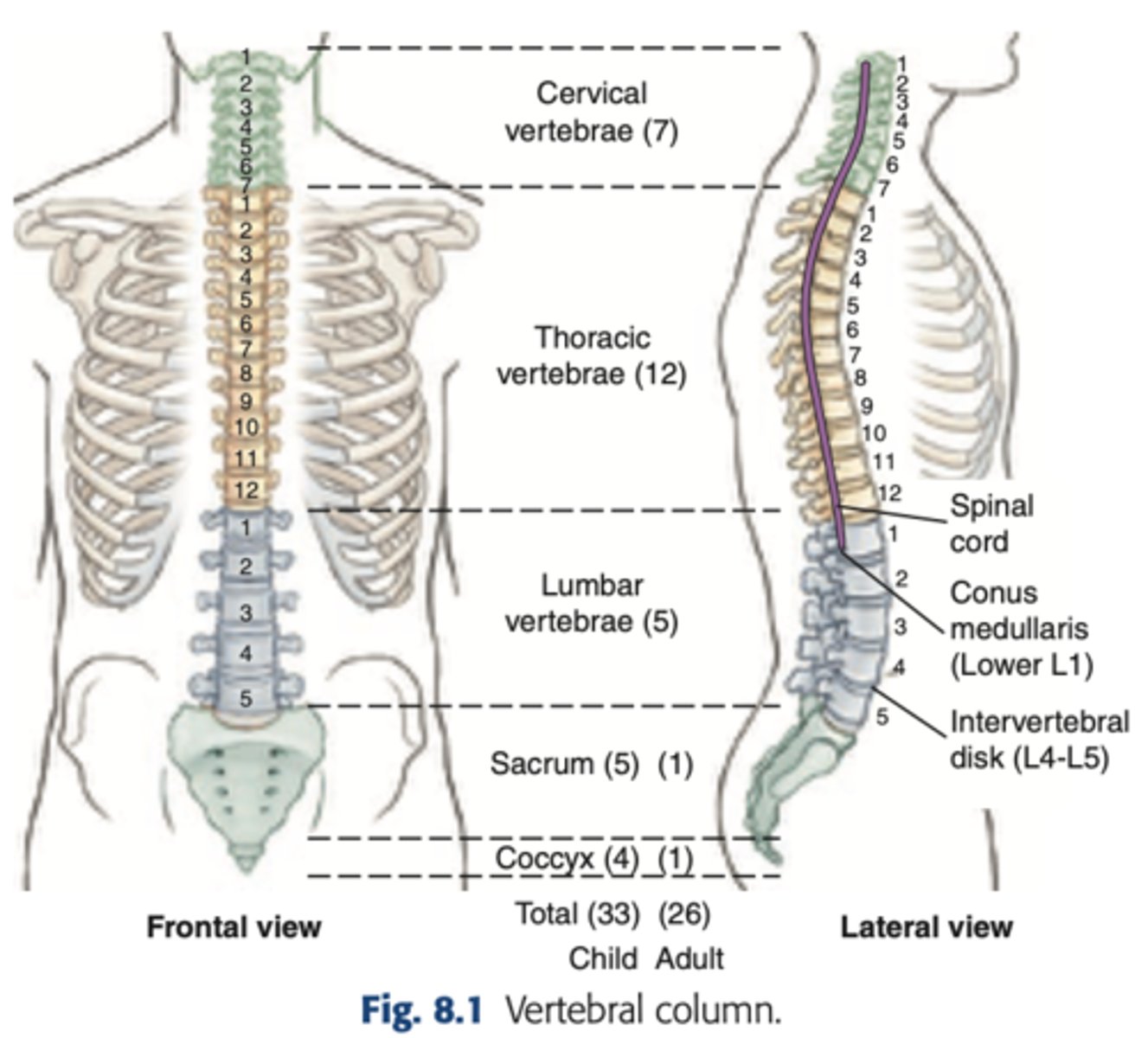
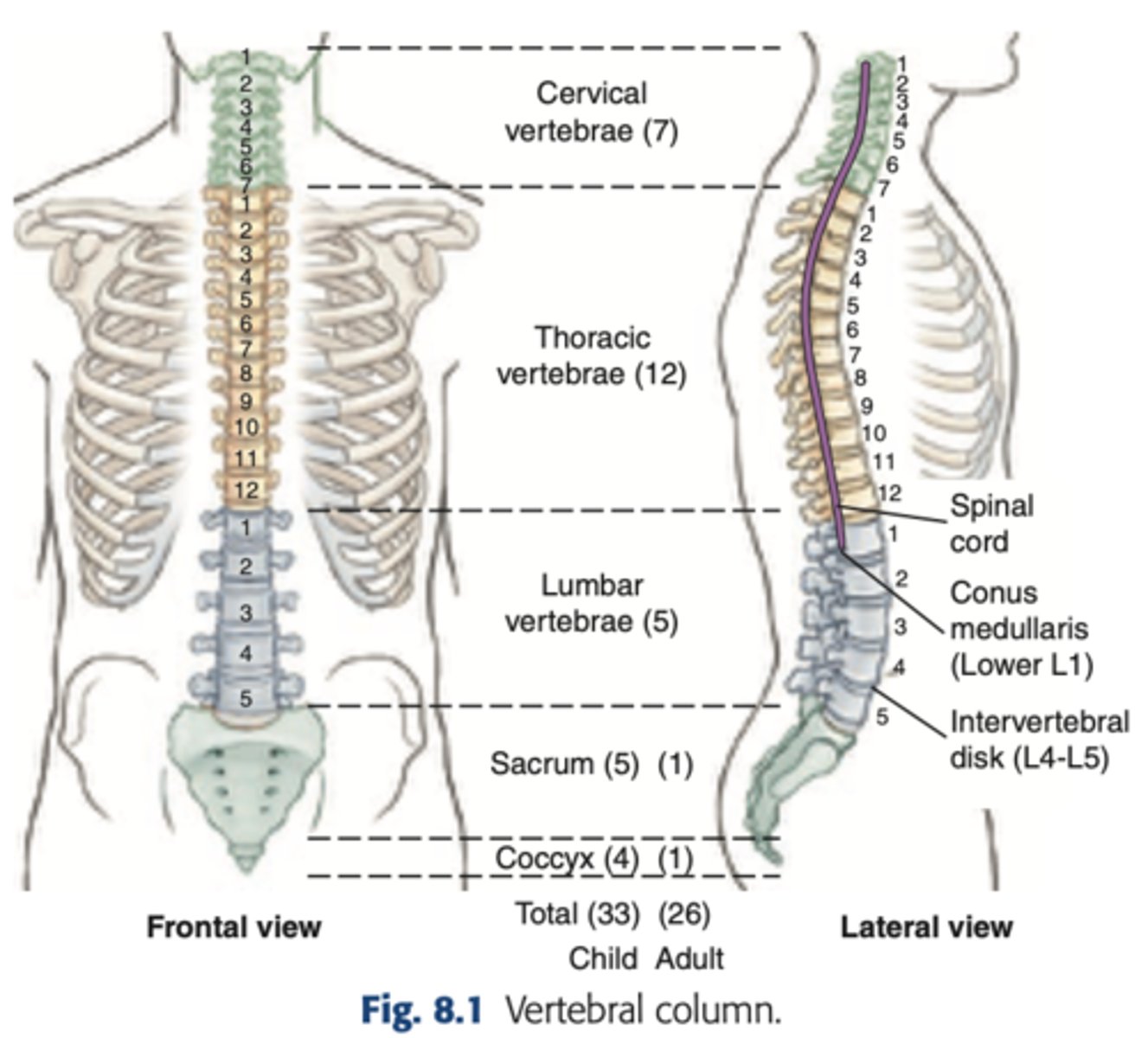
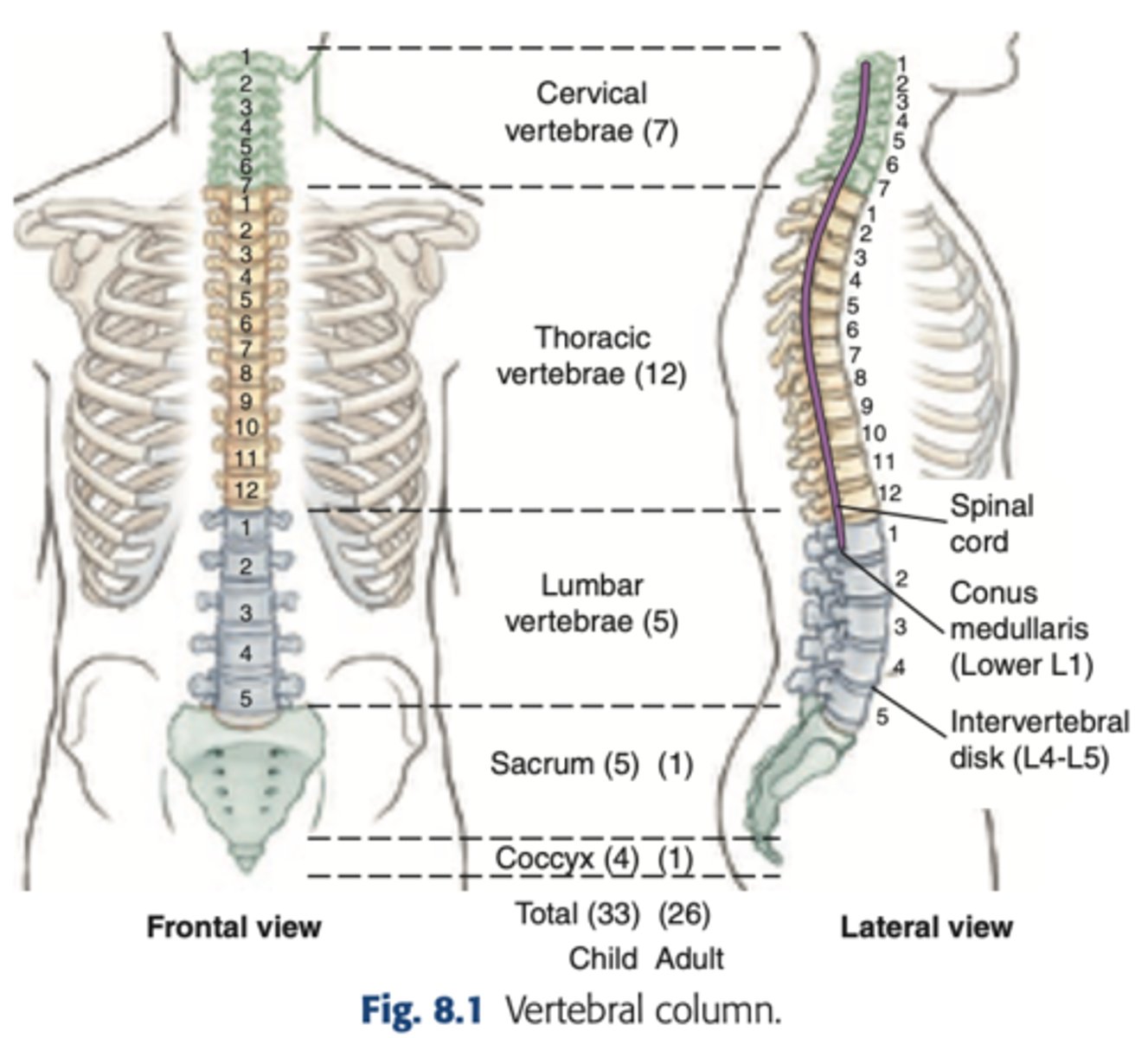
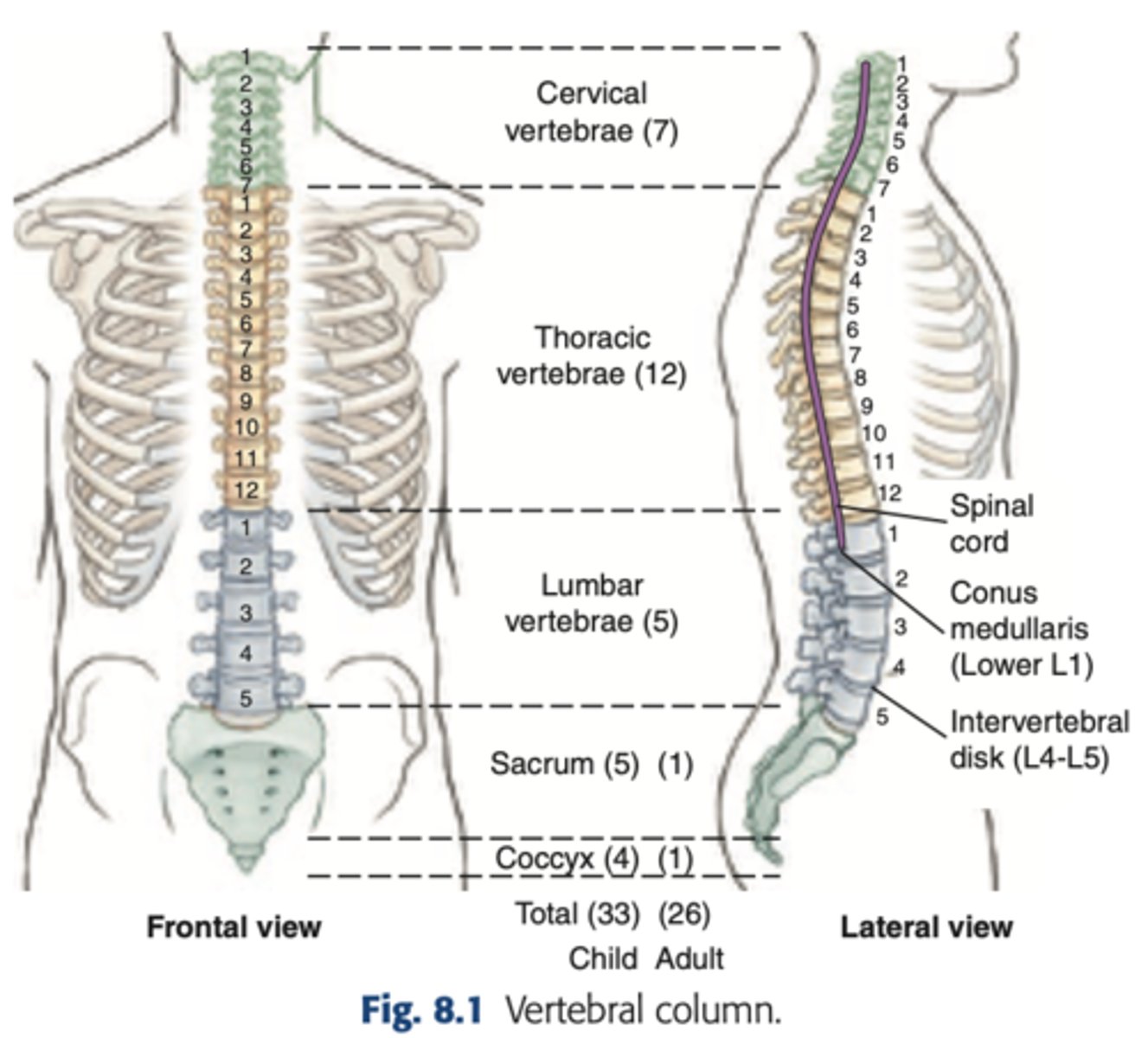
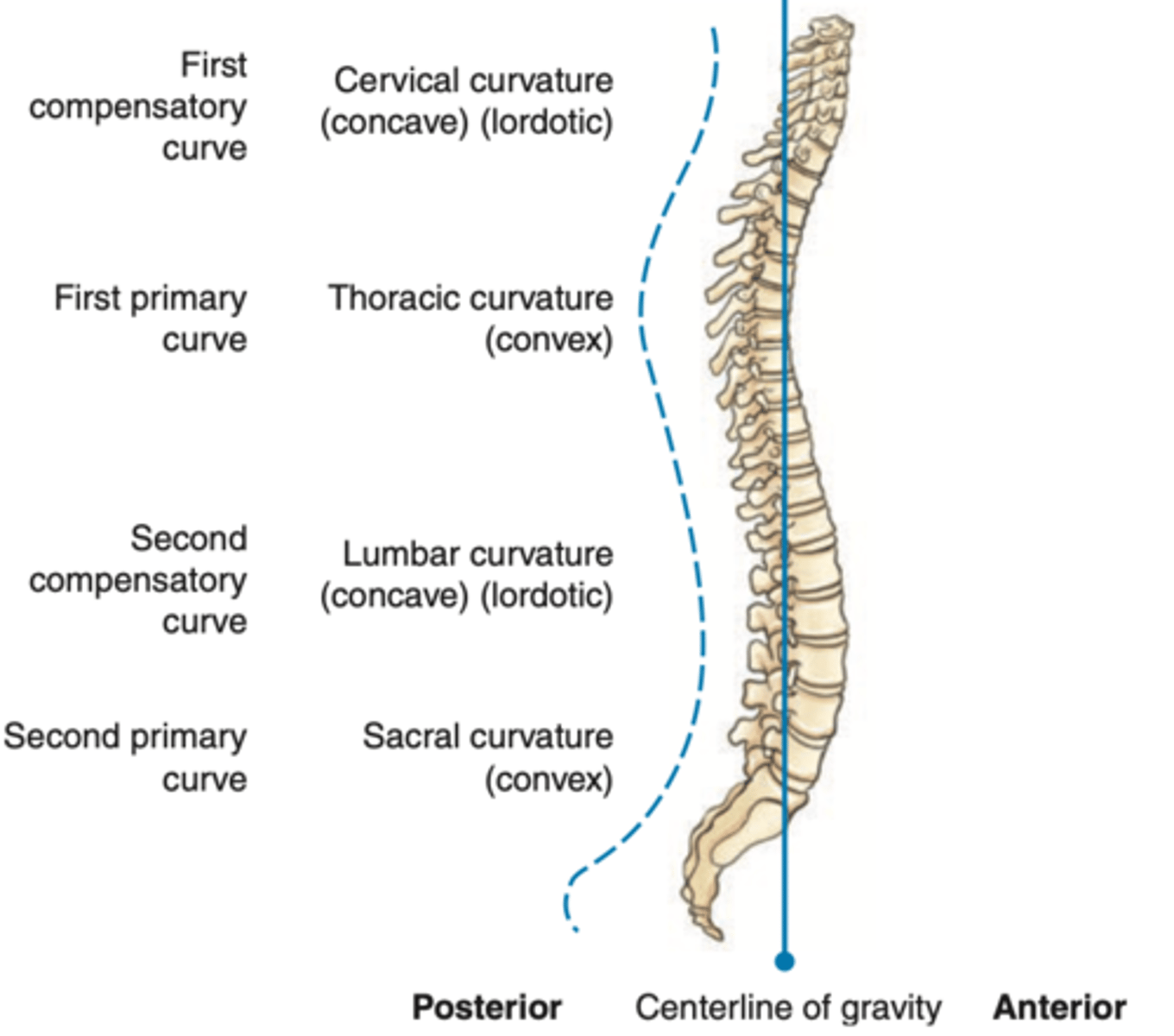
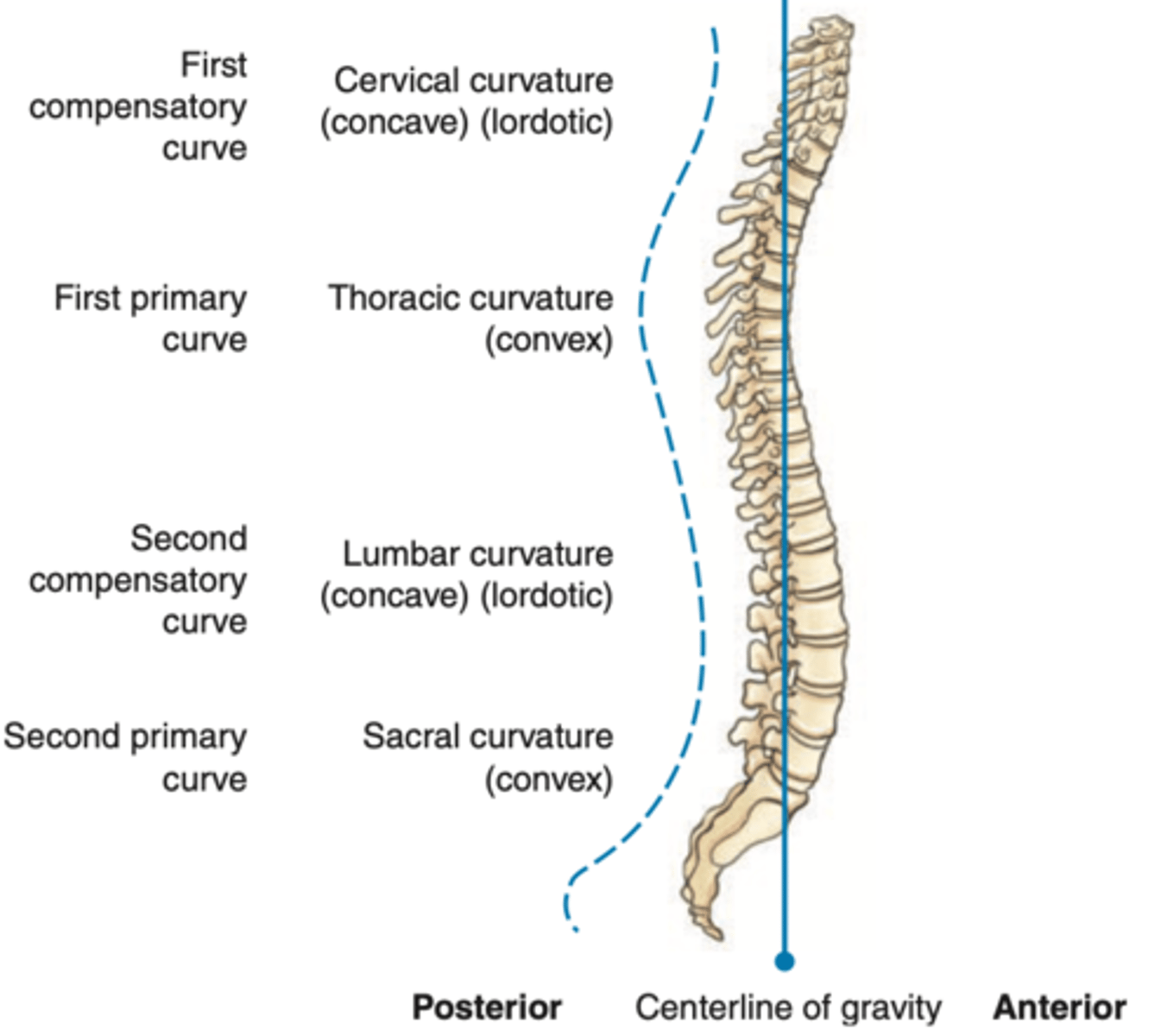
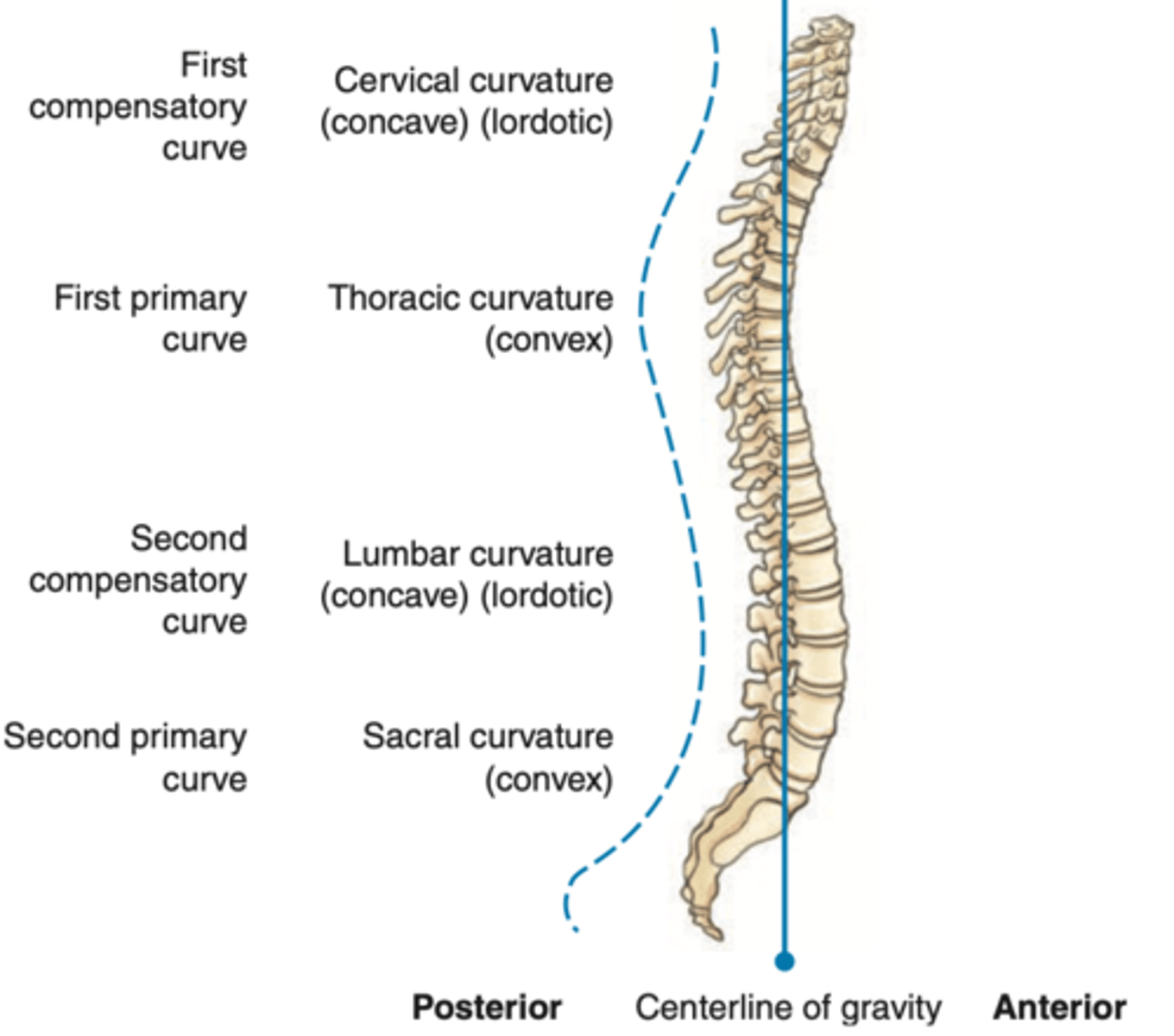
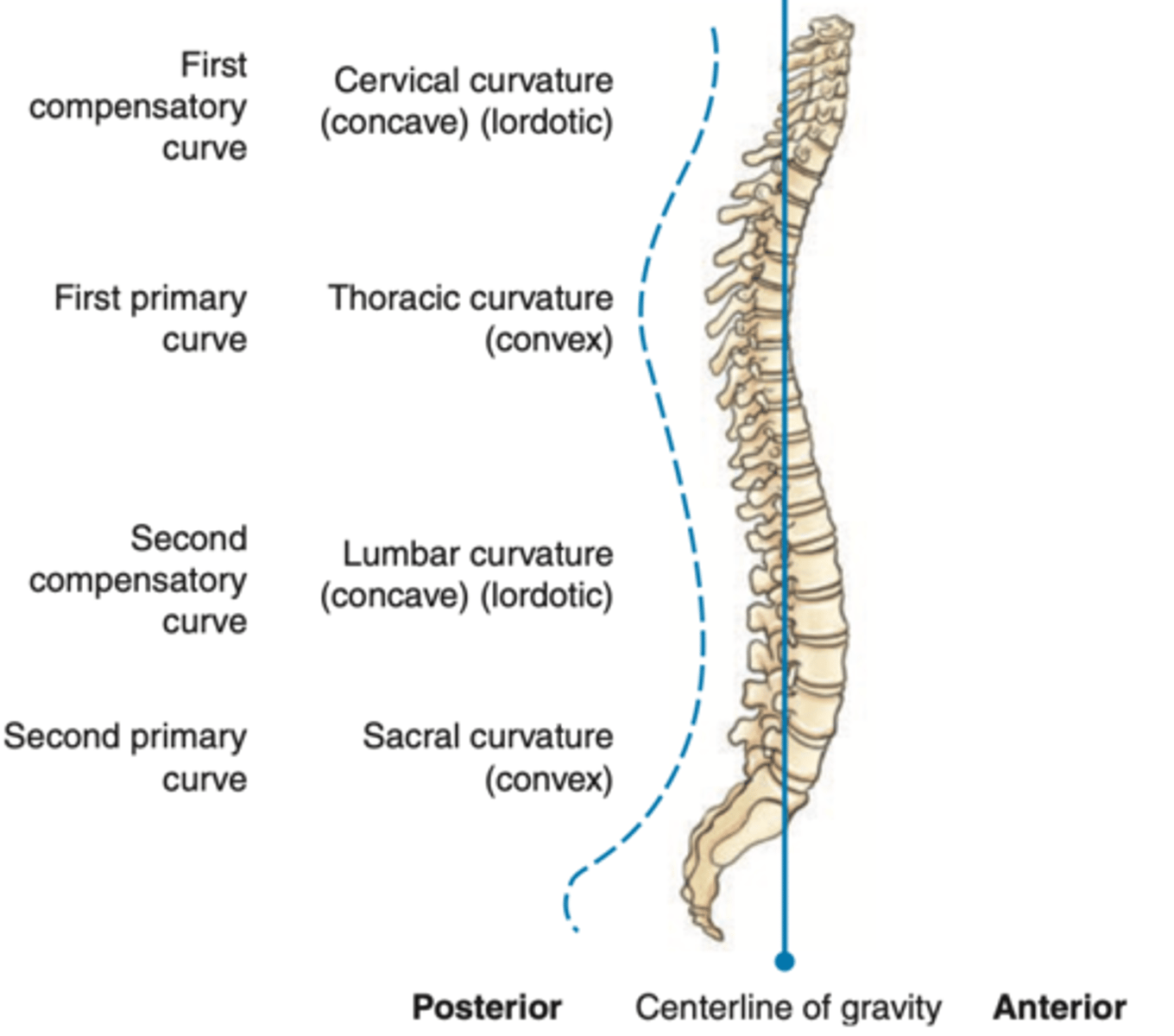
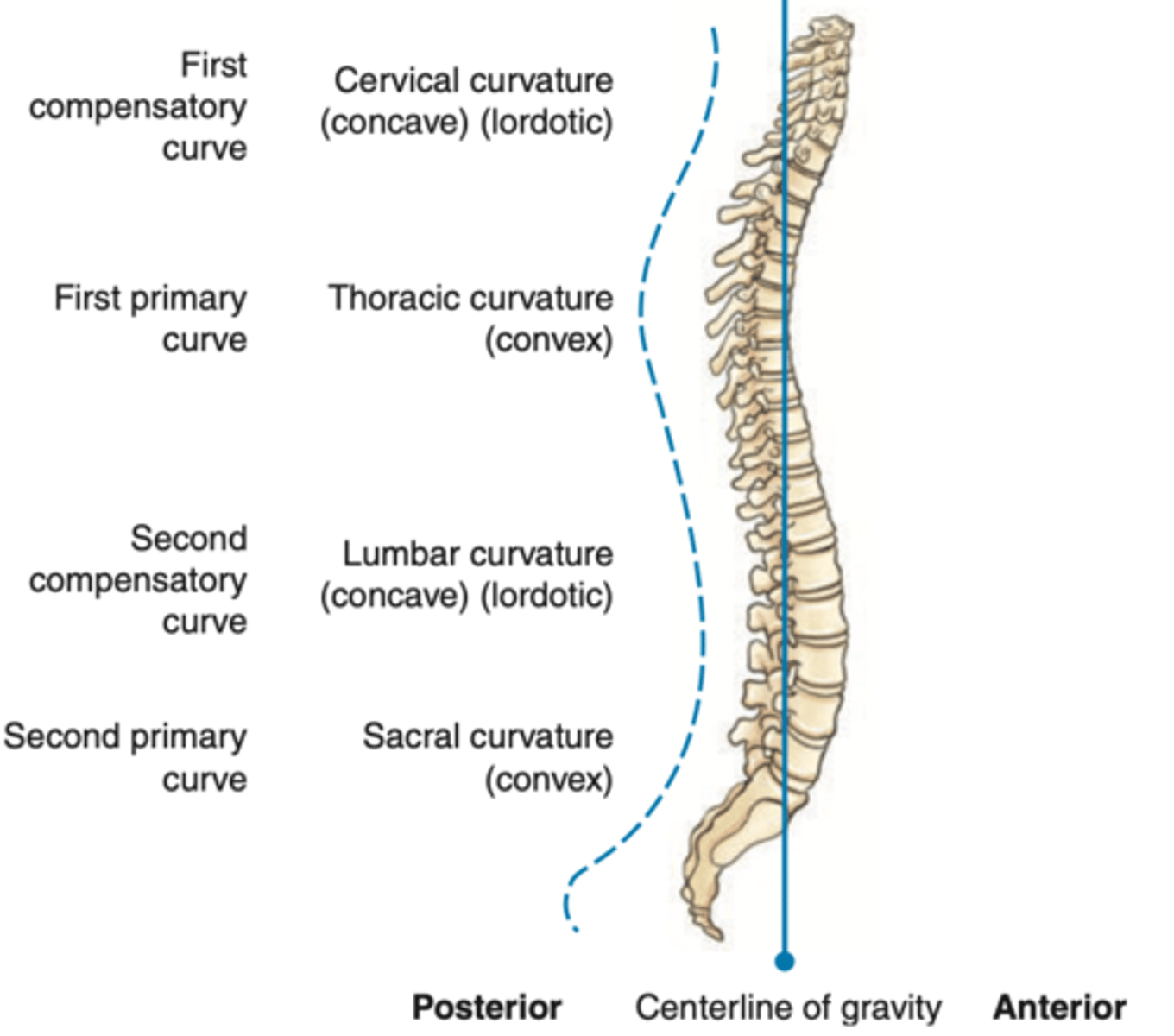
What type of curve is the cervical curvature?
It is a concave (inward) curve.
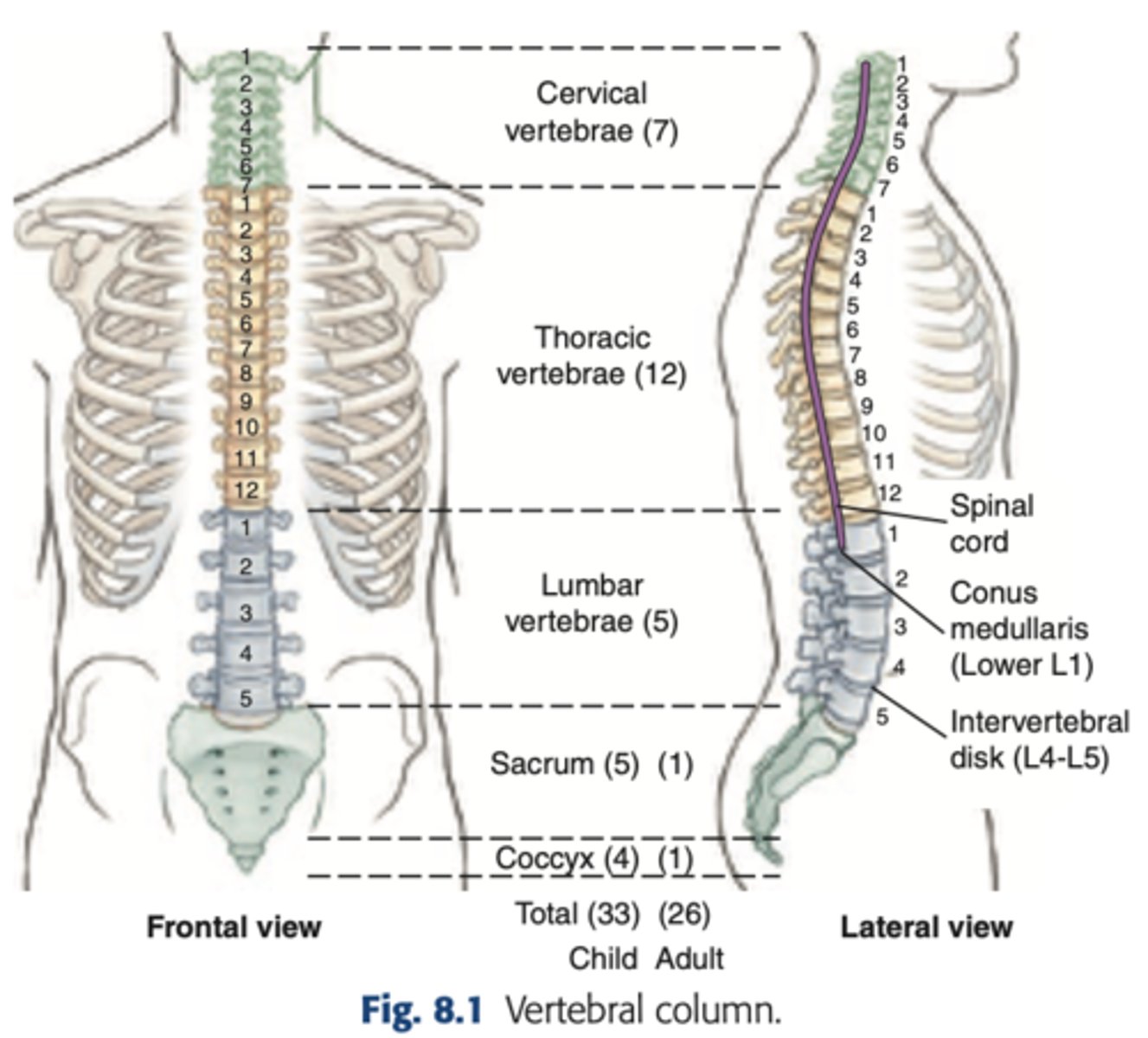
Is the cervical curvature a primary or compensatory curve?
It is a compensatory curve.
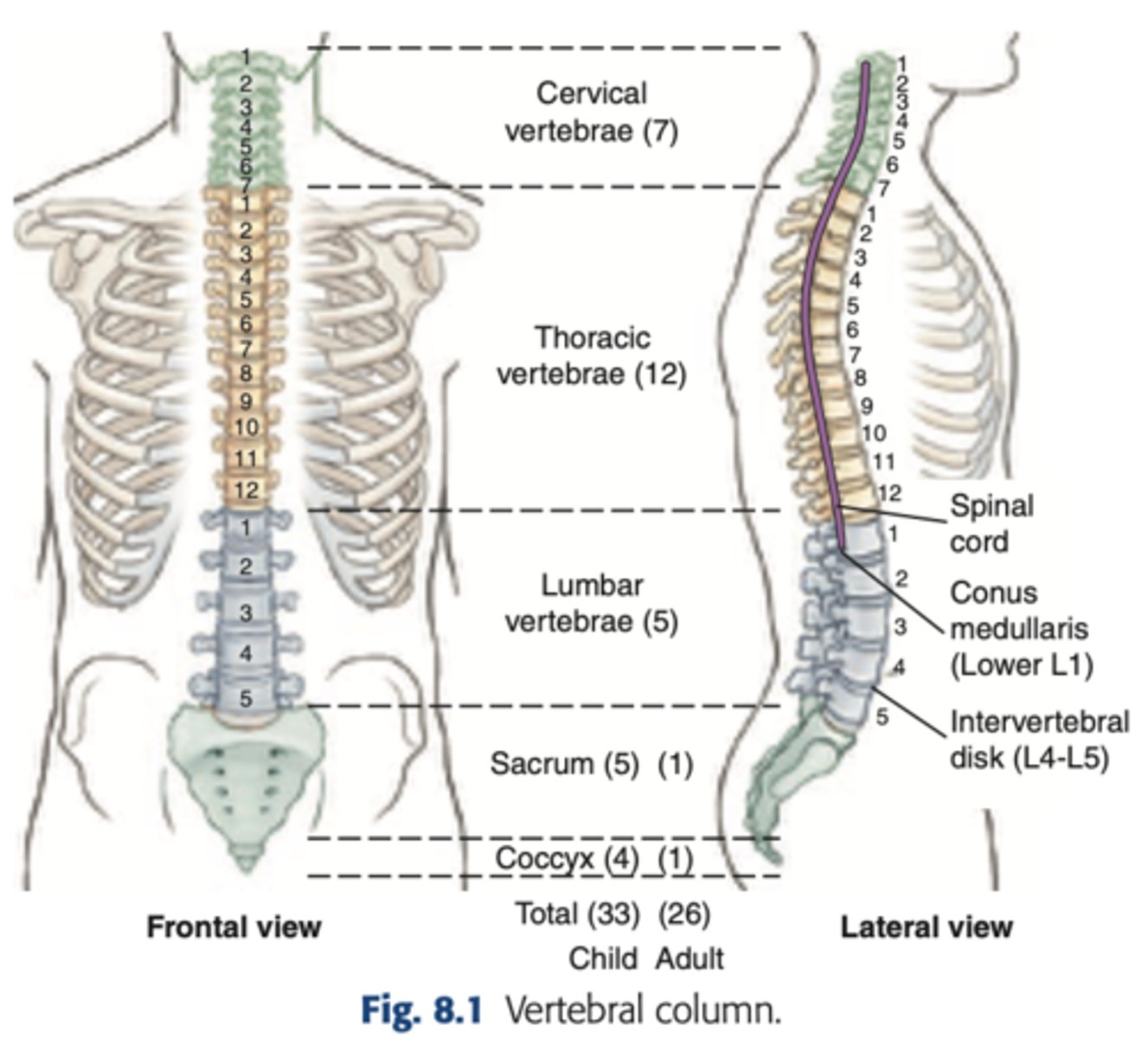
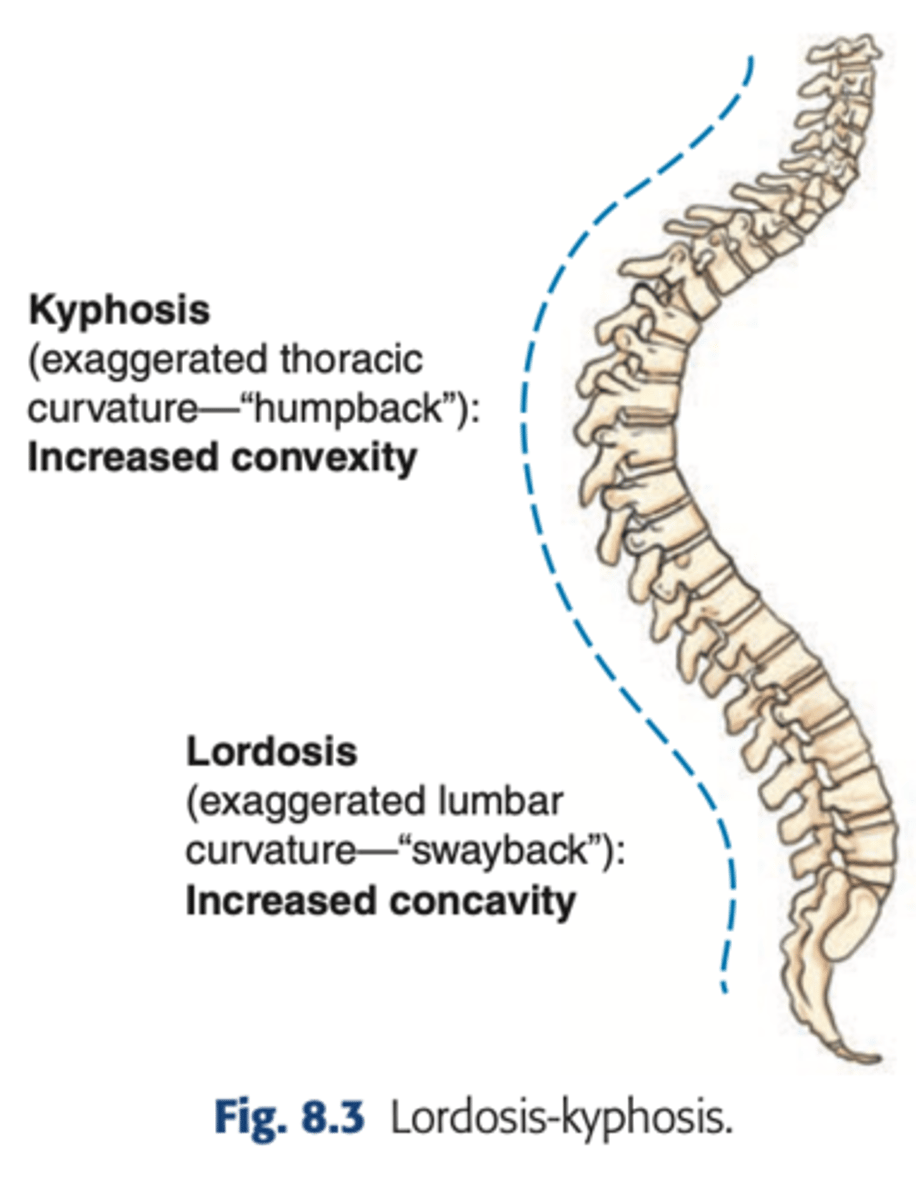
What is kyphosis?
An exaggerated thoracic curvature also called "humpback
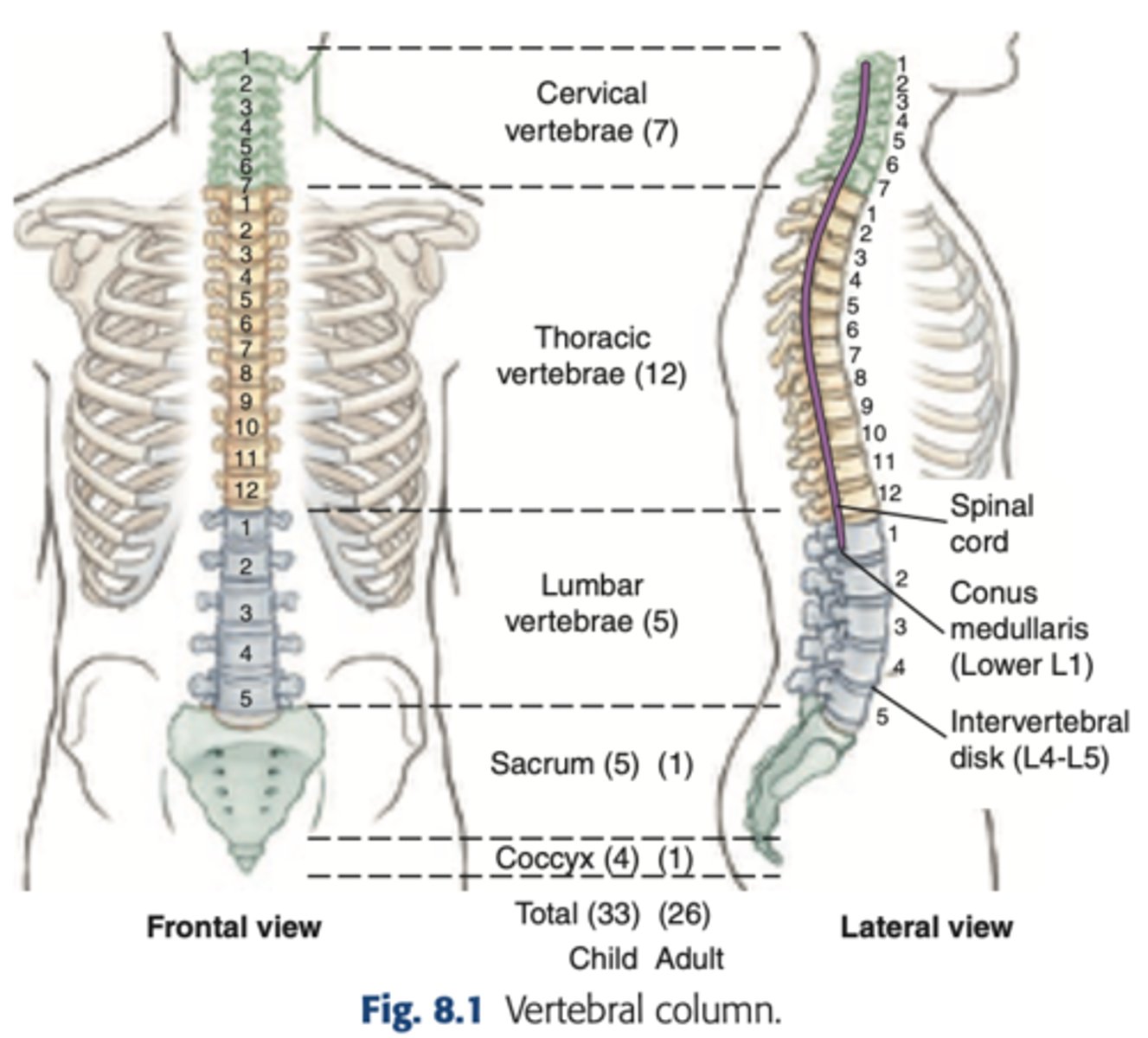
What does kyphosis cause in the spine?
Increased convexity
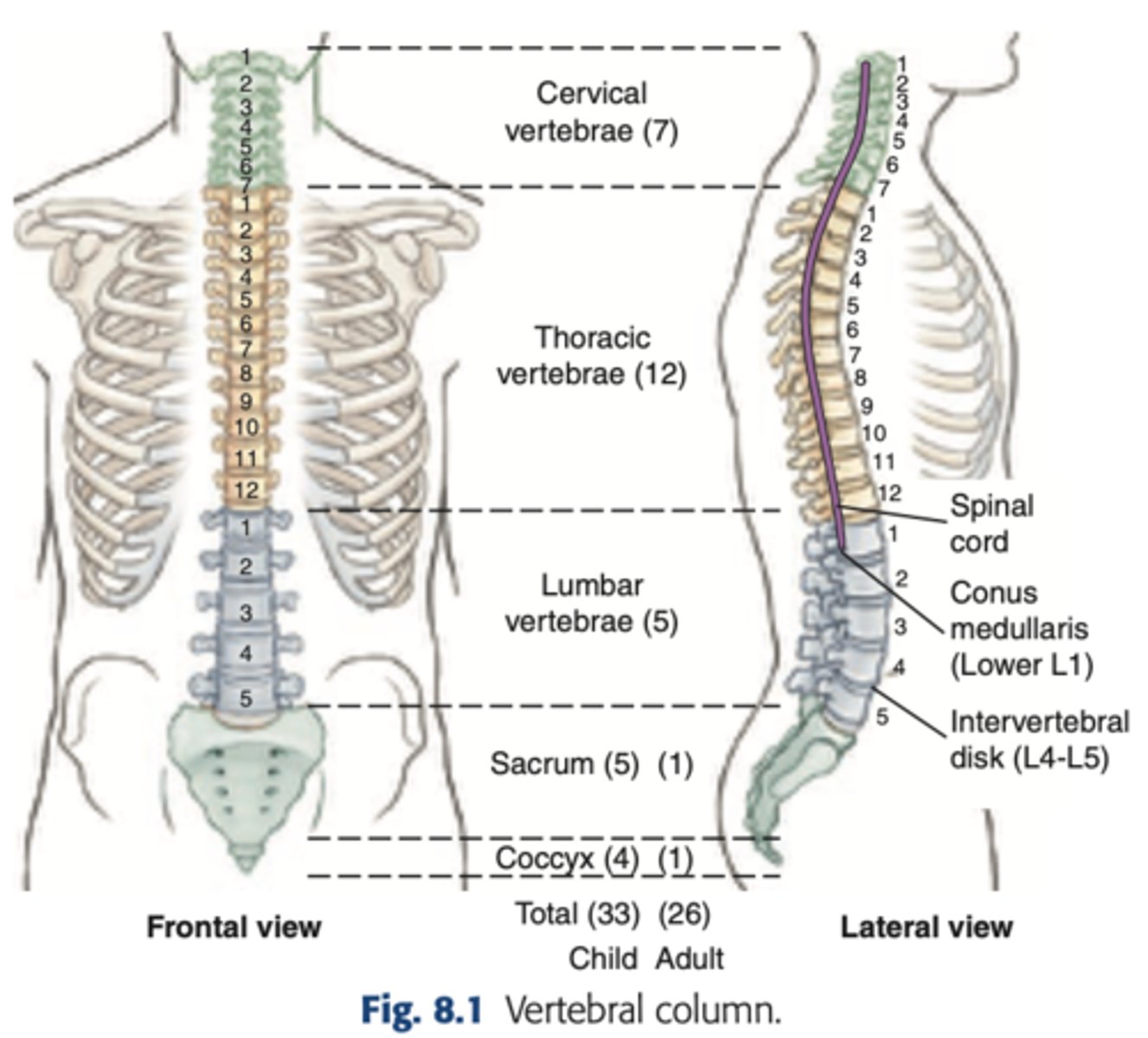
What is lordosis?
An exaggerated lumbar curvature also called "swayback"
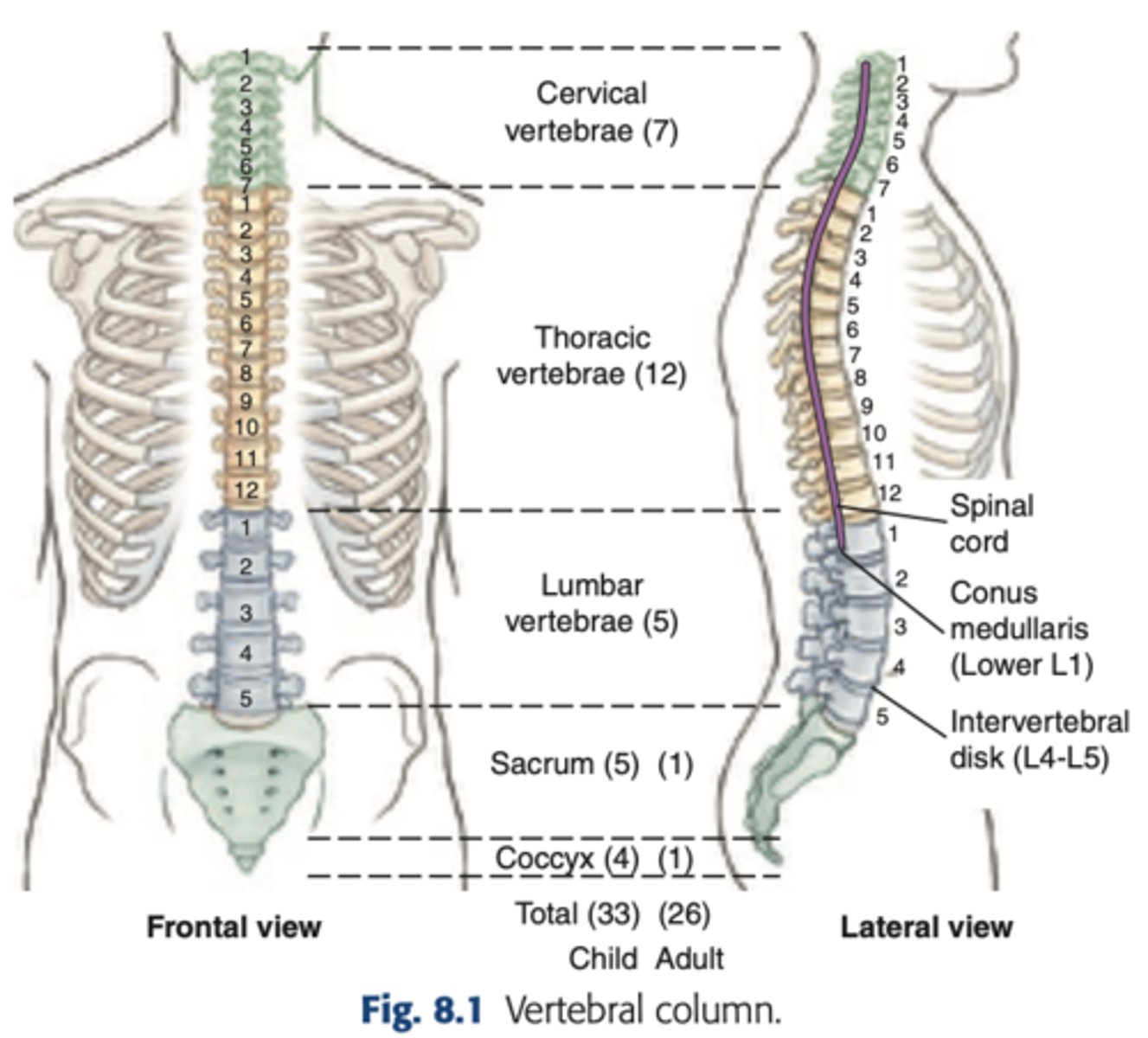
What does lordosis cause in the spine?
Increased concavity
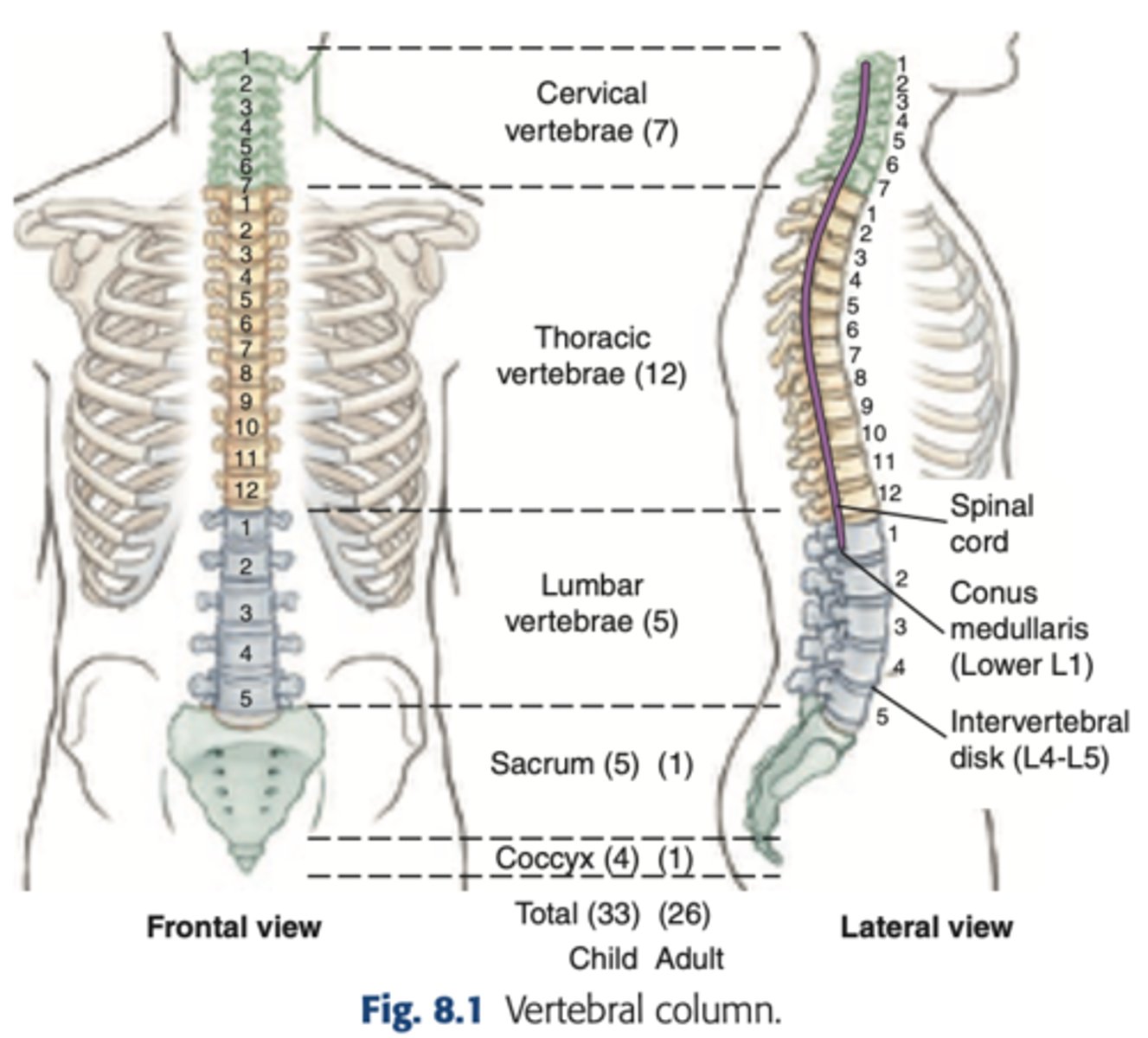
What is scoliosis?
An abnormal lateral curvature of the spine
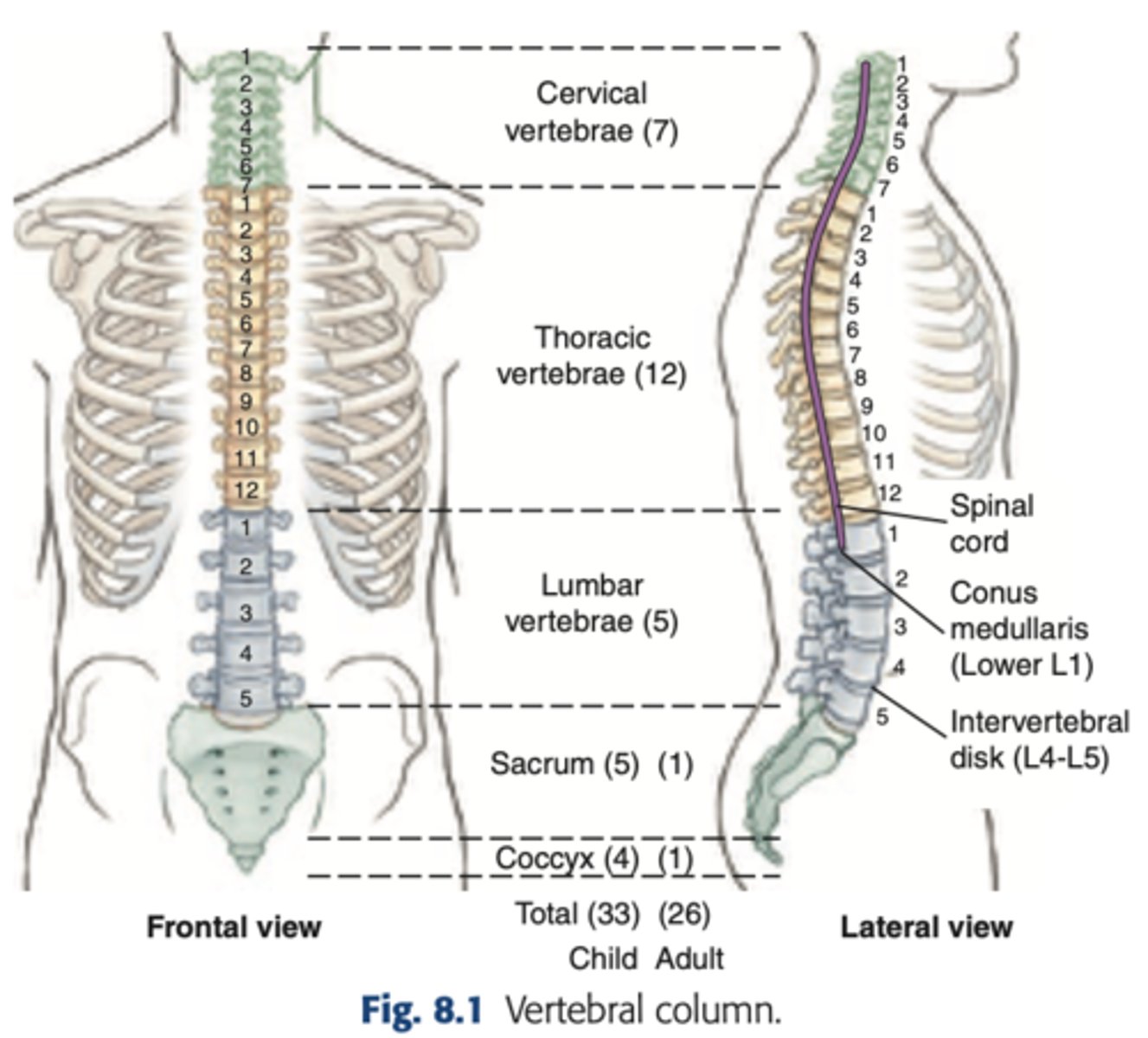
Which cervical vertebrae are considered typical?
C3 to C6
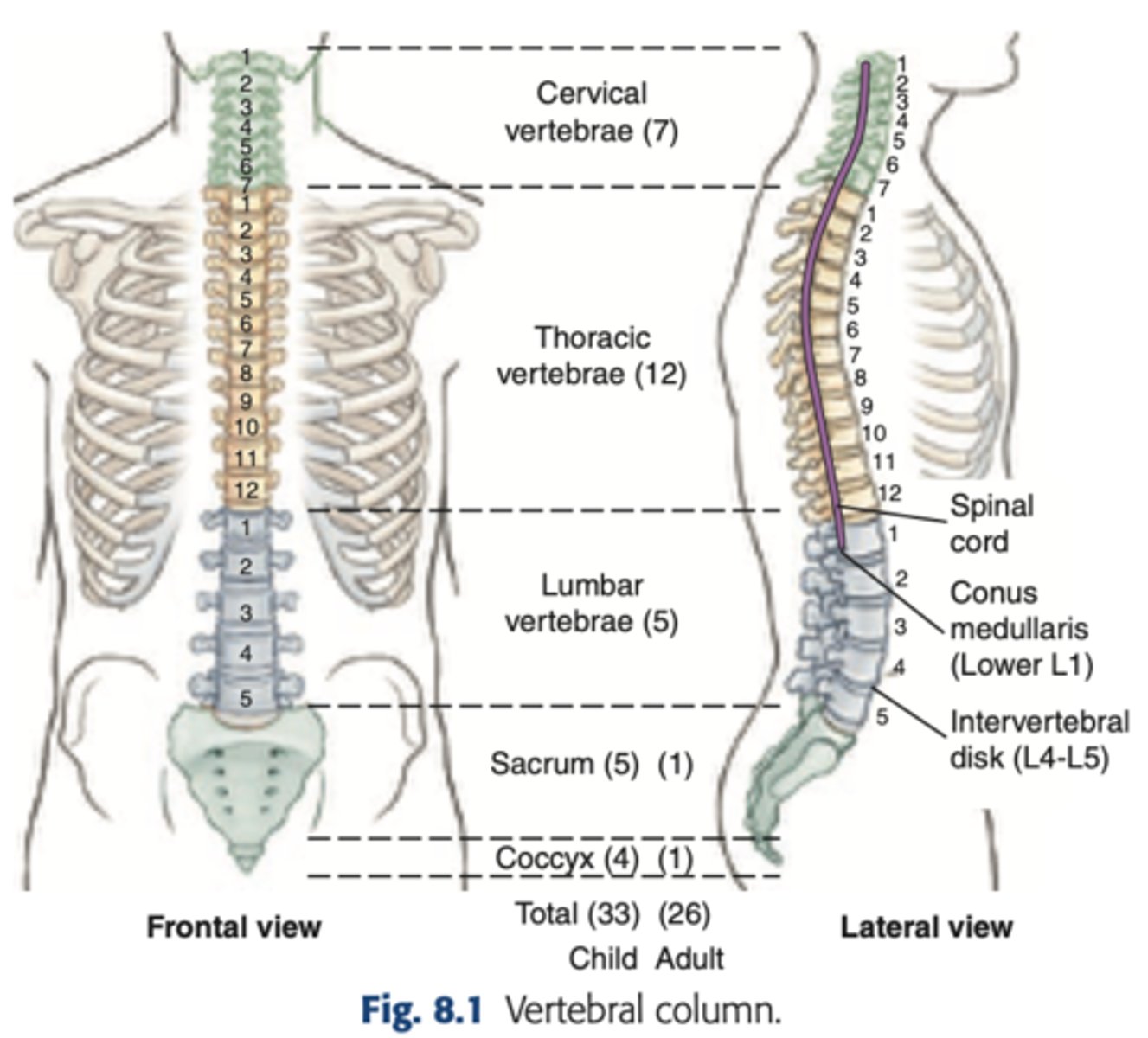
What is the name of C1?
Atlas
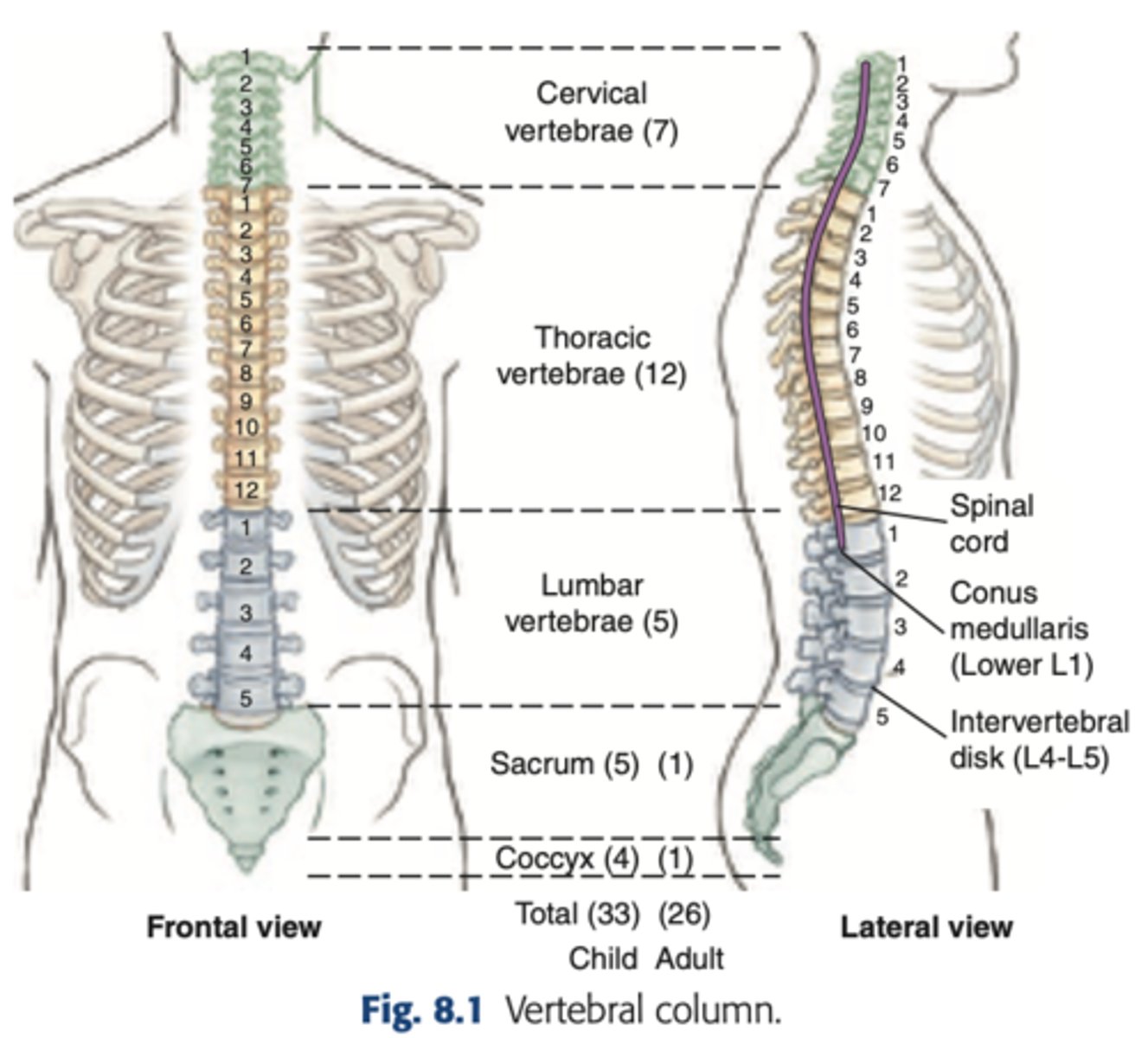
What is the name of C2?
Axis
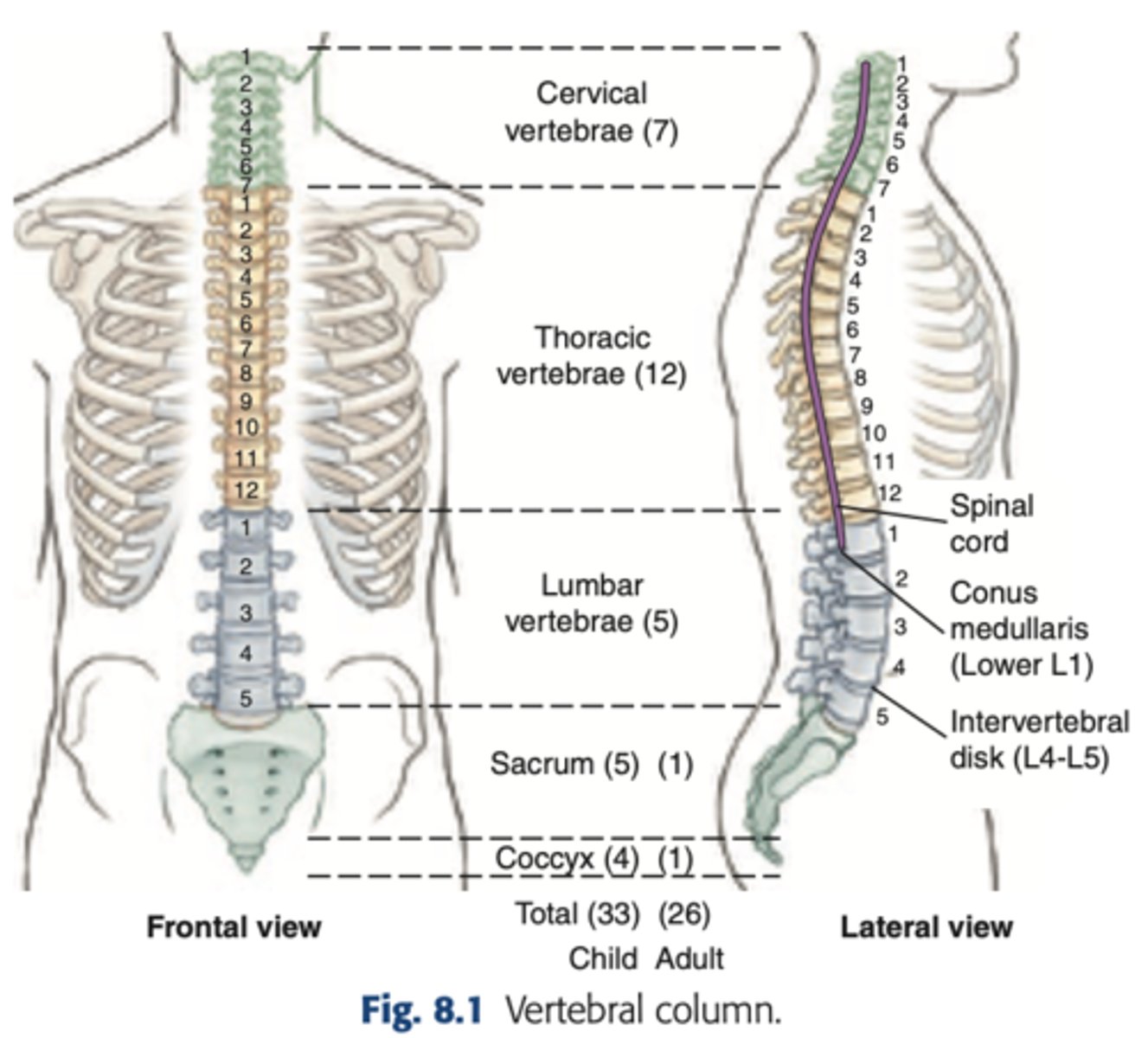
What is the special name for C7?
Vertebra prominens
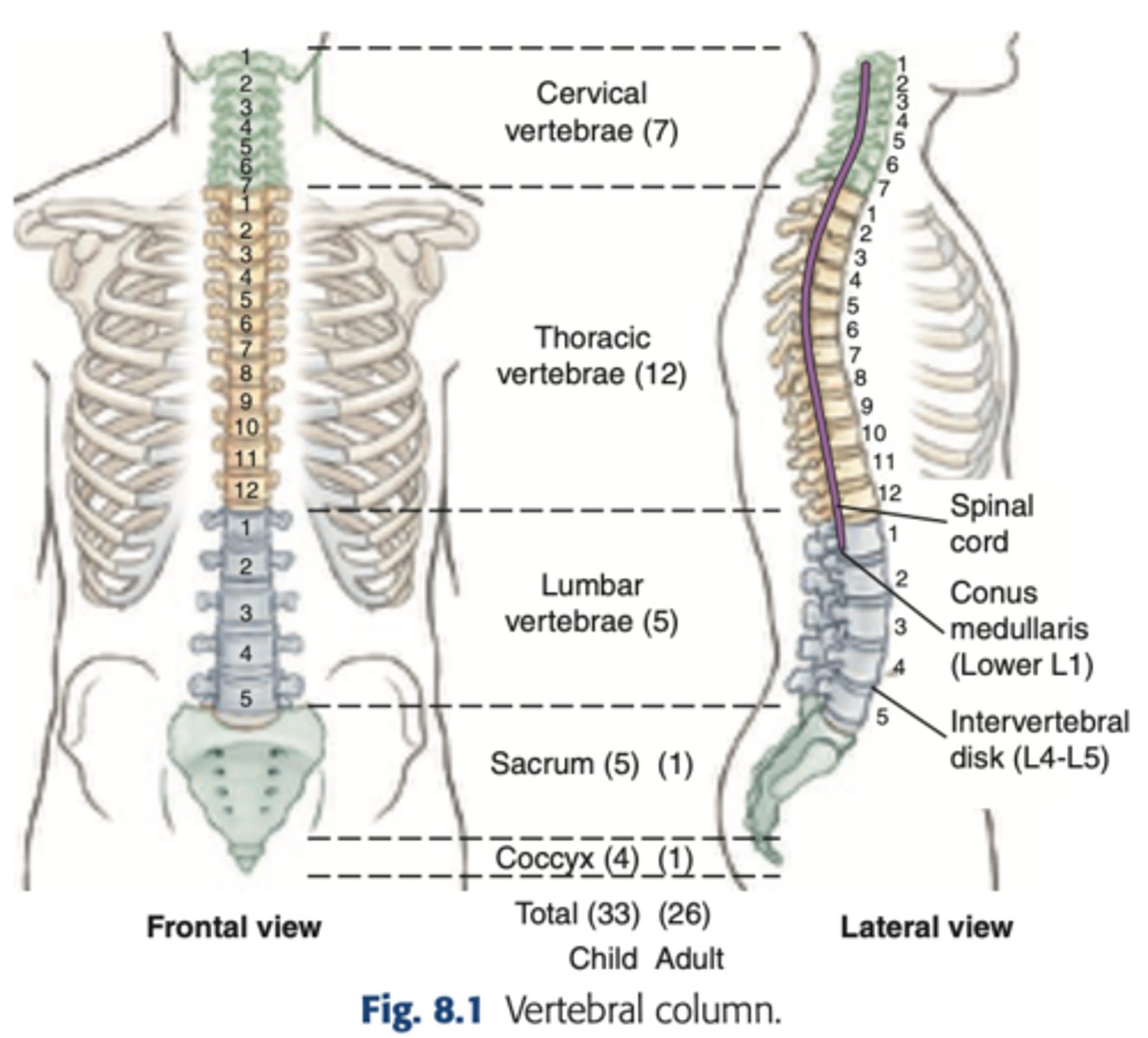
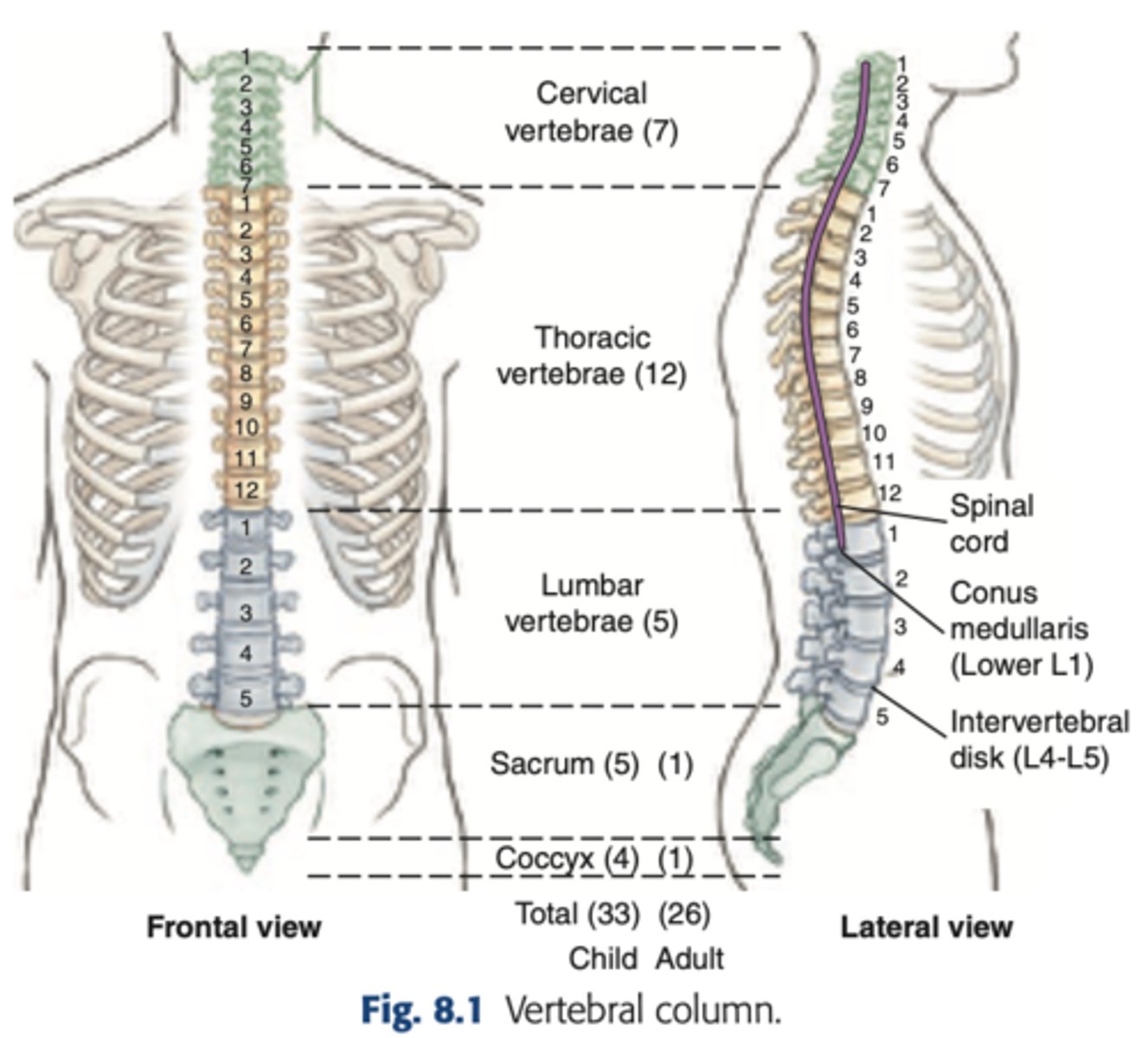
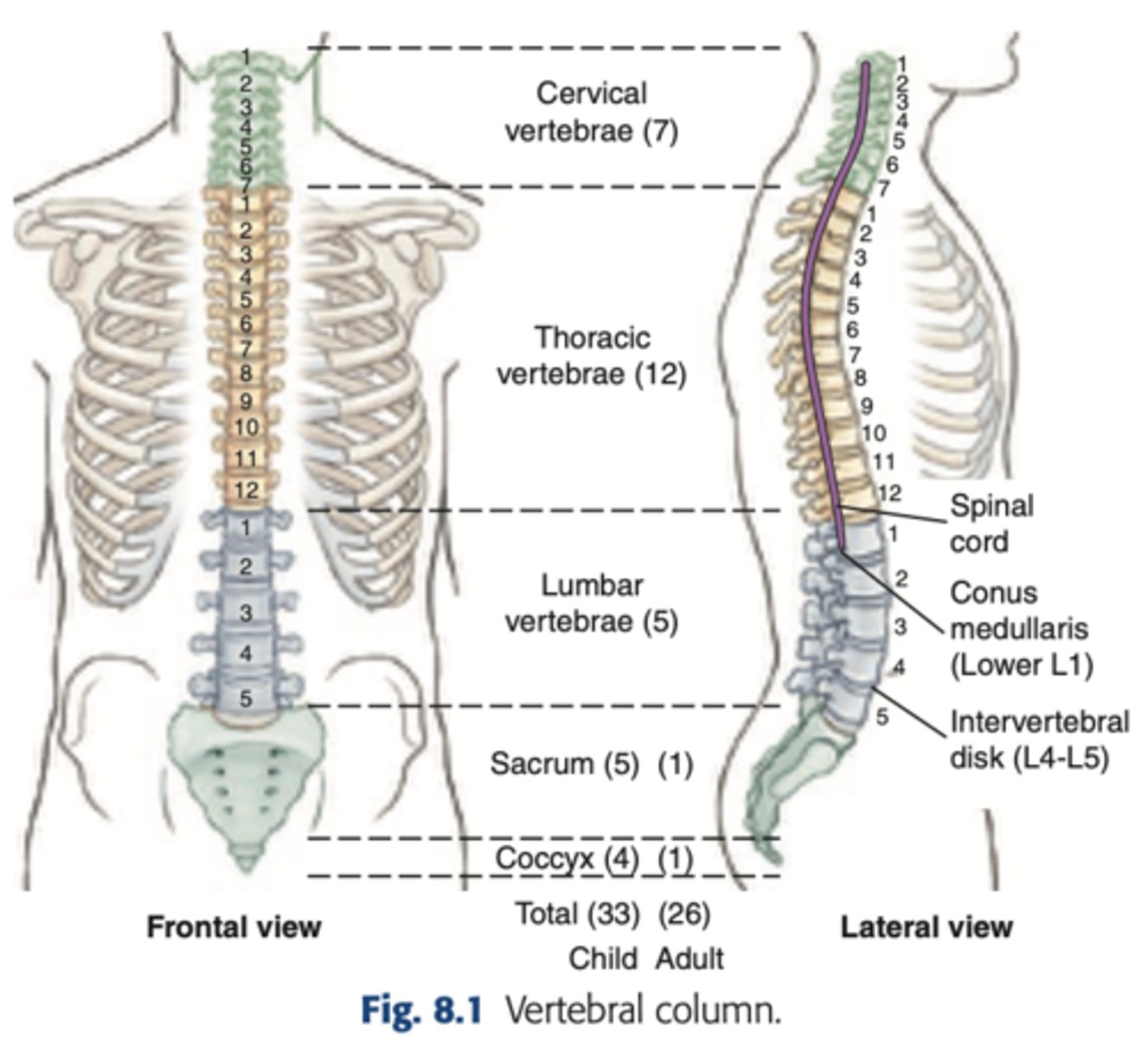
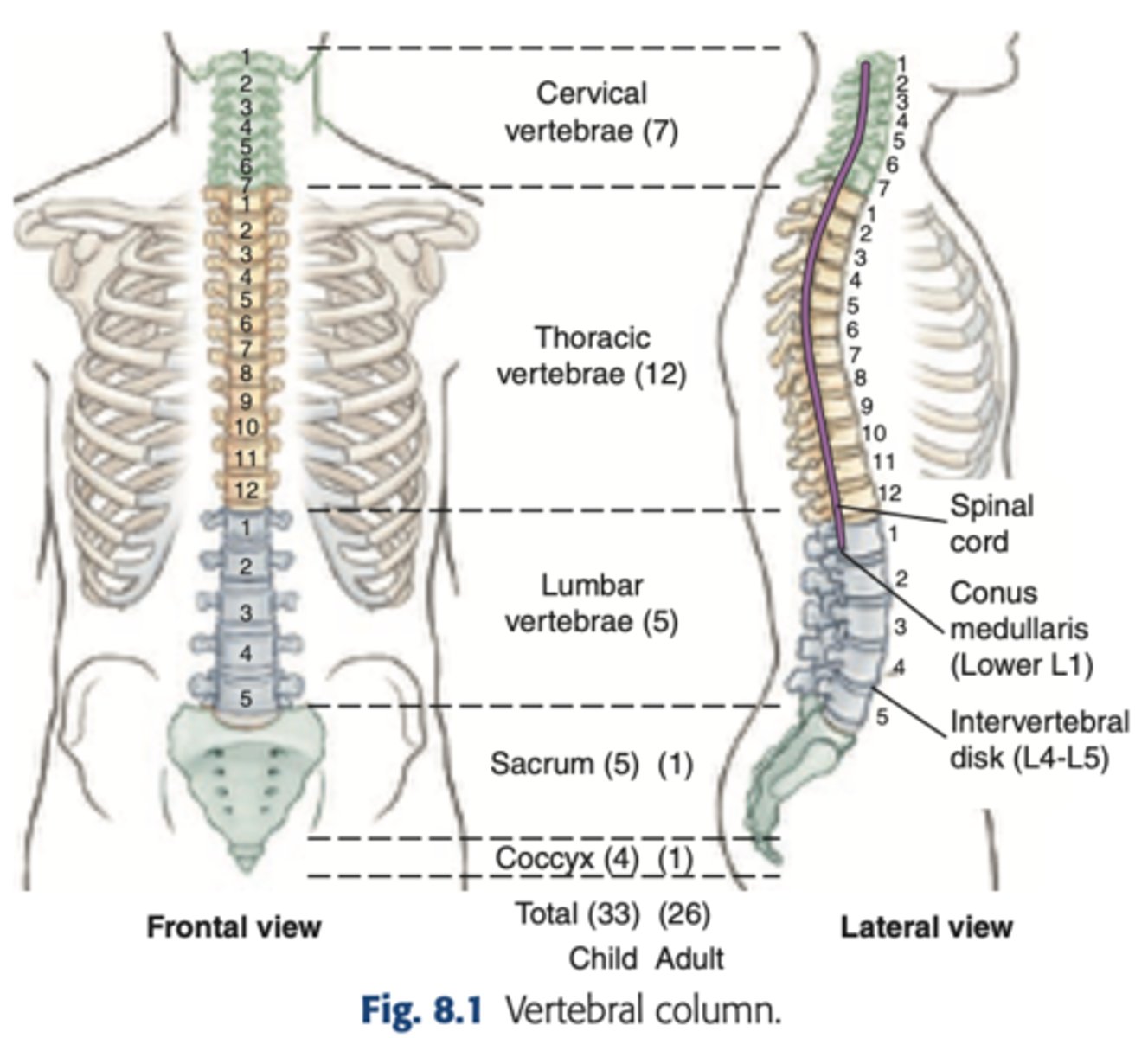
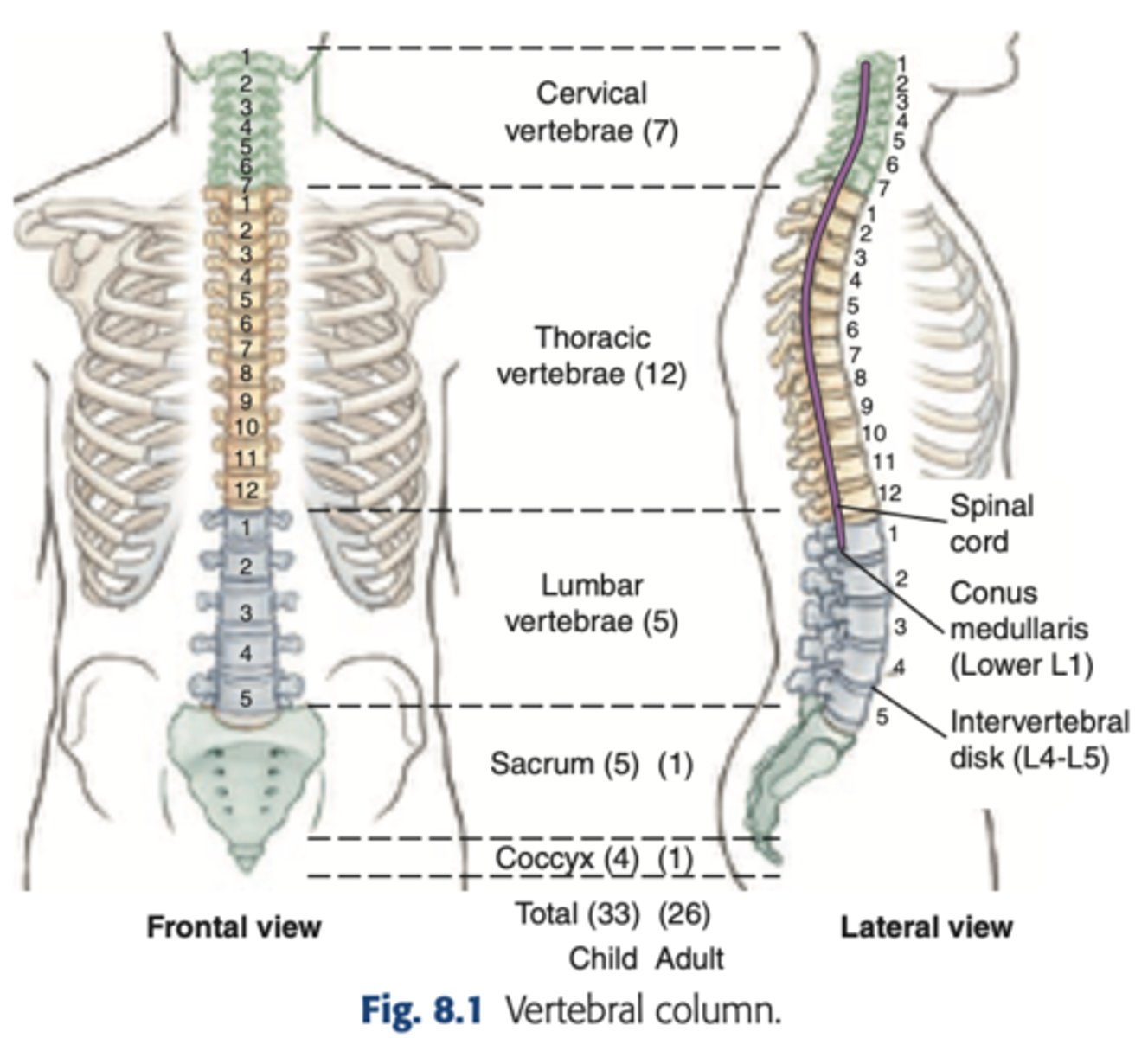
How many cervical vertebrae are there in total?
Seven (C1 to C7)
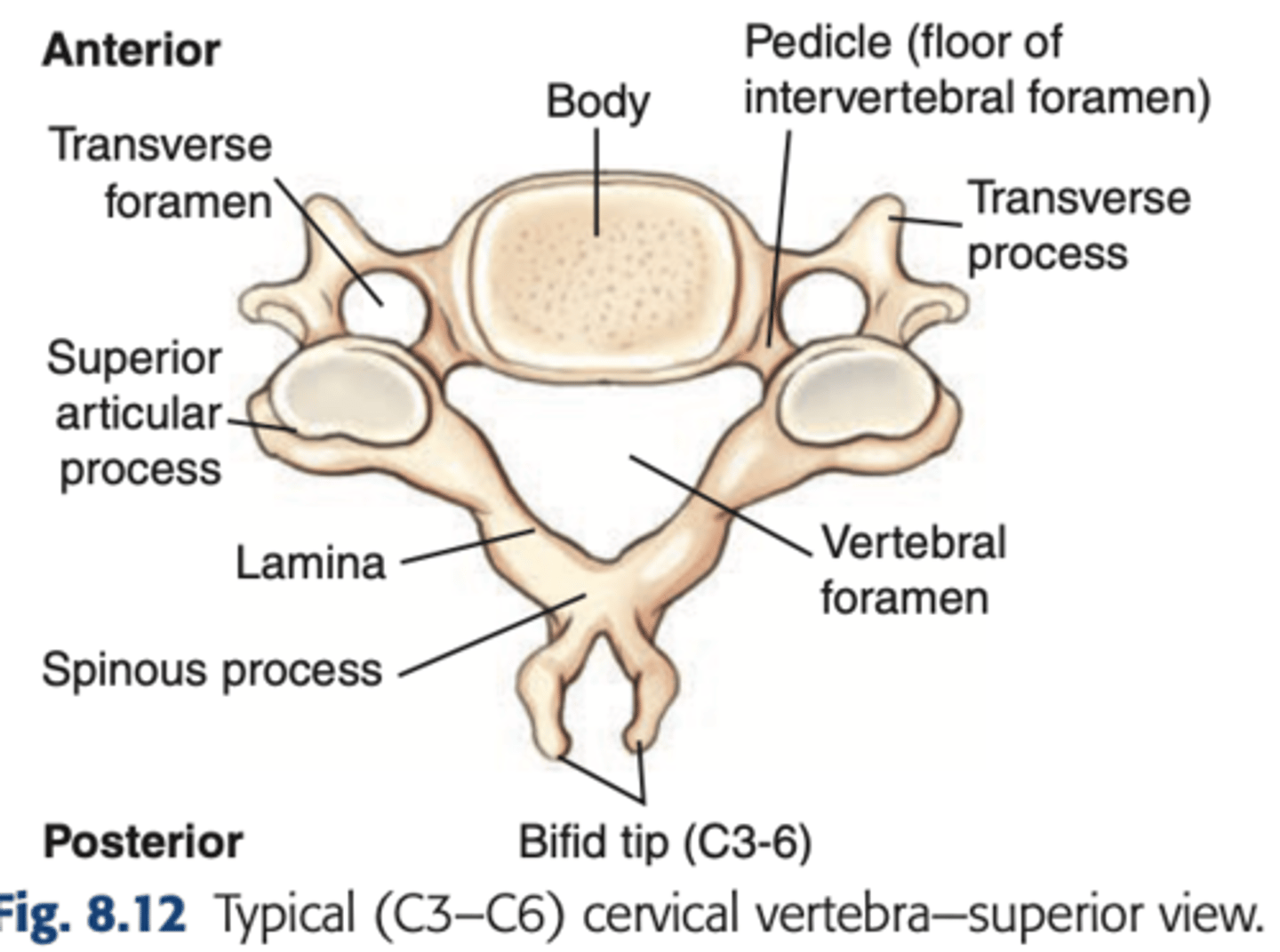
What are the 3 unique characteristics of typical cervical vertebrae?
Bifid spinous process, articular pillar, and 3 foramina
What is a bifid spinous process?
A spinous process that splits into two tips
What is the articular pillar?
The part of the vertebra between the superior and inferior articular processes
What are the 3 foramina in a typical cervical vertebra?
One vertebral foramen and two transverse foramina
What landmark corresponds with the level of C1?
External auditory meatus (EAM)
What landmark is used to find C3?
The gonion (angle of the mandible, "jawline")
What vertebral level is at the thyroid cartilage?
C4-C5
What is the landmark for the level of C7?
Vertebra prominens
What is the mastoid tip level associated with?
Near the base of the skull, close to C1
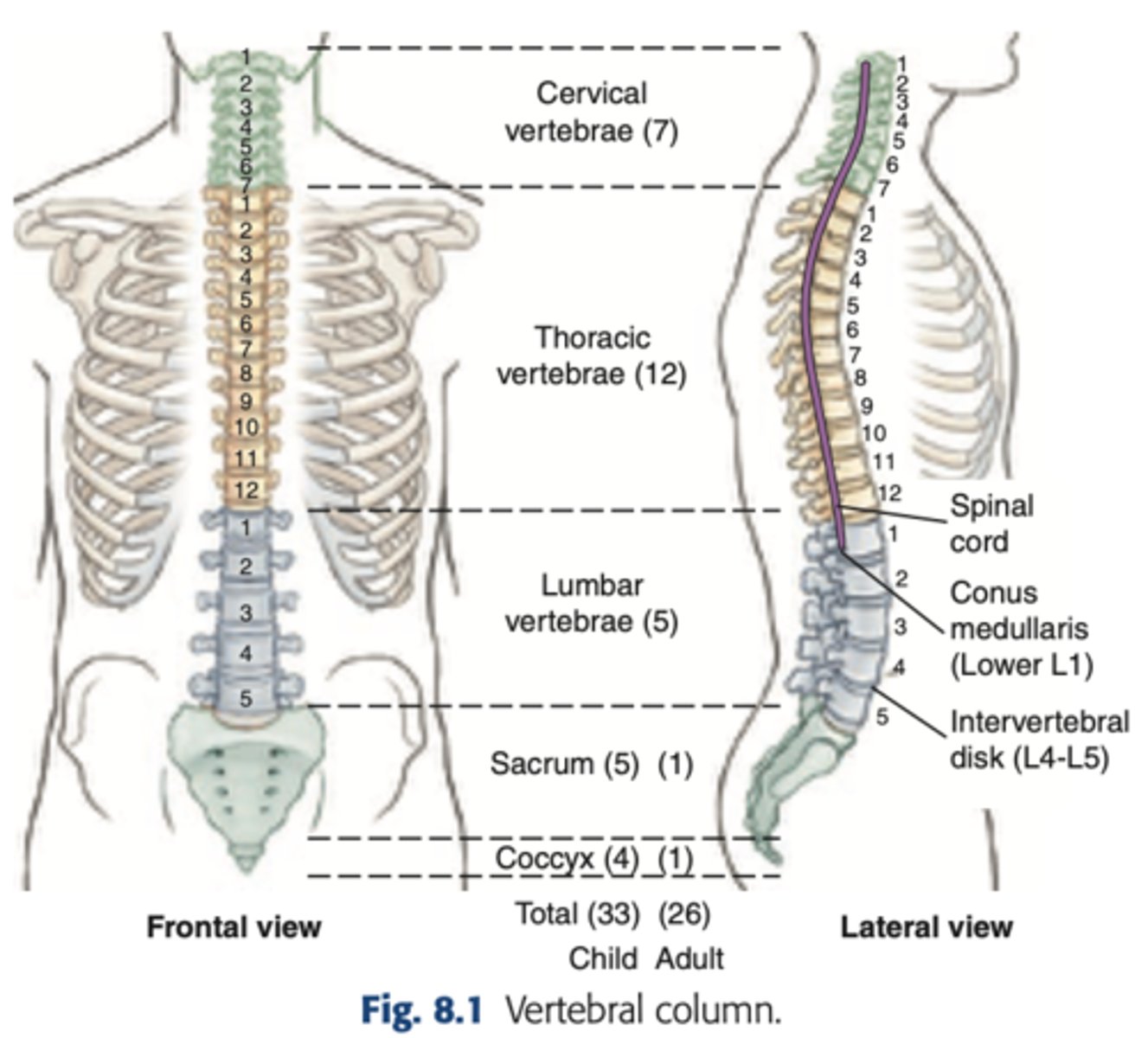
How many vertebral spines are in the cervical spine?
7
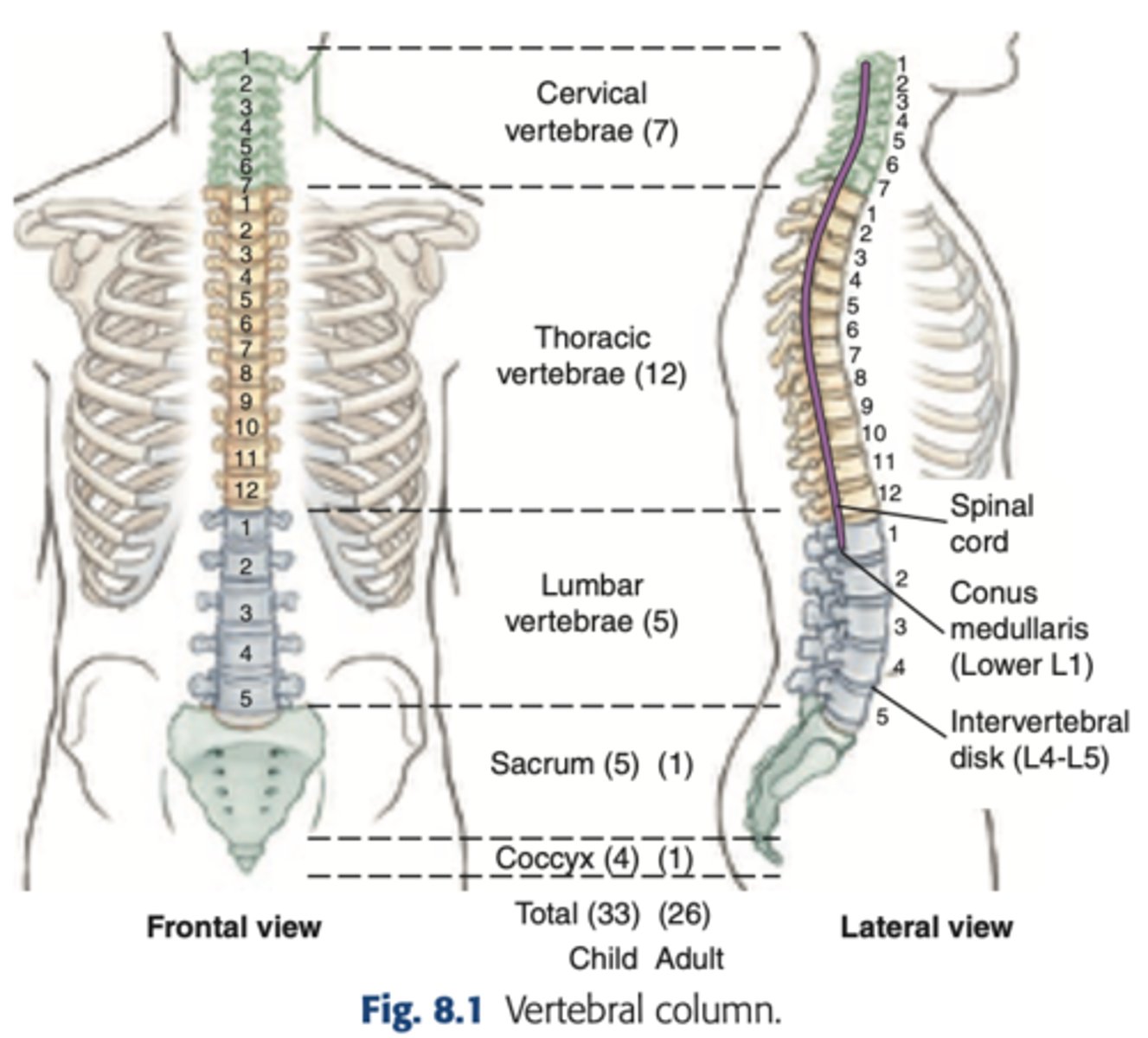
What is the cervical curvature also called?
Lordotic curve.
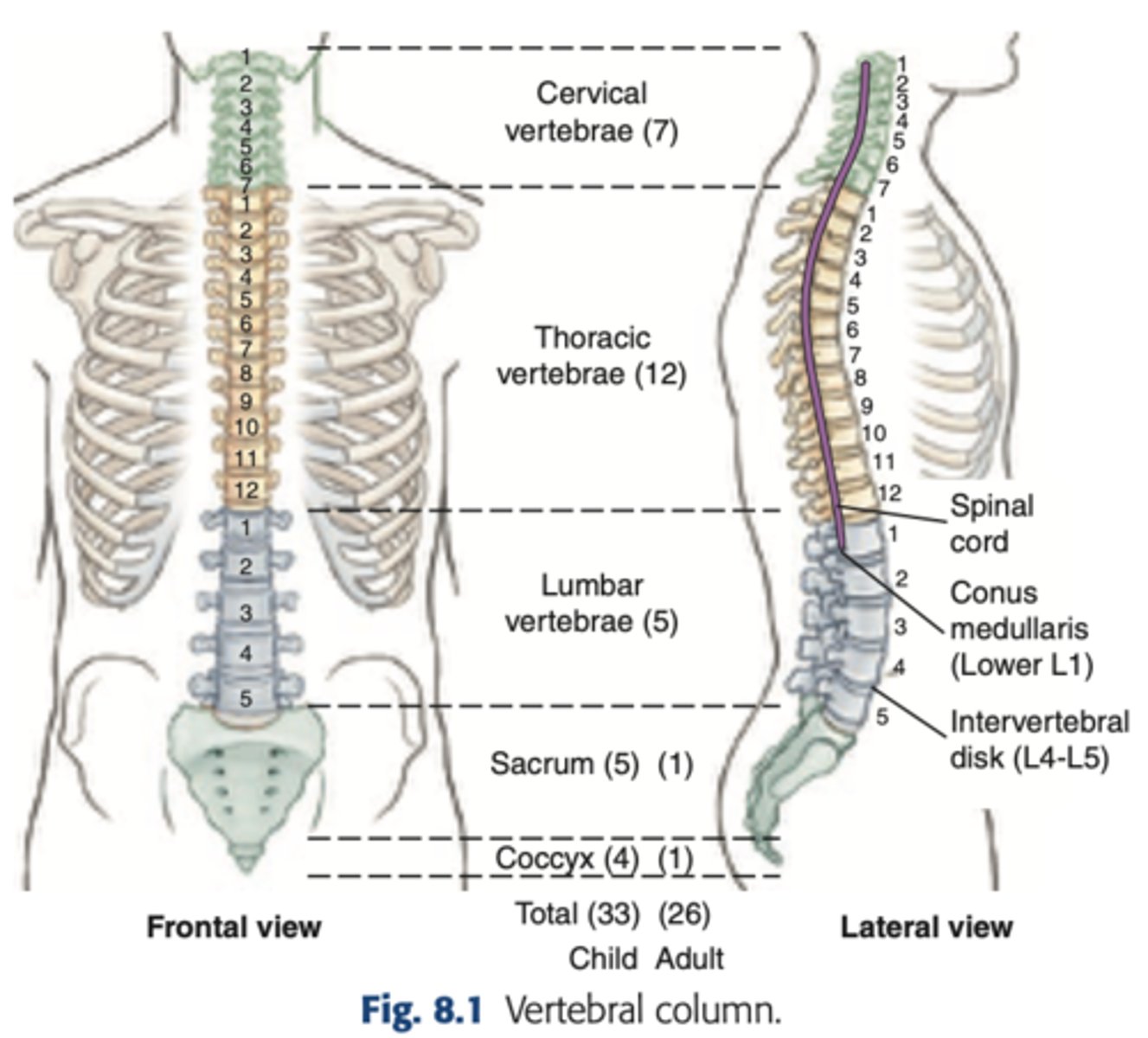
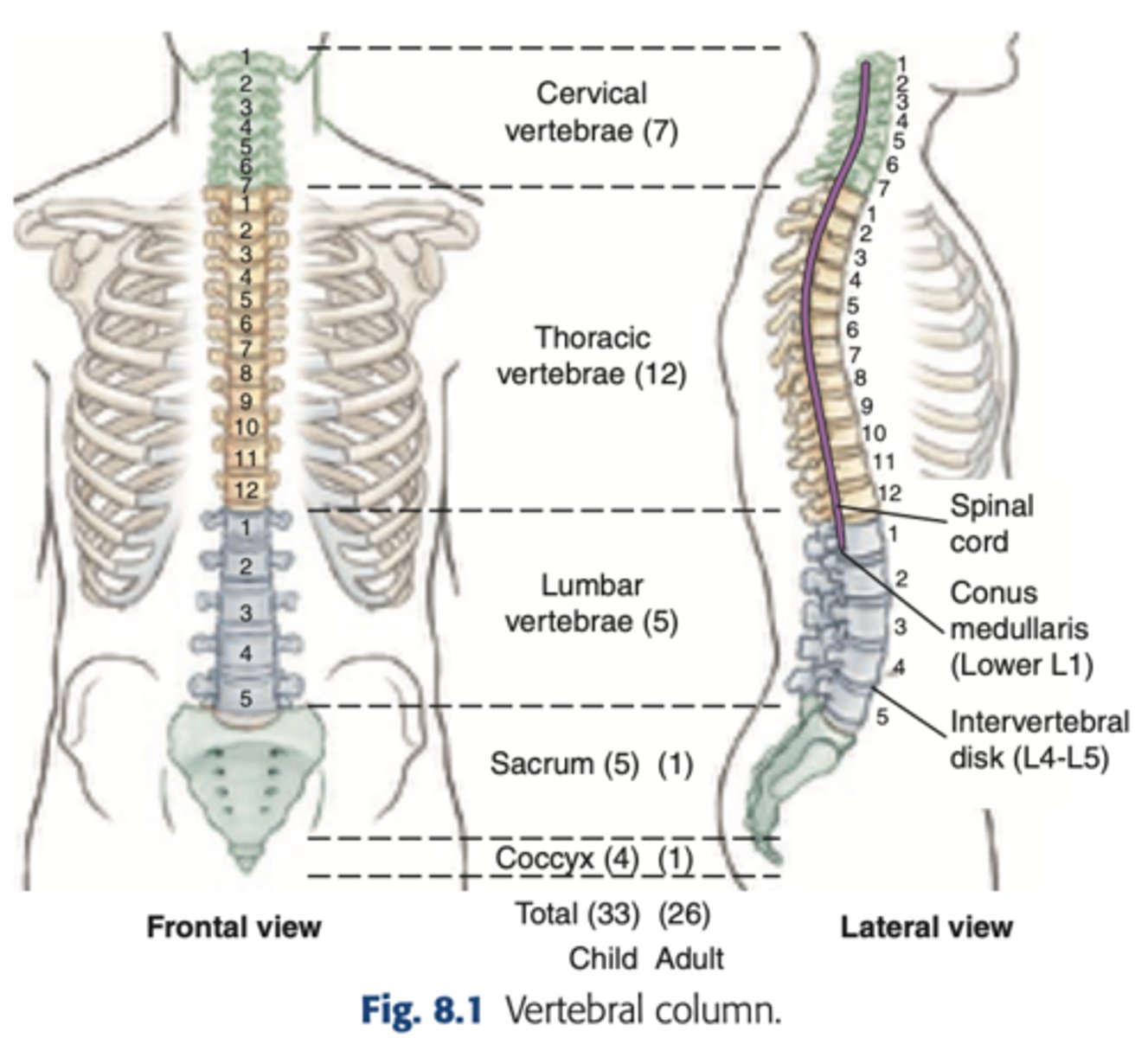
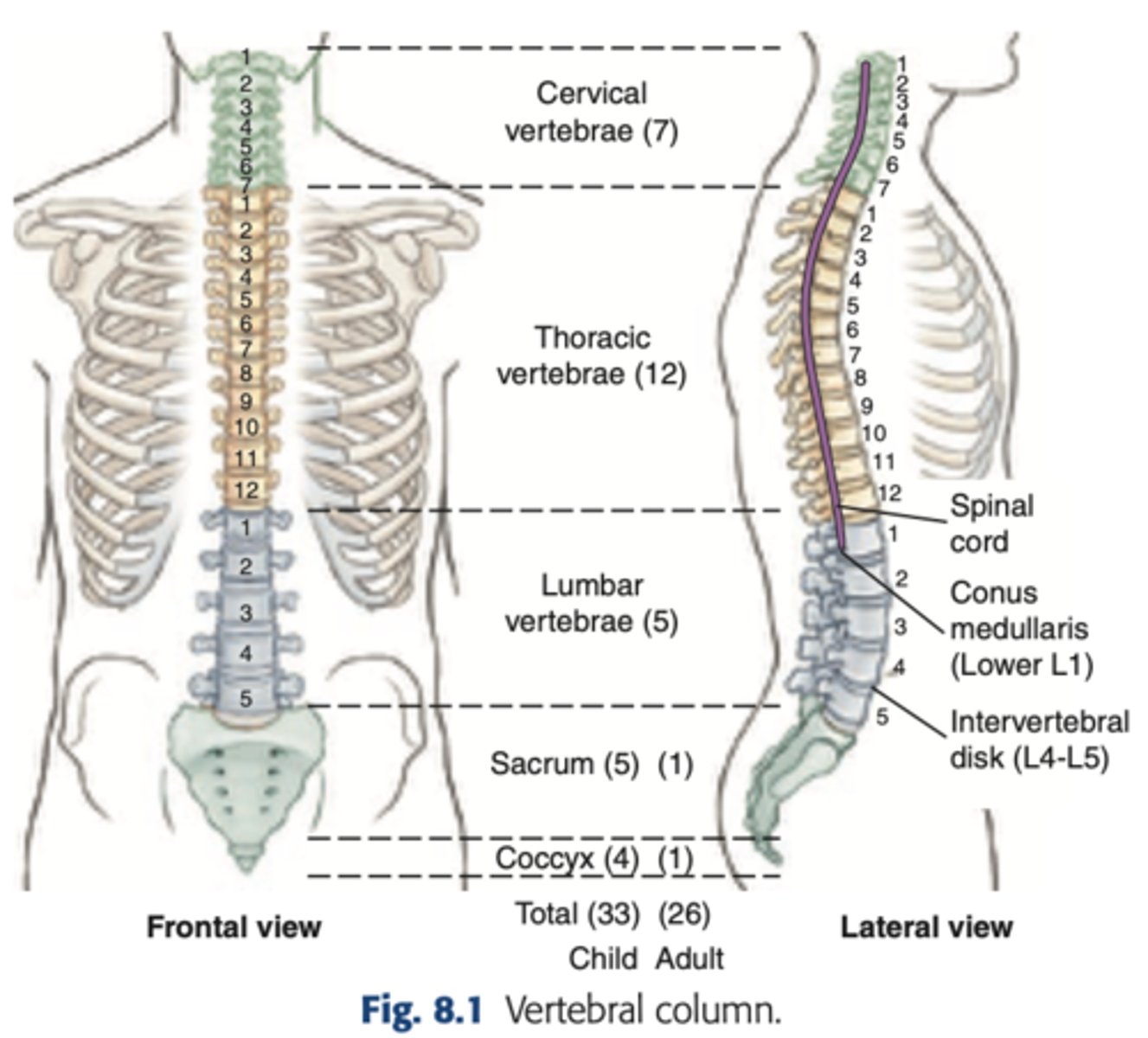
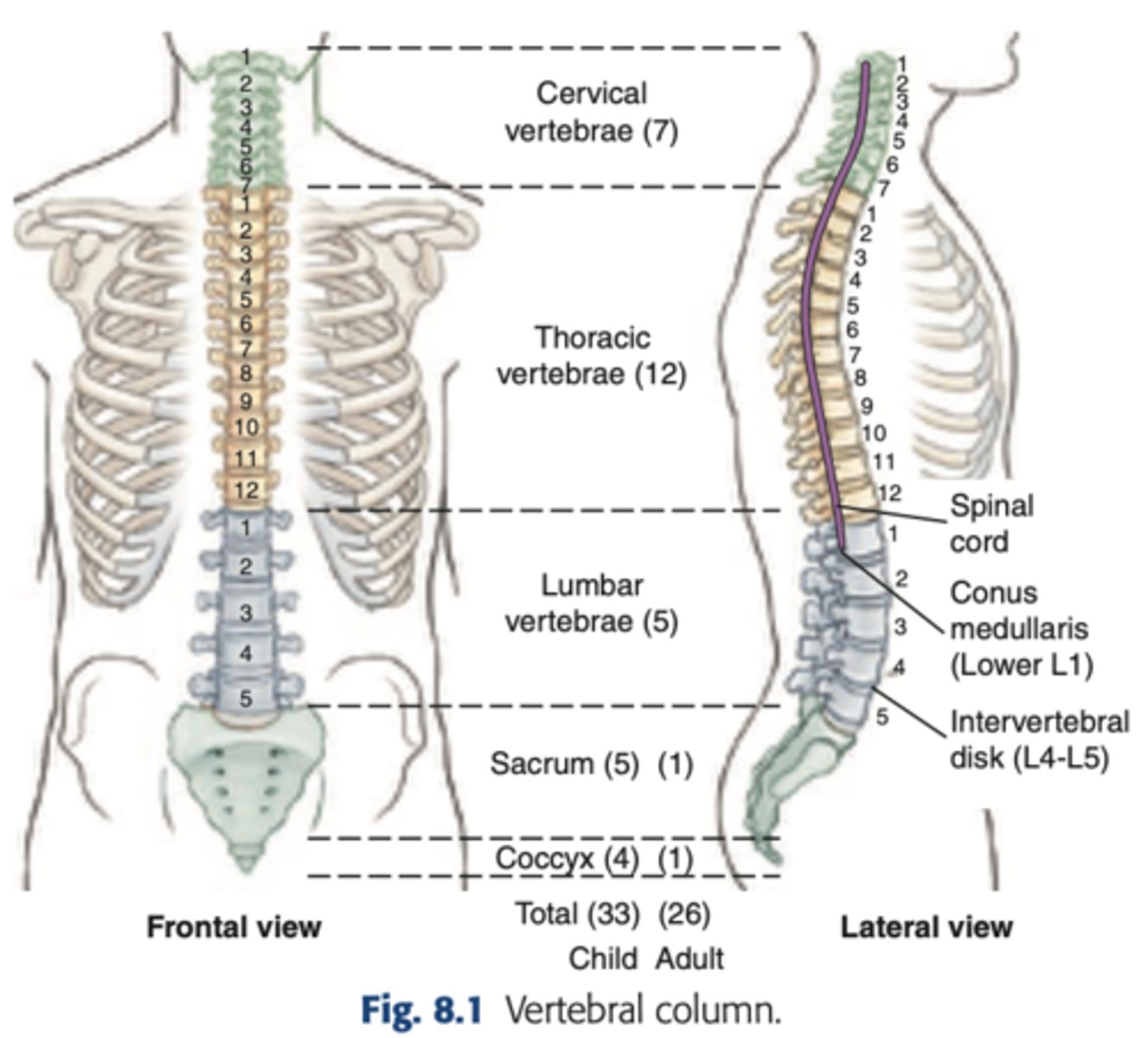
Where does the spinal canal begin and end?
It begins at the base of the skull and extends into the sacrum
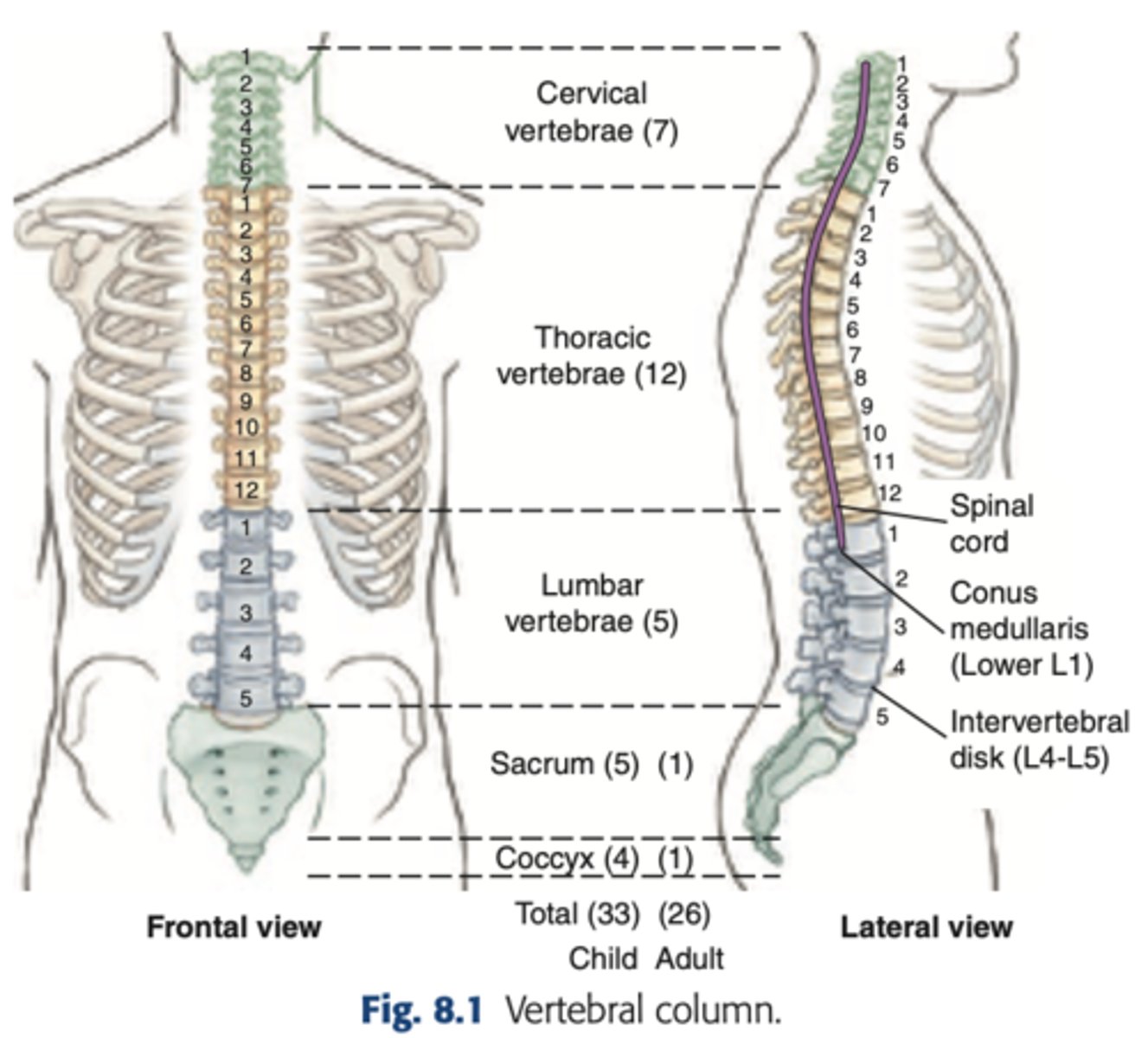
What does the spinal canal contain?
The spinal cord
What fluid fills the spinal canal?
Cerebrospinal fluid
Where does the spinal cord begin?
Below the medulla oblongata of the brain
What opening does the medulla oblongata pass through?
The foramen magnum of the skull
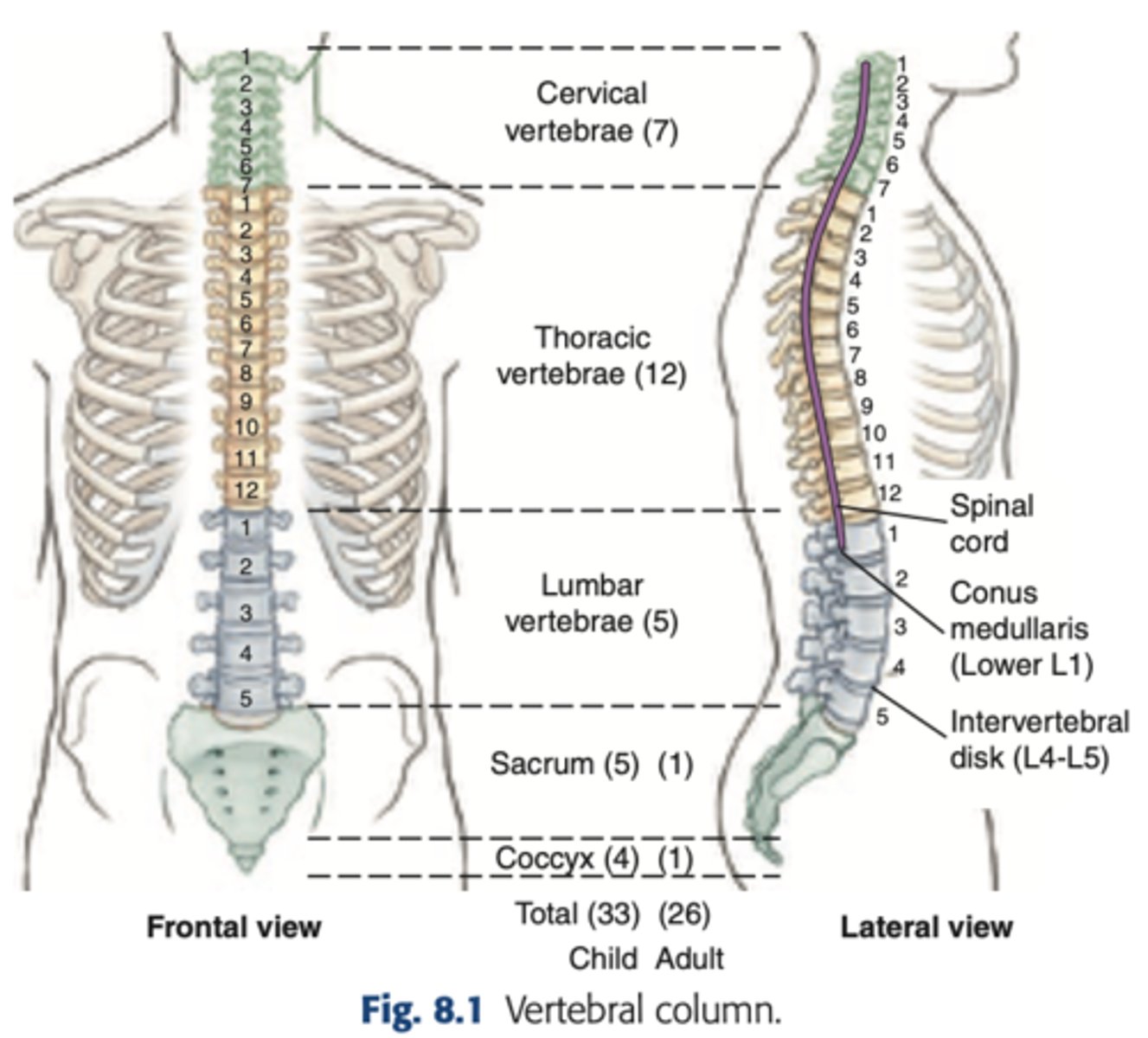
Where does the spinal cord typically end?
At the lower border of the first lumbar vertebra (L1)
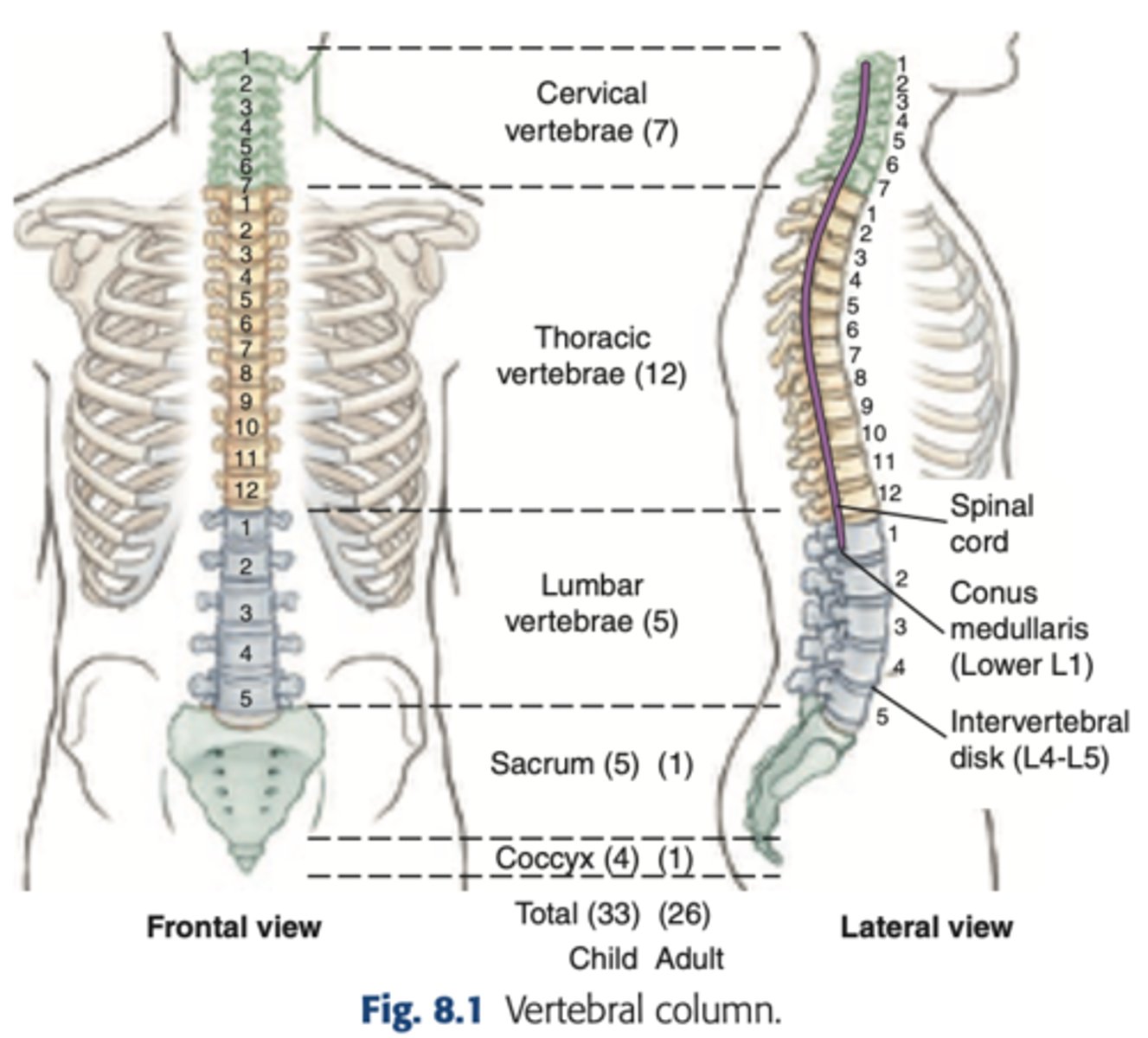
What is the tapered end of the spinal cord called?
Conus medullaris
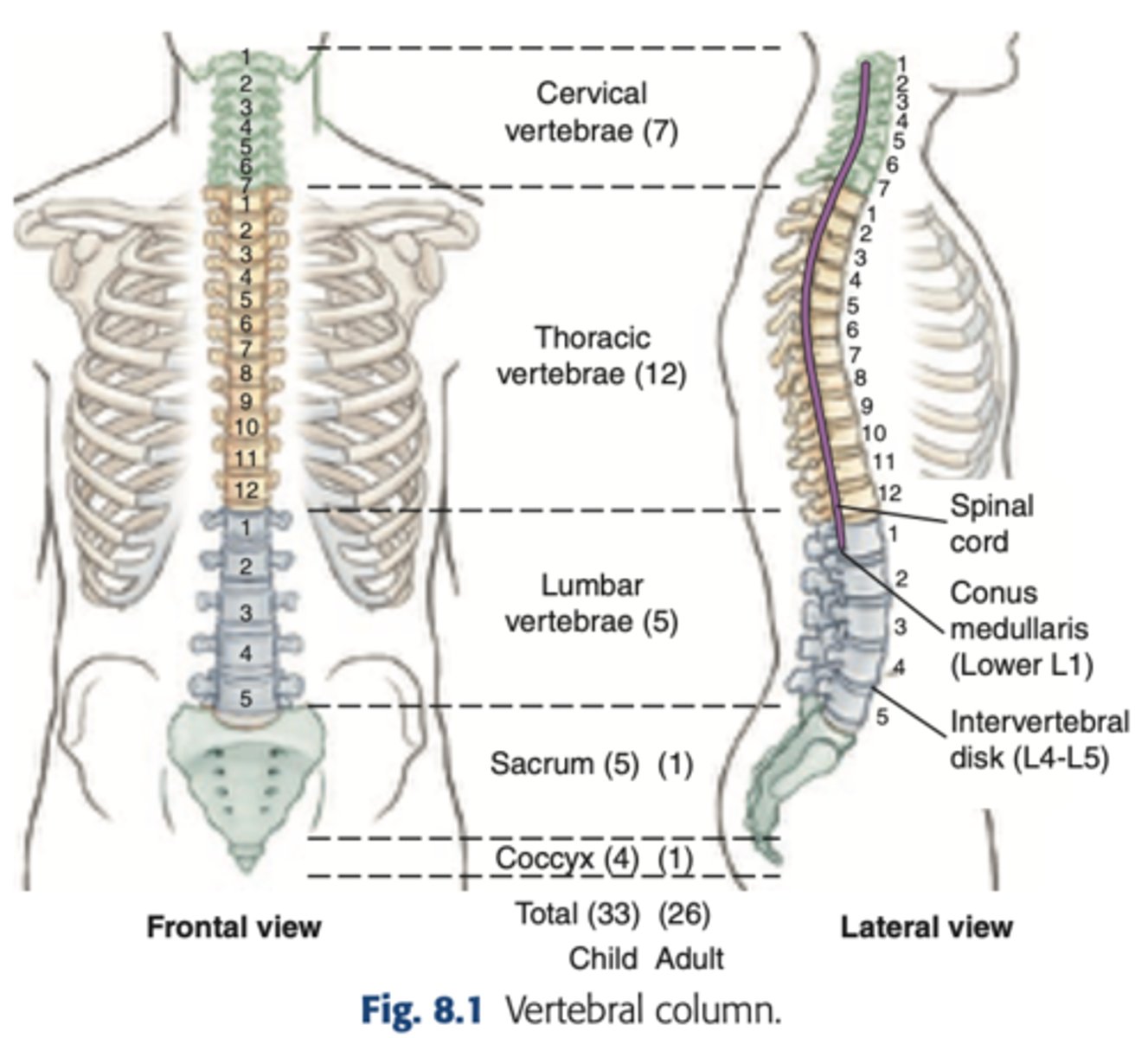
What separates typical adult vertebrae?
Tough fibrocartilaginous intervertebral disks
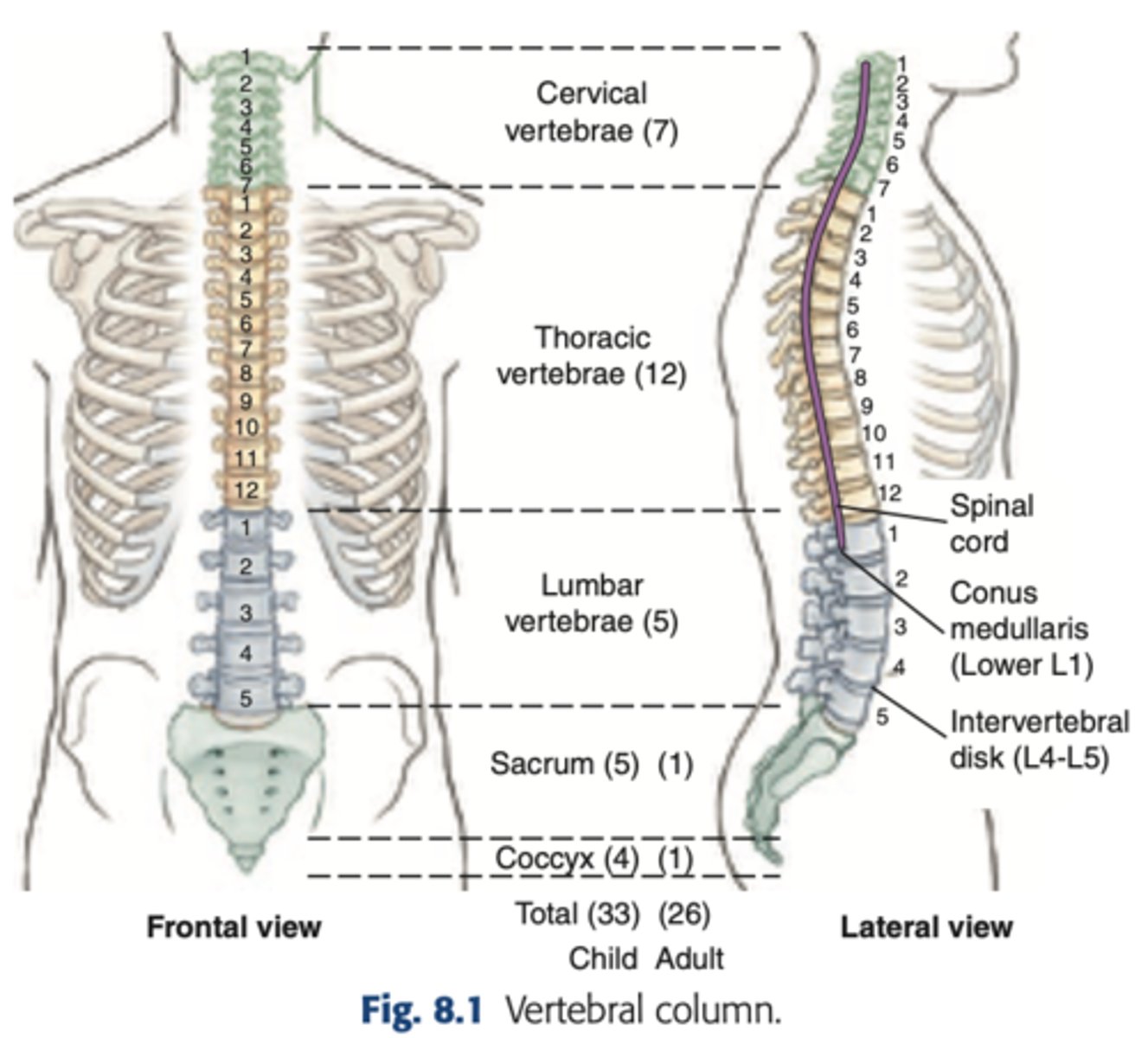
What is the function of intervertebral disks?
To cushion the vertebrae, allowing flexibility and movement
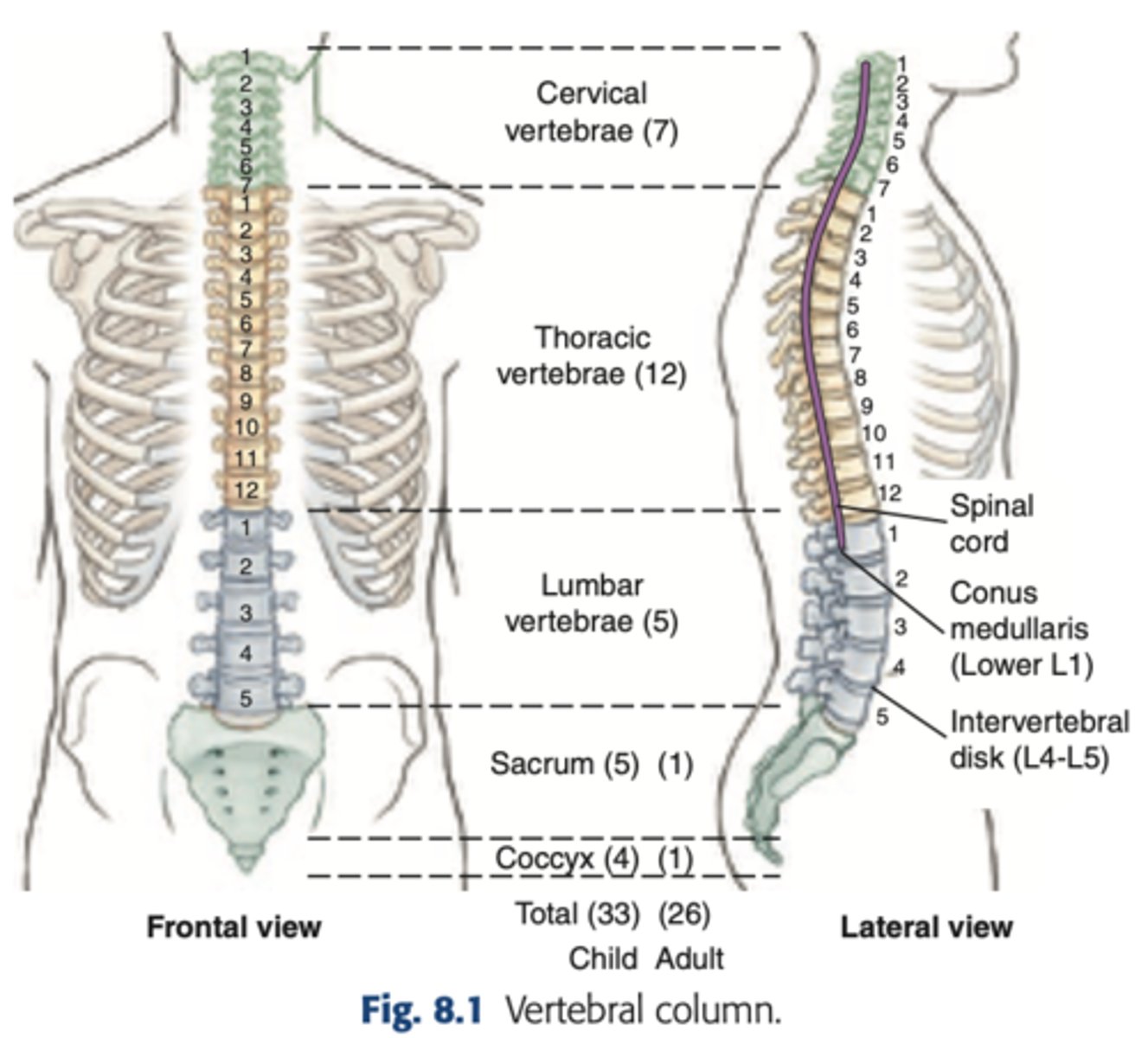
How many sections is the vertebral column divided into?
Five sections
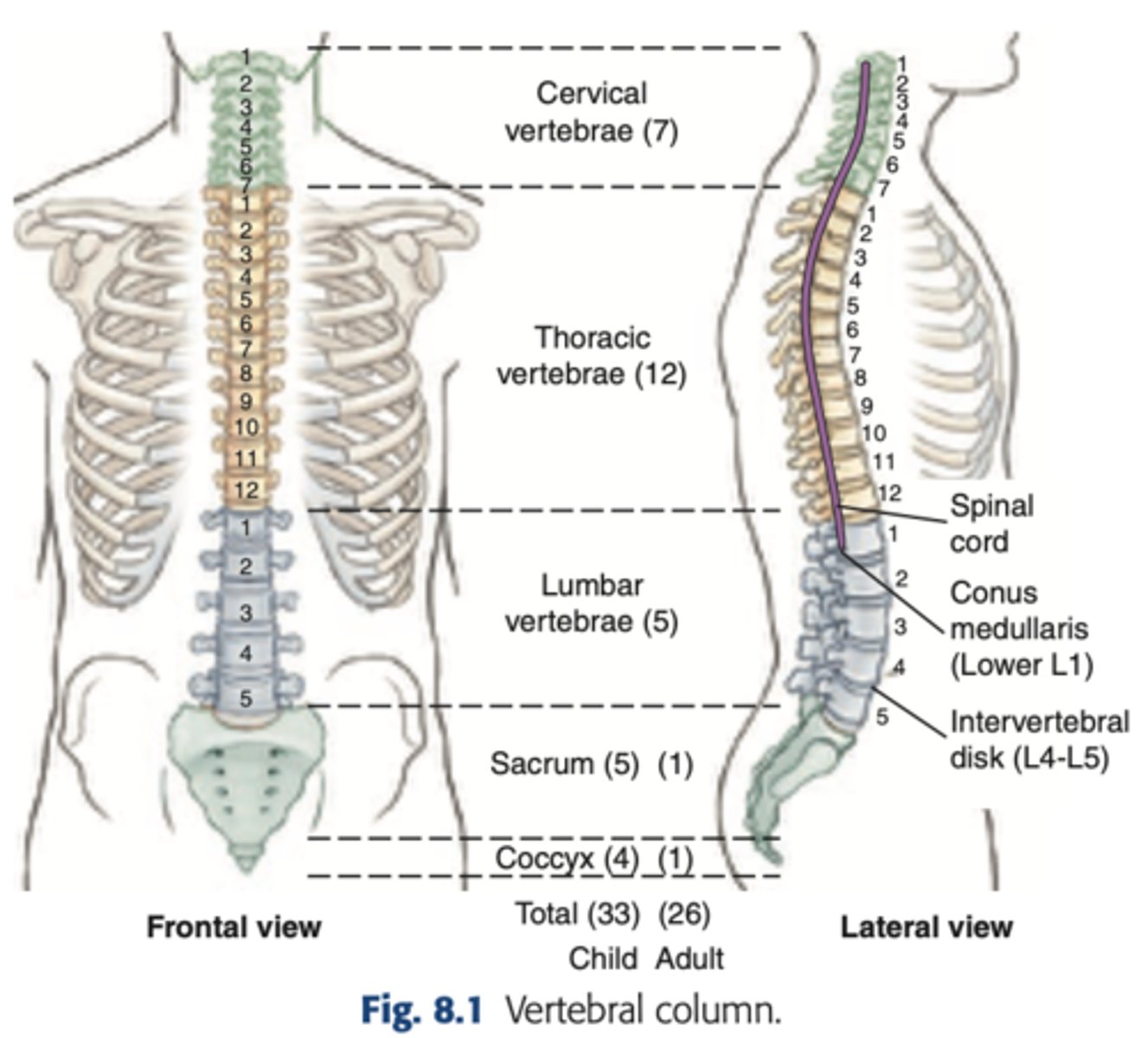
How many cervical vertebrae are there?
Seven
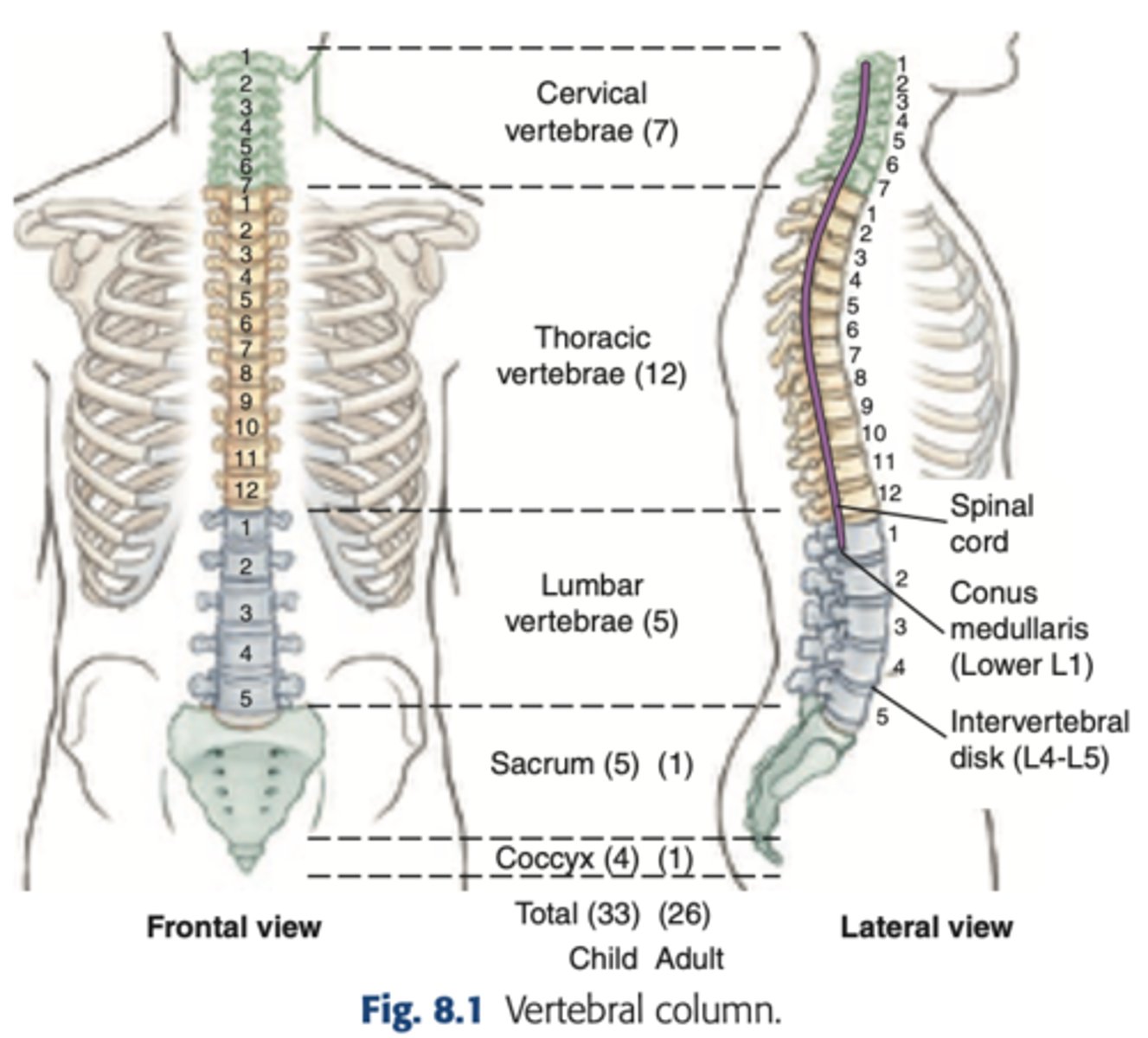
Do all people have the exact same height in their cervical vertebrae?
No, slight variation in height may occur among individuals
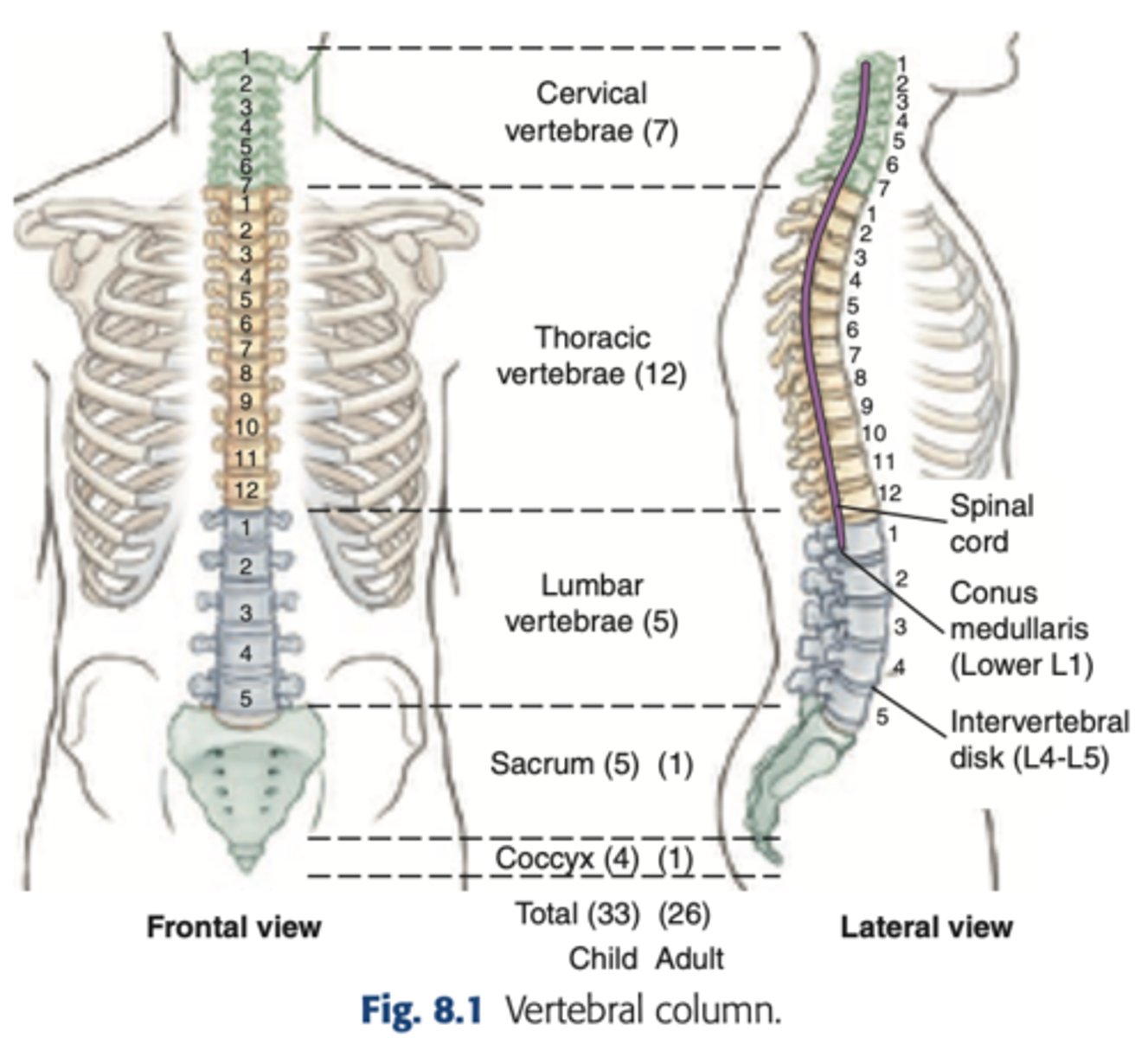
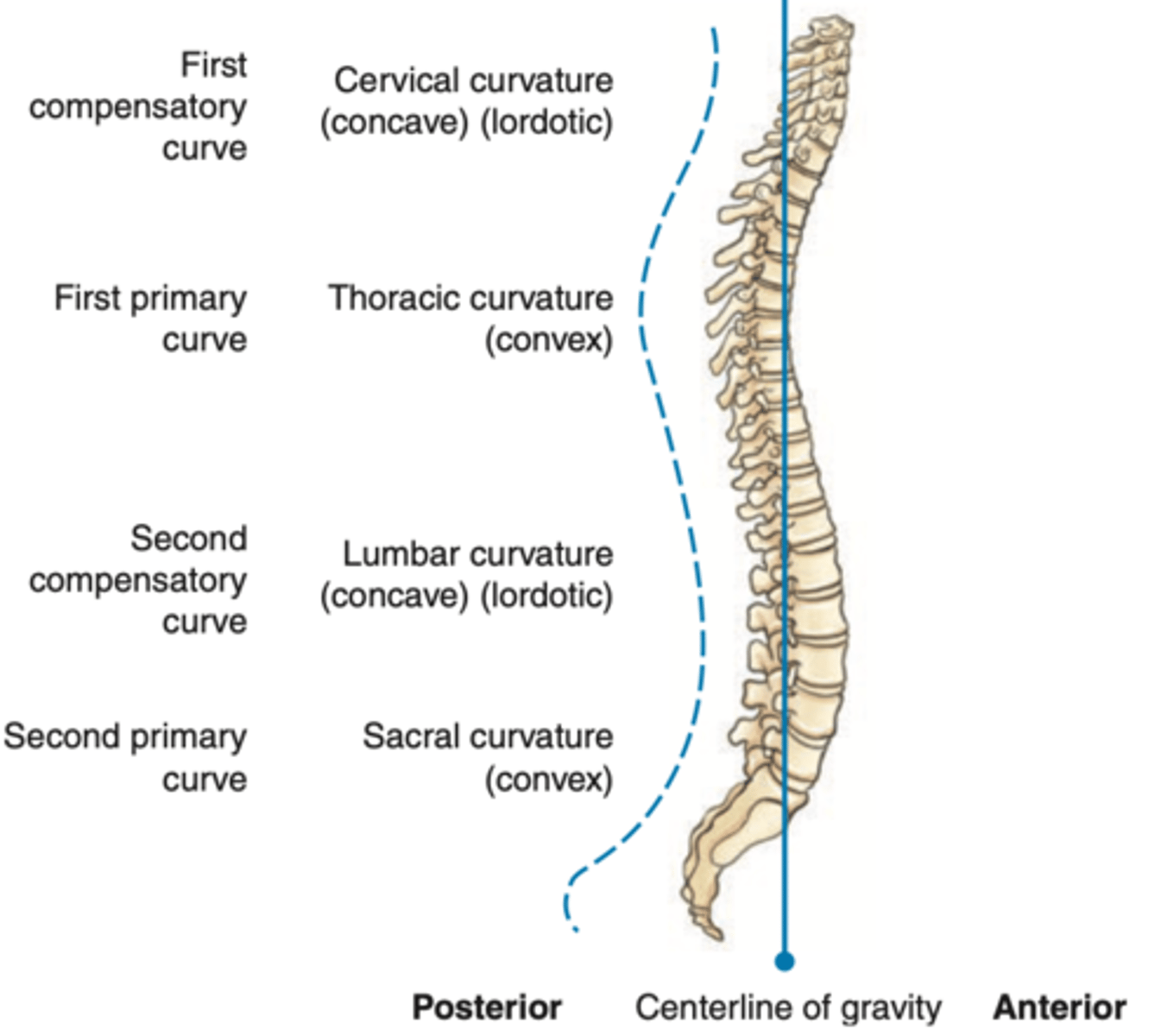
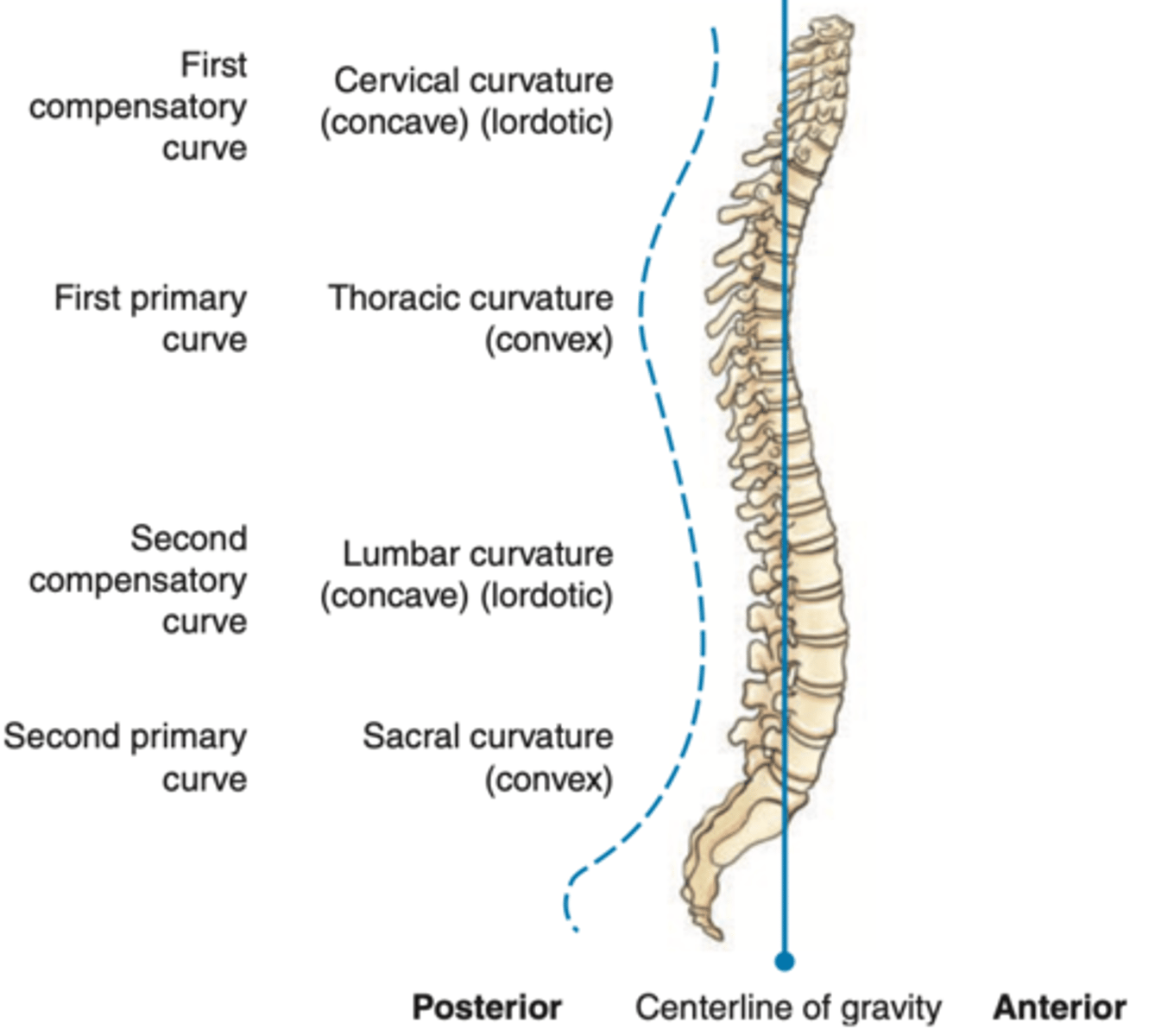
What type of curves make up the vertebral column?
Anteroposterior (AP) curves
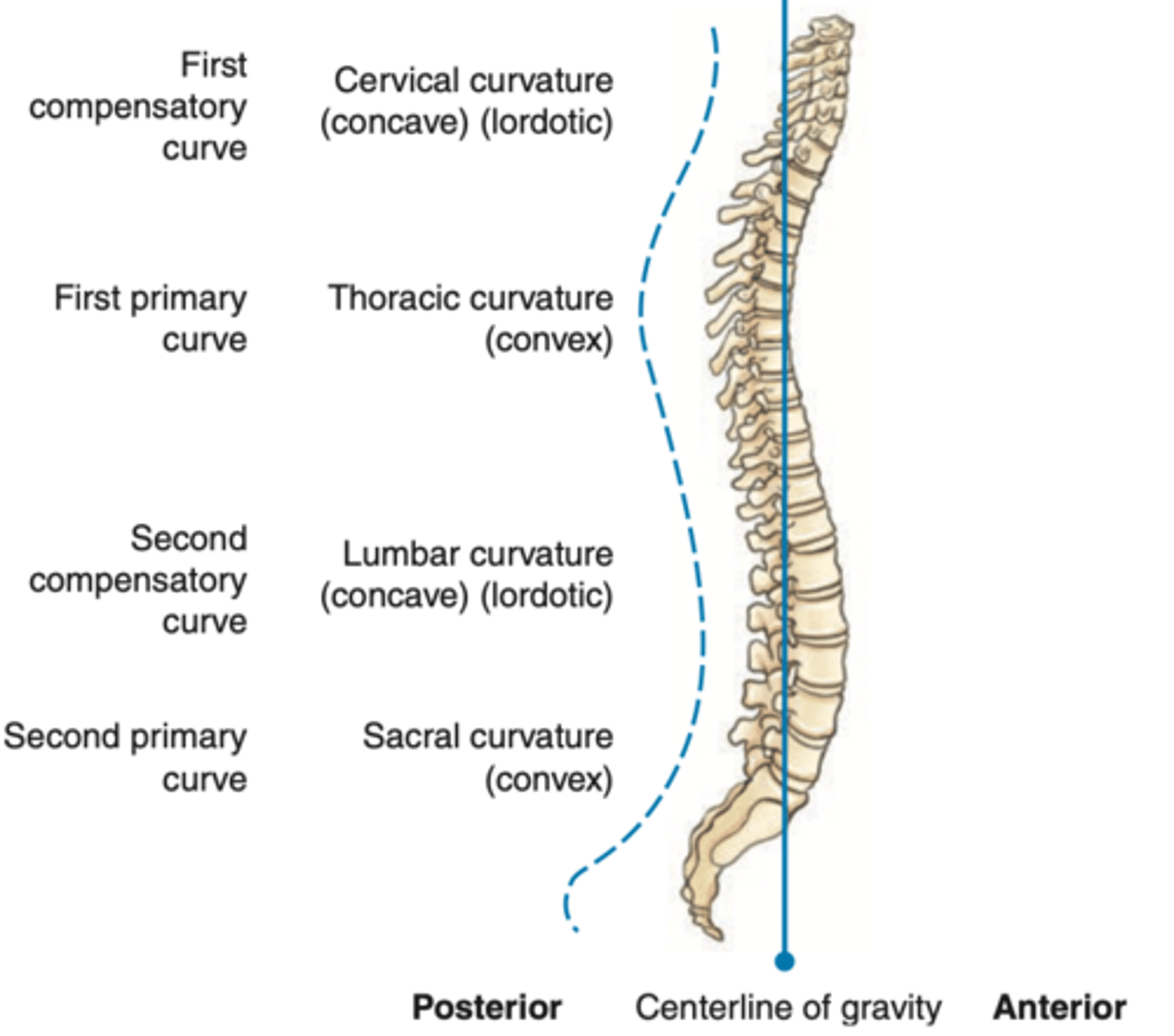
Which spinal regions have concave (lordotic) curves?
Cervical and lumbar regions (inward)
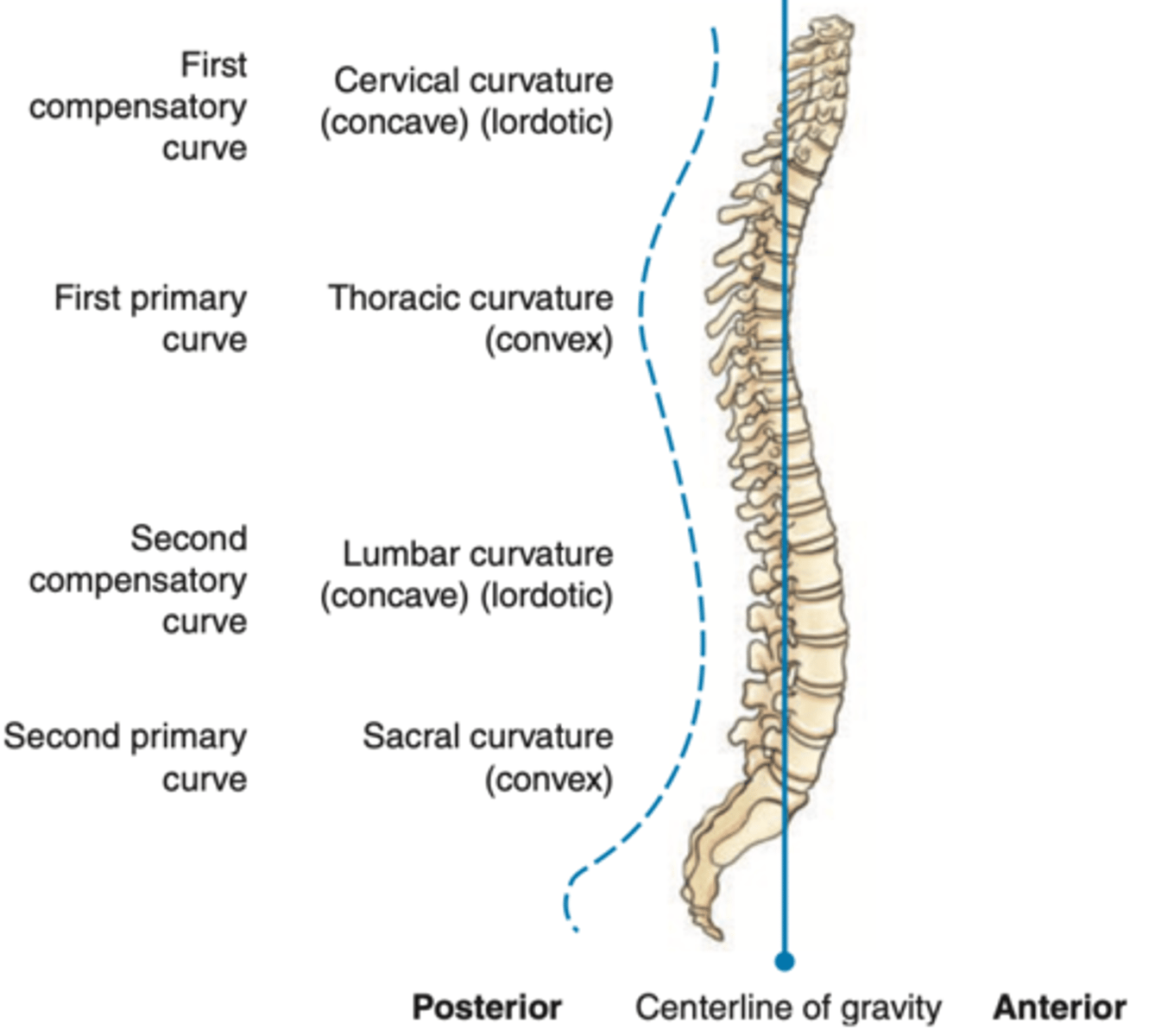
Which spinal regions have convex (kyphotic) curves?
Thoracic and sacral regions (outward)
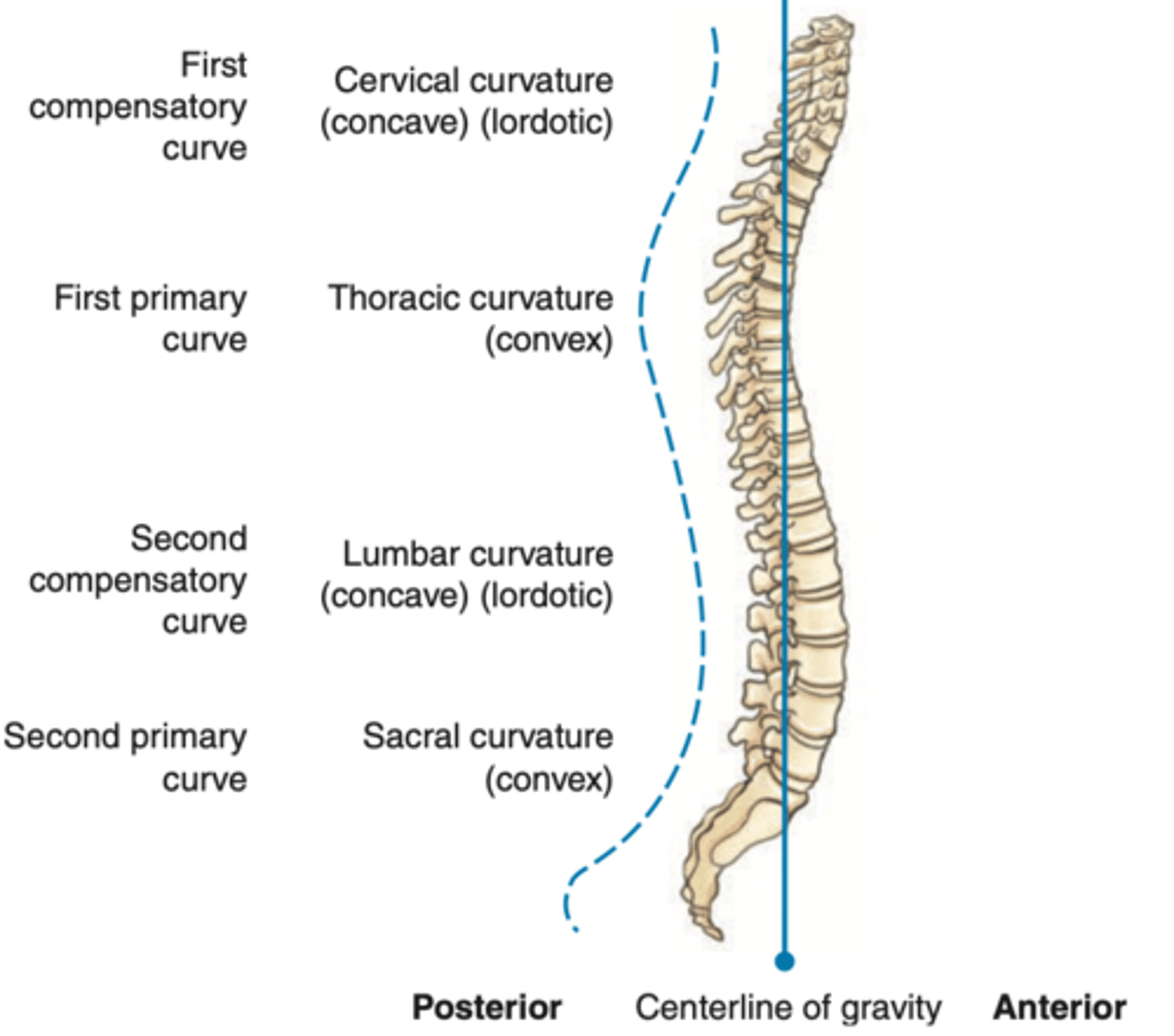
Which curves develop soon after birth?
Thoracic and sacral curves (primary curves)
When does the cervical curve begin to form?
When a child starts to raise their head and sit up
When does the lumbar curve develop?
When a child learns to walk
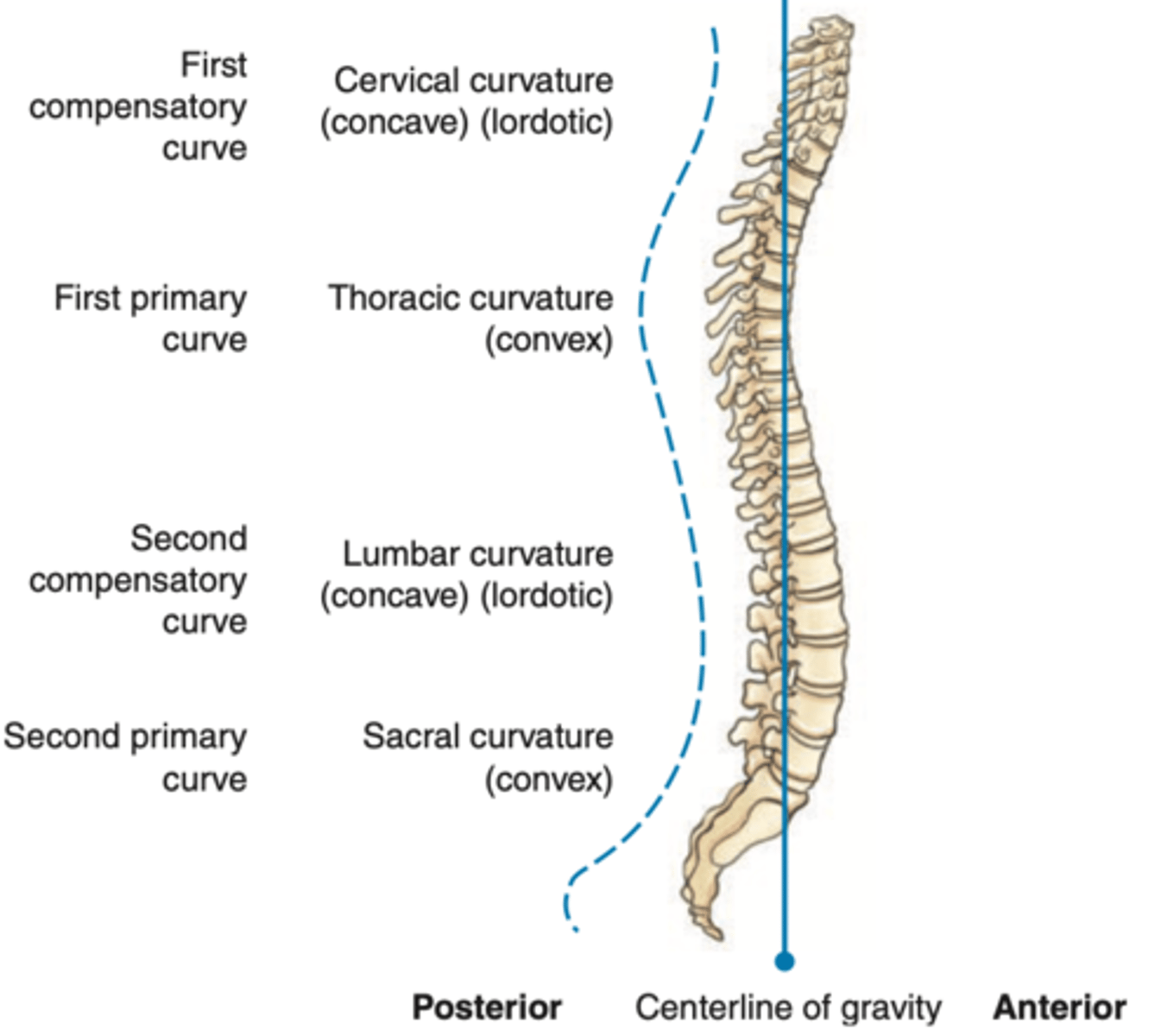
Which two curves are usually more pronounced in women?
Lumbar and sacral curves
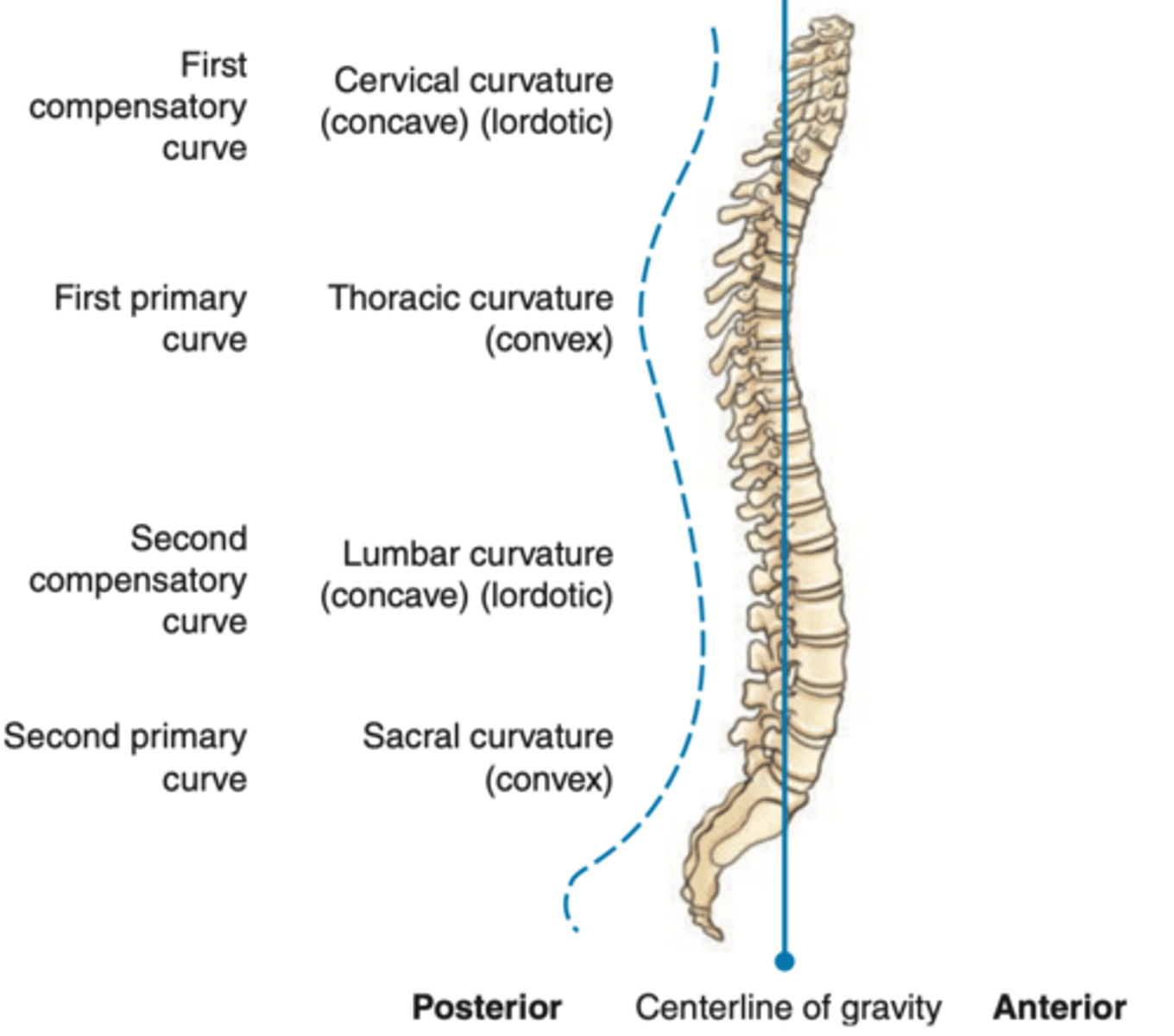
What is the function of primary and compensatory curves?
To increase the strength of the spine and help maintain balance along the center of gravity
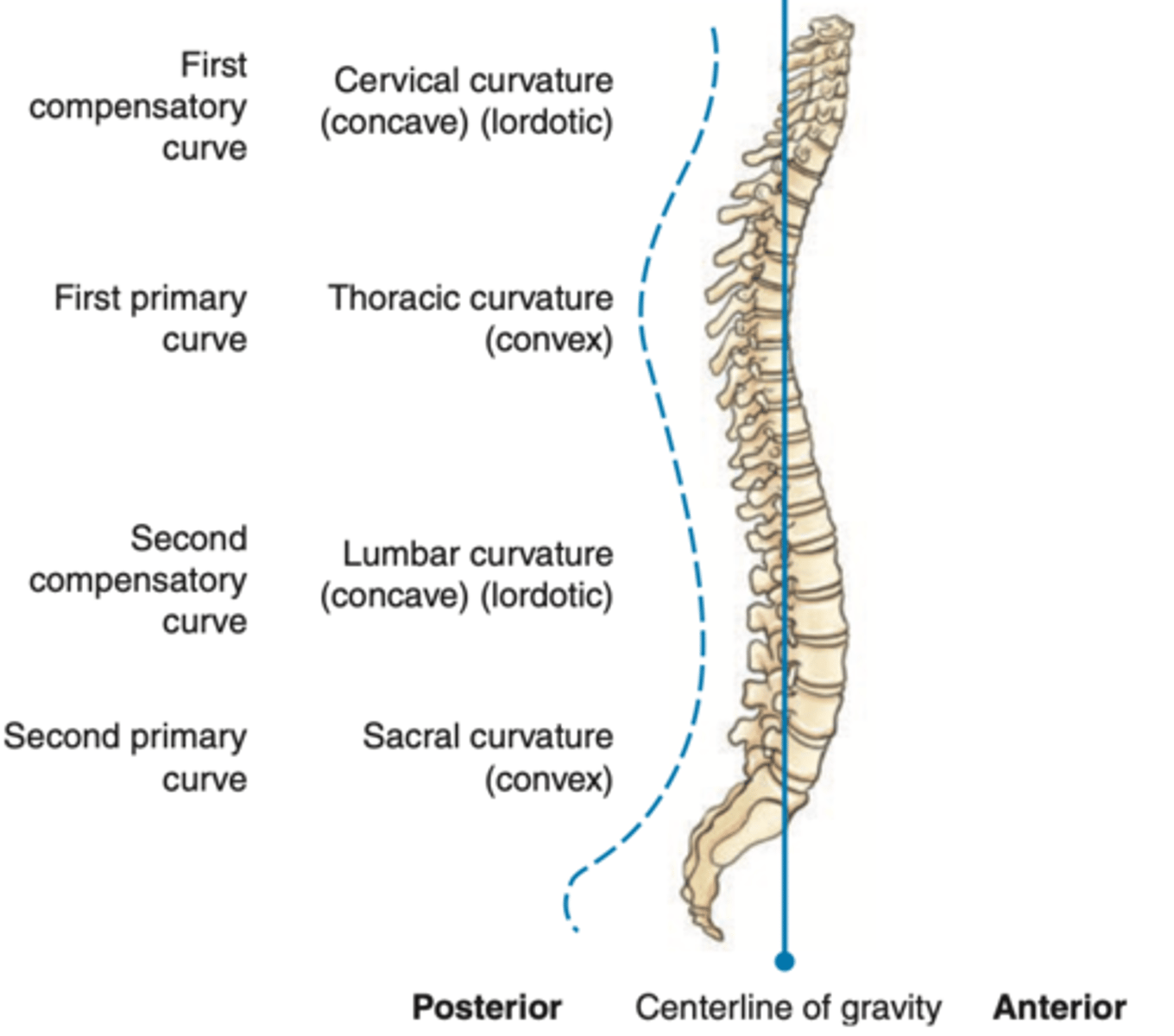
What is lordosis?
An abnormal anterior concavity of the lumbar spine
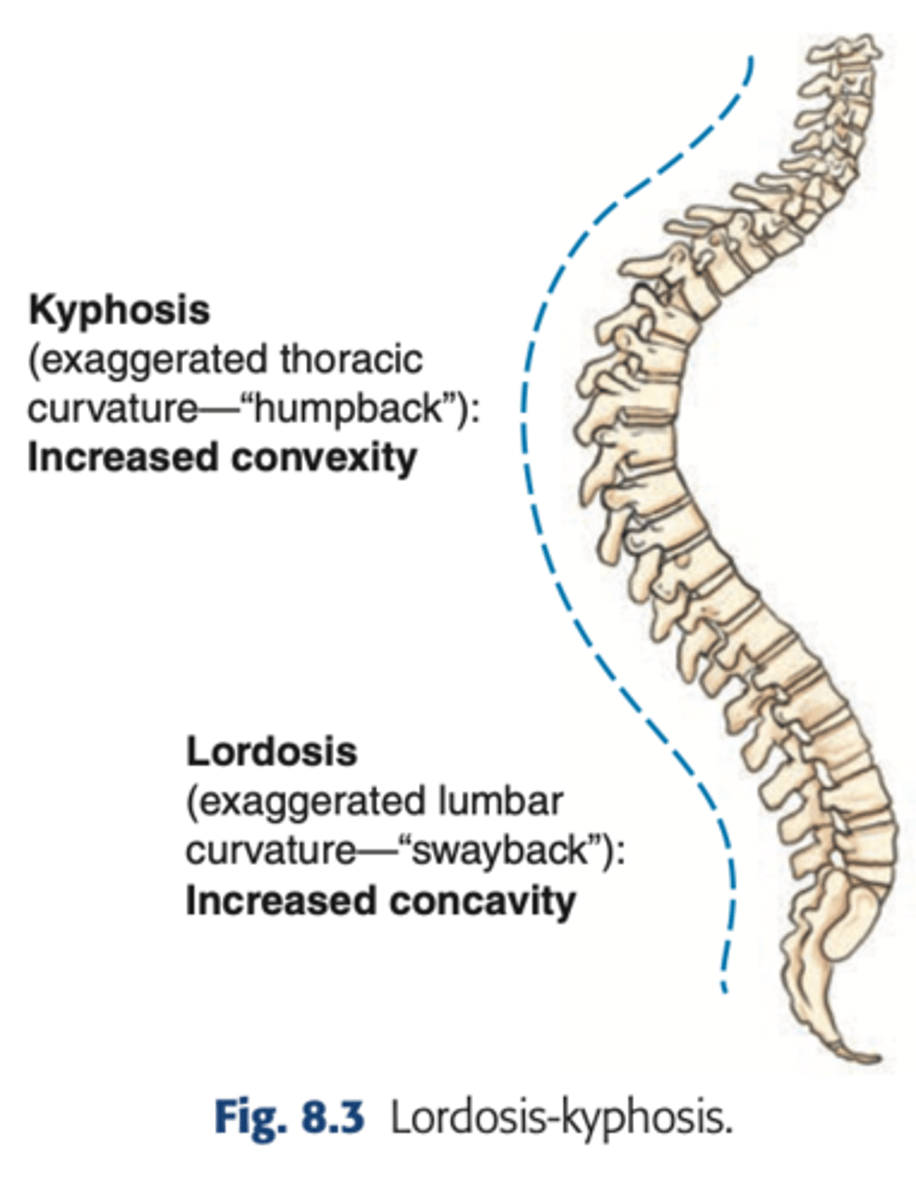
Which part of the spine does lordosis affect?
The lumbar spine
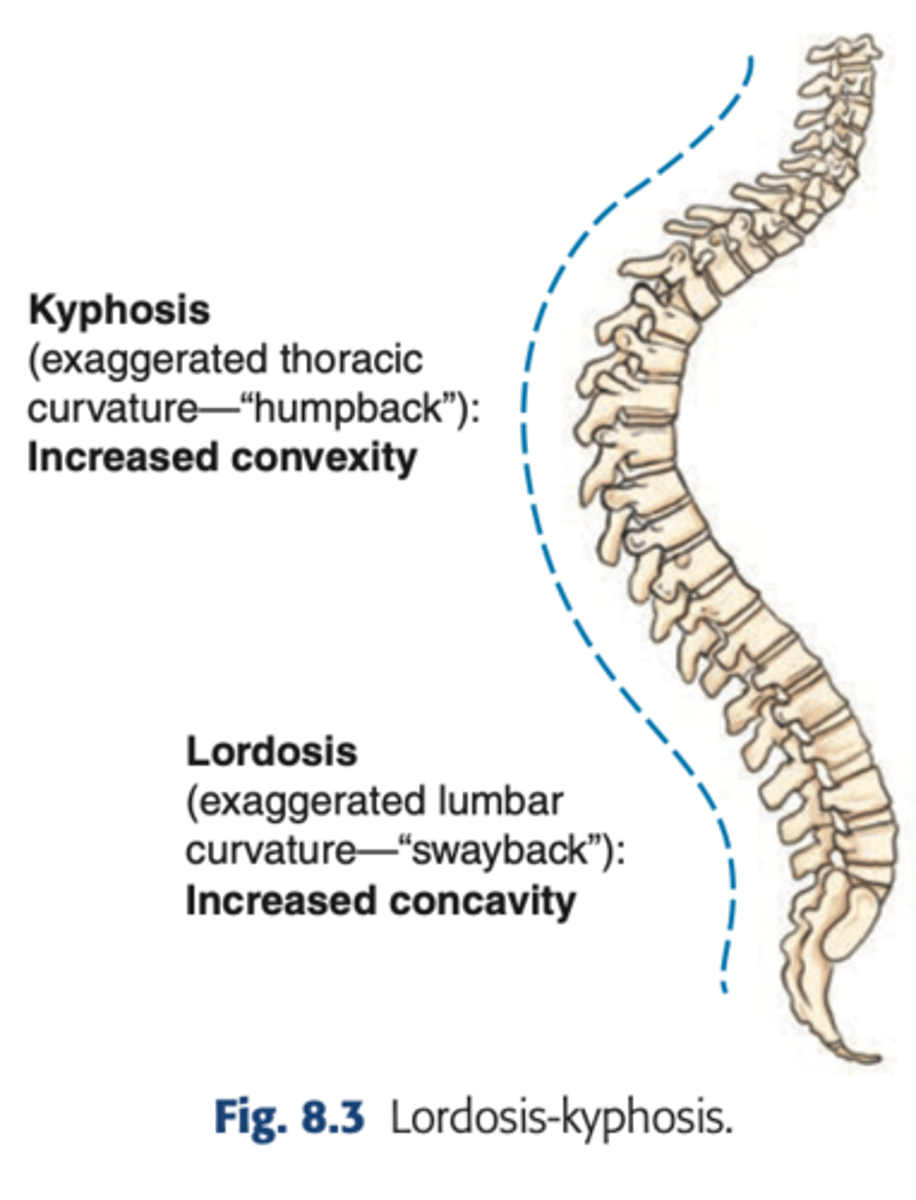
What is kyphosis?
An abnormal condition with increased convexity of the thoracic spine
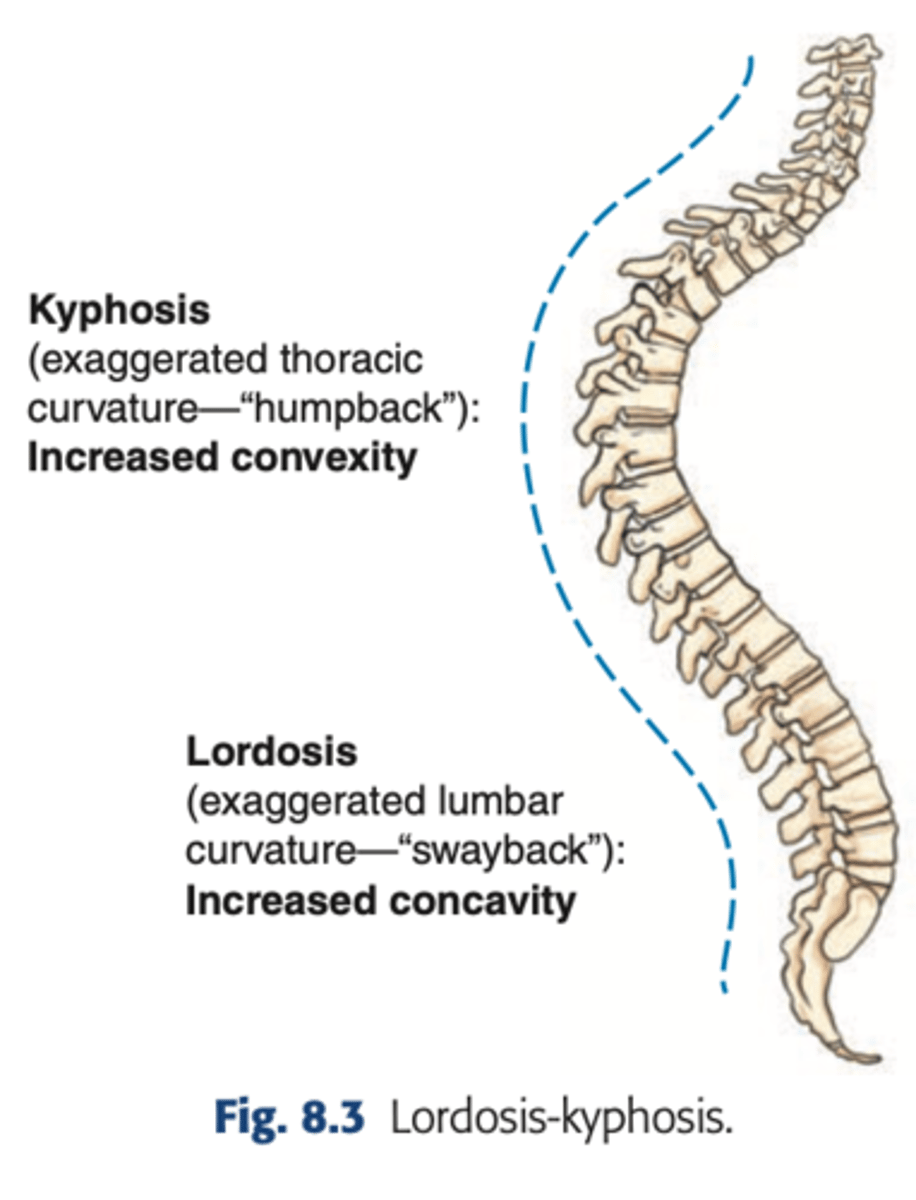
Which part of the spine does kyphosis affect?
The thoracic spine
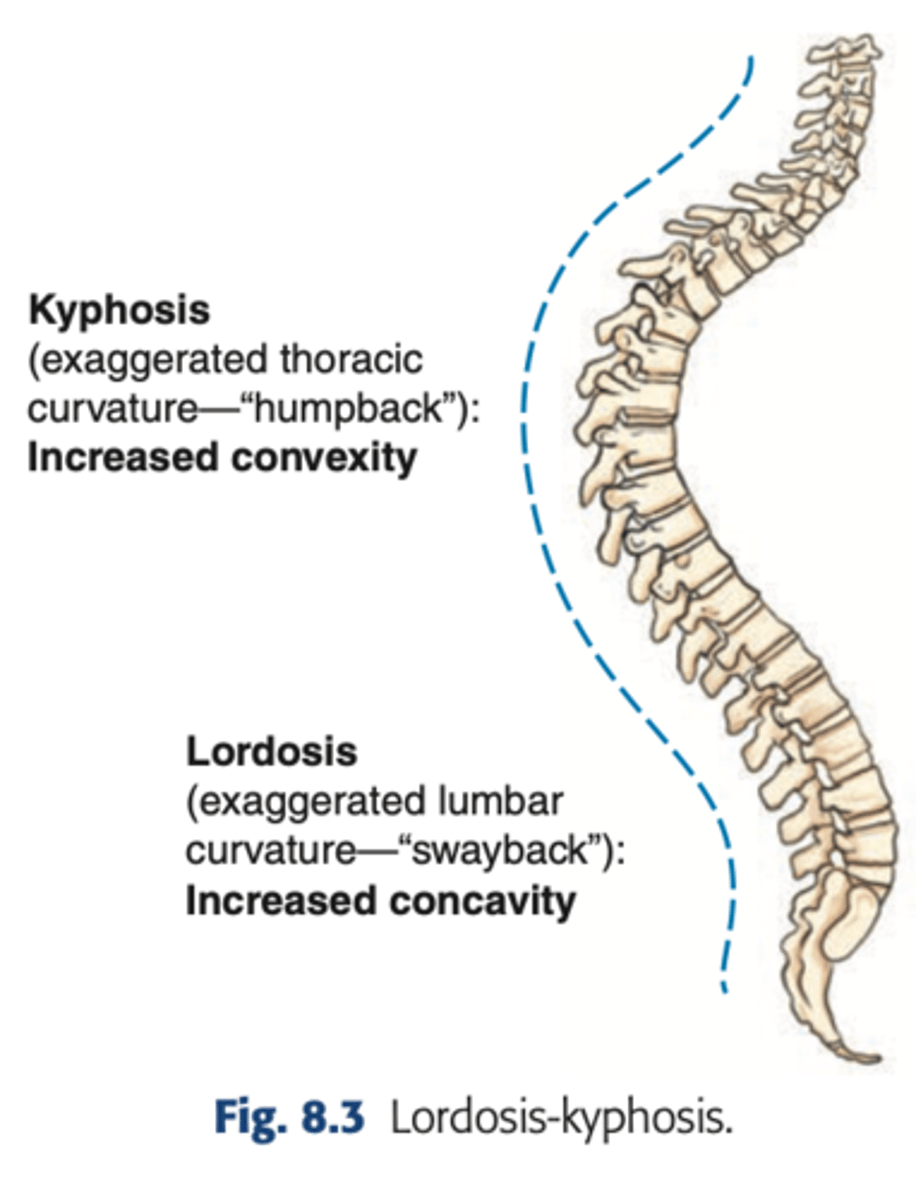
How does the vertebral column normally appear from the front or back?
Almost straight, with little lateral curvature
What is scoliosis?
A condition with lateral curvature of the spine
Where does slight lateral curvature sometimes appear in healthy adults?
In the upper thoracic region
What is slight thoracic curvature usually related to?
The dominant extremity
In a right-handed person, which way might the spine curve?
Convex to the right
In a left-handed person, which way might the spine curve?
Convex to the left
What is dextroscoliosis?
An exaggerated spinal curvature to the right
What is levoscoliosis?
An exaggerated spinal curvature to the left
What shape does severe scoliosis often form?
An S-shaped lateral curvature
What are the two main parts of a typical vertebra?
The body and the vertebral arch
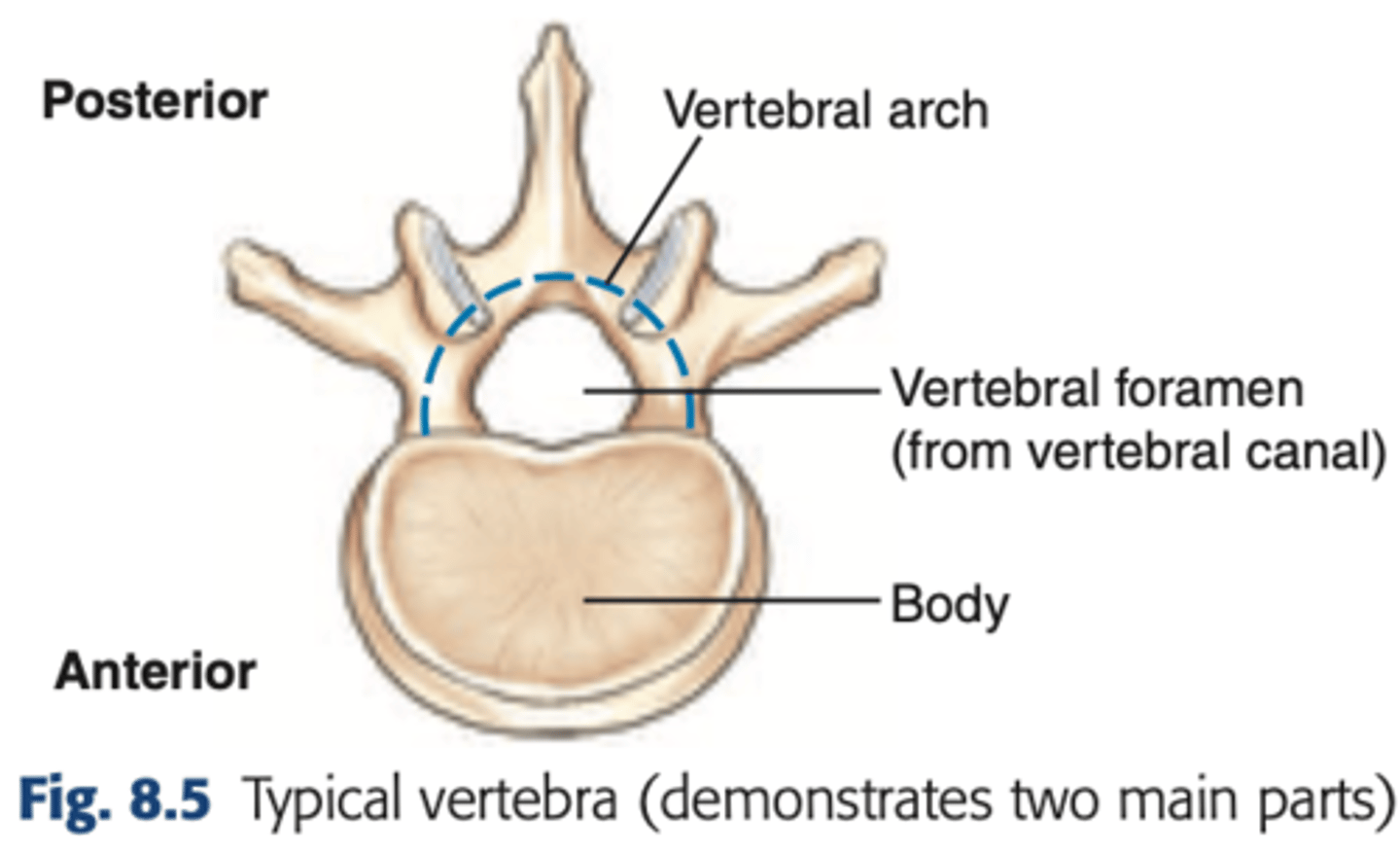
What is the body of a vertebra?
The thick, weight-bearing anterior part
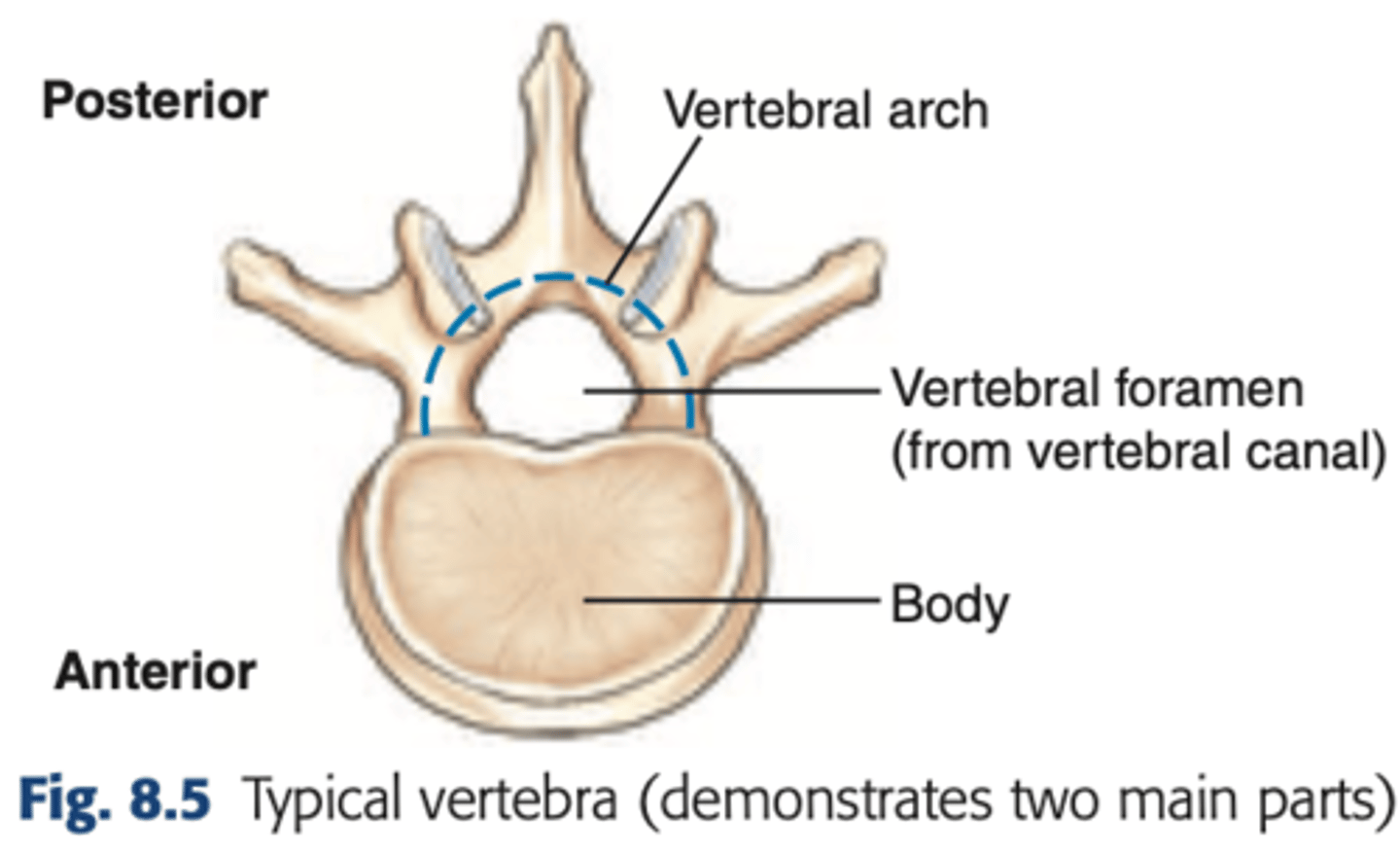
What are the surfaces of the vertebral body like?
Flat and rough
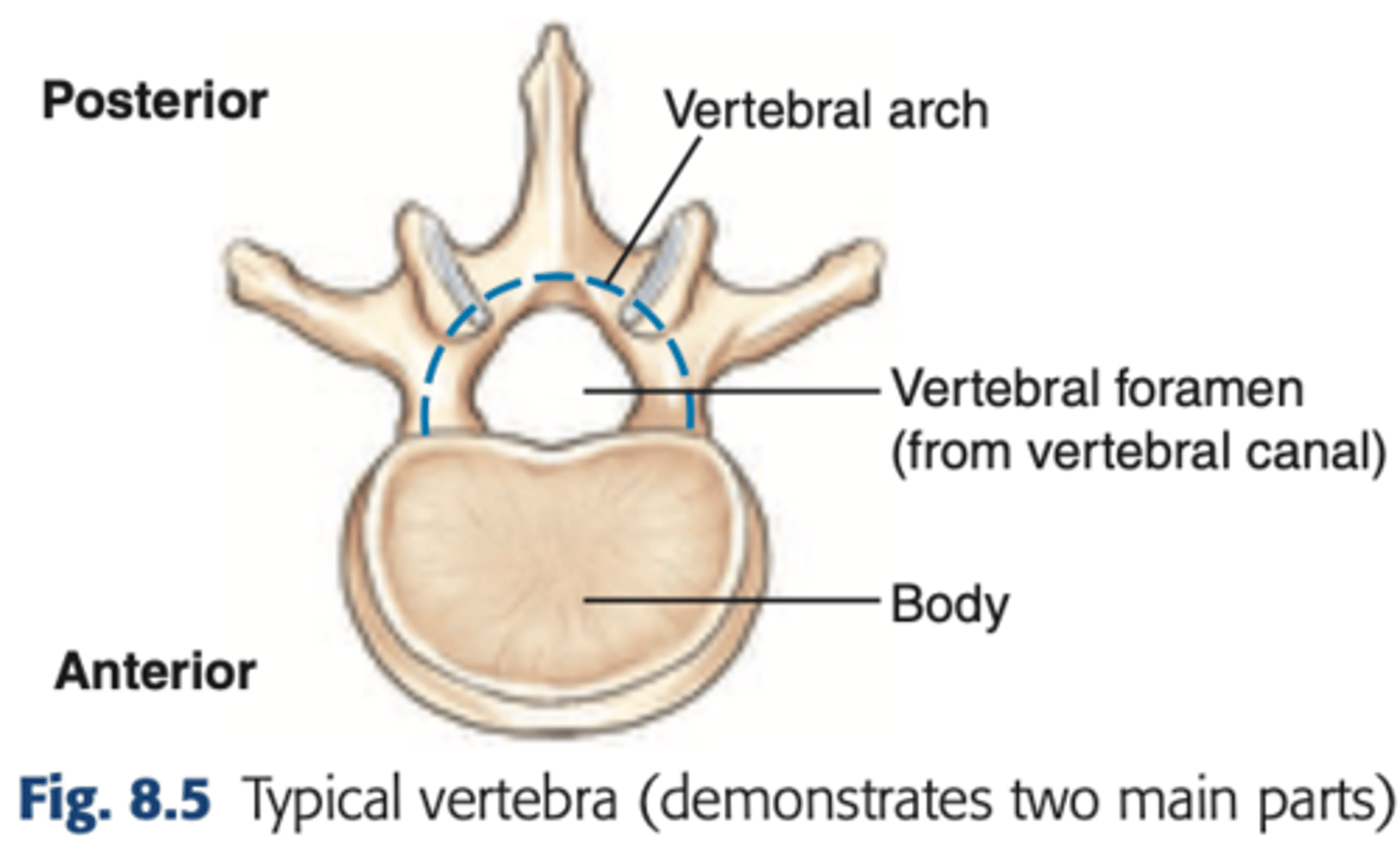
Why are the vertebral body surfaces flat and rough?
For attachment of the intervertebral disks
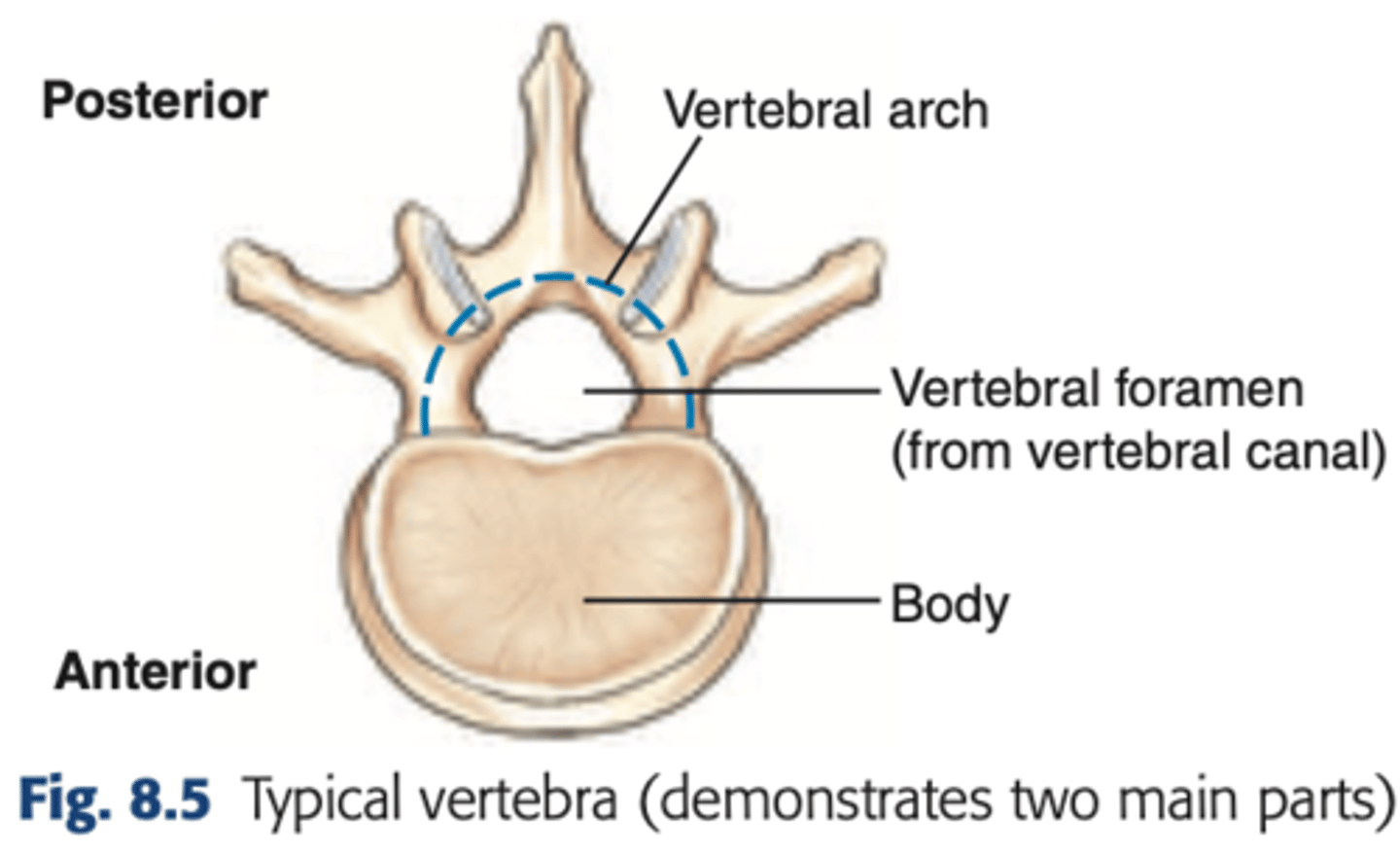
What is the vertebral arch?
A ring of bone that extends posteriorly from the vertebral body
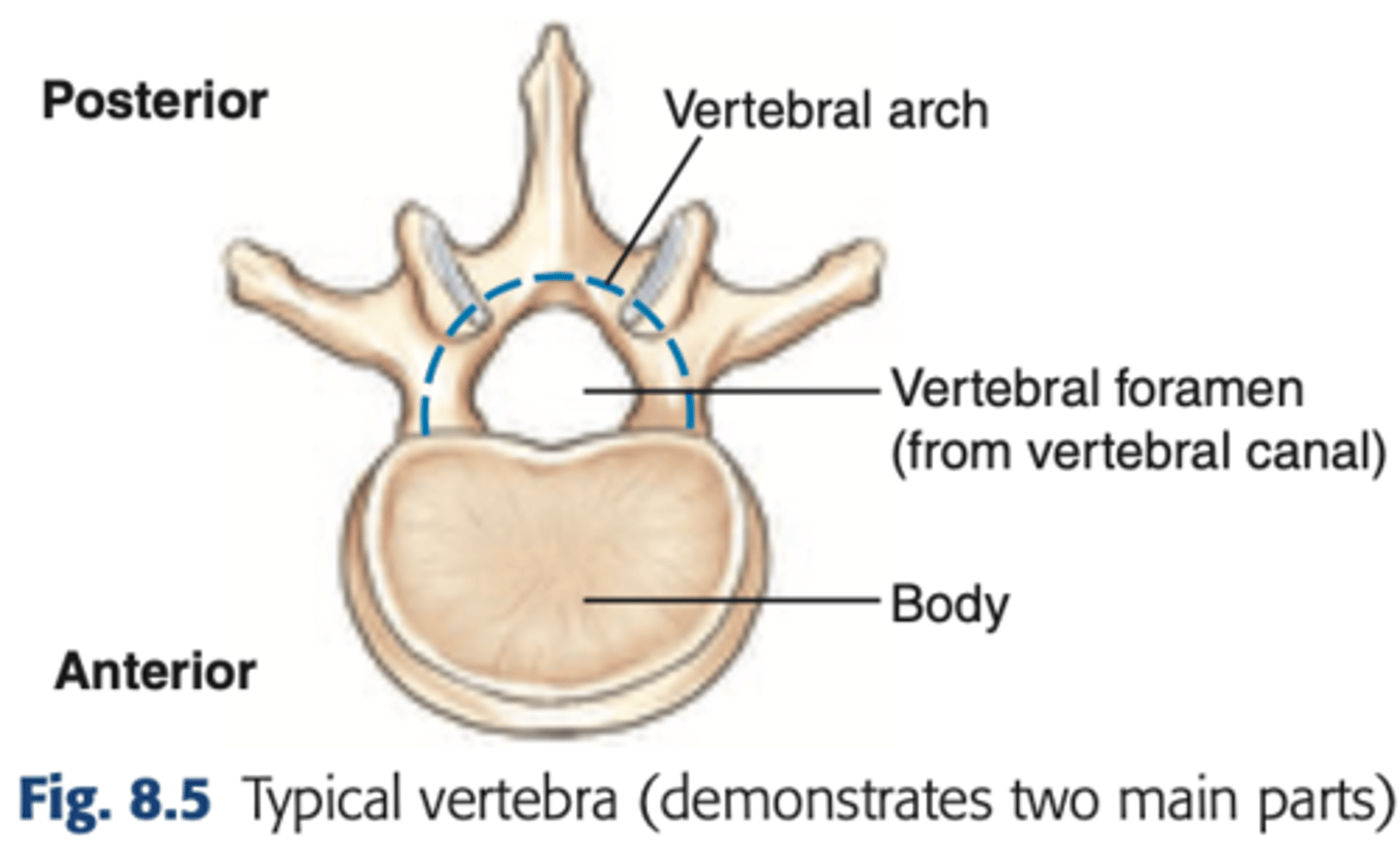
What forms the vertebral foramen?
The posterior surface of the body and the vertebral arch
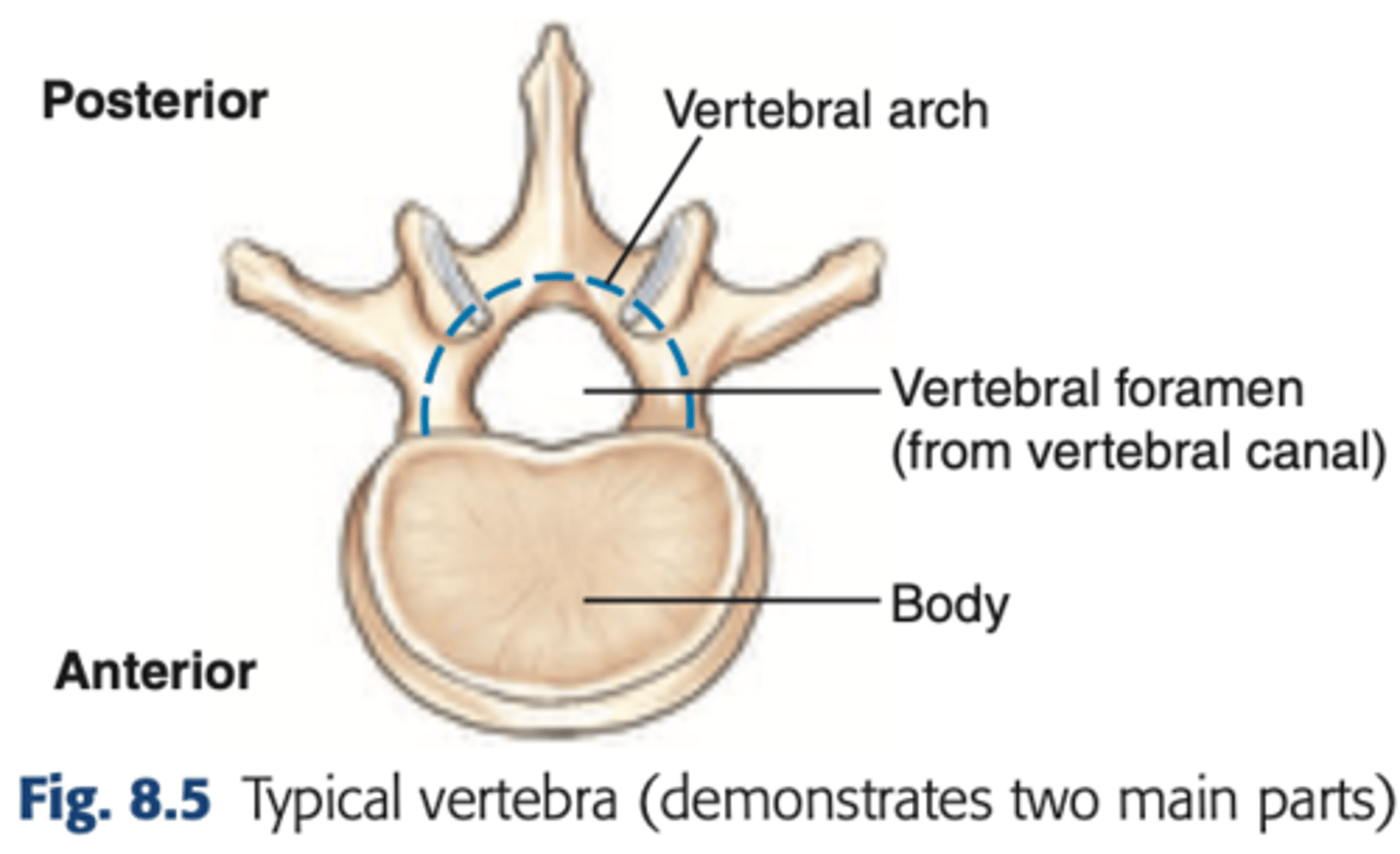
What does the vertebral foramen contain?
The spinal cord
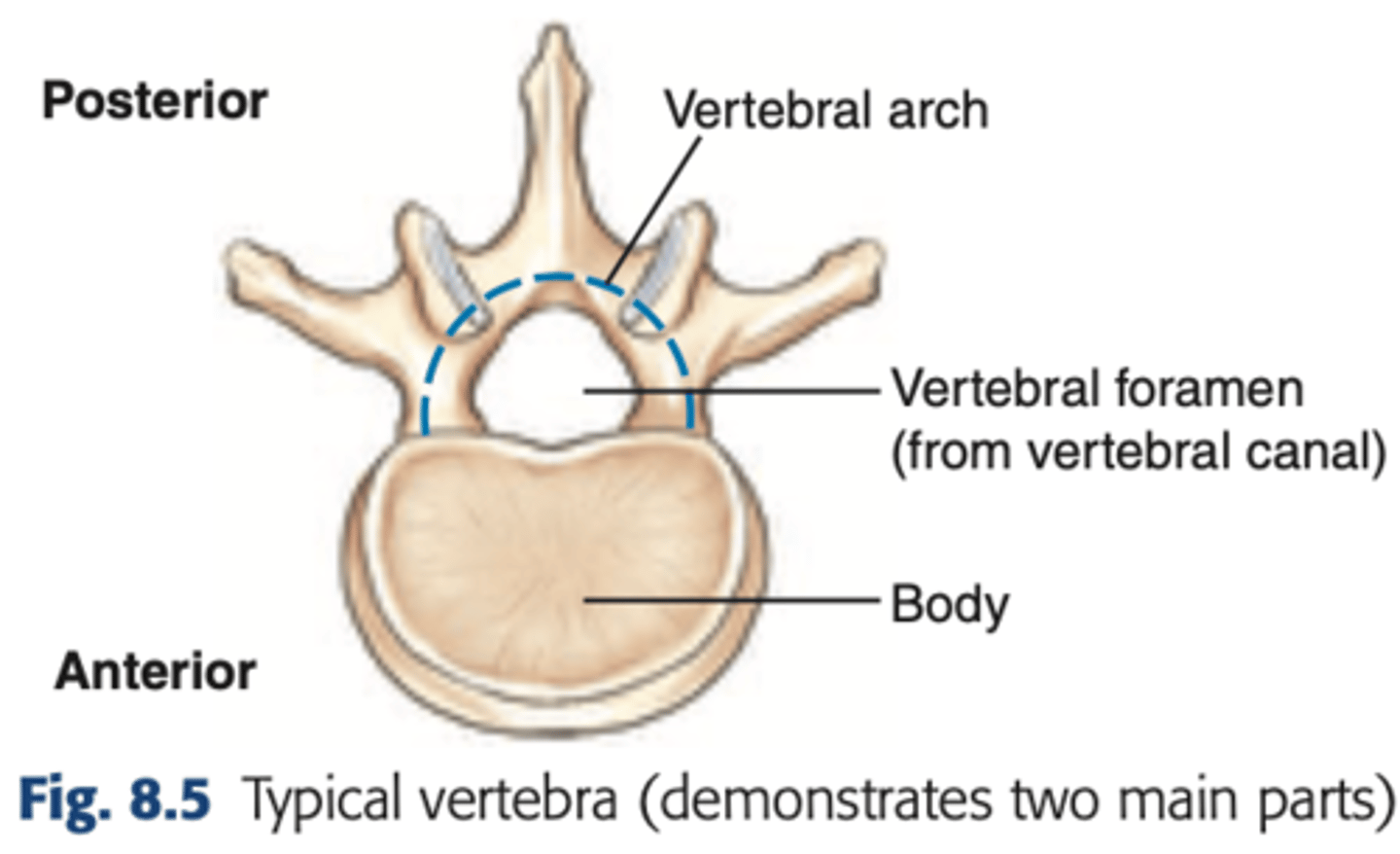
What is formed when multiple vertebral foramina are stacked?
The vertebral (spinal) canal
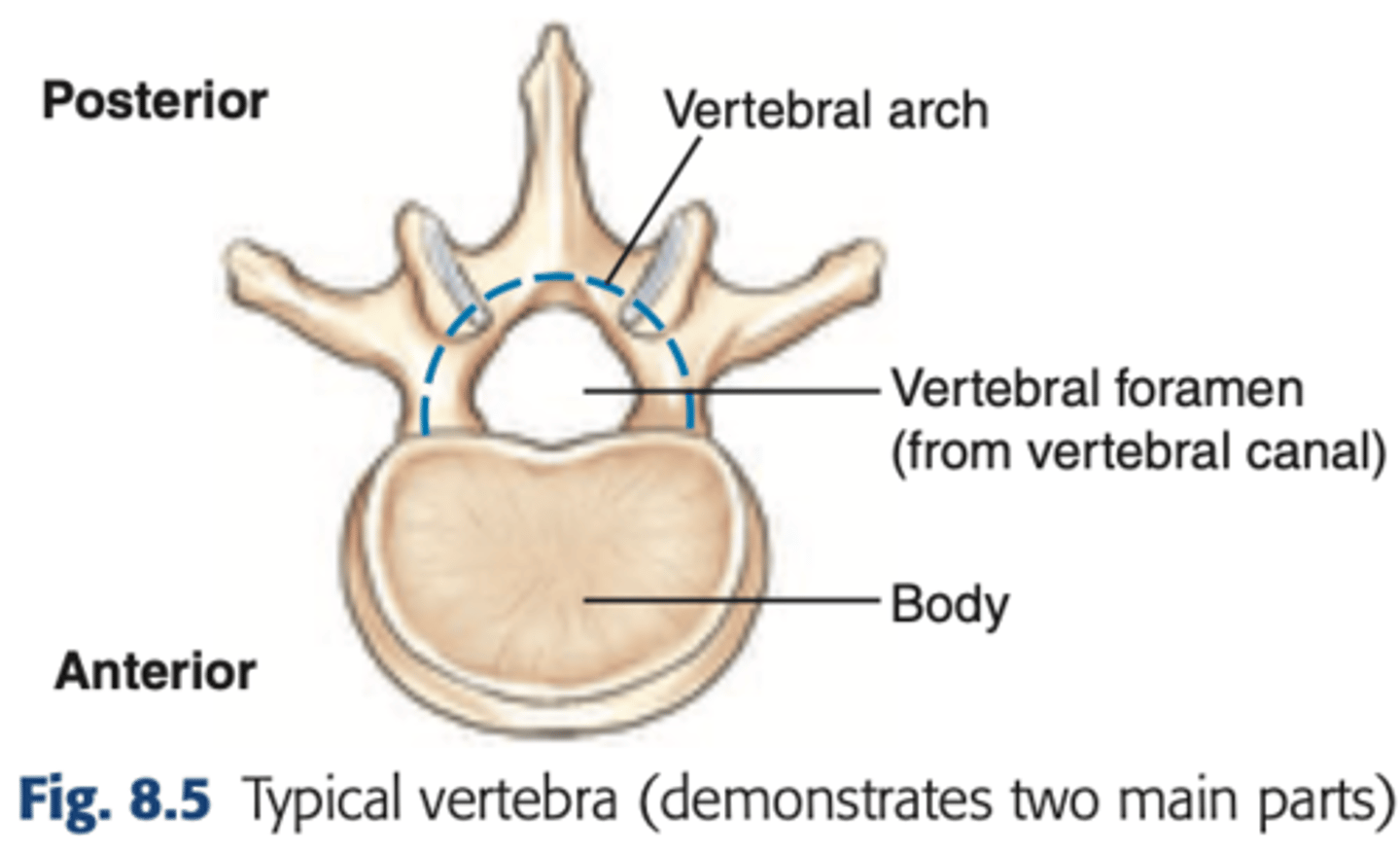
What is the function of the vertebral canal?
To enclose and protect the spinal cord
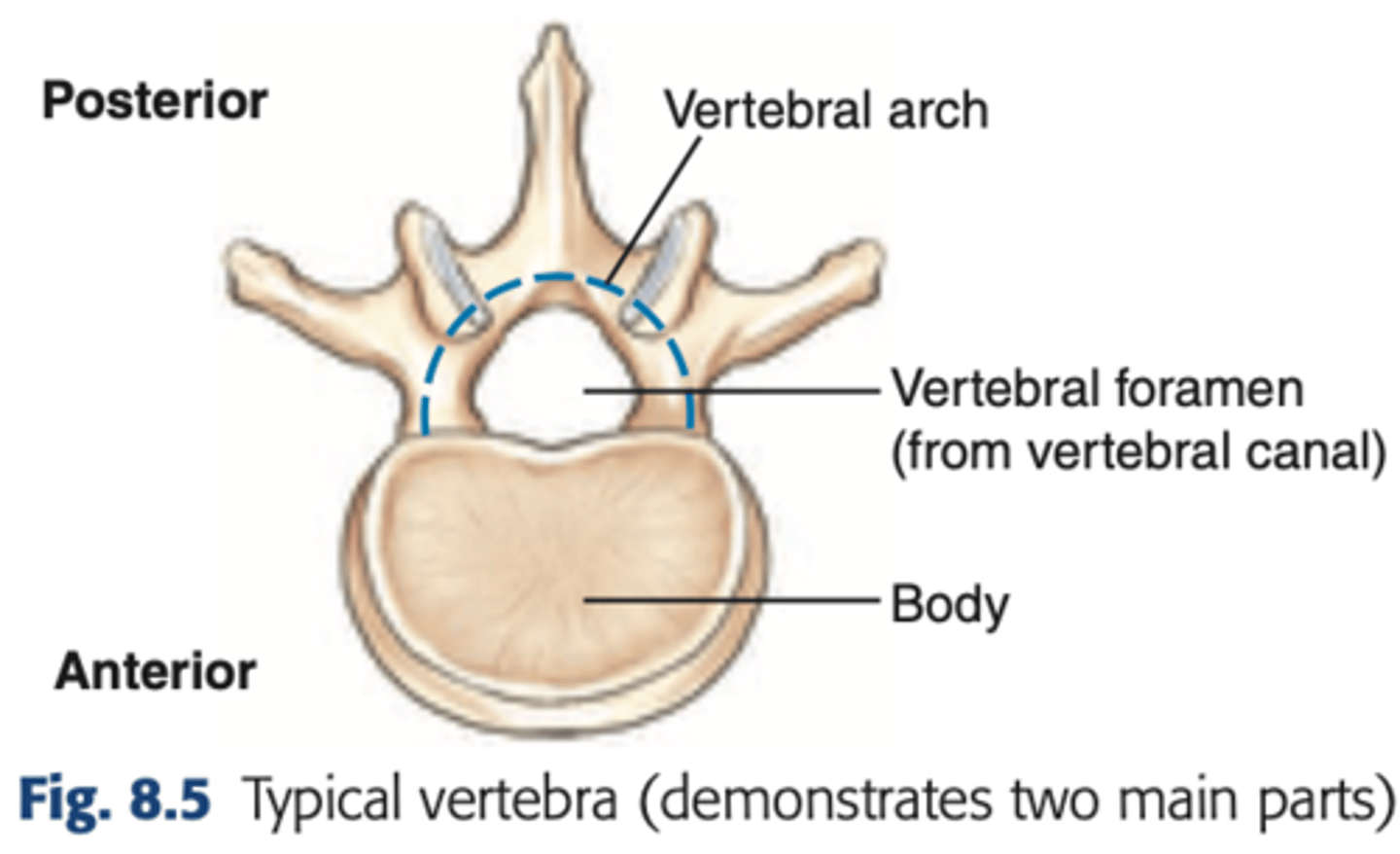
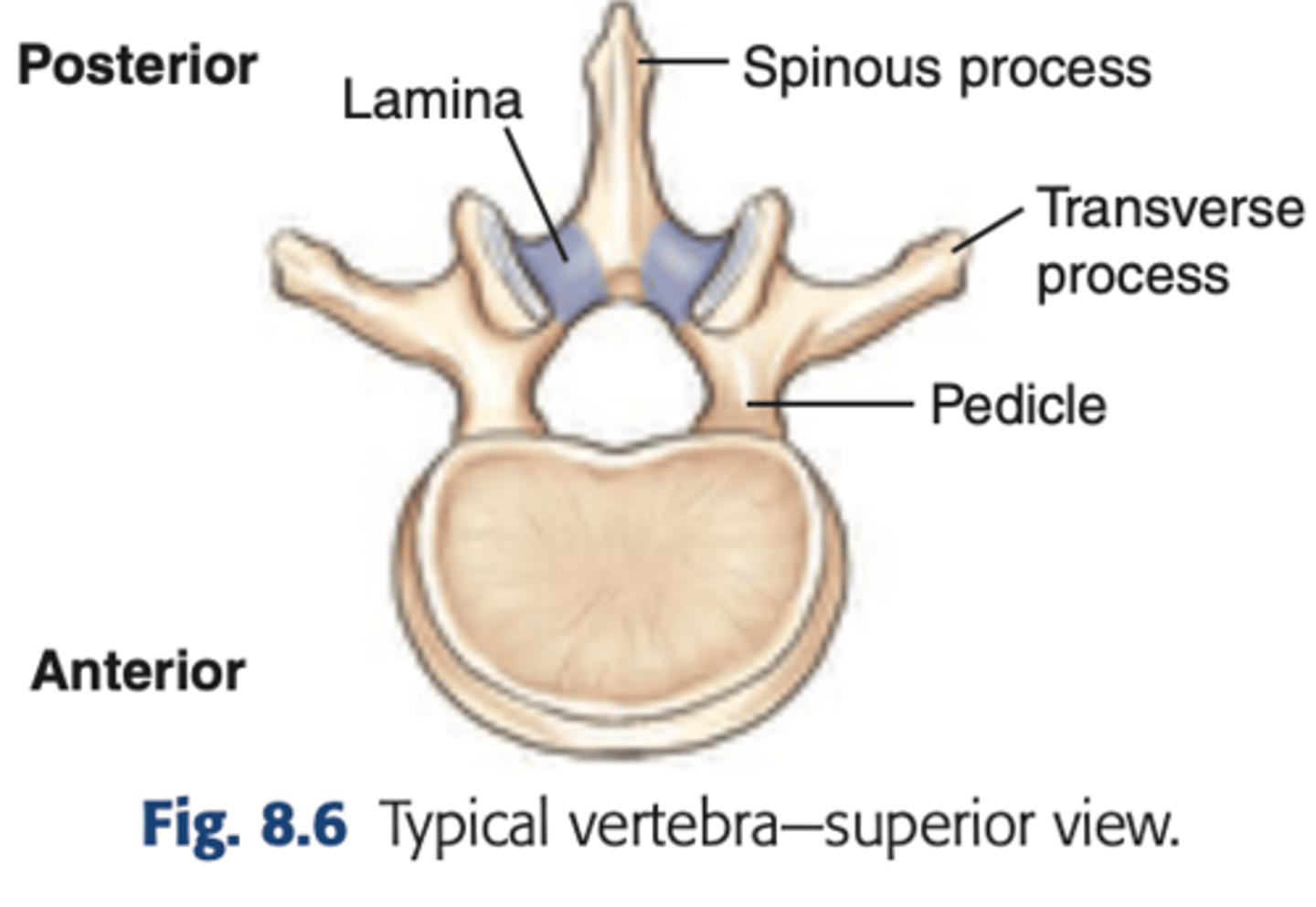
What are pedicles?
Parts that extend posteriorly from each side of the vertebral body and form most of the sides of the vertebral arch
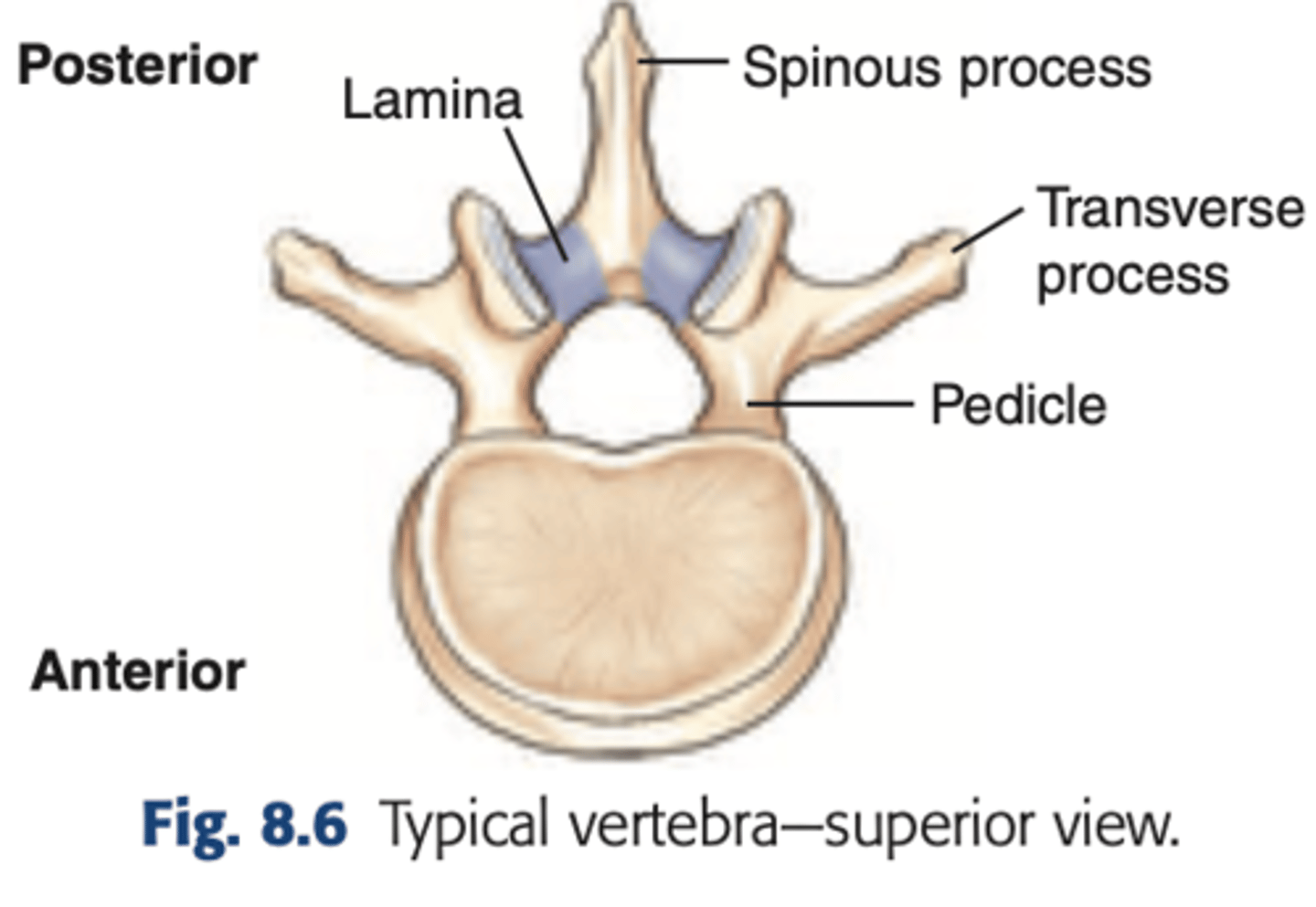
What is the spinous process?
A projection that extends posteriorly from the midline junction of the two laminae
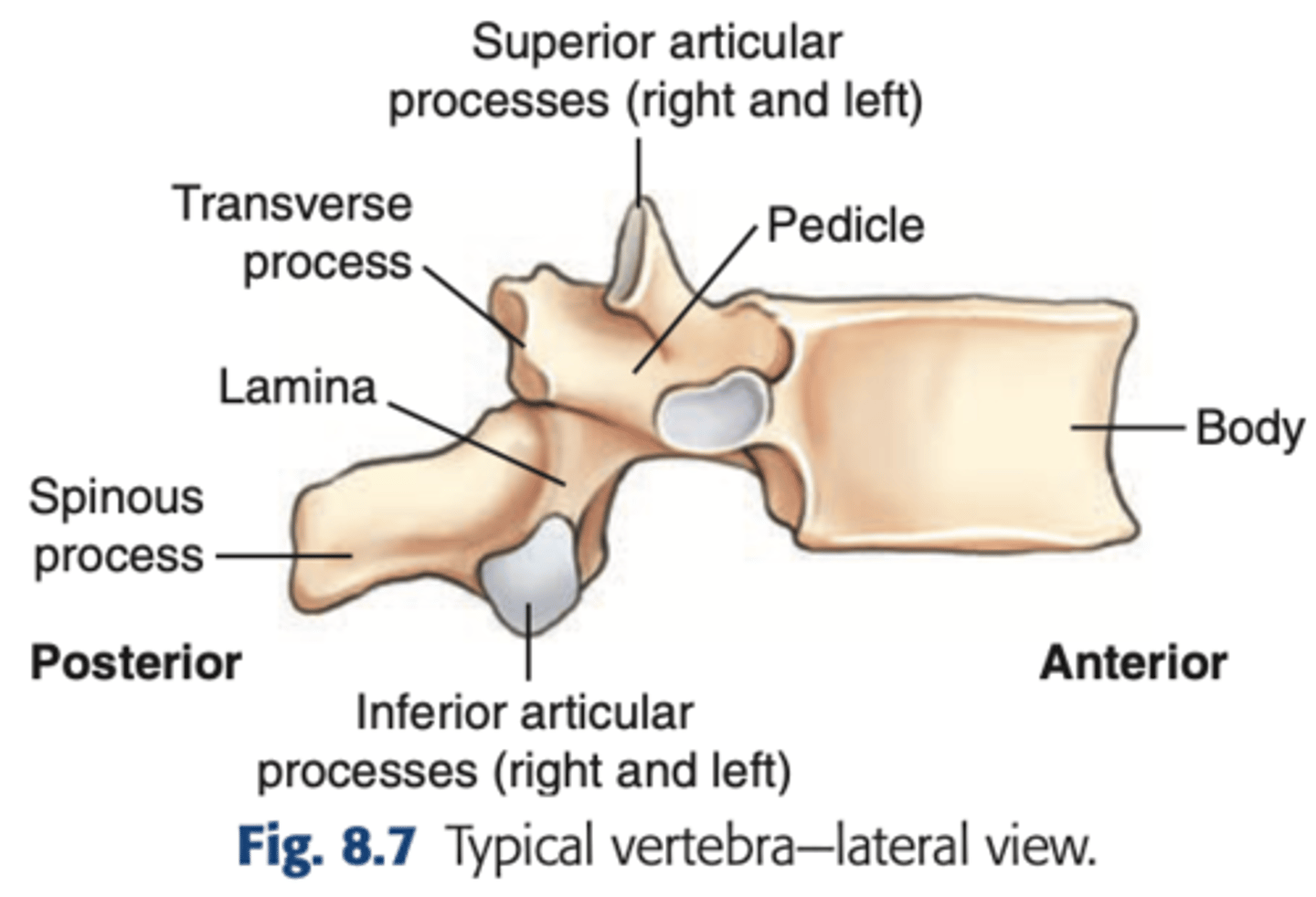
What two main parts are easily seen in a lateral view of a vertebra?
The anterior vertebral body and the posterior spinous process
What forms the vertebral arch of a typical vertebra?
Two pedicles and two laminae
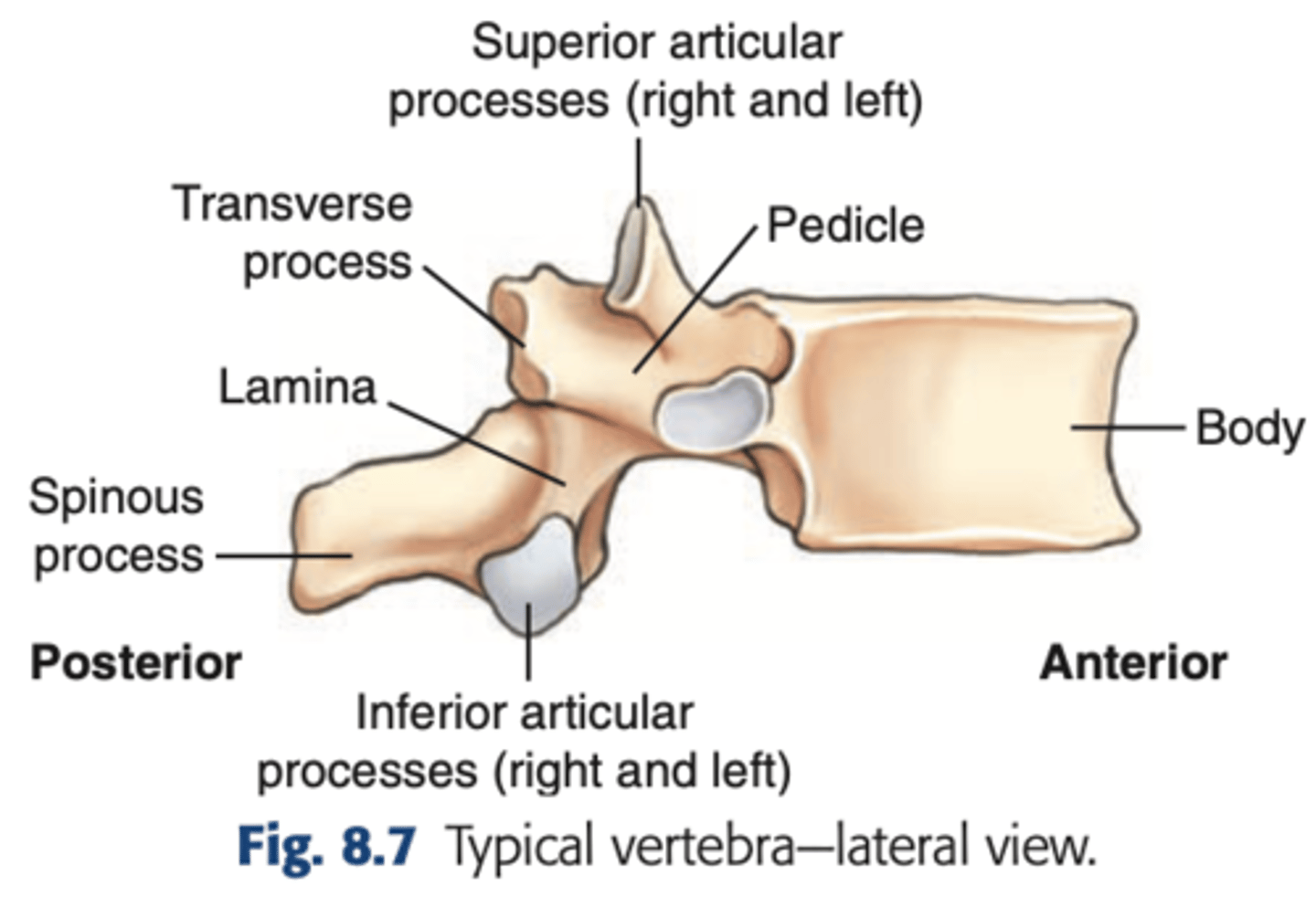
How many transverse processes does a typical vertebra have?
Two, extending laterally
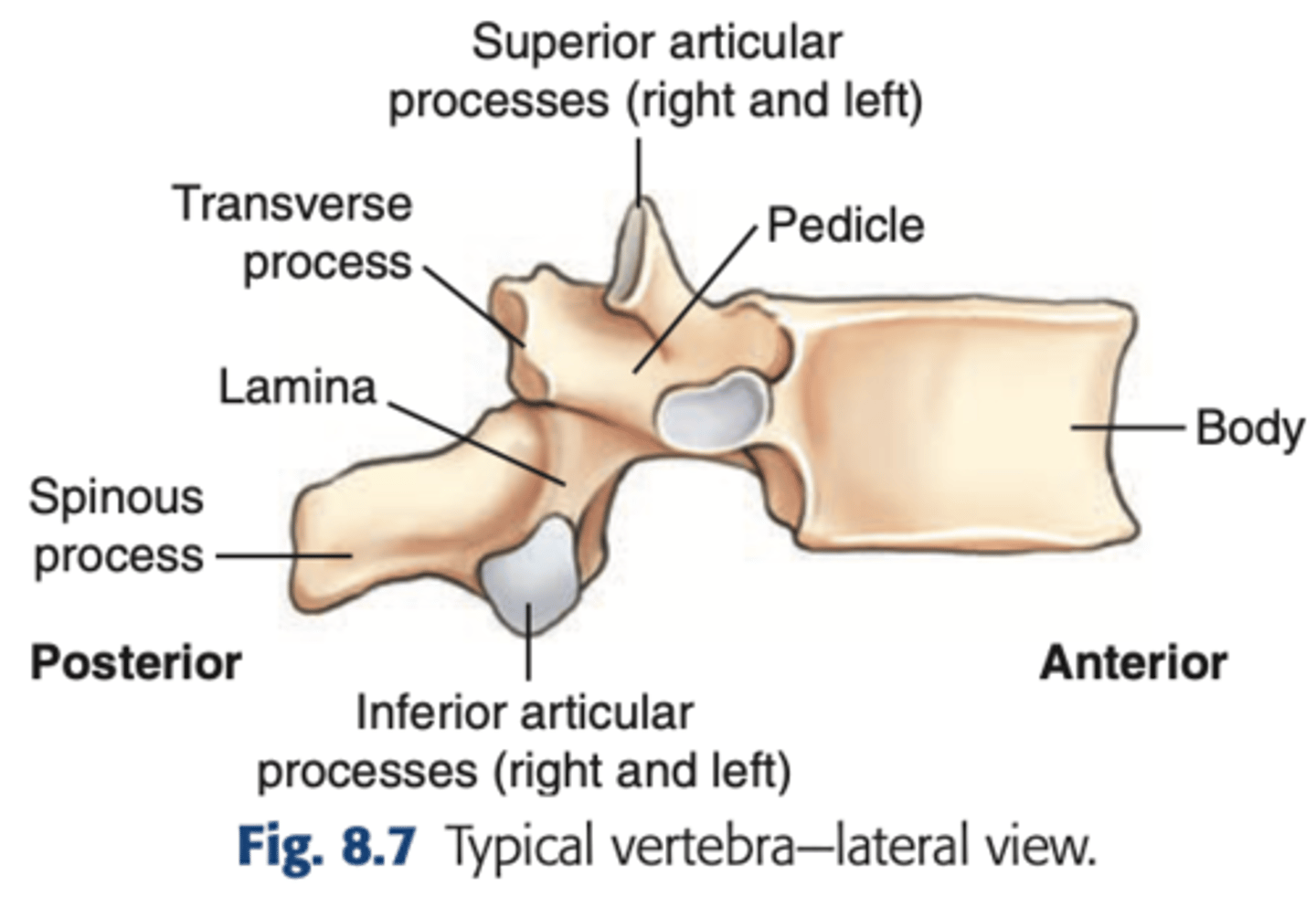
How many spinous processes does a typical vertebra have?
One, extending posteriorly
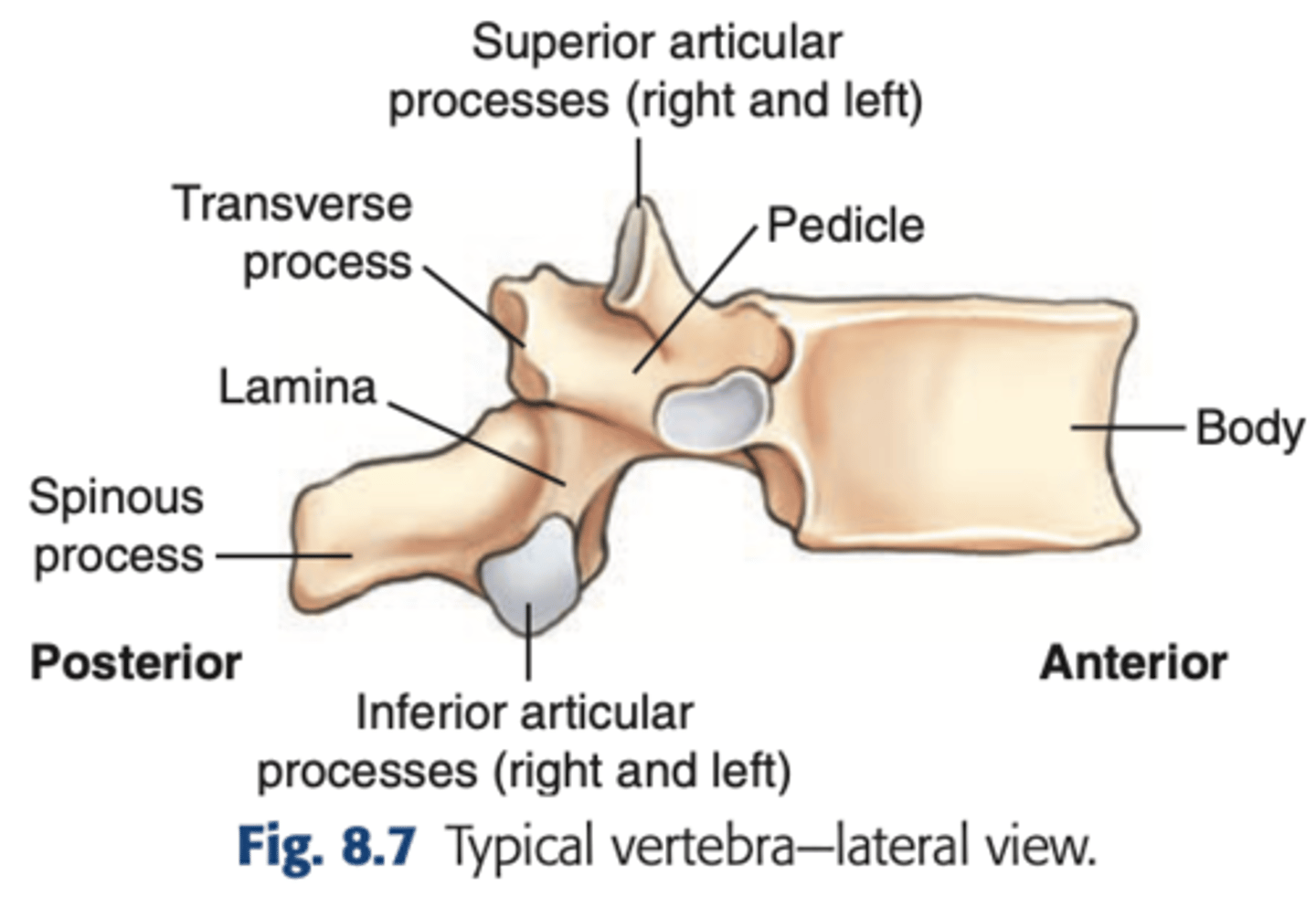
What is the large anterior part of a typical vertebra?
The vertebral body
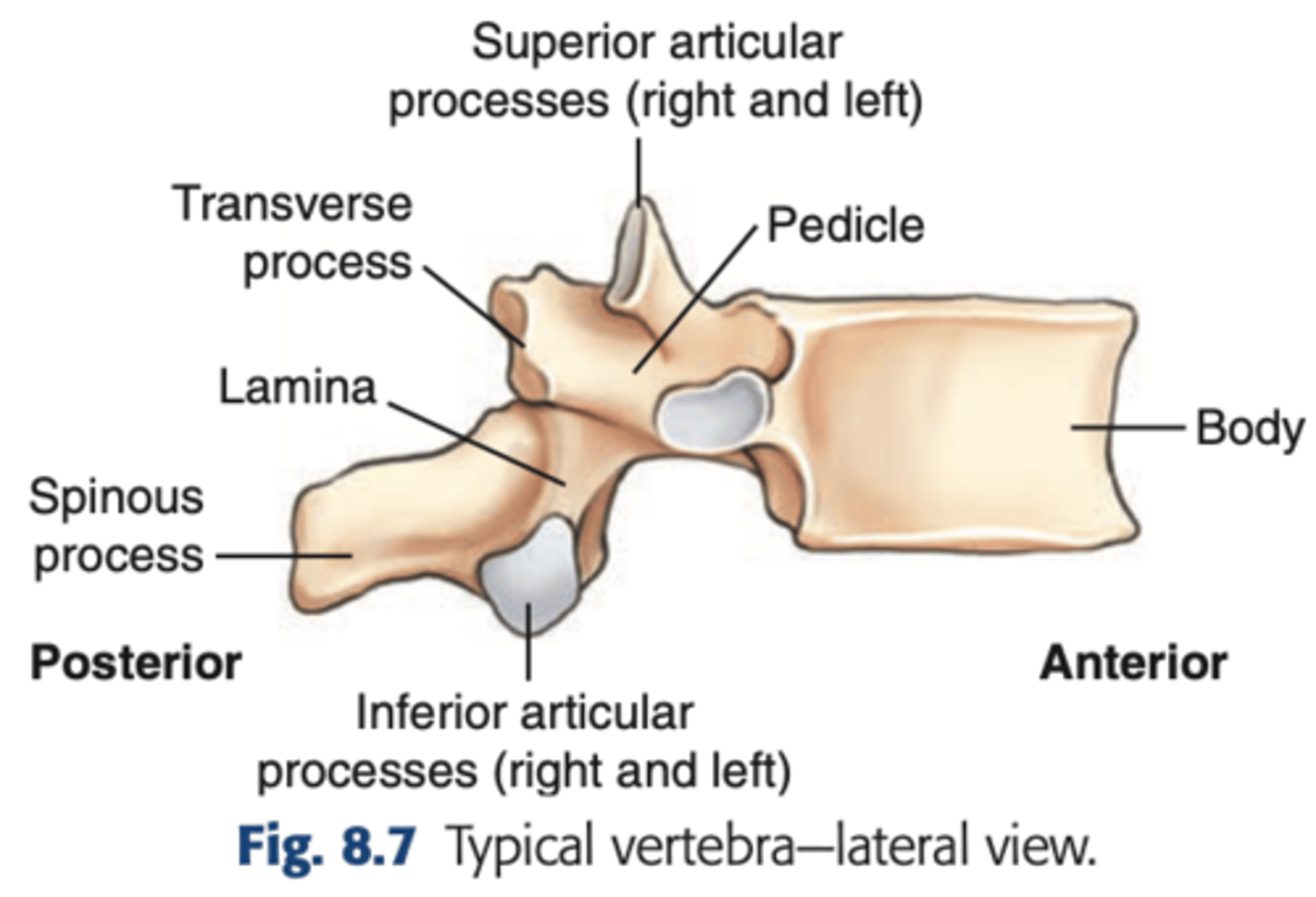
What are the three important parts of the vertebral column?
The body, the vertebral arch, and the joints
What allows movement in the vertebral column?
The intervertebral disks and zygapophyseal joints
What would happen if the vertebral column had no joints?
It would be rigid and immovable
Why is the vertebral column important for respiration?
It acts as a pivot point for the arch-like movement of the ribs
What type of joints are intervertebral joints?
Amphiarthrodial joints
Where are intervertebral joints located?
Between the vertebral bodies
What is found in the intervertebral joints?
Intervertebral disks
What do intervertebral disks do?
Provide spinal stability and allow flexibility and movement
What are costal joints?
Joints where the ribs articulate with the thoracic vertebrae
What are intervertebral foramina?
Openings between vertebrae through which spinal nerves and blood vessels pass
What separates typical adult vertebrae?
Tough fibrocartilaginous intervertebral disks
Between which vertebrae is there no intervertebral disk?
Between the first and second cervical vertebrae
What is the function of intervertebral disks?
To cushion the vertebrae and absorb shock during movement
What is the outer part of an intervertebral disk called?
Annulus fibrosus
What is the inner part of an intervertebral disk called?
Nucleus pulposus
What happens in a herniated nucleus pulposus (HNP)?
The soft inner part (nucleus pulposus) protrudes through the outer layer and presses on the spinal cord
What symptoms can HNP cause?
Severe pain and numbness that radiates into the limbs
How do cervical vertebrae compare to lumbar and thoracic vertebrae?
They show little resemblance and have unique characteristics
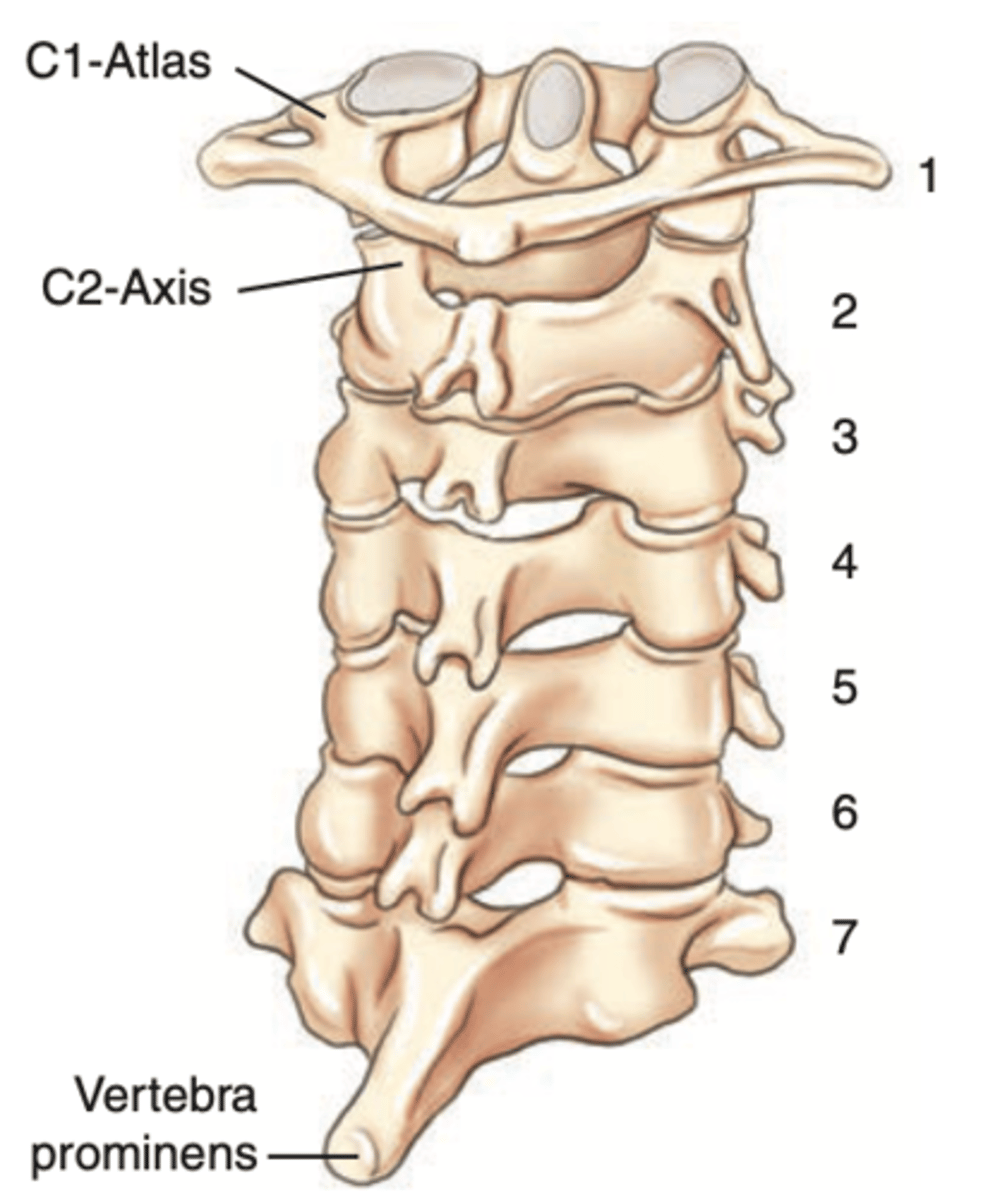
What are three unique features of cervical vertebrae?
Transverse foramina, bifid spinous processes, and overlapping vertebral bodies
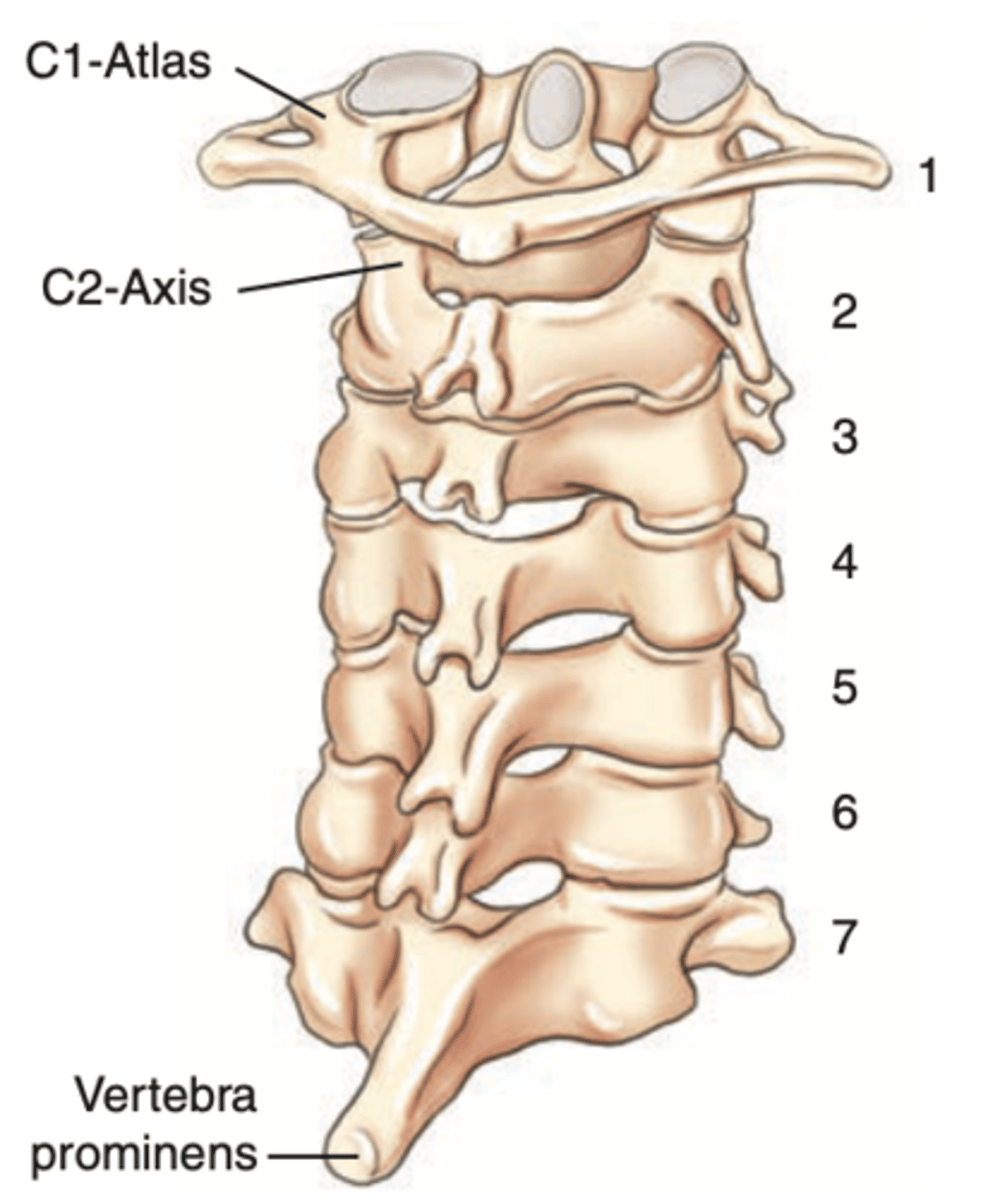
What happens to cervical vertebrae as you go down the spine?
They gradually get larger through C7
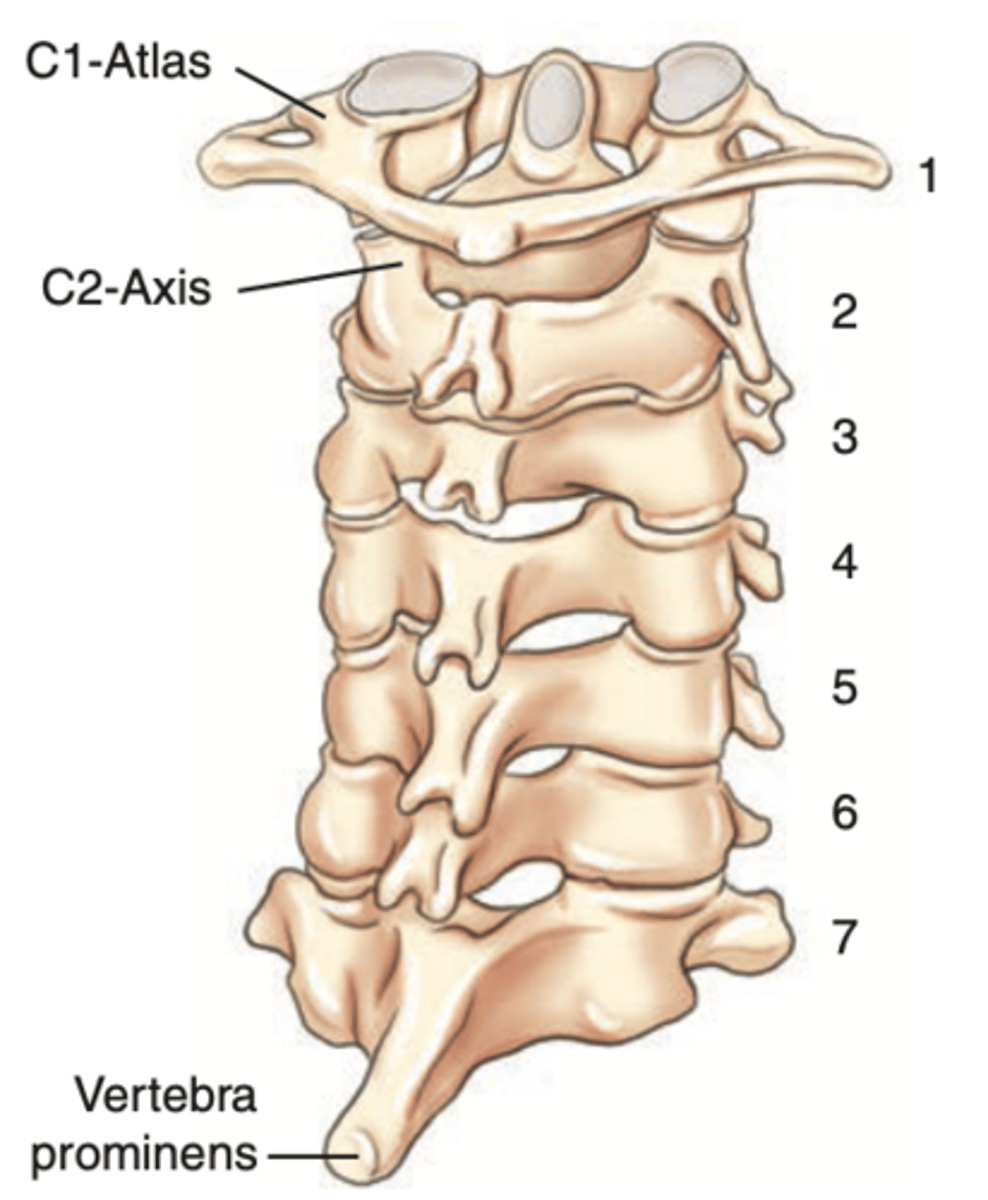
Which cervical vertebrae are considered typical?
C3 through C6
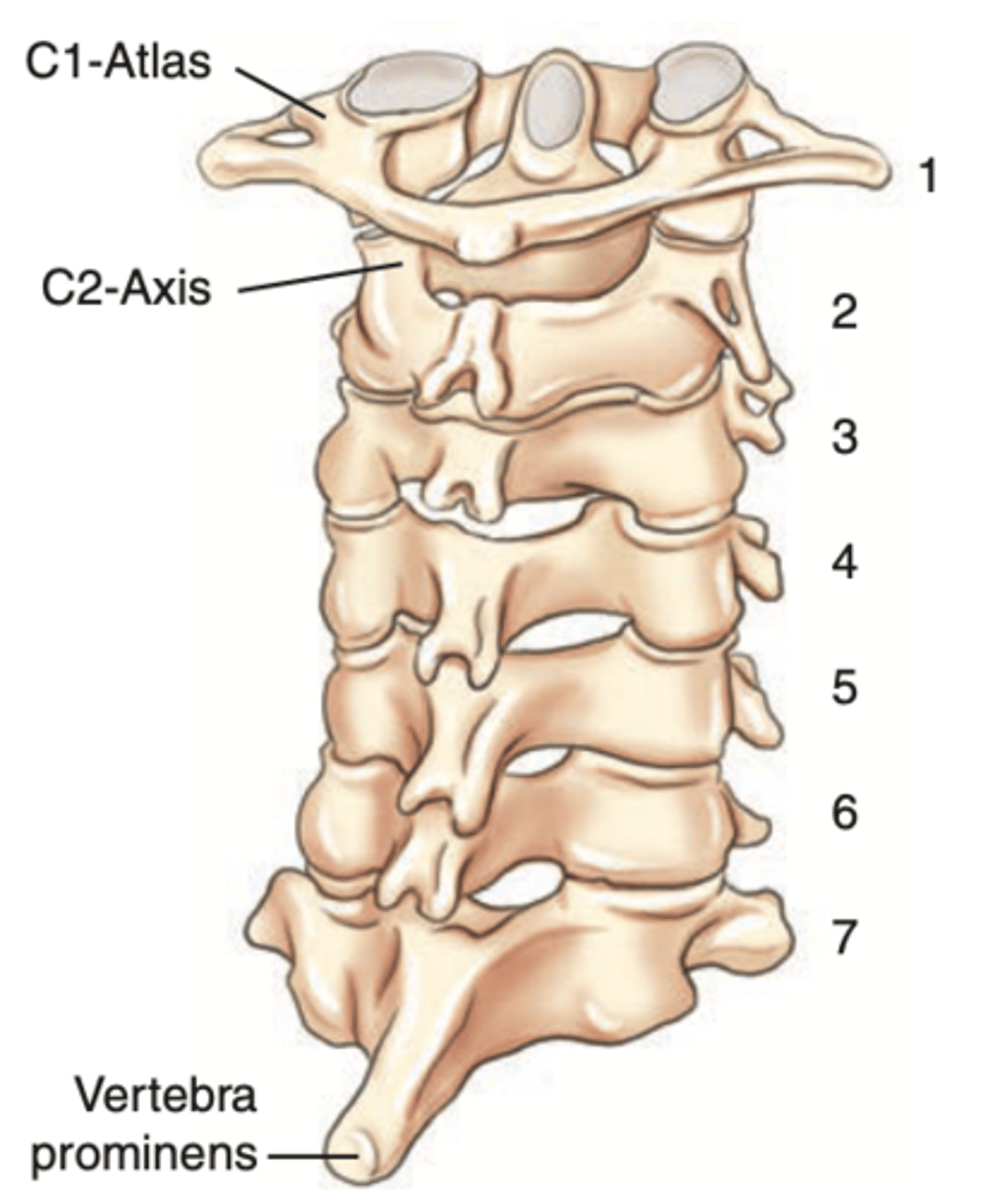
What is another name for C1?
Atlas
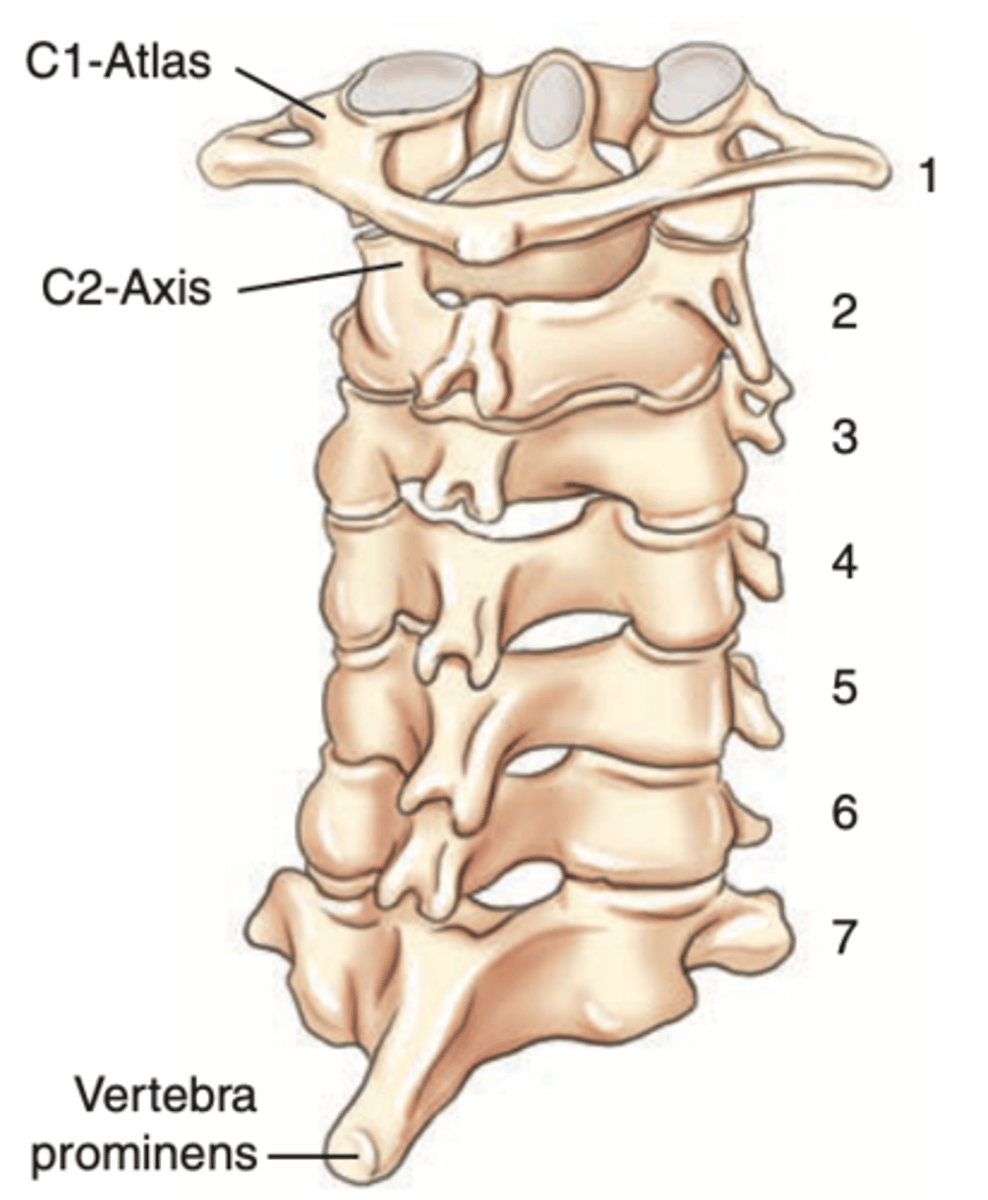
What is another name for C2?
Axis
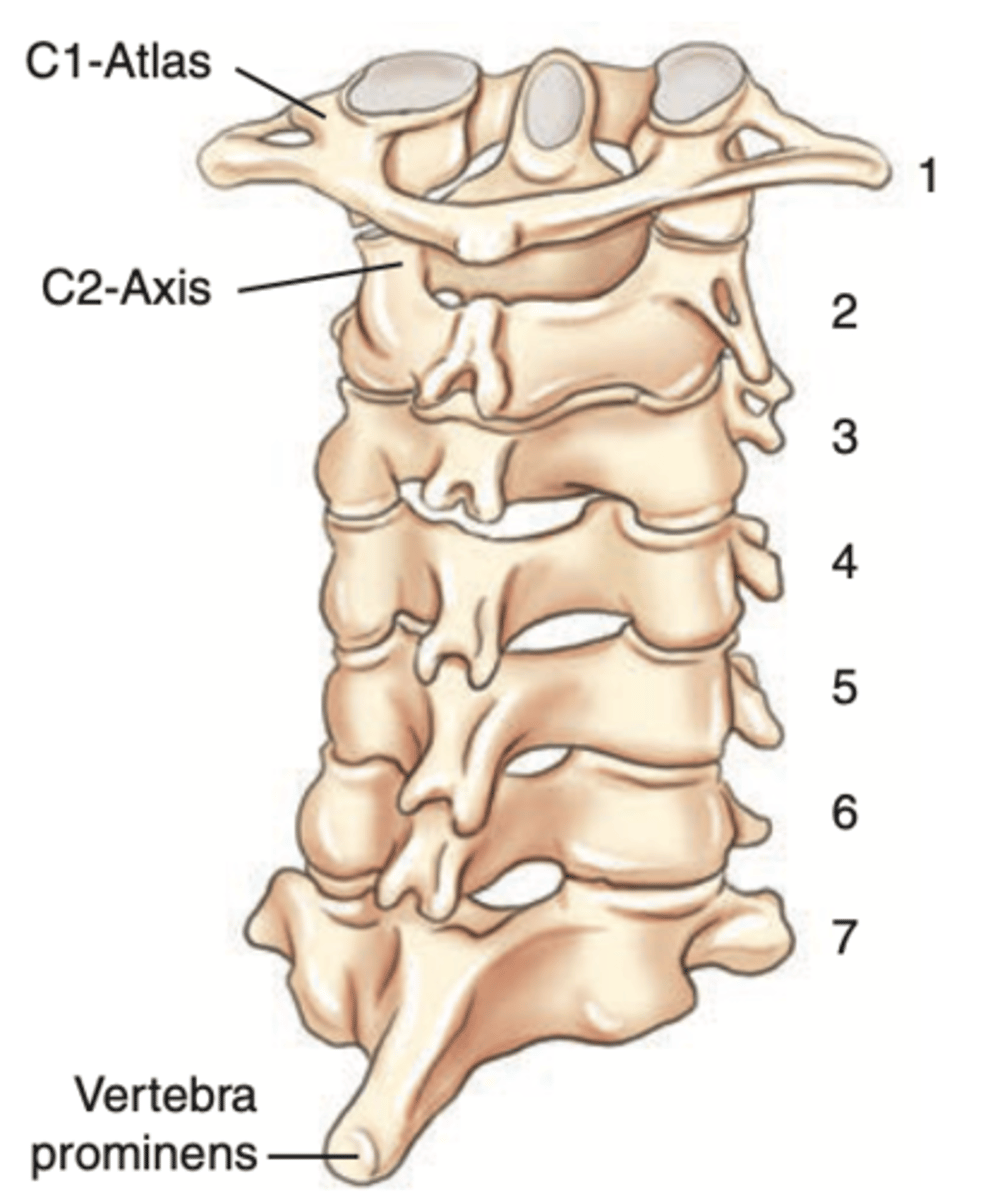
What is special about C7?
It's called the vertebra prominens and has a long, horizontal spinous process
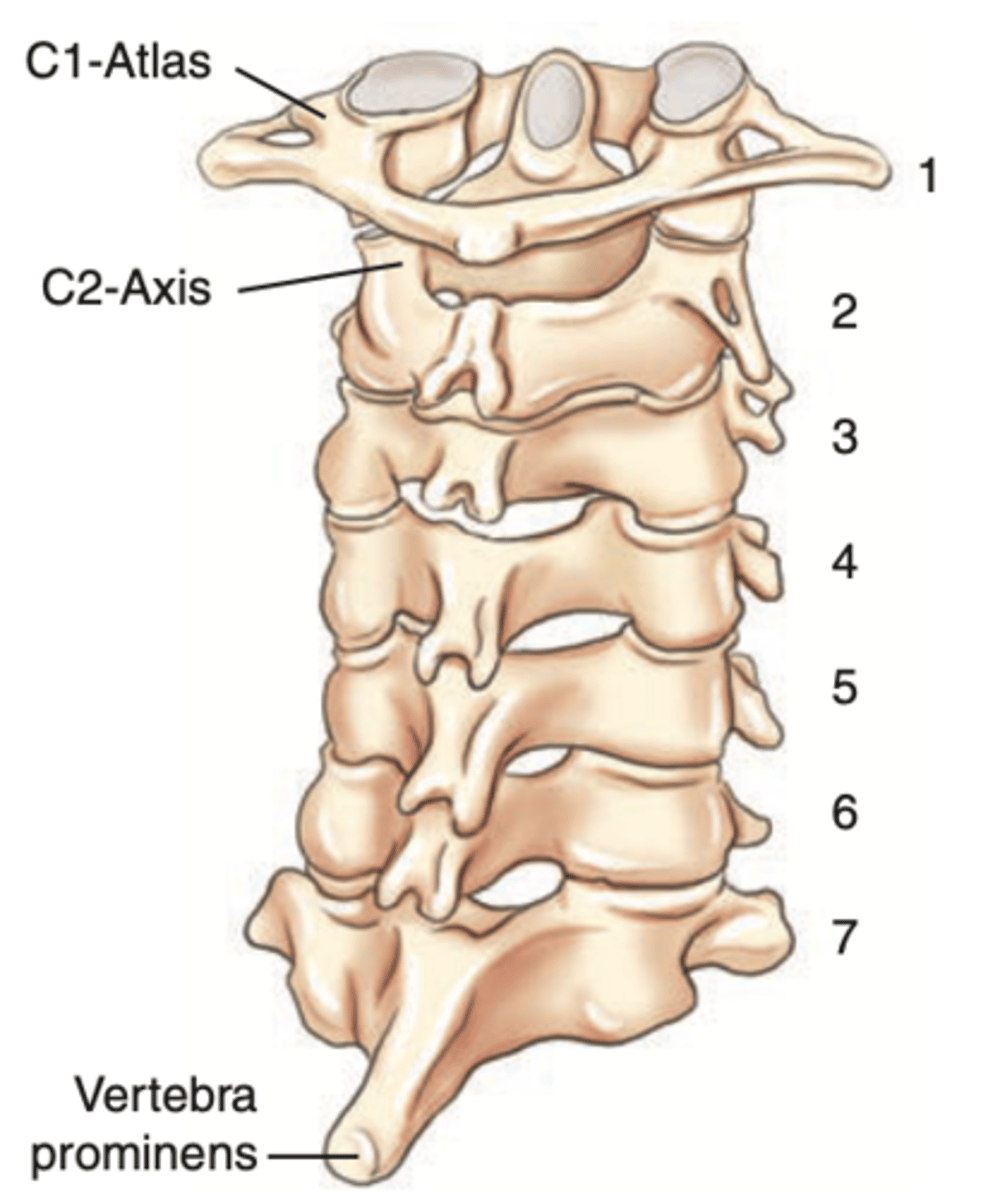
What is the hole in each transverse process called?
Transverse foramen
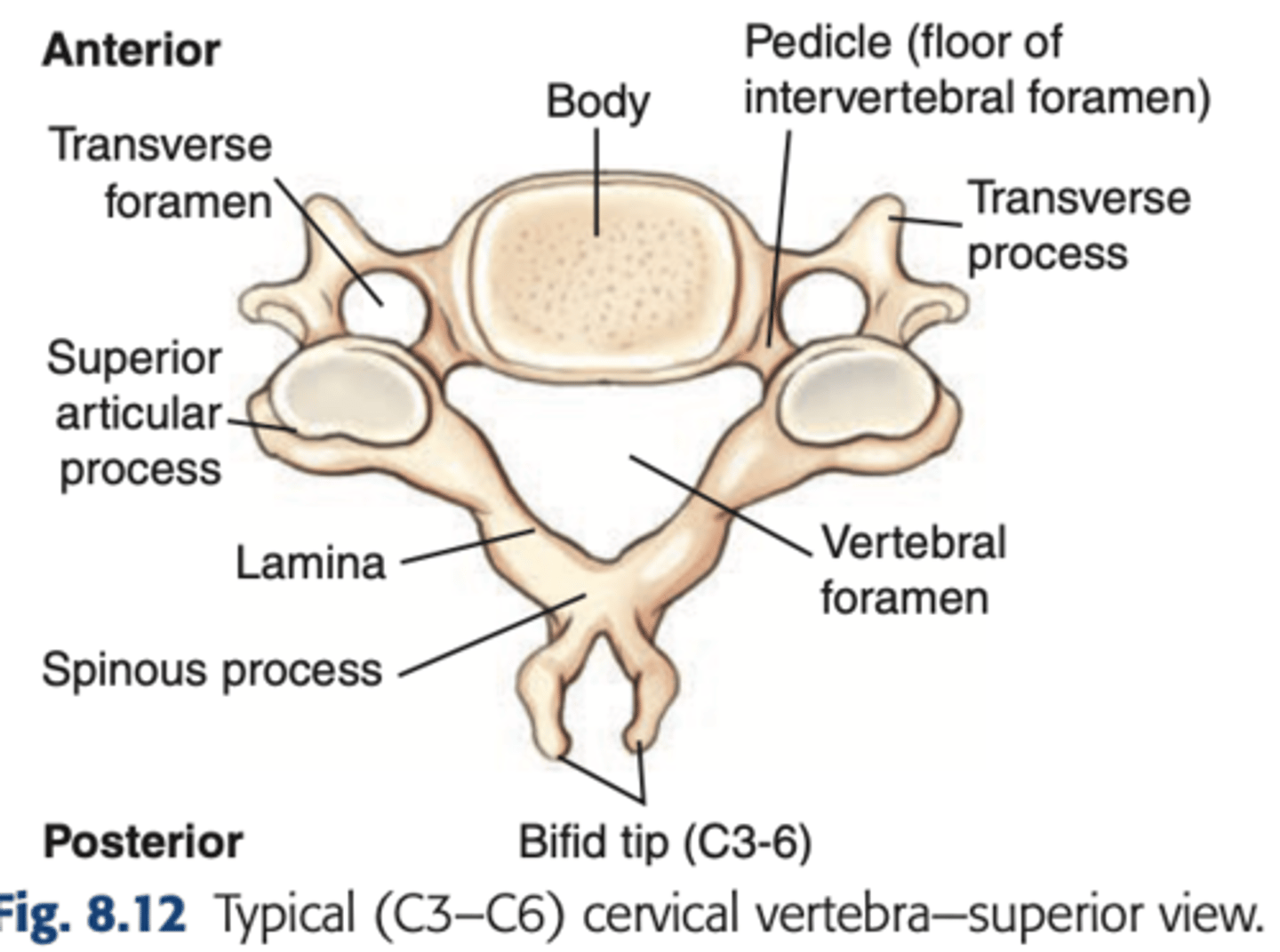
What passes through the transverse foramina?
Vertebral artery, veins, and certain nerves
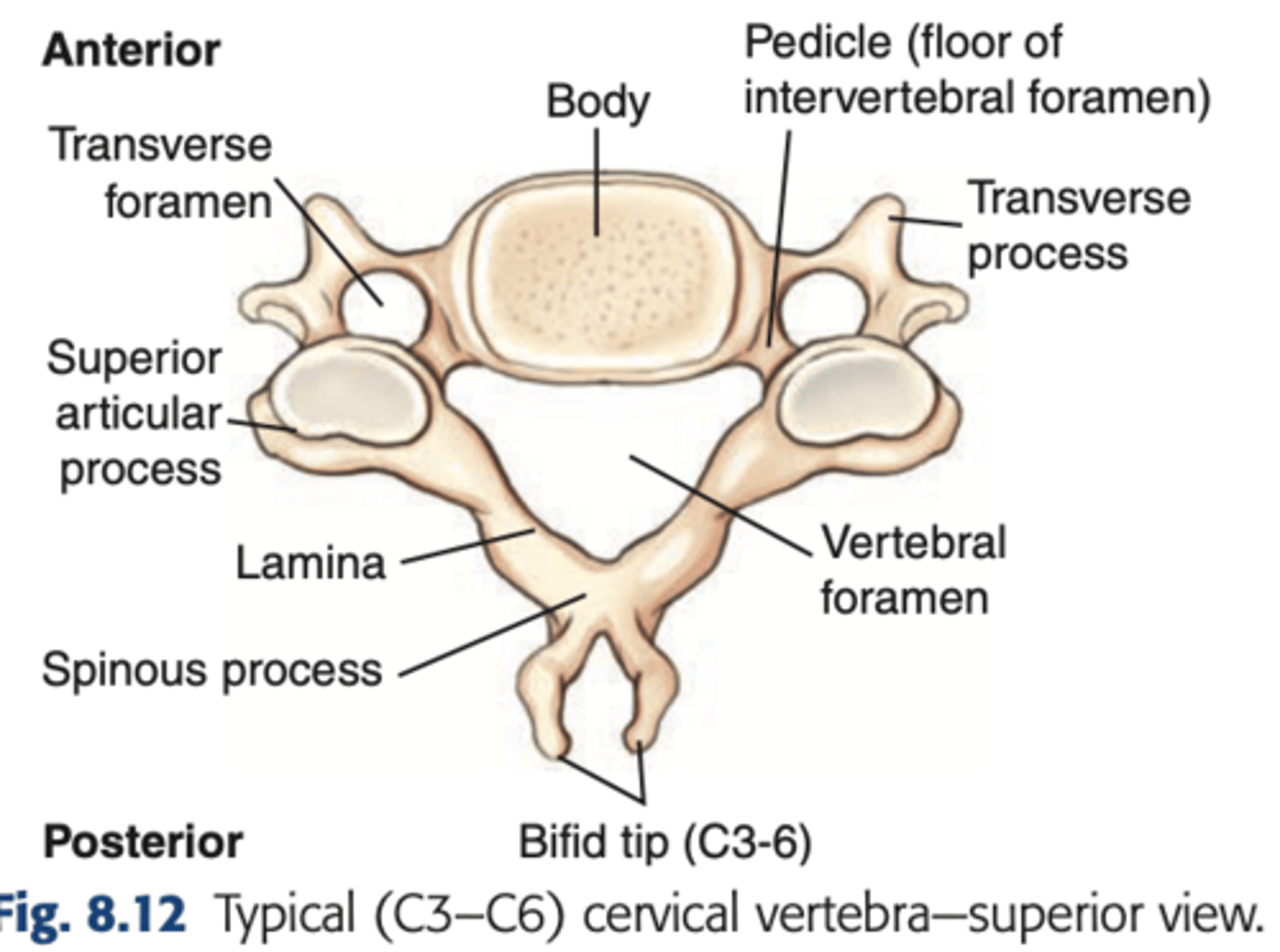
How many foramina does a typical cervical vertebra have?
Three — two transverse foramina and one vertebral foramen
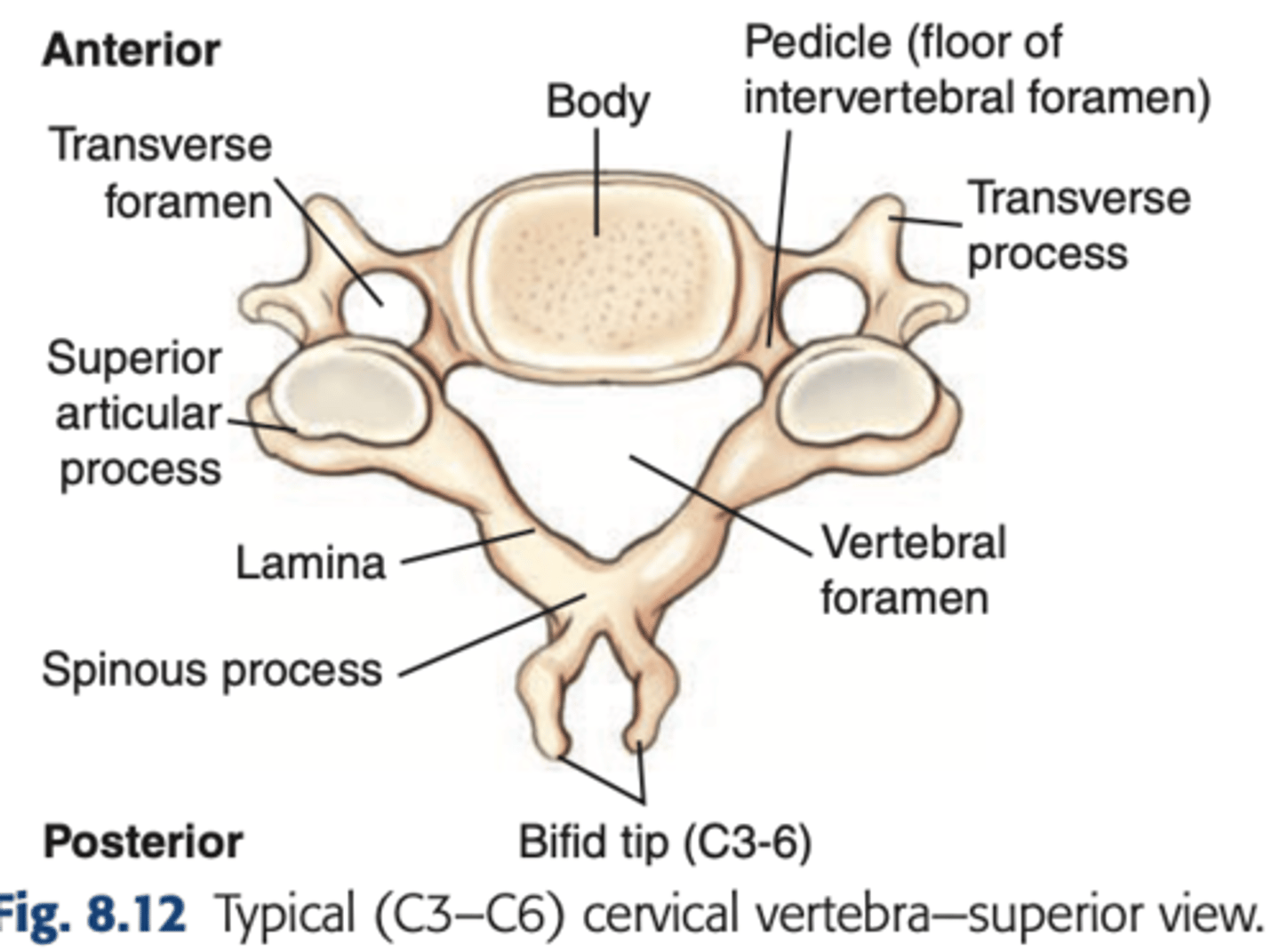
What is unique about the spinous processes of C2 to C6?
They are short and have bifid (double-pointed) tips