Schizophrenia Spectrum + Psychotic Disorders Ch.23
 Call Kai
 Learn
Learn Practice Test
 Spaced Repetition
 Match
Match Flashcards
 Knowt Play
1/23

Earn XP
Description and Tags
Week 3
Name | Mastery | Learn | Test | Matching | Spaced | Call with Kai |
|---|
No analytics yet
Send a link to your students to track their progress
24 Terms
Schizophrenia
A psychotic disorder with 3 clusters of symptoms
psychotic/positive symptoms
Negative symptoms
Cognitive symptoms
Means “split mind”
DSM-5 Diagnostic Criteria of Schizophrenia
Two or more of the following symptoms (present for significant part of a month)
▪ Hallucinations
▪ Delusions
▪ Disorganized speech
▪ Disorganized or catatonic behavior
▪ Negative symptoms
o Condition persists for 6 months
o Impaired functioning At least one!
Psychosis
A disconnection from reality
Hallucinations
Delusions
Hallucinations
Distortion in perception
Auditory: Hearing sounds that aren’t real (voices, music, footsteps,commands)
o Visual: Seeing things that aren’t real (people, shapes, lights)
o Tactile: Feeling touch or movement that isn’t real (bugs crawling on skin, organs moving)
o Gustatory: Strange or unpleasant tastes (metallic)
o Olfactory: Experiencing smells that aren’t real
Delusions
Distortion in thought/false beliefs
Culturally situation
Persecutory: Paranoid beliefs (being targeted, followed, or threatened)
o Erotomanic: Unfounded beliefs about love (someone else is in love with them)
o Grandiose: Inflated sense of self (special powers, fame, God)
o Somatic: Something is wrong with the body (missing organs, being pregnant)
Thought Disorder
Disorganized thinking and speech
Tangential speech: Not following a clear train of thought
o Loose associations: Lack of connection between ideas, moving quickly between ideas
o Neologisms: Newly coined word that is meaningless to others
o Echolalia: Repetition of words or phrases said by others
o Magical thinking: More fleeting and flexible than delusions
o Concrete thinking: Difficulty with abstraction, takes things literally
Negative Symptoms: Scizophrenia
Alogia
Flat affect
Avolition
Asociality
Anhedonia
Alogia
Reduced amt of speech, impoverished content, limited spontaneity
Flat affect
Reduced intensity of emotional expression
Avolition
Difficulty initiating and carrying out goal directed behavior
Asociality
withdrawal or avoidance of social contact
Cognitive Impairment
NOT a diagnostic criteria but a core feature
Domains: processing speed, executive function, memory, sociaal cognition
Schizoaffective Disorder
Combination og psychotic + mood disorder
Must meet DSM-5 criteria for both schizophrenia AND depressive or manic episode
Mood disturbance must be present for majority of time of illness
Positive Experiences of Psychosis
Voices of encouragement
Identity and deeper meaning
Spirituality
Symptom or strength?
Etiology
Genetic Factors
Prenatal factors
Structural and functional neuroanatomical differences
Dopamine hypothesis
Environmental factors
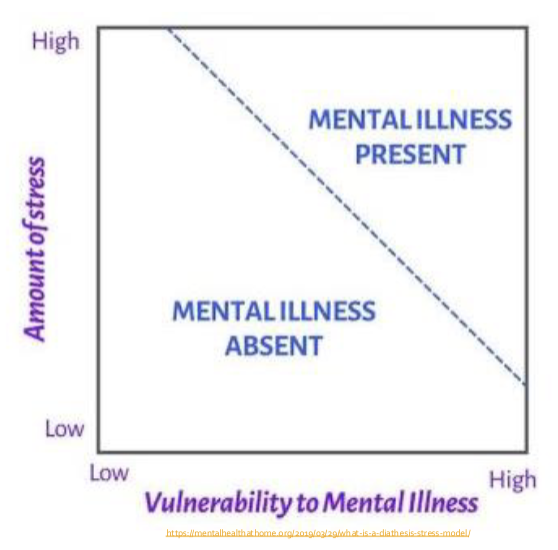
Diathesis Stress Model
Also called the stress vulnerability model
Suggests that schizophrenia results from
a biological predisposition to schizophrenia and
2. environmental stressors that triggers the onset of illness
Prevalence and Course
0.3-0.7% of population
Most commonly diagnosed in early 20s
The course and prognosis of schizophrenia is widely variable
o Symptoms
o Functioning
o Self-perceived wellbeing
Prodromal period
The period of time after the onset of symptoms but before diagnostic criteria
is met is called the prodromal period (can last for weeks or months)
o Early intervention during this period can reduce long-term disability and
impairment
o Oftentimes seen first through a change in cognition
Adaptive paranoia
Health suspicion that develops from experiences of racism and racial profiling
Impact on Occupational Performance: Cognitive Impairments
Information Processing
Executive Function
Social Cognition
Memory
Memory Cognitive Impairments: Schizophrenia
Short-term memory generally impacted less
o Difficulty with working memory (manipulating and processing information)
and episodic memory (remembering past events)
o Impairment in verbal fluency (retrieving verbal information)
Schizophrenia: Health and Wellness Impact
Associated with higher rates of morbidity and mortality
Life expectancy may be reduced by decades
Obesity
Smoking
Oral Health
Schizophrenia Medication: Antipsychotics
Most effective in reducing symptoms
1st Generation - Dopamine antagonists
2nd Generation - serotonin-dopamine antagonists
Side Effects: sedation, sun sensitivity, dry mouth, blurred vision, weight gain, orthostatic hypotension, movement disorders, clozaril (decreased WBC)
OT Intervention Approaches
Cognitive Remediation
Cognitive Adaptation
Social Skills Training
Permanent Supportive Housing
ADL and IADL training