9th grade Bio final
 Call Kai
 Learn
Learn Practice Test
 Spaced Repetition
 Match
Match Flashcards
 Knowt Play
1/109

There's no tags or description
Looks like no tags are added yet.
Name | Mastery | Learn | Test | Matching | Spaced | Call with Kai |
|---|
No analytics yet
Send a link to your students to track their progress
110 Terms
what does a organism be considered to be a living thing
cellular organization, reproduction, metabolism, homeostasis, heredity, response to stimuli, growth and development, adaption from evolution
(atom,element,molecule) the smallest unit of matter that forms a element
atom
(atom,element,molecule) a pure substance made of only one kind of atom
element
(atom,element,molecule) a group of atoms bonded together
molecule
what is the charge of a proton
positive
what is the charge of a nuetron
no charge
what is the charge of a electron
negative
what does CHONPS stand for
Carbon, hydrogen, oxygen, nitrogen, phosphorus, sulfur
what is this: forms when 2 or more elements chemically combine to form a bond between them
compound
2 types of compounds
Ionic and covalent
Ionic bond
form when electrons are transferred. Positively/negatively charged ions are formed
covalent bond
forms when electrons are shared. Moles are formed. Can be polar or non polar.
What are the properties of water
Cohesion, adhesion, heat capacity, universal solvent, capillary action, surface tension
mixture
two or more substances physically combined
solution
mixture in which components are evenly distributed
solute
substance that is dissolved
solvent
substance doing the dissolving
suspension
when a material does not dissolve in water
PH scale ions
solutions have different amounts of 2 important ions—> H+ and OH-
PH scale
measurement system to show the concentration of H+ in a solution
more H+ (#)
acidic (low #)
less H+
basic (low #)
Buffers
maintaining PH within cells keeps homeostasis
Taxonmony
classifying name of a organism
Eukaryote
has a nucleus
prokaryote
doesnt have nucleus
Cell wall of plants, fungi, bacteria
cellulose, chitin, peptidoglycan
DKPCOFGS
domain, kingdom, class, order, family, genus, species
what are the 6 kingdoms
animalia, plantae, protista, fungi, archaea, eubacteria
animal characteristics
multicellular, eukaryote, heterotrophic, live in diverse environments, reproduce with a mate, is aerobatic
Plant characteristics
multicellular, eukaryote, cell contains chlorophyll used to make own food (producers) and gives green color (photosynthesis), made of cellulose, have a cell wall, autotroph
protist characteristics
complex, unicellular life forms, usually seen under microscopes, can be parasites that cause illness, can make its own food or feed othersm eukaryote, very diverse, ex: amoeba, algae
fungi characteristics
eukaryotic, most are unicellular decomposers, parasitic plants that are not true plants, they dont have chlorophyll, have chitin as body, ex: mushroom, yeast, bread mold
archaea characteristics
simplist type of organism, thrive in extreme environments, prokaryotic, unicellular
eubacteria characteristics
found everywhere in the world other than extreme environments, unicellular, prokaryote, some are autotrophic and heterotrophic, killed by antibiotics, asexual
Molecules containing carbon are….
organic
macromolecules
carbohydrates, lipids, nucleic acids, proteins
carbohydrates monomer and polymer
monosaccharides (glucose, fructose), polysaccharides (starch, cellulose, glycogen)
Carbohydrates elements
CHO
Structure of carbohydrates
simple sugars, monosaccharides, and disaccharide
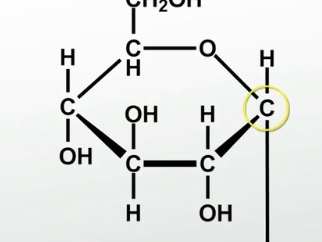
Function of carbohydrates
main source of energy for living things
Lipid elements
CH little O
what are the 3 general structures of lipids
triglycerides, phospholipids, steroids
shape of lipids
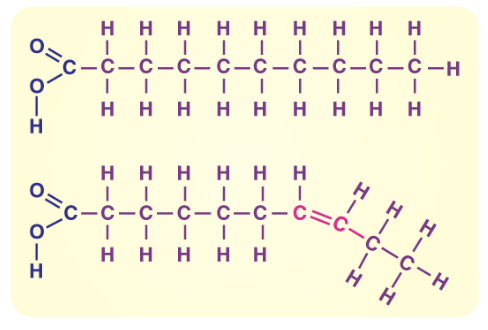
job for lipids
store energy for later, protect organs, hormones are lipids, make up the cell membrane
nucleic acid elements
CHONP
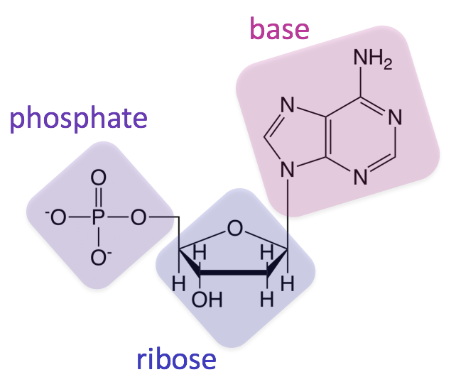
nucleic acid monomer, polymer
nucleotide, DNA/RNA
3 parts of nucleic acids
sugar, phosphate group, nitrogen base(a,t,c,g,u)
Proteins elements
CHONS
monomer and polymer of Proteins
amino acids, polypeptides
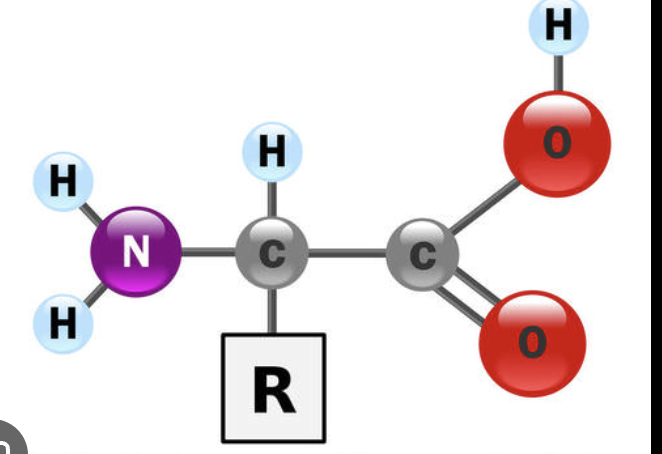
amino acids consist of..
amino group, carboxyl group, and function group (r group)
function of Proteins
reaction, repair, support, transport, fight illness
structure of protein
enzymes reduce….
activation energy
enzymes are….
proteins
does transcription or translation come first
transcription
liver
produces bile, breaks up fat, filters out waste
gallblader
stores bile, releases into small intensite, fatty acids cause gall stones
pancreas
produces digestive enzymes to digect fats, carbs and proteins, regulates blood sugar by insulin
vacuole (plant, animal, bacteria)
sacklike, membrane enclosed storage organelles, stores water, salt, protein, carbohydrates (P/A)
cytoplasm (plant, animal, bacteria)
P/A/B, jelly
nucleus (plant, animal, bacteria)
P/A
Lysosome (plant, animal, bacteria)
enzymes break down L/C (A)
Centriole (plant, animal, bacteria)
organize cell (A)
Ribosomes (plant, animal, bacteria)
where proteins are made, amino acids form proteins, follows directions in DNA
Rough ER(plant, animal, bacteria)
has ribosomes attached that make proteins (P/A)
Smooth ER(plant, animal, bacteria)
make lipids, stores enzymes (P/A)
Mitochondria (plant, animal, bacteria)
power house of the cell, produces ATP through cellular respiration. (P/A)
Chloroplast (plant, animal, bacteria)
capture sunlight, and create glucose during photosynthesis, green pigment=chlorophyll (P)
Cell membrane (plant, animal, bacteria)
flexible, lipid bilayer, what enters and exits the cell, outer most layer of animal cells, fluid mosaic (P/B/A)
cell wall (plant, animal, bacteria)
protects cell, made of cellulose, surronds prokaryotes, fungi, plant cells, outside cell membrane (P/B)
Cytoskeleton (plant, animal, bacteria)
complex tubes all over the cell (P/A/B)
diffusion
passive movement of molecules, high to low until equilibrium
osmosis
water across a semi permeable membrane (ALWAYS WATER)
Isotonic
same inside and outside
hypertonic
more solution inside
hypotonic
more solution outside
facilitated
channel protein (high to low) no energy needed
active transport
ions/molecules across membrane against gradient from low to high, ATP needed
gametes
sex cells that unite during reproduction, such as sperm and eggs.
autosomal
body cell
end of mitosis
2 daughter diploid cells, genetically identical to parent and each other (DIPLOID)
end of meiosis
4 daughter haploid cells, genetically different to parent and each other (HAPLOID)
6 phases of cell
division: interphase, prophase, metaphase, anaphase, telophase, and cytokinesis.
cell respiration
chemical process of taking in sugar and creating ATP in mitochondria (plant,fungi,protist,animal)
photosynthesis
chemical process of taking in sunlight and CO2 to create food (glucose) , in chloroplasts (plants, algea)
pedigrees
of trait skips=recessive, autosomal seen in male/female, sex linked in one sex
commensalism
A symbiotic relationship where one organism benefits while the other is neither helped nor harmed.
mutalism
A symbiotic relationship where both organisms benefit from the interaction.
parastism
A symbiotic relationship where one organism benefits at the expense of another, often harming the host.
predation
A biological interaction where one organism, the predator, kills and consumes another organism, the prey.
SRY gene
A gene on the Y chromosome that is crucial for male sex determination and development.
incomplete dominance
A genetic situation where one allele is not completely dominant over another, resulting in a phenotype that is a blending of both alleles. red+white=pink
codominance
A genetic scenario where both alleles in a heterozygote are fully expressed, resulting in offspring with a phenotype that shows both traits simultaneously, such as red and white flowers appearing together. red+white=speckled red and white
combustion
burning of fossil fuels for heat
arrows show??
where energy is going
egg+sperm=??
zygote
human gametes
haploid”one set” of chromosomes, 23 total
pair 23
sex cells
pairs 1-22
autosomes