Anatomy & Physiology 1: Module 1 Exam Prep
 Call Kai
 Learn
Learn Practice Test
 Spaced Repetition
 Match
Match Flashcards
 Knowt Play
1/125

Earn XP
Description and Tags
Portage Learning
Name | Mastery | Learn | Test | Matching | Spaced | Call with Kai |
|---|
No analytics yet
Send a link to your students to track their progress
126 Terms
What is anatomy?
Studies STRUCTURE of the body. Asks what structures are made of and where structures are located
What is physiology?
Studies the FUNCTIONS of the anatomical structures
What is the principle of complementarity?
The activities a cell carries out are determined by the anatomy (Structure), which then determines the cell’s physiology (function)
What is gross anantomy?
Large visible structures
Includes surface anatomy: exterior features
Includes systematic anatomy: organ systems
What is microscopic anatomy?
Studies the structures of human body using a microscope
What is pathological physiology (abnormal physiology)?
Examines the impact of disease or injury to organs and organ systems
What are the smallest building blocks of matter?
Atoms W
What level of organization is the smallest unit of structural organization?
Cellular level
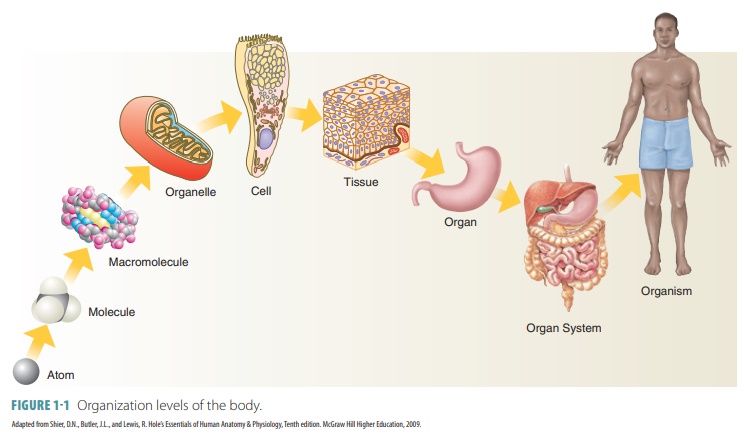
What are the levels of organization in order?
Starts at the chemical level with atoms — atoms combine to form macromolecules — macromolecules combine to form organelles — cells — tissues — organs — organ system — organism
Describe the tissue level of organization.
Groups of cells that join to perform a common function
What are the 4 main tissue types?
Epithelium, muscular, connective, and nervous tissue
Describe the organ structure level of organization.
An organ is two or more tissues working together to perform a function
What are organ systems?
A group of interacting organs (ex: cardio system, skeletal system)
What is an organism?
Organ systems that form an individual living being
What is homeostasis?
Maintenance of a relatively stable internal environment to sustain life functions
Why is homeostasis a dynamic state?
It is a dynamic state because the body is continuously monitoring internal function
What are the two main body systems responsible for controlling homeostasis?
The Nervous System and the Endocrine System
What are the control mechanisms involved in homeostasis?
Receptor
Control center
Effector
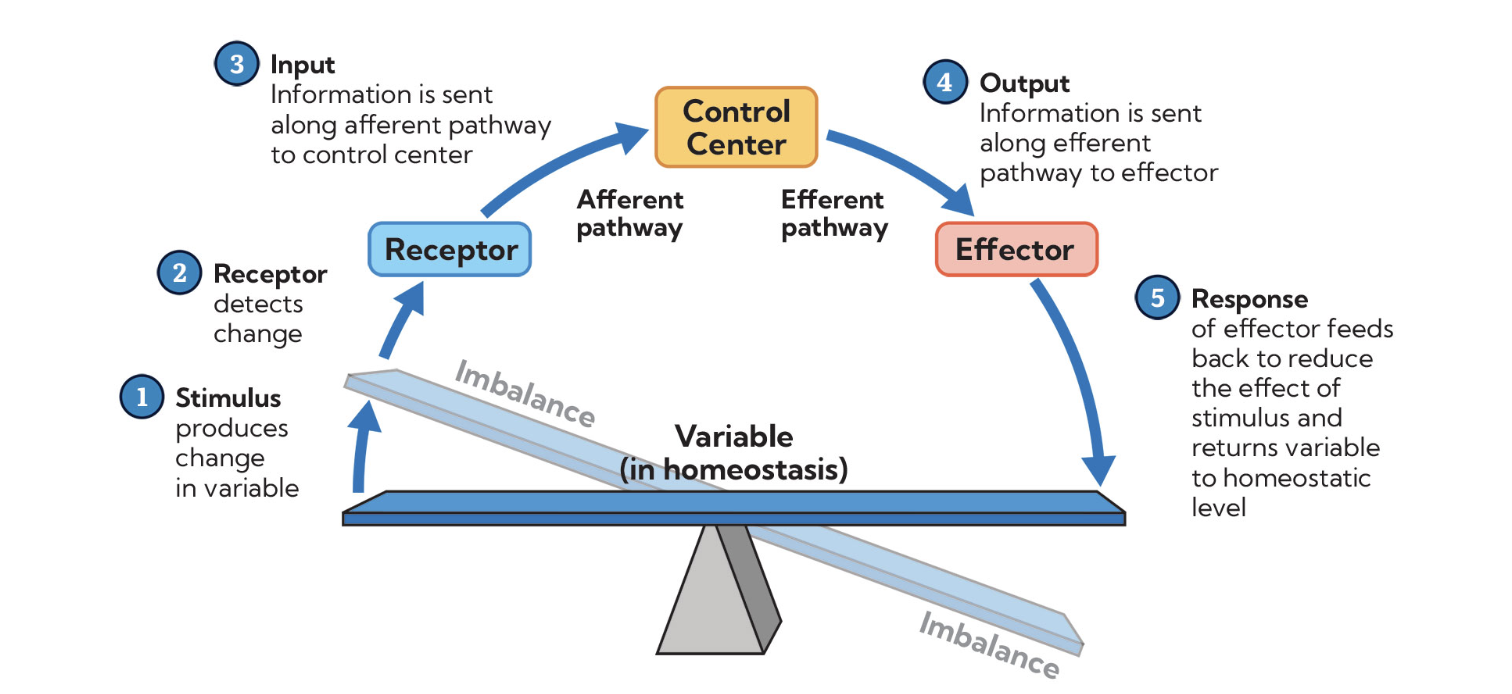
What is the role of the receptor in homeostasis?
Detects a change in the internal or external environment (stimulus) and sends information via the afferent pathway to the control center
What is the role of the control center in homeostasis?
It is the central part of the homeostatic mechanism that integrates and processes the information received from the receptor and the determines the appropriate response
Determines the set point or "normal" parameters for the balanced state
What is the role of the effector in homeostasis?
To enable a response or change to occur within the body in response to the original stimulus
Information comes from the control center to the effector by what pathway?
The efferent pathway (also called the motor pathway)
Input from a receptor is sent to the control center via what pathway?
Afferent
What are the two homeostasis feedback loops?
Negative feedback and positive feedback
What is negative feedback in homeostasis?
When increased production of a product results in eventual inhibition or decrease of the initial stimulus. The end product functions as a stop signal to inhibit or decrease the initial stimuli
It is a balancing feedback
What is an example of negative feedback?
Thermoregulation
Ex: Decreased body temp is the stimulus. The receptors send a message to the control center via the afferent pathway. The control center determines the appropriate response and sends a message to the effectors via the efferent pathway. The effectors enable a response, causing the blood vessels to constrict, warming the body and resulting in a decrease of the stimuli
What is positive feedback in homeostasis?
Enhances or increases the output of the initial stimulus, often called a cascade as each step reinforces or increases production of the next step.
There’s a shut-off mechanism at the end of the system. The body would continue into potentially life-threatening process if not shut off
Which is more common, positive or negative feedback?
Negative
What is an example of an important positive feedback mechanism?
Blood clotting cascade
Damaged cells in blood vessel
Damaged cells release chemicals
Chemicals initiate positive feedback loop and start chain reaction
Cells come in and also start to release chemicals
This continues until a clot is formed
Once a clot is formed the feedback loop is turned off
True or False: Each body system has a role to play in homeostasis
True
How does the digestive system aid in homeostasis?
Maintains body fluid composition through nutrient absorption, storage, and release
Maintains body fluid volume through absorption of water; loss of water in feces
Maintains waste concentration through elimination of wastes from liver in feces
How is the digestive system involved in the regulation of body fluid composition?
Nutrient absorption, storage, and release.
What is the basic unit of life?
The cell - structural and functional unit of the human body
Cells of similar structure and function form?
Tissues
What are the two main types of cells?
Prokaryotic and Eukaryotic
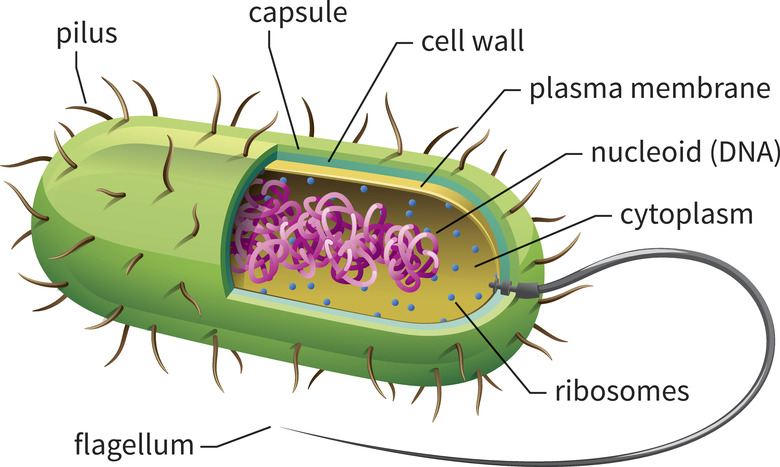
What are prokaryotic cells?
Cells that do not have a nucleus or membrane-bound organelles
will often find these in the body as pathogens
will also find these in the gut - these are called normal flora and help with digestion
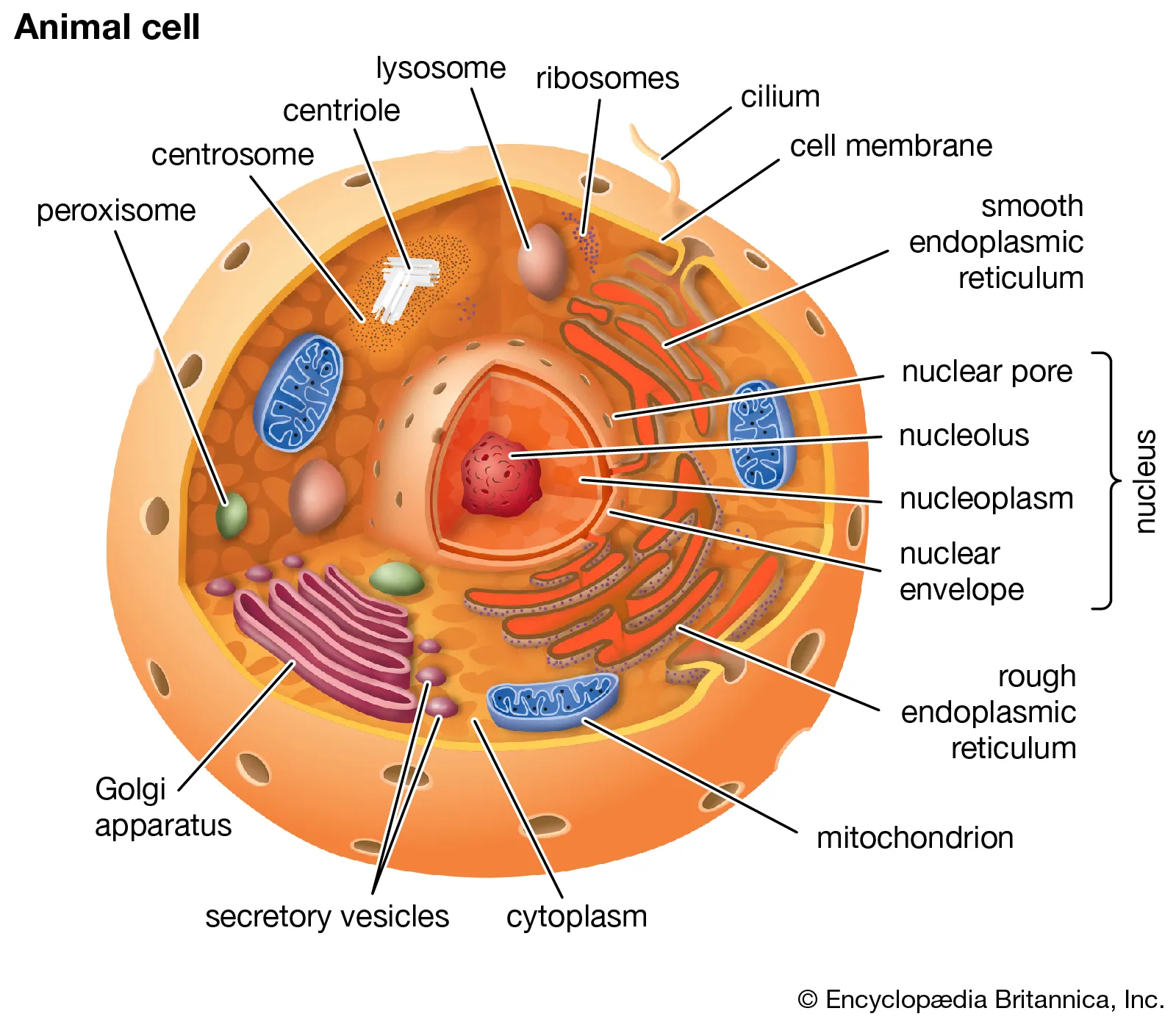
What are eukaryotic cells?
Cells that have a defined nucleus, contain DNA, and have membrane bound organelles
What are organelles?
Structures found within cells with a specific function to sustain life
What is the plasma membrane?
Surrounds all cells and contains specialized “pumps” and “gates” to regulate the passage of materials in and out of the cell
What are some important functions of the plasma membrane?
Forming compartments within organelles
Keeping compounds away from each other
Form large surface area for enzymes to complete reactions
What is the nucleus? What does it contain?
The control center of the cell. Contains genetic material known as DNA. Has three regions.
What is DNA needed for?
Needed for building proteins and necessary for cell reproduction
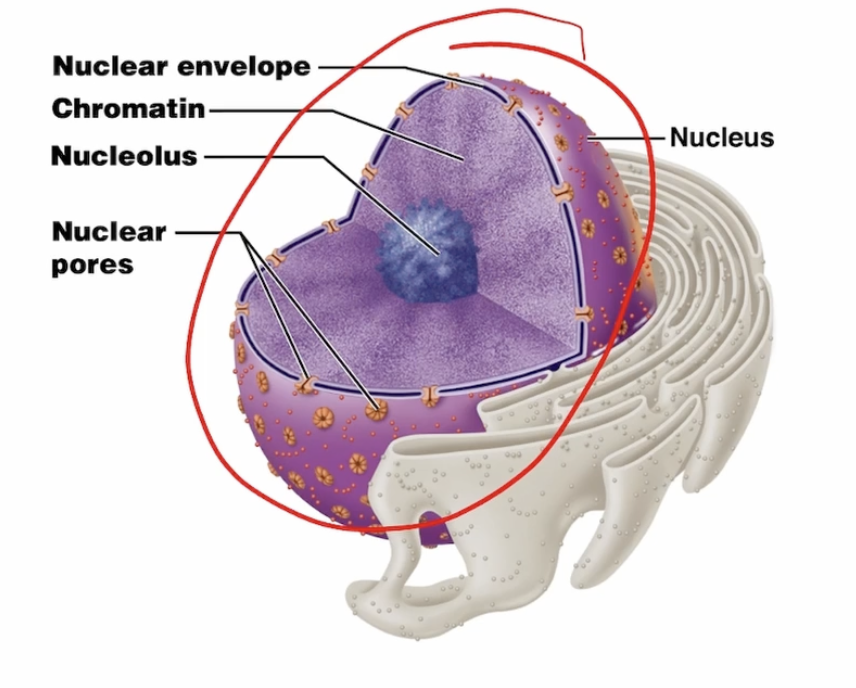
What are the three regions of the nucleus?
Nuclear envelope (membrane)
Nucleolus
Chromatin
What is the function of the nuclear envelope?
Permit movement in and out of the nucleus
What is the function of the nucleolus?
To produce and assemble ribosomes
What is the cytoplasm/cytosol?
Fluid portion of the cell that suspends all the organelles outside of the nucleus
What is extracellular fluid?
Watery fluid that surrounds the cell on the outside
Most extracellular fluid in tissues is called what?
Interstitial fluid
What is the cytoskeleton?
A network of protein fibers that provides structural support for the cell. Can be rapidly assembled and disassembled
What are the two types of protein fibers that compose the cytoskeleton?
Microtubules and microfilaments
What are microtubules?
Hollow cylinders (like a tube) that are involved in the movement of chromosomes during cell division and in the structure of cilia and flagella.
Make up the centrosome
What is the centrosome?
Contains two centrioles which are 9 sets of three attached tubules forming a hollow cylinder. These anchor microtubules in the cell
What are flagellum?
Long, whip-like structure that propels or pulls a single celled organism through a watery medium
What are cilia?
Shorter and found in greater number. Found along the respiratory passage ways for trapping and moving debris
What are microfilaments?
Two intertwined polymer chains of actin molecules that can’t contract but can generate movement by rapidly assembling and disassemblingW
What do microfilaments assist in?
Assist during cell division via constriction of the cell to form two daughter cells
In muscle cells, actin and myosin slide past one another, shortening the muscle fiber to cause what?
Muscle contractions
What components of the cytoskeleton makes up the structure of the flagella and cilia?
Microtubules
What are chromosomes?
The organized or “packaged” form of DNA inside the cell located in the nucleus
Sections of these chromosomal nucleotide sequences are called what?
Genes
What do genes do?
Determine what proteins are synthesized in the ribosomes
The information from the DNA is transferred to the ribosomes by what?
messenger RNA (mRNA)
mRNA is able to leave the nucleus to become protein. It attaches itself to a _____
Ribsosome
What are ribosomes?
Tiny manufacturing plants that assemble/synthesize proteins
take mRNA and makes proteins — takes codons, made of 3 nucleotides, which creates 1 amino acid
Ribosomes contain ribosomal RNA (rRNA) and enzymes necessary to form what?
Peptide bonds between amino acids
each type of cell produces a unique combination of proteins
the unique sequence of DNA nucleotides in a cell serves as a code
code specifies the order in which amino acids are assembled
Which organelle is an extension of the outer membrane of the nucleus?
The Endoplasmic Reticulum
What is the Endoplasmic Reticulum?
A maze of tightly packed and flattened saclike structures that form interconnected compartments and contain enzymes that speed up chemical reactions
Consists of the rough endoplasmic reticulum and the smooth endoplasmic reticulum
What is the rough endoplasmic reticulum?
When ribosomes are located on the ER. ER appears bumpy. This is where proteins previously assembled by the ribosomes are modified and transported to the golgi apparatus
What is the smooth endoplasmic reticulum?
Contains no ribosomes. Responsible for lipid synthesis
Human liver cells have extensive smooth ER - cholesterol (component of cell membrane) is formed here
Which type of ER is responsible for lipid synthesis?
Smooth ER
Describe how DNA gets turned into a protein.
DNA - transcribed into mRNA - attached to ribosomes for protein synthesis - goes to rough ER for protein to be modified and transported - goes to golgi apparatus
What is the golgi complex?
A stack of flattened sacs called cisternae that is considered the packaging center of the cell. Receives lipds and proteins synthesized by the ER, modifies their structure, and sends them to other parts of the cell
Portions that pinch off from the golgi membrane form enclosed sacs called what?
Vesicles
Vesicles formed from the golgi apparatus can transport contents where?
To other organelles within the cell or exported out of the cell (becomes part of cell membrane or contents to be secreted through cell membrane)
If contents from the golgi apparatus are staying inside the cell that can become what?
Lysosomes
What are lysosomes?
Small sacs of digestive enzymes produced by the golgi complex that recycle molecules or break down biomacromolecules (proteins, lipids, carbohydrates, and nucleic acids) into smaller building blocks
can also fuse with other vesicles containing pathogens and break the pathogen apart
What is Tay-Sachs Disease?
A genetic disorder where one of the normally present digestive enzymes in lysosomes is missing
Fusion of lysosomes is ineffective for breaking down a toxic lipid in neurons
Without this digestive enzyme present, the lipid accumulates inside lysosomes
buildup of lipids inside the brain eventually causes intellectual disability and death
Tay-Sachs disease affects which organelle?
Lysosomes
What are proteasomes?
Non-membrane bound organelles responsible for disassembly of unwanted, misfolded, or worn-out proteins
important function in regulation of proteins involved in cell life cycle or apoptosis
What organelle is responsible for the disassembly of unwanted or misfolded proteins?
Proteasomes
What is the mitochondria?
Organelle responsible for converting chemical energy found in food into ATP
What is ATP?
Adenosine triphosphate. A high-energy molecule that provides energy for the cell
What is aerobic cellular respiration?
The metabolic process by which cells break down glucose in the presence of oxygen to produce usable chemical energy (ATP), carbon dioxide, and water. It is the primary energy pathway for most living organisms and occurs in three main stages: glycolysis, the Krebs cycle, and the electron transport chain
Where does aerobic cellular respiration occur?
The mitochondria
What are the products of aerobic cellular respiration?
Water, carbon dioxide, and ATP
The mitochondria is bound by a single or double membrane?
Double
What is significant about the mitochondria’s double membrane?
It creates an intermembrane space between the inner and outer membranes, and a matrix at the center
What is the significance of the inner mitochondrial membrane?
It possesses numerous folds that increase the surface area. Increased surface area allows for extra room for the chemical reactions and enzymes required to transfer the chemical enerfy in food into ATP
What is the cell coat made out of?
Polysaccharides and side chains, glyocoproteins (projecting out from proteins) and glycolipids (projecting out from lipids)
Cell coats surround most prokaryotic or eukaryotic cells?
Eukarytoic
What do the side chains in the cell coat allow for?
Cell-Cell recognition, cell contact, cell-to-cell adherence, tissue formation
Many eukaryotic cells secrete an extracellular matrix, which contains rough protein fibers called what?
Collagen
As a cell expands, the amount of surface area relative to the volume of the cell increases or decreases?
Decreases
Relative to its volume, is a smaller cell’s surface area larger or smaller than a bigger cell?
Larger
Describe the structure of the plasma membrane?
Made of a phospholipid bilayer that has polar (hydrophilic) heads on the inner and outer faces of the membrane, and non-polar (hydrophobic) tails facing each other to form the center of the membrane
tails are in constant motion, creating rotation and lateral movement and allowing for protein movements within the cell membrane
How do cells maintain their shape?
Cholesterol
Acts as a stabilizer and spacer between the tails in cold temps. Without cholesterol, the membrane would become too rigid and break
Stabilizes the head during increased temps by restricting motion and preventing movement. without cholesterol, the membrane would become too fluid and wouldn’t hold its shape
What are integral proteins?
Proteins that span across the bilayer and are firmly bound within the membrane. They may weave several times back and forth in the membrane