Lecture 14 - Explosive Resistance Training (STRENGTH-SPEED)
 Call Kai
 Learn
Learn Practice Test
 Spaced Repetition
 Match
Match Flashcards
 Knowt Play
1/8

Earn XP
Description and Tags
Name | Mastery | Learn | Test | Matching | Spaced | Call with Kai | Chat |
|---|
No analytics yet
Send a link to your students to track their progress
9 Terms
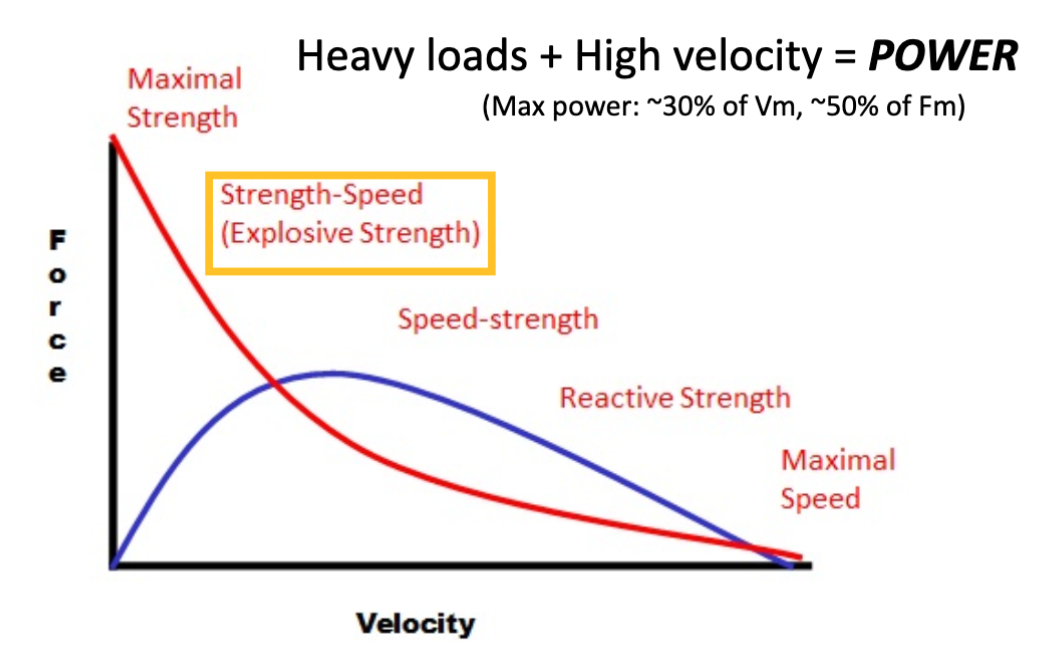
Power
measure of the rate at which work is done
= work/time
force x velocity
Maximal Power
heavy loads + high velocity
30% of Velocity max
50% of Force max
Dynamic Strength Index
= Fm/Fmm (Explosive strength deficit)
<0.6 = ballaistic strength training recommended
0.6-0.8 = concurrent training recommended
>0.8 = maximal strength training recommended
Lifts that improve power and rate of force development
Olympic Weightlifting!
clean and jerk
snatch
trains the strength-speed component of force velocity curve
improves jump and sprint performance
is not too beneficial for beginners bc they have little to no ESD
Why use olympic lifting?
Biomechanical similarities to sport movements
Teaches to accelerate leverage point of the body using
primary movers
Practice similar skill: coming out of stances, jumping higher &
sprint strides
Trains body through varying degrees of resistance
Olympic lifts in sport injury prevention
Nature of lifts = similar to sport actions
Speed of contraction prepares athlete for sport
Proprioception practiced throughout the lift
Practice acceleration/deceleration
Technical limitations prevent extreme overload & cheat reps (you need to have proper form to do the lift so can’t really ego lift")
Explosive Strength Training Overview
time under tension is minimized
muscles exert large forces while contracting at high speeds
mulit-jointed movements
very technical based
moderate to fast rep speed
low rep (1-5)
many sets (3-5)
moderate rest (2-5min) —> needs a lot bc CNS is engaged to a high degree
Examples of Olympic Lift Variations
hang clean
snatch
one-arm snatch w dumbells
two-arm snatch w dumbells
power clean
full clean
split jerk
Explosive Strength Variations
jump squats
bench throws
sled towing or push