(2) 4.2 Xylem, Phloem, and Nutrient transport (Part 2: Phloem)
 Call Kai
 Learn
Learn Practice Test
 Spaced Repetition
 Match
Match Flashcards
 Knowt Play
1/9

There's no tags or description
Looks like no tags are added yet.
Name | Mastery | Learn | Test | Matching | Spaced | Call with Kai |
|---|
No analytics yet
Send a link to your students to track their progress
10 Terms
what is phloem?
phloem = the vascular tissue in plants that conducts dissolved sugars and other metabolic products throughout plant via translocation
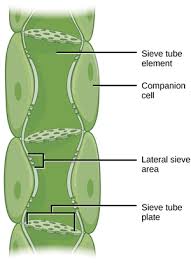
Key cellular components: Sieve tube cells / Sieve tube element
living cells with no nuclei and few organelles
form chain of elongated, thin-walled cells
cytoplasm freely diffuses between cells via sieve plate
Key cellular components: Companion cells
healthy, nucleated and organelle rich cells
carry out essential cellular processes and share products via paired sieve tube
Key cellular components: Fiber cells
Secrete lignin (protein) glue that, with cellulose, encases and supports phloem
fiber cells die in immunity (only dead cells)
Key cellular components: Phloem parenchyma
store nutrients and immune mechanism to support phloem
what substances does phloem carry
sugars, amino acids, proteins, hormones, etc.
what are source and sink tissues
source tissues = parts of the plant where nutrients are produced
sink tissues = parts of plants where nutrients are consumed/stored
what is translocation and how does it move nutrients to sink cells
translocation = the active process of moving soluble nutrients from source to sink tissues via phloem
what is the pressure flow theory and what does it do
the pressure flow theory explains bidirectional nutrient movement
The pressure flow theory states that food moves in the phloem from a region of high pressure (source) to low pressure (sink) due to osmotic pressure differences.
Label Phloem :
ignore bottom two