Bio H | Unit 6: Meiosis and Chromosomes
 Call Kai
 Learn
Learn Practice Test
 Spaced Repetition
 Match
Match Flashcards
 Knowt Play
1/57

There's no tags or description
Looks like no tags are added yet.
Name | Mastery | Learn | Test | Matching | Spaced | Call with Kai |
|---|
No analytics yet
Send a link to your students to track their progress
58 Terms
somatic cells
all cells in the body BUT sperm and egg
homologous chromosomes
2 chromosomes (one from mom and one from dad) that carry the same genes, same size, and same pattern
diploid or 2n
have both sets of homologous chromosomes
humans: 2n=46
gametes
sperm and egg cells, contain one of each chromosome
haploid or n
have one set of chromosomes, n=23
how many chromosomes does a chicken have?
78
how many chromosomes does a fruit fly have?
8
how many chromosomes does rice have?
24
meiosis
Def: Special process to make gametes with half the number of chromosomes (haploid number=n)
•Or reduction division
•Separate homologous chromosomes so only one of each chromosome is in each gamete
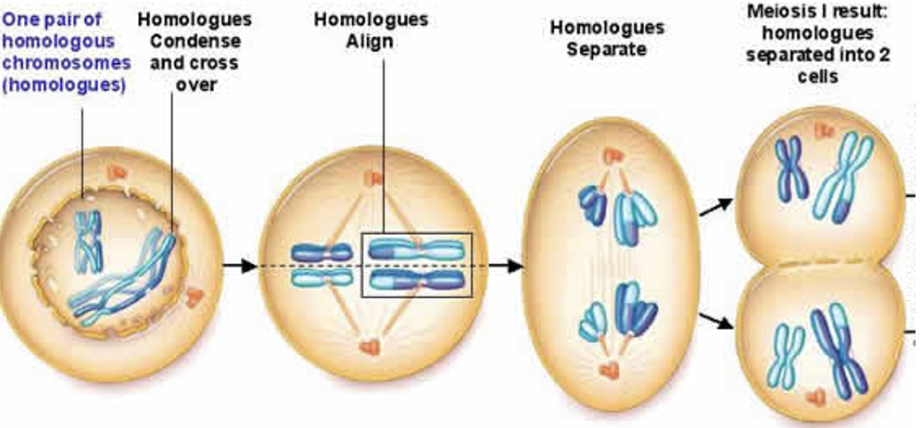
what does meiosis 1 do?
Homologous chromosomes split into 2 different cells (PMAT1)
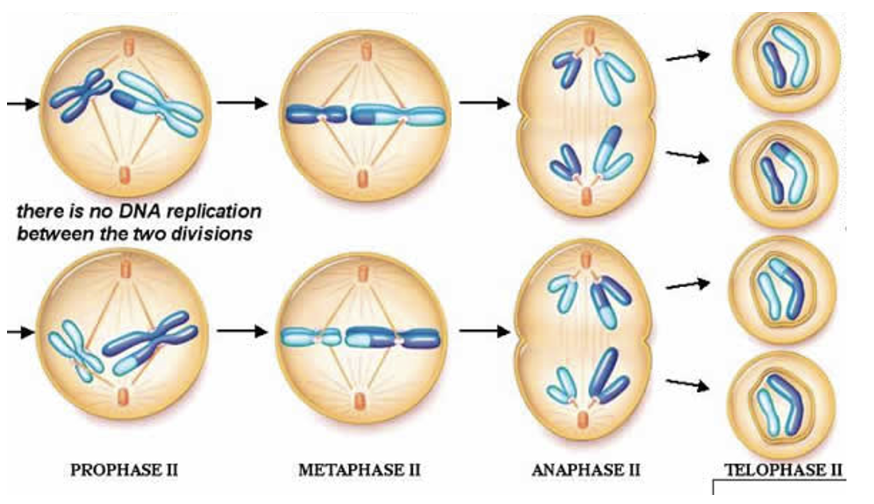
what does meiosis 2 do?
Chromatids of each chromosome split into 4 different cells (PMAT2)
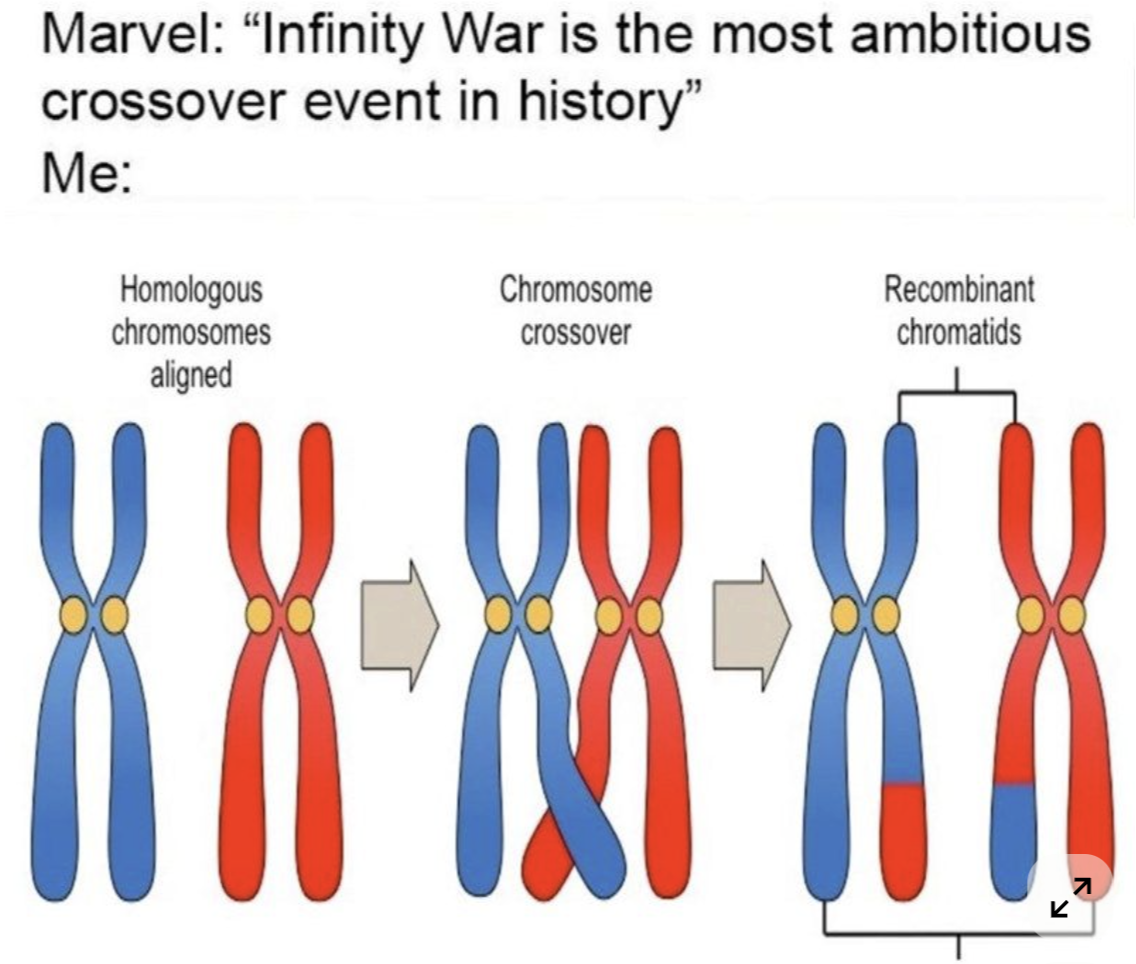
describe prophase 1
•Homologous chromosomes pair up
•Also called synapsis
•Form a tetrad = 4 chromatids
•While in this stage, pieces of chromatids can break off and exchange
•Called crossing over
•Make new gene combinations
•Can be called recombinations or recombinants
what is synapsis
when homologous chromosomes pair up
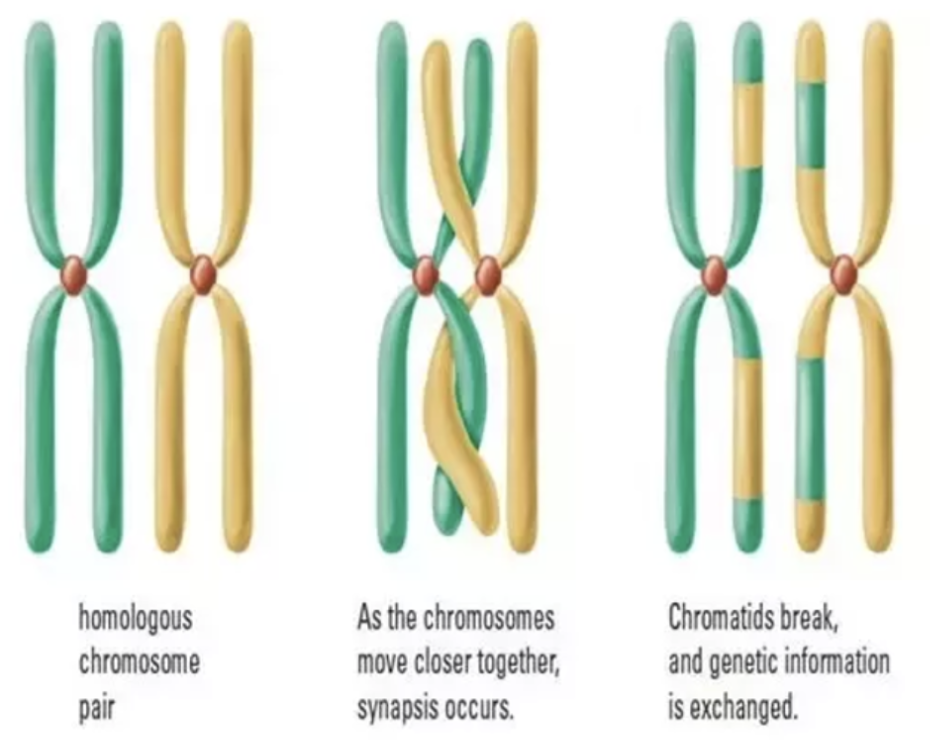
what is crossing over
when pieces of chromatids break off and exchange
metaphase 1
• Tetrads line up at equator
• Line up independently
• Called independent assortment
• Creates unique cells
• Increases genetic diversity
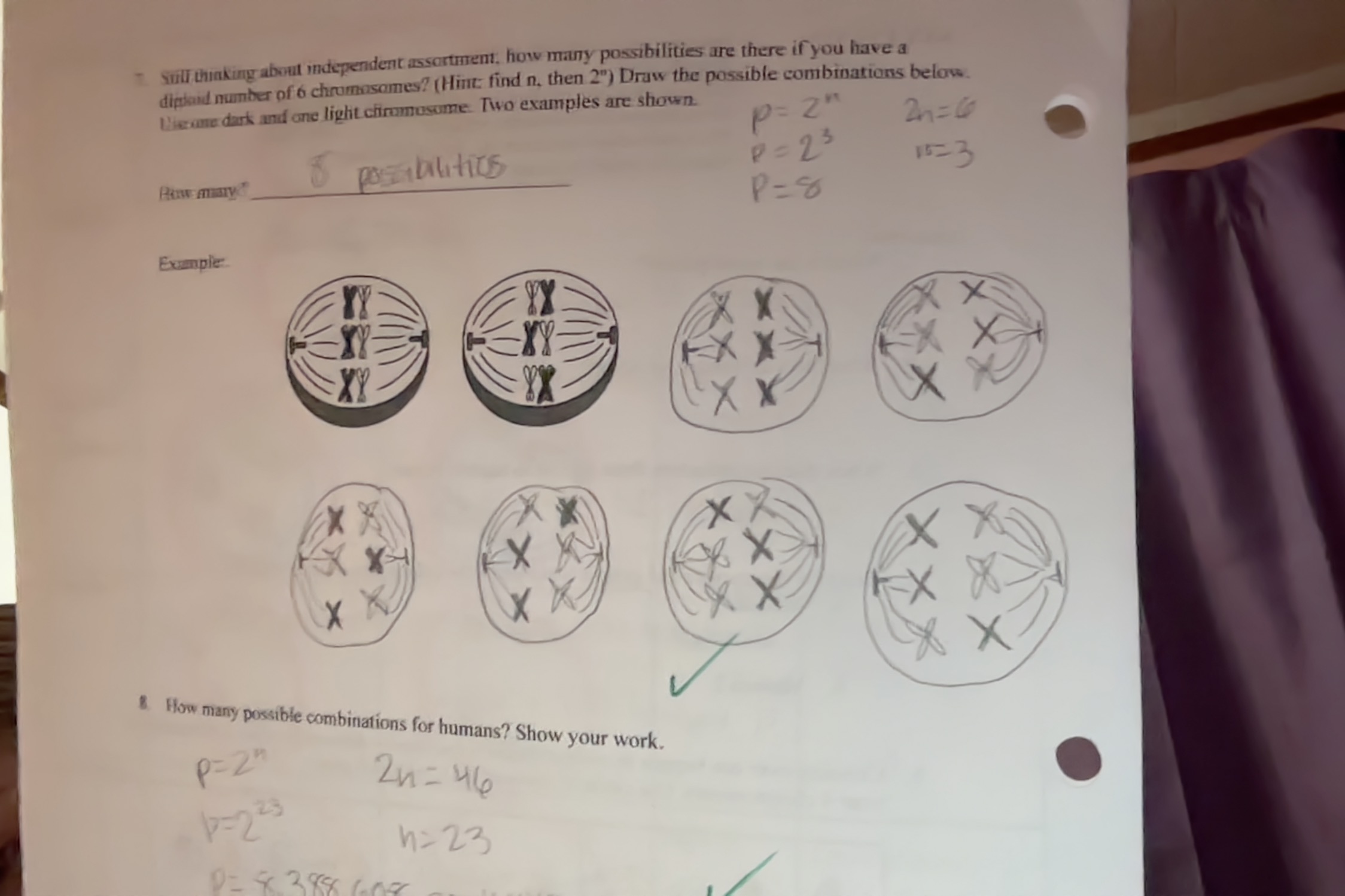
what is independent assortment
genes for different traits segregate independently during gamete (sperm/egg) formation
Anaphase 1 + Telophase 1
Homologous chromosomes move to opposite ends and the cell splits
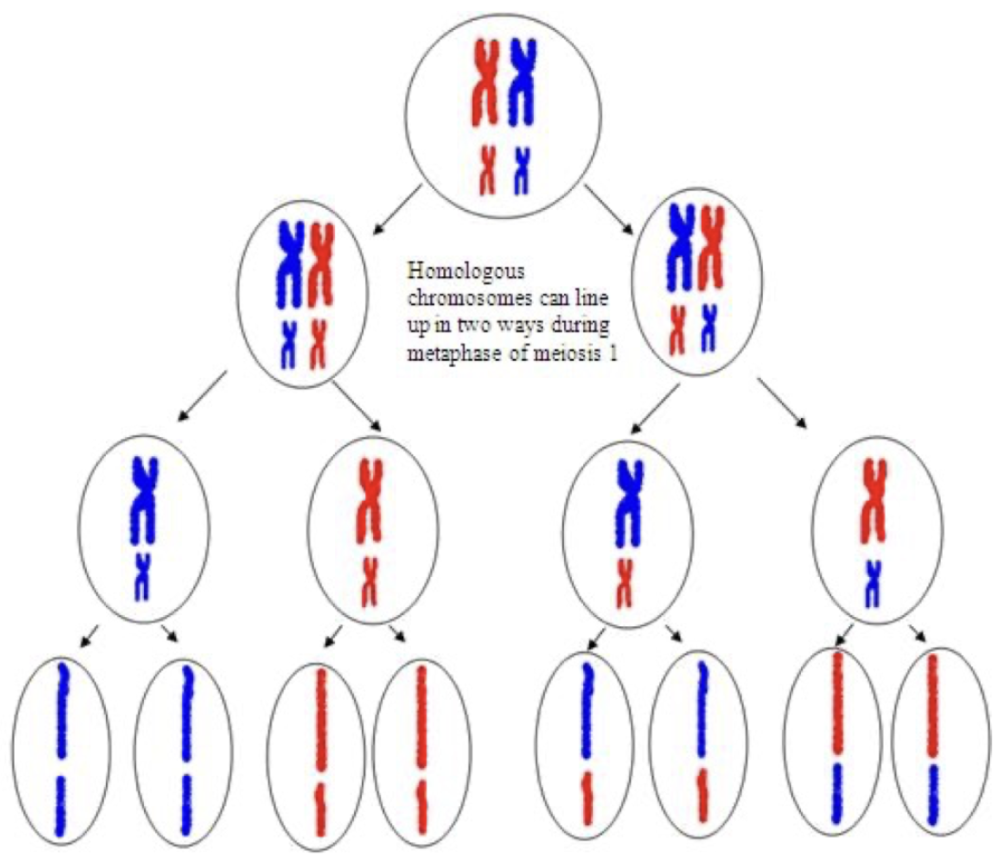
Cytokenesis
• 2 haploid cells are formed
• Each has one of each homologous chromosome
• Identical Cells
Prophase 2
there is no DNA replication between the two divisions, no S, no tetrads
metaphase 2
chromosomes line up single file
anaphase 2
each chromosome splits into 2 chromatids, become chromosomes as they separate
telophase 2
2 cells divides into 4 cells, each is haploid and unique
meiosis 1
meiosis 2
spermatogenesis
In males, 4 unique cells made by meiosis become sperm, begins after puberty
oogenesis
In females, 1 of the 4 cells becomes an egg, the other 3 are not involved in reproduction, begins after birth, process continues after puberty
autosomes
Human chromosomes #1-22
sex chromosomes
• Human chromosome pair #23
• Can be XX or XY (not necessarily homologous)
• X and Y carry different genes
• Inherited differently if on X chromosome (men only have 1 copy)
• SRY gene found on Y chromosome- cause start of male
development
XX chromosomes?
female
XY chromosomes?
male
what system do grasshoppers use to identify gender?
XO
what system do chickens use to identify gender?
ZX
what system to bees use to identify gender?
haploid-diploid
nondisjunction
Chromosomes do not separate correctly in Meiosis
what does nondisjunction look like in meiosis 1?
•Homologous chromosomes don’t separate correctly
•All 4 haploid cells have incorrect number: n+1, n+1, n-1, n-1
what does nondisjunction look like in meiosis 2?
•Sister chromatids don’t separate correctly
•2 cells abnormal, 2 normal: n+1, n-1, n, n
aneuploidy
One or more missing or extra chromosomes
trisomy
3 of one chromosome
monosomic
1 of one chromosome
trisomy 21
down syndrome
trisomy 18
edwards syndrome
trisomy 13
patau syndrome
what is klinefelter syndrome?
-XXY
-Males born with Klinefelter syndrome may have low testosterone and reduced muscle mass, facial hair, and body hair. Most males with this condition produce little or no sperm.
•Treatment may include testosterone replacement and fertility treatment
what is turner syndrome? (thats not obsessing over alex turner)
•Symptoms include short stature, delayed puberty, infertility, heart defects, and certain learning disabilities.
•Treatment involves hormone therapy. Fertility treatment may be necessary for women who want to become pregnant.
polyploidy
-More than 2 complete sets of chromosomes
•Triploidy or Tetraploidy
•Plants
•Animals
what are the 4 variations of chromosome structure?
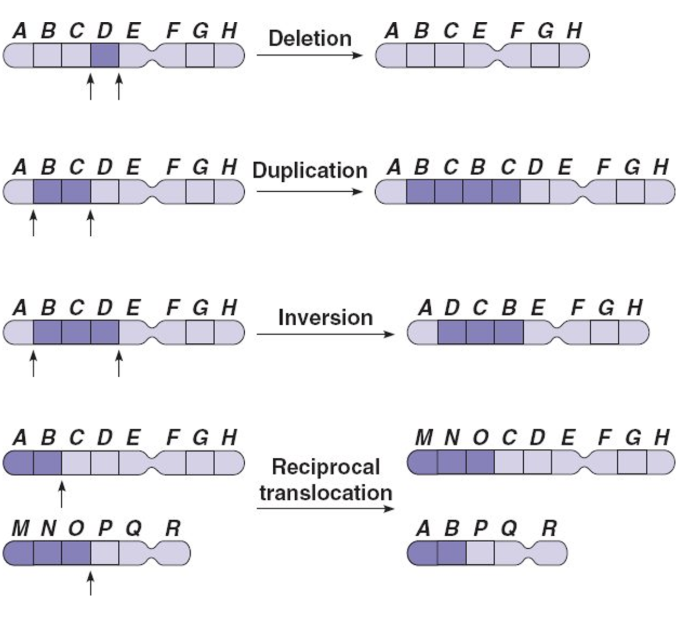
deletion, duplication, inversion, reciprocal translocation
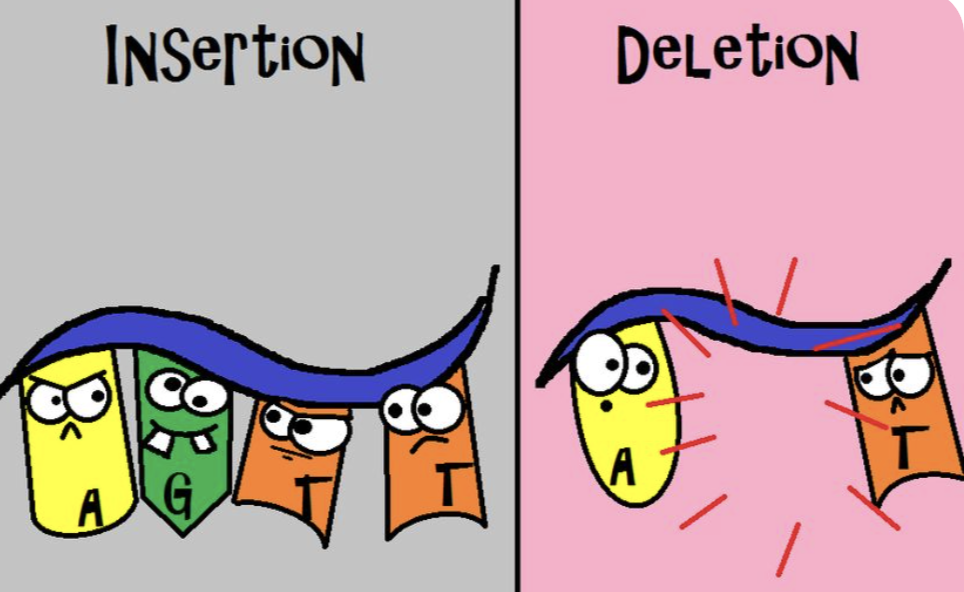
deletion
part of the chromosome (# of genes) is removed
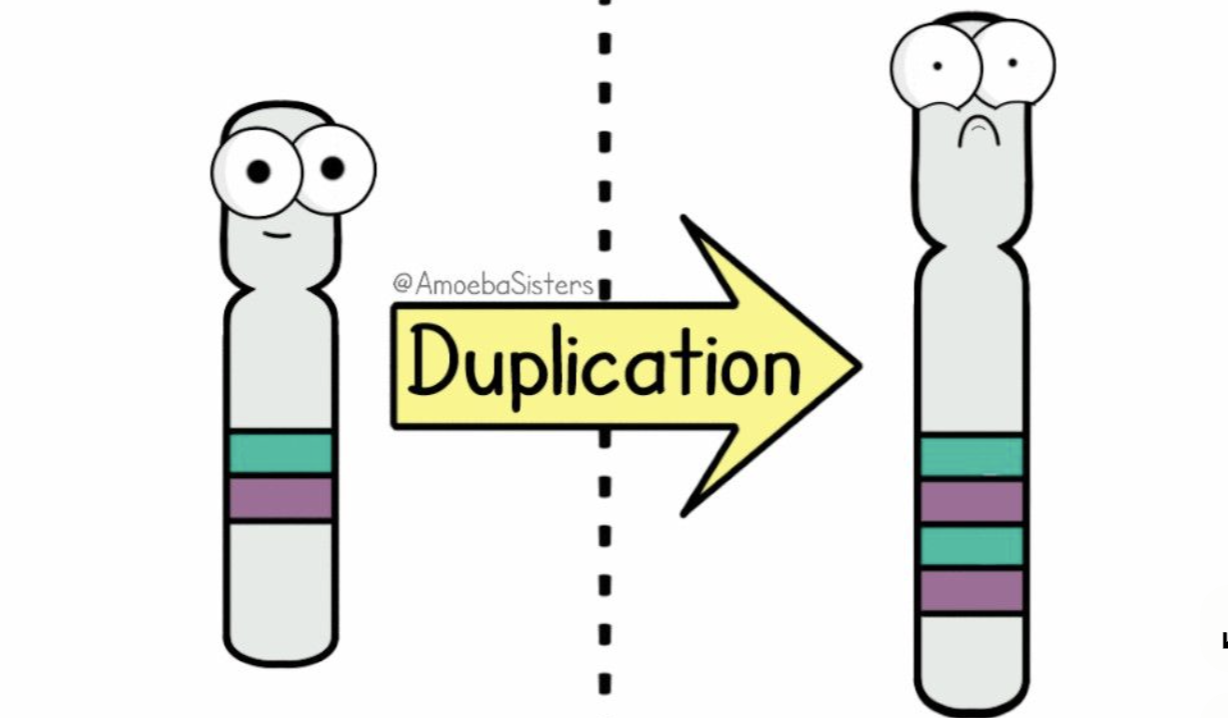
duplication
a section of the chromosome is doubled
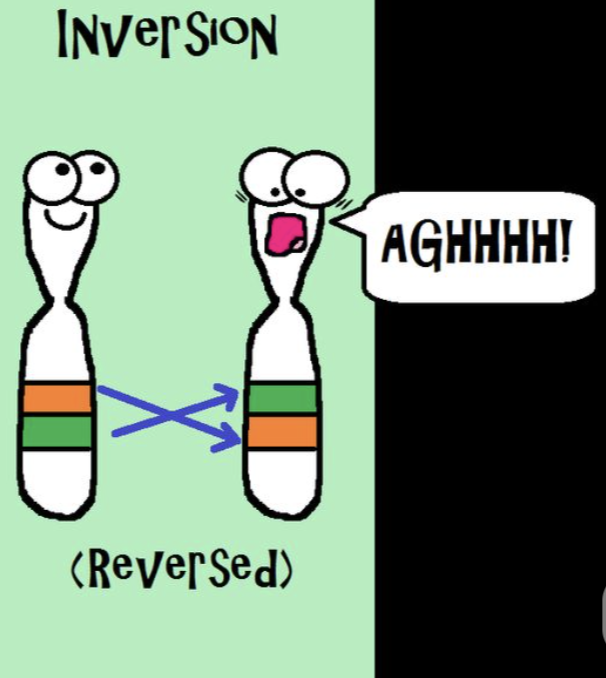
inversion
gene order flipped around
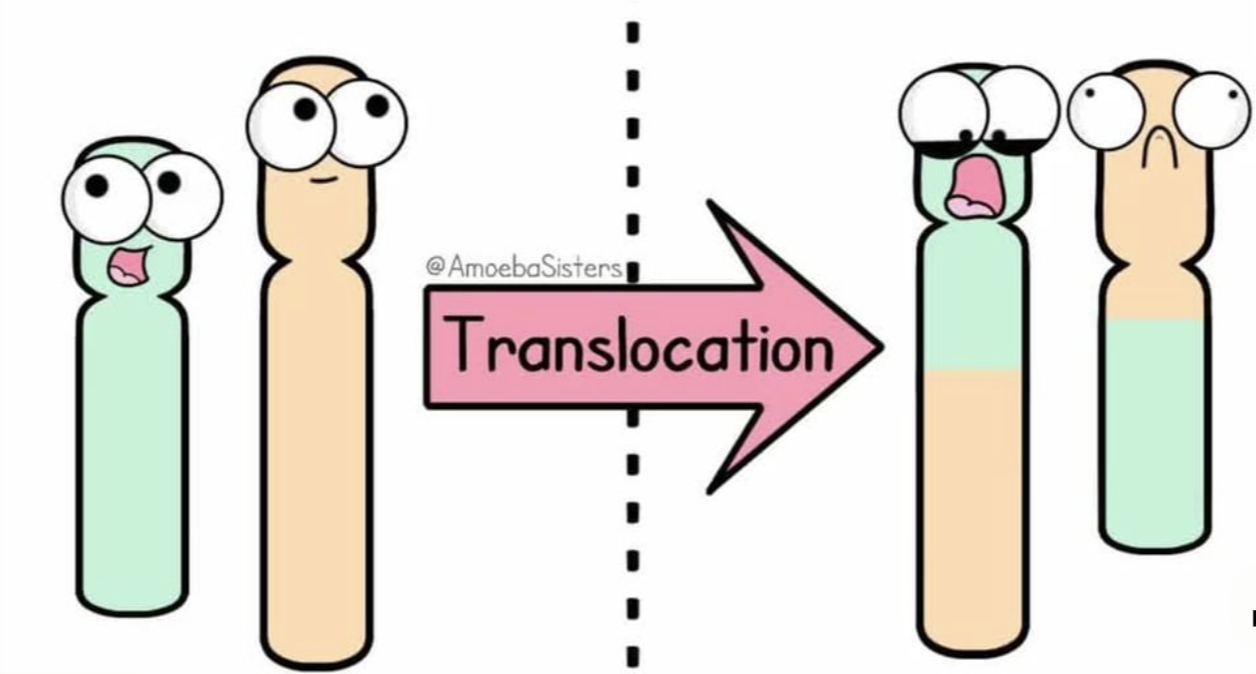
reciprocal translocation
non-homologous chromosomes, for example: removed from chromosome #13 then moved to chrom. #16
Describe how different events during meiosis contribute to genetic diversity. Include specific details and terms that apply. Be sure to discuss when these events occur
crossing over - pieces of chromatids and sections of DNA break off and exchange with other chromatids, mixing genes up → more diverse (PROPHASE 1)
independent assortment - genes for different traits segregate independently during gamete (sperm/egg) formation (METAPHASE 1) (different arrangements of x’s - shaded/shaded)
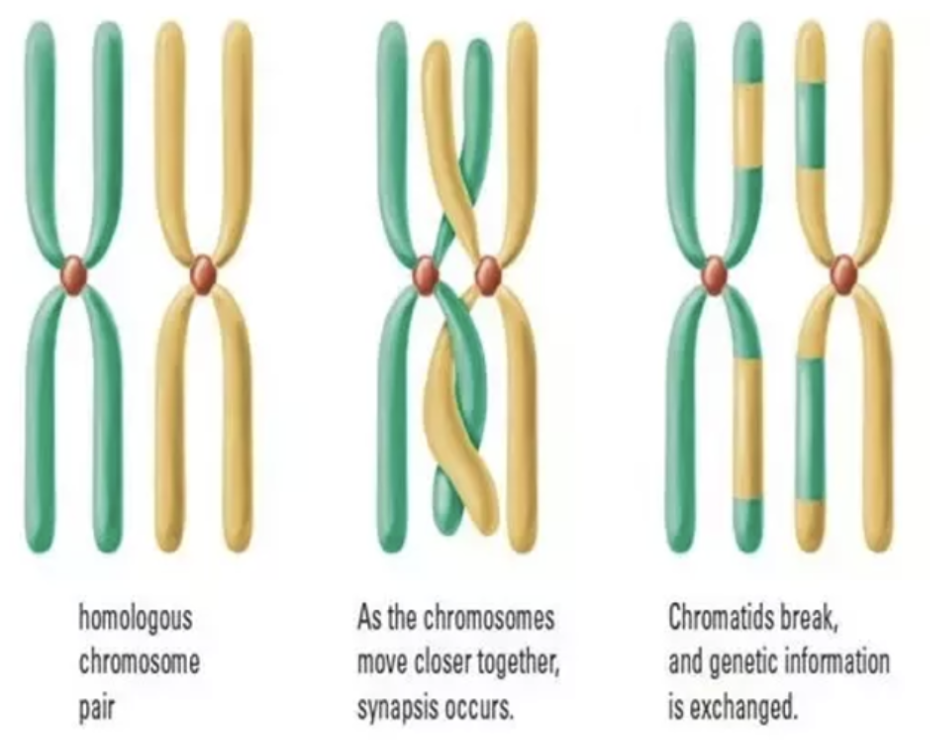
Sketch examples of crossing over and independent assortment.
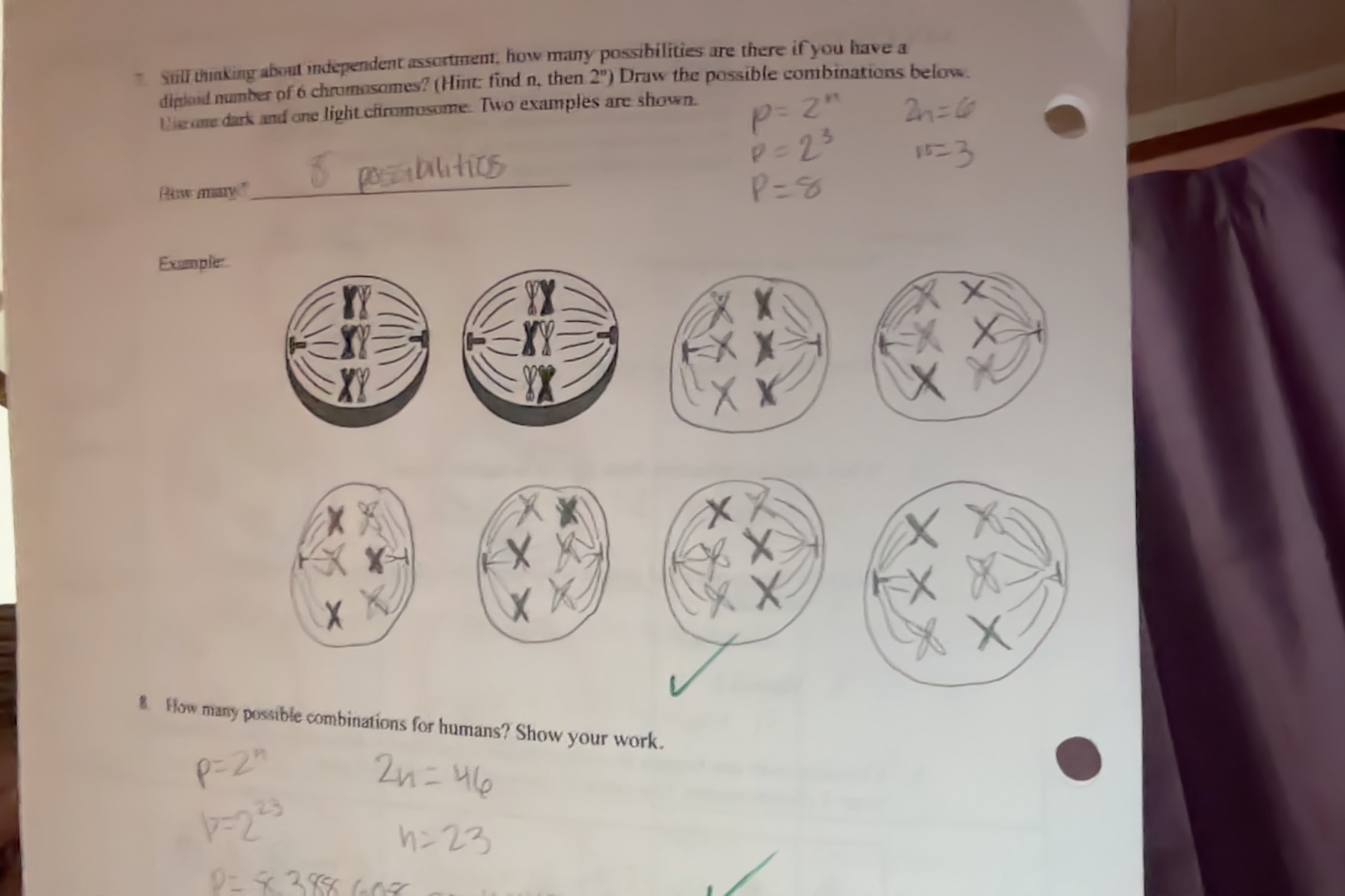
Describe the difference between autosomes and sex chromosomes.
autosomes - chromosomes #1-22
sex chromosomes - chromosome #23 (X AND Y, carry different genes, SRY gene on Y chromosome - start of male development)
Give 3 examples of how different animals use sex chromosomes to determine chromosomal basis of gender.
humans use XY system
grasshoppers use XO system, M: X, F: O
chickens use ZW system, M: Z, F: W
bees use haplo-diploid, M: 16 all are haploid, F: 32 all are diploid
Sketch examples of alteration of chromosomal structure (look on lab too)
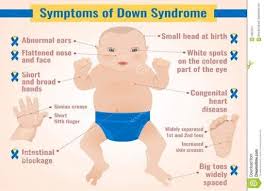
Describe ONE example of a human disorder caused by either changes to chromosome number or structure. Give the # of chromosome involved and the characteristics/symptoms/effects of the disorder.
Trisomy 21 - Down Syndrome
an individual has 47 chromosomes, not 46
has 3 copies of chromosome 21 instead of the normal 2
symptoms/side effects: intellectual disability, developmental delays, and distinct physical traits like a flat facial profile, small ears/mouth, almond-shaped eyes, or poor muscle tone
Summarize the experiments and conclusions from the reading activity: Naked Mole Rats are Fertile until they Die
from paper:
in summary of the article, scientists have discovered that maked mole rats can breed for their entire life, not get cancer, not feel pain, and live for around 37 years.
notes:
reproduce for their entire life
live in colonies with a queen
dont get cancer
live for 37 years
they keep producing new eggs after they are born