Autism
 Call Kai
 Learn
Learn Practice Test
 Spaced Repetition
 Match
Match Flashcards
 Knowt Play
1/19

There's no tags or description
Looks like no tags are added yet.
Name | Mastery | Learn | Test | Matching | Spaced | Call with Kai |
|---|
No analytics yet
Send a link to your students to track their progress
20 Terms
What are the social communication and interaction criteria for a diagnosis of autism according to DSM-5?
All 3:

What are the repetitive patterns of behaviour, interests & activities criteria for a diagnosis of autism according to DSM-5?
At least 2 of:

What is the global prevalence of autism?
0.6% according to Salari et al. (2022)
How is autism assessed and diagnosed?

What age can a diagnosis of autism be made?
First signs at as young as 1 year, average diagnosis at 5 years
What are some factors associated with ‘early’ diagnosis of autism?
Deficits in social communication skills and intellectual disability
Being Caucasian (in the U.S.) with non-citizenship, low income, and lack of English language as barriers to healthcare
How genetic is autism?
Strong genetic component and moderate degree of heritability. Shared twin environment and familial history substantially contribute to autism
What are environmental factors for autism?
parental age, maternal nutritional and metabolic status, infections during pregnancy, pre- and peri-natal stress (hypoxia), exposure to toxins, heavy metals, or drugs (e.g., anti-depressants or anti-epilepsy medication)

What were some previous theories of autism?
Theory of mind and social motivational deficit theories
Global processing deficit theories e.g. attentional control, executive dysfunction and weak central coherence, enhanced perceptual processing
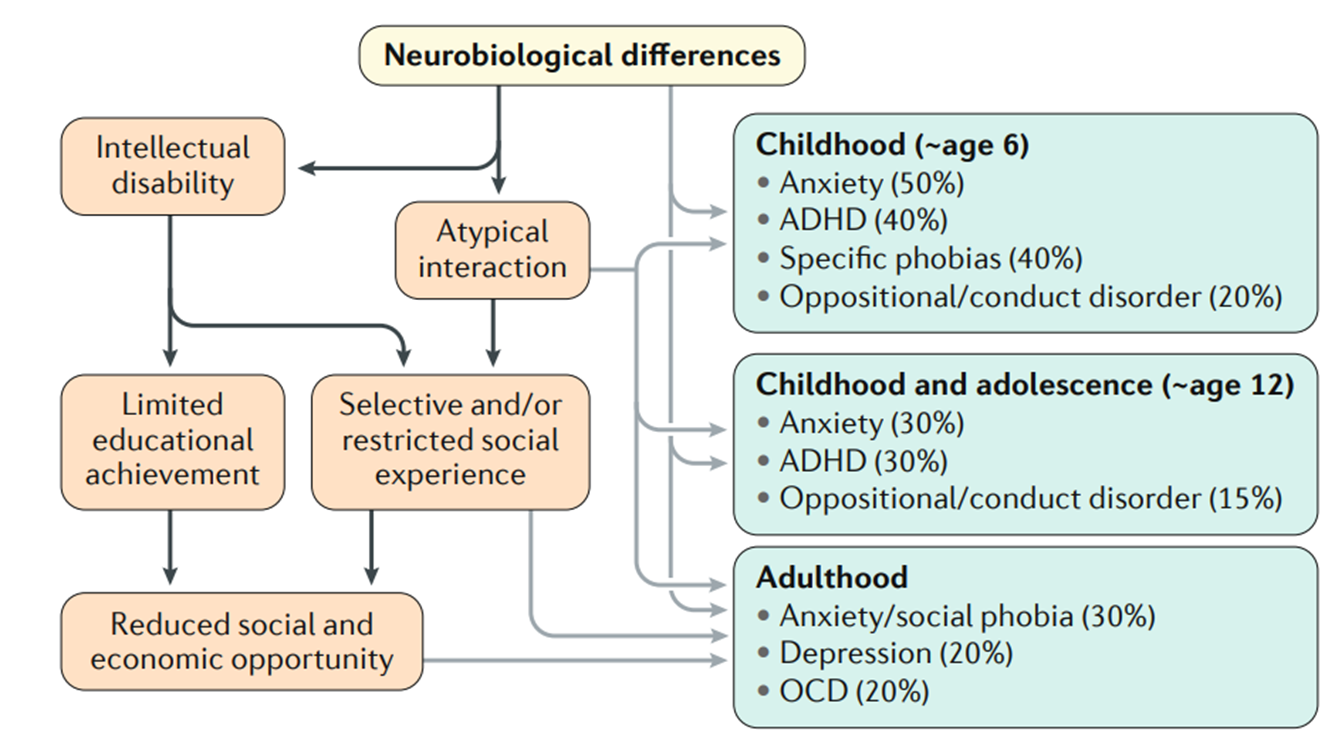
What are some co-occurrences of autism?
Anxiety, ADHD, specific phobias, ODD/CD, Depression, OCD
How can autism be managed?
early interventions, applied behavioural analysis, parent-mediated interventions and therapist-mediated interventions (e.g. Early Start Denver Model)
What is the main problem with autism management interventions?
They aim to promote typical development
What are the affects of autism on quality of life?
unemployment, under-skilled labour, scarce relationships with peers, increased risk of suicide, lower life expectancy
What is the medical model view on autism?
View autism as a disorder and aims to reduce symptoms
What is the social model view on autism?
Challenges associated with autism are a product of lack of societal accommodation and support. Focus on neurodiversity: we all experience the world in unique ways and that should be respected
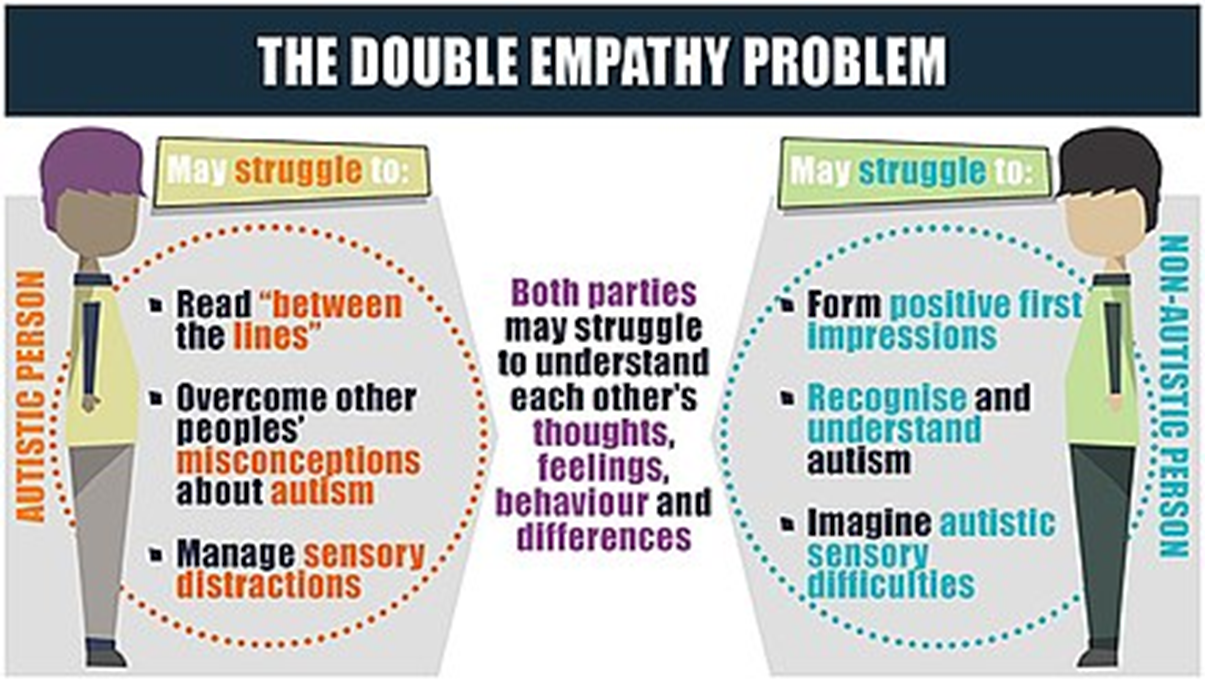
What is the double empathy problem coined by Milton (2012)?
What is ‘camouflaging’ within autism?
Effortful and exhausting performances of non-autistic social behaviour learnt through observation and imitation in order to fit in within a non-autistic social world e.g. forcing eye contact, supressing repetitive hand movements
Cook et al. (2021) on camouflaging?
Adults with higher self-reported autistic traits report greater engagement in camouflaging regardless of diagnosis
In whom is camouflaging more predominant in?
Those experiencing stigma and exclusion, women (often leads to a later or mis-diagnosis)
What is higher self reported camouflaging associated with?
Worse mental health outcomes and suicidal ideation