28- Pulmonary embolism.
 Call Kai
 Learn
Learn Practice Test
 Spaced Repetition
 Match
Match Flashcards
 Knowt Play
1/11

There's no tags or description
Looks like no tags are added yet.
Name | Mastery | Learn | Test | Matching | Spaced | Call with Kai |
|---|
No analytics yet
Send a link to your students to track their progress
12 Terms
what is PE
due to thromboembolism- mainly from DVT
usually silent- dual blood supply of lung
can cause pulmonary infarction if large enough
what is the etiology of PE
DVT most common!
prolonged bed rest, surgery, trauma, hypercoagulability, contraceptives, congestive HF
what is the pathophysiology of PE
thrombosis usually from DVT
ventilation/ perfusion mismatch in scintigraphy
occlusion in PA on CTA
what are the symptoms of PE
stabbing chest pain, dyspnea, syncope
tachycardia, tachypnea, hypotension, hypoxia,
what can be seen on physical exam in PE
A+B: Tachypnea, dyspnea-
most common symptom, present
in 90% of patients, diaphoresis, hypoxia-hyperkapnia
C: Tachycardia, hypotension, cardiovascular collapse, right
ventricular overload on EchoD: Anxiety, pain
E: low grade fever
how do you do Dx PE
D Dimer in low risk patient to rule out PE
echo (elevated PAP, D-sign, preserved EF),
chest CT-angio!
what are the signs of PE on an ECG
sinus tachycardia
Classic S1,Q3,T3 finding is seen in less than 30%
what are the criteria's used for PE
Wells criteria
Geneva prediction rule
what is the Wells criteria for PE
Clinical Signs and Symptoms of DVT?- Yes +3
PE is #1 Diagnosis, or Equally Likely?- Yes +3
Heart Rate > 100? Yes +1.5
Immobilization at least 3 days, or Surgery in the Previous 4 weks?Yes +1.5
Previous, objectively Dx PE or DVT? Yes + 1.5
Hemoptysis? Yes +1
Malignancy w Rx w/in 6 mo, or palliative? Yes +1
<2=low risk, 2.5-6=moderate risk, >6=high risk
what is the risk management for acute PE
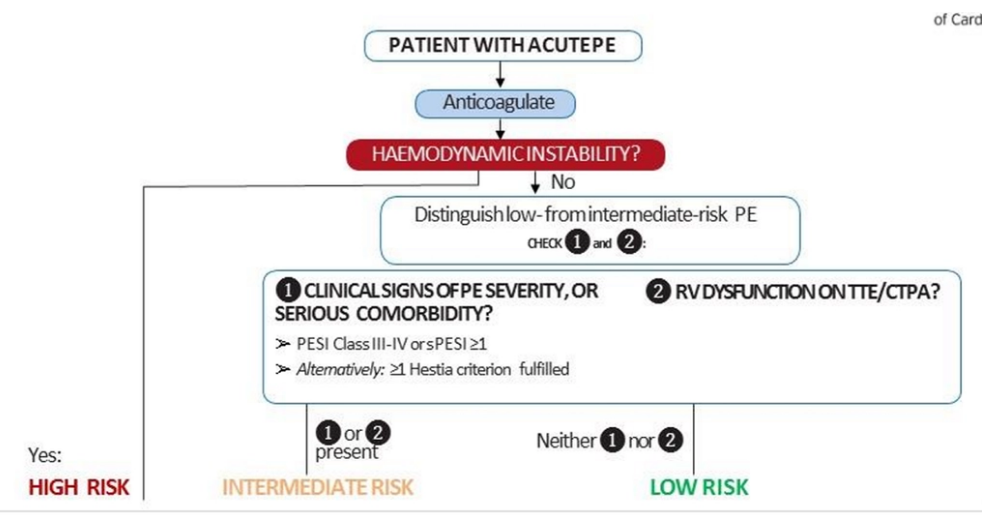
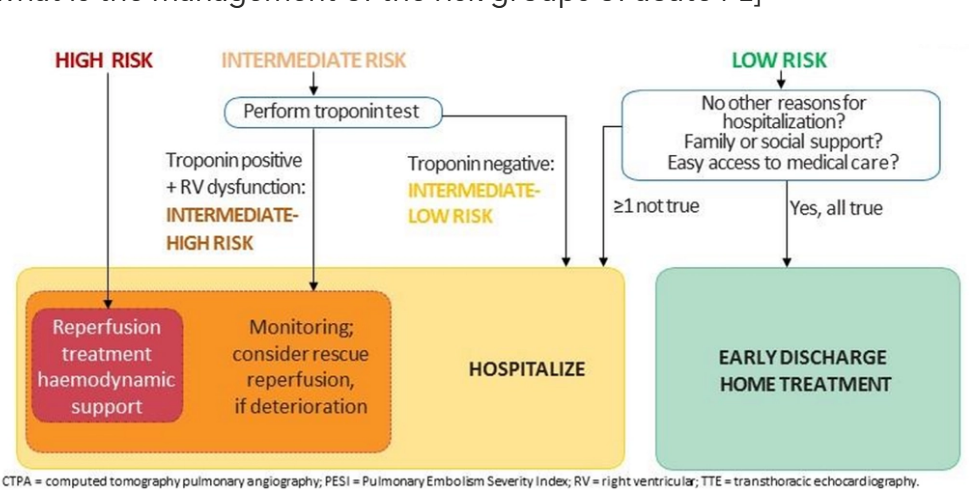
what is the management of the risk groups of acute PE
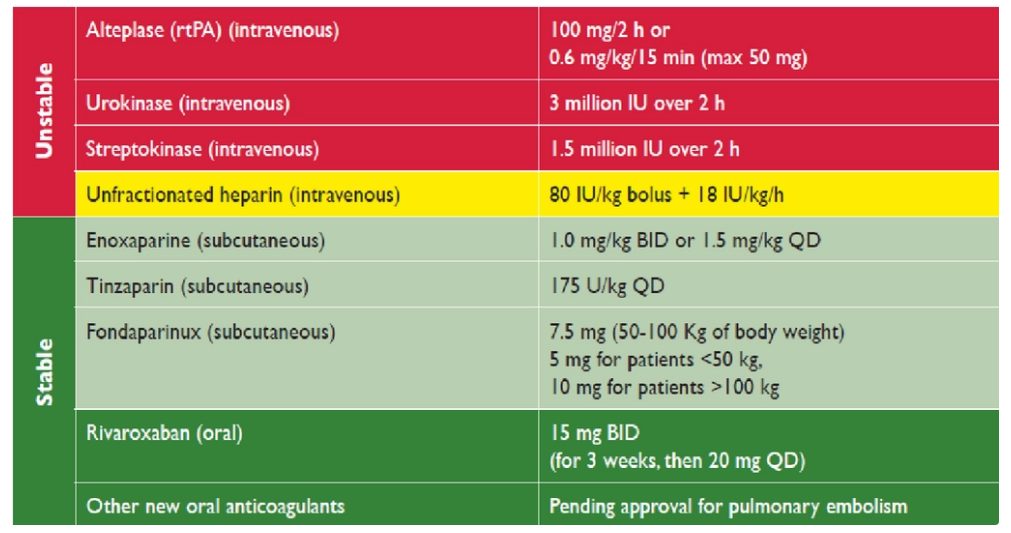
what is the pharmacological treatment of PE