J CM EENT Eyes + Ears
 Call Kai
 Learn
Learn Practice Test
 Spaced Repetition
 Match
Match Flashcards
 Knowt Play
1/164

There's no tags or description
Looks like no tags are added yet.
Name | Mastery | Learn | Test | Matching | Spaced | Call with Kai |
|---|
No analytics yet
Send a link to your students to track their progress
165 Terms
Emmetropic
eye that perfectly refracts light
Accommodation
refractive power added to the corner by the lens and pupil
fusion
process by which separate images arise in each eye = one image
Stereopsis
depth preception
Refraction
how accurately light is focused on the retina to form a clear focused image
Visual Acuity
smallest detail a person can see when looking straight at a stationary, high contrast (B/W) target in good lighting
Legal blindness
20/200 or worse with corrective lenses
Cornea
main structure of eye responsible for refracting light
Lens
changes shape, more rounded, powerfully refracts light over short distance to form a focal point
Dilated pupil
more waves of light enter
-> can see distanced objects and low light conditions
objects far away vs. close
Objects far away: amount of energy of light is more important than refraction, not a lot of light/waves reach eye, pupils dilate
Objects close: lots of light can reach the eye, pupils constrict
when cornea is steep →
light is focused on the front of the retina (not normal)
-> less sharpness of the image
(myopia = nearsiteness)
myopia (nearsightedness) explanation
When pupil constricts, it weeds out a lot of the photons -> more likely the photons will reach to the retina
when object is far away, the iris dilates, so divergent light goes into the eye so that’s why you can’t see it
Medial rectus
adducts
lateral rectus
abducts
Superior rectus
elevates, adducts, intorts
Inferior oblique
elevates, abducts, extorts
Inferior rectus
depresses, adducts, and extorts
Superior oblique
depresses, abducts, and intorts
IR and SO work together =
depress eye,
prevents abducting/adducting and from intorsion/extorsion
SR and IO work together =
elevate eye
prevent abduct/adduct and intorsion/extorsion
Macula and fovea are aligned along
optical axis
macula has lots of cones!
neurovascular-bundle is aligned with
orbital axis
EOM are aligned with ____ but the axis of light is along the ___
orbital axis
optical axis
if eye starts out adducted, the _ is the major elevator and depressors
obliques
if eye starts out looking abducted and out, _ is the major elevator
SR
if i’m looking down and out, the major depressor is _
IR
SO vs IO
Rotation
SO: intorsion
IO: extortion
Depress and elevate
SO: depression
SI: elevation
Abduction and adduction
Both: abduction
Neither: adduction
The highest visual acuity occurs at the
fovea
= focal point of all the light that enters eye = optic axis = most photosensitive area
sits at the center of the orbital axis = no photoreceptors (blind spot)
optic cup and disc
Nucleus
a collection of nerve cell bodies in the CNS
Special pediatric eye problems
Strabismus
Ambylopia
Retinopathy of prematurity
Congenital cataracts
Retinoblastoma
Retinitis pigmentosa
Latent strabismus (phoria)
intermittent, present only when pt is tired or when fusion is broken
Manifest strabismus (tropia)
constantly present even when fixation is uninterrupted
strabismus eye rotations
Eso: nasal deviation of nonfixating eye
Exo: temporal deviation of non-fixating eye
Hyper- superior deviation
Hypo- inferior deviation
amblyopia
functionally cortically blind
tx for amblyopia
patch the GOOD eye
dx for ambylopia
cover/uncover test
Tx of strabismus
Correct visual impairment
lenses/atropine drops/patching
surgical therapy
Retinopathy of Prematurity (ROP) (Retrolental Fibroplasia) definition
Peripheral cells release angiogenic factors for neovascularization but no vessels grow abnormal, fragile, weak
RF of ROP
Excessive oxygen admin
Strabismus
Refractive errors
in ROP, if you do not tx, what eventually can happen
amblyopia
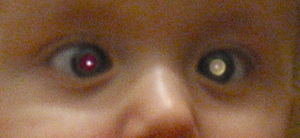
Cataracts in children = what finding
white reflex (leukocoria)
most common cause of cataracts in children
intrauterine infx*
retinoblastoma
Congenital Infections (all zebras secretly eat red meat when they can happily have privacy)
Adenovarius
Zika
Syphilis
Enterovirus
Rubella
Measles
West nile
Toxoplasma
CMV
HIV
Herpes
parvo
uvea is formed by
iris
ciliary body
choroid
most prevalent ocular neoplasm in children
retinoblastoma
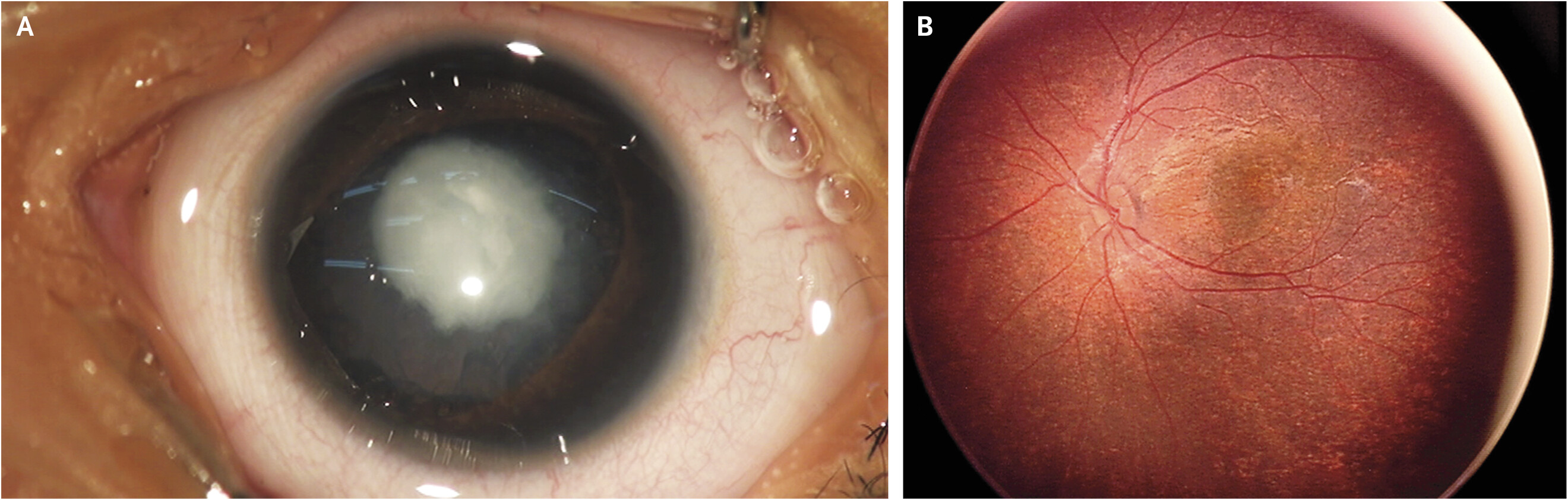
Congenital rubella syndrome eye
smooth white “opal” looking appearance of eye
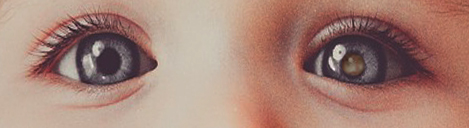
Unilateral leukocoria eye appearance
patchy white
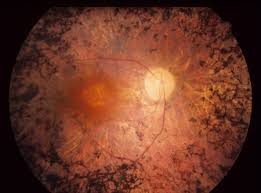
Retinitis Pigmentosa definition
Large groups of retinal receptor cells degenerate
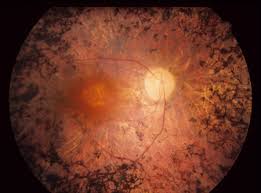
Retinitis Pigmentosa s/sx
Loss of peripheral vision (Tunnel vision) - rods
Loss of central vision (cones degenerate first)
Decreased vision at night or in low light - rods
rods affected more!
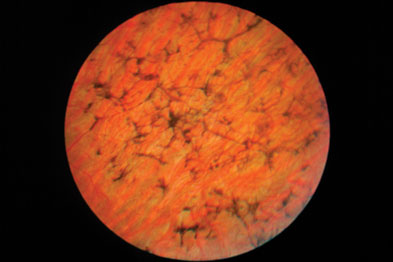
Retinitis Pigmentosa hallmark*
presence of dark deposits (melanin) in retina
(b/c you can see the layer more)
Tarsi
contains tarsal (meibomian) glands
meibomian gland makes tears
role of cones*
color
bright light
contrast
rods role*
peripheral vision
night vision
meibum role
Prevents evaporation of eye’s tear film
Prevents tear spillage onto cheek
Makes closed lids airtight
Sebaceous gland assoc with the eyelids =
meibomian gland
Sebaceous gland assoc with hair =
zeiss gland
hordeolum definition
Localized infx/inflammation of eyelid
Localized infx/inflammation of eyelid s/sx
Edema
Painful, erythematous
Tender
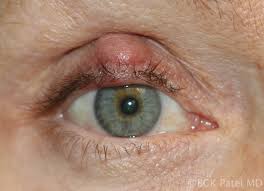
external hordeolum = ?*
zeis gland infection (stye) - hair follicle
(more visible from the outside)
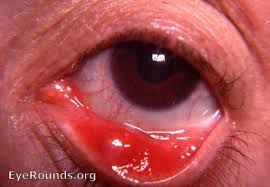
internal hordoelum =*
meibomian gland infection
( more visible on inner eyelid)
external hordeolum can RARELY progress to
blepharitis
internal hordeolum can progress to*
blepharitis
chalazion
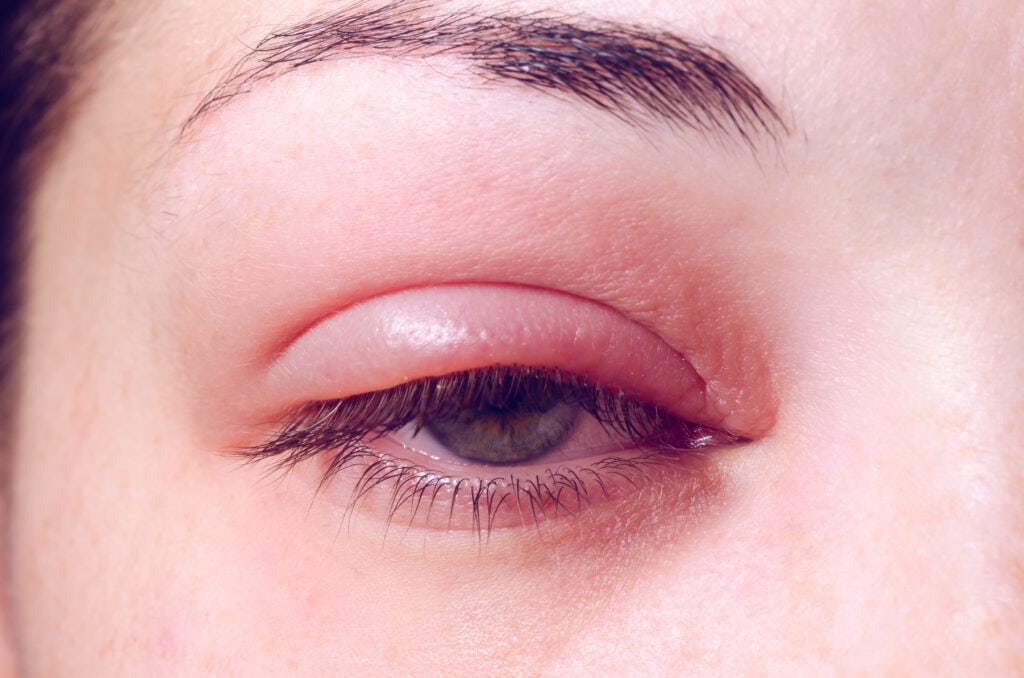
Blepharitis definition*
Infectious Cellulitis of the eye lid (staph aureus)
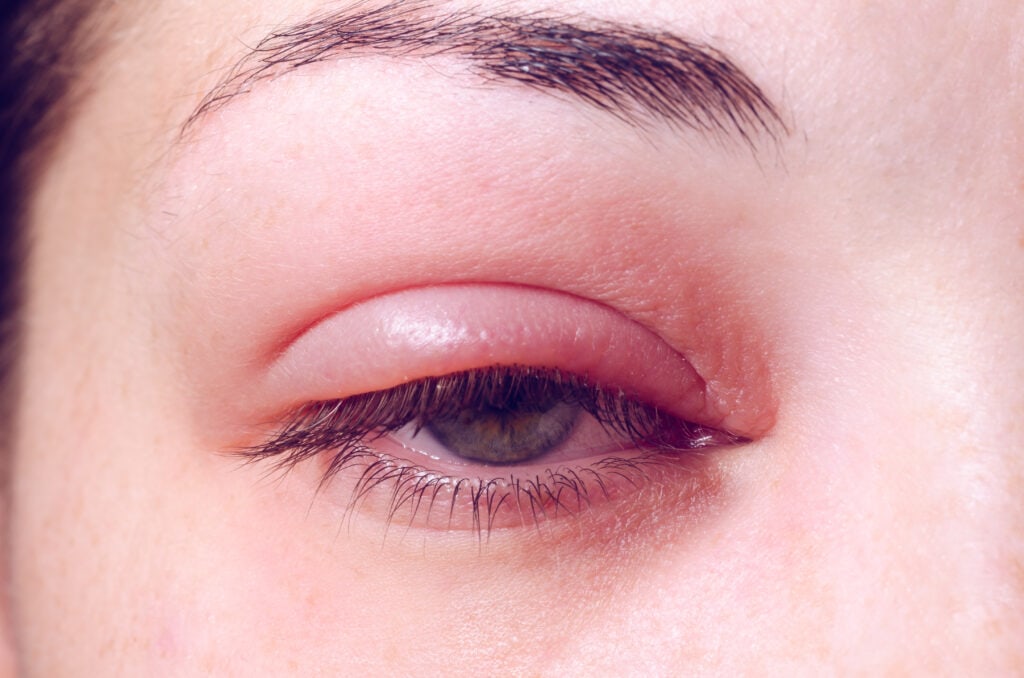
Blepharitis cause*
Internal (and external( hordeolum
Rosacea
Seborrhea
Trauma to the lid
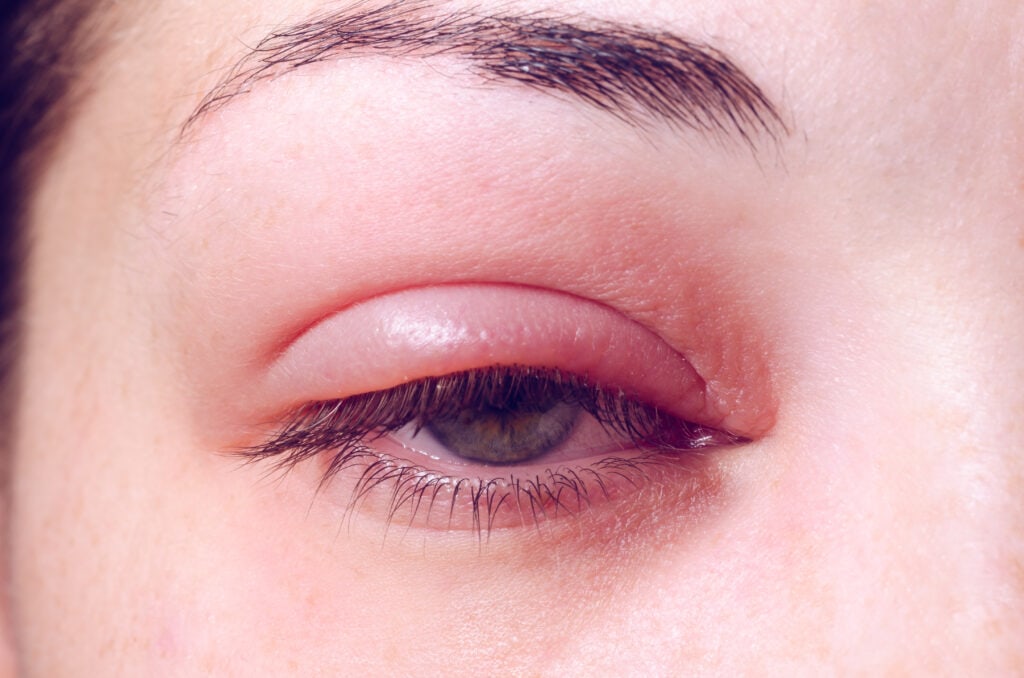
Blepharitis s/sx
Crusty lashes/lashes fall out
telangiectactic vessels
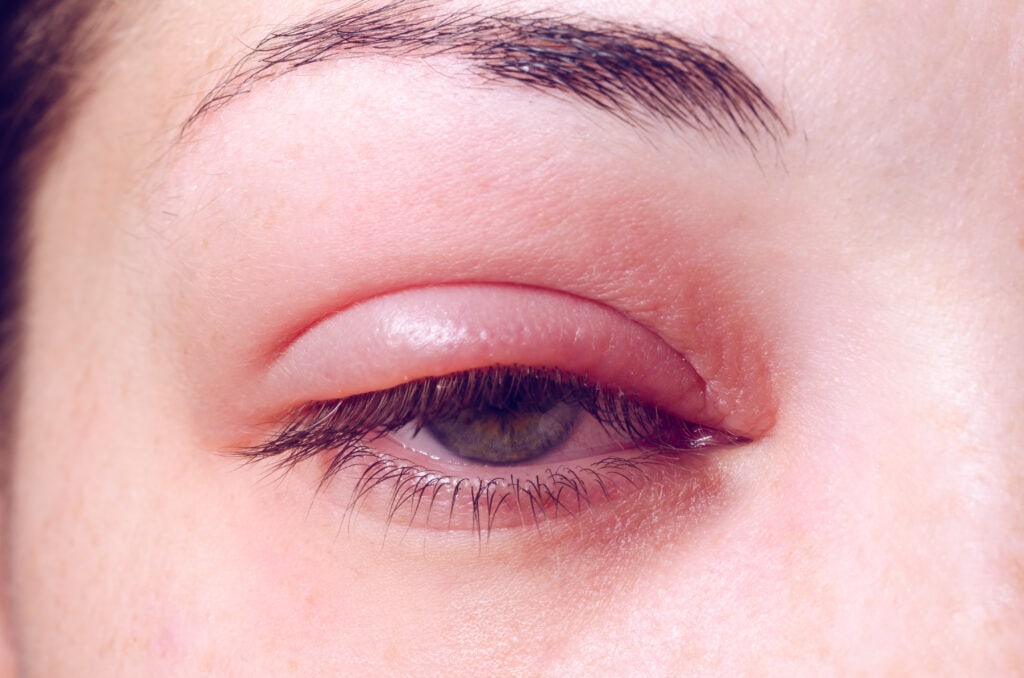
blepharitis tx*
lid hygiene
warm compress
natural tears
ery/bacitracin ointment to lids
UNRESPONSIVE = tetra (250 mg) / doxy (100 mg)
Tx of Hordeolum*
Warm compresses BID x 2 weeks
bacitracin or erythromycin ointment HS
chalazion is more common in pts with
rosacea
tx with systemic abx
Unresponsive pts, pts with ocular rosacea, or with margin infiltrates w/ blepharitis, tx =
Tetracycline or doxy (systemic abx)
Ectropion/Entropion
Eyelid problems seen in elderly d/t loose skin, ligaments, muscles
Ectropion
turning out of eyelid margin
ectropion causes
Congenital
Mechanical
Ocular rosacea
Aging
Scarring
Allergy
Entropion definition
turning in of the eyelid margin
Entropion can cause?
eyelashes to rub on cornea (trichiasis)
tx of ectropion/entropion
surgery
unilateral ptosis cause
neuro
(ie multiple sclerosis, CN III, horner’s syndrome)
bilateral ptosis cause
muscular/myopathic cause
myasthenia gravis
CN III damage makes the eye look
down and out
nasal deviation of the eye muscles (adduct/medial)
medial rectus
superior rectus
inferior rectus
Proptosis definition*
Protrusion of the globe from orbit
Most common cause of bilateral proptosis*
grave’s disease
Acute unilateral proptosis cause*
infection,
vascular disorder (trauma*, fistula, cavernous sinus thrombosis)
Chronic unilateral proptosis cause*
tumor
causes of red eye
keratitis
iritis/uveitis
conjunctivitis
orbital and periorbital cellulitis
dacryocystitis
(dilated blood vessels AKA telangiectasias)
Keratitis definition
inflammation of the cornea
(Herpes Simplex keratitis and Herpes zoster ophthalmicus)
Iritis/Uveitis definition
inflammation in the anterior chamber
uvea =**
iris
ciliary body
choroid (goes to the back of the eye)
uveitis summary*
inflammation in anterior chamber (iris, ciliary body, choroid)
s/sx: watery d/c, photophobia, blurred vision
dx: slit lamp (ciliary flush)
tx: pain control, abx, referral
assoc with HLA-B27
cataracts definition*
An opacity of the lens of the eye that cause partial or total blindness
causes of cataracts*
Oxidative damage (senile cataracts)
Trauma
Inflammation
Radiation
Congenital
RF for cataracts
Age
Smoking/alcohol consumption/malnutrition/physical inactivity
Sunlight exposure
Metabolic syndrome
DM
Systemic/topical corticosteroid use
presentation of cataracts*
Cortical → peripheral portion of the lens → does not degrade vision much
Nuclear → middle of the lens → progress very slowly with gradual loss of distance vision
Posterior subcapsular → back side of the lens → progress quickly (months vs years) and causes severe problems with glare → ppl avoid driving at night
Immature → lens opacity
Mature → loss of the red reflex
tx of cataracts*
Surgical correction with cataract extraction and intraocular lens implant (IOL) → will still need reading glasses (convex lenses)
indicated if sx from cataract interferes with pts ability to meet activities of daily living
at risk: alpha-1 blocker risk of floppy iris syndrome
conjunctivitis definition
inflammation of the mucosal surface covering sclera and lids
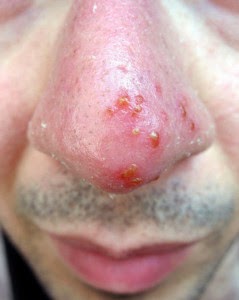
hutchingsons sign*
vesicles on the nose tip
indicating herpes zoster ophthalmicus (shingles affecting the eye)
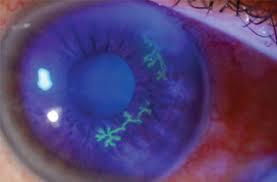
Herpes Simplex Keratitis dx*
Fluorescein staining = tree branch appearance
Herpes Simplex Keratitis tx
Antivirals - NO topical steroids!
Iritis/Uveitis requires what kind of exam
slit lamp exam