Topic 13 Biodiversity and Conservation
 Call Kai
 Learn
Learn Practice Test
 Spaced Repetition
 Match
Match Flashcards
 Knowt Play
1/32

There's no tags or description
Looks like no tags are added yet.
Name | Mastery | Learn | Test | Matching | Spaced | Call with Kai |
|---|
No analytics yet
Send a link to your students to track their progress
33 Terms
Genetic diversity
the total genetic information of all individuals.
small population sizes can lead to inbreeding and genetic drift
Extinction risk increases with reduced genetic diversity
Species diversity
the number of species in an area.
Ecosystem diversity
the variety of biotic components in communities in a region, along with abiotic components like soil, water, and nutrients
Ecosystem Functions
The biological and chemical processes of ecosystems, like primary production, nutrient cycling, carbon storage
Ecosystem Services
The direct and indirect contributions of biodiversity to human survival and quality of life
Species diversity can be measured in different ways
Species richness
Species diversity
Phylogenetic diversity
Functional diversity
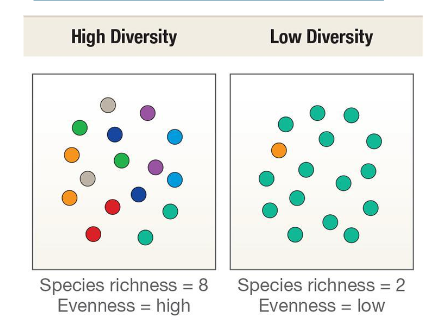
Species richness
A count of the number of species in an area
Species diversity
includes both species richness and the relative abundance of those species
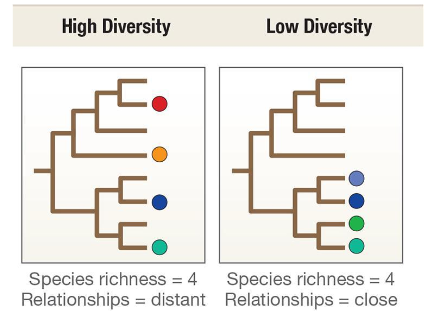
Phylogenetic diversity
Evolutionary distinctiveness. Measures branch lengths in a phylogeny.
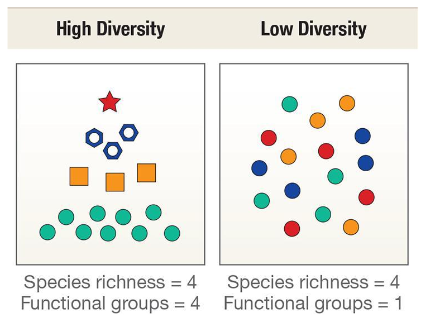
Functional diversity
Ecological distinctiveness. Count and categorize functional traits of species.
Endemic species
Species found in one area and nowhere else on earth
Species richness varies across the planet
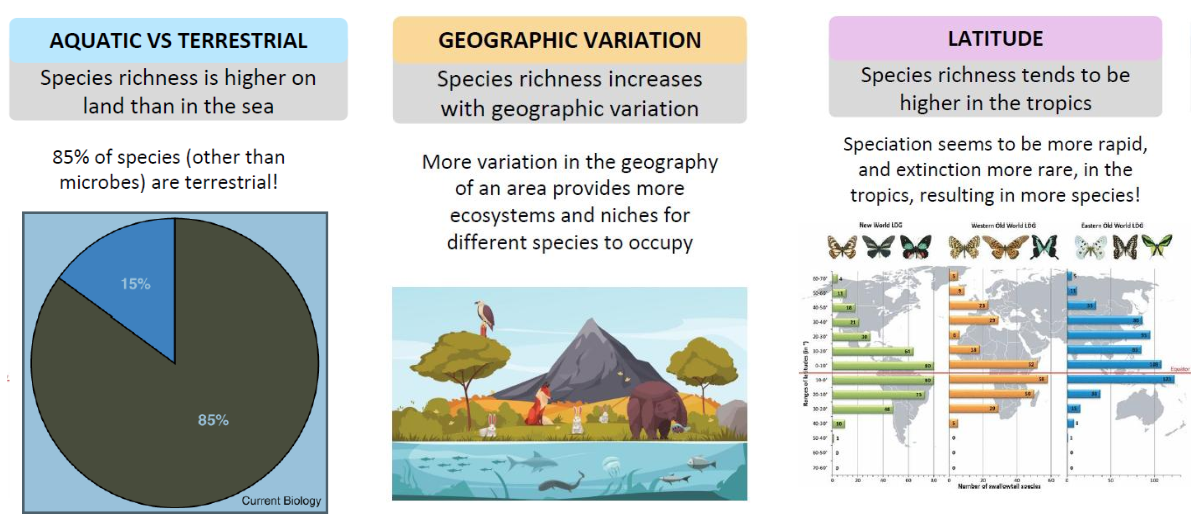
Latitudinal Gradient in Species Richness
The climate in the tropics likely contributes to higher speciation and lower extinction for most species groups
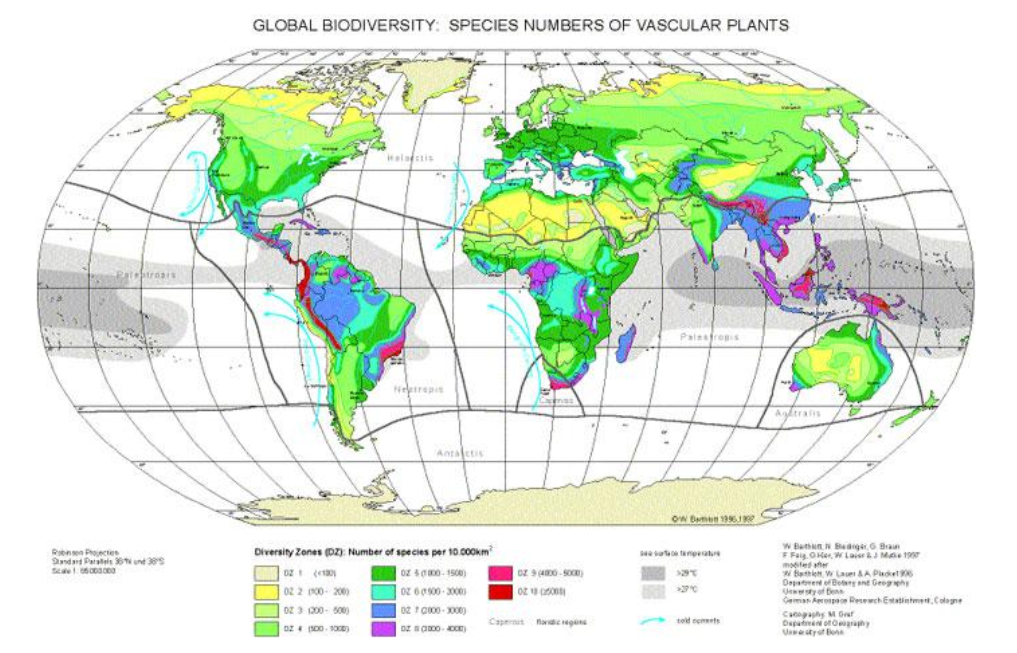
BC is the most biodiverse province in Canada, why?
Topography quite variable → rainshadow effect
Mountainous regions tend to have exceptionally high diversity: different species at different elevations
the only desert in Canada
Species richness tends to scale with area
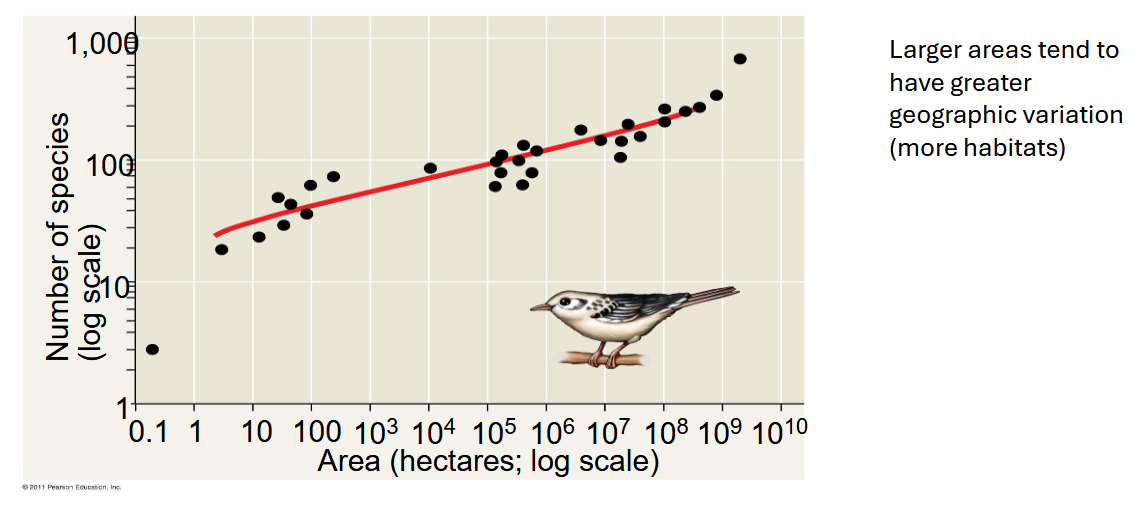
Island biogeography theory predicts species richness as a function of island size and distance from the mainland
Small islands: low immigration and high extinction rates relative to large islands.
Near islands: higher imigration and lower extinction rates relative to remote islands
It’s easier for organisms to disperse to the island, and populations can be rescued by ongoing immigration
Biodiversity can increase the ability of a community to resist or recover from disturbance
Resistance: How well a community resists change in the face of a disturbance
Resilience: How quickly a community recovers following a disturbance
Communities with higher species richness tend to be more resistant and resilient
How has biodiversity on earth changed over time?
Since the Cambrian explosion, biodiversity has generally
increased, except when there were mass extinctions.
Background Extinction
Ongoing loss of species, due to changes in abiotic and biotic environment
normal, gradual rate at which species go extinct over time, excluding major extinction event
Mass Extinction
When > 60% of species alive go extinct within ~ 1 million years
There have been five mass extinction events in the history of earth
End-Ordovician: bout 85 % of species. Massive glaciation lowered sea levels (all life was in the sea)
Late Devonian: 75% species loss, likely due to depletion of O2 in the ocean from rapid algae growth
End-Permian: 96% of species (on land and in the oceans) due to massive volcanic activity
End-Triassic: 80% species loss, also due to volcanic activity
Cretaceous: 75% of species including non-avian dinosaurs, due to asteroid impact and volcanism
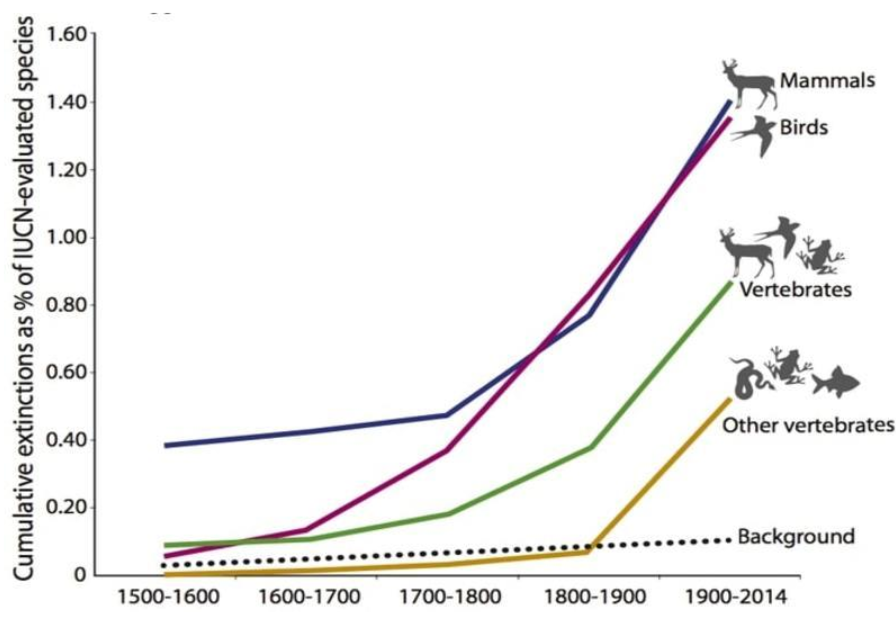
Habitat loss
the main reason species are threatened with extinction, globally
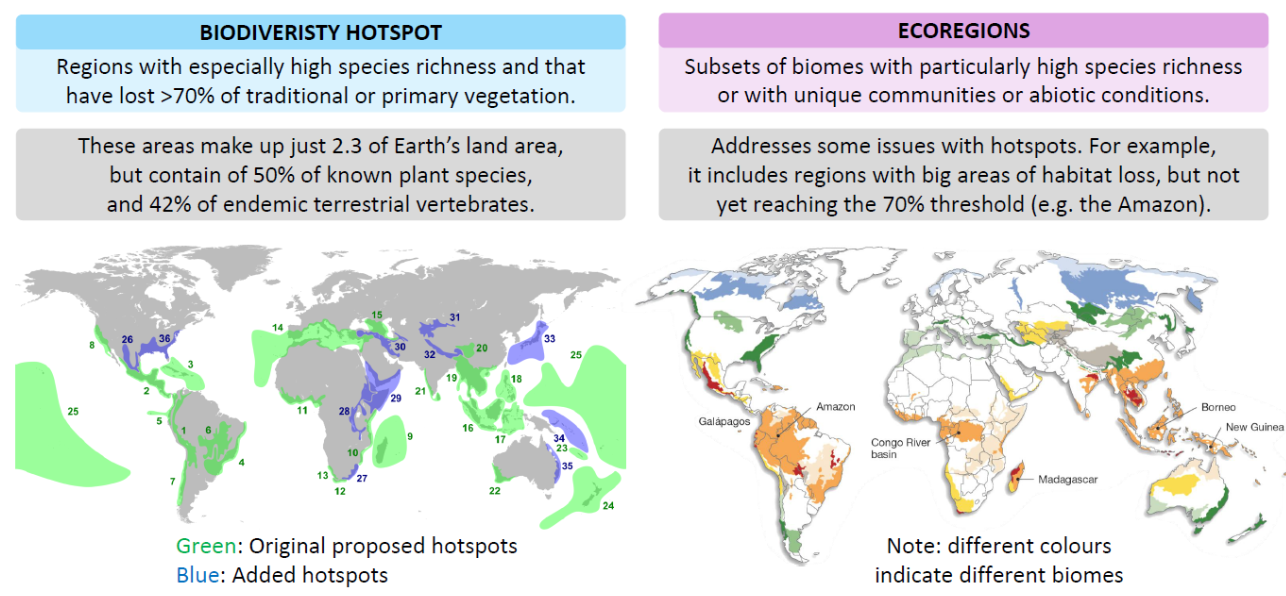
Conservation Biology
The effort to study, preserve, and restore diversity
How do we decide which areas to conserve?
We can use ideas from Island Biogeography for conservation planning
• Large reserves are better than small
• Proximity to other reserves is good (similar to islands near mainland)
• Corridors that connect habitat fragments can aid conservation
Habitat loss can be countered by habitat creation
Agriculture often causes habitat loss and degradation, but many crops need pollinators (like blueberries!)
Wildflower meadows planted near crops provide habitat for pollinators, which also increases crop pollination (and profit for farmers)
Ecological Restoration addresses habitat degradation
Invasive Species
A non-native species that, once introduced to a new area, causes ecological or economic harm.
• High competitive ability
• High reproductive output
• Few natural enemies in their introduced range
• A broad niche (can live in many environments)
Invasive species pathways, and costs
While many invasive species are accidentally introduced, some are introduced deliberately (especially plants)
Invasive species are costly, especially for agriculture. The most costly invasives are insects and mammals.
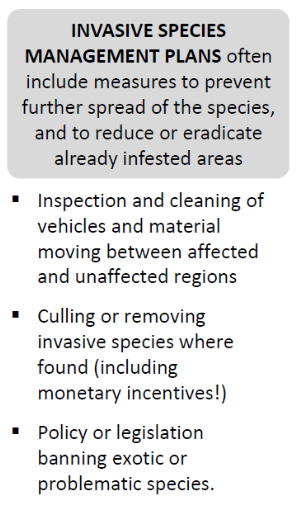
Invasive species management plans can slow or reverse spread
Overexploitation
Unsustainable removal of wildlife from the natural environment, for use by humans
Main threat for marine species
Government regulation can preserve both fish populations and the livelihood of fishing communities
Poaching
Collectors
The pet trade
Pollution
The release of chemicals and waste into ecosystems; can change biotic and abiotic conditions
• Industrial pollutants
• Pharmaceuticals
• Pesticides
• Herbicides
• Nutrients (N, P)
• Garbage/Plastics