1.4 leukotrine receptor antagonist LTRA short acting muscarinic antagonist SAMA long acting muscarine antagonist phosphodiesterase 3 inhibitors PDE-3 inhibitors nedocromil monoclonal antibodies anti-IgE
 Call Kai
 Learn
Learn Practice Test
 Spaced Repetition
 Match
Match Flashcards
 Knowt Play
1/13

There's no tags or description
Looks like no tags are added yet.
Name | Mastery | Learn | Test | Matching | Spaced | Call with Kai | Chat |
|---|
No analytics yet
Send a link to your students to track their progress
14 Terms
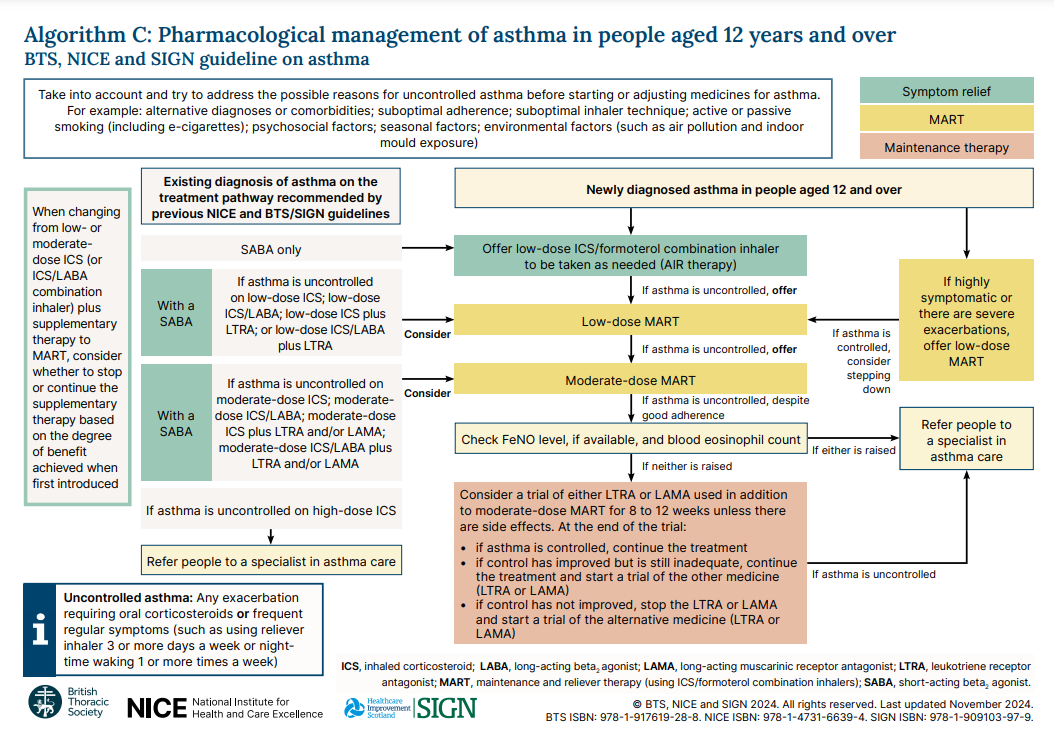
Leukotriene Receptor Antagonists (LTRA are normally used following persistent symptoms with high dose MART therapy
montelukast the most commonly prescribed LTRA is typically dosed at 10mg a day in adults.
a less used alternative, zafirlukast, typically dosed at 20mg BD in adults.
Leukotriene Receptor Antagonists competitively block the receptors for the potent spasmogens' cysteinyl leukotrienes (CysLT1 Protein-Coupled Receptor and suppress their effects,
resulting in a reduction in both bronchiolar muscle contraction and mucus secretion.
The only short-acting muscarinic antagonist used is 'ipratropium bromide'.
It is sometimes used in place of salbutamol (a SABA), but typically in young children rather than adults.
how SAMA works?
Act on M3 muscarinic receptors (G-Protein Couple Receptors)
Prevent bronchoconstriction by vagal discharge
Lead to smooth muscle relaxation and bronchodilation
Long-acting Muscarinic Antagonists
These work as per SAMA but present with a longer duration of action.
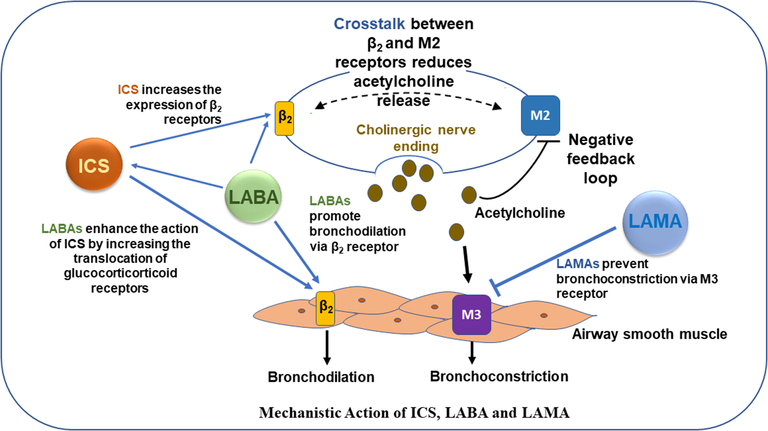
The specific drug used in respiratory disease - including asthma - is 'tiotropium'.
It tends to be used more often in COPD.
Phosphodiesterase 3 inhibitors (PDE-3 inhibitors)
Theophylline and aminophylline are other drugs that are infrequently used to manage patients with asthma.
Phosphodiesterase 3 inhibitors are methylxanthines (like caffeine), and inhibit Phosphodiesterase 3 (PDE-3), and to a lesser extent PDE-4.
They work by increasing cAMP,
as well as likely competitively antagonising adenosine receptors,
which possibly reduces bronchoconstriction and inflammation.
Theophylline:
This drug presents with a narrow therapeutic index, whereby the toxic dose is close to therapeutic dose.
measure plasma concentration 5 days after initiating + 3 days after any dose adjustment.
The plasma concentration is decreased in smokers and by alcohol.
Aminophylline
this is a mixture of theophylline and ethylenediamine which is added to increase water solubility, enabling intravenous administration
Nedocromil is a mast cell stabiliser.
Please refer to the drug monograph which summarises its mechanism of action.
Monoclonal antibodies (e.g. anti-IgE) are increasingly used for severe asthma and other respiratory and non-respiratory diseases
but require strict criteria to me met before administration, e.g. elevated blood eosinophils)
he first biologic used for the treatment of asthma is Mepolizumab.