Chapter 26: Disorders of Blood Flow and Blood Pressure Regulation PrepU (copy)
 Call Kai
 Learn
Learn Practice Test
 Spaced Repetition
 Match
Match Flashcards
 Knowt Play
1/79

There's no tags or description
Looks like no tags are added yet.
Name | Mastery | Learn | Test | Matching | Spaced | Call with Kai |
|---|
No analytics yet
Send a link to your students to track their progress
80 Terms
A client taking an antihypertensive drug for several months comes to the health care provider’s office with a dry, persistent cough. The nurse knows that this cough is an adverse effect of which class of antihypertensive drugs?
Beta-blockers
Angiotensin II receptor blockers
Calcium channel blockers
Angiotensin-converting enzyme (ACE) inhibitors
4
At 4 AM, the hemodynamic monitor for a critically ill client in the intensive care unit indicates that the client's mean arterial pressure is at the low end of the normal range; at 6 AM, the client's MAP has fallen definitively below normal. The client is at risk for:
Orthostatic hypotension
Left ventricular hypertrophy
Organ damage and hypovolemic shock
Pulmonary hypertension
3
What should the nurse teach the client with peripheral vascular disease and intermittent claudication about exercise?
Aerobic exercise is not recommended but isometric exercise is.
Exercise is not recommended in this population.
Clients with intermittent claudication should exercise only their arms.
Exercise can increase blood vessel growth and help to decrease symptoms.
4
While lecturing on blood pressure, the nurse will emphasize that the body maintains its blood pressure by adjusting the cardiac output to compensate for changes in which physiologic process?
Electrical impulses in the heart
Rigidity of the ventricular walls
Release of stress hormones
Peripheral vascular resistance
4
Atherosclerosis begins in an insidious manner with symptoms becoming apparent as long as 20 to 40 years after the onset of the disease. Although an exact etiology of the disease has not been identified, epidemiologic studies have shown that there are predisposing risk factors to this disease. What is the major risk factor for developing atherosclerosis?
Hypercholesterolemia
Increasing age
Familial history of premature coronary heart disease
Male sex
1
A client presents to the emergency department with a sudden onset of acute pain in their left lower leg. The practitioner is unable to palpate pedal pulses and finds the client to be in atrial fibrillation. Which test will the practitioner order to find the source of the emboli?
Ultrasound of the kidney
Chest x-ray
CT of the head
Echocardiogram
4
The nurse is reviewing laboratory results for a client who is experiencing angina. Which finding might be expected in a client with dyslipidemia?
Normal cholesterol and triglycerides
Decreased triglycerides
Decreased low-density lipoproteins
Elevated total cholesterol
4
While working triage in the emergency department, which client report should alert the nurse to imminent danger and, thus, that client should be seen first?
A client reporting painful urination and experiencing fever and chills.
A client with a history of chronic obstructive pulmonary disease (COPD) experiencing a productive cough with green sputum.
A client holding the abdomen and reporting a tearing and ripping feeling inside.
Athletic client reporting the kneecap popping in and out of socket.
3
The nurse knows that which food is excluded from the Dietary Approaches to Stop Hypertension (DASH) diet?
Steak
Nuts
Whole grains
Poultry
1
When trying to educate a client about the release of free radicals and the role they play in formation of atherosclerosis, which statement is most accurate?
Activated cells roam the vascular system looking for inflammatory cells to engulf.
Oxidized free radicals produce toxic metabolic waste that can kill liver cells.
Activated cells that release free radicals oxidize LDL, which is harmful to the lining of your blood vessels.
The end result of oxidation is rupture of the plaque, resulting in hemorrhage.
3
An older adult client newly diagnosed with systolic hypertension asks their health care provider why this happens. Which response is most accurate?
“Your heart has to work harder to pump blood through your vessels as you get older.”
“If you slow down and rest more, your blood pressure will more than likely return to its normal level.”
“With age, your arteries lose their elasticity and are replaced with collagen, which makes your arteries stiffer.”
“Everyone over the age of 50 tends to have their blood pressure creep up over the years.”
3
The client's ultrasound shows a thrombus in the venous sinus in the soleus muscle. The nurse explains that early treatment is important to prevent:
Loss of pulses in the limb
Cerebrovascular accident
Pulmonary embolism
Acute myocardial infarction
3
The health care team proposes a treatment plan for a client with peripheral artery disease. Which treatment measures are likely included?
Isometric exercise to increase cardiac endurance
Weight training to strengthen the vastus lateralis
Exercise training like walking to increase collateral circulation
Aerobic exercise to decrease respiratory stress
3
A client is pregnant for the first time and is considered to be at high risk for preeclampsia. The care team should prioritize which intervention?
Restriction of dietary sodium
Vigilant blood pressure monitoring
Cautious use of over-the-counter diuretics
Oral administration of beta-adrenergic blockers
2
Which drug(s) may cause secondary hypertension? Select all that apply.
erythromycin
cocaine
decongestants
oral contraceptives
amphetamines
2,3,4,5
The nurse is preparing to auscultate a client's blood pressure. Which information obtained from the client would indicate that the nurse should wait 30 minutes prior to obtaining a reading?
The client just smoked a cigarette.
The client ate a hamburger 45 minutes prior to the reading.
The client left work 1 hour ago.
The client took their antihypertensive medication 2 hours ago.
1
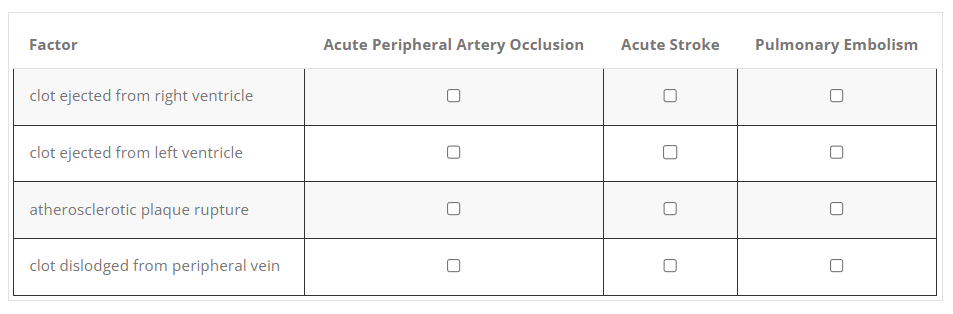
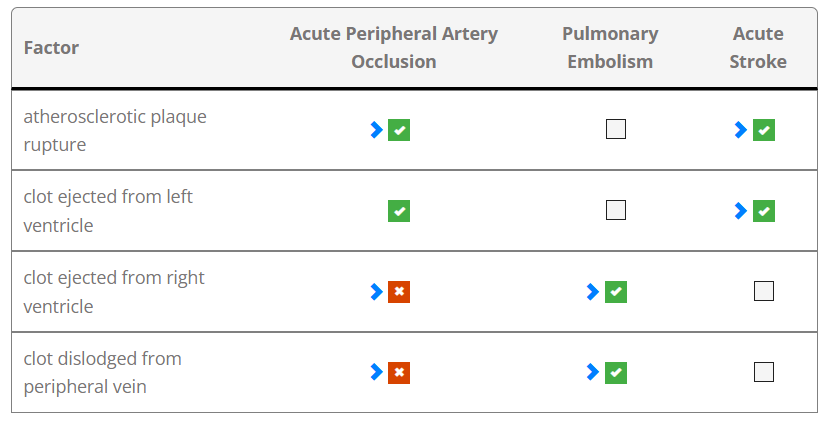
The nurse is caring for a client who is at risk for both venous and arterial occlusions.
For each factor, indicate if this factor could result in the client experiencing an acute peripheral arterial occlusion, a pulmonary embolism, or an acute stroke. Each factor may contribute to more than one complication.
The nurse's sibling is not convinced that they should quit smoking. They ask the nurse to demonstrate for them the more immediate effects of smoking on their health. Which of the following could be used to help convince the sibling to stop smoking?
Measure their blood pressure and show them how much higher it is when they are smoking.
Measure their pulse and show them how much lower it is when they are smoking.
Have them listen to their heart for the obvious murmur that presents when smoking.
Measure their temperature and show them how much higher it is when they are smoking.
1
The nurse is providing education for a client diagnosed with essential hypertension. The nurse will state that the cause of this disorder is:
Hyperaldosteronism
Unknown
Decreased renal blood flow
Pheochromocytoma
2
The nurse knows that the main objective of the management of hypertension is to achieve a sustainable level of blood pressure below:
100/90
140/60
100/60
140/90
4
Autonomic nervous system control of blood pressure is mediated through which physiologic process? Select all that apply.
Pain and strong emotion
Aortic chemoreceptors
Baroreceptors in blood vessels
Carotid artery chemoreceptors
Hepatic secretions
1,2,3,4
The client's ultrasound shows a true aneurysm that involves the entire circumference of the vessel and has a gradual and progressive dilation of the vessel. The provider tells the client the aneurysm is which of the following forms?
Berry
Fusiform
Dissecting
Saccular
2
The nurse is developing a plan of care for a postsurgical client. A major goal is to prevent the formation of deep vein thrombosis (DVT). Which nursing intervention should the nurse implement?
apply ice compresses to the site of the DVT hourly
massage legs to maintain blood flow
ensure that the client remains on bed rest
apply sequential pneumatic compression devices to lower extremities
4
The student attends a health fair and has their serum cholesterol checked. They have a high lipoprotein level (LDL). They understand which of the following about LDL cholesterol?
It transports cholesterol away from cells to the liver for excretion.
It is associated with a low intake of saturated fats.
It has a low cholesterol content.
It is believed to play an active role in the pathogenesis of the atherosclerotic lesion.
4
The nurse is assessing an older adult client with poorly controlled chronic hypertension. Which diagnostic tests should the nurse request to assess for potential complications of uncontrolled hypertension?
Select four (4).
liver function tests
cognitive function testing
ophthalmic examination
pulmonary function tests
serum creatinine level
echocardiogram
2,3,5,6
The health care provider understands that which client is at risk for developing primary hyperlipoproteinemia?
A client with obstructive liver disease
A client with hypothyroidism
A client receiving beta-blockers
A client with familial hypercholesterolemia
4
The nurse knows that the primary long-term regulation of blood pressure is exerted by which body system?
Neural mechanisms
The kidneys
Hormonal activity
Humoral influence
2
The nurse is providing care for a client who has a recent history of visual disturbances, facial pain and erythema in the region of the temporal artery. Which aspect of care is most appropriate?
Administration of corticosteroids as prescribed
Education focused on smoking cessation and dietary modifications
Assessing the client for signs and symptoms of venous thromboembolism
Preparing the client for bone marrow biopsy
1
A 56-year-old client presents at the clinic reporting the unsightliness of their varicose veins and wants to know what can be done about them. The nurse explains that the treatment for varicose veins includes which intervention?
Surgery or Trendelenburg therapy
Sclerotherapy or surgery
Trendelenburg therapy or sclerotherapy
Surgical or fibrotherapy
2
The nurse notes an older adult client has a wide pulse pressure. Which effect of aging will the nurse recognize as the most significant cause of a wide pulse pressure?
Decrease in compliance of large arteries
Increase in sympathetic nervous system stimulation
Increase in atherosclerosis development
Decrease in blood flow to the kidneys
1
From which one of the following sites is a fatal pulmonary thromboembolism most likely to originate?
The hepatic vein in chronic passive congestion of the liver
Deep vein thrombophlebitis of the leg
The endocardium over an acute myocardial infarction
An atherosclerotic plaque in the aorta
2
Which client would the nurse recognize as needing to be assessed for orthostatic hypotension?
A 65-year-old client whose vision has become much less acute in recent months and who has noticed swelling in the ankles
A 42-year-old client who has a history of poorly controlled type 1 diabetes
An 80-year-old client who has experienced two falls while attempting to ambulate to the bathroom
A 78-year-old client who has begun reporting frequent headaches unrelieved by over-the-counter analgesics
3
A client diagnosed with stage 2 hypertension and obesity is resistant to taking antihypertensive medication because they have no symptoms and "feel fine." The nurse will encourage this client to attempt lowering their blood pressure to prevent the development of which complication? Select all that apply.
Coronary artery disease
Acute kidney injury
Diabetes
Stroke
Loss of vision
1,2,4,5
Which statements regarding hypertension are correct? Select all that apply.
Hypertension is more frequent among white persons than among black persons.
Hypertension is more frequent in premenopausal clients compared to postmenopausal clients.
Hypertension is more frequent among younger males than in younger females.
Hypertension is a major risk factor for cardiovascular disease.
Hypertension is one of the most common health problems for adults.
3,4,5
Which lipoprotein is the main carrier of cholesterol?
Low-density lipoprotein (LDL)
Intermediate-density lipoprotein (IDL)
Very-low-density lipoprotein (VLDL)
High-density lipoprotein (HDL)
1
A nurse working on a gerontology unit notes that the majority of the clients on the unit are prescribed antihypertensive medications. When it comes to the aging process, which phenomenon is primarily a contributing factor to hypertension in the older adult population? Select all that apply.
Increase in renal perfusion
Increased sensitivity of the renin–angiotensin–aldosterone system
Stiffening of large arteries like the aorta
Increased peripheral vascular resistance
Decreased baroreceptor sensitivity and renal blood flow
3,4,5
Which statements are true concerning atherosclerosis? Select all that apply.
A family history of the disorder is generally present.
It is a leading cause of death in the United States.
It generally affects only coronary arteries.
Age is considered a risk factor.
Symptoms appear when the condition is in its advanced stage.
1,2,4,5
A client with an elevated total cholesterol level asks the nurse if they need to change their diet to reduce the risk for heart disease. Which response by the nurse is most appropriate?
"Total cholesterol levels include all the lipoproteins. Comparing the levels of each will better determine risk."
"Diet is only one factor that influences cholesterol levels. Genetics and other health conditions play a role as well."
"A healthy diet is a good start. This includes consuming healthy fats and reducing simple sugars and red meats."
"Cholesterol levels are only one risk factor for heart disease. You will need a comprehensive assessment."
1
A client with a diagnosis of chronic kidney disease secondary to diabetes has seen a gradual increase in their blood pressure over the past several months, culminating in a diagnosis of secondary hypertension. Which factor has most likely resulted in the client's increased blood pressure?
Increased levels of adrenocortical hormones
Activation of the renin–angiotensin–aldosterone mechanism
Coarctation of the aorta
Increased sympathetic stimulation by the autonomic nervous system
2
Which statements regarding alcohol consumption and hypertension are correct? Select all that apply.
Recommended limit for alcohol consumption for females is two drinks per day.
Chronic excessive alcohol consumption can induce hypertension.
Moderate alcohol consumption may decrease risk for cardiovascular disease.
A decrease in heavy alcohol consumption may help to lower blood pressure.
Hard liquor is the only alcoholic beverage associated with hypertension.
2,3,4
A health care provider is providing care for a client who developed deep vein thrombosis (DVT) and a pulmonary embolism following a period of bed rest. Which factor will the nurse determine did not contribute to the formation of a DVT?
increased heart rate
impaired venous return
increased blood viscosity
venous injury
1
The nurse knows that which of the following would put a client at risk of developing hypertension, if everything else in the body remained unchanged? Select all that apply.
Systemic vasoconstriction
Elevated renin levels
Reduced blood viscosity
Intravascular fluid retention
Reduced heart rate
1,2,4
A client's initial blood pressure on admission to the outpatient clinic is 190/120 mm Hg. Which action by the clinic staff is most appropriate at this time?
Calling an ambulance to take the client to the emergency department
Performing a complete physical exam and allowing the client to calm down and rest
Taking a more complete history to try to identify what is stressing this client
Asking the client if they have recently changed their diet to include more high-sodium foods
1
In addition to direct invasion of the vascular wall by an infectious agent, what pathogenic mechanism is a common cause of vasculitis?
Immune-mediated inflammation
Mononuclear cells
Necrotizing granulomas
Tissue necrosis
1
The nurse knows that which statements regarding sodium and hypertension are correct? Select all that apply.
Added table salt accounts for most of the sodium in the diet.
In the INTERSALT study, urinary sodium excretion and systolic blood pressure are closely correlated.
Older persons are less sensitive to sodium than younger persons.
Reduction in sodium intake often produces a reduction in blood pressure.
Sodium may increase the responsiveness of the cardiovascular system to adrenergic (sympathetic) stimulation.
2,4,5
The nurse is reviewing a client's history and recognizes that the client smokes cigarettes. The nurse is concerned because smoking does which of the following?
Promotes vasodilation and decreases peripheral resistance, thereby increasing cardiac workload
Increases serum HDL levels, thereby promoting fat oxidation
Injures the endothelial cells lining the blood vessels, thereby promoting thrombus development
Decreases serum lipid levels and increases inflammation, thereby promoting hyperlipidemia
3
Which most important complication of atherosclerosis can result in occlusion of small heart vessels?
Thrombosis
Fibrous plaque
Fatty streaks
Ulceration
1
A 54-year-old client with a long-standing diagnosis of essential hypertension is meeting with their health care provider. The client’s health care provider would anticipate that which phenomenon is most likely occurring?
The client’s juxtaglomerular cells are releasing aldosterone as a result of sympathetic stimulation.
The conversion of angiotensin I to angiotensin II in their lungs causes increases in blood pressure and sodium reabsorption.
Epinephrine from their adrenal gland is initiating the renin–angiotensin–aldosterone system.
Vasopressin is exerting an effect on their chemoreceptors and baroreceptors, resulting in vasoconstriction.
2
The nurse recognizes that insulin resistance and compensatory hyperinsulinemia may be related to development of which of the following? Select all that apply.
Glucose intolerance
Hyperlipidemia
Inappropriate weight loss
Type 2 diabetes
Hypertension
1,2,4,5
A client diagnosed with giant cell arteritis will likely experience pain located in which region of the head?
Vertebral
Temporal
Carotid
Ophthalmic
2
A client has been prescribed a thiazide diuretic, hydrochlorothiazide (HCTZ), for the initial treatment of hypertension. The nurse teaches the client that this medication lowers blood pressure through what effect?
increasing vasoconstriction
increasing renin release
decreasing vascular volume
decreasing heart rate
3
Which one of the following organs are the two primary sites of lipoprotein synthesis?
Small intestine and liver
Bone marrow and endothelium
Small intestines and bone marrow
Spleen and liver
1
Which type of blood vessel cells in the tunica media layer produce vasoconstriction and/or dilation of blood vessels?
Extracellular matrix cells
Vascular smooth muscle cells (SMCs)
Endothelial cells
Collagen tissue
2
The nurse assesses a client who presents to the emergency department due to feeling unwell. The client's blood pressure is 210/115 mm Hg. Which three assessments or diagnostic tests will the nurse prioritize based on the most likely and most serious potential complications of this finding? Choose THREE.
Peripheral perfusion
Liver function tests
Chest x-ray
Spheres of orientation
Renal function tests
Arterial blood gases
Electrocardiogram
4,5,7
The nurse is caring for a client being treated for acute arterial occlusion of the lower legs. Which actions does the nurse include in the plan of care? Select all that apply.
Administration of fluids to prevent fluid volume deficit (dehydration)
Administration of anticoagulants and monitoring for evidence of bleeding
Pain control measures including application of cold or heat to the area
Monitoring of neurovascular status for evidence of compartment syndrome
Monitoring of respiratory status for evidence of pulmonary embolism
1,2,4
The nurse is educating a client diagnosed with pre-hypertension about reducing modifiable risk factors. Which risk factors will the nurse address? Select all that apply.
Decreasing salt intake
Increasing dietary potassium
Working less to decrease stress level
Have genetic counseling
Decreasing alcohol consumption.
1,2,5
A 60-year-old client who has lost an extensive amount of blood in a work-related accident says that when their blood pressure was checked in the hospital, the top number (systolic pressure) was lower than usual but the bottom number (diastolic pressure) was about the same. The nurse recognizes that which reason accounts for this lack of change in the diastolic pressure?
Heart rate increased with blood loss.
Systemic vasoconstriction maintained the diastolic pressure.
Stroke volume increased with blood loss.
Blood volume rapidly increased.
2
A critical care nurse is carefully monitoring a client's mean arterial pressure. Which combination of factors is responsible for mean arterial blood pressure?
Systemic vascular resistance multiplied by heart rate
Stroke volume multiplied by cardiac output
Heart rate multiplied by stroke volume
Cardiac output multiplied by systemic vascular resistance
4
Which statement(s) applies to the condition of secondary hypertension?
Select all that apply.
It may result from hyperaldosteronism.
It may be cured by surgery or medical treatment.
Oral contraceptive use may be the cause.
It is an elevation in blood pressure due to an unknown cause.
It is most commonly caused by kidney disease.
1,2,3,5
A client with a history of disabling claudication now is in the emergency department with a lower limb that is turning dark purple to black associated with faint Doppler pedal pulses. The client will more than likely undergo:
surgery to remove the saphenous vein.
whirlpool therapy with tight wrapping of lower legs immediately following.
percutaneous transluminal angioplasty and stent placement.
injection of a potent anticoagulant into lower leg veins.
3
A client is prescribed an angiotensin-converting enzyme (ACE) inhibitor for hypertension. The nurse questions the prescription of an ACE inhibitor for a client with which condition?
diabetes
renal artery stenosis
heart failure
coronary artery disease
2
The nurse knows that systolic hypertension carries risk for which cardiovascular events? Select all that apply.
Right ventricular hypertrophy
Risk for aneurysm
Damage to elastic elements of blood vessel walls
Thrombosis
Atherosclerosis
2,3,4,5
A client is concerned about their family history of atherosclerosis and asks the nurse if there is anything they can do to decrease their risk. The client has type 2 diabetes. Which responses by the nurse are most accurate? Select all that apply.
Decrease smoking
Control hypertension
Maintain normal weight
Increase LDL levels
Control blood glucose levels
2,3,5
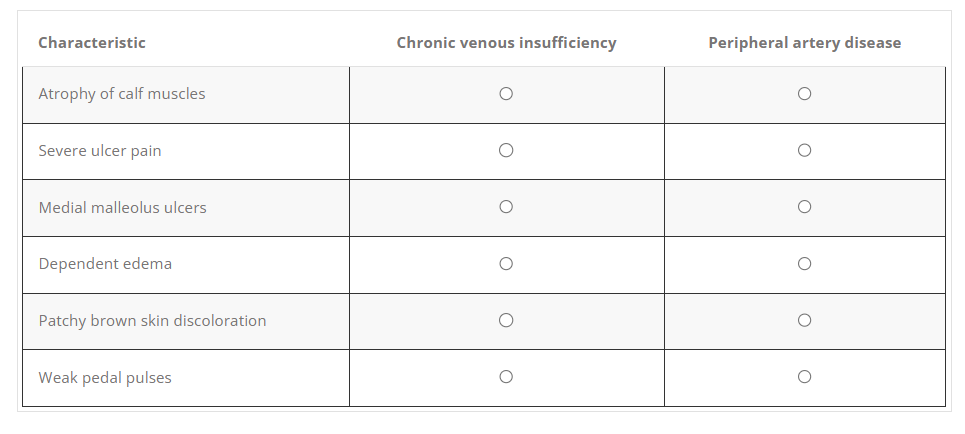
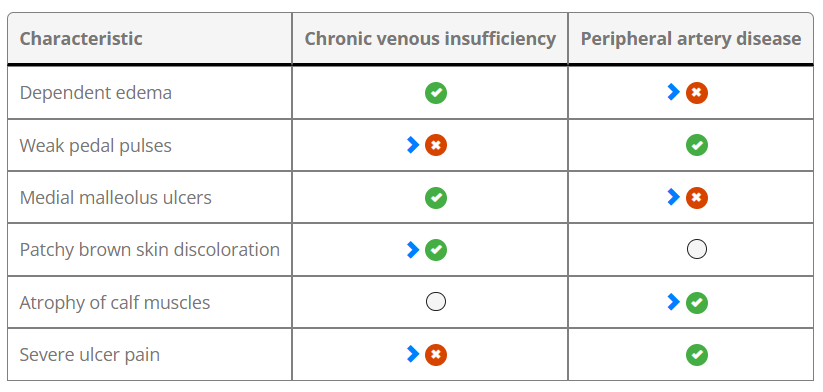
The nurse is assessing wounds on a client's lower legs.
For each characteristic, click to specify if the characteristic is consistent with chronic venous insufficiency (CVI) or peripheral artery disease (PAD).
The nurse knows that vasopressin (antidiuretic hormone, ADH) plays which role in blood pressure control?
Produces prolonged increase in blood pressure
Decreases blood volume
Increases osmolality of body fluids
Promotes retention of water
4
A client with hypercholesterolemia is being treated with diet and exercise. Which assessment finding is a positive outcome of this treatment regimen?
increased blood glucose levels
lowered high-density lipoproteins
increased low-density lipoproteins
increased high-density lipoproteins
4
A client is diagnosed with orthostatic hypotension. The nurse knows that which drugs can predispose the client to orthostasis? Select all that apply.
Antibiotics
Psychotropics
Diuretics
Antihypertensives
Bronchodilators
2,3,4
The smooth muscle cells produce vasoconstriction of blood vessels due to innervation by which part of the nervous system?
Peripheral
Sympathetic
Central
Parasympathetic
2
During assessment of a 66-year-old client, the nurse practitioner notes a pulsating abdominal mass and refers the client for further treatment. Which aspects of the pathophysiology of aneurysms would the health care provider explain to this client?
Aneurysms can normally be resolved with lifestyle and diet modifications.
Hypertension is a frequent modifiable contributor to aneurysms.
Individuals with an aneurysm are normally asymptomatic until the aneurysm ruptures.
Aneurysms are commonly a result of poorly controlled diabetes mellitus.
2
Changes in systemic blood pressure are a reflection of which properties of the cardiovascular system? Select all that apply.
Resistance in arterioles
Aortic elasticity
Ejection of blood from right ventricle
Dilation of capillaries
Stroke volume
1,2,5
A client is receiving home care for the treatment of a wound on the inside of the lower leg described as 3 cm in diameter with a yellow wound bed draining clear exudate. Assessment of the client's legs reveals edema and a irregularly darkened pigmentation on the ankles and shins of both legs. How would the home care nurse document these findings?
Varicose veins
Deep vein thrombosis
Peripheral arterial disease
Chronic venous insufficiency
4
The client undergoes a cardiac catheterization to evaluate symptoms of chest pain and shortness of breath. The test shows lesions in the coronary arteries that have begun to reduce the size of the vessel lumen. This type of lesion is known as:
Thrombus
Complicated lesion
Fibrous atheromatous plaque
Fatty streak
3
The client has been diagnosed with Raynaud disease. Which treatment measure will the nurse teach the client?
Anxiety and stress may precipitate vasodilation in predisposed people.
The client must protect the entire body from cold, not just the extremities.
Treatment with vasoconstrictor medications may be indicated.
The client can take decongestants as needed.
2
Which assessment finding of a newly admitted 30-year-old client would be most likely to cause the health care provider to suspect polyarteritis nodosa?
The client’s blood work indicates polycythemia (elevated red cells levels) and leukocytosis (elevated white cells).
The client’s blood pressure is 178/102 and they have abnormal liver function tests.
The client’s temperature is 101.9°F (38.8°C) and they are diaphoretic (heavily sweating).
The client is acutely short of breath and their oxygen saturation is 87%.
2
A client is brought to the emergency department diagnosed with malignant hypertension. The nurse knows which clinical manifestations are associated with this disorder? Select all that apply.
Diastolic pressure above 120 mm Hg
Chest pain radiating to right arm
Confusion
Cerebral edema
Papilledema
1,3,4,5
The nurse is assessing a school-age client who has presented with rash and swollen hands and feet. The nurse suspects the child may have Multisystem Inflammatory Syndrome in Children (MIS-C). Which other two conditions should the nurse consider as most likely to present with similar manifestations to MIS-C? Select TWO.
Kawasaki disease
Rubella
Toxic shock syndrome
Varicella zoster virus
Mononucleosis
Measles
1,3
Which of the following facilitates the clearance of cholesterol from the periphery (including atheromatous plaques) and transports it to the liver where it may be excreted?
VLDL
Chylomicrons
HDL
LDL
3
The role of inflammation in the etiology of atherosclerosis has emerged over the last few years. Which lab test is a marker for systemic inflammation?
Triglycerides
Lipoprotein(a)
C-reactive protein
Homocysteine
3
The nurse knows that acute regulation of blood pressure involves which physiologic processes? Select all that apply.
Vagal nerve impulses
Arterial chemoreceptors
Renal regulation of blood volume
Adrenergic (sympathetic) stimulation
Carotid baroreceptors
1,2,4,5
A 65-year-old client is diagnosed with systolic hypertension. The nurse educates the client about how the aging process and development of stiff, large arteries can result in which physiologic occurrence? Select all that apply.
Increased systolic pressure
Widened pulse pressure
Unstable blood pressure
Decreased diastolic pressure
Increased diastolic pressure
1,2,4