Lect Exam 2 - Cells + Bones!
 Call Kai
 Learn
Learn Practice Test
 Spaced Repetition
 Match
Match Flashcards
 Knowt Play
1/157

There's no tags or description
Looks like no tags are added yet.
Name | Mastery | Learn | Test | Matching | Spaced | Call with Kai |
|---|
No analytics yet
Send a link to your students to track their progress
158 Terms
cell
structural and functional unit of human body
-we have different shapes and sizes of cell depending on the location and funcs of cells
all activities in body carried out by cell - they continue to divide
99% of cells in human body have 3 important parts *** EXTRA CREDIT
plasma / cell membrane / plasmalemma
cytoplasm
nucleus
plasma membrane
makes outer (flexible) boundary of the cell
separates inner stuff from outer stuff
cytoplasm
in between plasma memb and nucleus
contains fluid + some organelles
nucleus
central hub of the cell that contains DNA in the form of chromosomes
we have fluid..
inside the cell: water + electrolytes - ICF (intracellular fluid)
outside the cell: ECF (extracellular fluid)
MOST IMPORTANT FUNC OF PLASMA MEMB
separate ECF: (water + electrolytes) and ICF: (water + electrolytes)
plasmalemma/cell memb/plasma memb components *****EXAM
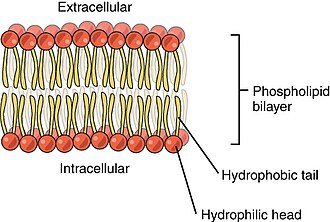
phospholipid bilayer made of phospholipids
cholesterol (steroid)
glycolipids/glycoproteins: glucoses/sugars attached to lipids or proteins
3 funcs of plasma memb
most important func: acts as a mechanical barrier that separates the inside of the cell (which has ICF) from the outside of the cell (which has ECF).
to be selectively/semi permeable - because plasma memb is made of lipids (hydrophobic), it will only things that are lipid/fat soluble to cross the plasma memb - anything that is watery won’t be allowed to pass thru
to maintain an electrochemical gradient: keep things that have different charges where they should belong - keeping anything with charge in and out
—> ***inside of cell we have neg charge and potassium (K+)- (no Na+ inside),
outside of cell we have pos charge + sodium (Na+)- (no K+ outside) - —→plasma memb keeps this charge/electrical difference - the electrochemical gradient
func of cholest/steroid embedded n plasma memb **IN EXAM
provides stability (strengthens) to the plasma memb
phospholipid bilayer
most important component of plasma memb: phosholipid bilayer
phosphate heads hydrophilic - they facing outside the cell and they facing inside the cell cuz we have water inside and outside the cell so water is not directly facing the lipids, which don’t like water
—> we have phosphate balls on the outside and inside of plasma memb so water doesn’t seep inside the cell! - phosphate heads won’t allow water to enter in but they can face (tolerate) the water.
lipid tails hydrophobic - are inside plasma memb as tails cuz lipids cant face water.
—
func of sugars attaached to plasma memb (glycoprot/glycolipid )
sugars act as sensors that tells the cell whenever a bad (cancer etc.) cell comes near it. - act as cell signals
memb proteins are…
inserted into the plasma memb but is not a part of plasma memb!
2 types of memb proteins + what is memb prots’ func
integral prots
peripheral prots
funcs:
act as enzymes
anchoring prots - things get attached to them
recognition prots - they recognize good and bad cells (detected by cells of immune sys)
receptor prots - bind to specific extracellular molecules called ligands
carrier prots - bind solutes and transport across plasma memb
prot channels - the passageway for solutes to enter the plasma memb
carrier prots + prot channels - faciliate movement of things into and out of the cell
integral prots
AKA transmembrane prots
memb prots that start from where the plasma memb starts and ends where the plasma memb ends - run the whole length of the plasma memb - all the way through
peripheral prots
-memb prots that are either attached to the outside (upper part) of the plasma memb or attached to the inside (jnner side) of the plasma memb.
glycocalyx
sugary coat on the outer surface of plasma memb
-func: help recognition between good and bad things.
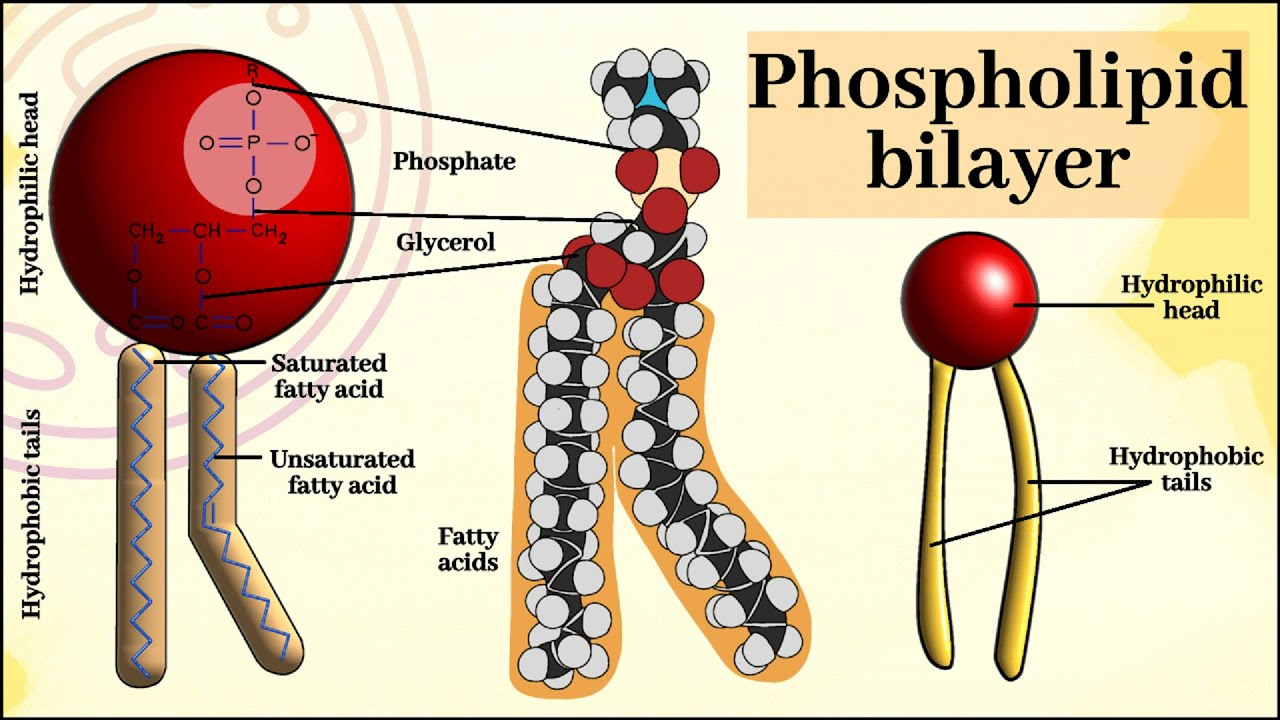
phospholipid struct
phosphate head - hydrophilic - faces outwards
lipid tail - hydrophobic - faces inwards
CELL MEMB SEPARATES ___ AND KEEPS
ECF + ICF - BOTH OF THEM MADE OF WATER + ELECTROLYTES(SOLUTES)
keeps electrochemical gradient
cytoplasm
part of cell between plasma memb and nucleus
is watery part of the cell
made up of 3 things:
—cytosol - most important + abundant - is water + electrolytes
—organelles - tiny little machines within the cytoplasm that work for the cell
—(inclusions) - they pigments like haemoglobin
membranous organelles
surrounded by membranes
mitochondria
Peroxisomes
• Lysosomes
• Endoplasmic reticulum
• Golgi apparatus
non membranous organelles
not covered by membranes
Cytoskeleton
• Centrioles
• Ribosomes
• Cilia
• Microvilli
cytoskeleton
gives internal support, strength, flexibility to cell - cell’s skeelton
made up of thread-like proteins/filaments
components (name of skeletons in cell?):
-1. microfilaments
=2. Intermediate filaments
-3. Microtubules
microfilaments
made up of actin prots
smallest supports in the cell
present in peripheries of cell
part of cytoskeleton
intermediate filaments
mid size
strongest + most durable cytoskeletal elem
funcs:
Strengthen the cell and maintain its
shape
Stabilize position of organelles
Stabilize cell position
part of cytoskeleton (type of cell skeleton)
microtubules
biggest skeleton of cell (largest components of cytoskeleton)
part of cytoskeleton (type of cell skeleton)
microvilli
finger like projections / tiny folds of plasma memb to increase the surface area of absorption
cilia
hair like growths on the upper end of the cell (on plasma memb)
move and keep things away from cell e.g. fluids you dont need
non membranous organelle
centrioles
-cylinder-like organelles
non membranous
always seen in pair in a cell
important role in cell division
EXAM Q**: cells that do not have centrioles in them will not divide and will die!
ribosomes
**func: MAKE PROTS!! EXAM
MADE UP OF PROTEIN AND RIBOSOMAL RNA (rRNA) - **EXAM
2 types: free ribosomes + membrane-bound ribosomes
free ribosomes: ribosomes that freely circulate in a cell that make PROTEINS WHICH ARE USED IN THE CELL
membrane bound ribosomes/ bound ribosomes/ attached ribosomes : attached to memb of ER - MAKE PROTS THAT WILL LEAVE THE CELL OR GET INSERTED INTO THE PLASMA MEMB AS MEMB PROTS!!
non membranous organelles
endoplasmic reticulum (ER)
in the form of flat stacked interconnected tubes
-usually seen attached to the nucleus
2 types of ER:
→ rough ER - has ribosomes attached
—> smooth ER - no ribosomes attached
rough ER func
same func as memb bound ribosomes cuz has those attached to it!
—> make proteins that will leave the cell or be inserted into the plasma memb as membrane prots
smooth ER func IN EXAM!
MAKE LIPIDS (STEROID CHOLEST ETC.!)
LIPID METABOLISM: ABSORPTION, SYNTHESIS, TRANSPORT OF LIPIDS - dealing with all kinds of lipids!
STORES CALCIUM!
NO RIBOSOMES ATTACHED - SO IS SMOOTH!
mitochondria
inner memb is folded
folds in inner memb called cristae
func: MAKE ATP ENERGY BY BREAK GLUCOSE!
powerhourse of cell cuz make energy in the form of ATP by use (break) gluc
golgi body / apparatus
usually attach to rough ER
flattened membranous organelle
** func: modify, concentrate, package prots and lipids coming from the ER b4 they going out of the cell!**
has 2 entrances/doors:
- 1 is entrance door - cis face/door -door through which proteins will enter so they can be packed, will go through the golgi and then go to
2 is exit door - trans face/door - the door through which proteins will leave the cell
what is a vesicle
packed protein or lipid which will go out of the cell
peroxisomes
spherical organelles
func: detoxify substances/any toxins - make things less harmful! (neutralise them)
they detoxify things thru 2 chemicals that are in them: oxidase (use oxy to make things less harmful) and catalase
lysosomes
spherical organelles - memb bound
func: phagocytosis of bad cells e.g. bacteria, cancer. -
—> they eat up any bad cell by the process of phagocytosis and have special digestive enzymes in them that allow them to digest the bad cells!
nucleus
3rd part of the cell
present in the centre of cell - spherical
nuclear pores: pores in nuclear membs through which things can enter or leave the nucleus
center of nucleus has NUCLEOLUS that makes ribosomes - ribos come out in the cytoplasm thru nuclear pores!
2 membs/envelopes of nucleus
surrounded by nuclear envelope
func of nucleus: store DNA!!!
DNA present in 2 forms in nucleus EXAM
chromatin - when the cell is not dividing, DNA is in the form of chromatin - loose threads! - cell is just growing in size when chromatin
chromosomes - condensed form of DNA that shows us the cell is dividing!!!
when DNA is loosely wrapped around histone prots - is chromatin - tells not divide, just growing!
when DNA is tightly wrapped around histone prots - is chromosome
cell is divide
some cells.. but most cells..
freely roam in body e.g. blood sperm
attached to each other, bound in communities
cell community
when cells attached to one another; bound in communities
junction AKA communications
when cells attached to one another in a community!
most cells connected to one another via junctions
3 types of junctions! with cell
Tight junctions
• Desmosomes
• Gap junctions
tight junction
junction/communication in which cells are connected by special prots to each other so tightly so* * nothing can pass thru them!**
in urinary bladder
continuous seal preventing molecules/anything from passing between/across cells
desmosomes
tooth like/ velcro like junc that holds cells to prevent wear and tear (interlock)
gap junctions
(cells) have tiny gaps iin between them so things can pass from 1 cell to another cell.
you see gap junctions and desmosomes..
in cardiac cells - cells of heart
when things move in and out of the cel..
that is movements/transport
permeable
some plasma membs is freely permeable - will allow everything to enter and leave!
some plasma membs are impermeable - wont allow anything to enter or leave
our plasma membs are semi perm- will allow some things to enter and not allow smth to enter
our plasma memb allows things to enter/disallow based on..
size
molecular shape
Electrical charge
• Lipid solubility
-so is semi permeable
2 types of transports
passive transport/movement
active transport/movement
charge inside cell is
negative - potassium
electrolyte + outside cell
sodium
pos charge
resting condition /resting potential/ polarised state of cell/RESTING MEMB POTENTIAL + ACTION POTENTIAL!
neg charge + potassium in cell
pos charge + sodium outside of cell
—WE DONT WANT SODIUM TO ENTER INTO CELL CUZ ITS VERY EXCITABLE
WHENEVER SEND A MESSAGE INSIDE THE CELL, SODIUM WILL ENTER IN CELL, THIS EXCITES THE CELL CUZ SODIUM IS EXCITABLE - IS ACTION POTENTIAL
ACTION POTENTIAL: ENTRANCE OF SODIUM INSIDE THE CELL AND CELL IS NO LONGER RESTING, IT IS EXCITED - EXCITED STATE IS ACTION POTENTIAL!
passive transport
movement of things from higher area (concent) to lower area (concent) WITHOUT ENERGY USE! (ATP)
move down concent grad
things will cont to move from high to low till balance (equilibrium) reached
active transport
movement of things from lower area (concent) to higher area (concent) WITH ENERGY USE (ATP)
things move from lower to higher gradient
types of passive transport AKA diffusion
simple diffusion
facilitated diffusion / helped movement
simple diffusion
movement of simple things (oxy. co2, h2o etc.) from higher to lower area down concent grad) without ATP use
'“SIMPLE THINGS = THINGS THAT ARE FAT SOLUBLE + WATER!
type of passive transp
facilitated diffusion
movement of anything which is not lipid soluble / is too big to cross the plasma memb moving from higher to lower area without the use of energy
things e.g. gluc, AA - can’t cross plasma memb so will be facilitated
- type of passive transp
INTEGRAL PROTS WILL CARRY THOSE THINGS ACROSS PLASMA MEMB WITHOUT ENERGY USE - WILL HELP THEM
OSMOSIS EXAM
MOVEMENT OF WATER FROM HIGHER WATER CONCENT TO LOWER WATER CONCENTRATION
in plasma memb. we have holes called aquaporins that allows water move through from a higher concent to a lower concent
MOVEMENT OF WATER FROM WHERE SOLUTE ARE LESS TO WHERE SOLUTES ARE MORE
WATER LOVES TO GO TO AREA WHR SOLUTES MORE
-flip em!
electrolytes are//
solutes
(TONICITY)
SOLUTES CAN AFFECT THE SHAPE OF THE CELL CUZ SHAPE OF CELL IS CONTROLLED BY WATER + ELECTROLYTES
ISOTONIC SOLU
NO WATER MOVEMENT WHEN NUMBER OF WATER + SOLUTES SAME INSIDE AND OUTSIDE!]
OUR BODY CELLS ARE LIKE THIS
hypertonic solu
-a solution which has more solutes as compared to cell
-water will move out of the cell - cell shrinks + dies
hypotonic solu
water moves into cell - cell swells and burst
solution in which solution has less solutes as compared with inside the cell
active transport + types
movement of things from lower concent (area) to higher concent (area) - need ATP!
- may need cuz too big, not lipid solu, cant be moved across plasma memb!
2 types:
simple/primary active transp
vesicular transp
primary active/simple active transp
movement of things from lower to higher concent w/use of ATP
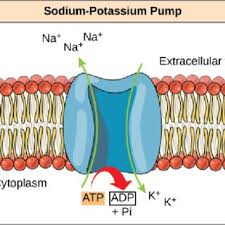
E.g. sodium-potassium pump
vesicular transport
-e.g. of active transp needs ATP
movement of things that are too big to an area by using energy
Transport of large particles, macromolecules, and fluids across membrane in membranous sacs called vesicles
2 types:
exocytosis - movement of things out of the cell
endocytosis - movement of things into the cell
—> 3 types: phagocytosis, pinocytosis, receptor-mediated endocytosis
—→ pinocytosis: cell drinking, fluids e.g. nutrients as liquid come into the cell
—→ phagocytosis: plasma memb of cell creates false feet around whatever it wants to eat (e..g cancer cell) and brings it inside the cell! -: false feet = pseudopods
receptor-mediated endocytosis: cells have specialized receptors to which a spec thing will get attached and be brought into the cell e.g. spec receptor for gluc - only gluc will get attached to receptor and taken into the cell!
vesicle
anythihg we want to transport out of the cell will be in the form of little packages called vesicles
memb potential
when you have negative charge + potassium inside cell + you have pos charge and sodium outside cell - cell is in resting condition/resting memb pot / polarised state - plasma memb keeps charge + electrical diff in + out of cell
- voltage inside cell can be -90 to -110 mV when cell in resting pot
DNA
nucleotide made of pentose sugar, phosphate, nitrigenous base: ATGC
DNA is larger molecule in nucleis
important cuz has codes for make prots
spec part of DNA which has recipes for making protein is called GENE
double strand
RNA
single strand
AUGC
made in nucleus
3 types:
mRNA (messenger) func:
rRNA (ribosomal) func:
tRNA (transfer) func:
these RNA can exit nucleus + go into cytoplasm
2 processes in which proteins forned
transcription
translation
transcription
1 strand of DNA goes away when want to make prot
a single strand of DNA gets mRNA attached to it
mRNA copies protein codes cuz DNA cant exit nucleus cuz its big
then will exit nucleus and go into cytoplasm
translation
all the messages /prot codes mRNA has is then translated/ transferred to another RNA called tRNA
tRNA will tell those protein codes to ribosomes and rough ER
- protein synth will then start
cell cycle
phases of cell life
2 stages of cell cycle
interphase
mitosis
interphase
phase whr cell grows in size
mitosis
phase in cell cycle in which the genetic material (DNA) + cytoplasm divide into 2 equal daughter cells
cell division in which 1 mother cell divides into 2 daugher cells in which the genetic material (which is DNA) + cytoplasmic contents will be equally distrib to 2 daughter cells.
mitosis phases EXAM
prophase
metaphase
anaphase
telophase
prophase
in cytoplasm, we have 2 centrioles in each cell normally
centrioles will double - we have 4 now
from centrioles - spindle-like fibers/extensions will come out - we call em mitotic spindles
2 centrioles will move towards each end of cell
in nucleus, DNA conv to chromosomes (2 sister chromatids connevcted tgt - connected to each other by centrosomes - a prot)
nuclear memb disappears + chromosomes become free in cytoplasm
mitotic spindles hold chromosomes by centromeres
metaphase
mitotic spindles bring chromosomes to centre of cell
anaphase
mitotic spindles separate sis chromatids + bring sis chromatids to opp ends of cell
telophase
cell starts to get pinched in the centre - starts to divide
dent formed between 2 cells is cleavage furrow - eventually deepens to form 2 daughter cells
cytokinesis
process in which cytoplasm of cell begins to divide into 2
cell is fully dividied
23 chromosomes in each of the daughter cells
we need cell division for
produce cells
allow for growth + repair of tissues
perichondrium **
connective tissue covering/memb surrounding all cartilage that supplies it with blood cuz all cartilage is avascular
all cartilage is
avascular
no body cells can survive without
blood coming to it
cartilage cells
chondrocytes
lacunae
cavities/spaces in which chondrocytes (cartilage cells) sit
(how bones formed)
before u born - in mum’s uterus - all support for body was cartilage, which was later replaced by bones
support for body was cartilage cuz is flexible, moldable, light weight, more resilient, made of more watery content
after birth. all cartilage replaced by bones, and bones make up the skeletion/support of body now
3 types of cartilage
hyaline cartilage
fibrocartilage
elastic cartilage
hyaline cartilage **EXAM
seen mostly around ends of bones that make joints
ELASTIC cartilage
see in ear ; rare
fibrocartilage
seen in intervertebral discs
bones are what type of tissue
CT
funcs of bones
.1. Support
• For body and soft organs
2. Protection
• Protect brain, (vertebraes that surround) spinal cord, and vital organs (rib cage surrounds heart + lungs)
3. Movement - most muscles attached to bones and are resp for movement
4. Mineral and growth factor storage
• Minerals Calcium and phosphorus stored in bones, + growth factors stored in bone
© 2016 Pearson Education, Inc.
5. Blood cell formation
-rbc, wbc, platelets made in bones
• Hematopoiesis - process of blood cell formation by the bones
-6. (fat) storage
• Fat is stored in bone cavities
VIT D PRODUCTION