cell cycle
 Call Kai
 Learn
Learn Practice Test
 Spaced Repetition
 Match
Match Flashcards
 Knowt Play
1/7

There's no tags or description
Looks like no tags are added yet.
Name | Mastery | Learn | Test | Matching | Spaced | Call with Kai |
|---|
No analytics yet
Send a link to your students to track their progress
8 Terms
37. Infer the role of cyclin.
Cyclin activates regulatory proteins.
Cyclin signals the cell to enter mitosis.
Predict what happens if cyclin is no longer produced.
Mitosis cannot occur.
The cell remains in interphase.
The cell continues to grow.
Material exchange becomes difficult.
The cell may die because it cannot obtain enough materials.
The cell may also die due to aging.
Predict what happens if the apoptosis gene is damaged.
Abnormal cells survive.
Apoptosis does not occur normally.
Uncontrolled cell survival occurs.
The risk of tumor formation increases.
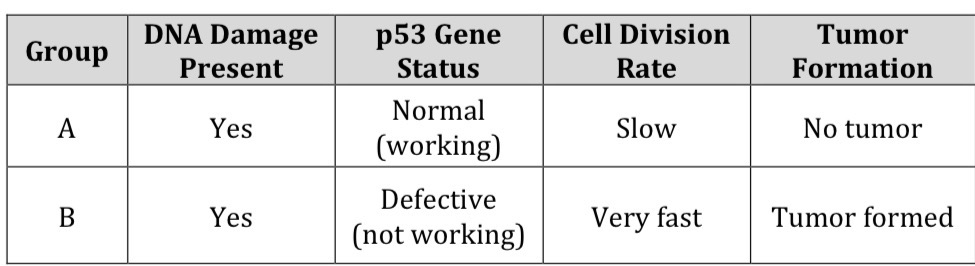
42. Explain why Group A did not form tumors.
The p53 gene works properly.
It stops the cell cycle when DNA is damaged.
DNA damage can be repaired.
Uncontrolled division is prevented.
Tumors do not form.
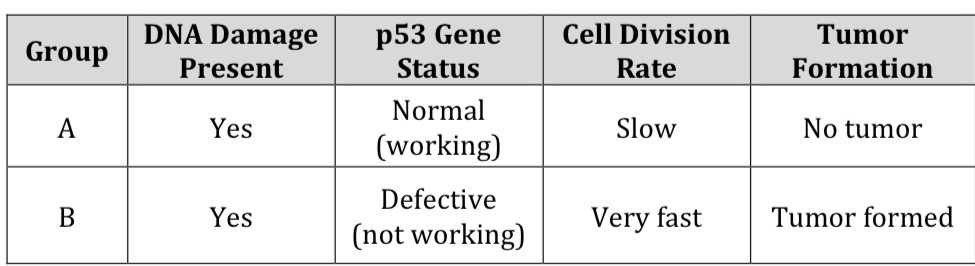
43. Explain why Group B formed tumors
The p53 gene is defective.
DNA damage is not detected.
The cell cycle does not stop.
Cells divide uncontrollably.
Tumors are formed.
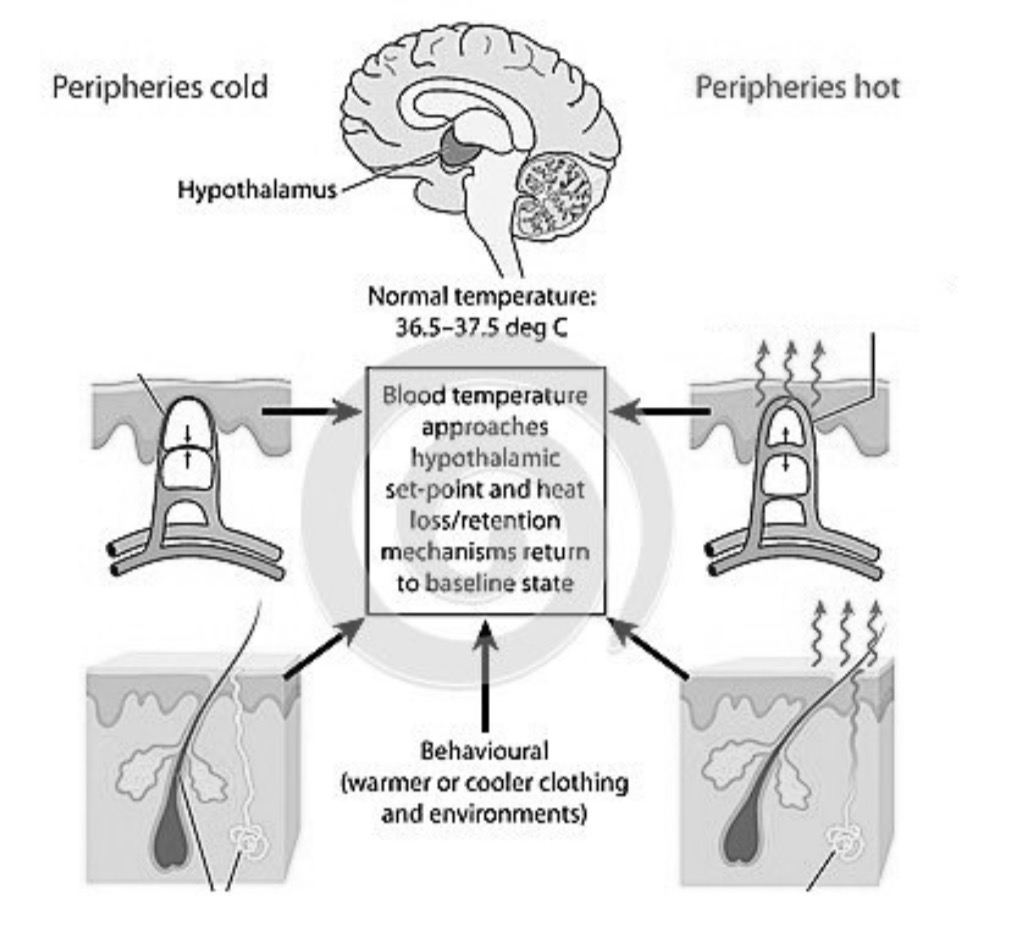
47. Identify the type of feedback and ex
Negative feedback.
It maintains homeostasis.
It keeps internal conditions around a set point
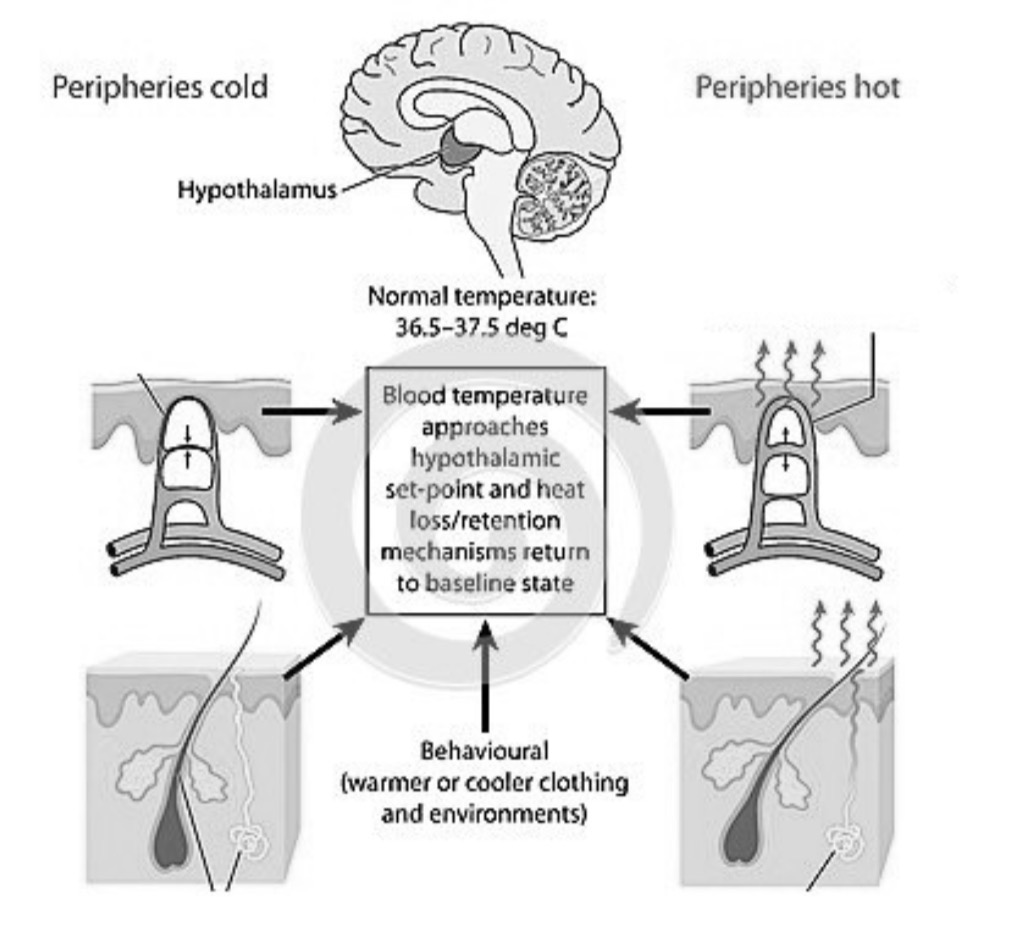
48. Explain the importance of this mechanism.
It maintains homeostasis.
It keeps internal conditions stable.
52. Explain how the liver regulates blood glucos
The liver stores and releases glucose when needed.
After a meal, insulin causes excess glucose to be stored as glycogen.
Blood glucose decreases.
During fasting, glucagon breaks down glycogen.
New glucose is produced.
Blood glucose remains stable.
The brain receives a continuous supply of energy.
Liver dysfunction may cause hypoglycemia or diabetes.