Chapter 3: Lifting and Moving Patients
 Call Kai
 Learn
Learn Practice Test
 Spaced Repetition
 Match
Match Flashcards
 Knowt Play
1/21

There's no tags or description
Looks like no tags are added yet.
Name | Mastery | Learn | Test | Matching | Spaced | Call with Kai |
|---|
No analytics yet
Send a link to your students to track their progress
22 Terms
3 things to consider before lifting a patient
-The object
-Your limitations
-Communication
What to use when carrying a pt down steps?
Stair chair, if possible
Three situations to use an emergency move
-The scene is hazardous
-Care of life-threatening conditions requires repositioning
-You must reach other patients
To prevent aggravation of an injury, _____.
move the patient in the direction of the long axis when possible
Urgent move
Patient must be moved quickly for treatment of immediate life threats, but spinal precautions are taken.
When to use an urgent move
-The required treatment can only be performed if the patient is moved.
-Factors at the scene cause patient decline. (ex. heat, cold)
When to use a nonurgent move
There is no immediate threat to life, and the patient is ready for transportation.
When moving a patient on a stretcher, the safest level is ____.
closest to the ground
How much weight can most power stretchers lift?
700 lbs
Bariatric
Having to do with patients who are significantly overweight or obese
How to carry a stretcher on rough terrain
Four EMTs, one on each corner
An indication for a stair chair
Pt with difficulty breathing
Contraindications for a stair chair
-Neck or spine injury
-Unresponsive pt
-Severely altered AMS
-Pt needs airway care
What is a backboard / spine board used for?
Transportation from scene to stretcher, spinal immobilization
Contraindication for scoop stretcher
Spinal injury
Methods for moving a pt with no suspected spinal injury
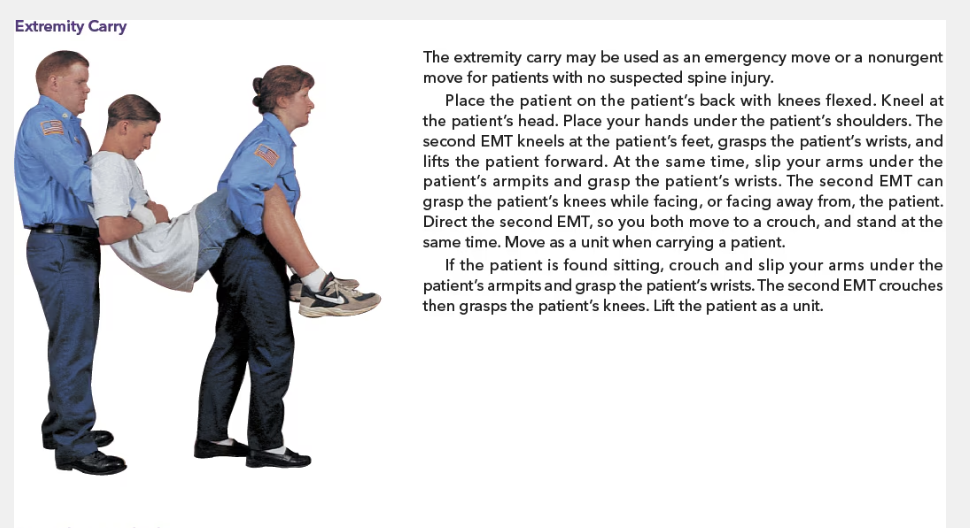
-Extremity lift
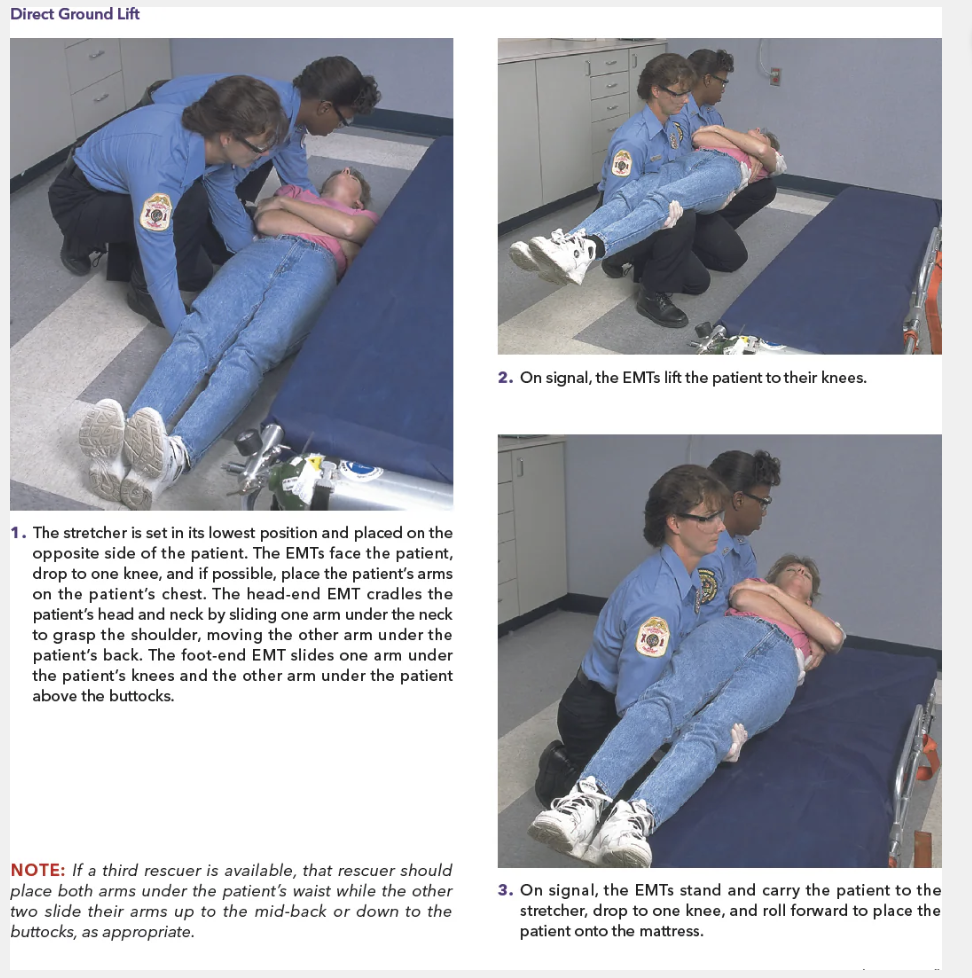
-Direct ground lift
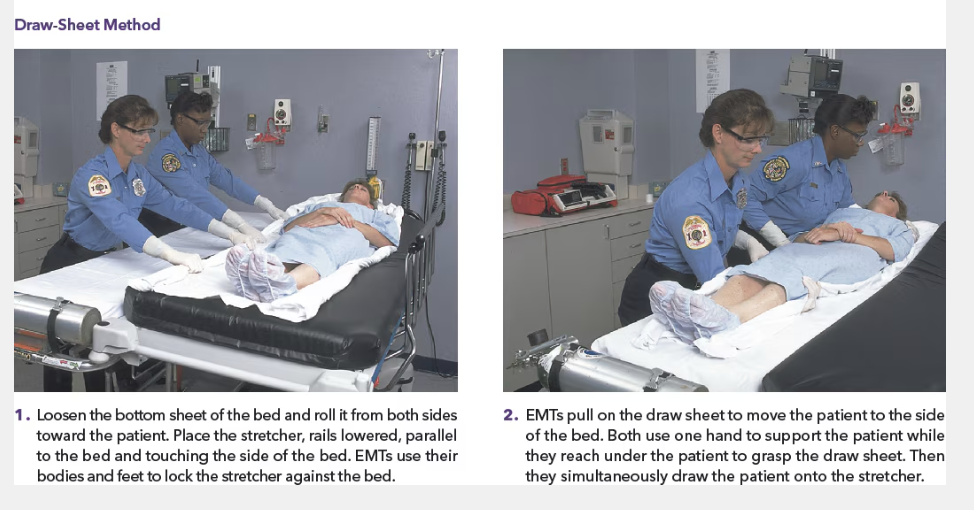
-Draw-sheet method
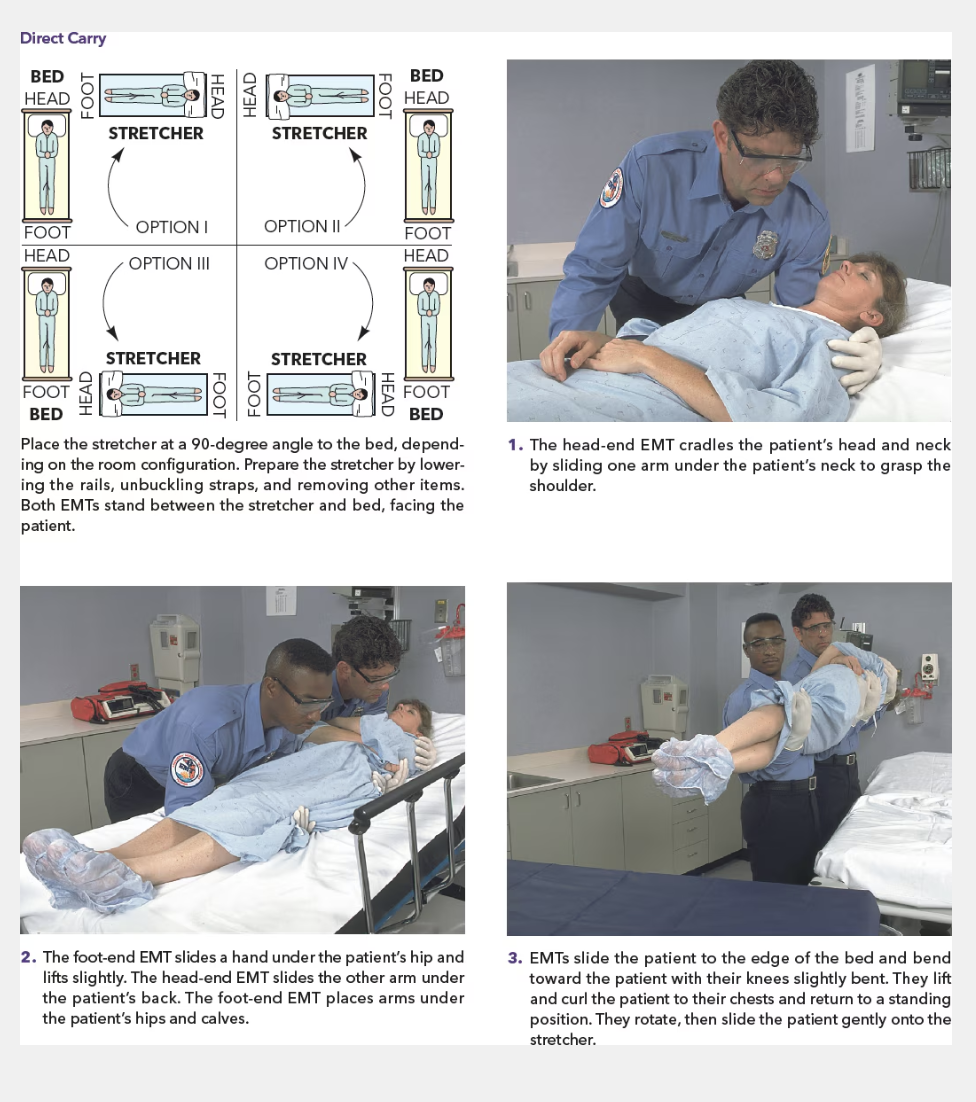
-Direct carry
Extremity lift
Direct ground lift
Draw-sheet method
Direct carry
How to position an unresponsive patient with no suspected spinal injury?
Recovery position
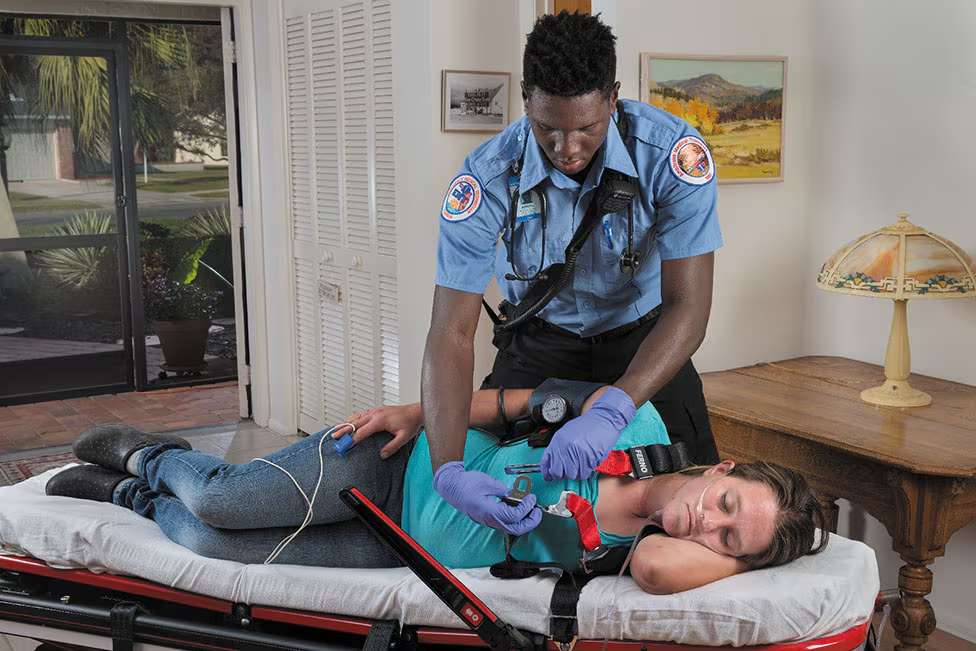
How to position for shock
Supine (allows maximum perfusion)