14 Innate Immune Response
 Call Kai
 Learn
Learn Practice Test
 Spaced Repetition
 Match
Match Flashcards
 Knowt Play
1/16

There's no tags or description
Looks like no tags are added yet.
Name | Mastery | Learn | Test | Matching | Spaced | Call with Kai |
|---|
No analytics yet
Send a link to your students to track their progress
17 Terms
Immune System
Protects against foreign invaders (infectious diseases)
2 components:
Innate » what you’re born with. The 1st and 2nd line of defense
Adaptive » acquired throughout lifetime. 3rd life of defense
specific response to a specific pathogen
Intact skin
First line defense.
[__]: barriers that shield interior of body from outside
Physical barrier → makes difficult to penetrate
prevents 99% of pathogens
dry environment → prevents growth of microbes
[__] continually sloughs off, along with any attached microbes
This is why damaged or open skin puts body at risk

Mucous membranes
First line defense.
[__]: barriers that line gastrointestinal, respiratory, and genitourinary tract
bathed in antimicrobial secretions (mucus, IgA: immunoglobulin A, primary antibody)
Respiratory tract
ciliary escalator → peristaltic pump action propels microbes away from lungs
mucus » contains IgA
Eyes → most susceptible
tears → cleansing; contains lysozyme and IgA
undergoes blinking from constant motion
Urogenital tract
urine → cleanses urethra
has secretions
GI tract
gastric acid acts in stomach
normal flora compete with pathogens in intestine

antimicrobial defenses
First line of defense.
[__] protect skin and mucous membranes
eg.
sweat: salt on skin
lysozyme → degrades peptidoglycan
found in tears, saliva, blood and phagocytes
lactoferrin: iron-binding proteins → sequesters/isolates iron
found in saliva, blood, mucus, and tissue fluids

normal microbiota
First line defense.[__] or human microbiome are the microorganisms found on the body surfaces; normally do not harm host.
Stimulates the host immune response
Provides significant protection against invasion by:
competitive exclusion
» physical exclusion → takes up space and covers binding sites so pathogens can’t bind
» competing for nutrients → makes nutrients unavailable for pathogens
producing chemicals (bacteriocins, acids) toxic to invaders
immune system
Cells of the [__] are always found in the normal blood
→ numbers increase during infection
→ includes white blood cells (WBCs); also known as leukocytes » very important in host defenses
Neutrophil
Most abundant leukocyte (55-85% of WBC)
increases in number during infection
eats and kills pathogens (phagocytosis)

Basophils
Leukocyte involved in allergic reactions and inflammation
eg. mast cells: cells similar to [__] of the blood, except they are found in tissues
Eosinophils
Leukocyte responsible for fighting parasitic worms.
Done by poking holes in their membranes
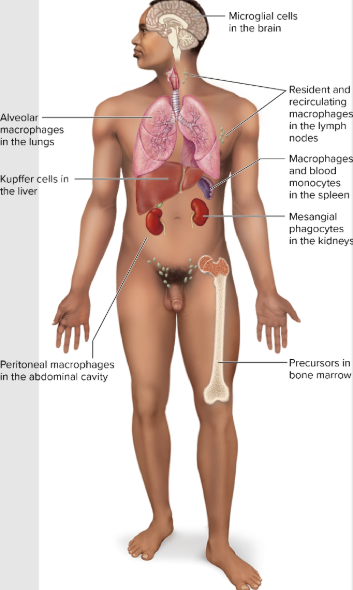
Macrophages
Cells that differentiate from the leukocyte, monocyte. Involved in phagocytosis
present in most tissues
abundant in liver, spleen, lymph nodes, lungs, and peritoneal cavity
Dendritic cells
Cells that differentiate from the leukocyte, monocyte. They are branched cells
sentinel cells → function as “scouts”
has pseudopods that grab onto and engulf the pathogen in tissue and bring it to cells of the adaptive immune system for “inspection”
found in the liver, spine, lung, and spleen
Lymphocytes
Leukocyte involved in adaptive immunity
has specific response to antigen (pathogen) with production of antibodies
B-cells » produce antibodies to specific antigens
T cells differentiate into (3) kinds of cells:
Cytotoxic T cells → destroy infected cells
Helper T cells → recruit B and T cells to site of infection
Natural Killer cells → kills abnormal cells, even host cells
Complement System
System composed of a group of proteins circulating in blood and fluids. Named [__], as it “complements” the function of antibodies
When activated, leads to protective outcomes:
inflammation
opsonization: coating of an object with molecules for which phagocytes have receptors → makes it easier for phagocyte to engulf object
cytolysis → lysis of foreign cells
spontaneous assembly of system proteins in doughnut-shaped structures known as membrane attack complexes (MAC) → creates pores in cell → lyse

phagocytosis
Carried out by phagocytes
The act of engulfing and digesting microbes and cellular debris

inflammatory response
Occurs in response to microbial invasion or tissue damage.
4 Cardinal signs:
heat
pain
redness
swelling
in addition to loss of function
[__] is done in order to contain damage, localize response, eliminate invader, and restore tissue function.

initiated by chemical mediators released by cells around damage
leads to dilation of blood vessels → increased blood flow to area
diapedesis: migration of leukocytes and phagocytes from blood vessels into tissue
Outcomes of inflammation are:
limited damage and restored function
damage, as inflammation itself can cause damage
severe consequences in delicate systems
inflammation around the brain and spinal cord can lead to meningitis or encephalitis
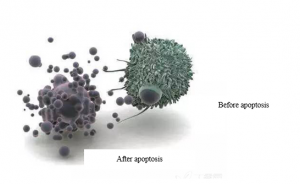
Apoptosis
Programmed cell death. Cells die without eliciting an inflammatory response → cell undergoes changes to signal destruction by macrophages
Fever
An increase in internal body temperature to 37.8C or higher
strong indicator of infection, especially of bacterial infection
higher temperature for bacterial than viral infections
caused by pyrogens: fever-inducing substances
eg. lipid A of Gram-negative bacteria
Has a curative effect
» inhibits the growth of or kills pathogens
» speeds up body’s defenses