Designing safer chemicals
 Call Kai
 Learn
Learn Practice Test
 Spaced Repetition
 Match
Match Flashcards
 Knowt Play
1/26

There's no tags or description
Looks like no tags are added yet.
Name | Mastery | Learn | Test | Matching | Spaced | Call with Kai |
|---|
No analytics yet
Send a link to your students to track their progress
27 Terms
examples of commodity chemcials that have leasd to adverse side effects
PFAS: widely used commodity chemical (packaging, coatings), but very slowly biodegradable. Now it can be found everywhere, and can accumulate in the body leading to health risks.
DDT: insecticed used to spread on crops and reduce malaria. however it was found to cause reproductive problems in a certain kind of birds leading to its ban. it is also very slowly biodegradable
example of intended spillage
CFCs chlorofluorcarbons: once considered a safe refrigerant and aerosol propellants (replacing toxic ammonia). But because of its slow degradation, it allowed them to accumulate in the atmosphere damaging the ozone layer (Cl radicals act as catalyst for O3 to O2 conversion). although now banned, ozone layer is still recovering
two main approaches of sustainable chemistry
designing safer synthetic pathways to the same or similar chemicals
designing new/safer chemicals themselves
preferable also through a greener patwhay over traditional alternatives
12 prinicples of green chemsitry mainly focus on approach 1, but not sufficient to solve DDT or PFAS problems therefore sustainable chemistry should focus more on approach 2
designing safer chemicals
using SAR and synthesis to find the optimum relationship between toxicological effects and efficacy of intended use
although optimum cannot be determined form scientific reasoning but only provide insight. so it’s determined as a society (side effects more accepted for anti drug than pain killer)
•‘Domestication’ of chemistry
like a wolf has domesticated to dogs. we still use dangerous chemicals we have to take precautions for. but in an ideal situation, we should be able to safe chemistry in our kitchen for instance.
Starting points of designing safer chemicals
need for new chemical with specific function - come up with structural design - new chemical that is safe and effective
start from existing effective chemcial (that may not be safe or green) - redesign - modified chemcical that is safe and effective
what’s new? (new way of approaching this)
Like SAR with respect to biological activity and toxicity has always been important in medicinal chemistry, this knowledge should be extend to the design of all chemcials.
Should lead to a new toxicological chemist that combines the knowledge of:
industrial chemist (efficacy)
medicinal/pesticide chemist (awareness of side effects)
also have broader environmental check (not only consider human health.
design strategy
define characteristics to guarantee efficacy (what should the comoun do?)
define molecular characteristic responsible for efficacy (how should compound induce effect?)
design and redesign chemcial avoiding adverse effects on human biology or environment
external vs internal considerations for designing safer chemicals
External (have nothing to do with the metabolism of the organism on which we study the adverse effects)
distriubition into the environment
uptake by organisms
routes of absorption by man, animal and aquatic life
reduction/elimination of impurities
internal (have to do with the metabolism of the organism on which we study the adverse effects)
facilitate detoxication (easier excretion by the body)
avoid direct toxication (direct toxic effect)
avoid indirect biotoxication (creation of toxic metabolites)
toxicity of benzene (biotoxication)
benzene itself is not toxic, it is a very stable inert molecule. However in the body, benzene is metabolized to facilitate its excretion. since it is very apolar, is does not dissolve well in aqueous media such as urine. the body converts into more compounds to facilitate this.
this occurs through oxidation reactions catalyzed by cytochrom enzmes that use oxygen as a reagent. This can lead to the transformation of benzene to epoxide intermeidates that are strongly electrophilic. These are susceptible to nucleophilic attack by nucleophilic gorups on DNA, RNA or proteins so alkylation can occur. This can lead to damage of genetic material or deactivate enzymes leading to loss of protein function and toxic or carcinogenic effects
External considerations:
Environmental distribution/dispersion
Factors:
volatility/ density/melting point
more volitile compounds spread more easily
solubility
lower sol means slower spread into the environment
persistnce (susceptibility to biodegradation)/degradation, main routes:
oxidation
hydrolysis
photolysis
microbila degradation (by microorganisms, diverse but mostly oxidation and hydrolysis)
this can result in conversion to biologically active (toxic) or incactive (harmless) substances
eg. DDT —>DDE
External considerations:
uptake by organisms
Main parameters
volatility (breathing)
lipophilicity (LogP = Coct/Cwater)
important paramater in drug discovery
measured by my putting compound in equal mixture of octanol and water, shaaking it, allowing phase separation and measure conc in both layers
higer LogP = higher conc in octanol = higher lipophilicty
why octanol as it still contains an alcohol (polar)?
because this additional polarity was agreed to resemble human tissue the most which is not purely hydrophobic
Molecular size
large molecules are less likely to be taken up
may require degradation e.g. hydrolysis of ester but depens on other factors
pH
digestive enzymes (does not mean every molecule with ester or amide is hydrolysided, it still has to fit into the pocket)
External consideration:
routes of absorption by man, animals, or aquatic life
skin
eyes
lungs
gastrointestinal tract (from mouth to an*s)
gills for fish or other species specific routes
External considerations:
Reduction/elimination of impurities
presence/generation of impurities of different chemical classes
more easily removed because different physical and chemical properties
presence/generation of toxic homologs
harder to remove
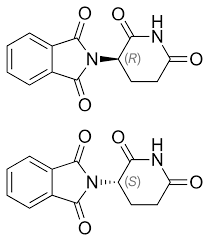
presence/generation of geometric isomers or stereoisomers
very difficult to remove
R- vs S-thalidomide was used as a drug to treat morning sickness during pregnancies but was banned because it caused birth defects (like arms missing) because of one of the isomers (S)
Internal considerations
facilitation of detoxication
facilitate excrection (mostly via urine)
select more hydrophilic compounds
facilitate conjugation or acetylation
body can attatch sugar moieties (highly polar) to compound it wants to eliminate so it’s more readily excreted
so chemist can provid a handle to which this can occur
facilitate biodegradation
introduce functional groups that are susceptible to smooth fragmentation, hydrolysis, oxidation, reduction,…
facilitation of biodegradation example
Laundry softeners
they are cationic detergents with a polar cationic head and a hydrophobic tail
Use
The water used to wash our clothes contains ions like Mg2+ or Ca2+ that have affinity for the fabric, if this occurs to a certain extent the fabric becomes hard
so in the final cycle of washing cationic detergents are added that replace the ions from the fabric so it becomes soft again
cationic detergents are more toxic than anionic ones (soaps) because they affinity for DNA
they don’t have any real FG the body can use to metabolise it
Solution: somewhere in the chain put an ester so the body has a handle for hydrolysis, it is than converted into an alcohol which is harmless and and NR3+-COOH which is polar and is more easily excreted
but in industry it is hard to change the process used to make it in a competitive market (want to keep it cheap)
industry doesn’t like change

Internal considerations
Avoidance of direct toxication
Selection of appropriate chemical class or parent compound
eg. if you discover an insecticide that is very similar in structure to corticoids (a type of steroid) this should ring a bel
they are structurally very similar to hormones whcich act at small concentrations in the body to spreading them in the envirionment at large scale is a bad idea
selection of fucntional groups
avoid toxic FGs (like cationic FGs like micheal acceptors)
planned biochemical elimination of toxic structual elements by incorporating elements that facilitate this metabolization (without making a more toxic metabolite)
structural blocking of toxic groups (sterically shield cationic groups to prevent nucleophilic attack)
pot toxic group at alternative molecular site
Internal considerations:
avoidance of indirect biotoxication
avoid chemicals with known activation routes
aromatic amines
unsaturated bonds
sterically block bioactivation
but bulky groups around FG’s susceptible to bioactivation
phases of Toxicity
exposure phase
toxicokinetic phase
absorptions
distribution
metabolism
excretion
(ADME)
toxicodynamic phase
chemical and biomolecular interactions with target tissue
toxic effect
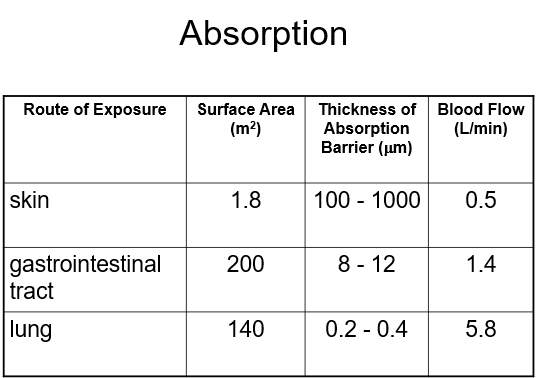
Absorption
skin
designed to not allow chemicals from the outside to get in
high thickness
low surface area
low bloodflow
gastrointestinal tract:
large surface area to allow exhange between lumen of intestins and blood
lower thickness
higerh bloodflow
lungs
also high surface area designed to allow exchange of O2 and CO2 ( and other chemcicals)
very thin
very high bloodflow (allows easier exchange)
physicochemical parameters of importance for absorption
molecular weight and size
larger molecules are more diffiicutl to absorb
dissociation constants
gastrointestinal tract is optimised for absorption of certain chemcials like amino acids, these are zwitterionic so dissociation cte’s can be of importance
particle size
asbestos is small and easy to enhale
aggregation state
liquid, solid, gas (easier to enhale)
lipophilicity
octanol/water partition coefficient
Lipinksi’s rule of five
Get an idea about the oral availiability of biomolecules
no more than 5H-donors
no more than 10 H-acceptors
Mw lower than 500 g/mol
LogP < 5
rules are designed to penetrate barriers but we want the opposite effect for toxicity. therefor we can apply the same rules but use them oppositely
molecular modifications to reduce absorption from the skin
polar, ionised, water soluble, low lipophilicity (rather than the opposite
solids rather than liquids
increase particle size or increase molecular weight and particle size
molecular modifications to reduce absorption from the lungs
less volatile (lower vapour pressure, higher boiling point)
higher melting point
less water soluble ie. higher lipophilicity (opposite to skin)
lung has a really thin membrane, while the skin has a thick hydrophobic membrane that would require hydrophobic compounds to get through
since the lung’s is thin, so the first step of the drug is to dissolve in the thin aqueous lining fluid in the airways before it can enter through the lipophilic membrane, increasing lipophilicity slows this process
bigger particle size > 5 µm
Molecular modification to reduce absorption from the gastrointestinal tract
increase particle size
increase molecular weight >500 g/mol
logP > 5
opposite of lipinski and absorption in via the skin
higher lipophilicity means more difficult uptake
high melting point > 150°C (for non-ionic substances)
keep substance unionized (or highly ionized)
in contrast to zwitterionic compounds
these are in between unionized and highly ionized and are thus abosrbed better (like AA’s)
also faty acids are weakly acidic and partially ionised and also abosrbed
this is not what we want for toxicity
thus unionized or highly ionized molecules are less likely to pass
Remark: difficult uptake becomes more and more problematic in medicinal chemistry
Drug candidates become more and more complex as the simple ones have already been investigated
they are more complex, bigger, and don’t abide lipinski’s rules anymore and are therefore less bioavailable
Understanding of toxic mechanism
very common pathway of toxicity is through the compound acting as an electrophile
the electrophile can react with nucleophilic groups present in the biological system
thiol of cysteine in proteins
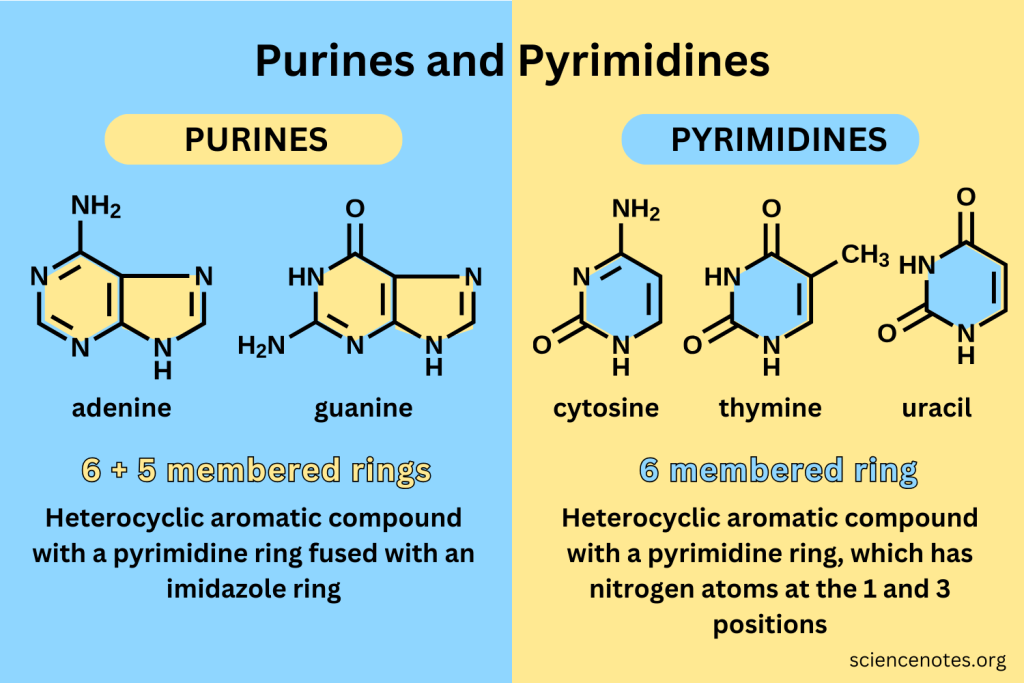
amine(like) groups in purines or pyrimidines in DNA or RNA
oxygen atoms of purines or pyrimidines in DNA or RNA
main effects
cancer
hepatotoxicity
liver (main source of detoxication)
hematotoxicity
blood
nephrotoxicity
damage to kidney
developmental toxicity
reproductive toxicity
Understanding of toxic mechanism
Electrophiles
electrophile enters the body