module 10: tetrapod limb development
 Call Kai
 Learn
Learn Practice Test
 Spaced Repetition
 Match
Match Flashcards
 Knowt Play
1/15

There's no tags or description
Looks like no tags are added yet.
Name | Mastery | Learn | Test | Matching | Spaced | Call with Kai |
|---|
No analytics yet
Send a link to your students to track their progress
16 Terms
stylopodium
1st single element in limb, more proximal
zeugopodium
2 elements/bones, middle of axis
autopodium
more diversified
support weight
carpals, digits
more distal
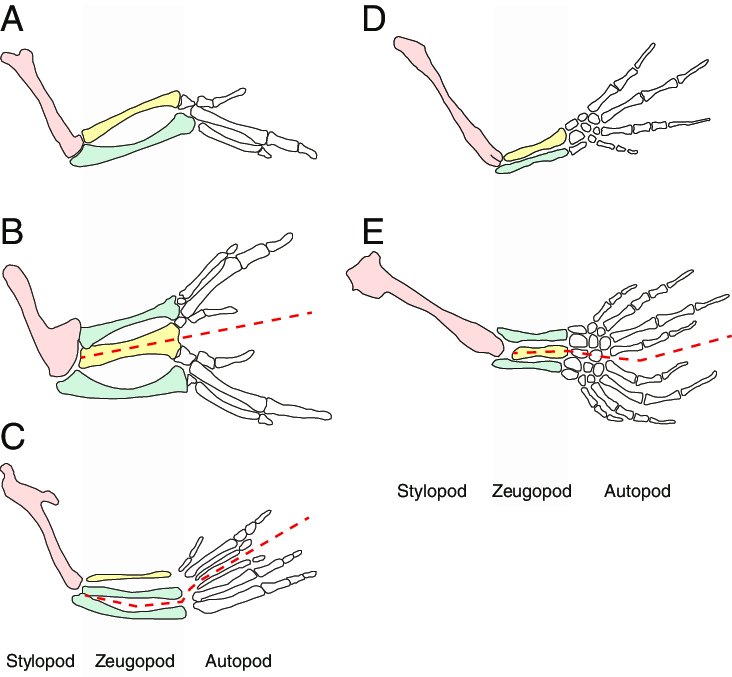
homologous elements in tetropod limbs
hox clusters determine domains of expression
stylopodium, zeugopodium, autopodium
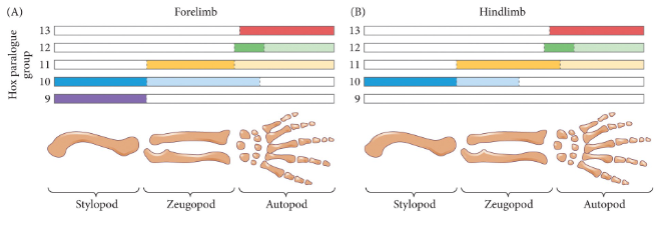
distal dominance
hox genes expressed more distally override more proximal hox expression
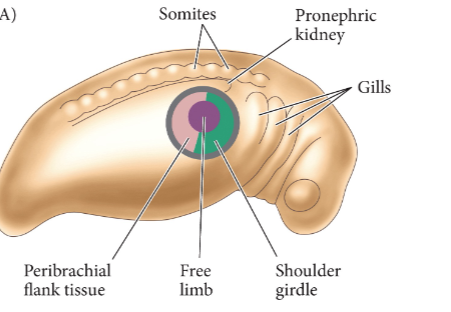
limb fields
center = free limb/limb proper
shoulder girdle
peribrachial flank tissue
ring of cells with limb potentiality
what components does the limb come from?
cells coming from paraxial mesoderm —> limb muscle
cells from lateral plate mesoderm→ limb bones
progress zone Pz
mesenchymal cells
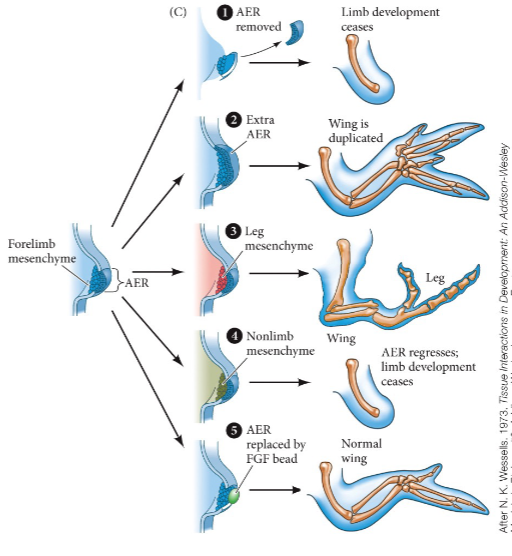
apical ectodermal ridge
expresses fgf8 (mutfgf8 = stops limb growth)
part of ectoderm
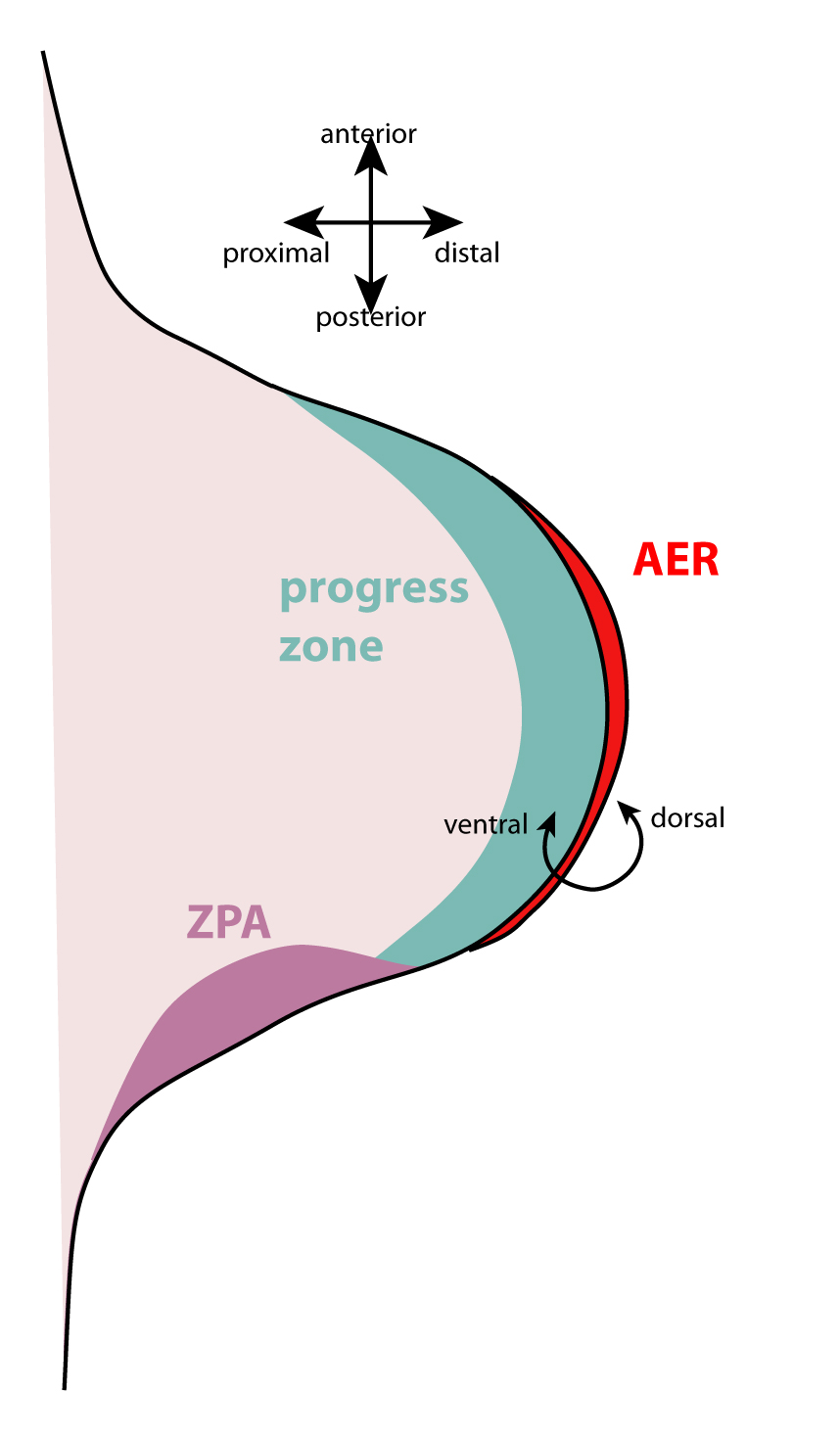
zone of polarizing activity ZPA
expresses ssh
thumb to pinky gradient
mutation — polydactyly, mirrored fingers
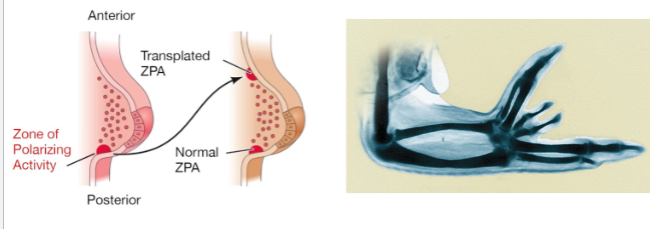
events of limb development
induction of limb bud: high RA, no fgf8
outgrowth: fgf8 expression distally
cell specification: as fgf8 increases, RA decreases
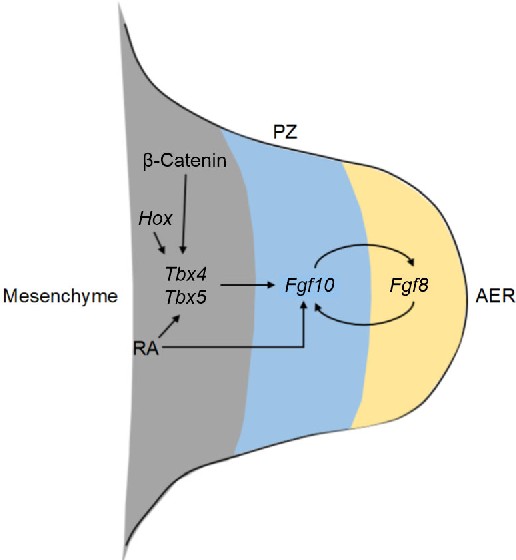
limb bud induction: FORELIMB
forelimb develops in RA permissive field
(mesoderm) high RA → +TBX5 (TF) → + wnt2b → (ectoderm) +fgf10 → +Wnt3a → + fgf8
+ feedback loop: fgf8 → + fgf10 → + TBX5
TBX5 = forelimb identity
fgf10 = cell division
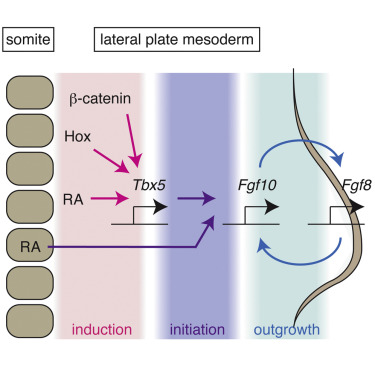
limb bud induction: HINDLIMB
starts with signal NOT RA
(mesoderm)? -→ + pitx1 OR Islet1 -→ + TBX4 →+ wnt2b → +(ectoderm) fgf10 → +wnt3a → + fgf8
+ feedback loop: fgf8 → + fgf10 → + TBX5
TBX4 = hindlimb identity
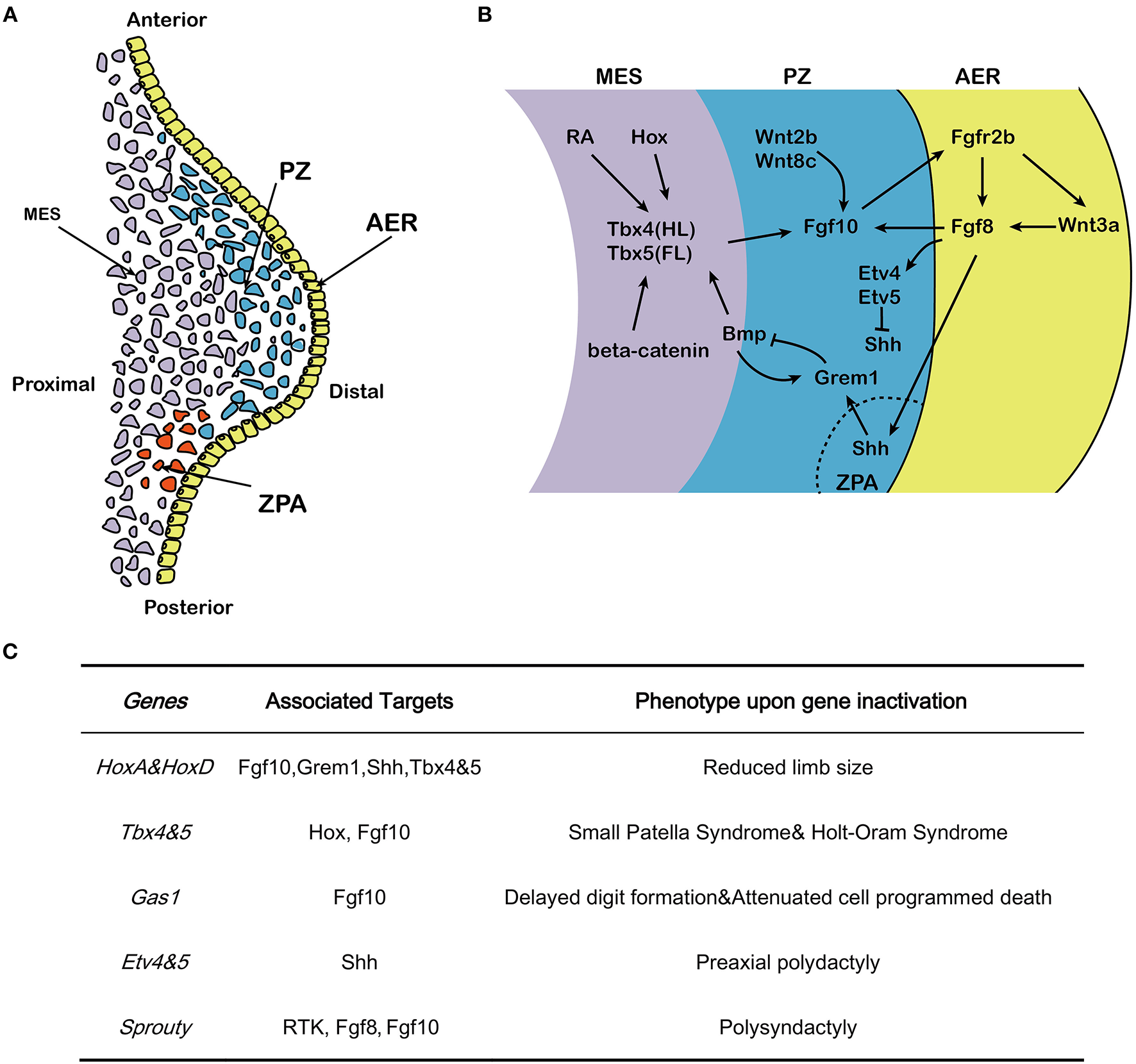
2 paths to Fgf10 expression
TBX5 → wnt2b → Fgf10
fgf8 → fgf10 → TBX5/TBX4
fgf8 = sufficient to induce ectopic chimera limb
apical ectodermal region mutations
heterochronic transplantation
transplant young Pz into old limb bud embryo = duplicated elements
time is important → determines signaling environment