Folding and faulting
 Call Kai
 Learn
Learn Practice Test
 Spaced Repetition
 Match
Match Flashcards
 Knowt Play
1/49

There's no tags or description
Looks like no tags are added yet.
Name | Mastery | Learn | Test | Matching | Spaced | Call with Kai |
|---|
No analytics yet
Send a link to your students to track their progress
50 Terms

Name the fold type covered
Symmetrical/simple fold

Name the fold type covered
Asymmetrical

Name the fold type coevered
Overtured

Name the fold type covered
Recumbent

Name the fold type covered
Over-thrust

Name the feature covered
Syncline

Name the term covered
Anticline

Name the term covered
Limb

Name this process of faulting
Tension

Name this process of faulting
Compression

Name this process of faulting
Shear

Name the feature covered
Footwall

Name the feature covered
Fault plane

Name the feature covered
Fault line

Name the feature covered
Scarp

Name the feature covered
Heave

Name the feature covered
Throw

Name the feature covered
Hanging wall
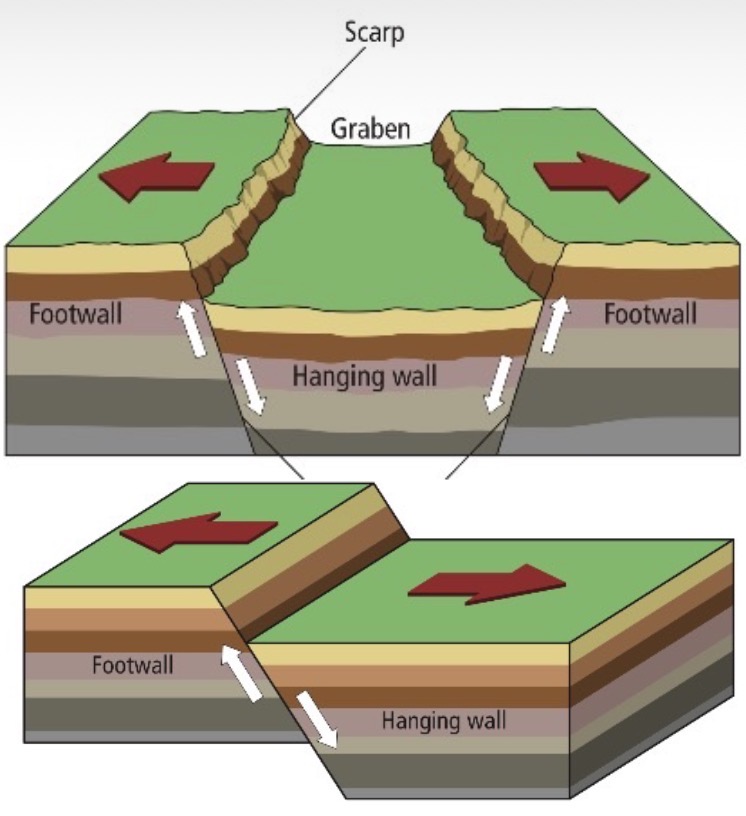
Name this fault type
Normal fault
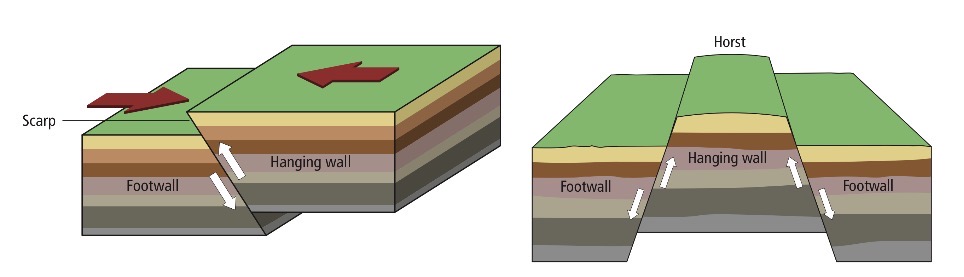
Name this fault type
Reverse fault
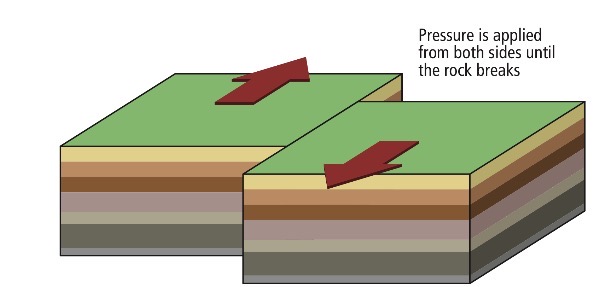
Name this fault type
Transform
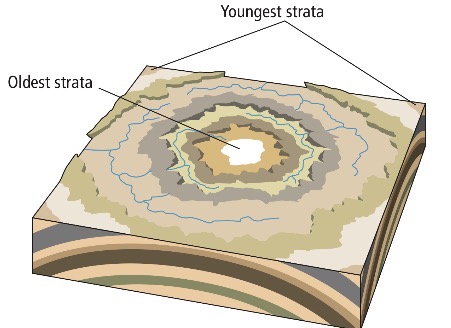
Name this feature
Dome
Fold
A curve that forms in sedimentary rocks buried in the Earth’s crust.
Ductile
Flexible. Used to refer to heated flexible rock that has the ability to change shape without breaking
Strata
Layers of rock
Buckle
How rocks change shape and bend without breaking.
Anticline
The layers of the rock that have been folded upwards
Syncline
The layers of the rock that have been folded downwards
Limbs
The slopes of a fold that connect the anticline and syncline
Symmetrical folds
Also known as even folds, form when an equal amount of pressure is applied on both sides
Asymmetrical folds
When pressure applied from one side is slightly greater than the other. As a result, one limb is steeper and shorter than the other.
Overturned folds
When pressure from one side is far greater than the other. This causes one limb to fold over on top of the other.
Recumbent fold
When the pressure from one side is so great that the limbs are horizontal to each other and moving in the same direction
Over-thrust fold
When the pressure from one side is so great that the strata of rock on one side fractures, causing one limb to be pushed up and over the other
Caledonian Orogeny
Occurred roughly 400mil years ago. Eurasian and north American plates. E.g. Croagh Patrick
Amorican Orogeny
Occurred roughly 250mil years ago, Eurasian and African plates. E.g. Macgillycuddy Reeks, Co. Kerry
Alpine orogeny
Began 60mil years ago, ongoing. African and Eurasian plates. E.g. Alps and Apennine Mts
Fault
A fracture or crack in the Earths crust
Tension
When rocks are pulled apart from both sides.
Compression
When rock is pushed together from both sides
Shearing
When layers of rock are moved sideways in opposite directions.
Scarp
The cliff formed by the vertical displacement of rock
Throw
The distance the crust has moved upwards/downwards
Heave
The horizontal movement of the rock
Fault plane
The surface which the faulted rock slides along
Hanging wall
The section of rock that slides
Footwall
The section of rock that does not move
Normal faults
Created by tension which stretches the crust at a divergent boundary. Can form a ridge valley, a section of the crust that sinks downwards between two parallel faults. E.g. East African Ridge Valley
Reverse fault/thrust fault
Formed when the crust is compressed together at a convergent boundary. Can form a horst, a block mountain that forms when a section of the crust is thrust upwards between two parallel faults, e.g. Killarney-Mallow thrust
Transform faults/tear faults
When two sections of crust move sideways at transform/passive plate boundaries, e.g. San Andreas Fault