Health Policy Issues in Women's Health
 Call Kai
 Learn
Learn Practice Test
 Spaced Repetition
 Match
Match Flashcards
 Knowt Play
1/69

Earn XP
Name | Mastery | Learn | Test | Matching | Spaced | Call with Kai |
|---|
No analytics yet
Send a link to your students to track their progress
70 Terms
Women’s health tends to associate with ______ rates of chronic health problems and functional limitations than men.
greater
The book [Our Bodies, Ourselves]…
brought to light a wide range of women’s health concerns, including
abortion
sexuality
menopause
cancer
#### Roe v. Wade ruling decriminalized and protected the right to abortion care for nearly _____ years.
1973, 50
Pregnancy Discrimination Act of 1978 offered…
workplace and insurance protection to pregnant workers
the NIH Revitalization Act of 1993 mandated the inclusion of women in ______ _______ and formally established the NIH _____ of _______ Health
Clinical Research
NIH Office of Women’s Health
In 2010, ACA banned discriminatory practices that had shaped women’s coverage of and access to care. ^
Nice…

In 2022, Dobbs v Jackson Women’s Health…
struck down the right to abortion, resulting in the outright banning of abortion in many states
Almost ____-third(s) (_#_%) of women live in a household with at least one full-time worker
While ___ in 10 (_#_%) live in a household with only part-time workers, and __#__% of women live in households with no workers.
two thirds, 65%
1 in 10 (9%)
25%
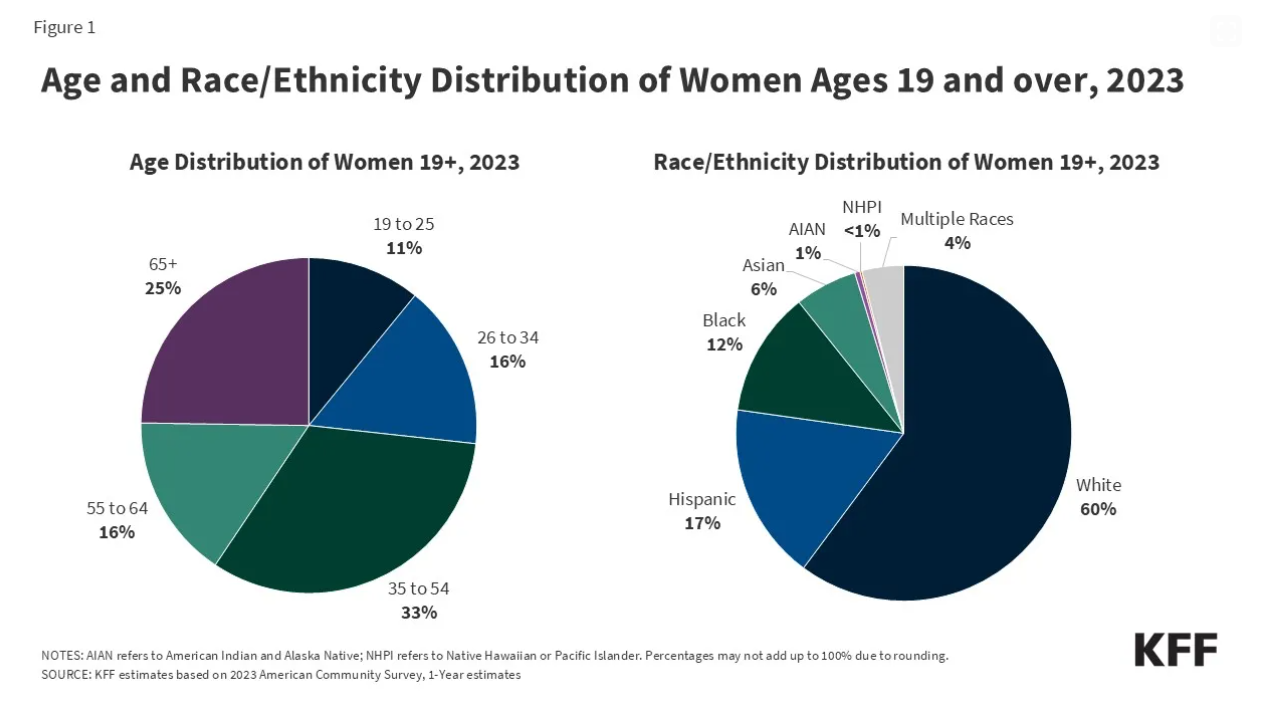
Age & Race/Ethnicity Distribution of Women Ages 19 and over, 2023
Ok!

Nearly ___ in 5 (___%) women 18 and older rate their health as fair or poor.
___% report having a disability such as difficulty with vision, hearing, or walking
1 in 5 (18%)
14%
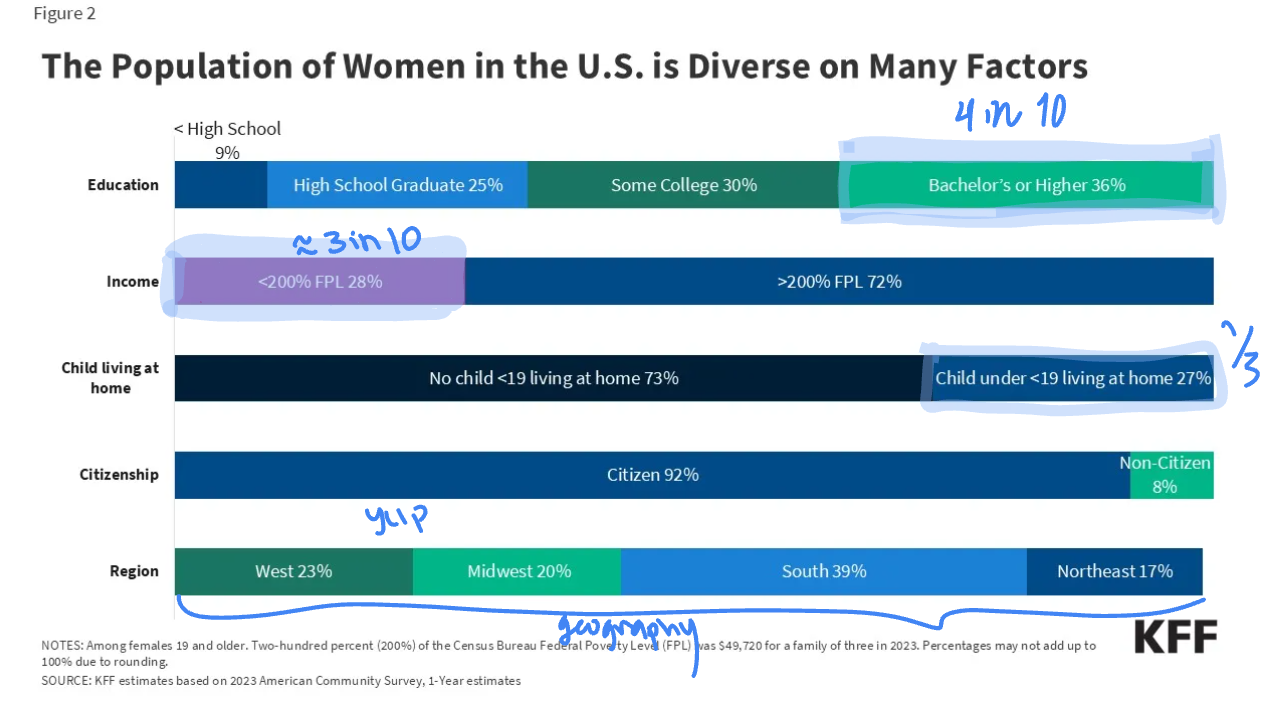
Graph ^
Ok


__ in 10 women under age 65 are completely uninsured
1 in 10
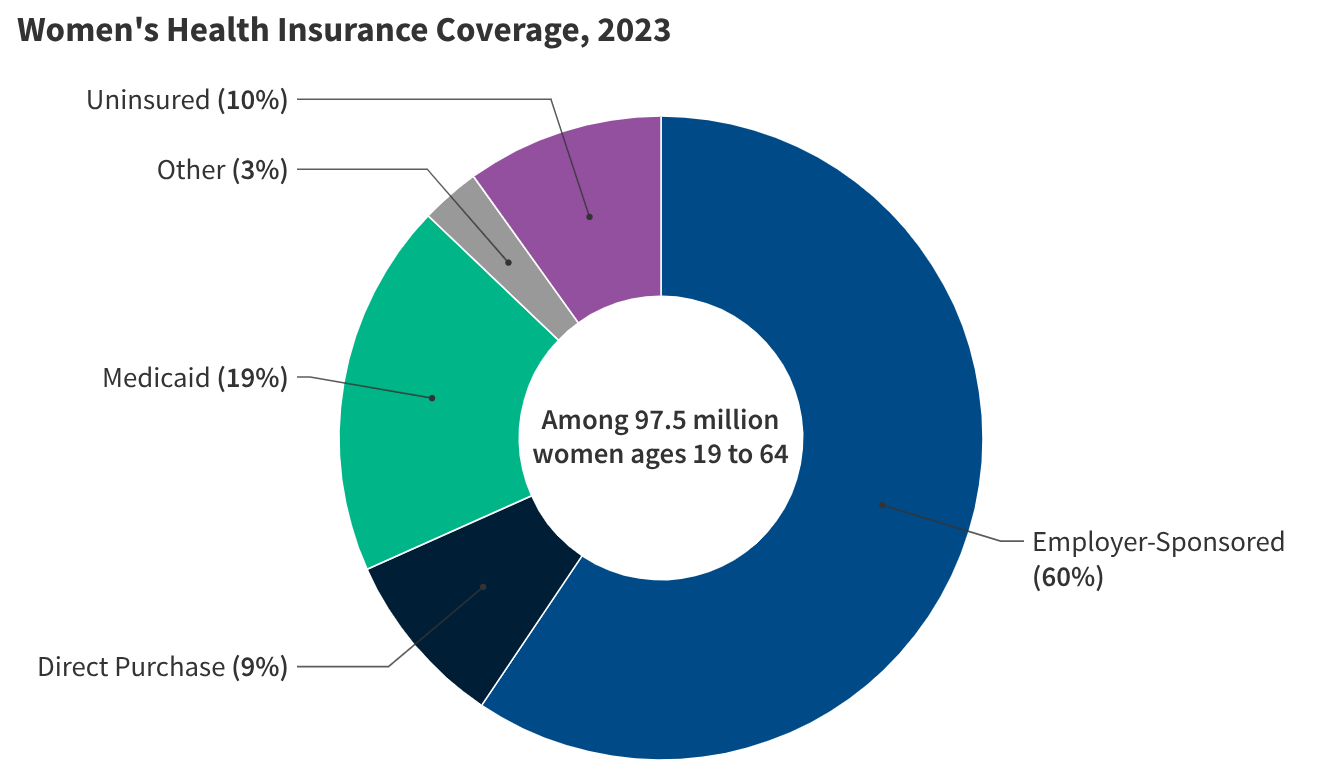
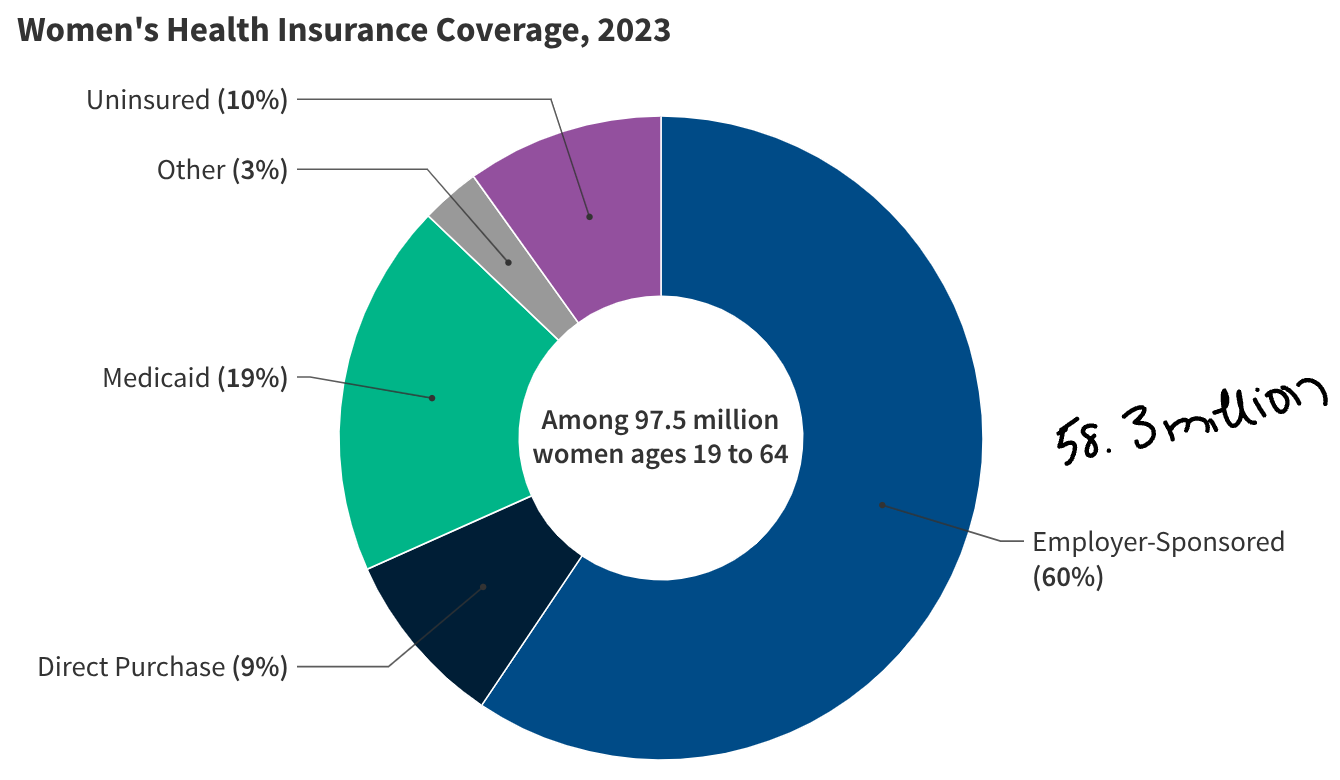
Approximately ____ million women aged 19-64 (___%) received their health coverage from employer sponsored insurance in 2023.
ok
In 2023, annual insurance premiums for employer-sponsored insurance average $8,435 for individuals and $23,968 for families.
On average, workers paid __% of premiums for individual coverage and __% for family coverage with the employers picking up the balance.
29%
17%
In 2023, about % of women Ages 19 to 64 (approximately 8.4 million women) and __% of their male counterparts purchased insurance in the non-group market.
9% about 8.4 million women
8% of male counterparts
Individuals with incomes below $___,_____ (___% of the Federal Poverty level in 2023) can receive federal tax credits which lower premium costs.
$58,320, 400%
Medicaid covered ___% of adult women ages 19 to 64 in 2023, compared to ___% of men.
19%
14%
Medicaid financed ___% of births in the US in 2022 and accounts for __% of all publicly funded family planing services.
41%
75%
In 2023, approximately ___% of non-elderly women (9.3 million) were uninsured, a rate slightly lower than that of men (__%)
10%
13%
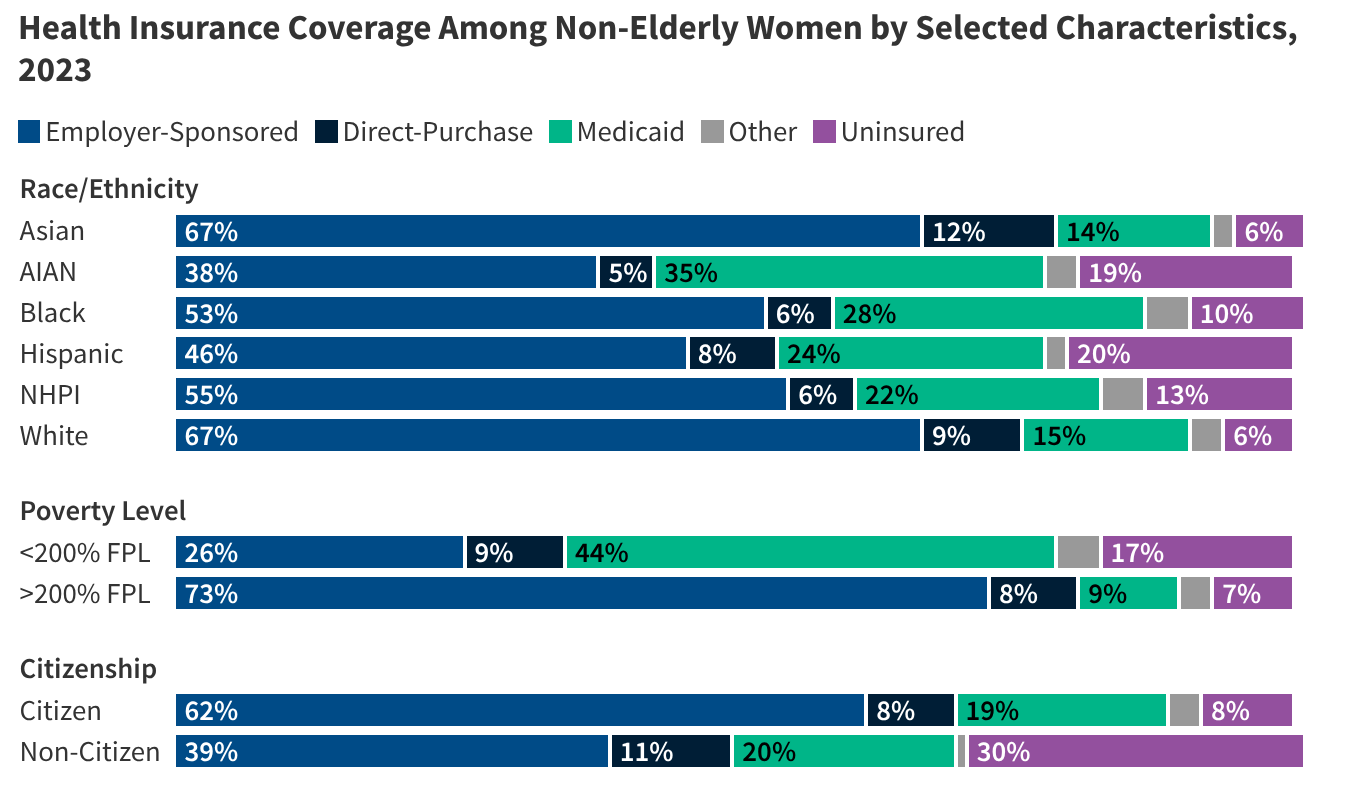
Figure
ok

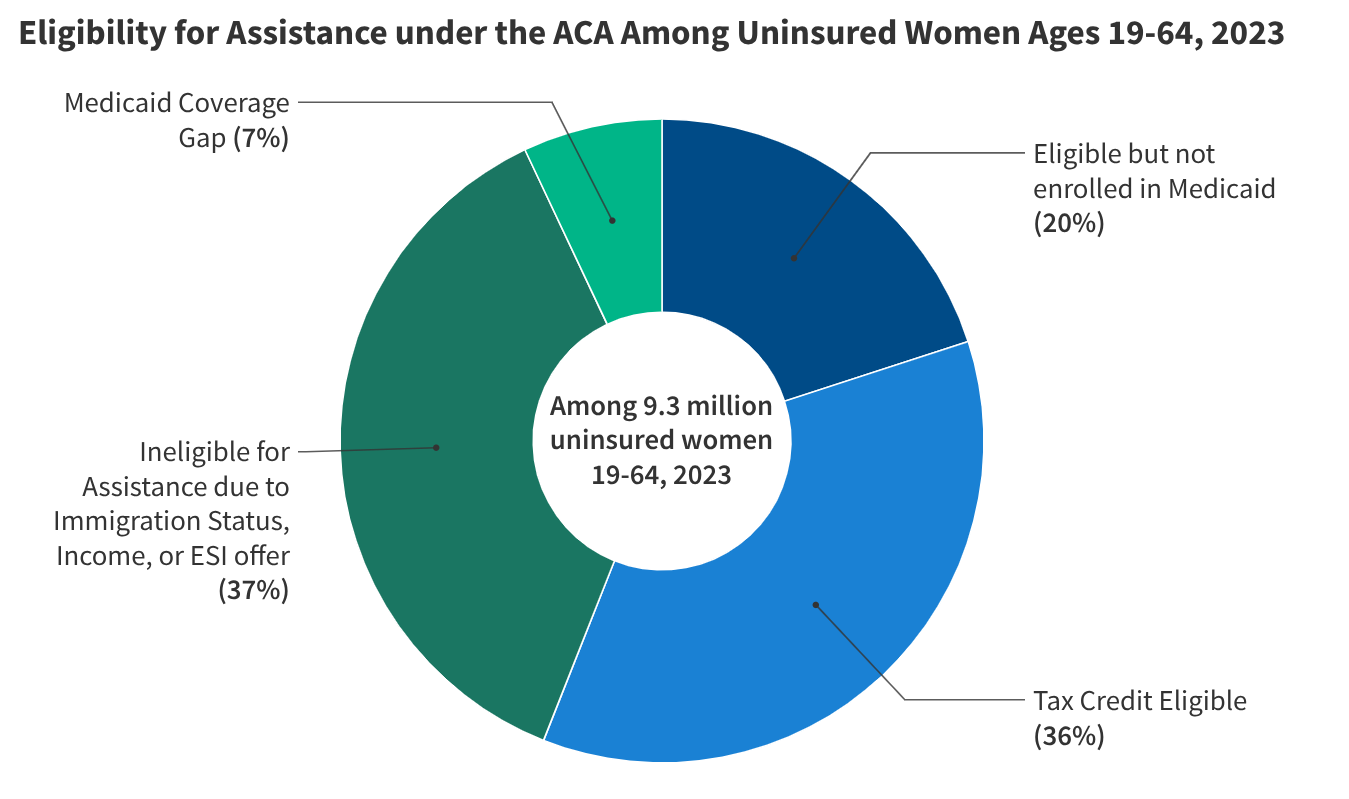
Figure
ok

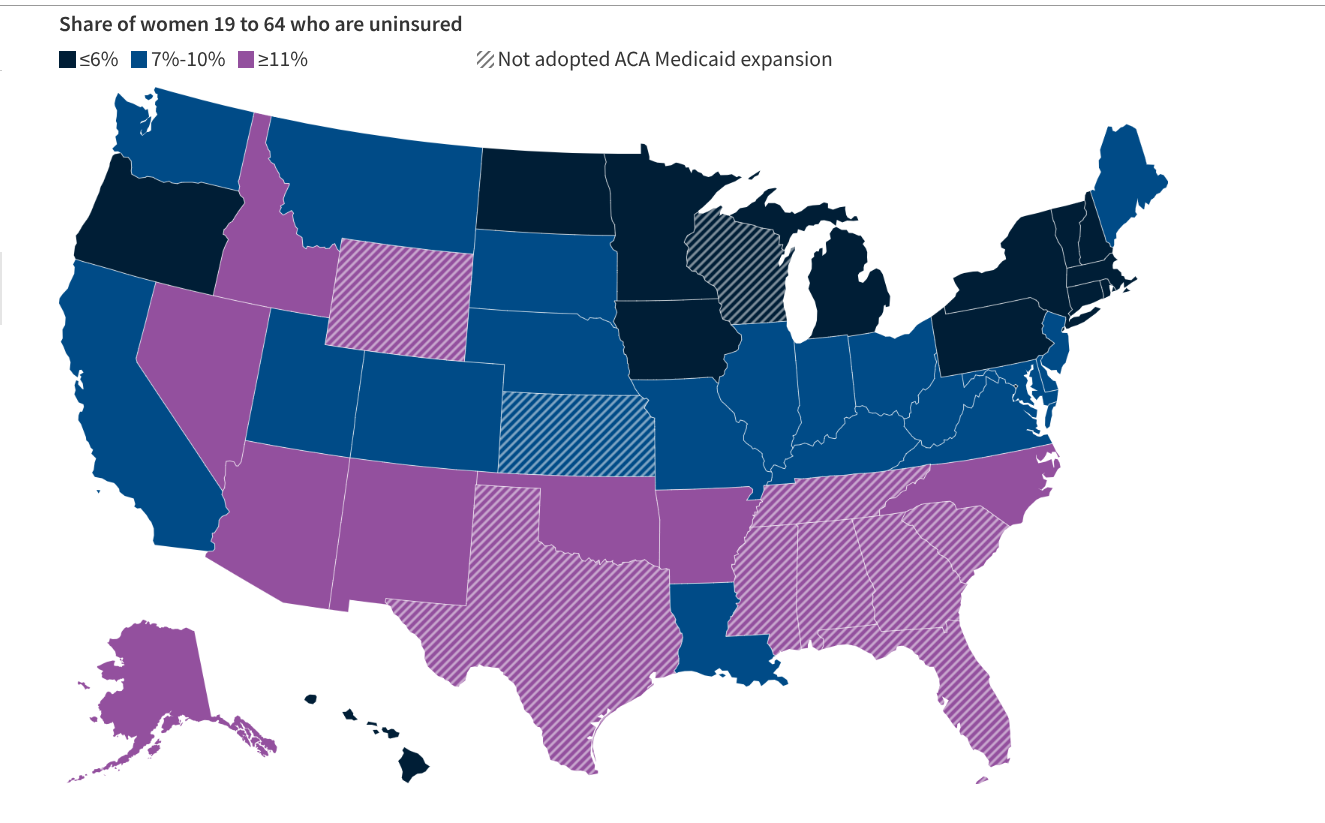
There is considerable state-level variation in uninsured rates across the nation, ranging from ___% of women in Texas to___% of women in Washington D.C., Hawaii, Massachusetts, and Vermont
ok

Of the 16 states with uninsured rates above the national average (10%), eight have not adopted the ACA Medicaid expansion.
oi
In 2020, Medicare covered __ million women, including nearly ## million ages 65 and older, and over # million under age 65 with long-term disabilities.
35 million, including 31 million
4 million
More than half (__%) of all Medicare beneficiaries are women and __% are men
55, 45 split
A _________ share of older women than men also experience urinary incontinence, depression, osteoporosis, pulmonary disease, and Alzheimer’s/dementia
higher
Long-term care services and supports (LTSS) [i.e. nursing home stays and home care services] gap in Medicare program. Women are ___ likely to require these services because they have _____ chronic conditions.
more, more
Medicare only covers time-limited LTSS after a hospitalization and does not cover ongoing lTSS for those with chronic conditions or functional impairments.
Women with Medicare also tend to have __more/less___ modest incomes than men (due to smaller lifetime savings, lower retirement income, divorce + widowhood, etc.)
more
In 2020, 13% of women and 11% of men with Medicare reported that they had faced cost-related challenges in the past 12 months, such as trouble getting care due to cost or problems paying medical bills.
These challenges are more common among female Medicare enrollees who are Black (22%) and Hispanic (18%), do not have a bachelor’s degree (15%), and those with annual incomes below $20,000 (20%).
Notice the percentage difference exists but isn’t very large

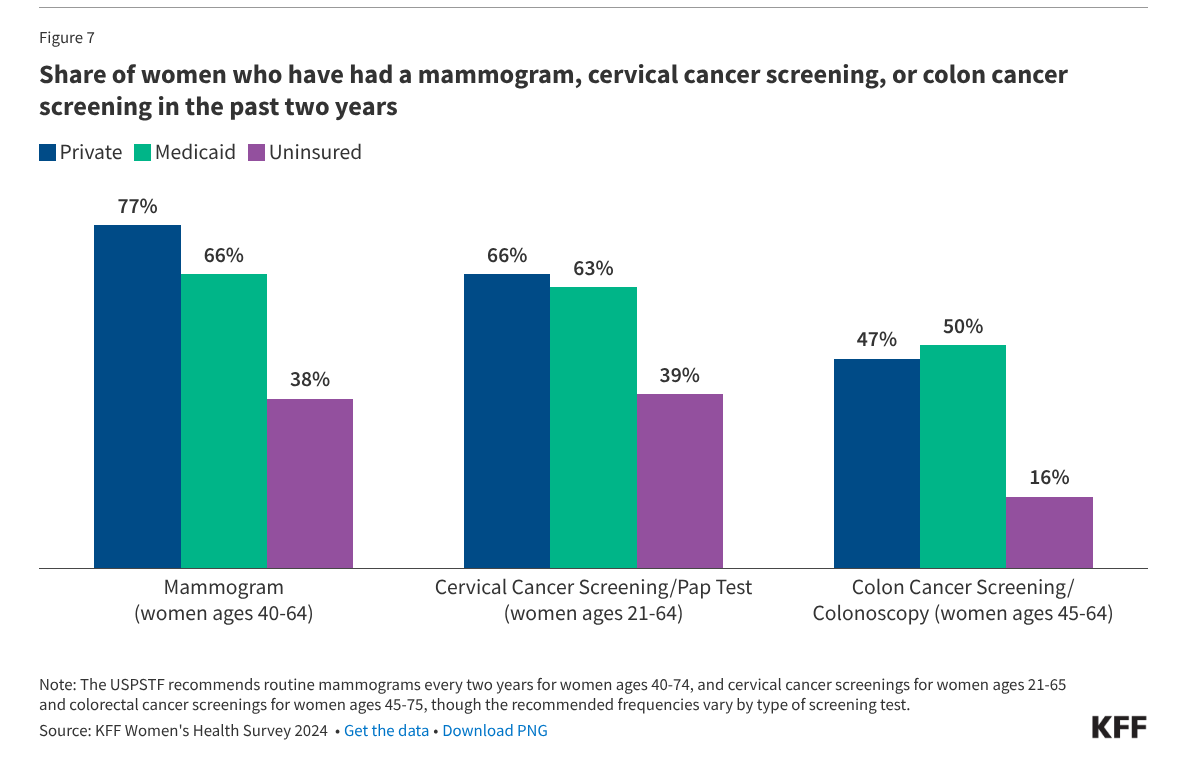
^^^
ok
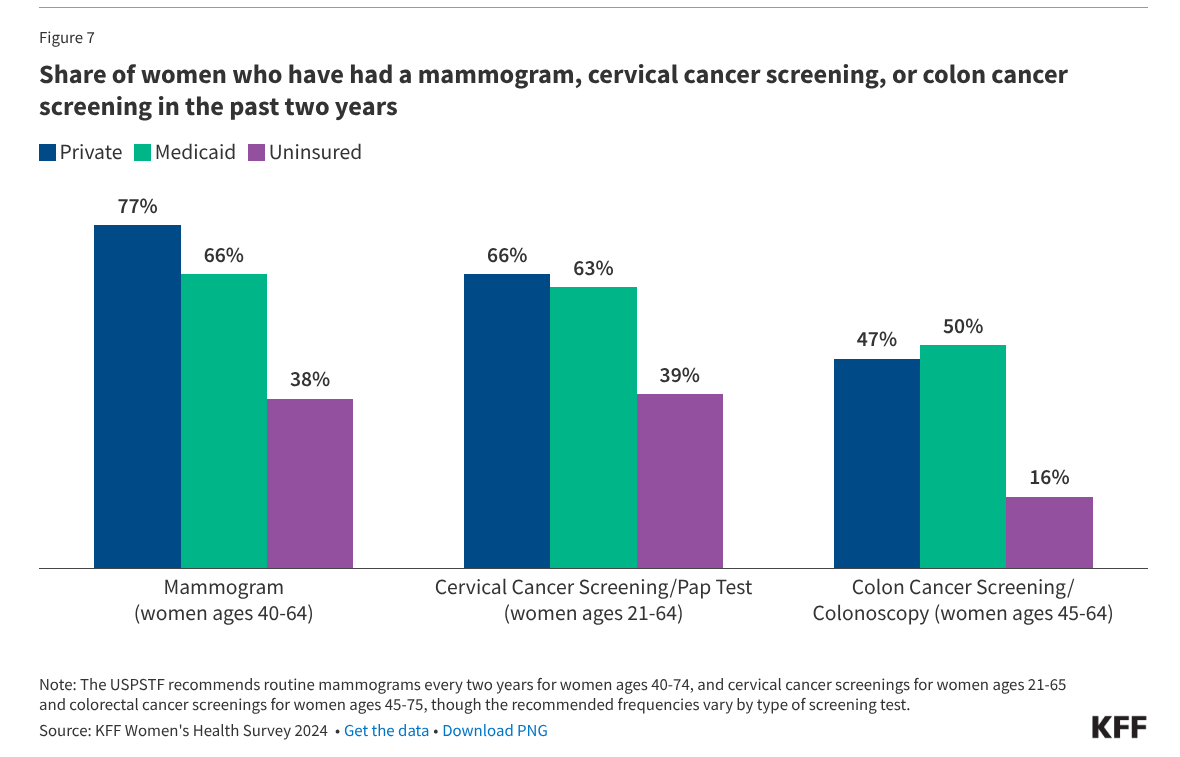
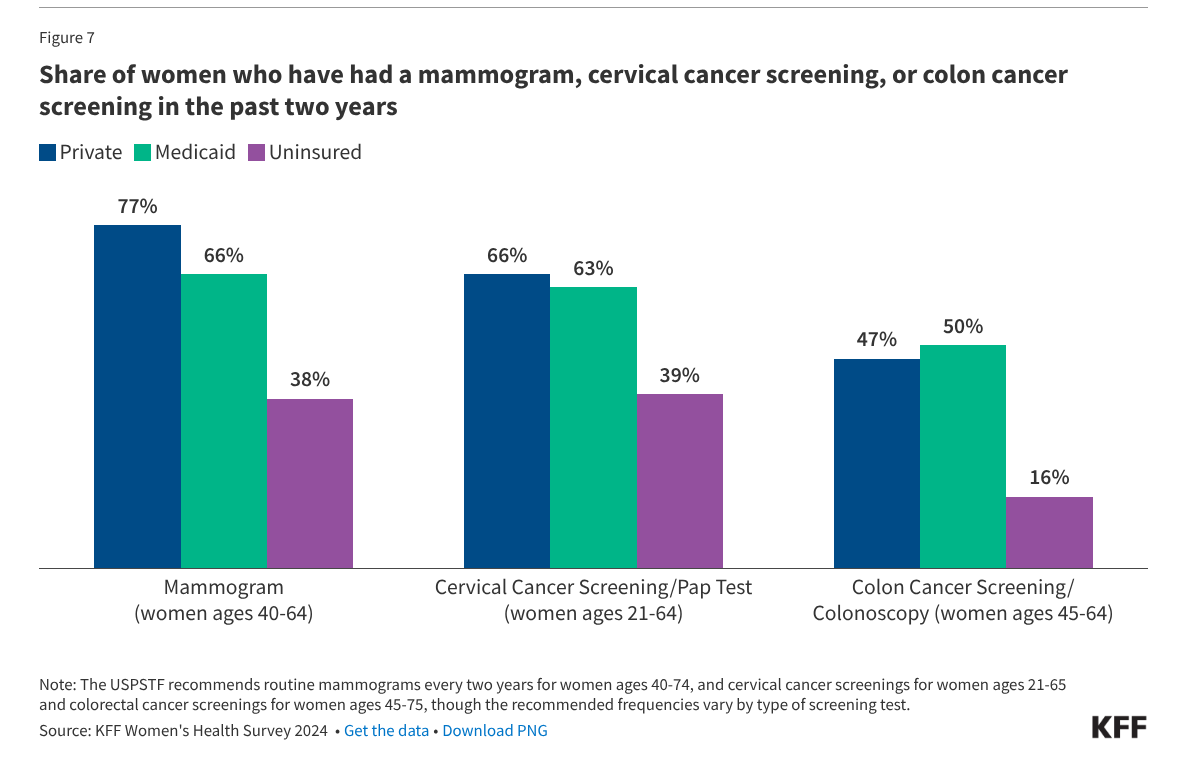
Under employer-sponsored insurance, the major source of coverage for women, 61% of all covered workers with a general annual deductible have deductibles of at least $1,000 for single coverage.
Despite having coverage, many insured women (__%) report that their plans did not always cover all of their needed care or paid less than they expected
31%
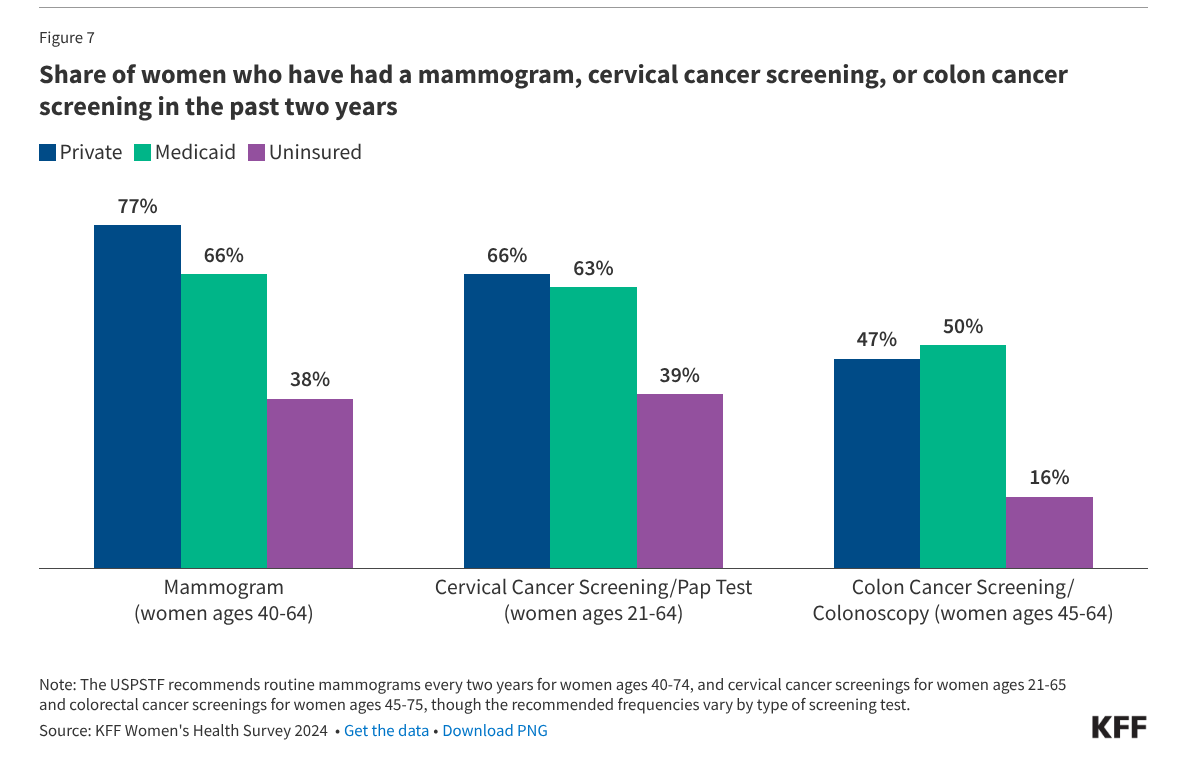
In 2023, there were approximately ___ million child births in the US.
Childbirth is the leading reason for hospitalization, covered by most private insurance plans and Medicaid
3.6
Medicaid covers about __ in 10 births nationally and more than _____ in some states
4 in 10
one half
Private insurance paid deliveries encompass over ___ of births
1/2
The Federal Pregnancy Discrimination Act requires employer plans to …
Cover maternity care benefits
A KFF analysis estimated that women enrolled in large group plans pay around $____out of pocket for costs associated with pregnancy, childbirth, and post-partum care.
$3000
Caesarean section births are more expensive than vaginal deliveries and account for about 1/? of births in the US
1/3

Maternal and Infant mortality rates in the US are far _____ than those in similarly large and developed countries
higher
rates of pregnancy related deaths among AI/AN, NHPI, and Black women are over ____ to ___ times higher compared to White women.
four to two
The CDC has determined that many of these pregnancy related deaths were ________, caused by cardiac-related conditions, infection, hemorrhage, and mental health conditions, including substance use
preventable
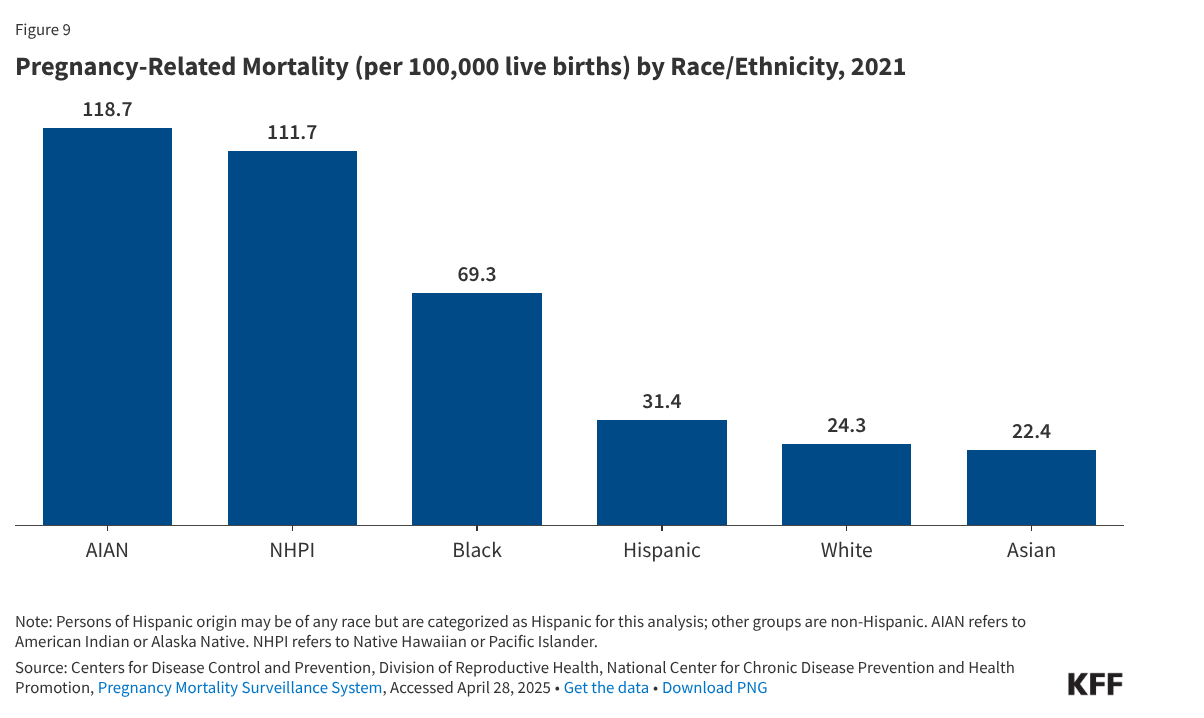
Pregnancy-Related Mortality (per 100,000 live births), 2021
ok

Fertility treatments are expensive and often are ____ covered by insurance. Most people must pay out of pocket, with costs often reaching thousands of dollars.
not

Trump Administration has issued an executive order requesting policy recommendations to protect access and reduce the costs for IVF, but congressional action is required to expand options to cover IVF services.^

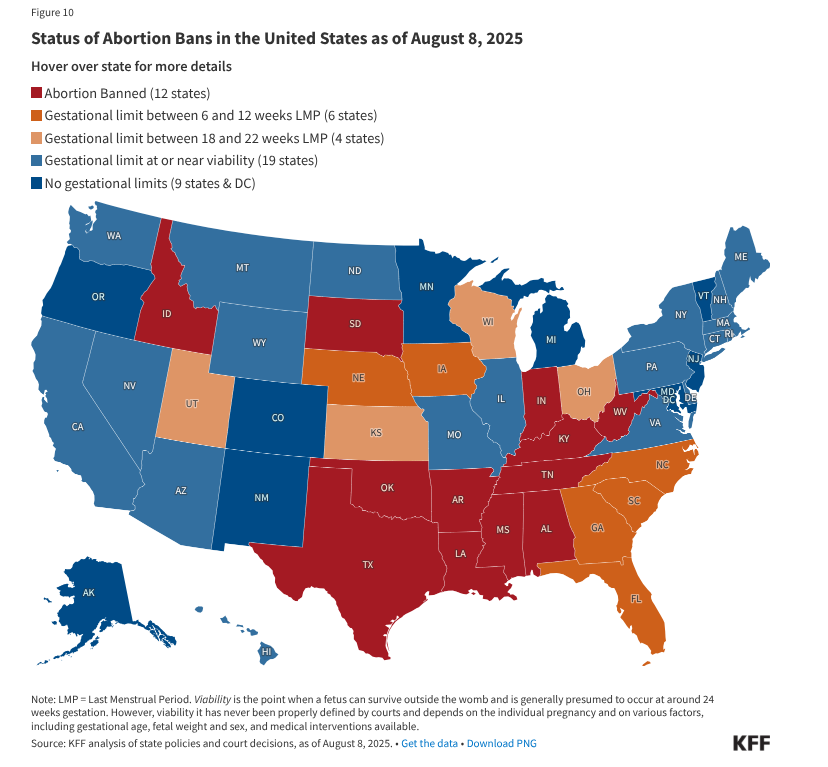
2022 Dobbs v. Jackson Women’s Health Organization ruling overturned…
Abortion legality now varies by state…
the constitutional right to abortion as well as the federal standards of abortion.
The Guttmacher Institute estimates that approximately ______ (##%) of all abortions are medication abortion (telehealth or pharmacy with pills)
two thirds (63%)
Median costs for abortion exceeds $___ in out-of-pocket expenses for patients who self pay.
500
After the Dobbs ruling, __ states have enacted laws that require private plans to cover abortion, typically without cost-sharing.
12
The Hyde Amendment banned…
the use of federal funds for abortion unless the pregnancy is a result of rape, incest, or it endangers the woman’s life.
More than _____ (___%) of women covered by Medicaid live in states where they have no coverage for abortion, unless they qualify for an exception.
half 56%
Abortion volume in the U.S. slightly _____ overall in the two years following the Dobbs ruling due to
broader availability of lower cost medication abortions through telehealth
virtual clinics + brick and mortar clinics
shield laws, where clinicians in legal states mail pills to individuals residing in states with bans and restrictions.
increased
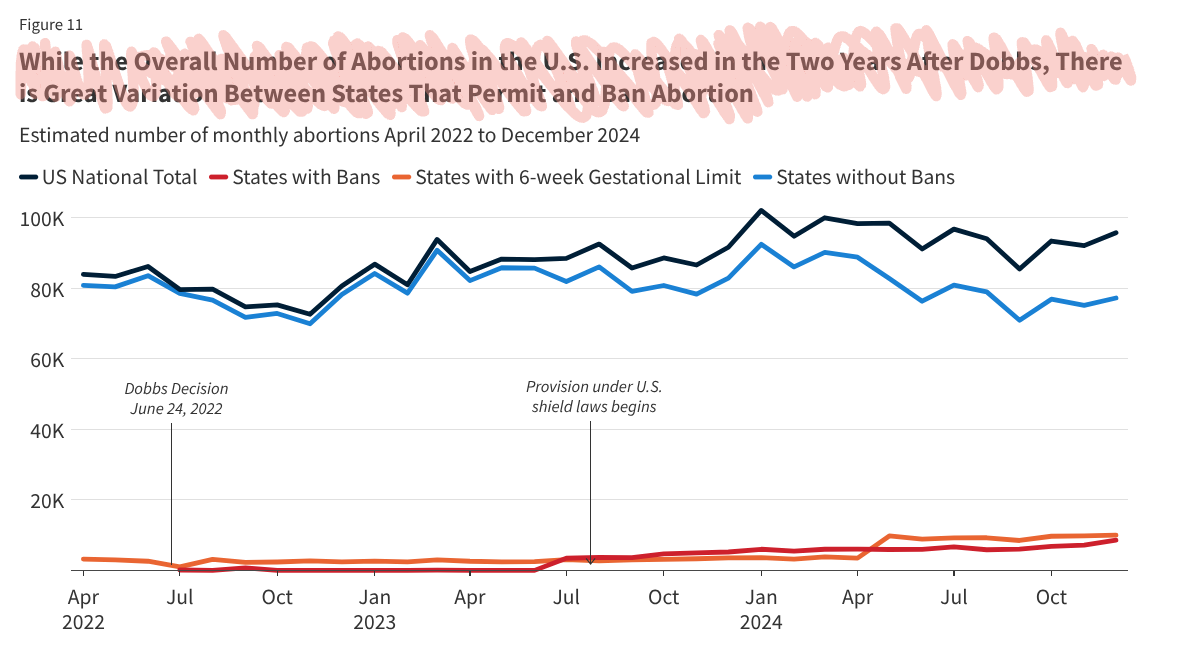
In May 2024 Florida implemented a ban on abortions after six weeks of gestation (previously permitted up to 15 weeks), and subsequently there was a noticeable ______ in abortions in the state and nationally.
decline
More than __ million women live in contraceptive deserts where they may not have acess to a health center offering the full range of contraceptive methods.
19 million
Efforts to broaden contraceptive availability (outside of clinical settings)
telehealth platforms
pharmacist prescription of birth control
over the counter access to contraceptives (OTC)
^
^
(On the topic of contraception) The 2024 KFF Women’s Health Survey highlighted that the majority of women ages 18 to 49 (82%) have…
used contraception in the past 12 months.
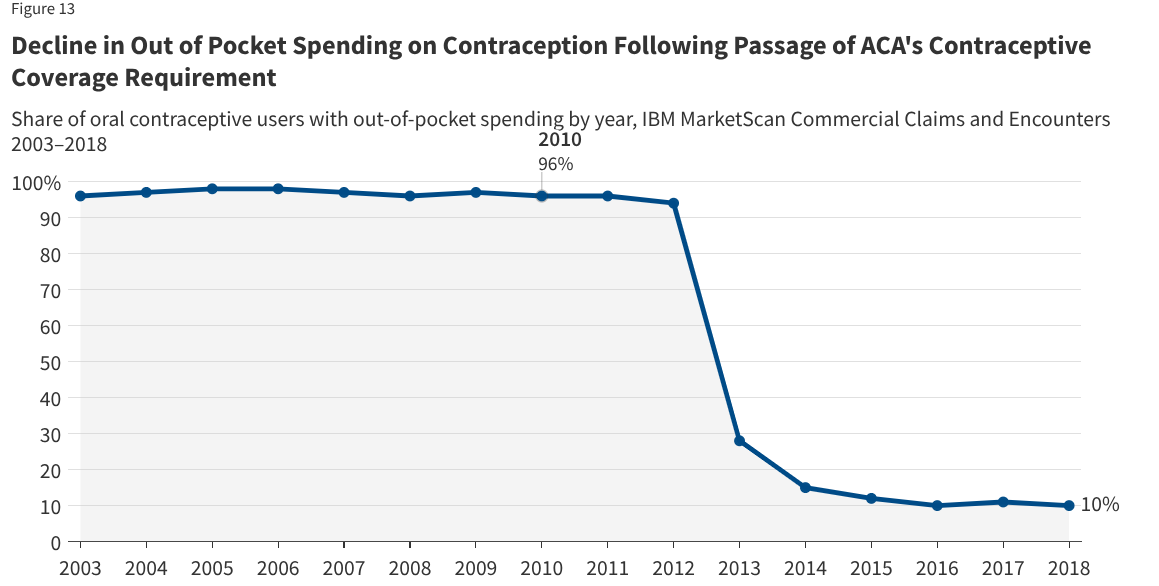
ACA requires that most private plans cover contraceptive services for females without cost-sharing (out-of-pocket spending portion)^
This provision has dramatically reduced cost-sharing for contraception among females with private insurance plans, though some privately insured females who are eligible for no-cost coverage are still paying some of the cost of their contraceptives
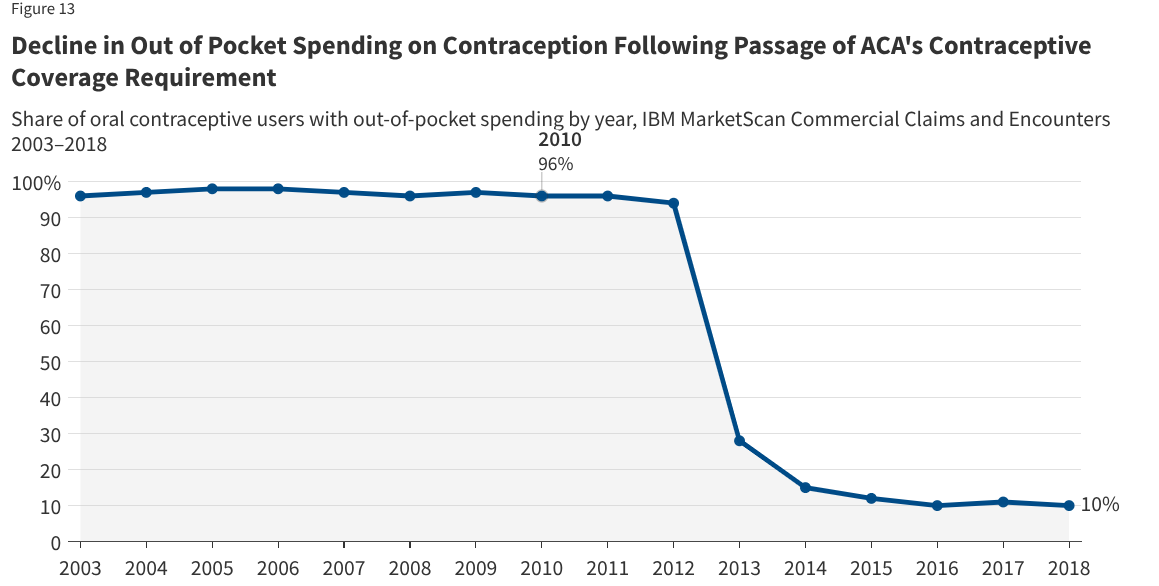
The cases Burwell v. Hobby Lobby (2014) and Zubik v. Burwell (2016) have challenged…
Most recent cases, Little Sisters of the Poor v. Pennsylvania (2020) and Trump v. Pennsylvania (2020)…
the ACA’s requirement for contraceptive coverage
exempt employers with religious objections from providing contraceptive coverage to their employees.
Title X, administered by the HHS Office of _______ Affairs, provides funding to more than ______ health clinics, public health departments, and non-profit agencies to deliver contraceptives and other family planning services to low-income targets.
population affairs
4000
Title X funded providers must follow the programs requirement, including…
Trump Administration changes…
family planning methods for low/no cost
Trump 1st term
disqulified clinics (1,000) that had co-located abortion services and abortion referrals (overturned by Biden)
2nd Trump administration withheld funds + proposed elimination of Title X
Women experience several mental health conditions (anxiety, depression, eating disorders, etc.) ___ frequently than men
Disorders unique to women…
perinatal depression (define)
premenstrual dysphoric disorder (hormonal changes) [Define)
more
mood disorder that encompasses both depression during pregnancy and in the weeks or months after childbirth
mood disorder that occurs during the week or two before menstruation—the luteal phase—and typically subsides a few days after bleeding starts
A 2024 KFF survey found that more women (28%) than men (23%) describe their mental health as fair or poor.
Roughly ___ in 10 women say they received mental health services from a mental health professional
3 in 10
Among women who received mental health care in the past 12 months, _____ ___ _____ (___%) say they experienced a barrier during their care seeking journey
including
finding a provider willing to accept new patients
insurance acceptance
trouble scheduling an appointment in a reasonable amount of time
more than half (55%)
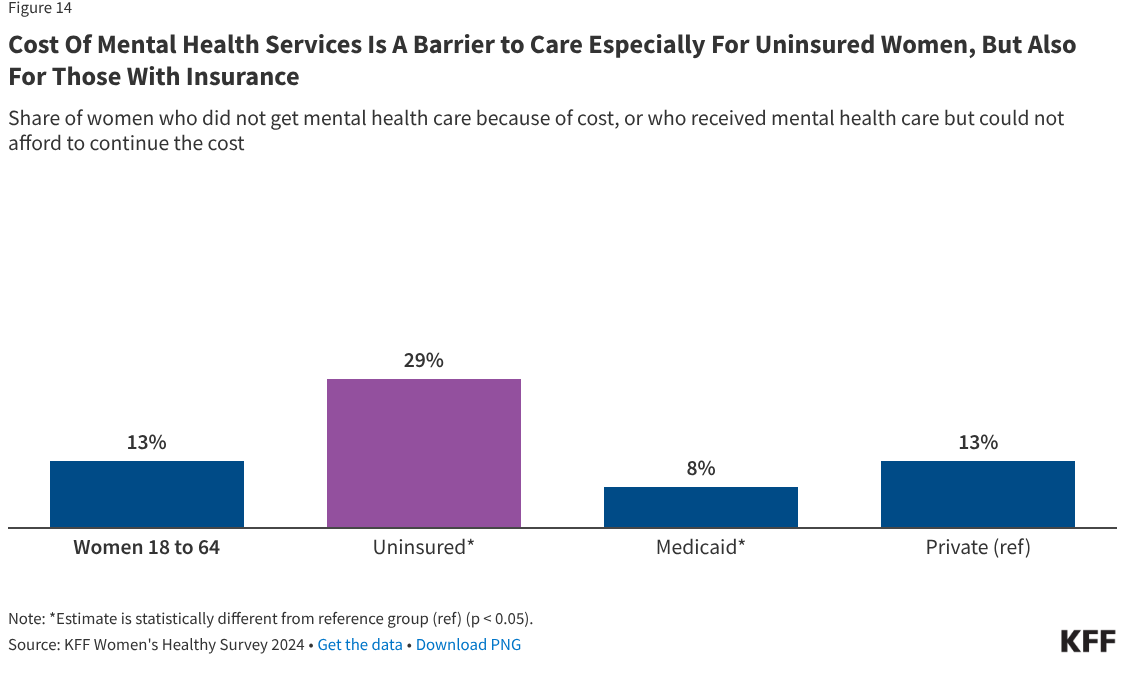
More than ___ in ____ women 18 to 64 say they did not get mental health care of could not continue to afford the mental health care they were receiving because of cost.
one in ten
Intimate Partner Violence (IPV), defined as…
sexual violence, stalking, physical violence, and psychological aggression by current/former partners.
Women experience IPV (Intimate Partner Violence) at ___ rates.
Rates are also higher among some groups of women
young
Black + AI/AN
LGBTQ
Those who experience IPV are more likely to experience a range of health problems, such as chronic pain, cardiovascular problems, and
higher
Some studies estimate ____ million women in the US experience IPV in a single year.
6.5 million
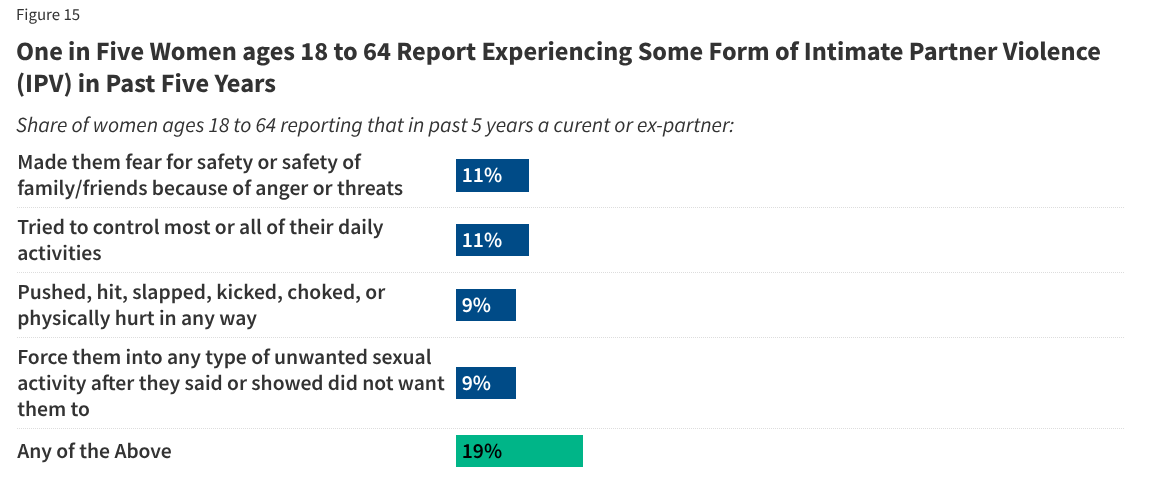
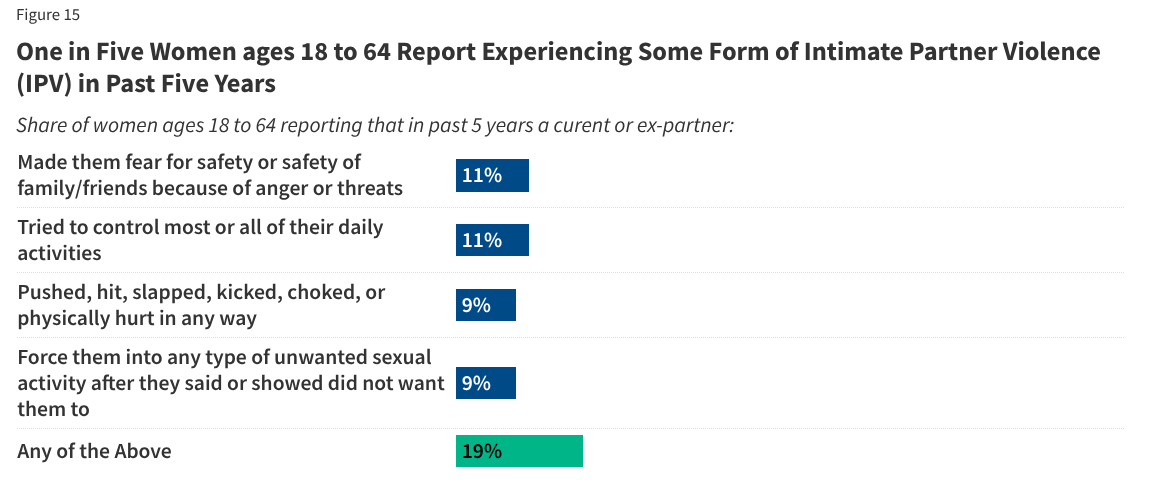
A 2024 KFF Women’s Health Survey, ___ in 5 women report experiencing IPV in the past five years
one in 5
The Violence Against Women Act (VAWA) has a broad scope, covering domestic violence, sexual harassment, stalking, and sexual assault^
ok