4. Internal Attention
 Call Kai
 Learn
Learn Practice Test
 Spaced Repetition
 Match
Match Flashcards
 Knowt Play
1/36

There's no tags or description
Looks like no tags are added yet.
Name | Mastery | Learn | Test | Matching | Spaced | Call with Kai |
|---|
No analytics yet
Send a link to your students to track their progress
37 Terms
What is internal attention/ executive attention?
Voluntary processes that override or influence automatic processes.
Not specific to any one sensory or cognitive operation
Engaged when routine functions are insufficient or behavior must adapt to environmental demands
Operate through two key mechanisms: selection and inhibition
What is the role of the frontoparietal network in executive (internal attention) control?
The frontoparietal network supports flexible, trial-by-trial executive control. It is responsible for:
Selection of task-relevant information
Start-cue (transient) activity at the beginning of a task
Error-related activity for conflict resolution
Initiating and adapting control on a trial-by-trial basis
Sending top-down control signals and supporting task switching
Key regions:
Dorsolateral prefrontal cortex
Intraparietal sulcus
What is the role of the cingulo-opercular network in executive (internal attention) control?
The cingulo-opercular network supports stable, sustained control across a task. It is responsible for:
Maintenance of task goals and task sets
Sustained control signals across task conditions
Performance monitoring throughout a task
Supporting goal-directed behavior via stable set maintenance
Key regions:
Dorsal anterior cingulate cortex / medial superior frontal cortex
Anterior insula / frontal operculum
Anterior prefrontal cortex
What is the function of internal/executive attention
Uses previously acquired internal information to select goals, plan actions and keep the two on task for execution and future objectives – selection between competing alternatives independent of input modalities
What is internal attention reliant on?
Working memory ( limited)
Long-term memory (latent store that has big capacity)
What is the main goal of internal/executive attention?
to control how finite cognitive resources are brought to bear on information (sensory, memories, task rules, decision and actions)
How does internal attention capacity relate to external attention?
Internal attention has independent capacity from external (perceptual) attention.
Evidence:
Dual-task studies show separable interference effects
Supported by distinct neural systems underlying internal vs. external attention
What is the Psychological Refractory Period in Response Selection?
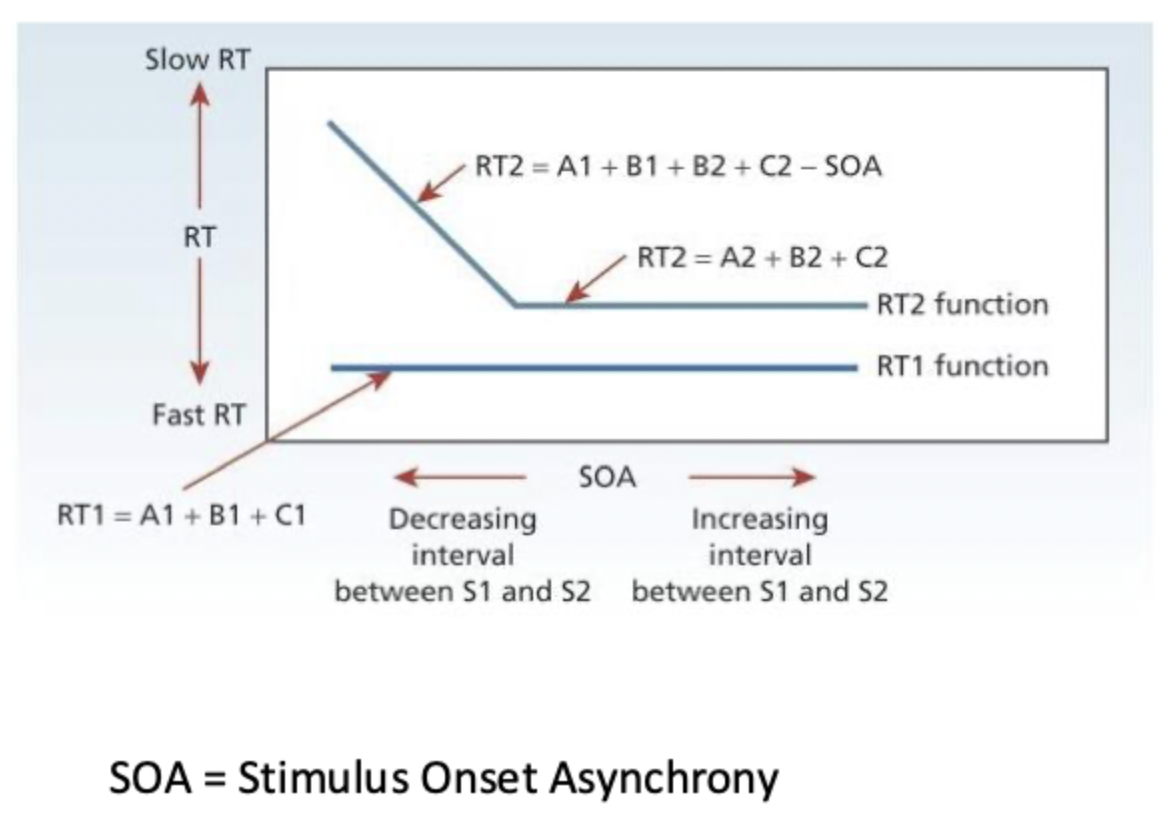
arises when observers are asked to make two sequential responses to two different tasks in quick succession
if the delay between two tasks is long enough then the performance on the two tasks does not differ from the one when its just a single task
but if it is short then the response to task 2 is significantly slowed independent of the modality and task type
What determines the duration of the Psychological Refractory Period (PRP) effect?
The duration of the PRP effect depends on three processing stages of Task 1:
Input processing (perceptual encoding)
Central processing (decision/response selection)
Output processing (motor response execution)
Key principle:
There is a “lock-out” period during central processing in which the system cannot process the second task — reflecting a central bottleneck in response selection.
Why does the Psychological Refractory Period (PRP) effect occur?
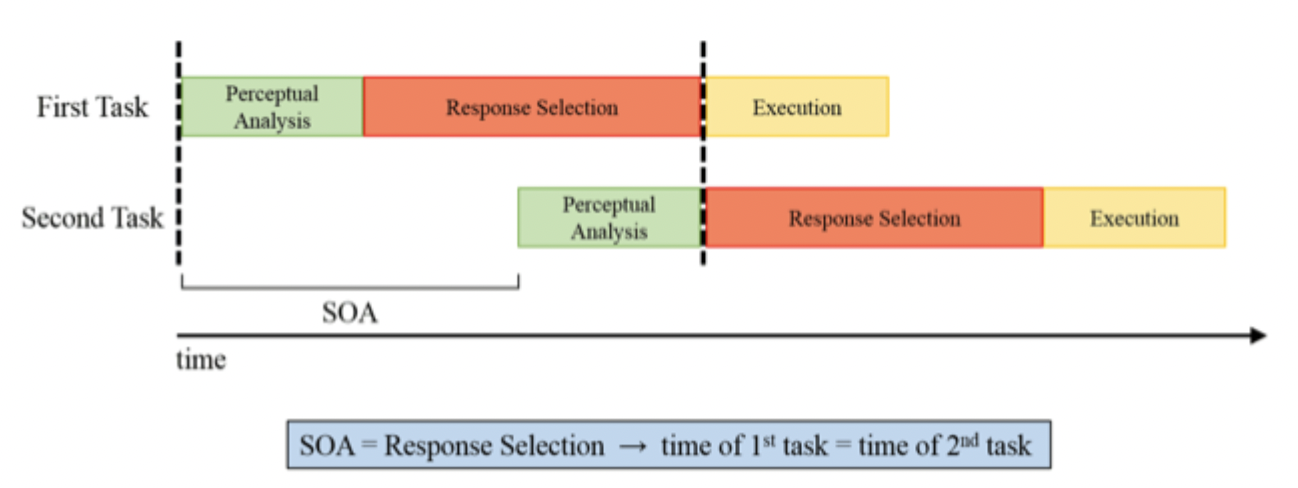
The PRP effect occurs due to limited internal attention capacity.
The brain cannot fully engage with Task 2 while still processing Task 1
Leads to reduced efficiency in accumulating evidence for Task 2
Causes reduced efficiency in routing the decision for Task 2’s response
Demonstrates a capacity limitation of internal attention, distinct from external processing mechanisms
What is task-switching cost, and what factors influence it?
Task-switching cost refers to the finding that people are slower when switching to a new task compared to repeating the same task.
Key points:
This limitation is separate from the response selection bottleneck seen in the PRP effect
Switch cost increases when the delay between the task cue and target stimulus is short
Even with longer preparation time, a residual switch cost remains
Full implementation of the new task set requires actual task execution
What is found regarding task switching in study where observers’ tasks are signalled by background colour or shape?
Task a: categories digits as odd or even
task b: categories digits as high or low
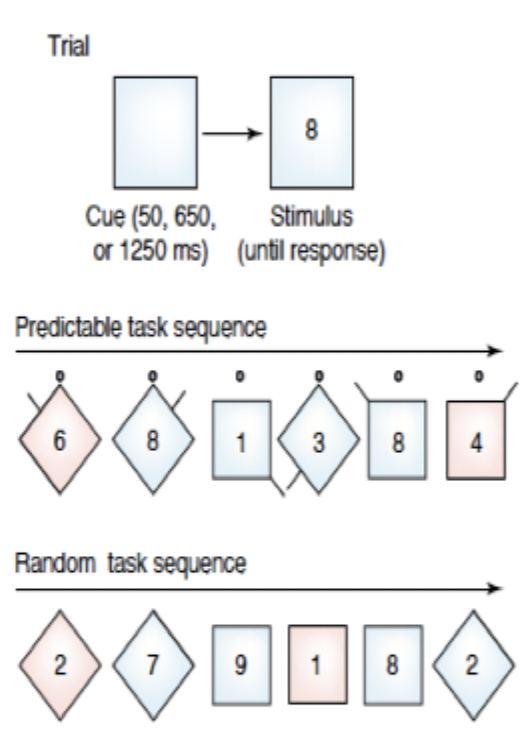
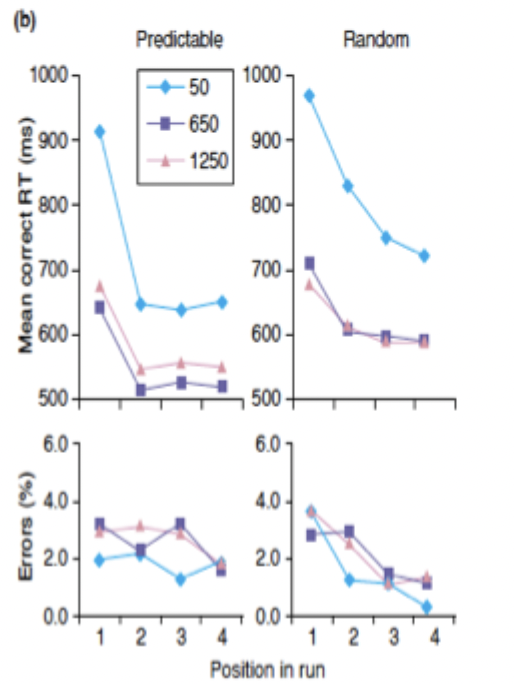
highest cost for short cue target durations
in predictable sequences cost limited to first trial
switch cost reduced by 50% by extending preparation time to 650 but there is still residual cost even with extension of the delay to 1250
What can task switching tell us about selecting a task-set?
Key observations: switch cost
Increased response time and error rates following a task switch compared to task repetition.
What can task switching tell us about selecting a task-set?
Key observations: preparation effect
Advanced knowledge of a task can reduce switch costs, although not eliminate them entirely
What can task switching tell us about selecting a task-set?
Key observations: residual cost
Even with preparation, there remains a measurable switch cost
What can task switching tell us about selecting a task-set?
Key observations: mixing cost
Performance remains slower when alternating between tasks compared to performing a single task consistently.
What are the mechanisms behind task switching?
shifting attention between task attributes
retrieving relevant goal states and action rules
inhibiting the previous task-set while activating the new one
What is the inhibition of competing options
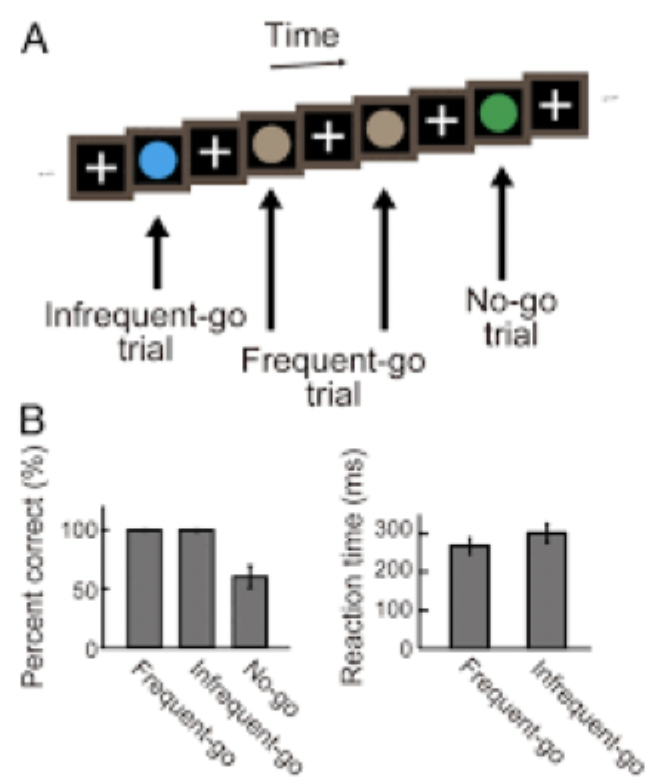
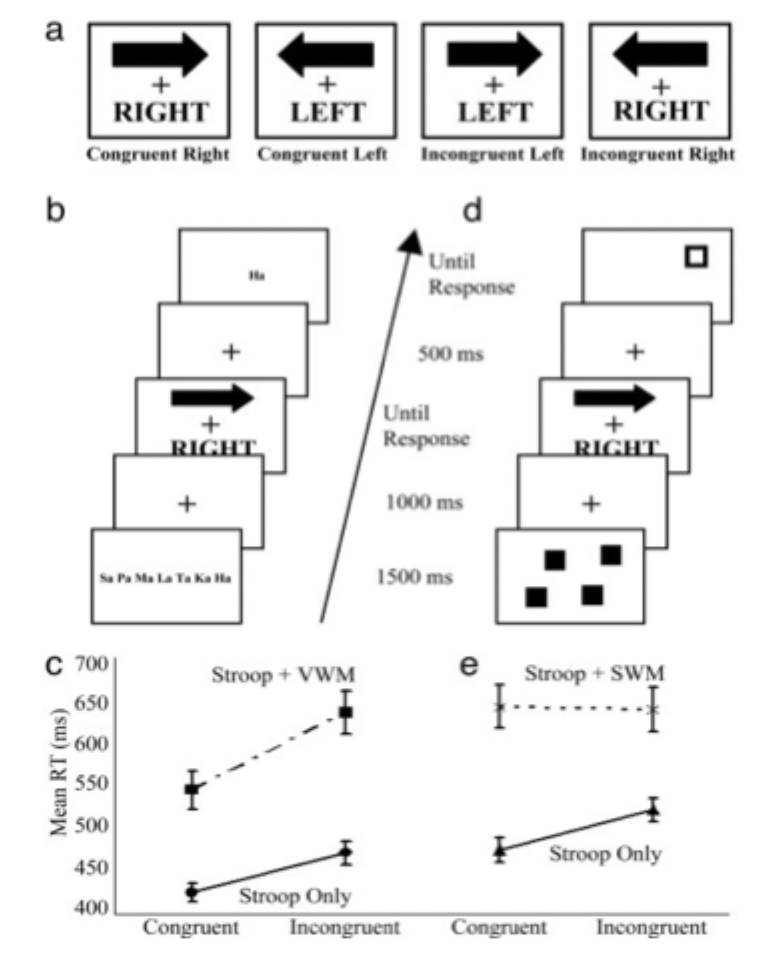
ability to suppress automatic, impulsive, or irrelevant thoughts and actions to focus on goals, task rules
allow us to stay on task or task maintenance
hard to inhibit arrow when you have high cognitive load
What are the features of automatic processing?
fast
parallel: a number of such processes can happen at once
requires little effort - efficient
very low capacity demands
may arise through extensive practice
no real call on awareness, involuntary and reflective selection
difficult to control and feel obligatory
capture and control by external events
What are the features of controlled processing?
slower
serial processing
effortful and interpretive
dependent on capacity demands
can be changed quickly
dependent on voluntary allocation of attention and awareness
controlled and modulated by internal goals, context
What were the consistent and variable mapping conditions in Schneider and Shiffrin’s study of automatic and controlled processes?
observers asked to memorise target items (1 or more) in a memory set
presented with 20 “frames”
each frame contains 2 (or more) items (distractor or/and targets)
observers indicate if target is present in the frame
accuracy and RT are the DV’s
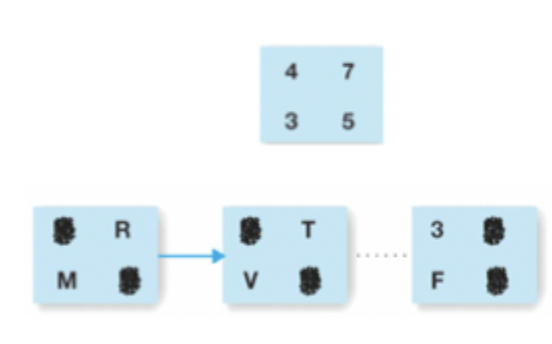
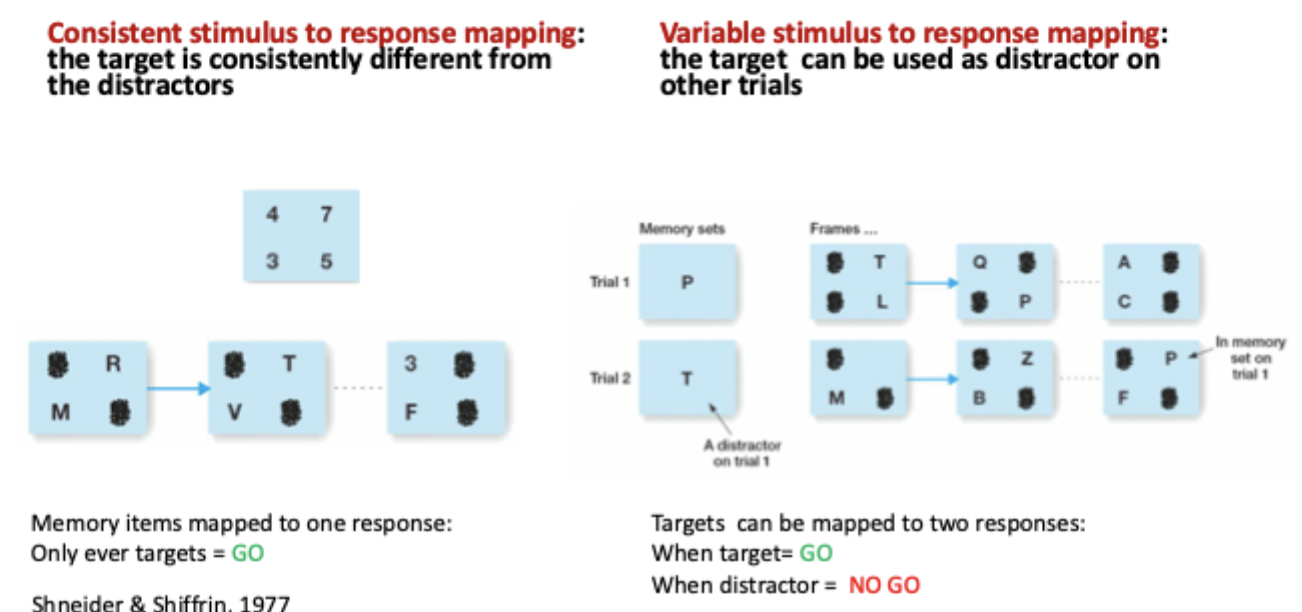
How can the demand be dialed up on capacity to observe two different processes at work?
by varying the number of to be remembered items in the memory set 1 to 4
by varying the number of items on each test frame: 1 to 4
by varying the time of each test frame
What was found with either consistent or variable mapping? regarding automatic and controlled processes?
Consistent Mapping
no change in performance as capacity demands increase
automatic processing
number of items in memory set has no effect
as search field increases - no increase in RT
Variable Mapping
performance reduced as capacity demands increase
controlled processing
number of items in memory set increase, results in RT increase
as search field increases there is also increase in RT
Can tasks that require controlled processing become automatic through training?
Can we learn arbitrary distinctions between items such as B to L and Q to Z?
with consistent mapping initial learning with B & Q as targets and L&Z as distractors
with consistent mapping reversed learning with L&Z as targets and B&Q as distractors
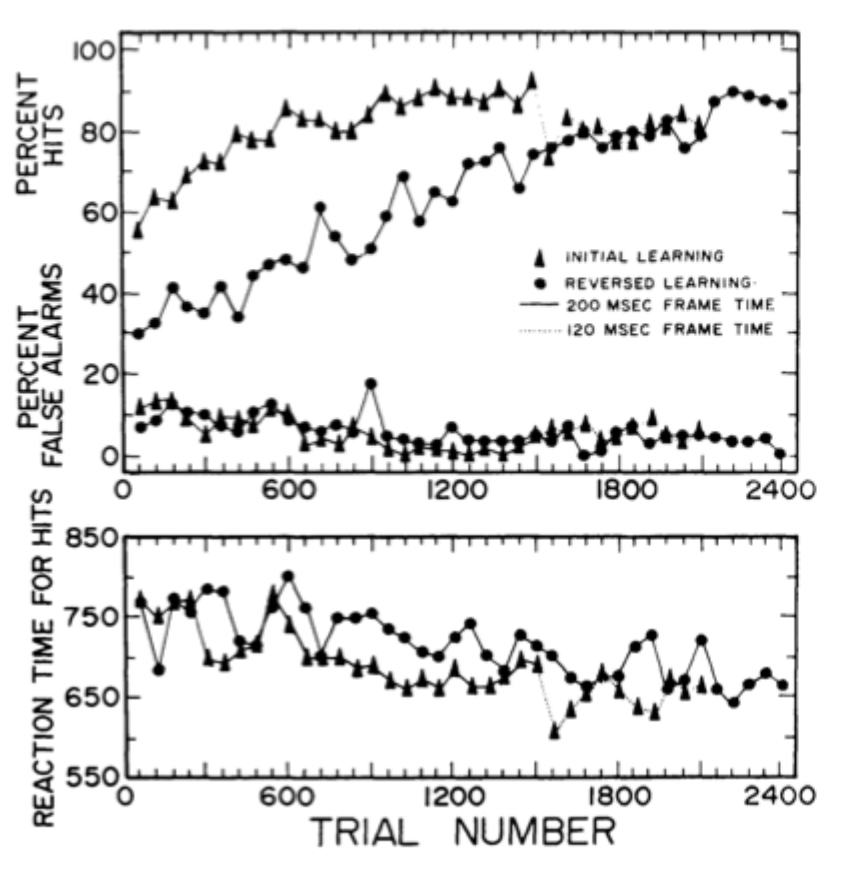
at 600 trials the process starts to become automatic and at 2100 trials it is achieved
reversed learning took longer to achieve signs of automatic processing
when using variable mapping for training prevented automaticity no matter how much practice is provided producing strong bidirectional interference
Posner’s ANT task: Valid and invalid SS
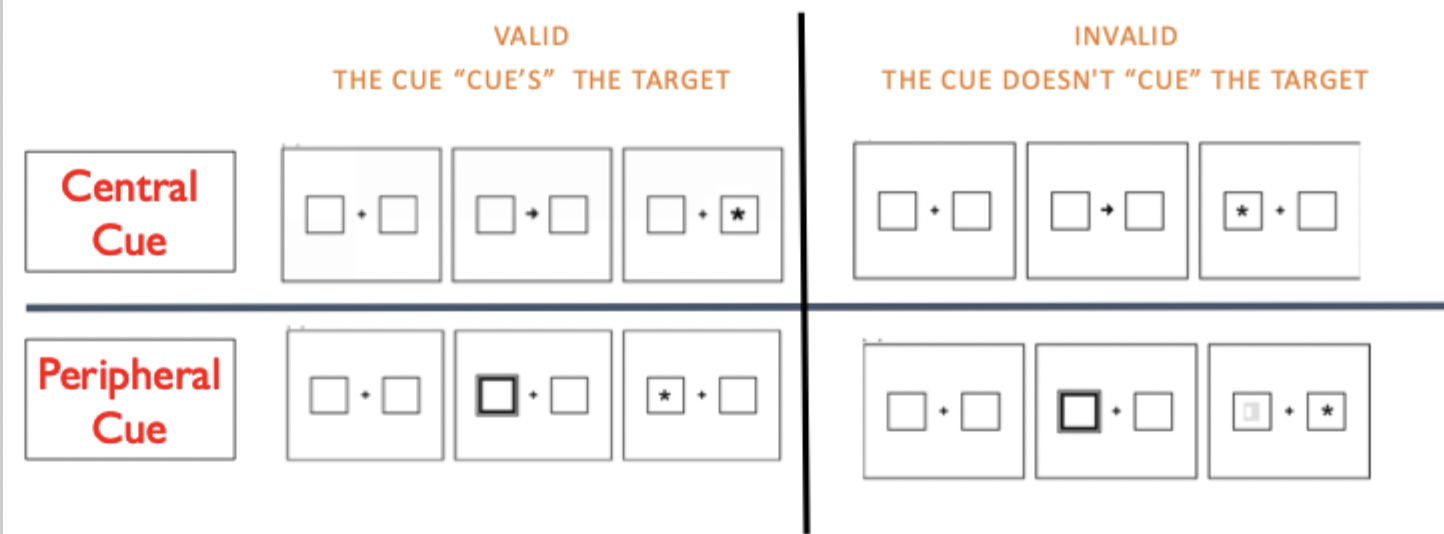
valid: the cue “cue’s” the target
invalid: the cue doesn’t “cue” the target
What is an informative cue on the Posner’s ANT task?
the percentage of valid cues in high in relation to invalid cues
e.g. 80% of the time valid/ 20% invalid
tells you where to look reliably
What is an uninformative cue in Posner’s ANT task?
percentage of valid cues is lower in relation to invalid cues
e.g. 25% invalid/ 25% valid/ 50% neutral
not really giving you good information on where to look
What is Cue Target Onset Asynchrony?
time between the cue and the presentation of the target
What is the validity effect (VE), and what does it indicate?
The Validity Effect (VE) is the difference in reaction time (RT) between invalid-cue trials and valid-cue trials:
VE = RT (Invalid) − RT (Valid)
It is the main dependent variable in cueing tasks.
Interpretation:
Positive VE (> 0): Faster responses on valid trials → observers are using the cues and directing attention to the target location
VE = 0: No cue benefit → observers are not using the cues
Negative VE (< 0): Slower responses on valid trials → attention may be directed away from the cued location (e.g., inhibition effects)
Researchers also examine how VE changes as CTOA (cue–target onset asynchrony) varies.
What happens when we have a situation of informative cues? difference between peripheral and central cues

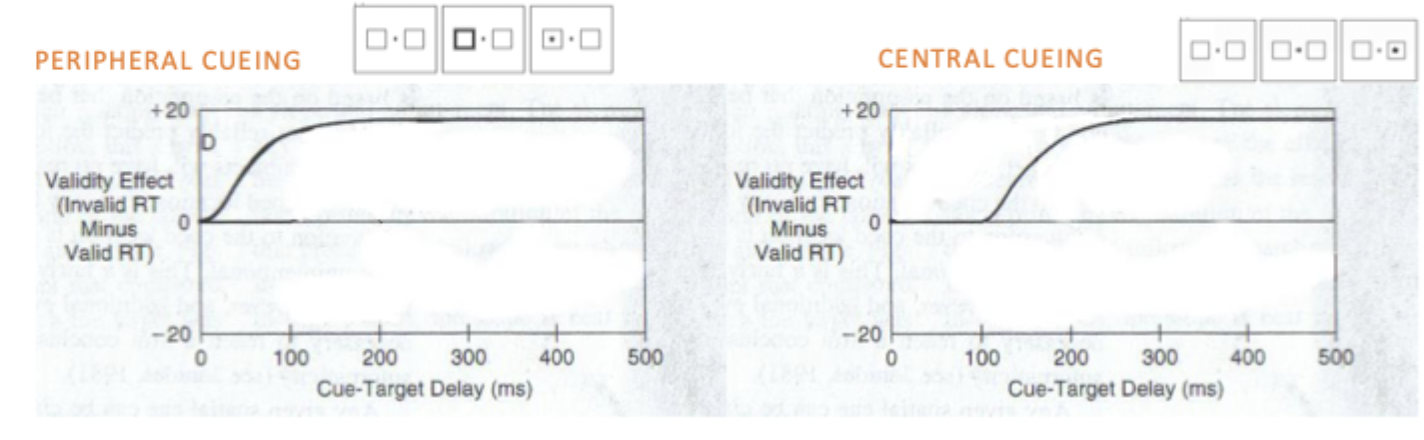
with peripheral cuing, response is fast acting and consistent across cue target delays - an involuntary and possibly automatic response
with central cuing, response is slower acting and consistent across cue target delays - voluntary through slower and controlled response
What happens when we have a situation of uninformative cues? difference between peripheral and central cuing

peripheral cuing: fast acting. Validity effect at short CTOA present although cues are not useful generally (at long it is lost) - this shows an automatic reponse and capture of attention
central cuing: appears to be no cuing. cue has no information about location and thus does not capture attention because of its lack of usefulness, observers exert control
What is inhibition of return (IOR)?
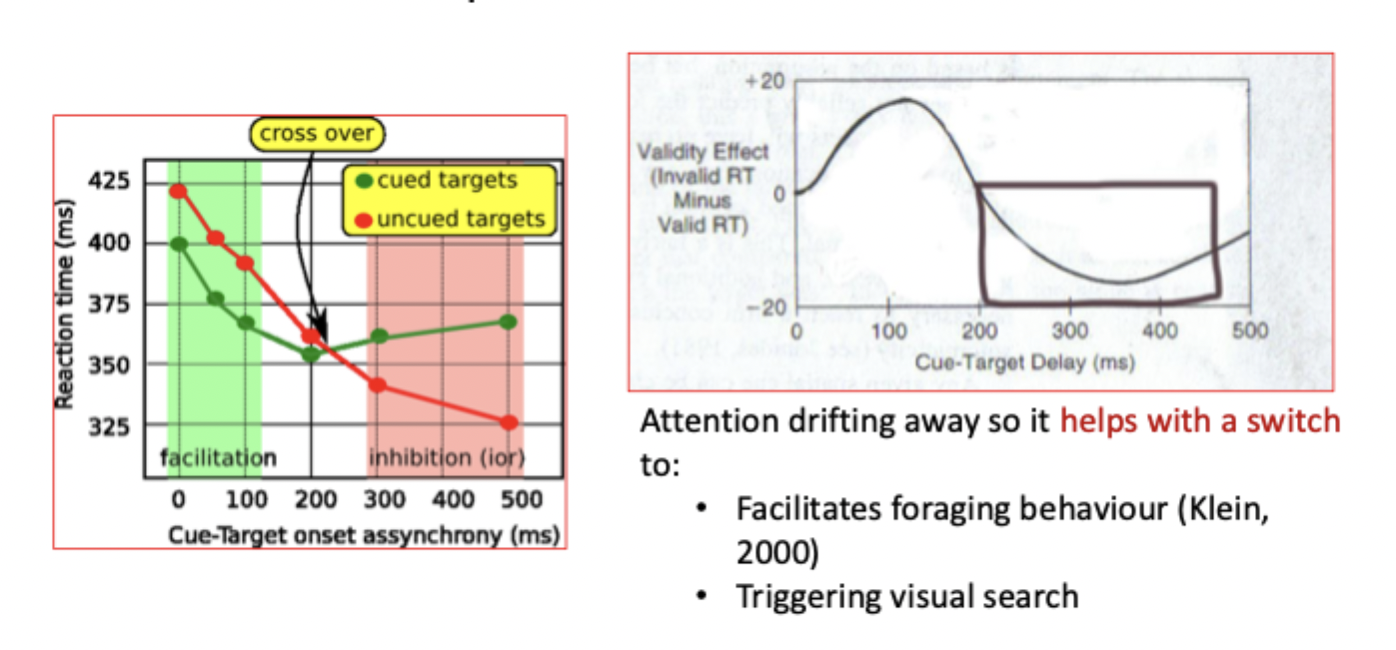
Inhibition of return (IOR) is an attentional effect in which responses are slower to targets appearing at a previously attended location after a short delay (~200–300 ms).
Produces a negative validity effect at longer cue–target intervals
Thought to promote efficient visual search by discouraging attention from returning to already inspected locations
How does automaticity exist on a continuum rather than as an all-or-none process?
Automaticity is graded, not absolute (Kahneman & Treisman, 1984):
Strongly automatic: Processing occurs independently of attention; neither aided nor impaired by attention allocation.
Partially automatic: Processing generally occurs when attention is diverted, but can be sped up or facilitated by attention.
Occasionally automatic: Processing normally requires attention, but can sometimes proceed without it.
This shows that tasks vary in how much they depend on attention rather than being strictly automatic or controlled.
What did Westbrook et al find about multi tasking in the clinic?
WOMBAT: program to record time-stamped data on tasks, interruptions, and multitasking
measures (DV):
clinical errors
procedural errors
time on task
clinicians reduced the time they spend on clinical tasks if they experience interruptions - delay or fails to return to a significant portion of interrupted tasks
each interruption was associated with a 12.1% increase in procedural failures and a 12.7% increase in clinical errors
What did Rosen, Carrier, Cheever find regarding task switching in study performance?
students observed studying for 15 minutes
observers recorded the technologies present, computer windows open, and a minute-by-minute assessment of on-task and off-task behaviour
measured: media usage, GPA, task-switching preference, study strategies
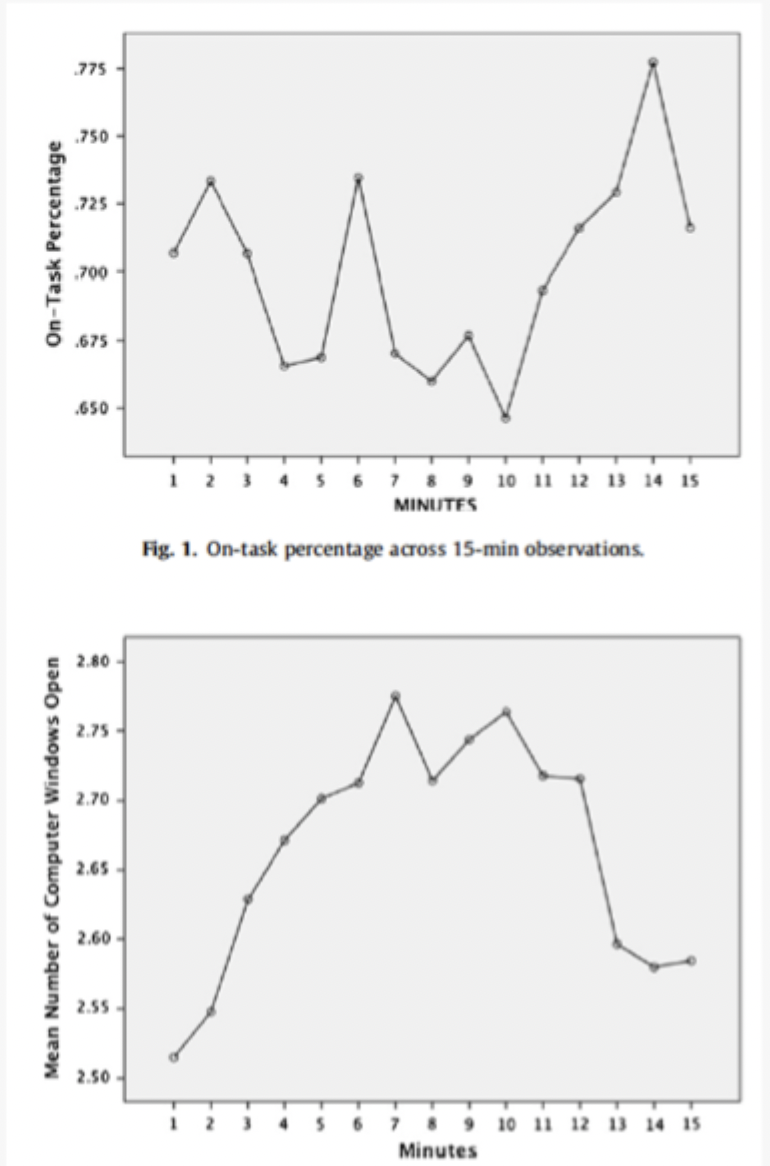
observers averaged less than six minutes on task before switching
emotional gratification from social media influences task-switching, leading to reduced academic performance
high usage of effective study strategies was linked to staying on-task more effectively
What did Fuller et al find regarding attentional control as a priority for treatment strategies for improvement of cognition in schizophrenia?
4 visual search tasks
feature task: low perceptual difficulty, high control requirements
large-gap task: medium perceptual difficulty, lower control requirements
small-gap task: high perceptual difficulty, lower control requirements
comparison task: medium perceptual difficulty, high control requirements (find the pair that has gaps on the same side and report the side)
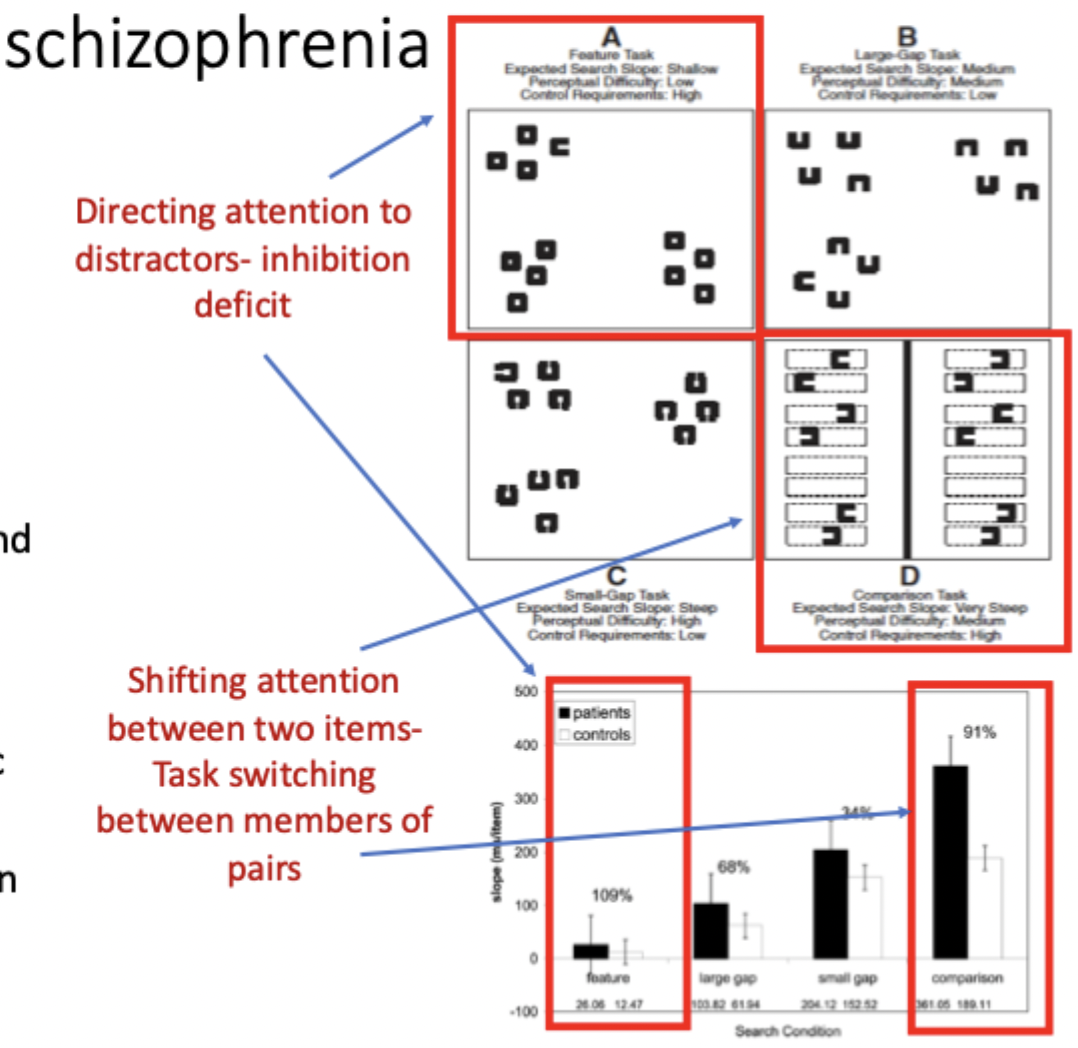
impairment is not merely due to generalised slowing but rather a specific dysfunction in attentional control processes
patients struggle with directing attention effectively
What did Zhao et al find regarding eye gaze cuing in observers on the autism spectrum and environmental complexity?
helps us understand if there is a deficit in engaging in joint attention
observers on the autism spectrum and those with typical development
posner valid/invalid cuing task: cues provided by eye gaze or arrows. Target (left or right) presented by audio (voice or tone) within each block
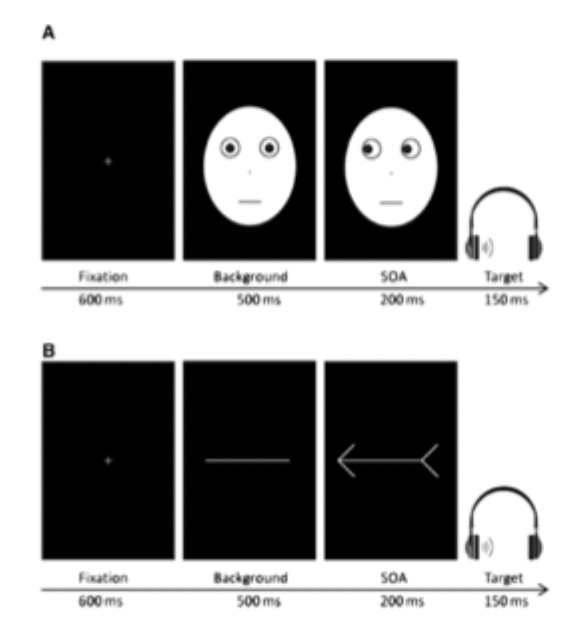
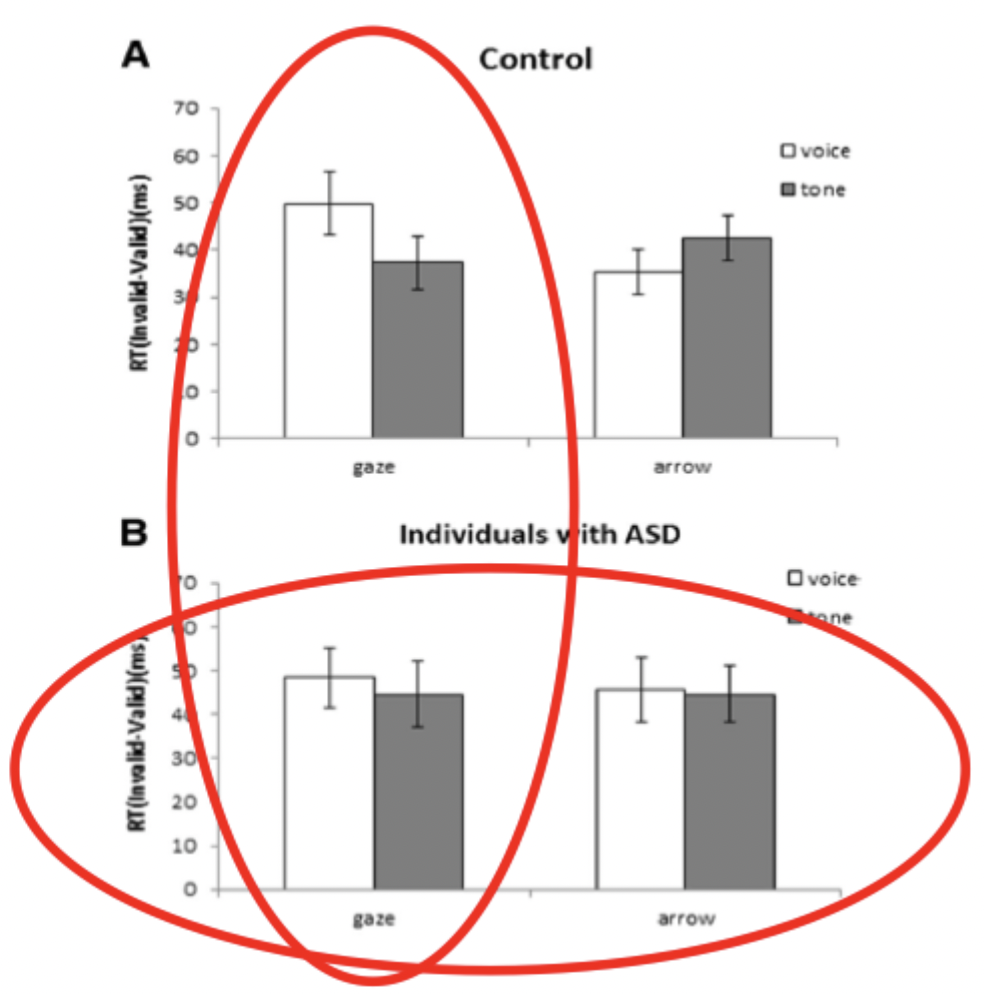
observers with AS did not show eye gaze effect (high validity effect) preferentially associated with a social target (a voice coming from left or right)
no advantage for gaze as opposed to arrows with AS observers