Unit 5.2: Growing microbes in the lab
 Call Kai
 Learn
Learn Practice Test
 Spaced Repetition
 Match
Match Flashcards
 Knowt Play
1/19

There's no tags or description
Looks like no tags are added yet.
Name | Mastery | Learn | Test | Matching | Spaced | Call with Kai |
|---|
No analytics yet
Send a link to your students to track their progress
20 Terms
What is liquid media used for?
Liquid media is used to grow large amounts of bacteria
What is solid media used for?
Solid media is used to isolate colonies in mixed samples
What is Agar used for?
Agar is used as a solidifying agent
What is chemically defined media?
Chemically defined media is when the media is specifically tailored for a microbe. Complicated and time-consuming to make
What is an example of chemically defined media?
Chemically defined media example: EZ medium
What type of bacteria is chemically defined media for?
Chemically defined media is for autotrophic bacteria
What is complex media?
Complex media is when the media uses a vague mixture of extracts. Complex media is more commonly used.
What is an example of complex media?
Complex media example: nutrient broth
What type of bacteria is complex media used for?
Complex media is used for chemoheterotrophs
What is selective media?
Selective media suppresses the growth of the unwanted bacteria and encourages the growth of the wanted bacteria
What is differential media?
Differential media uses a chemical to visually distinguish one species from another
What does selective Mannitol salt agar do?
Selective Mannitol salt agar’s salt concentration only lets halotolerant bacteria (Staphylococcus) grow
What does differential Mannitol salt agar do?
Differential Mannitol salt agar produces acids that differentiates the species of Staphylococcus
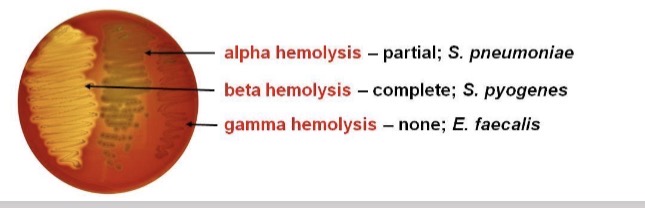
What does Blood Agar show?
Blood Agar shows hemolysis
What do the three hemolysis look like on Blood Agar?
Beta Hemolysis looks like a completely clear background
Alpha Hemolysis looks like a green background
Gamma hemolysis is no hemolysis at all
What is a short term method for preserving bacterial cultures?
Short term method: Refrigeration (2-4 weeks)
What are the two long term methods for preserving bacterial culture?
Deep freezing: culture of microbes are placed in a suspending liquid and frozen (6-12 months)
Lyophilization: a suspension of microbes are quickly frozen then water is removed by a high vacuum, giving a powder (few years)
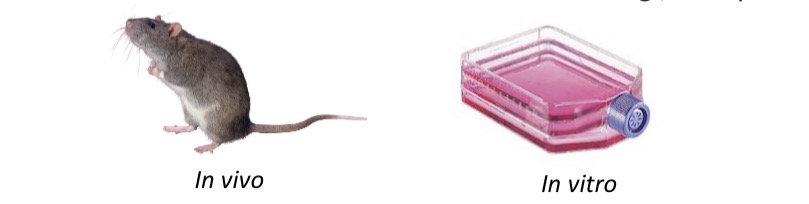
Where must viruses be grown in?
Viruses must be grown in:
Vivo: whole organisms
Vitro: in cells in an artificial environment
What are the three ways to grow Animal Viruses?
Living animals (mice)
Embryonated eggs
Cell cultures (immortal cells)
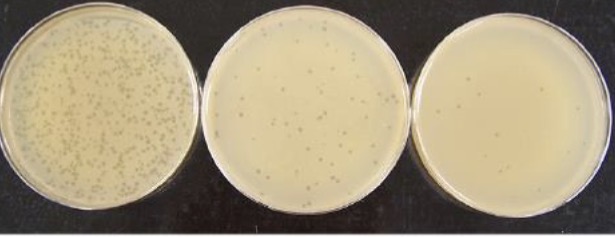
Describe the steps of growing a Bacteriophage
Start with a lawn of bacteria
Phage (bacteria virus) is added to the plate
Phages will cause lysis on susceptible bacteria