Comprehensive Blood and Cardiovascular System: Structure, Function, and Hemostasis
 Call Kai
 Learn
Learn Practice Test
 Spaced Repetition
 Match
Match Flashcards
 Knowt Play
1/49

There's no tags or description
Looks like no tags are added yet.
Name | Mastery | Learn | Test | Matching | Spaced | Call with Kai |
|---|
No analytics yet
Send a link to your students to track their progress
50 Terms
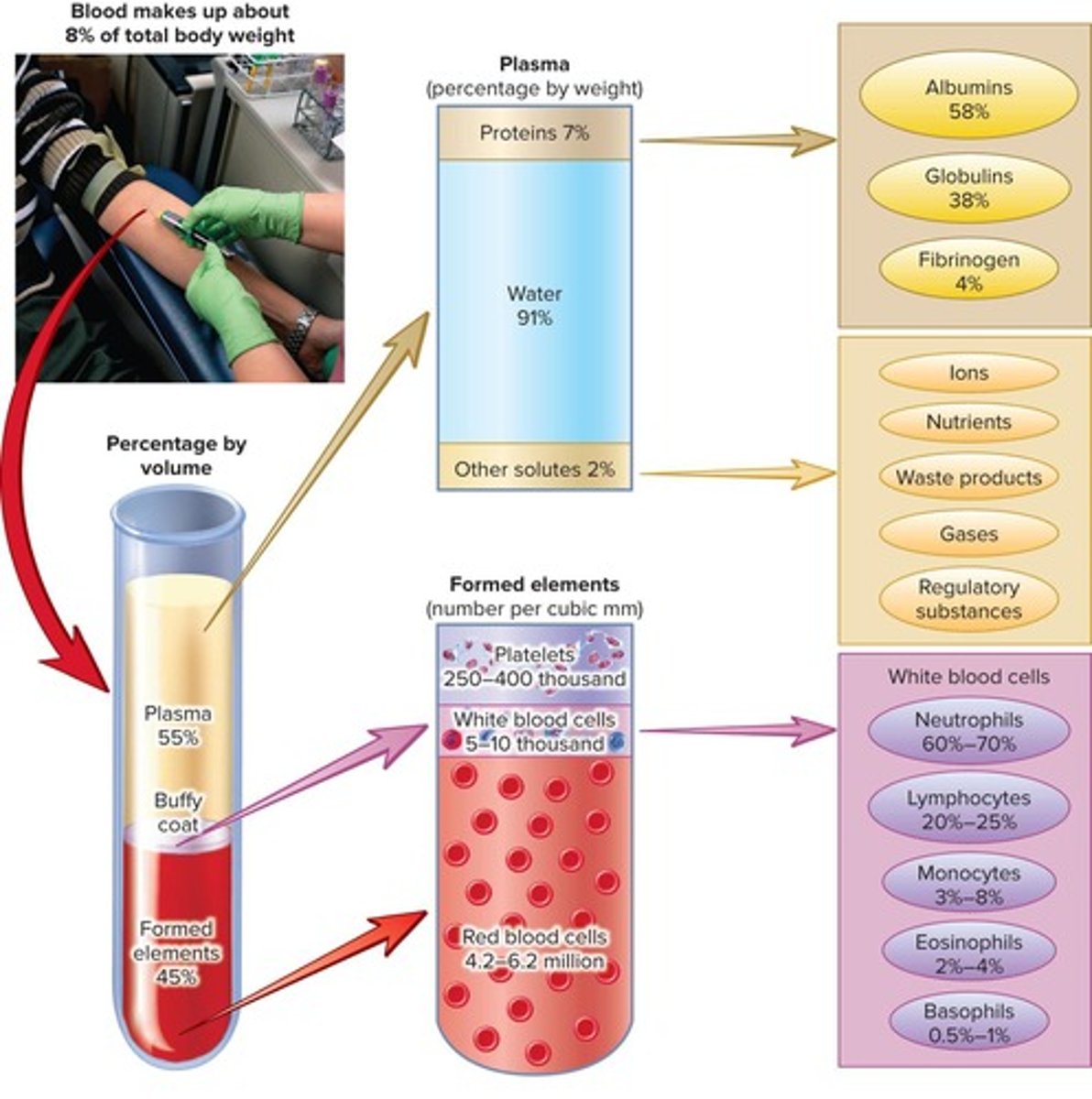
What are the main functions of blood?
Transport, regulation of pH and electrolytes, restriction of blood loss, defense against toxins and pathogens, stabilization of body temperature.
What type of tissue is blood classified as?
Connective tissue.
What is the liquid matrix of blood called?
Plasma.
What are the three major plasma proteins?
Albumins, globulins, and fibrinogens.
What is the primary function of albumins?
Transport proteins.
What is the primary function of globulins?
Transport proteins and immunoglobulins.
What is the primary function of fibrinogens?
To give rise to fibrin needed for blood clotting.
What are the formed elements of blood?
Red blood cells (RBCs), white blood cells (WBCs), and platelets.
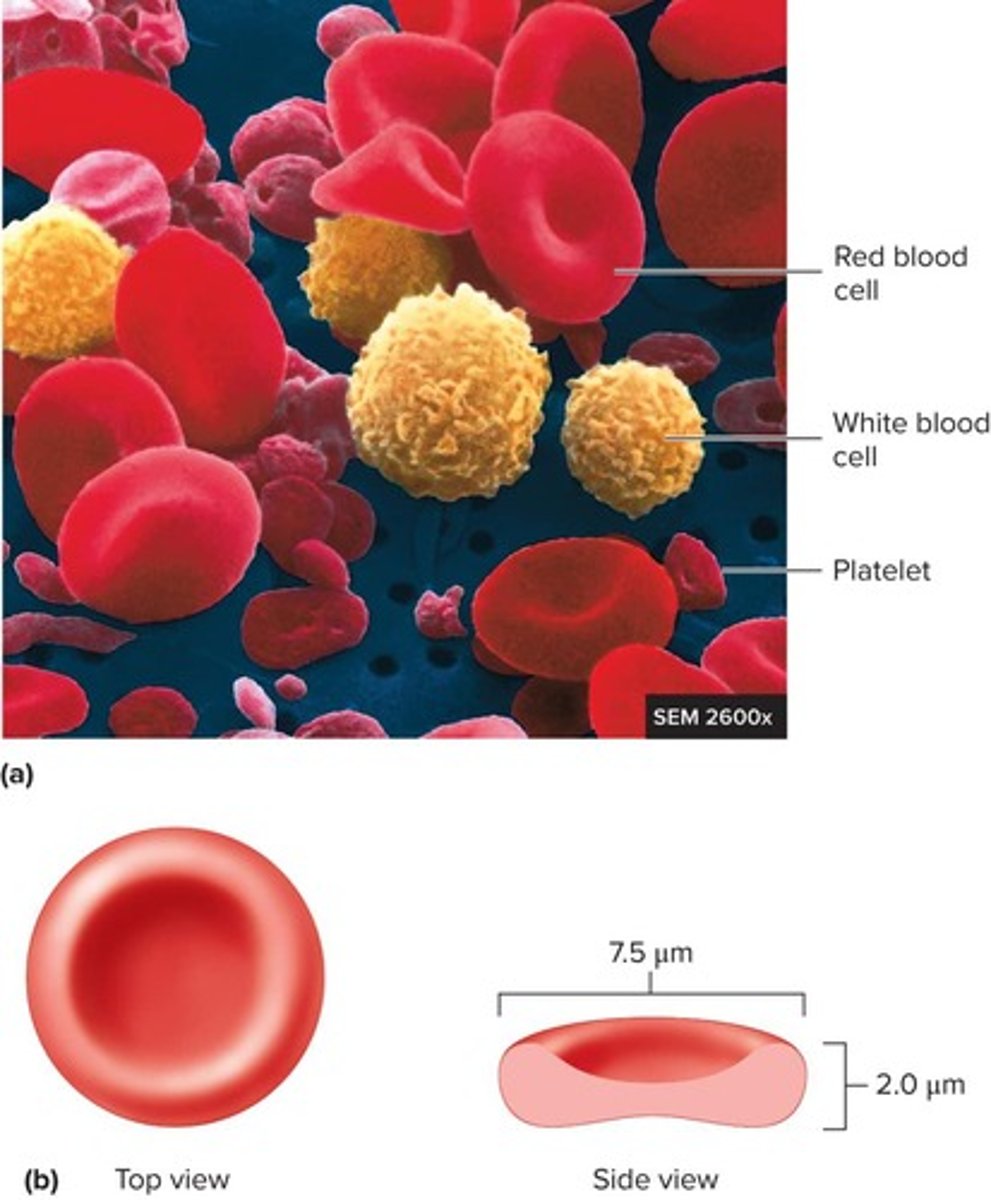
What is the primary function of red blood cells?
Oxygen transport.
What are the two types of white blood cells?
Granulocytes (neutrophils, eosinophils, basophils) and agranulocytes (lymphocytes and monocytes).

What is the role of platelets?
To form platelet plugs and release chemicals necessary for blood clotting.
What is hematopoiesis?
The process of blood cell production.
Where does hematopoiesis occur in infants?
In the yolk sac of the embryo, liver, thymus, spleen, lymph nodes, and red bone marrow.
What is the shape of red blood cells?
Biconcave disc shape.
What is hemoglobin?
A protein consisting of four subunits that transports oxygen and carbon dioxide.
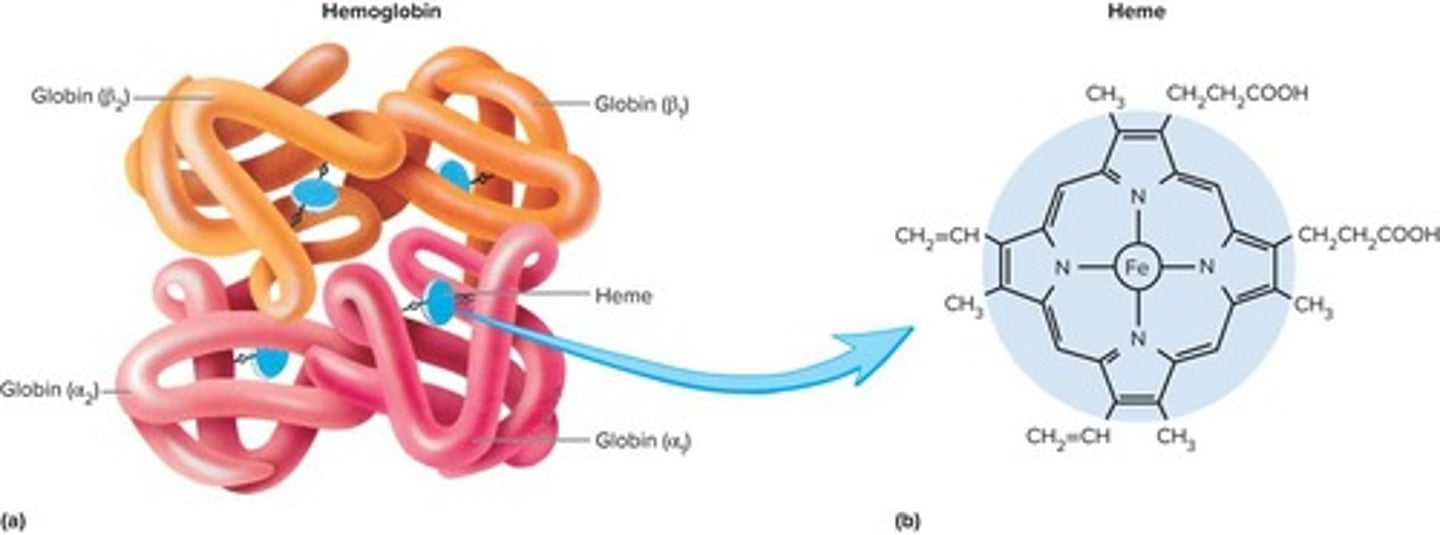
How does hemoglobin transport oxygen?
98.5% of oxygen is attached to hemoglobin; 1.5% is dissolved in plasma.
What happens to carbon dioxide in red blood cells?
7% is dissolved in plasma, 23% is combined with hemoglobin, and 70% is transported as bicarbonate ions.
What is Dalton's Law in relation to gas exchange?
It shows that oxygen and carbon dioxide exert separate pressures that affect their rate of diffusion.
What is the average total blood volume in females?
4 to 5 liters.
What is the average total blood volume in males?
5 to 6 liters.
What is the significance of the biconcave shape of red blood cells?
It increases surface area for gas exchange and allows flexibility to pass through small vessels.
What is the role of carbonic anhydrase in red blood cells?
It facilitates the conversion of carbon dioxide and water into bicarbonate ions.
What can affect hemoglobin's ability to transport oxygen?
Poisons and venoms, such as carbon monoxide, which binds strongly to hemoglobin.
What are the components of blood plasma?
Ions, nutrients, waste products, gases, and regulatory substances.
What is the function of white blood cells?
Defense against pathogens.
What is the origin of platelets?
They are cell fragments from megakaryocytes.
What are the three processes that can lead to hemostasis?
Vascular spasm, platelet plug formation, and coagulation.
What is the effect of carbon monoxide on hemoglobin?
Carbon monoxide binds strongly to the iron of hemoglobin, forming carboxyhemoglobin, which reduces oxygen transport.
What is the process of red blood cell formation called?
Erythropoiesis.
What hormone stimulates red blood cell production?
Erythropoietin, produced by the kidneys in response to low blood oxygen levels.
What is the lifespan of red blood cells?
About 100-120 days.
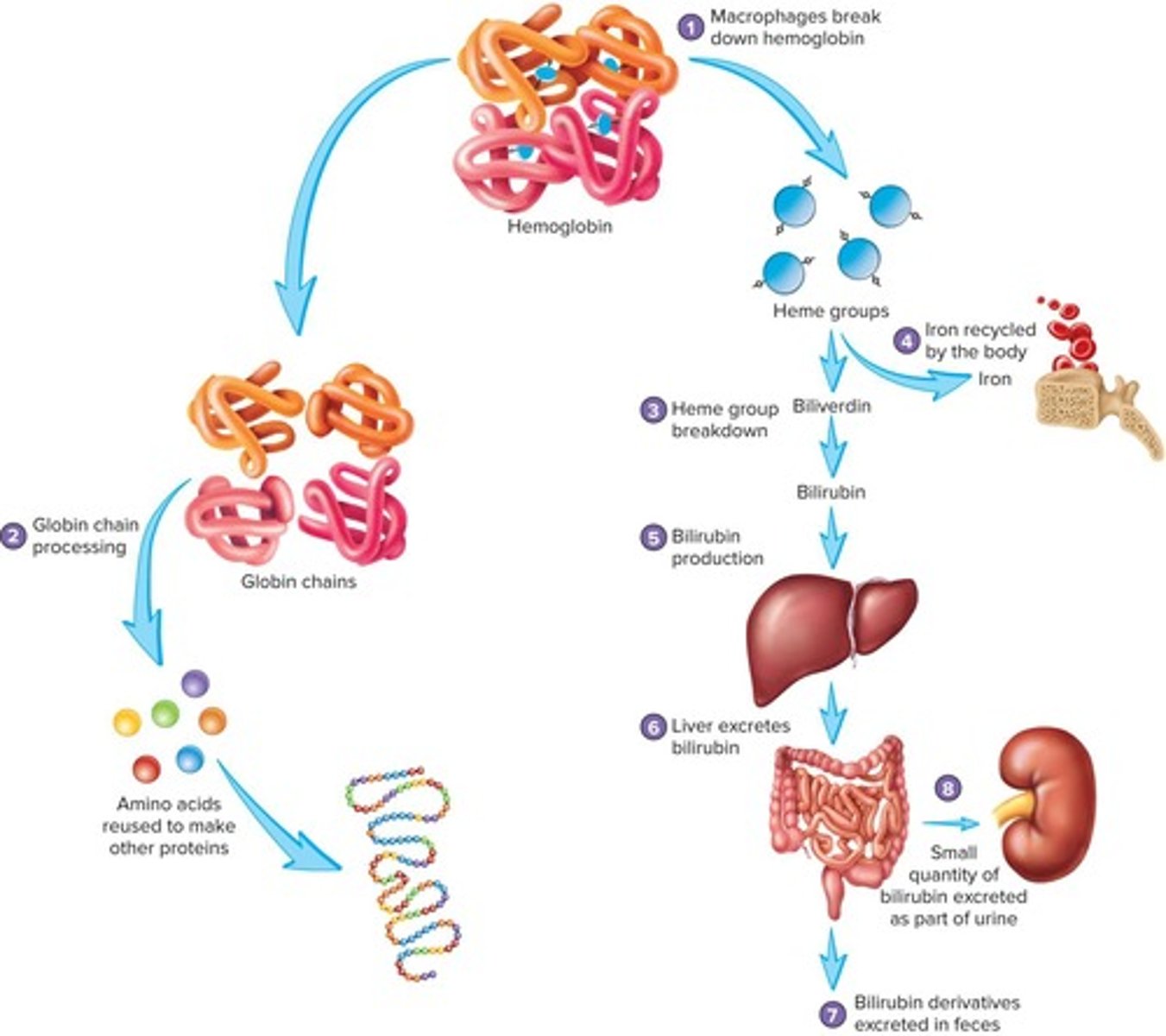
What happens to old red blood cells?
They become trapped and fragmented, usually captured by the spleen and broken down by macrophages.
What is heme degraded into?
Bilirubin (yellow bile).
What are the two main categories of white blood cells?
Granulocytes and agranulocytes.
What is the primary function of neutrophils?
To phagocytize bacteria and foreign matter.
What role do eosinophils play in the body?
They are involved in allergic reactions and destroy inflammatory chemicals like histamine.
What is the function of basophils?
They release histamine to increase inflammation and heparin to inhibit blood clotting.
What are lymphocytes responsible for?
Antibody production (B cells) and direct destruction of infected cells (T cells).
What do monocytes become when they leave circulation?
Macrophages, which are phagocytic cells.
What do hemocytoblasts give rise to?
Myeloid stem cells or lymphoid stem cells.
What are platelets and how are they formed?
Cell fragments pinched off from megakaryocytes in red bone marrow.
What is hemostasis?
The arrest of bleeding through various mechanisms.
What occurs during vascular spasm in hemostasis?
Local constriction of the vessel to reduce blood loss.
What is the role of platelets in hemostasis?
Platelets adhere to injury sites and aggregate to form a platelet plug.
What is the final step in the clotting process?
Conversion of fibrinogen into fibrin, forming a blood clot.
What is thrombosis?
Clotting in an unbroken vessel, which may be initiated by rough vessel walls or slow blood flow.
What determines transfusion success?
The presence of specific antigens (agglutinogens) on the surface of red blood cells.
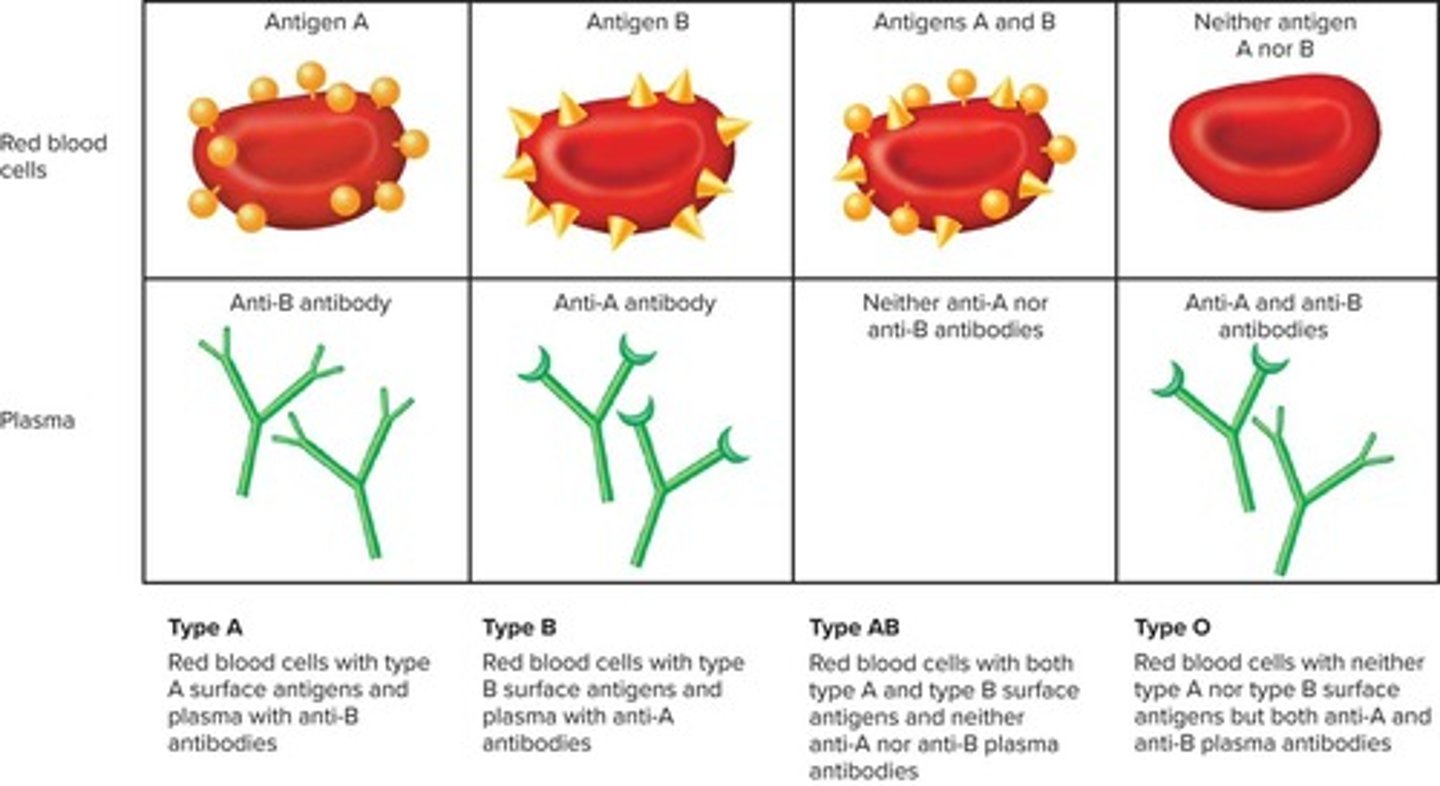
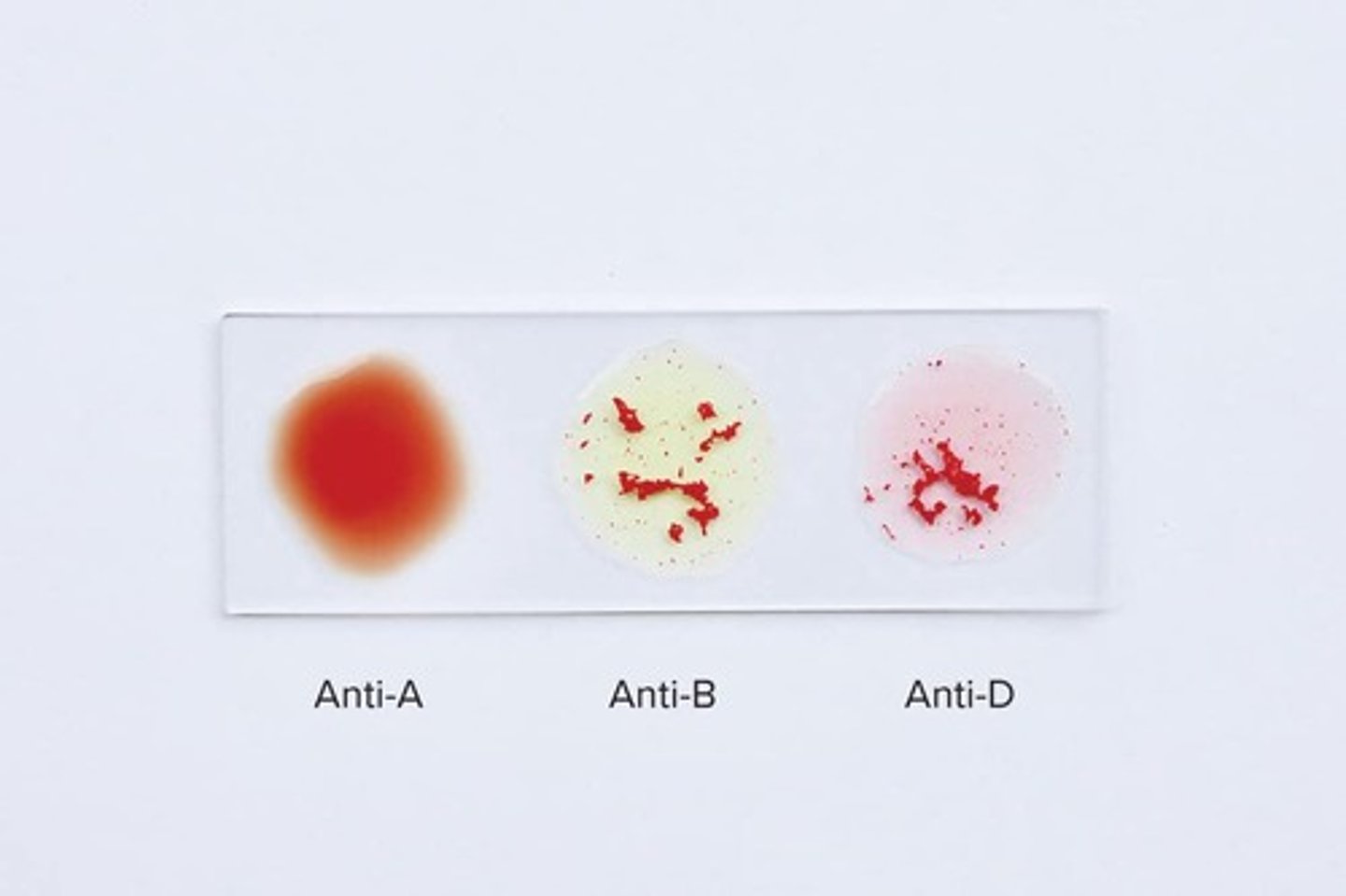
What is the purpose of blood typing?
To determine ABO and Rh blood types.
What happens during an agglutination reaction?
Antibodies bind to RBC antigens, causing clumping or hemolysis.
What is the role of megakaryocytes in blood composition?
They produce platelets; a decrease in megakaryocytes would decrease the number of platelets in the blood.