Monuments Image Bank Flashcards
 Call Kai
 Learn
Learn Practice Test
 Spaced Repetition
 Match
Match Flashcards
 Knowt Play
1/43

There's no tags or description
Looks like no tags are added yet.
Name | Mastery | Learn | Test | Matching | Spaced | Call with Kai |
|---|
No analytics yet
Send a link to your students to track their progress
44 Terms
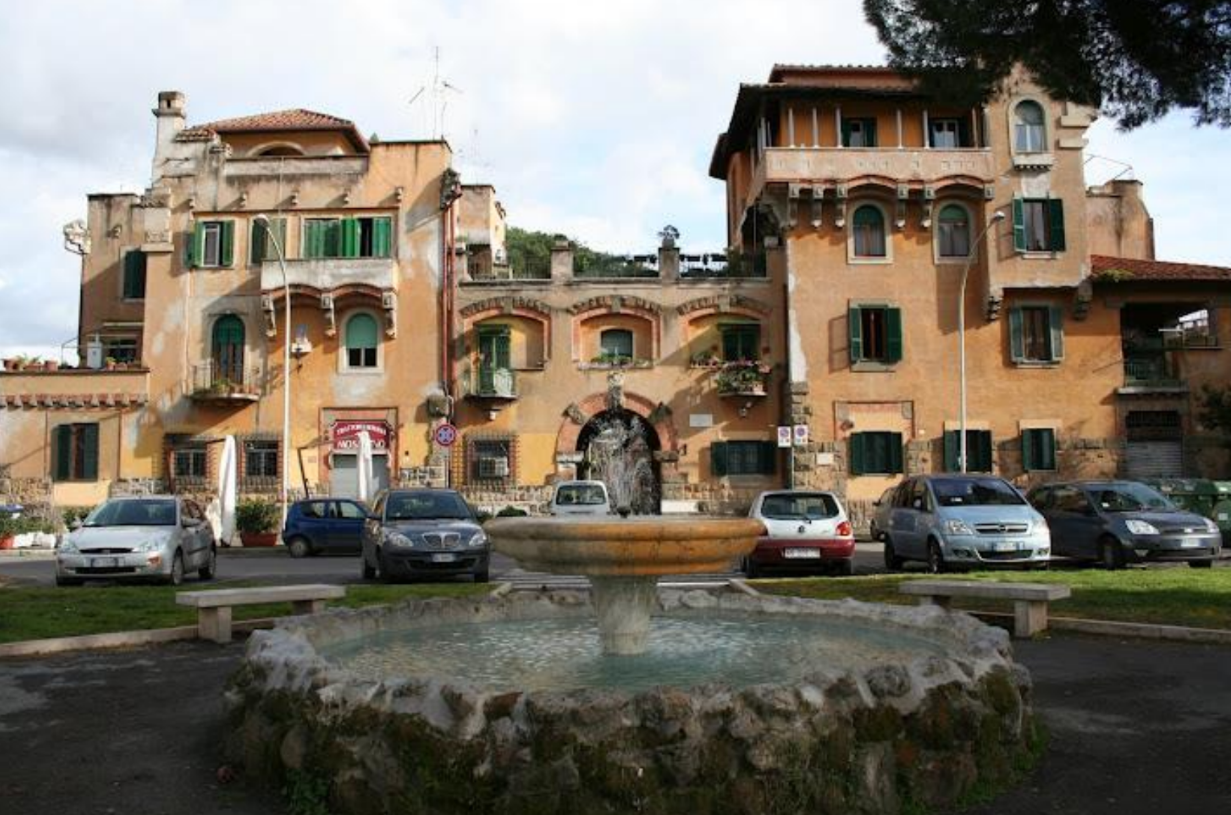
Innocenzo Sabbatini, Lotto 5, Palazzina at Piazza Benedetto Brin,
Significance: Poorer housing focused on the pyscholoigcal health of people who are now working in the port area. These buildings were supposed to mimic the trastevere area so people moving there would feel at home. recognizable forms of residential housing. local “poorer” stone than travertine in.
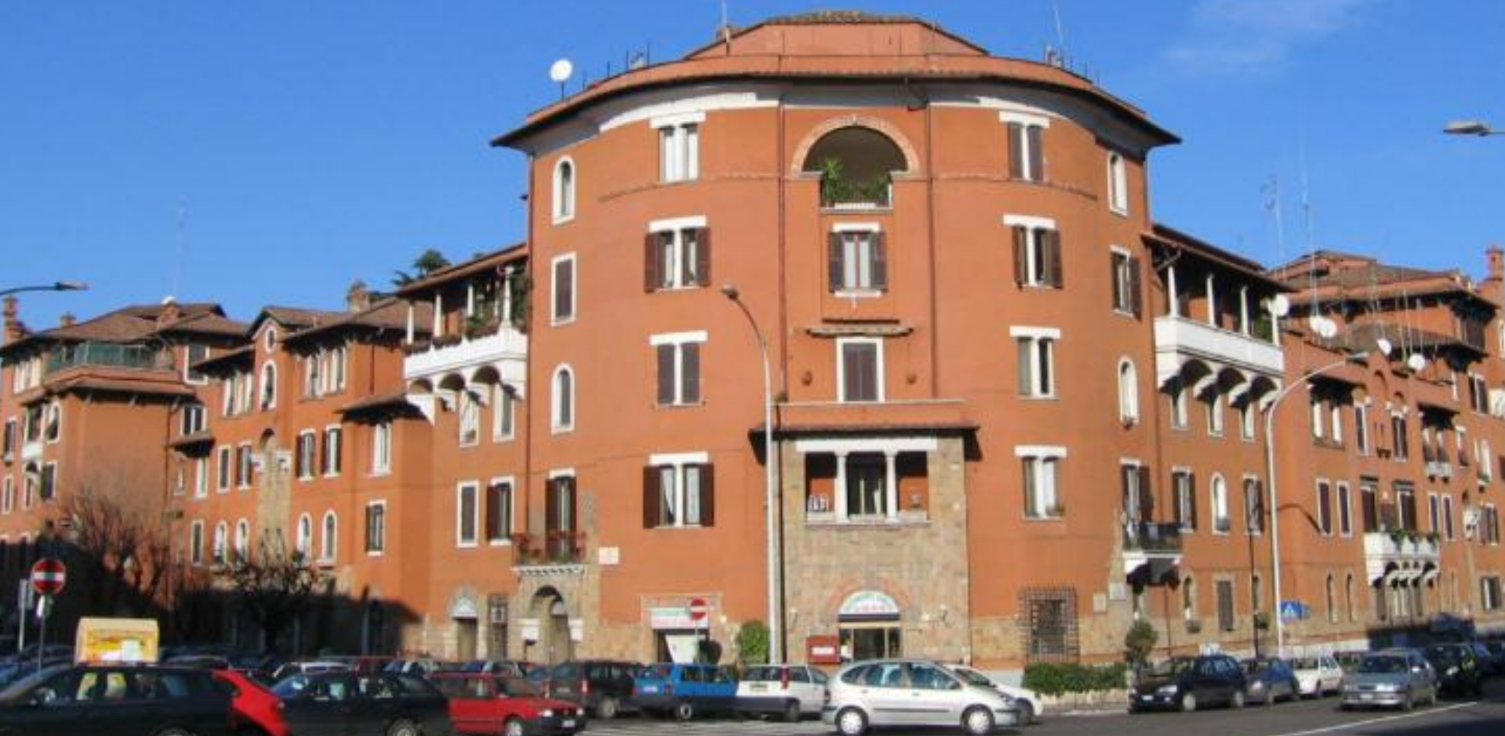
Plinio Marconi, Lotto 8, Palazzine at Piazza Romano
Significance: Projects like the “Lotto 8” palazzine were tied to the broader urban strategies under Benito Mussolini. Rome was being reshaped to reflect power, order, and modernity. Entire new residential districts were planned to house a growing population while also projecting ideological control over the city’s form.
Sits between rationalism and modernity
order and hierarchy in layout
controlled density (not overcrowded working-class housing)
a vision of a stable, respectable middle-class society aligned with the regime
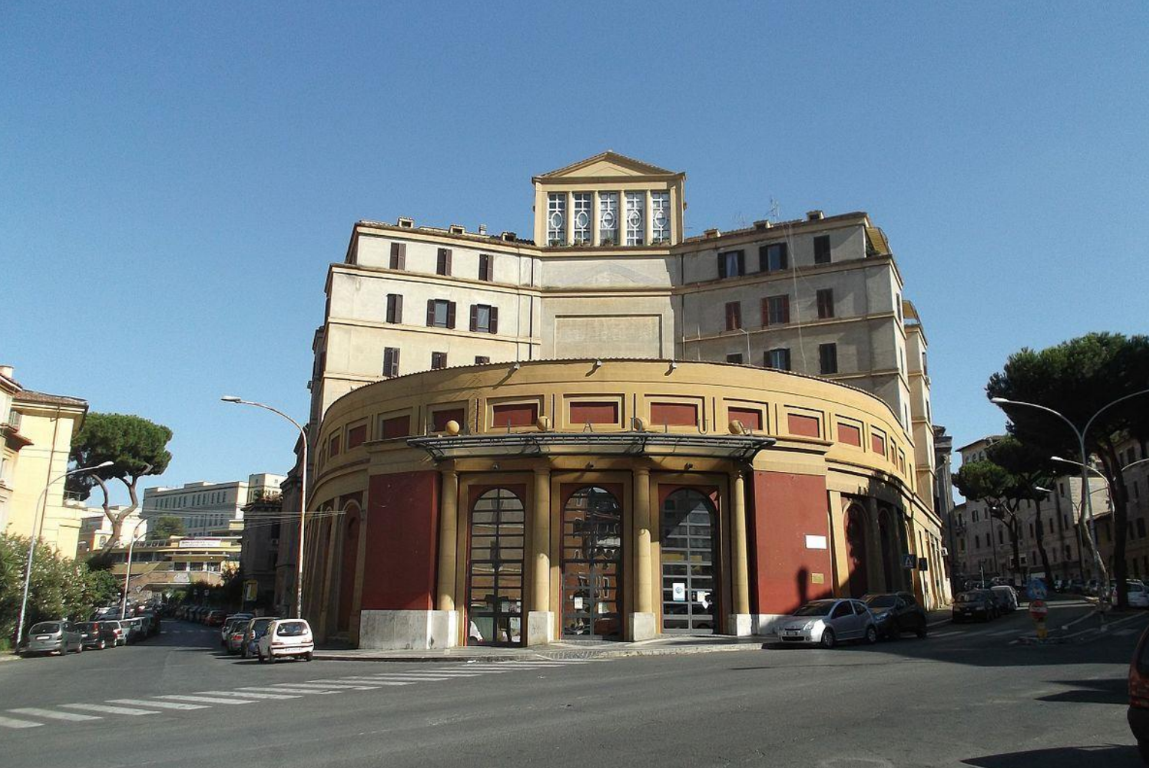
Innocenzo Sabbatini, Lotto 12, called the Palladium, Piazza Romano, ICP
Significance: Built as public housing for working-class residents, it reflects the regime’s effort to address urban overcrowding while maintaining social control through planned environments. Architecturally, Sabbatini combined elements of Roman monumental tradition with simplified, almost expressionist forms—giving the complex a strong visual identity (hence the nickname “Palladium”) while still prioritizing functionality and communal living. Compared to the more middle-class palazzine of Lotto 8, this project is denser and more collective in character, emphasizing shared courtyards and a sense of community shaped by design. Its significance lies in how it demonstrates the regime’s dual approach to housing—both providing for lower-income populations and embedding ideological ideas about order, hierarchy, and collective life into the urban fabric.
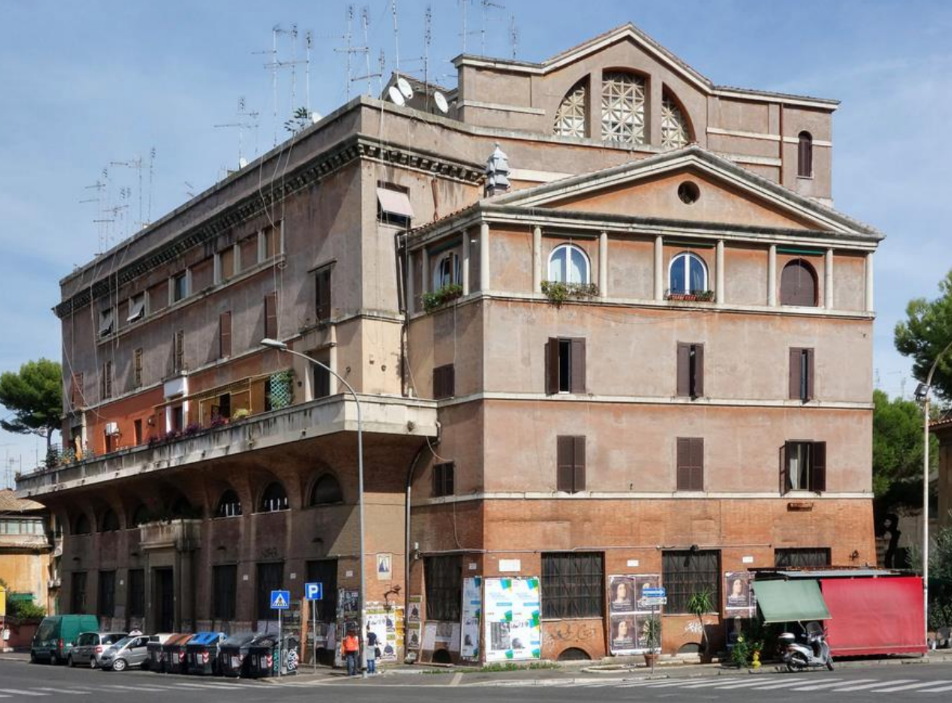
Innocenzo Sabbatini, Lotto 13, called the Bath Complex,
Piazza Romano
significance: reflects the social welfare ambitions embedded in early Fascist-era public housing. Conceived as part of a broader residential scheme, the inclusion of communal bath facilities addressed the lack of private sanitation in working-class apartments at the time, making hygiene and collective services a central architectural concern.
Its significance lies in showing how public housing design extended beyond living units to shared social infrastructure, anticipating later welfare-oriented urban planning while remaining closely tied to the ideological framework of the period.
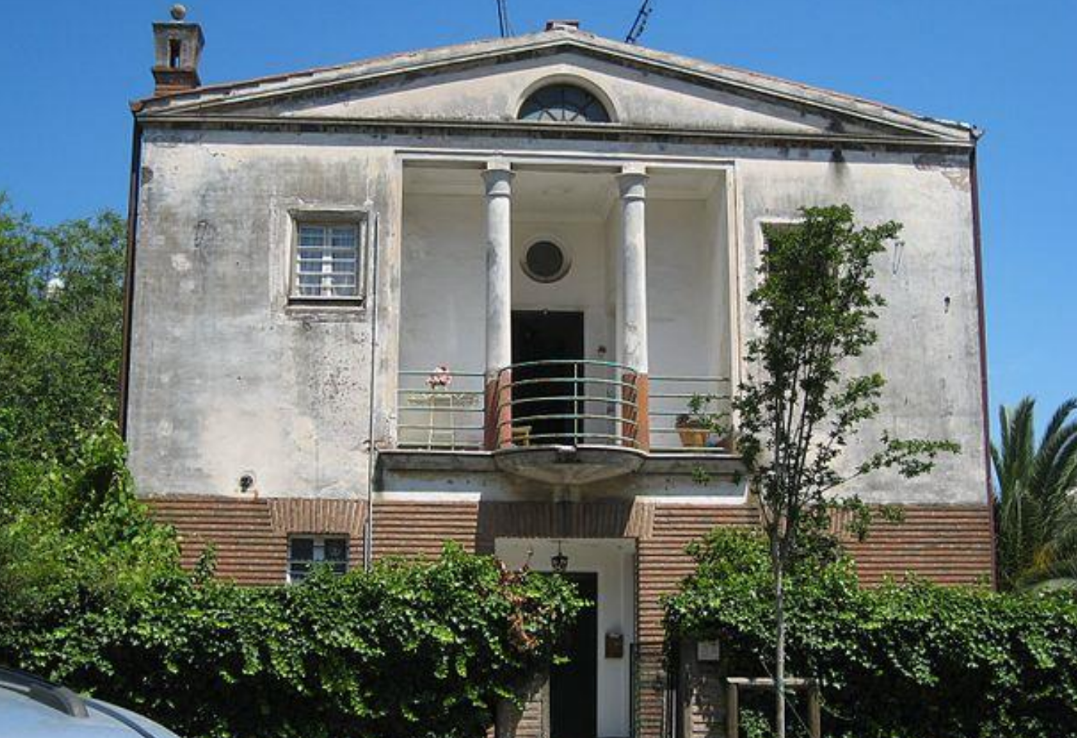
Case Modello: Mario De Renzi, House at via delle Sette Chiese 93,
winner of competition
Significance: Milan architect part of group of seven, won the competition for the modern house. Part of exhibit of rationalist architecture and actually realized as a design.
The building is more cross-sided with columns and cantilever. Pediment (classical element), recalls serlian arch. No external supports. Tube-ish balcony. Brick, stucko. However, symmetrical and small windows.
other versions are more bauhouse with ribbon windows and factory-like
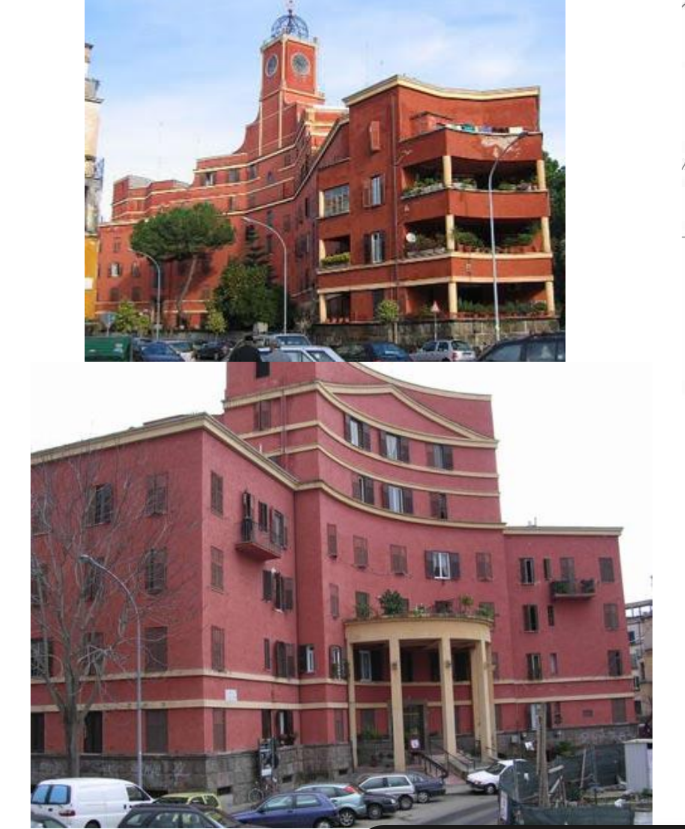
Innocenzo Sabbatini, Albergo
Rosso, Temporary housing at
Piazza Carbonara and Piazza Biffi
Significance: Hotel of temporary housing for people to stay at from being kicked out of Rome.
represented the neighborhood turning from the social ideal of garden space and pleasent space, to the fascist ideal of moving people out of rome residences into the peripheal and urban density.
Institutional appearance.
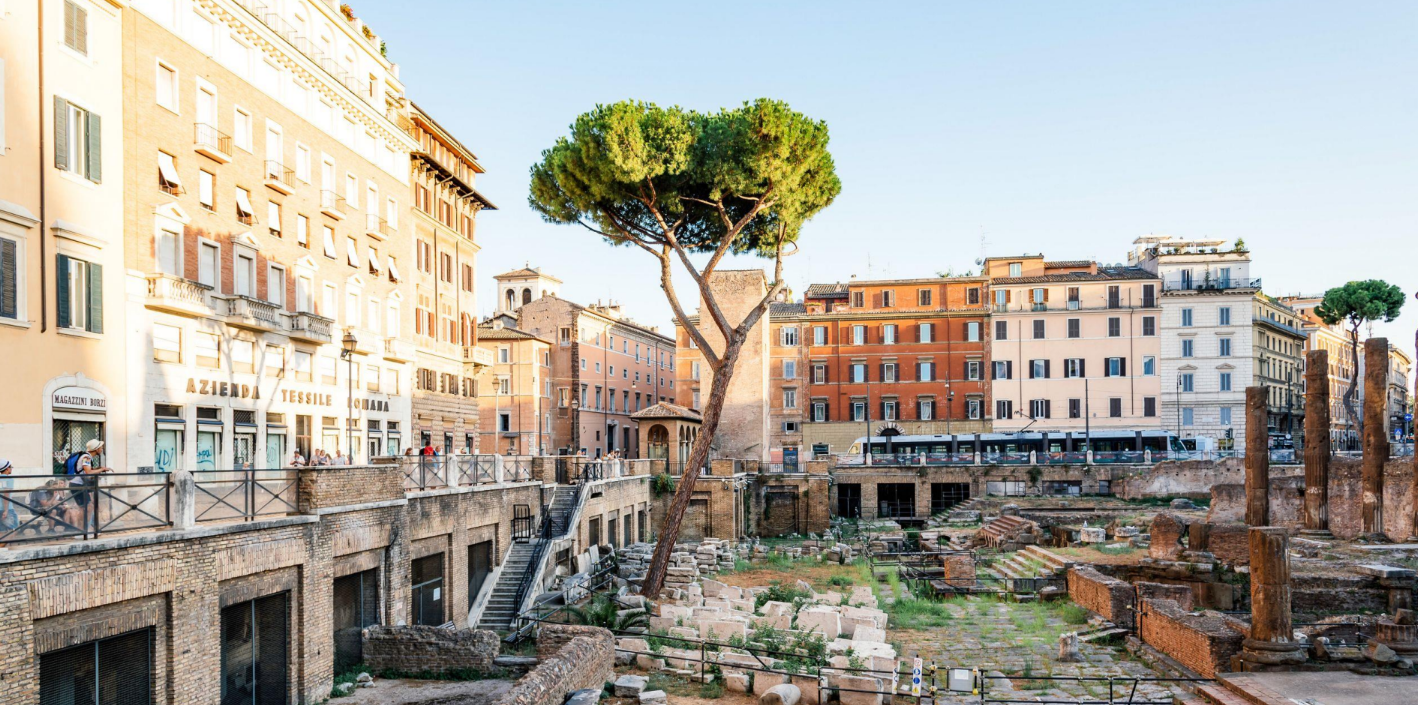
Archeological area at Largo Argentina
significance: The archaeological area at Largo di Torre Argentina became significant in the late 1920s when it was excavated and isolated as part of the urban transformations under Benito Mussolini. By clearing later buildings to expose a group of Republican-era temples and the remains of the Theatre of Pompey—notably associated with the assassination of Julius Caesar—the regime sought to visually connect modern Rome with its imperial past.
This project exemplifies how archaeology was used as a political tool: ancient ruins were framed as symbols of Roman greatness, reinforcing Fascist ideology and its claims to historical continuity. At the same time, the site reflects a shift in urban planning, where entire layers of the city were removed to create open, monumental spaces that prioritized historical spectacle over the organic fabric of the lived city.
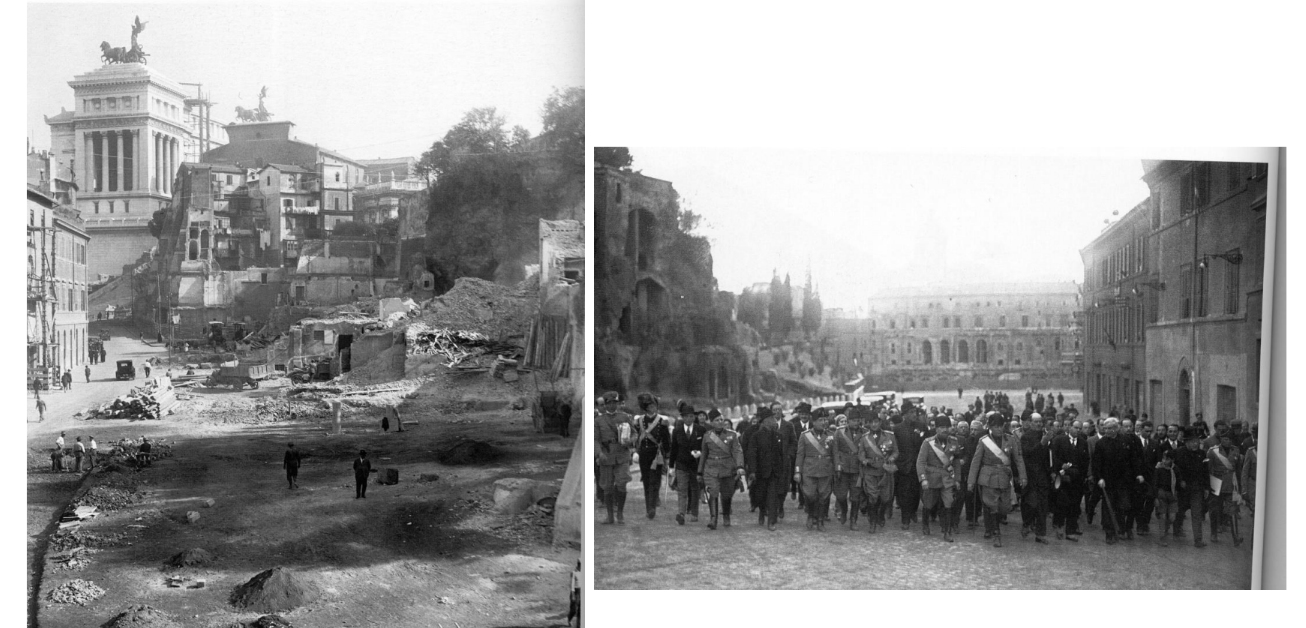
via del Mare: historic photographs showing
demolition, construction and completion
significance: Images of demolition show the destruction of entire historic areas—most notably the disappearance of Piazza Montanara and surrounding medieval fabric—to isolate ancient monuments and clear space for the new road.
images of the completed avenue emphasize the intended result: a broad, open, monumental route linking key parts of the city while visually foregrounding ancient ruins.
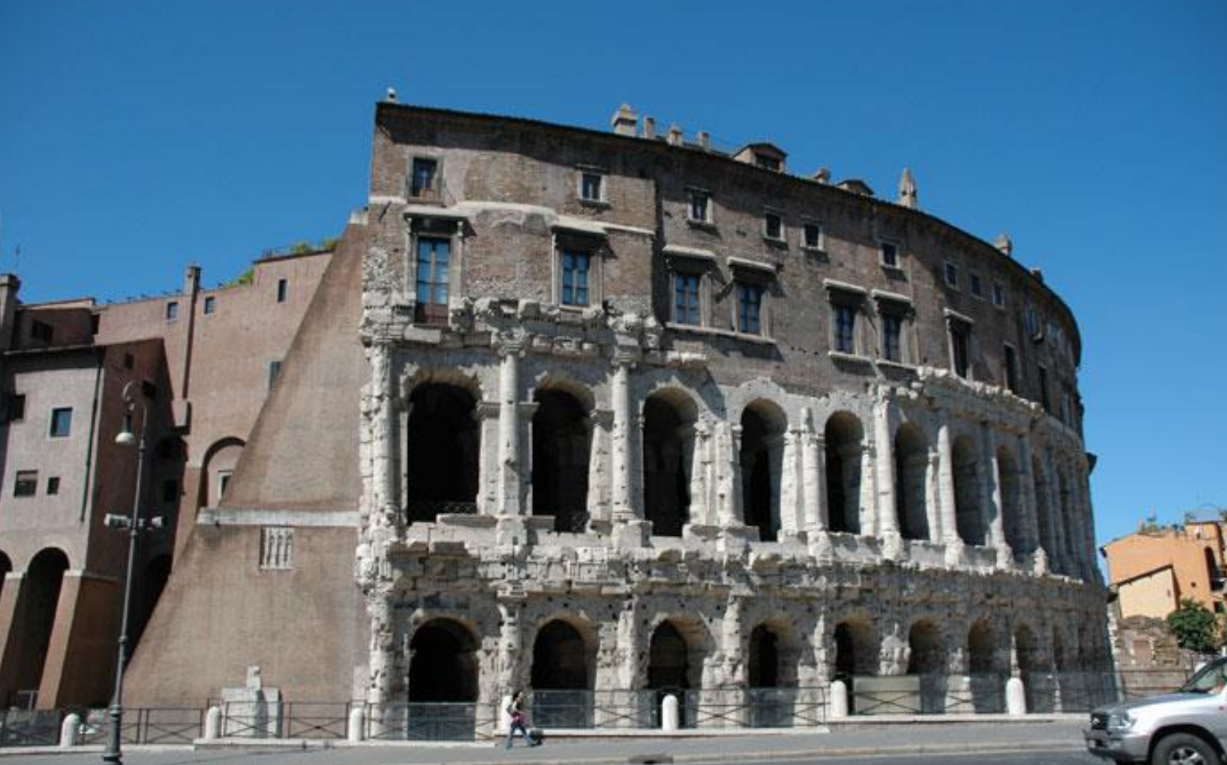
View of the Theater of Marcellus from the street: notice the
buttressing wall contaning the fasces on the left side
significance: The Theatre of Marcellus gained renewed significance between 1926 and 1930, when it was excavated and “isolated” as part of the urban interventions carried out under Benito Mussolini. During this process, surrounding medieval and Renaissance buildings were demolished to reveal the ancient structure more fully, transforming it into a monumental centerpiece rather than an embedded part of the living city. This reflects a key strategy of the period: using archaeology to highlight Rome’s imperial past while reshaping the modern city to project power, order, and historical continuity.
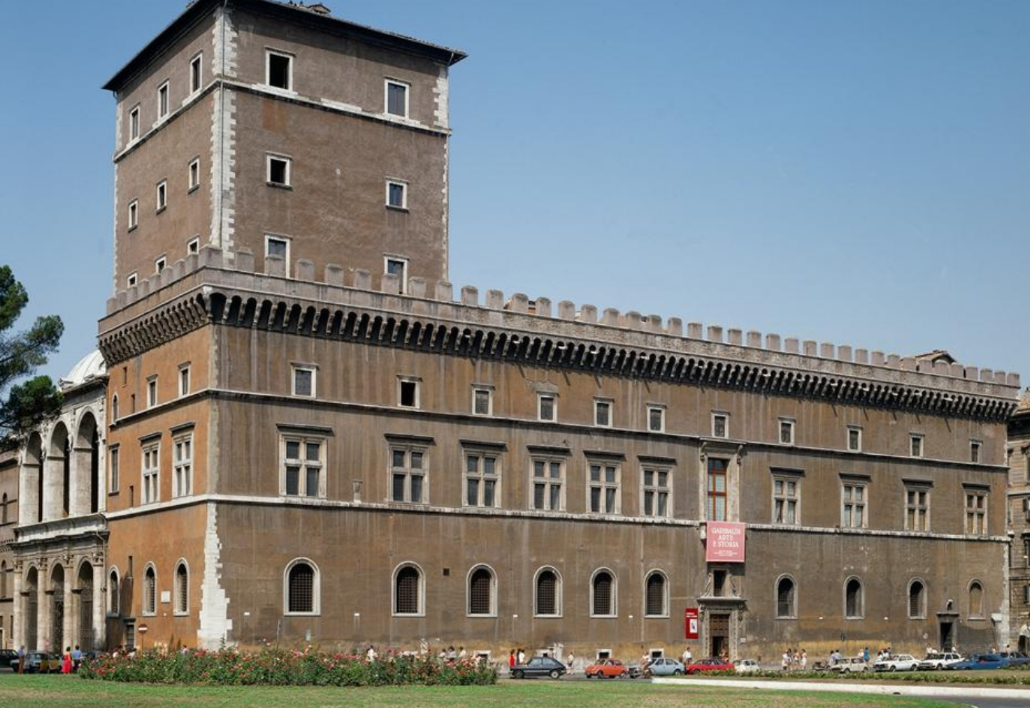
Palazzo Venezia: Mussolini’s Headquarters beginning in 1929
significance: Mussolini used it as his headquarters, combining its solid Renaissance massing with Fascist-era interventions and symbolism. “Lictor’s Tower” was intended to rise beside it as a stark vertical landmark, embodying authority through a stripped, modern form aligned with Rationalist architecture. This contrast between the heavy, historic palace and the rationalist tower reflects the regime’s broader attempt to fuse Rome’s past with a modern, ideological future.
rom its balcony overlooking Piazza Venezia and Vittoriano, Mussolini regularly delivered speeches to large crowds, turning the building into a powerful stage for Fascist propaganda and public spectacle. Takes away attention from the very liberty-style and monarchy celebrating Vittoriano
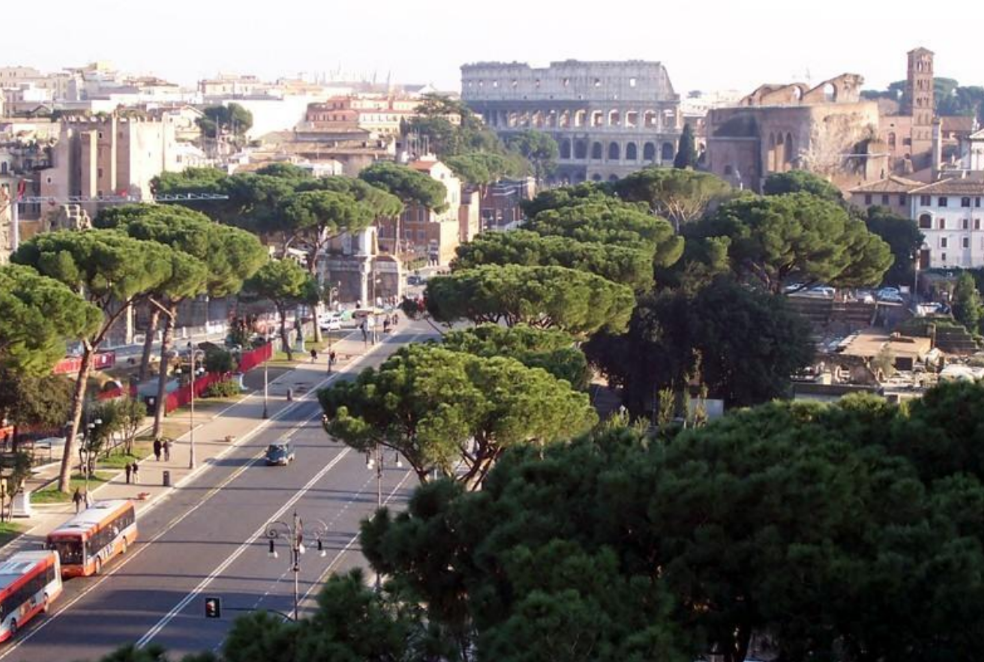
Via dell’Impero (now Via dei Fori Imperiali)
Significance: Incredibly wide, forum on either side of the street. On the site of the ancient imperial fora, forum is where social/political important space is. There is the roman forum and then emperor’s with their special forum. augustus has oepn space with temple in the middle. Framed by colleseum on one end, then Vittoriano, Pallaza venezia (fascist building) and piazza venezia.
The road functions for you to view things from movement, kind of like film. Mussolini liked cars and wanted people to ride them and view everything from this movement.
To house processions (military parades)
A part of a larger connection to Ostia (the sea)
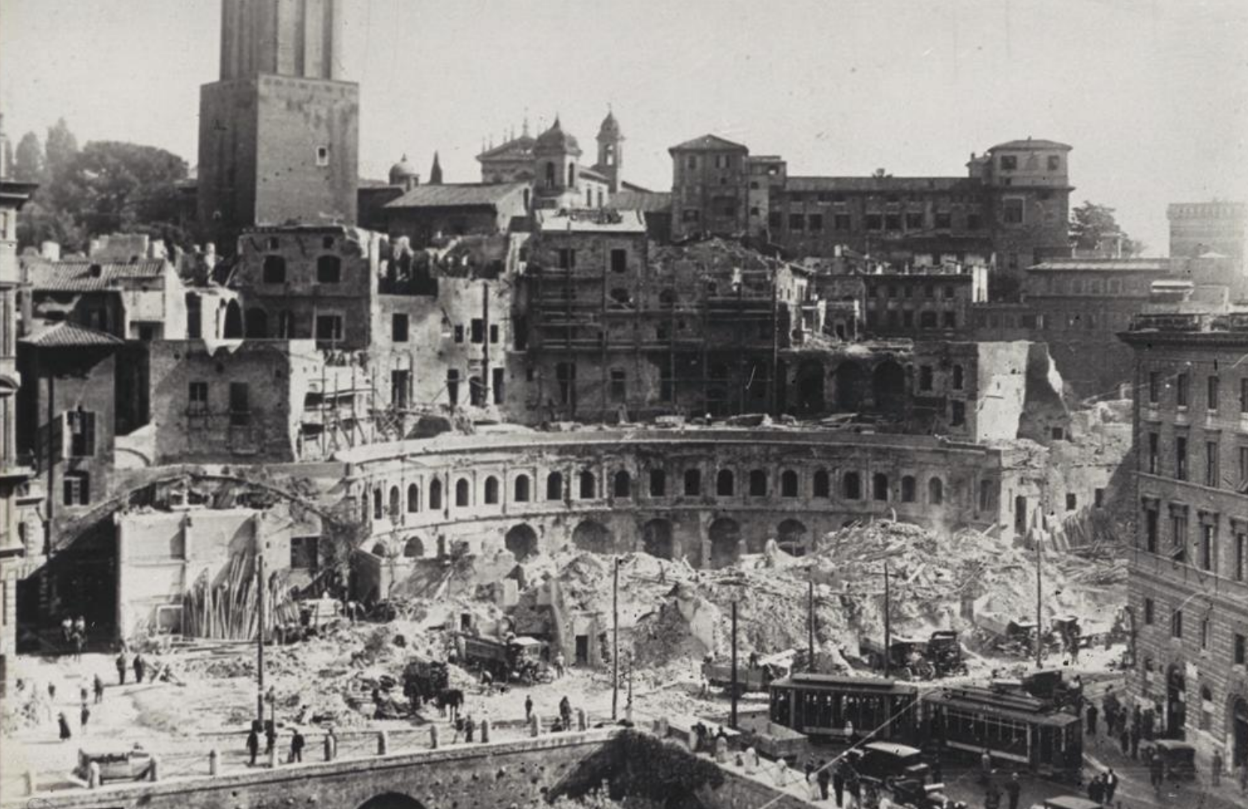
Demolition and excavation of the Markets of Trajan
Significance: densely inhabited neighborhood, dozens of buildings had to be demolished in order to create this street between the forums.
These ancient sites are going to be soon used as a backdrop for future activities. Excavation is selective.
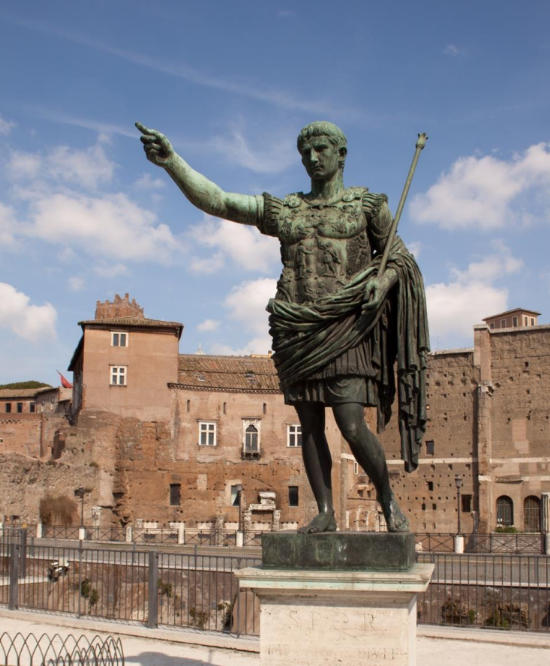
Portrait of the Emperor Augustus in front of the Forum of Augustus, via dell’Impero
Significance: Placed in front of Augustus’ forum. Augustus forum was open with temple in the middle. Making a gesture that means rhetorical gesture in speeches, similar to roman salute.
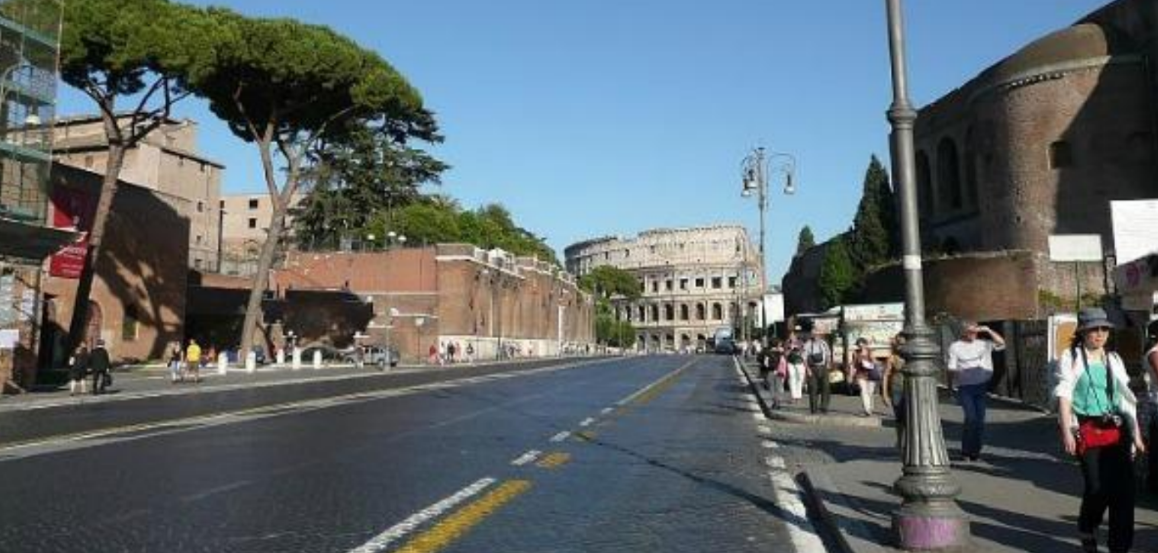
via dell’Impero: view toward Colosseum with Basilica of Maxentius and Constantine on the right, area originally designated for Palazzo del Littorio on the left
Significance: (view of exterior) imperialist imagery rooted in the marble maps (rome expansion, formerly 5th map with modern italian expansion).
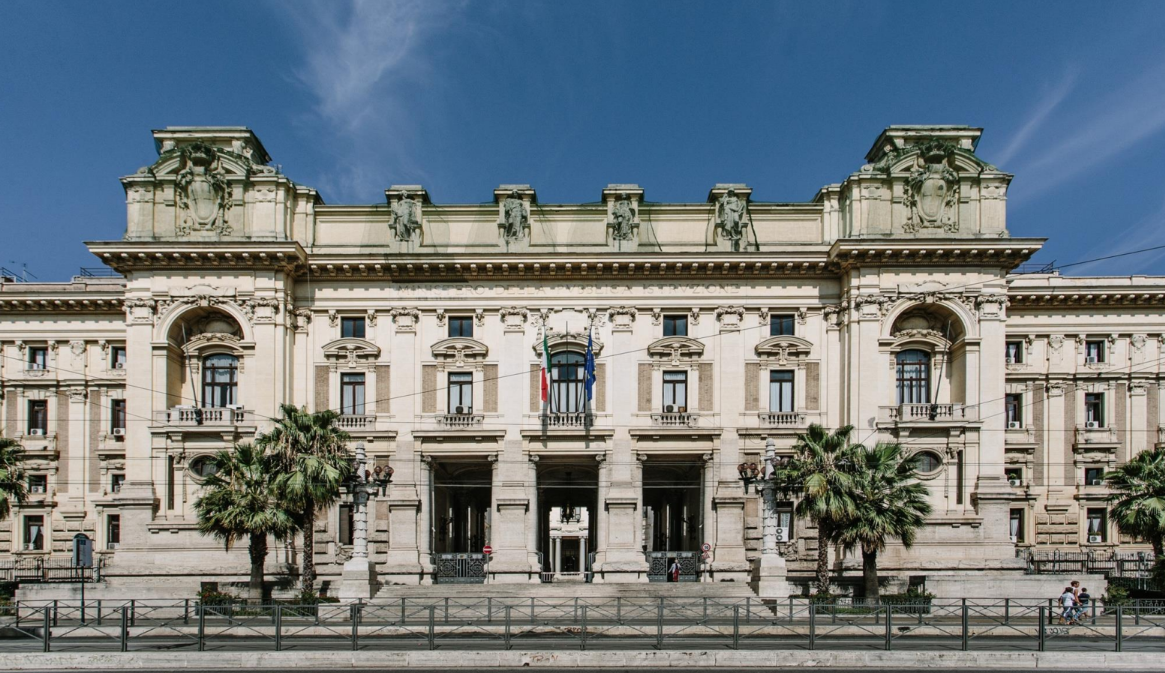
Cesare Bazzani, Palazzo della Pubblica Istruzione (Palace of the Ministry of Public Instruction)
significance: present education as a pillar of the modern Italian state. Architecturally, it combines monumental classicism with restrained modern elements, projecting authority, stability, and continuity with Italy’s cultural past while remaining functional as an administrative center. Socially, the building symbolized the growing role of centralized public education in shaping citizens, particularly as it was later absorbed into the ideological framework of the Fascist regime. Its scale and formal language communicate the importance of state institutions in organizing and guiding national identity during this period.
stylized vegetal motifs—acanthus leaves, laurel garlands, and flowing plant forms
corinthian/composite capitals. both entablature and parapets. Very decorative
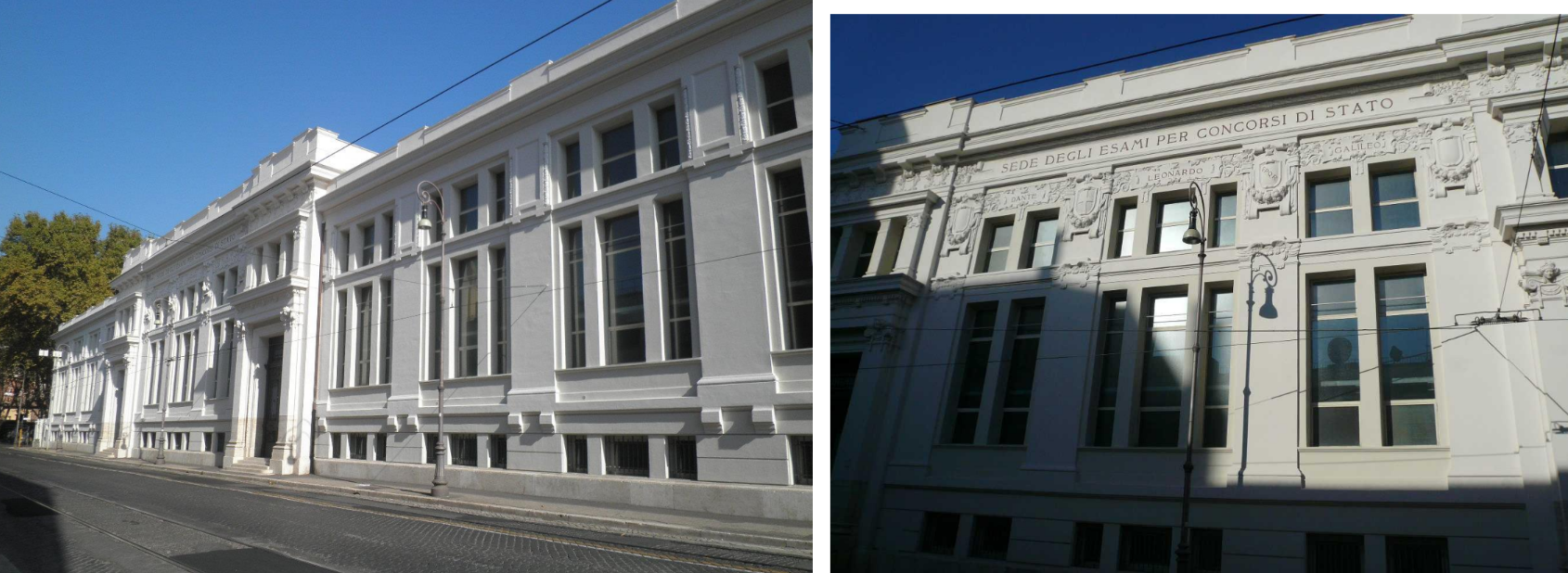
Edoardo del Bufalo, Palazzo degli Esami (Palace for Public Examinations)
significance: emphasis on expanding state bureaucracy and standardizing education and professional certification in Italy. Architecturally, it adopts a restrained monumental classicism, with symmetrical façades, regular window rhythms, and a clear hierarchical organization that expresses order and authority without excessive ornament. Its design supports large-scale functional needs—such as examination halls and circulation spaces—showing how architecture was adapted to manage growing administrative systems efficiently. Socially, the building symbolized the increasing role of the state in regulating access to professions and shaping merit-based advancement
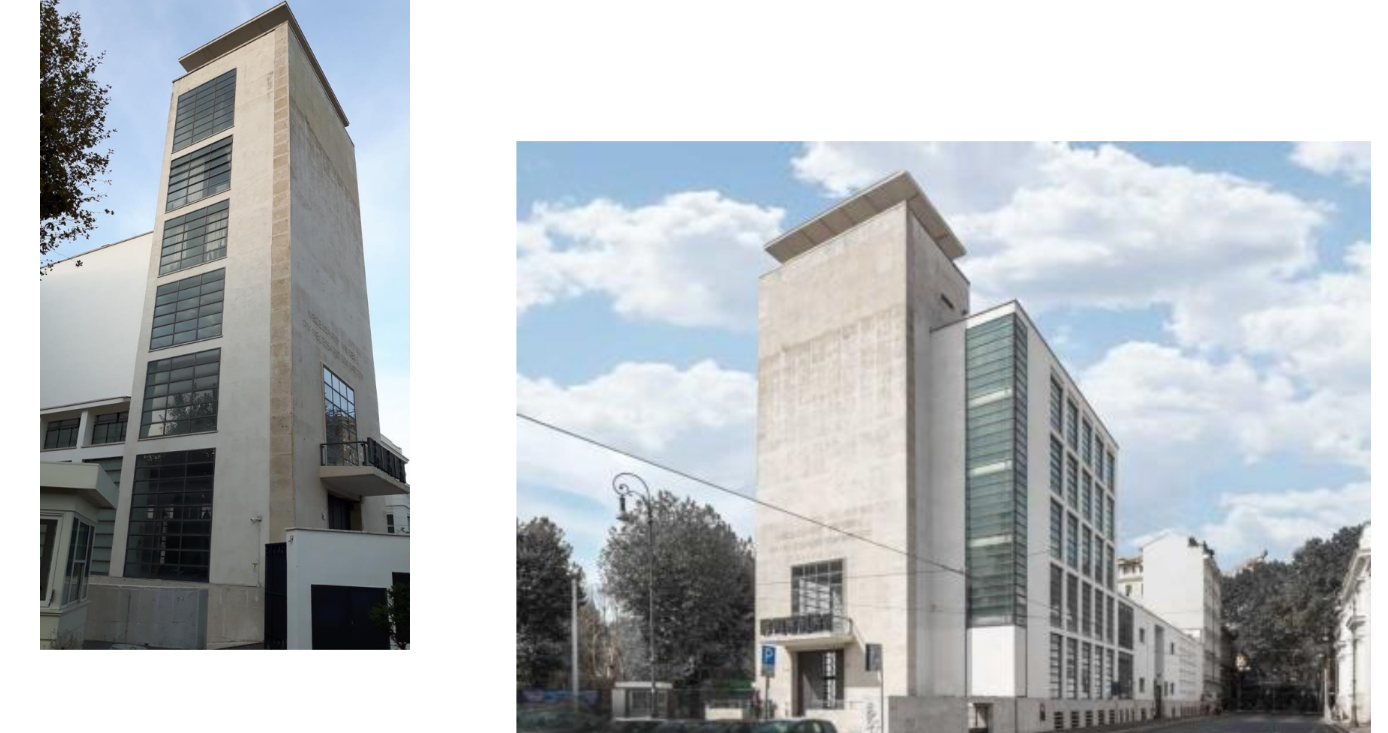
Luigi Moretti, Casa della GIL (Gioventù Italiano Littorio), Largo Ascianghi 5
Significance: Rationalist principles and classical. Part of the building from the road is bauhause, factory-aesthetic. Balcony had imperial eagles looking like M’s. Inscription: It is necessary to win, but it is more necessary to fight. Year on the name was in roman numerals since fascism though. Develops into still lictorio: rationalism with classical elements; scale is larger, symmetry is prominent and simplified, lots of stone and marble used.
Classical though: Lictor’s tower from classical period. Decorative: travertine (just like antiquity).
Hiding the decorative ministry of public instruction.
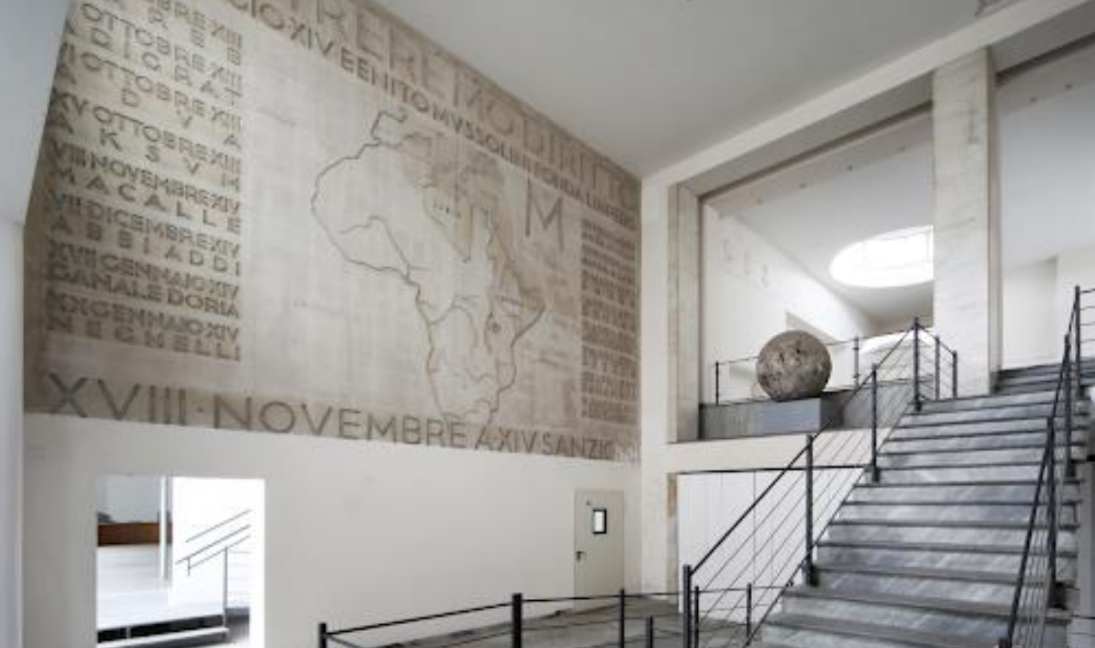
Luigi Moretti, Casa della GIL (Gioventù
Italiano Littorio), Largo Ascianghi 5,
Interior view with imperial map of Africa
Significance: use of marble for the interior which was newly common for interiors. Imperial imagery with the mapping to remind us of Italy’s destiny.
Trastevere at this time was a working class neighborhood. Would leave strong impression on someone young. Openness in the building, sense of grandeu through space, materials, and the visual signs through this map and the inscription at the front.
Meant for youth to look at with its inspired luxury to be motivated to be a part of this
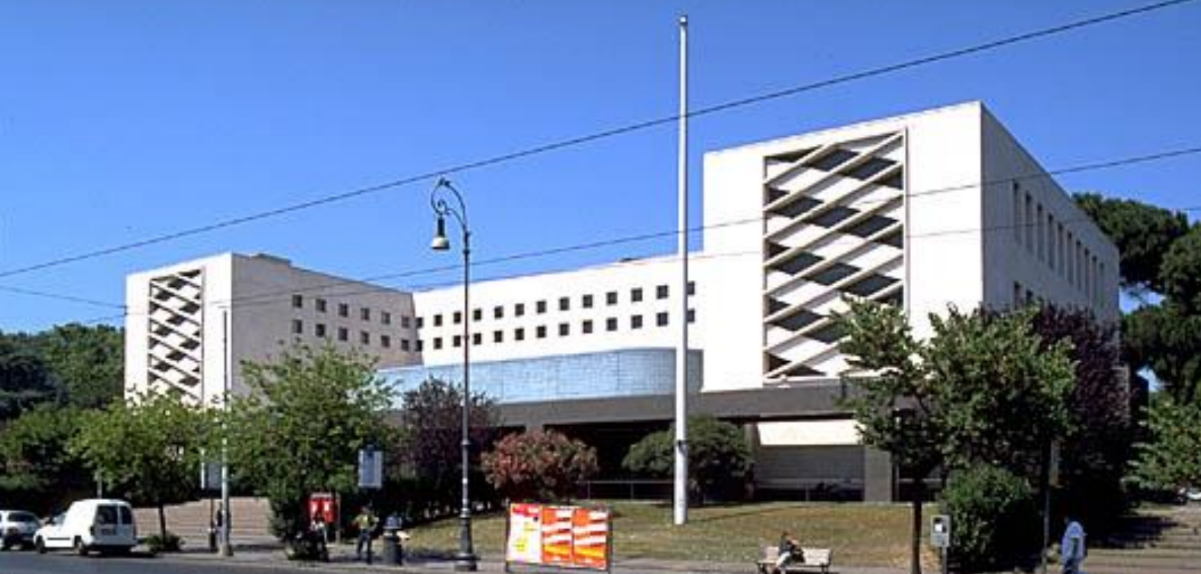
Adalberto Libera and Mario De Renzi, Post Office for Quartiere Aventino (via Marmorata at Porta S. Paolo)
significance: architecturally, it emphasizes geometric clarity, functional planning, and structural honesty, with a strong cubic massing, smooth wall surfaces, and an absence of historical ornament in favor of proportion and material contrast. The interior is organized for efficient circulation and postal operations, reflecting the modernist idea that form should follow function in a highly rational system. the two projecting parts remind us of renaissance palaces
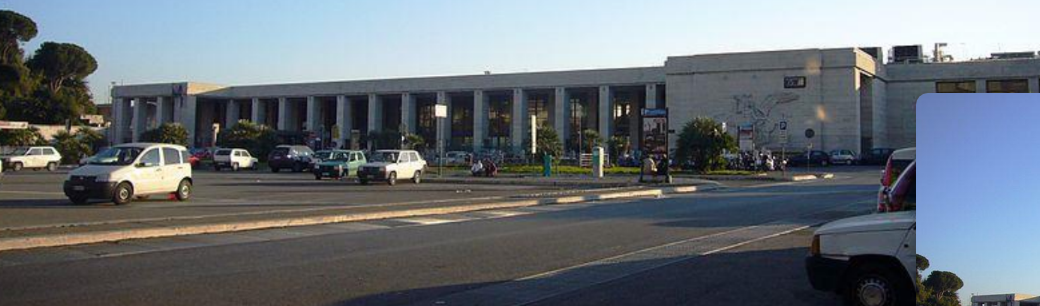
Roberto Narducci, Stazione Ostiense (train station)
significance: connect rome with the sea, part of the expansion to the mediterranean and beyond. also meant for hitler’s visit to rome, decorated immensely in mosaics of fascist agenda to mark it. monumental facade. Forward-looking Italy, focus on public transport and less walking.
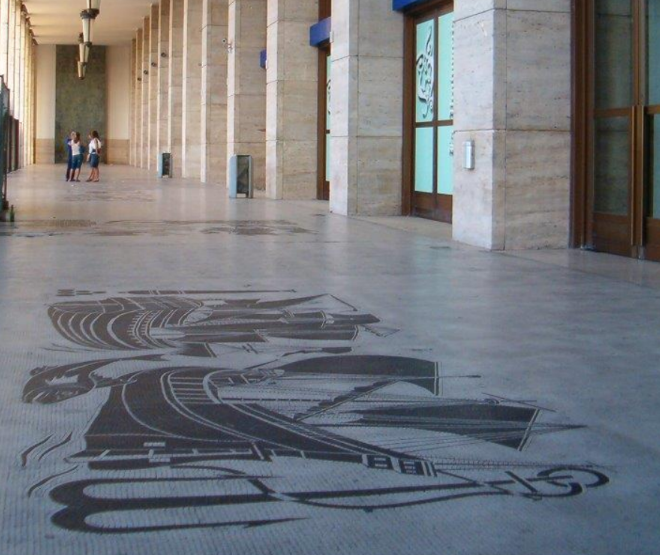
Detail of portico with mosaic pavement, Stazione Ostiense
significance: forward-looking agenda. Roman history here, also other notes of the future of imperialism.
Also show barbaric german soldier surrender to roman guard, a mosiac not present for hitler’s arrival but shows intention to go back to a new type of roman empire among europe and the world.
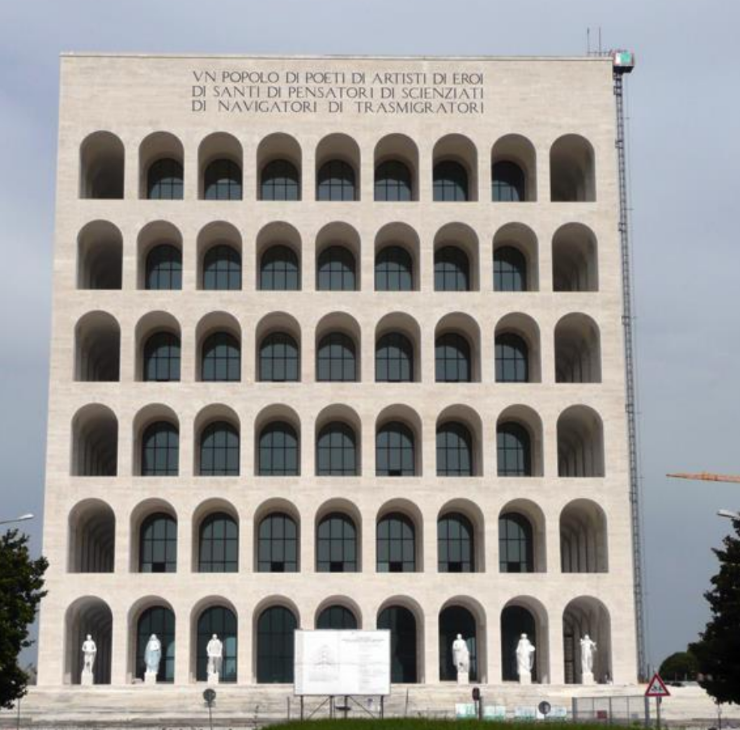
Giovanni Guerrini, Ernesto Bruno La Padula, and Mario Romano,
Palazzo della Civiltà Romana (also called Colosseo Quadrato, or
Square Colosseum)
Significance: was supposed to be the palace of italian civilization, permanent display of italian continuity and genius.
Sense of transparency through it and see the sky behind it.
Looks a ton like the colleseum so it is a reimagined version of it. Repeition of roman arch. Unlike colleseum, done in four registers or arcades. This is given more vertical emphasis.
Was not supposed to be central in the EUR district but ends up occupying as an idea a central posiiton of EUR district.
Place on hill so it would be temple like (antiquity).
Poritcos and statues at the bottom. Colleseum was also originally dedicated with statues at the bottom arcade. Idealized bodies in these, don’t have an identity, just adherance to the ideal body image for muscles and athleticism.
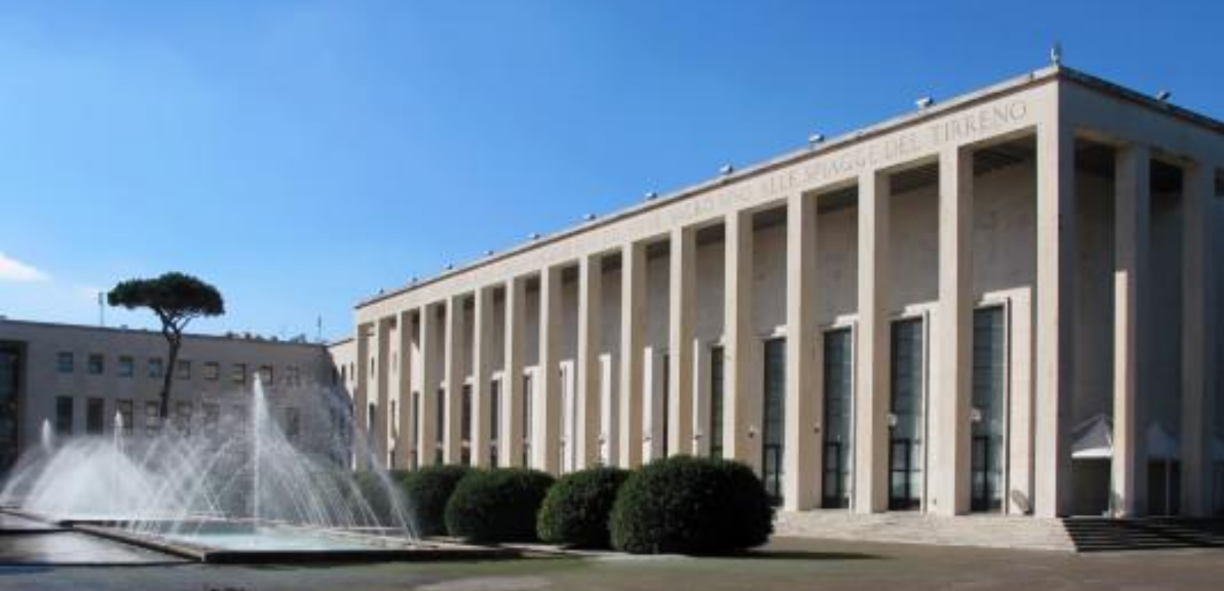
Gaetano Minnucci, Expo Office Buildings, EUR
Significance: collonade-like thing call propalia, used as a screen. Ancient form of a palace, entablature at top in roman script using italian not latin. Old materials used here
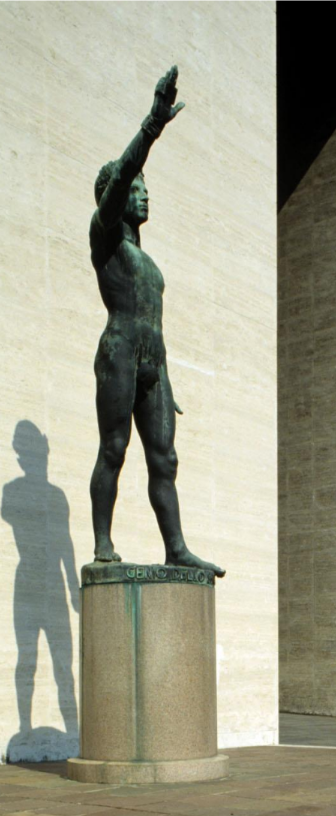
Gaetano Minnucci, Expo Office Buildings, 1937-39 Detail of façade with the sculpture Genio dello Sport
Significance: Fascist creating, originally the genius of facism. Figure is making roman salute. Giving this athletic idol for the people to look to.
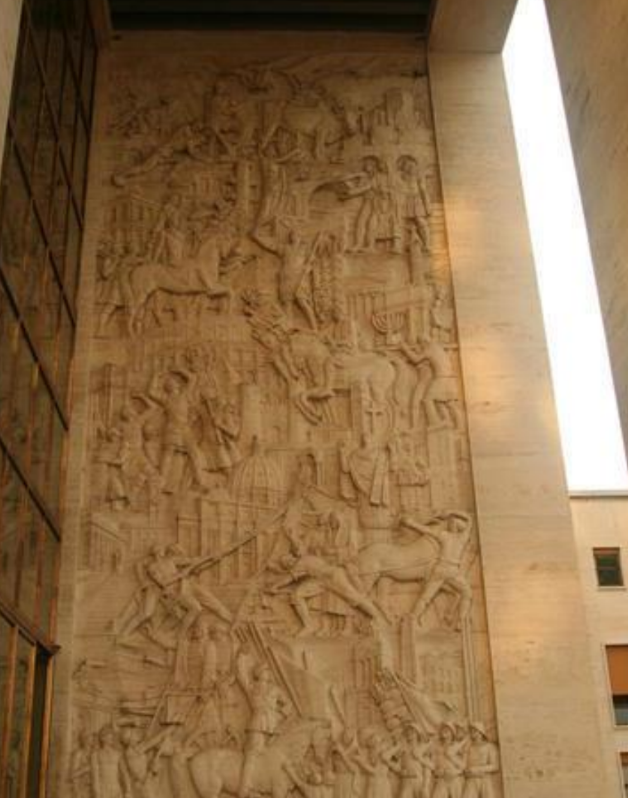
Publio Morbiducci, The Building History of Rome, relief in façade of Expo office buildings
Significance: altering history, chronological but very selective in elements included. Very top is the founding, constant matching of great actors with buildings. Themes of war power
At the bottom is Mussolini. Horseback figure is equestrian (roots in ancient rome)
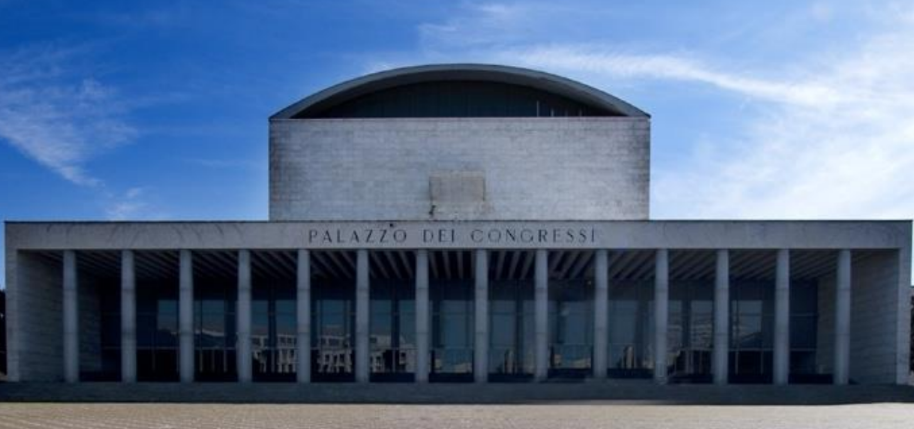
Adalberto Libera,
Palazzo dei Congressi
(Convention Center),
Significance: function is a conference center, incorporates rationalist ideas. Cube set into large rectangular shape?
Architect did not want collonade but needed to include this classical element. No capitols but do contain curvature called entaces.
Cantilevered top that is empy that was supposed to be quadriagae but not finished due to WWII.
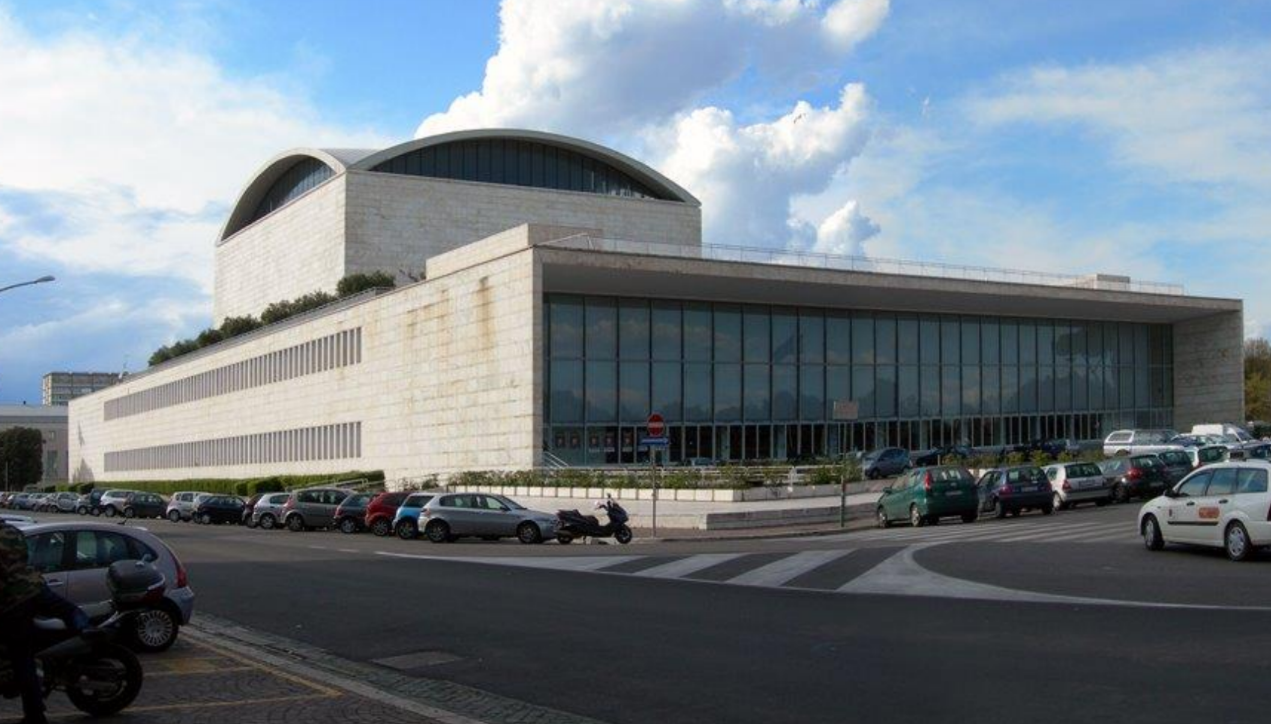
Palazzo dei Congressi, rear façade, EUR
significance: late Fascist monumental Rationalism, where classical references are abstracted into a modern, ordered architectural language. The building is composed around strict symmetry, a clear structural grid, and a monumental central hall topped by a coffered concrete vault, which evokes Roman engineering while remaining fully modern in construction and expression. Its façades use repetitive arcades and planar surfaces rather than traditional ornament, creating a sense of rhythm, balance, and institutional authority.
the building was designed as part of the EUR masterplan to project a vision of a timeless, rational, and imperial Rome—linking Fascist modernity to ancient Roman grandeur through abstraction, scale, and disciplined geometry
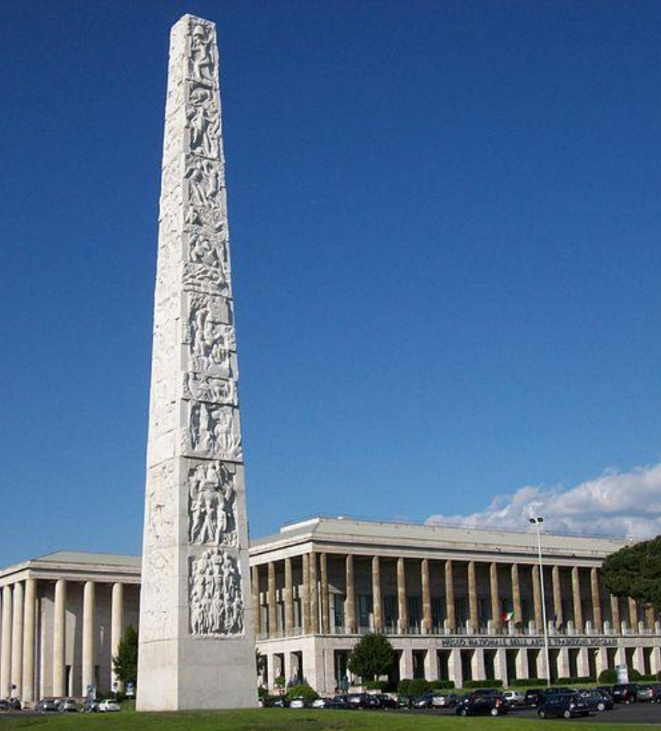
View of obelisk at Piazza Marconi, EUR
signifiicance: designed to anchor the monumental plan of the EUR district through a highly legible vertical marker. Like ancient Egyptian and Roman obelisks, it functions as a pure form of state power and permanence, but here it is reinterpreted in a stripped, modernist language consistent with the Rationalist architecture of the surrounding buildings.
These reliefs typically depict allegorical and civic themes associated with Fascist-era imagery—such as disciplined workers, figures representing industry, technology, and collective effort—rendered in a simplified, monumental style consistent with Rationalist aesthetics
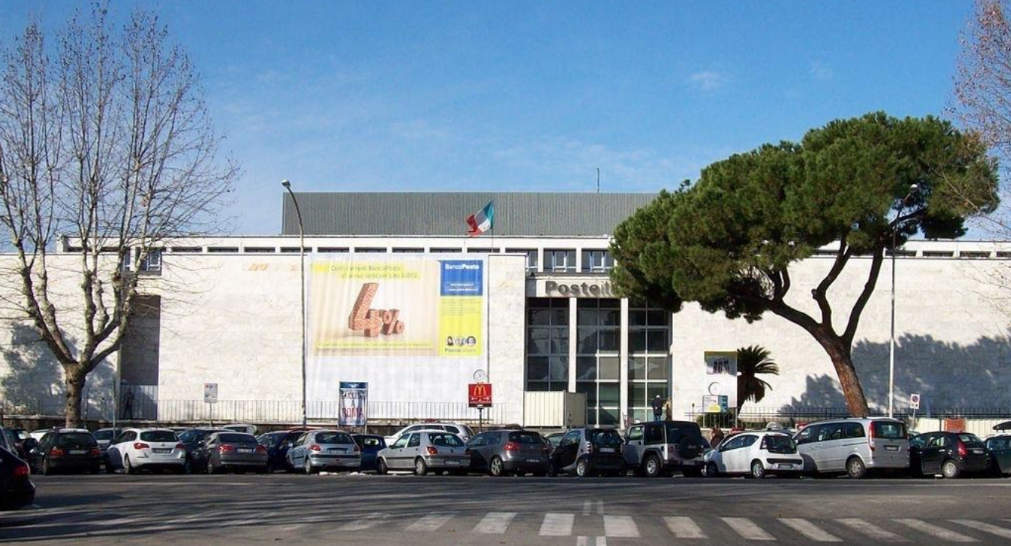
BBPR (Architectural Studio: Banfi, Belgioioso, Peressutti, Rogers), Post Office,
significance: eflects a decisive postwar shift away from Fascist monumentalism toward a more human-centred, democratic modernism. Architecturally, it is defined by clarity of structure, exposed functional logic, and a restrained use of materials,imple geometries and legible spatial organization
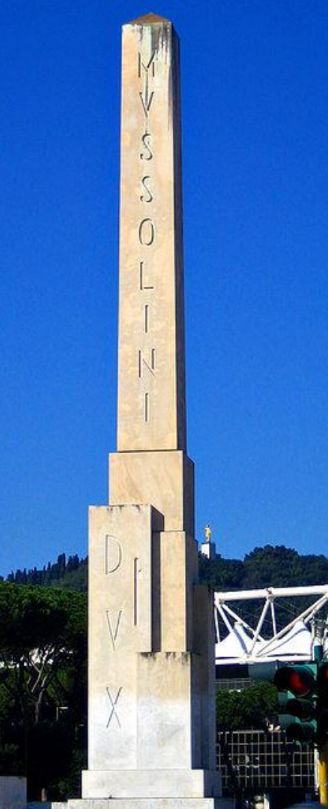
Costantino Costantini,
Monolith to Mussolini,
Significance: centerpiece in front of main entrace to developing of sports complex. The mussolini oblelisk has his letters as well as DVX are also really DVCE. This forum was moved from being dedicated to Mussolini was dedicated to sport.
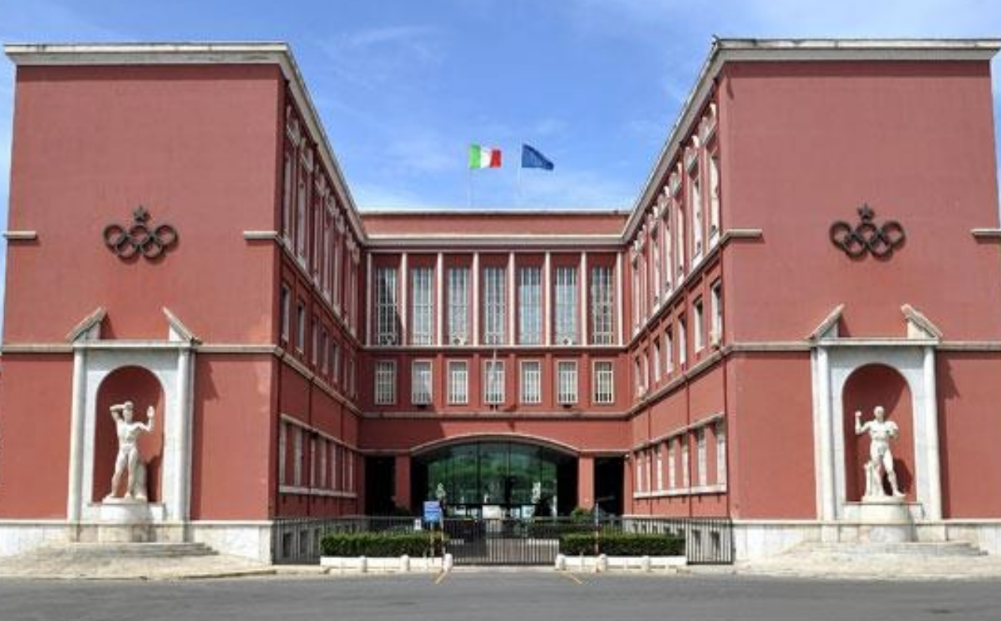
Enrico Del Debbio, Fascist Academy of Physical Education
Significance: one of two original buildings for the forum of mussolini. Meant for youth, honoring sports.
Designed in year that rationalism is first introduced to Rome. Gradual disappearance of classical architectural decoration.
niches with scultures framed in marble, engaged colums with no decoration. Hint of pediment at top but broken.
Windows are oriented to strong narrow vertical windows with no framing. Use of string course.
Looks like renaissance villa.
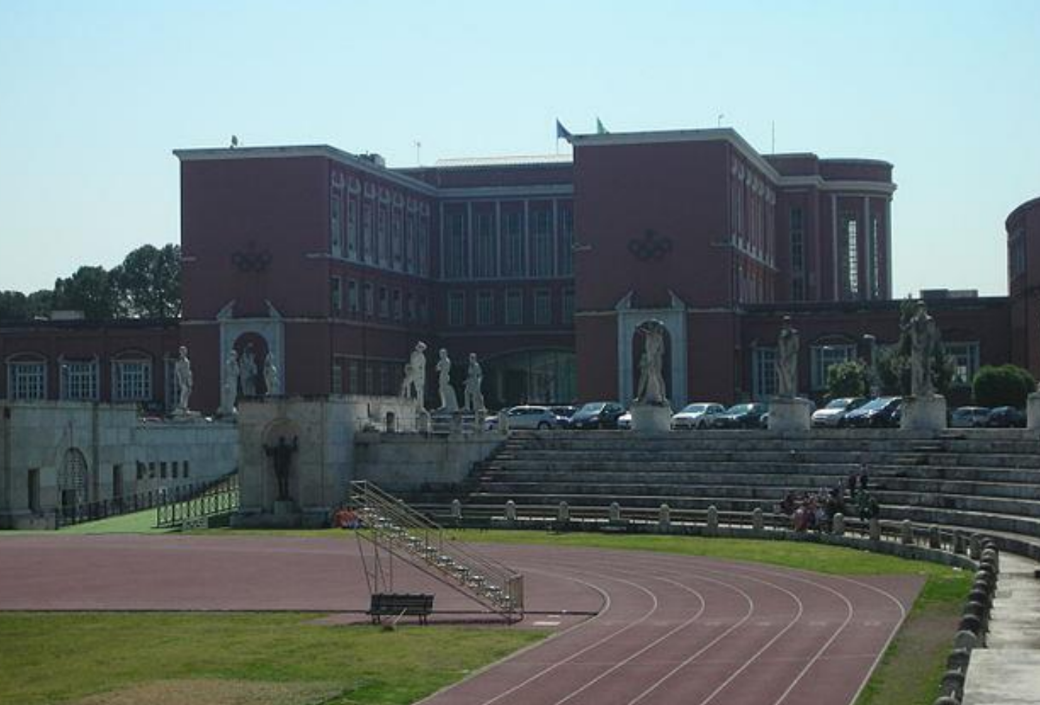
Foro Mussolini: Enrico Del Debbio, Fascist Academy of Physical Education, 1928-32.
View from the Marble Stadium
Significance: one of two original buildings meant for forum.
background: pallazzo litterio and natural area, reminding you of your place in rome and relation to the raw elements of it. You can feel like romulus and remus about to build your own city. We saw videos of the syncronized exercises here, also meant for large spectatorship so the public view of this order would easily be accessed.
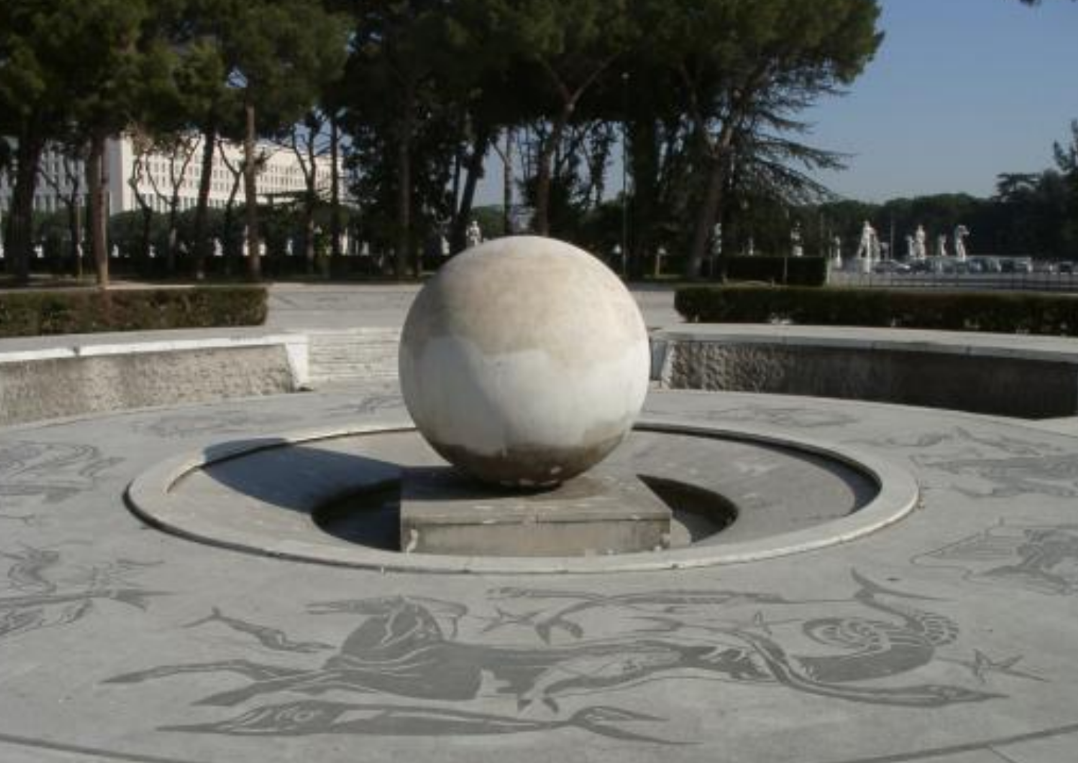
Mario Paniconi and Giulio Pediconi, Sphere Fountain,
Significance: end of avenue paved with mosaics. Thinking about expanision of rome outward to mediterranean (marine life in mosaics)
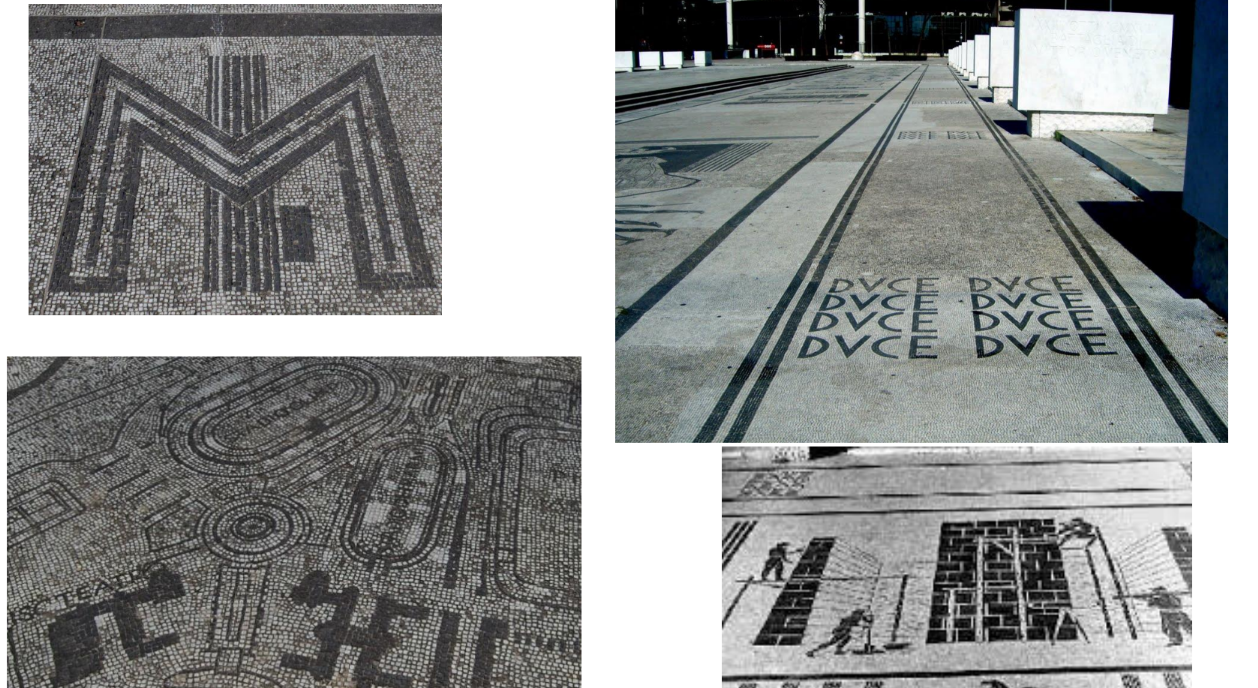
Details of mosaics from the Foro Mussolini
Significance: black and white mosaics in the lower area of this walking area. Aisles created. Honoring mussolini everywhere, DVCE, M, framing with fasces, “marble map of rome”
overtly propagandistic
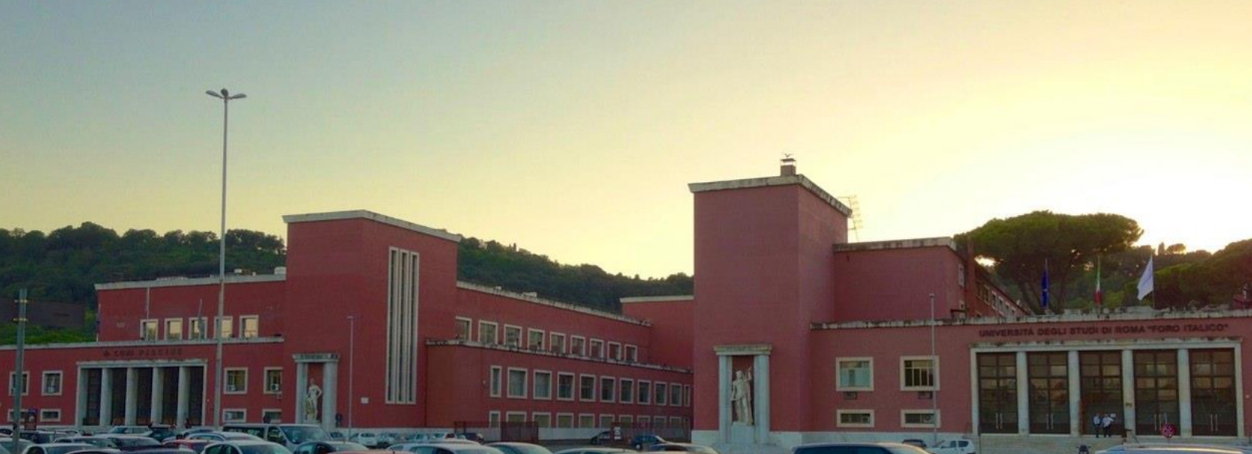
Enrico Del Debbio and Luigi Moretti, Palazzo delle Terme (Bath Complex)
Significance: lictor’s towers, long ribbon windows, three stripes look like fasces.
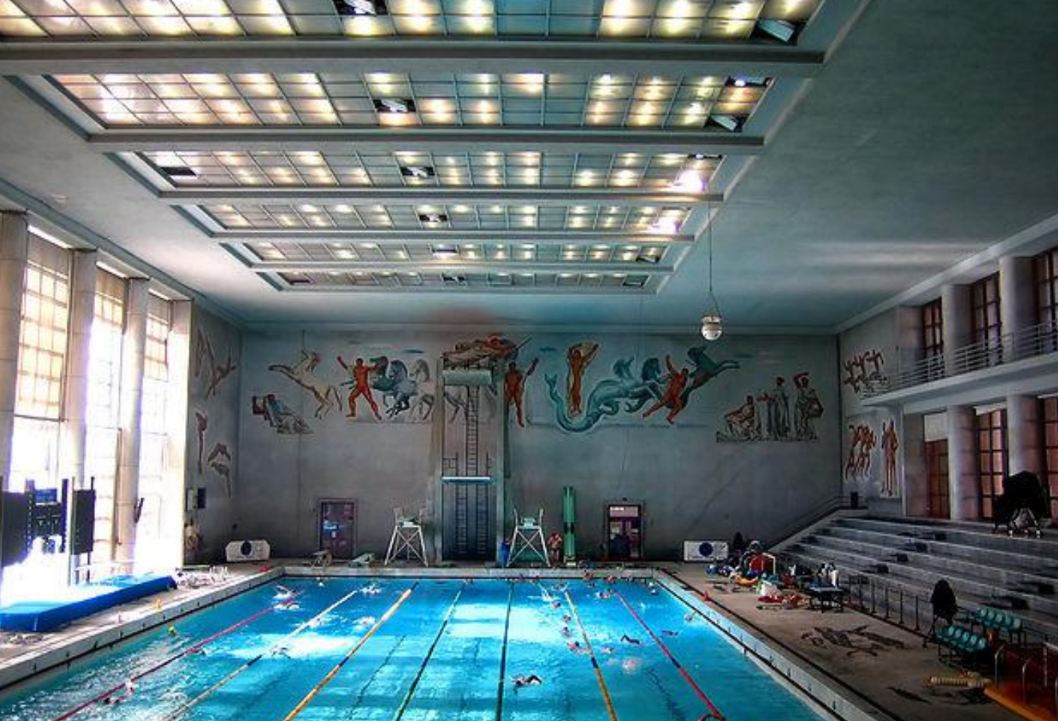
Del Debbio and Moretti, Palazzo delle Terme (Bath Complex)
Significance: very decorative, murals related to athletes, marine animals, figures dressed in romam togas, mosaics too to honor fascism and mussolini. Spectatorship important function of this as well, not just developing strong people.
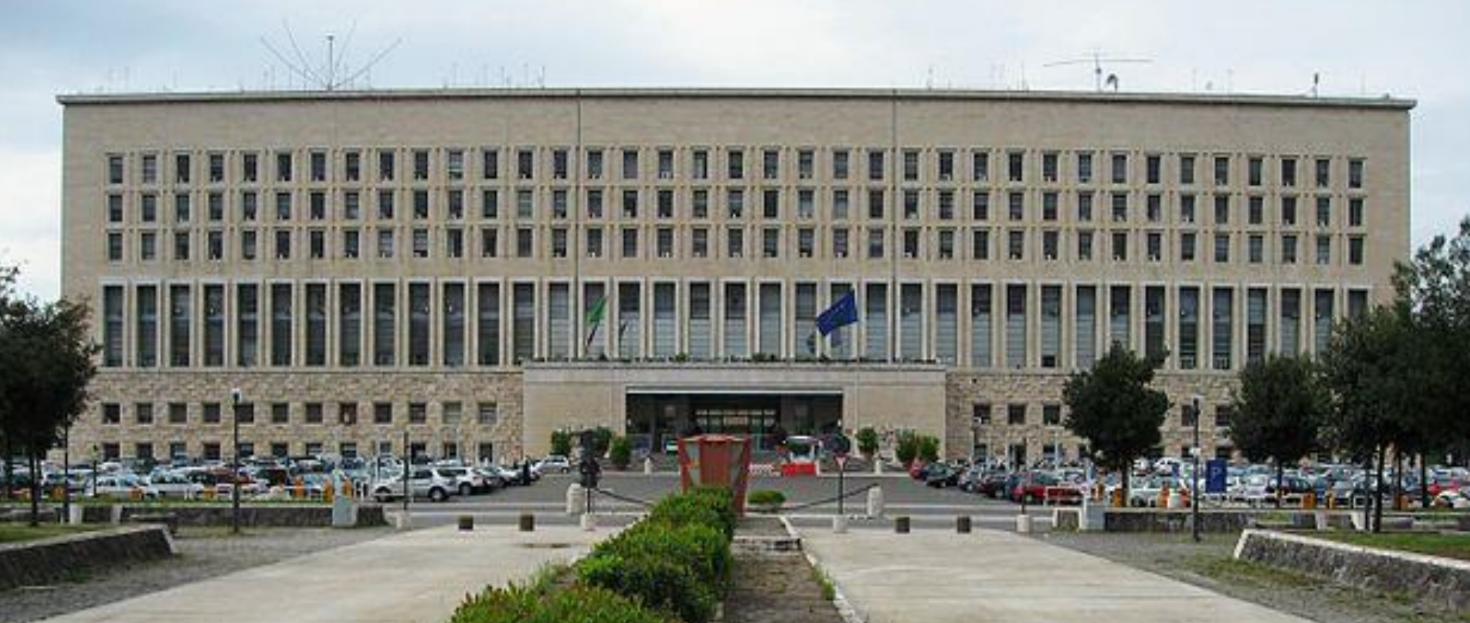
Enrico del Debbio, Arnaldo Foschini and Vittorio Ballio Morpurgo,
Palazzo Littorio, later Ministry of Foreign Affairs,
Significance: was supposed to be fascist party headquarters. Started in 1937, construction stopped in 1943 for WWII. However, usable by 1940 to be used for ministry of foreign affairs (still is today). Constructed here instead of Via dell’impero because the space is flat and open. Purely natural space (hill there) did not have to deal with architecture or pre-existing buildings. As this was supposed to have a piazza to hold almost a half million people, the space was needed.
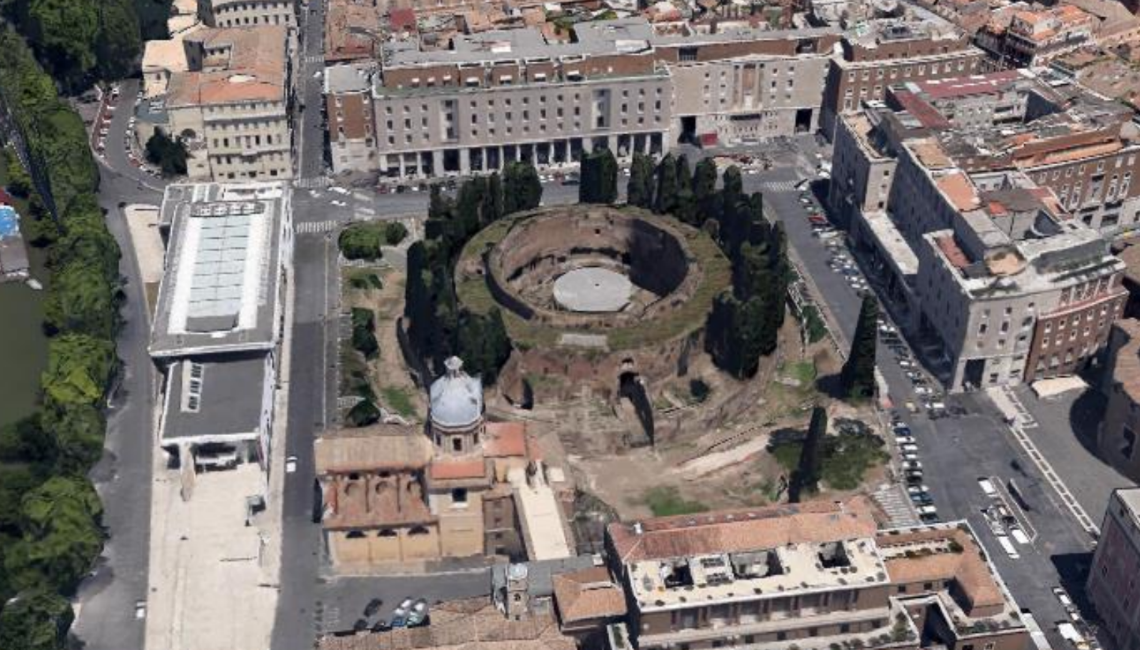
Aerial view of Piazza Augusto Imperatore
significance: the square was redesigned in the late 1930s as part of a broader program of “clearing” historic fabric to isolate and monumentalise imperial monuments—in this case, the Mausoleum of Augustus. Surrounding medieval and Renaissance buildings were demolished to create an open, axial space that framed the mausoleum as a symbol of Roman imperial power, which the Fascist regime sought to claim as its historical predecessor.
the square functioned as a curated “stage” where antiquity was visually isolated and elevated, turning archaeology into propaganda: Rome’s past was not simply preserved, but reorganised to support Fascism’s narrative of continuity, revival, and imperial destiny.
*there are also photos of the demolitions to clear the Mausoleum of Augustus w/ Church of S. Carlo al Corso and its belltower on the left side
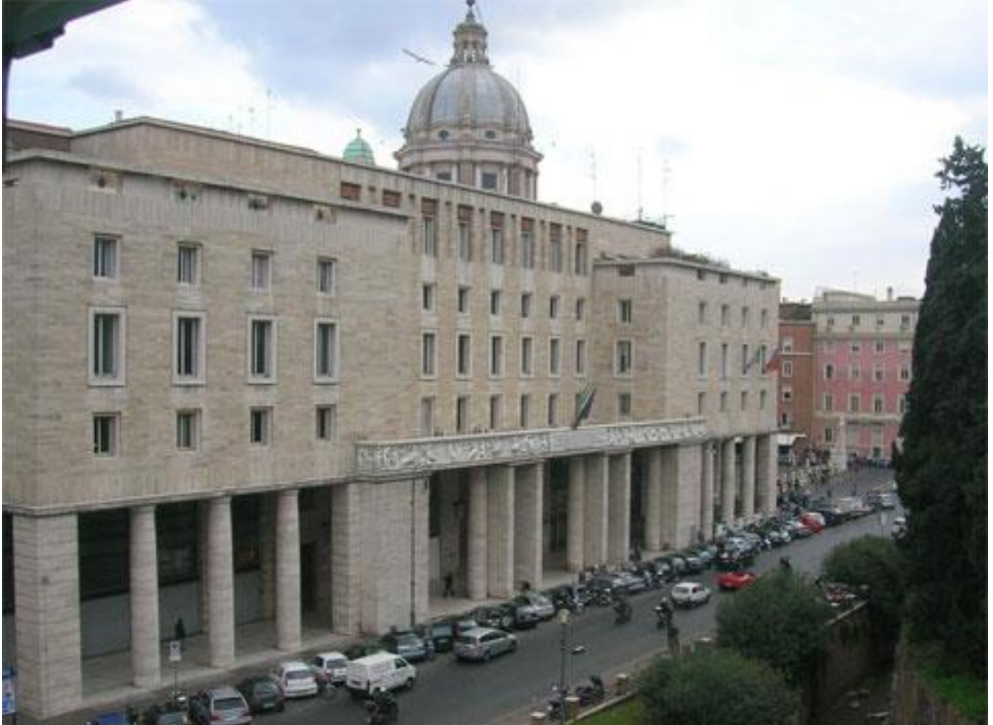
Vittorio Ballio-Morpurgo, Piazza Augusto Imperatore,
significance: the area around the Mausoleum of Augustus was radically cleared to isolate the ancient monument and transform it into a monumental civic centerpiece, and Morpurgo’s buildings were designed to define and control this new open space.
His work provides a disciplined Rationalist “container” for the archaeological monument, using restrained classical modernism—symmetry, travertine cladding, and strict geometric order—to echo imperial Roman architecture without copying it directly.
the buildings are part of a curated urban stage where Fascism visually aligned itself with Augustus and the Roman Empire
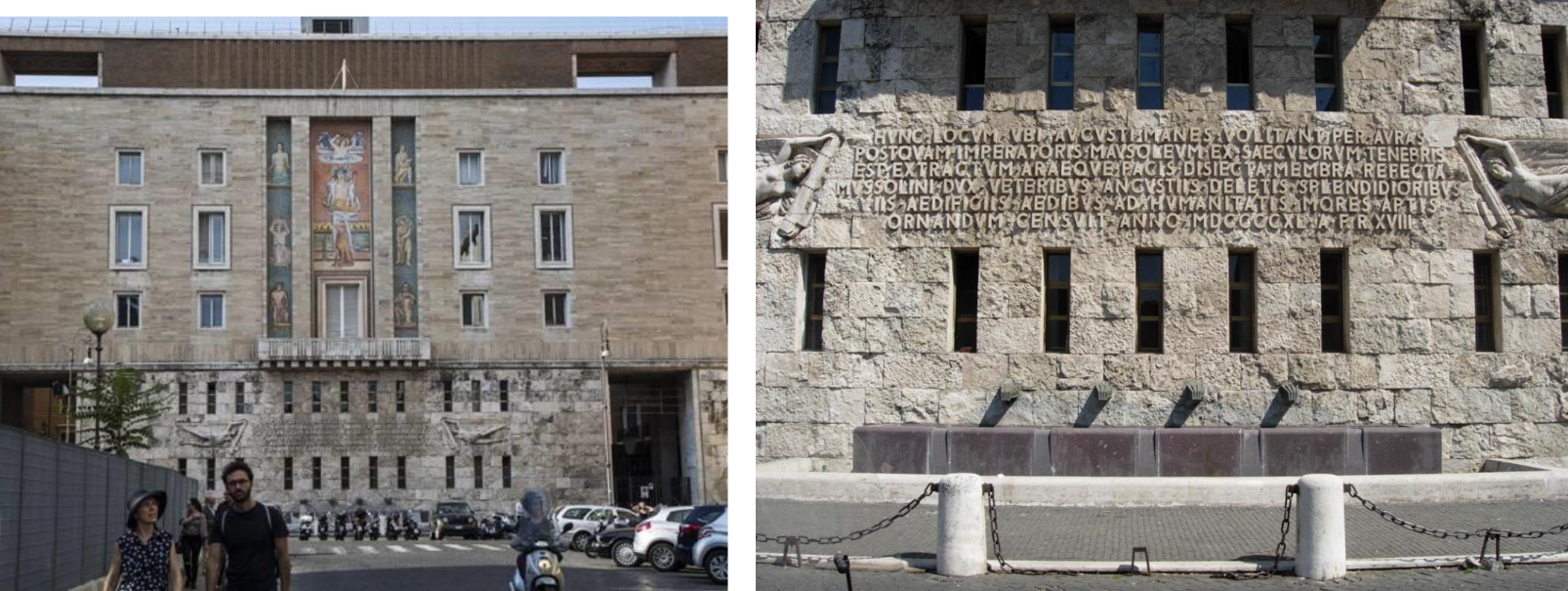
Piazza Augusto Imperatore: Palazzo del INPS, details of facade
significance:
inscription: Here, where the sacred remains of the Emperor Augustus lay buried, the Fascist regime, under Mussolini, having cleared away the surrounding structures and restored the dignity of the monument, dedicates this area to the memory of the founder of the Empire. Year 1937–1938
The message is ideological: it presents Mussolini’s regime as the rightful heir to ancient Rome, physically reshaping the city so that Augustus (founder of the Roman Empire) is visually and symbolically aligned with Fascist power.
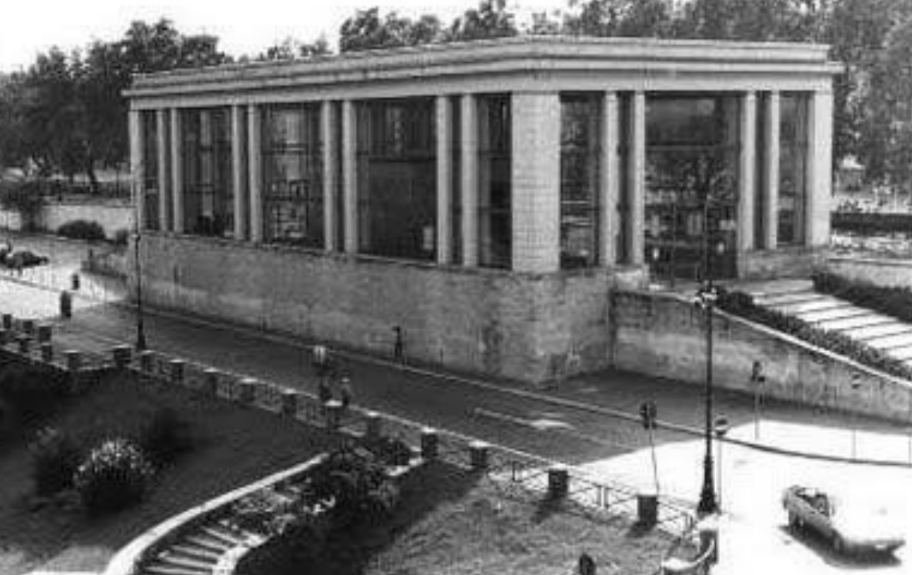
Vittorio Ballio-Morpurgo, Pavilion for the Ara Pacis
Significance: the re-presentation of ancient monuments. Mean to display the altar of peace (even though now in other building).
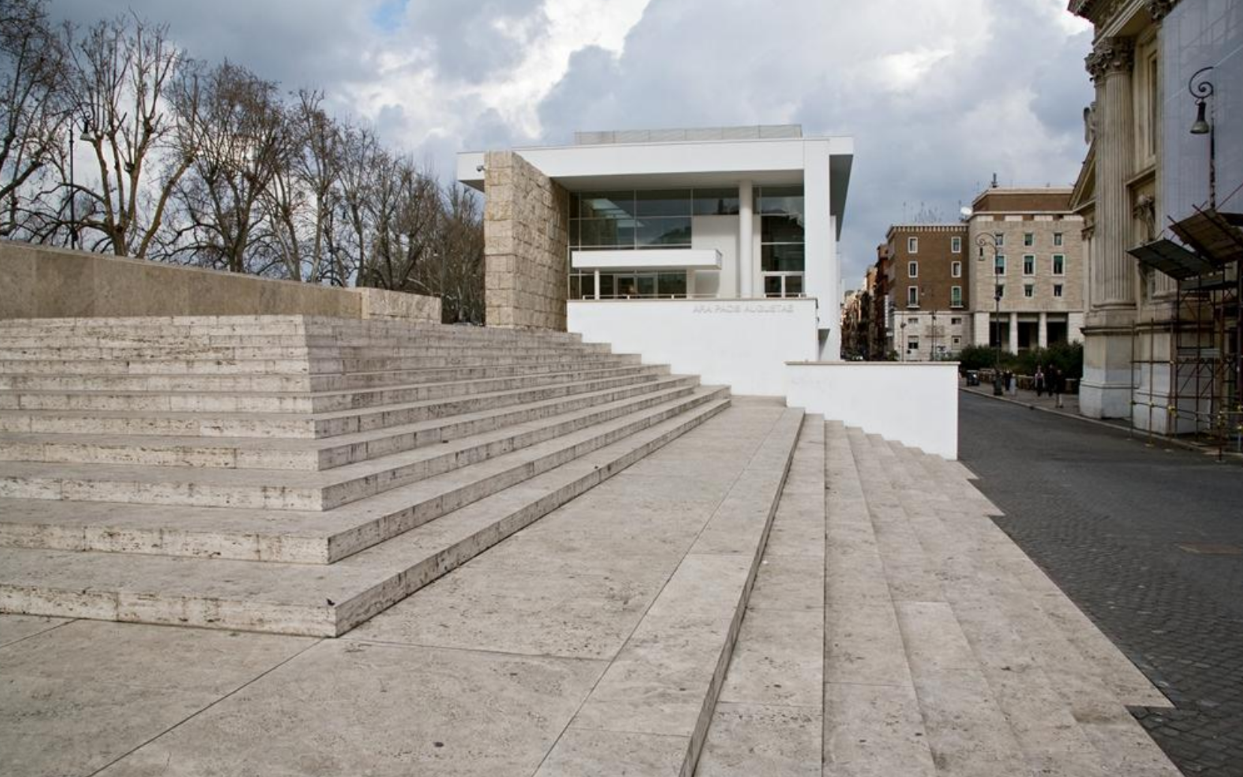
Richard Meier, Museum of the Ara Pacis
significance:
shape the museum to look like a classical temple from this viewpoint. Vertical fountain running along wall to add grandeur. Re-presenting the altar of peace through this arechitectural work.
mention also walls block view of lungotevere?
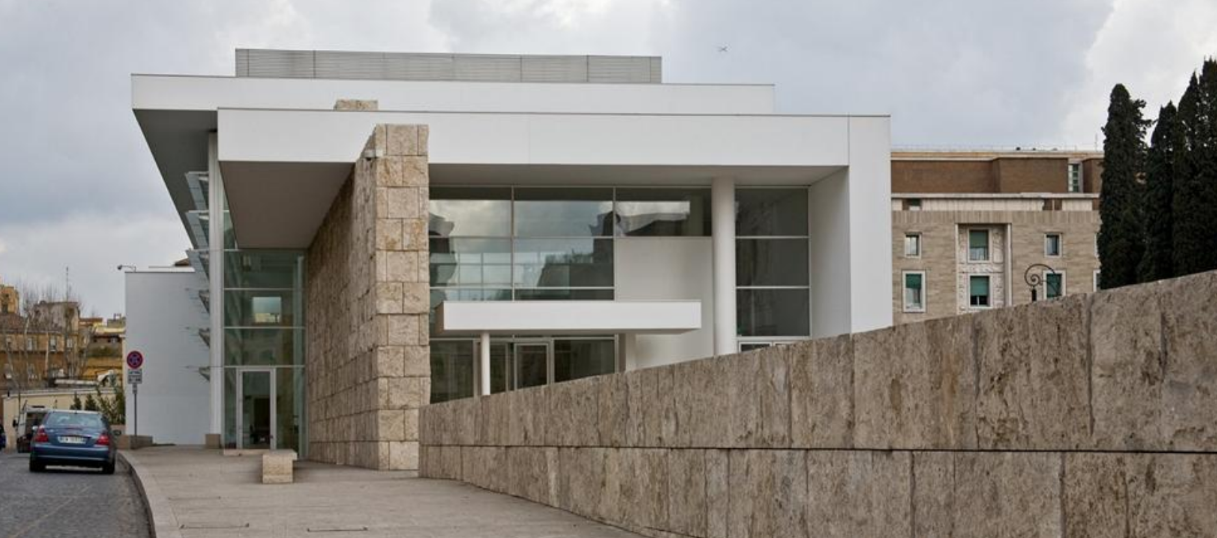
Ara Pacis Museum, view from the Lungotevere
significance: uses stark modernist materials like glass, travertine, and white plaster to create a controlled, almost abstract environment that isolates the altar from its urban surroundings. This approach emphasizes clarity, light, and spatial neutrality, think about the horizontal layers in the windows blocking immense natural light
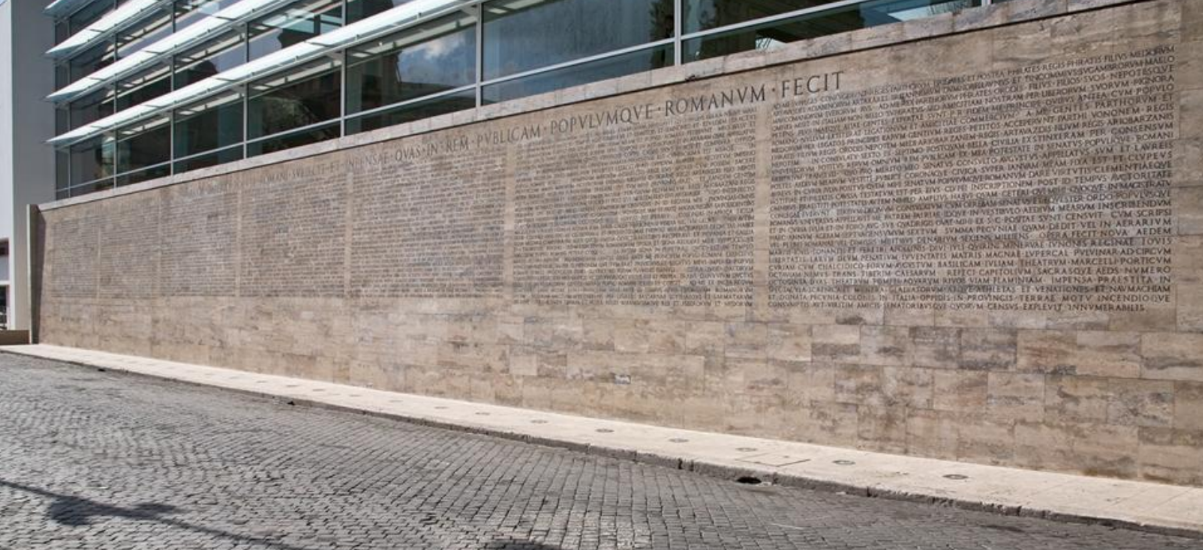
Detail of Ara Pacis Museum, facing Piazza Augusto: inscription
with the Res Gestae Divi Augustii (Good Works of the Divine
Augustus)
significance: reproduction of the Res Gestae Divi Augusti—the official autobiography of the Roman emperor Augustus.
its significance is that it turns the museum façade into an extension of the ancient monument’s political message: Augustus presents himself as the restorer of peace, order, and prosperity in Rome, framing his rule as beneficent and divinely sanctioned.
reflects a layered historical dialogue: the Fascist-era original installation of the Ara Pacis Augustae already used Augustus as a model for modern state power under Benito Mussolini, and the contemporary museum continues to foreground that connection.