Italian Renaissance Art Test

0.0(0)
Studied by 0 people
call kaiCall Kai
learnLearn
examPractice Test
spaced repetitionSpaced Repetition
heart puzzleMatch
flashcardsFlashcards
GameKnowt Play
Card Sorting

1/34

encourage image

There's no tags or description

Looks like no tags are added yet.

Last updated 2:38 AM on 4/16/26
Name
Mastery
Learn
Test
Matching
Spaced
Call with Kai

No analytics yet

Send a link to your students to track their progress

35 Terms
1
New cards
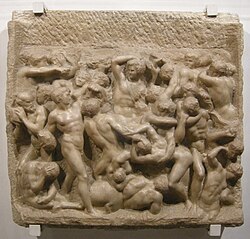
<p>Battle of Lapiths and Centaurs</p>

Battle of Lapiths and Centaurs

Michelangelo, Battle of Lapiths and Centaurs,1492

  • last work created while under the patronage of Lorenzo de Medici

  • Mythic battle between the Lapiths and the Centaurs

  • small frieze

  • subject is from Ovid (poet)

  • the story is not important but the human body is. humans contorted and piled on top of each other
2
New cards
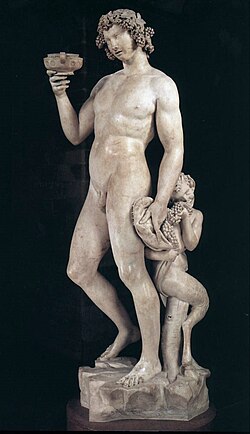
<p>Bacchus</p>

Bacchus

Michelangelo, Bacchus, 1496-97

  • created in ROME

  • the god of wine

  • contrapasto pose not for elegance but for drunkenness.

  • carved in marble

3
New cards
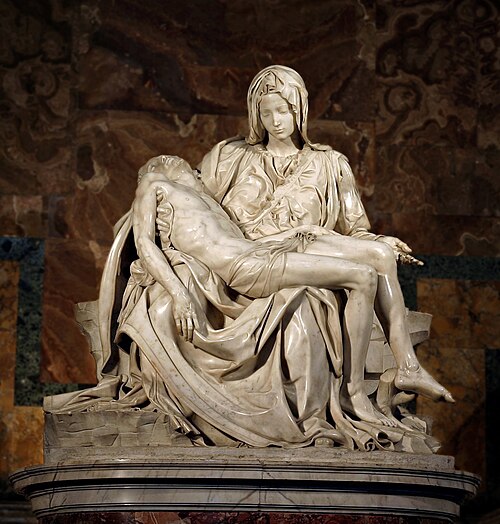
<p>Pietà</p>

Pietà

Michelangelo, Pietà, 1498-99

  • carved in marble in Rome when he was in the early 20s

  • Commissioned by a French Cardinal for a chapel, this image was popular for the french and german

  • An ideally beautiful version: the Virgin Mary looks younger than her son which is an expression of her purity

  • together they form a pyramid which is a very stable form.

  • Notable for Jesus weight and heaviness.

  • He adds an inscription on band with his signature saying “Michelangelo was making this” -non finito and unfinished, interested in the process

  • placing himself in a divine space

4
New cards
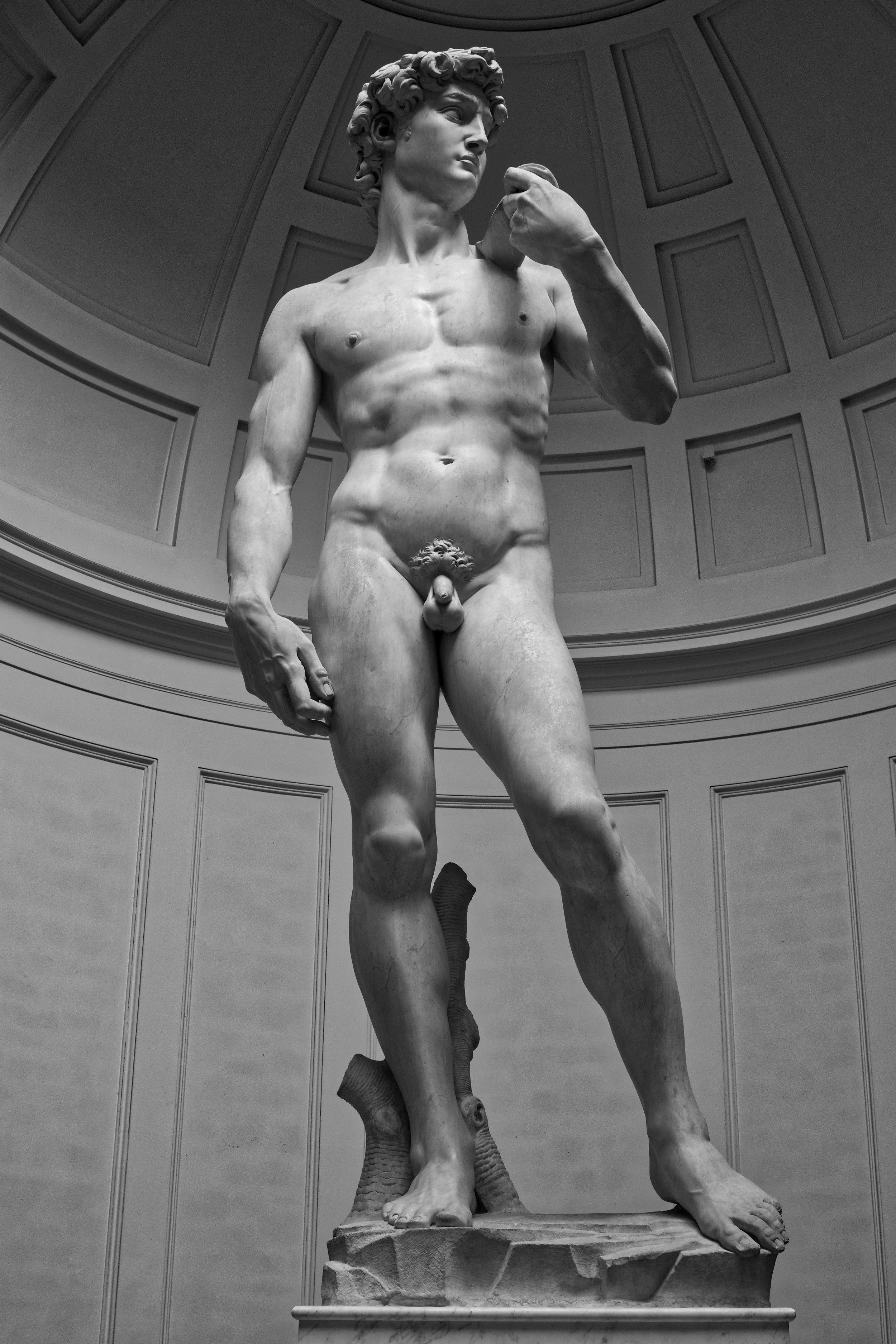
<p>David</p>

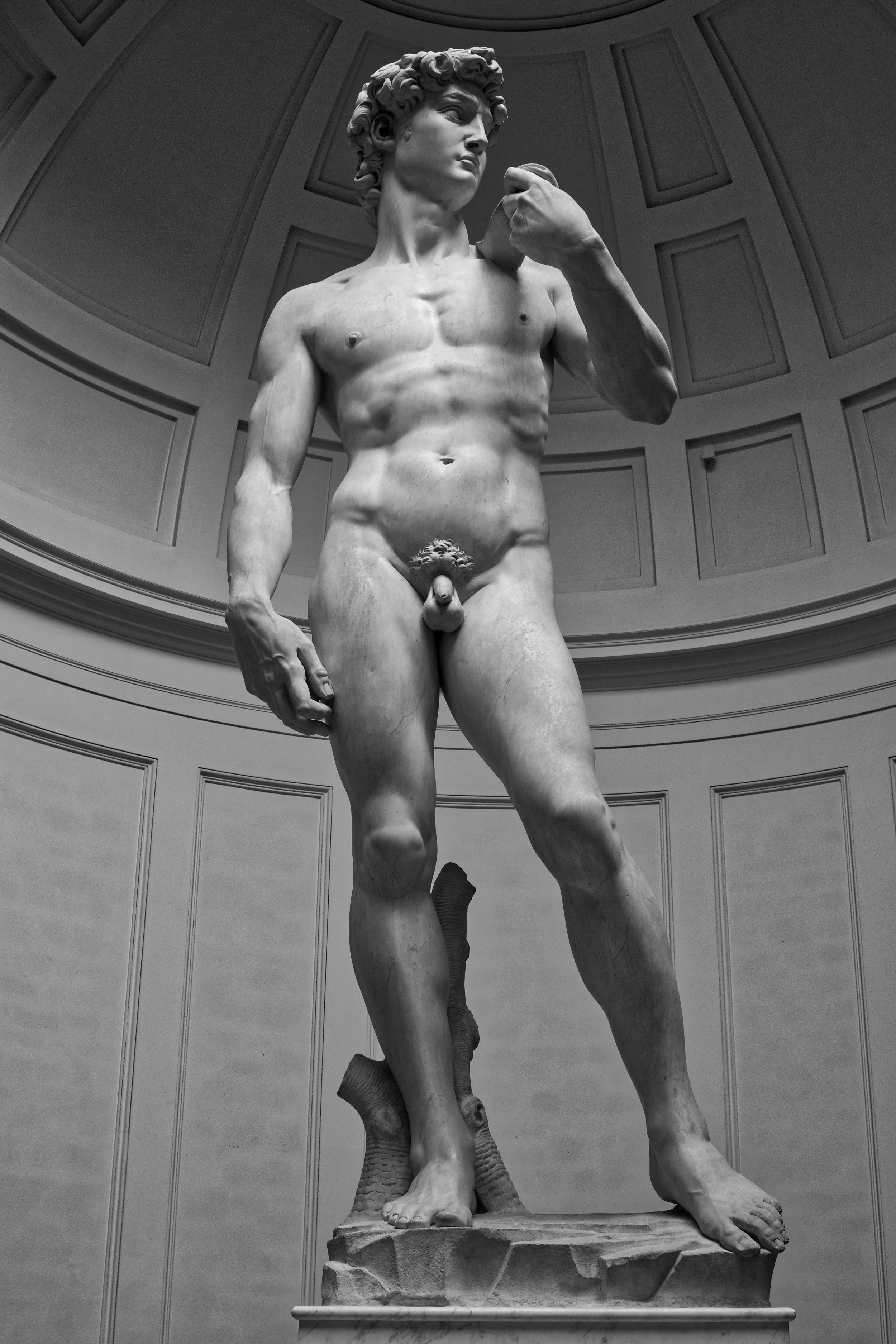
David

Michelangelo, David, 1501-04

  • Commissioned to decorate the outside of the cathedral in Florence, it is so big because it was meant to be up there

    • was given this after the success of the pieta

  • sculpted out of a large block of marble that was one part of an earlier commission- the government was looking back 100 years to the Golden age of the Florentine republic

  • After the Medici were exiled out of Florence in 1490s (1494) and the republic gets reestablished

    • Savonarola (monk) begins rising to power and turning the new republic into a theocratic state.

      • Did not like how Florence had become because of their wealth and interest in the arts and the humanities

      • “bonfire of the humanities”

      • excommunicated by the pope and executed

  • David was made after the defeat of two tyrants

  • Biblical figure of David means something special for the Florentines

    • David defeats goliath, good overcoming evil

    • saw themselves as an underdog

    • follows in the tradition of Donatello (commissioned by the Medici) and Verrocchio

  • Antiquity

    • Contrapposto-weight shifting

  • We see David before the fight instead of after the fight, he is anticipating what is going to happen.

    • powerful sense of uncertainty but the Contrappostopose is relaxed

    • we sense david as a human being not God.

  • Palazzo della Signoria

    • David was seen as too beautiful to be placed on Santa Maria del Fiore (Florence Cathedral) so they moved it to the Palazzo della Signoria

    • this changed the religious meaning to a political meaning - a symbol of the new republic.
<p><strong>Michelangelo, <em>David</em>, 1501-04</strong></p><ul><li><p>Commissioned to decorate the outside of the cathedral in Florence, it is so big because it was meant to be up there</p><ul><li><p>was given this after the success of the pieta</p></li></ul></li><li><p>sculpted out of a large block of marble that was one part of an earlier commission- the government was looking back 100 years to the Golden age of the Florentine republic</p></li><li><p>After the Medici were exiled out of Florence in 1490s (1494) and the republic gets reestablished</p><ul><li><p>Savonarola (monk) begins rising to power and turning the new republic into a theocratic state.</p><ul><li><p>Did not like how Florence had become because of their wealth and interest in the arts and the humanities</p></li><li><p>“bonfire of the humanities”</p></li><li><p>excommunicated by the pope and executed</p></li></ul></li></ul></li><li><p>David was made after the defeat of two tyrants</p></li><li><p>Biblical figure of David means something special for the Florentines </p><ul><li><p>David defeats goliath, good overcoming evil</p></li><li><p>saw themselves as an underdog</p></li><li><p>follows in the tradition of Donatello (commissioned by the Medici) and Verrocchio</p></li></ul></li><li><p>Antiquity</p><ul><li><p>Contrapposto-weight shifting</p></li></ul></li><li><p>We see David before the fight instead of after the fight, he is anticipating what is going to happen.</p><ul><li><p>powerful sense of uncertainty but the Contrappostopose is relaxed</p></li><li><p>we sense david as a human being not God. </p></li></ul></li><li><p>Palazzo della Signoria </p><ul><li><p>David was seen as too beautiful to be placed on Santa Maria del Fiore (Florence Cathedral) so they moved it to the Palazzo della Signoria</p></li><li><p>this changed the religious meaning to a political meaning - a symbol of the new republic.</p></li></ul></li></ul><p></p>
5
New cards

Doni Tondi

Michelangelo, Doni Tondi, 1504-06.

6
New cards

Mannerism (Crisis and Style)

Post 1520s

  • overtly artificial

  • ambiguous

  • conspicuously sophisticated

Mannerist imagery frequently pushes the boundaries of fantasy and imagination with artists looking to art, rather than nature, as a model

  • Maniera means “style” mano comes from hand.

  • stylishness and extreme refinement

  • term is applied to Italian artists that followed Raphael and Michelangelo

    • artists did not employ a single style or set of characteristics or common aesthetic attitude.

  • the term was pejorative and intended to convey a negative judgement about this entire generation

    • art after Raphael was seen as declining

7
New cards

Raphael, Pope Leo X, 1518.

8
New cards

Michelangelo, Tombs of Giuliano and Lorenzo di Piero de’ Medici, New Sacristy, San Lorenzo, 1524-34
9
New cards
<p>Madonna of the Harpies</p>

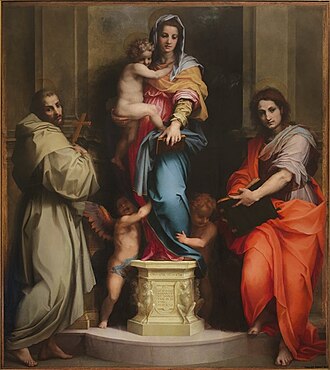
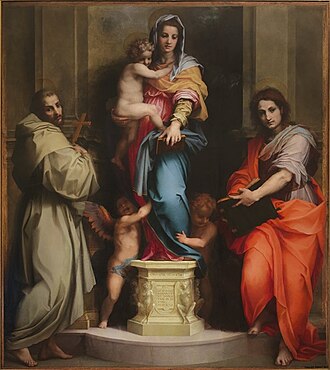
Madonna of the Harpies

Andrea del Sarto, Madonna of the Harpies, 1517

  • harpies: half-human and half-bird creatures - personification of the storm winds

  • forces of evil being trampled on by the virgin

Subject

  • Virgin and child with Saint Bonaventure or Frnacis and Saint John the Evangelist

    • St John is writing his profecies

    • St Francis in place of San Bonaventura

      • Rising up towards the East, he is believed to have taken with him the salvific symbol of God, the tau, the cross

  • pedsatal with locusts that are described in St John the Evangelist’s Apocalypse
<p><strong>Andrea del Sarto, <em>Madonna of the Harpies</em>, 1517</strong></p><ul><li><p><em>harpies: </em>half-human and half-bird creatures - personification of the storm winds</p></li><li><p>forces of evil being trampled on by the virgin</p></li></ul><p><strong>Subject</strong></p><ul><li><p>Virgin and child with Saint Bonaventure or Frnacis and Saint John the Evangelist</p><ul><li><p>St John is writing his profecies</p></li><li><p><span>St Francis in place of San Bonaventura</span></p><ul><li><p><span>Rising up towards the East, he is believed to have taken with him the salvific symbol of God, the tau, the cross</span></p></li></ul></li></ul></li><li><p>pedsatal with locusts that are described in <span>St John the Evangelist’s </span><em>Apocalypse</em></p></li></ul><p></p>
10
New cards
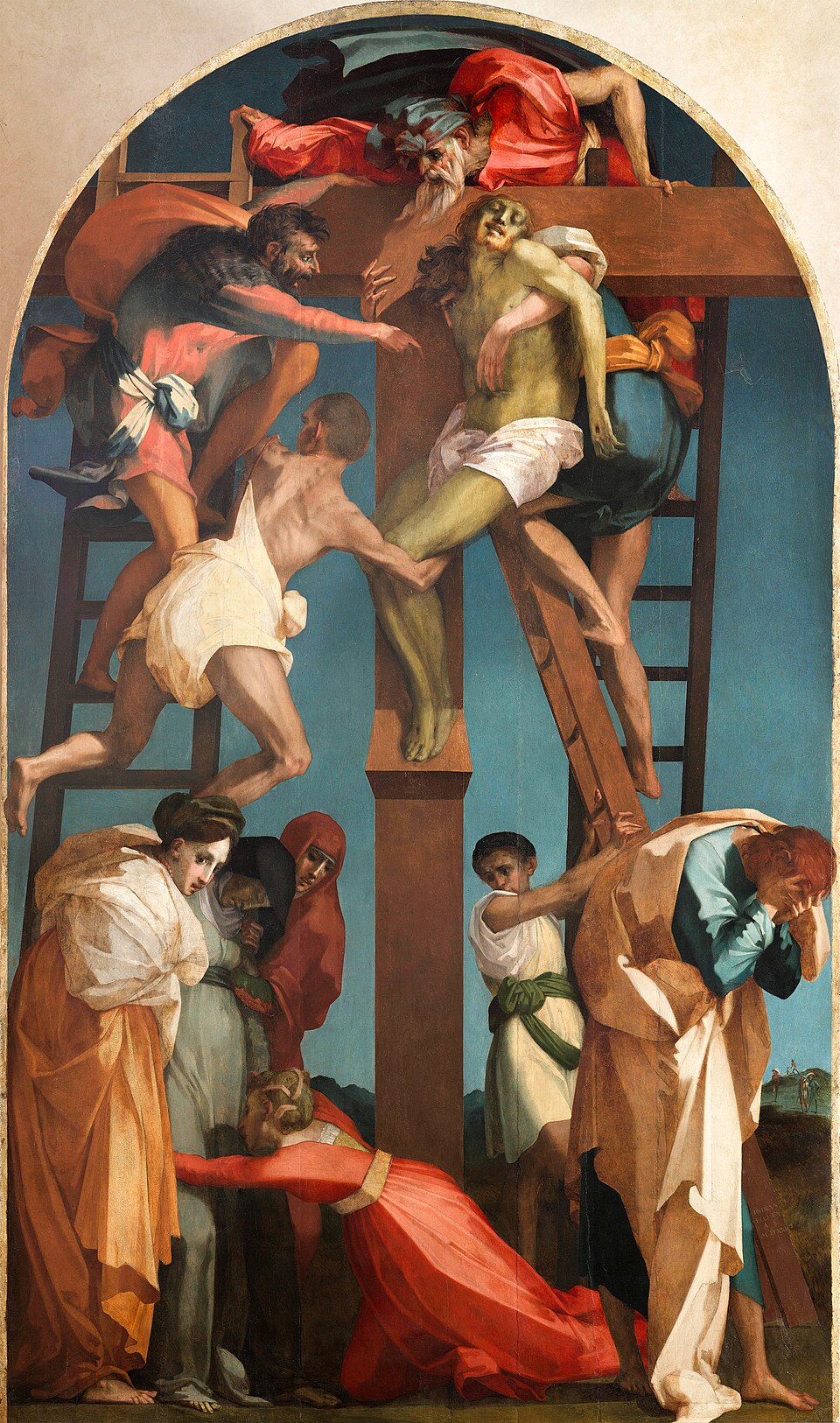
<p>Deposition</p>

Deposition

Rosso Fiorentino, Deposition, 1521.
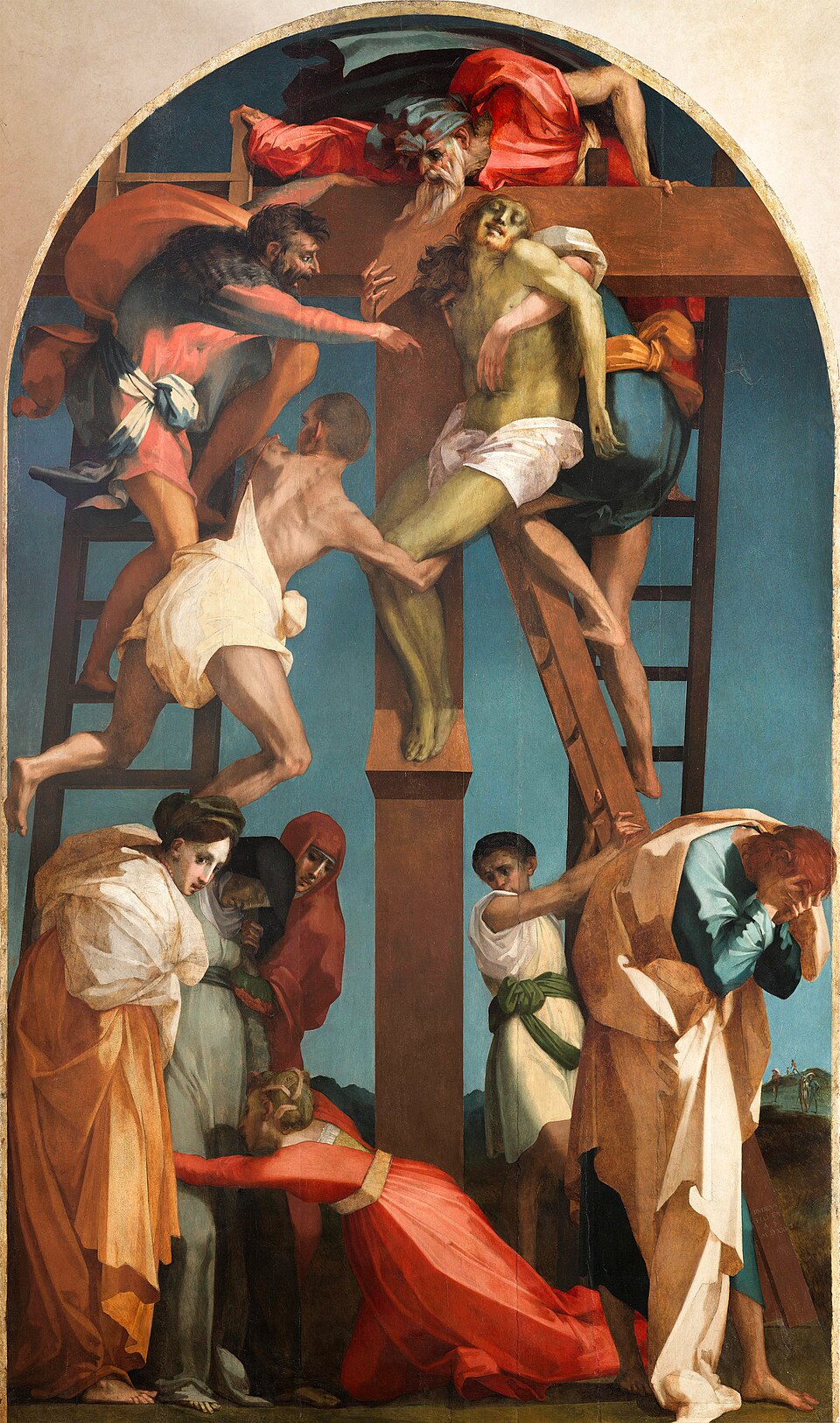
<p><strong>Rosso Fiorentino, <em>Deposition</em>, 1521.</strong></p><p></p>
11
New cards
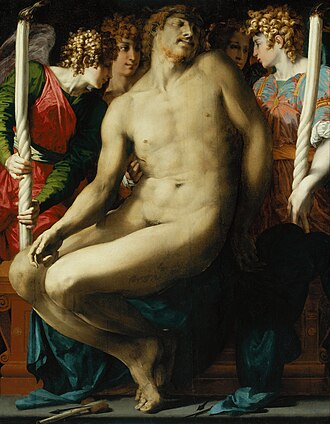
<p>Dead Christ with Angels</p>

Dead Christ with Angels

Rosso Fiorentino, Dead Christ with Angels, completed 1527.

  • Distortion and the remaking of form

  • we cannot easily see the signs of Christs suffering or the sadness of the angels

  • weird space and distorted scale of the body

    • he seems way to large like he will break out'

    • more interested in resurrection (breaking the bounds and the confines of the canvas)

  • Michelangelo

    • Rosso recalls the nude male figure from the ceiling of the Sistine chapel
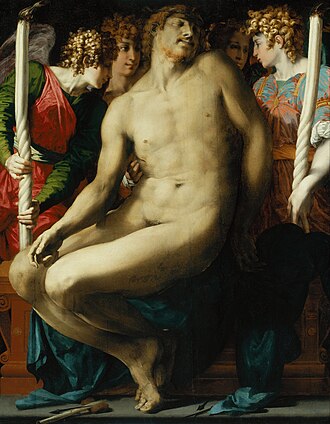
<p><strong>Rosso Fiorentino, Dead Christ with Angels, completed 1527.</strong></p><ul><li><p>Distortion and the remaking of form</p></li><li><p>we cannot easily see the signs of Christs suffering or the sadness of the angels</p></li><li><p>weird space and distorted scale of the body</p><ul><li><p>he seems way to large like he will break out'</p></li><li><p>more interested in resurrection (breaking the bounds and the confines of the canvas)</p></li></ul></li><li><p>Michelangelo</p><ul><li><p>Rosso recalls the nude male figure from the ceiling of the Sistine chapel</p></li></ul></li></ul><p></p>
12
New cards
<p>Deposition</p>

Deposition

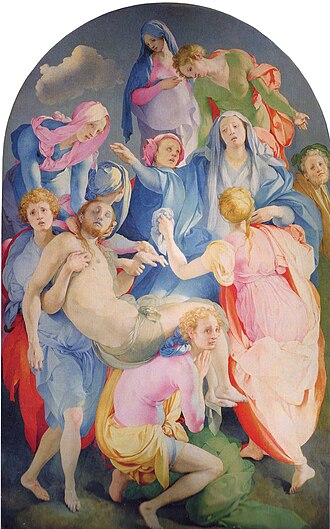
Pontormo, Deposition, Capponi Chapel, Santa Felicita, 1526-28.

  • In a burial chapel for the Capponi Family

  • the altarpiece

  • one cloud, the human body, and cloth

we don’t have: illusion of space, linear or atmospheric perspective, a sense of weight, accurate anatomy

Mannerism

  • uses art itself as its source, not nature

    • looking back to pieta by Botticelli which Michelangelo also did

  • Pontormo’s takes the form of a circle so our eyes never stop

In time

  • 1517-protestant reformation

  • 1527-31 - Florentine republic is reinstalled

  • 1528 (this painting)

  • 1532- The republic of Florence ends and Medici rule Florence as dukes

Subject?

  • people do not agree: Lamentation (Christs followers grieving), Deposition (Christs body removed from cross) Entombment (Christ being lowered into the tomb), lifted onto the lap (before the pieta).

  • Confirmation of the miracle of the body of Christ (against Martin Luther)
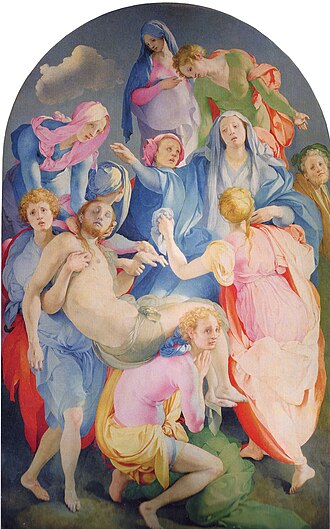
<p><strong><mark data-color="yellow" style="background-color: yellow; color: inherit;">Pontormo, </mark><em><mark data-color="yellow" style="background-color: yellow; color: inherit;">Deposition</mark></em><mark data-color="yellow" style="background-color: yellow; color: inherit;">, Capponi Chapel, Santa Felicita, 1526-28.</mark></strong></p><ul><li><p>In a burial chapel for the Capponi Family</p></li><li><p>the altarpiece </p></li><li><p>one cloud, the human body, and cloth</p></li></ul><p><strong>we don’t have</strong>: illusion of space, linear or atmospheric perspective, a sense of weight, accurate anatomy</p><p><strong>Mannerism</strong></p><ul><li><p>uses art itself as its source, not nature </p><ul><li><p>looking back to pieta by Botticelli which Michelangelo also did</p></li></ul></li><li><p>Pontormo’s takes the form of a circle so our eyes never stop</p></li></ul><p><strong>In time</strong></p><ul><li><p>1517-protestant reformation</p></li><li><p>1527-31 - Florentine republic is reinstalled</p></li><li><p>1528 (this painting)</p></li><li><p>1532- The republic of Florence ends and Medici rule Florence as dukes</p></li></ul><p><strong>Subject?</strong></p><ul><li><p>people do not agree: Lamentation (Christs followers grieving), Deposition (Christs body removed from cross) Entombment (Christ being lowered into the tomb), lifted onto the lap (before the pieta).</p></li><li><p>Confirmation of the miracle of the body of Christ (against Martin Luther)</p></li></ul><p></p>
13
New cards
14
New cards

Bellini, Giorgione, Titian (or, Venice around 1500)

  • around 1500

15
New cards
<p><em>Virgin Annunciate</em></p>

Virgin Annunciate

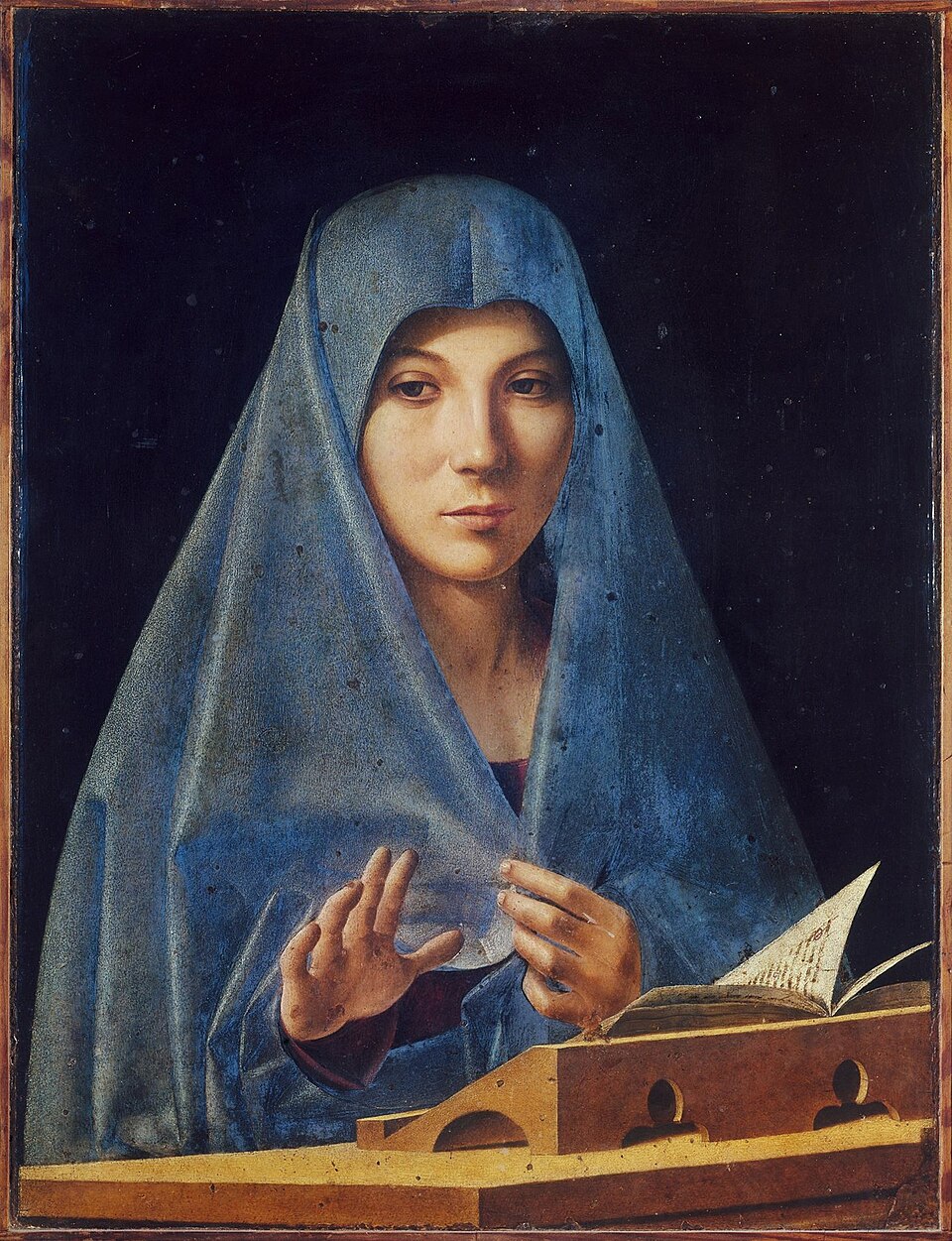
Antonello da Messina, Virgin Annunciate, ca. 1476.

  • direct and subtly commanding Mary

  • implicating us, the viewer, or implying that Gabriel is out of the Frame and with us.

  • anticipating the high renaissance, simple wool garment
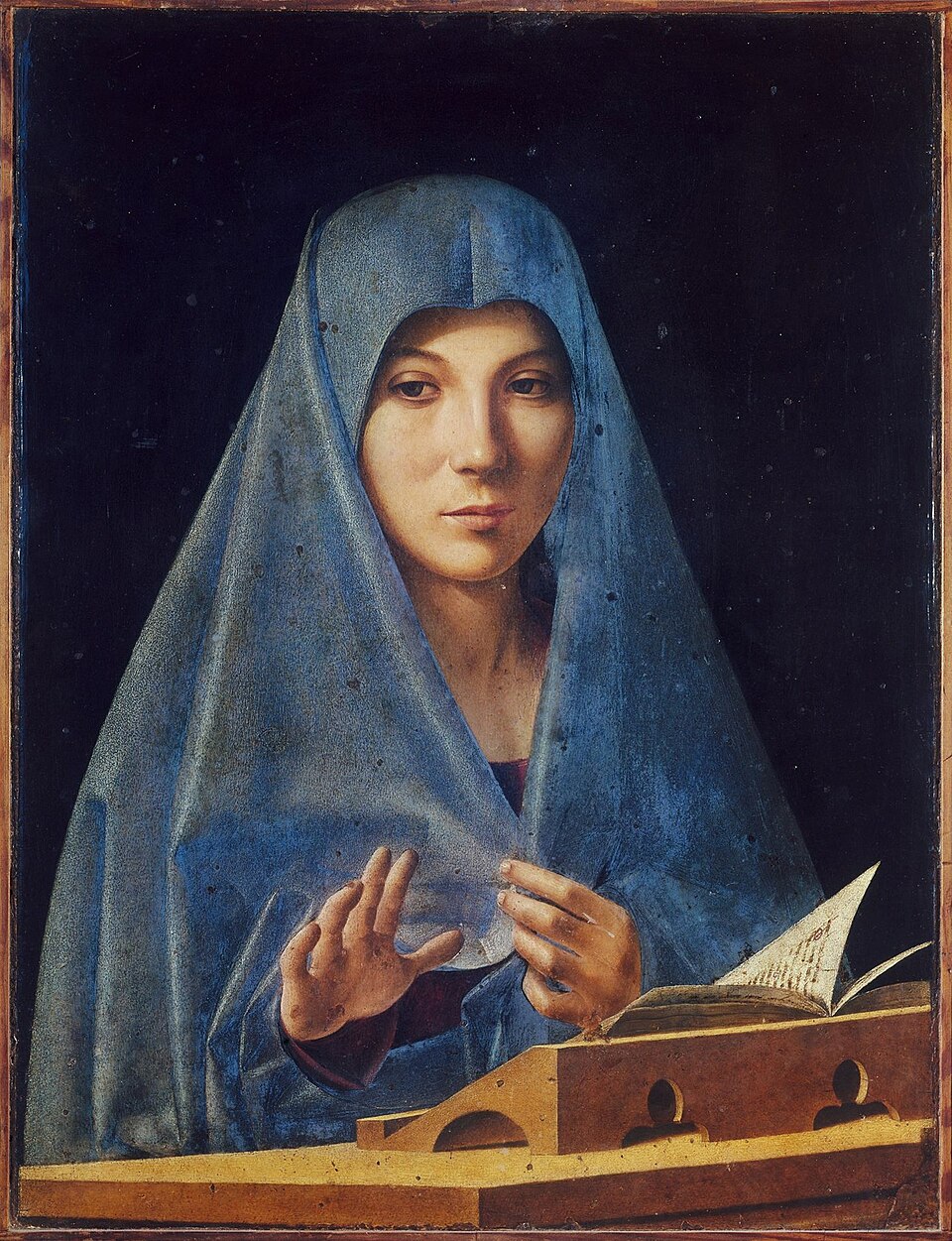
<p><strong>Antonello da Messina, <em>Virgin Annunciate</em>, ca. 1476.</strong></p><ul><li><p>direct and subtly commanding Mary </p></li><li><p>implicating us, the viewer, or implying that Gabriel is out of the Frame and with us. </p></li><li><p>anticipating the high renaissance, simple wool garment</p></li></ul><p></p>
16
New cards
<p><em>San Zaccaria Altarpiece</em></p>

San Zaccaria Altarpiece

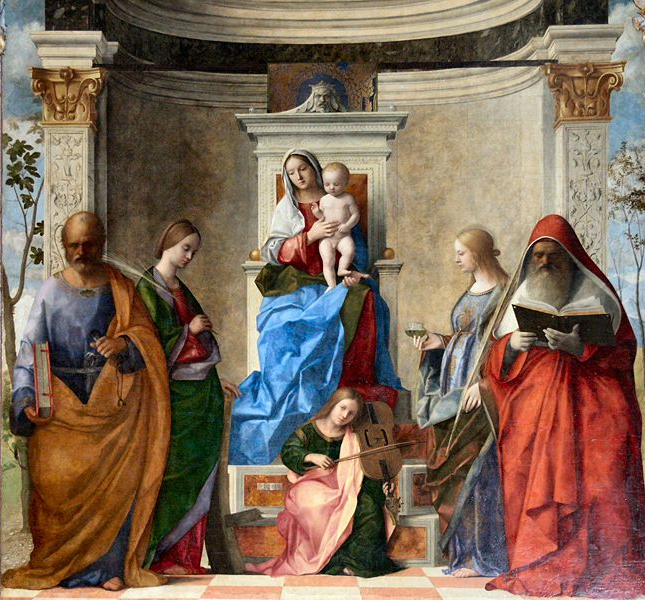
Giovanni Bellini, San Zaccaria Altarpiece, 1506.

  • San Zaccaria in venice

Sacra Conversazione: a group of saints from different time periods around a throned Madonna and child.

Subject

  • Saint Peter: On the left holding the keys to heaven

  • Saint Catherine: supporting the wheel she was martyred on

  • Virgin and Child

  • Angel playing a small instrument playing a violing

  • Saint Lucy: the patron saint of the blind, her eyes were plucked out because of belief in christ

  • Saint Jerome: translator of the Bible into Latin, father and doctor of the church so is wearing red. He is often depicted bearded and reading a book

Masaccio

  • opens up the architecture like massachio

  • the arches relate to the frame of the painting, making it look like one could walk out

Napoleon

  • stole this painting and brought it into Paris so we do not know if it in the proper location.

Sacred conversation that is not available

  • we are not invited to participate in it but we are able to watch it

Oil Paint

  • Bellini used oil paint that let him play with depth and color

Curving forms unite the composition
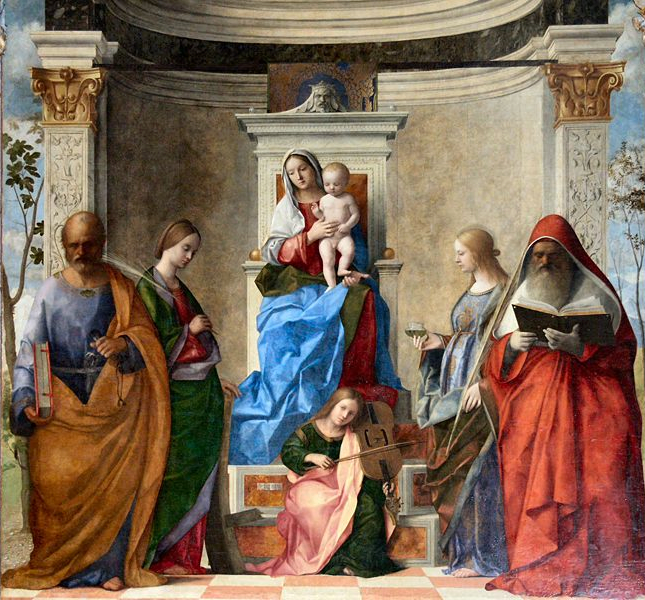
<p><strong><mark data-color="yellow" style="background-color: yellow; color: inherit;">Giovanni Bellini, </mark><em><mark data-color="yellow" style="background-color: yellow; color: inherit;">San Zaccaria Altarpiece</mark></em><mark data-color="yellow" style="background-color: yellow; color: inherit;">, 1506.</mark></strong></p><ul><li><p>San Zaccaria in venice</p></li></ul><p><strong><em>Sacra Conversazione: </em></strong>a group of saints from different time periods around a throned Madonna and child.</p><p><strong>Subject</strong></p><ul><li><p>Saint Peter: On the left holding the keys to heaven</p></li><li><p>Saint Catherine: supporting the wheel she was martyred on </p></li><li><p>Virgin and Child</p></li><li><p>Angel playing a small instrument playing a violing</p></li><li><p>Saint Lucy: the patron saint of the blind, her eyes were plucked out because of belief in christ</p></li><li><p>Saint Jerome: translator of the Bible into Latin, father and doctor of the church so is wearing red. He is often depicted bearded and reading a book</p></li></ul><p><strong>Masaccio</strong></p><ul><li><p>opens up the architecture like massachio</p></li><li><p>the arches relate to the frame of the painting, making it look like one could walk out</p></li></ul><p><strong>Napoleon</strong></p><ul><li><p>stole this painting and brought it into Paris so we do not know if it in the proper location.</p></li></ul><p>Sacred conversation that is not available </p><ul><li><p>we are not invited to participate in it but we are able to watch it</p></li></ul><p><strong>Oil Paint</strong></p><ul><li><p>Bellini used oil paint that let him play with depth and color </p></li></ul><p></p><p>Curving forms unite the composition</p>
17
New cards

Madonna of the Rose Garlands

Albrecht Dürer, Madonna of the Rose Garlands, painted for San Bartolomeo al Rialto, Venice, 1506.

18
New cards

Reproduction or Forgery? Raimondi or Dürer?

19
New cards

Sacred Allegory

Giovanni Bellini, Sacred Allegory, ca. 1500.

20
New cards

Self-Portrait as David (?), ca. 1508.

Giorgione, Self-Portrait as David (?), ca. 1508.

21
New cards

Young Man with an Arrow

Giorgione, Young Man with an Arrow, ca. 1505.

22
New cards

The Tempest

Giorgione, The Tempest, ca. 1508.

23
New cards

Sleeping Venus

Giorgione, Sleeping Venus, ca. 1510.
24
New cards
<p><em>Pastoral Concert</em></p>

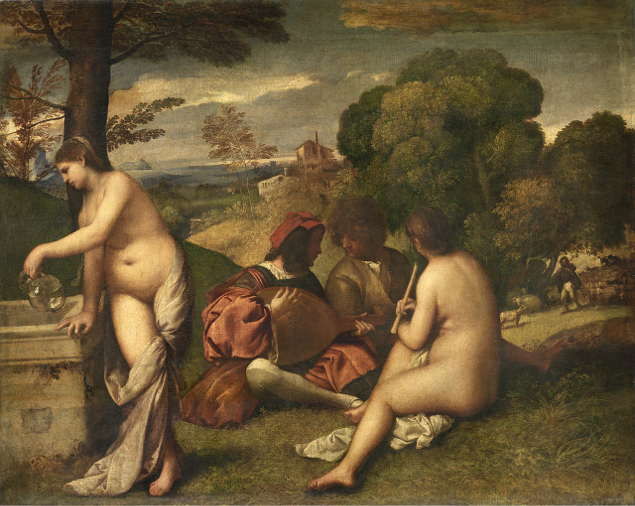
Pastoral Concert

Titian, Pastoral Concert, 1509.

Subject: idyllic landscape populated by gods and goddess, nymphs and satyrs, shepherds and peasants.

Interpretation: w
<p><strong><mark data-color="yellow" style="background-color: yellow; color: inherit;">Titian, </mark><em><mark data-color="yellow" style="background-color: yellow; color: inherit;">Pastoral Concert</mark></em><mark data-color="yellow" style="background-color: yellow; color: inherit;">, 1509.</mark></strong></p><p></p><p><strong>Subject: </strong>idyllic landscape populated by gods and goddess, nymphs and satyrs, shepherds and peasants.</p><p><strong>Interpretation: </strong>w</p>
25
New cards

Assumption of the Virgin

Titian, Assumption of the Virgin, Frari, Venice, 1518.

26
New cards
27
New cards
28
New cards
29
New cards
30
New cards
31
New cards
32
New cards
33
New cards
34
New cards
35
New cards