9.7 - Detection of light in mammals
 Call Kai
 Learn
Learn Practice Test
 Spaced Repetition
 Match
Match Flashcards
 Knowt Play
1/15

There's no tags or description
Looks like no tags are added yet.
Name | Mastery | Learn | Test | Matching | Spaced | Call with Kai | Chat |
|---|
No analytics yet
Send a link to your students to track their progress
16 Terms
What is the definition of a receptor?
A specialised structure which, when activated by a specific stimulus, can initiate an action potential at one end of a sensory neurone
What are the different types of receptors?
Photoreceptors: detect light & other kinds of electromagnetic radiation
Mechanoreceptors: detect movements, pressure & tension
Chemoreceptors: detect specific chemicals (e.g. glucose & H+ ions)
Thermoreceptors: detect hot & cold temperatures
What do all receptors act as?
Energy transducers:
they convert energy from a stimulus into electrical energy in the form of a generator potential, which then initiates an action potential in the sensory neurone
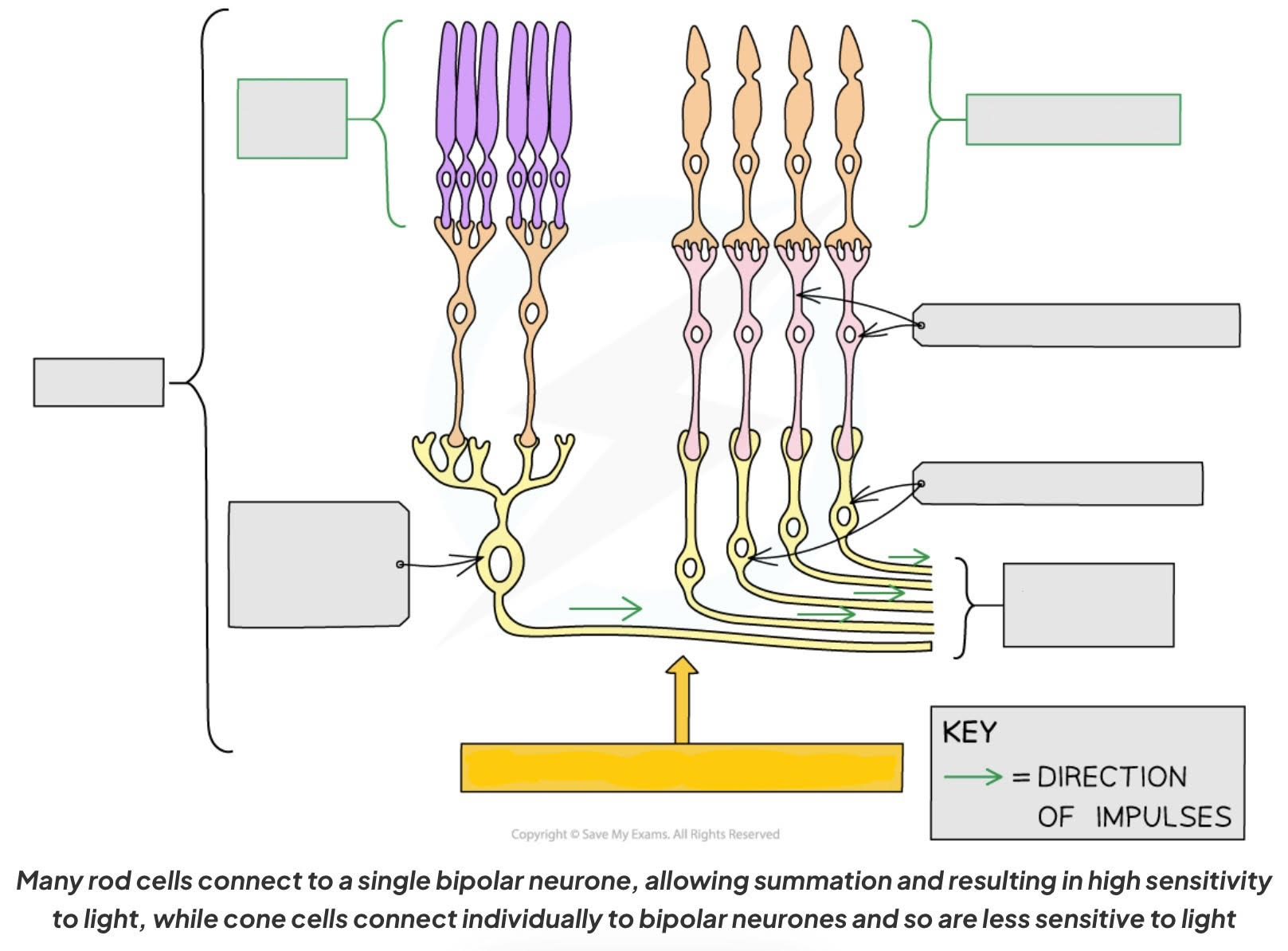
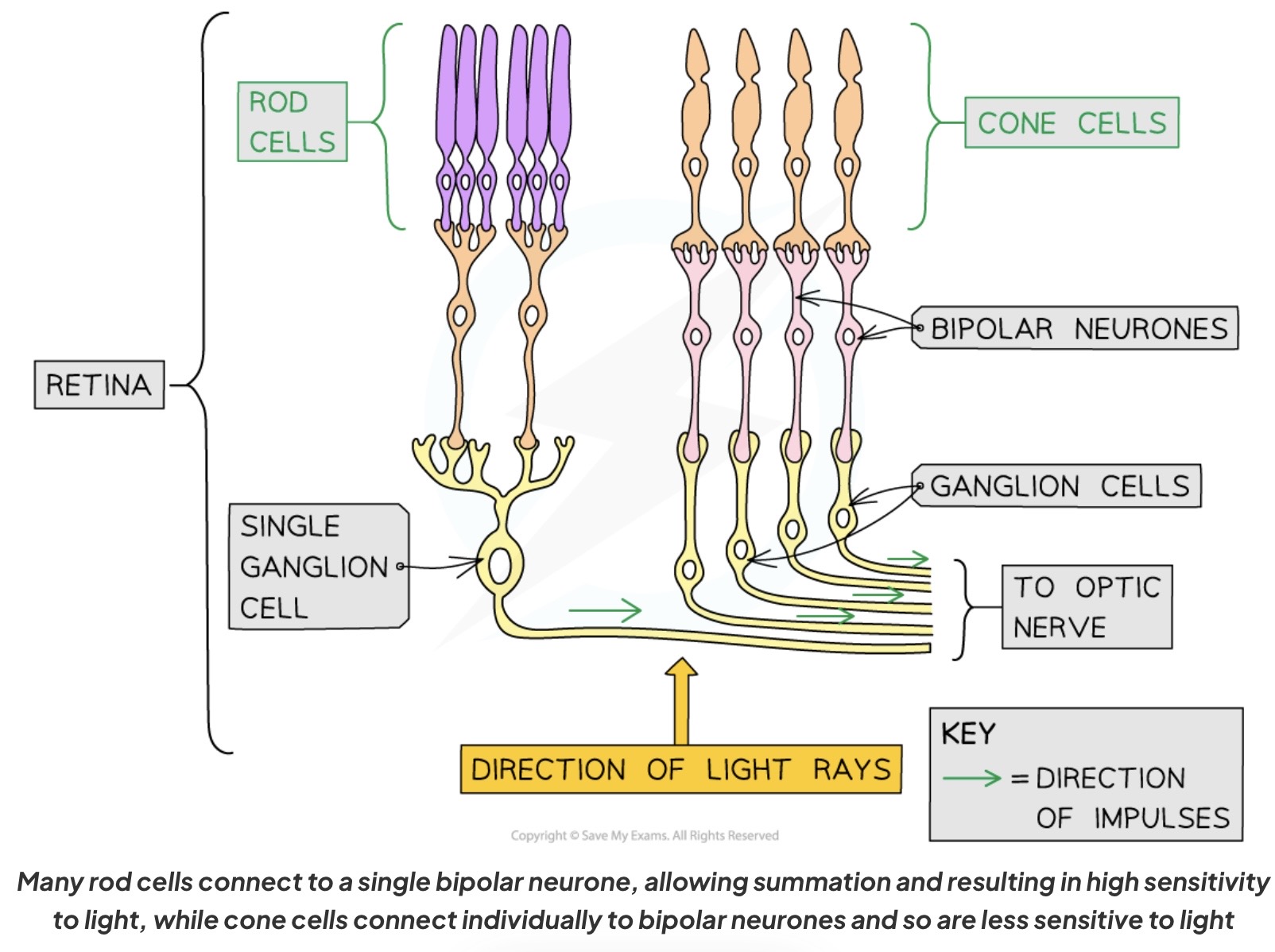
Label this image of the structure of the human retina
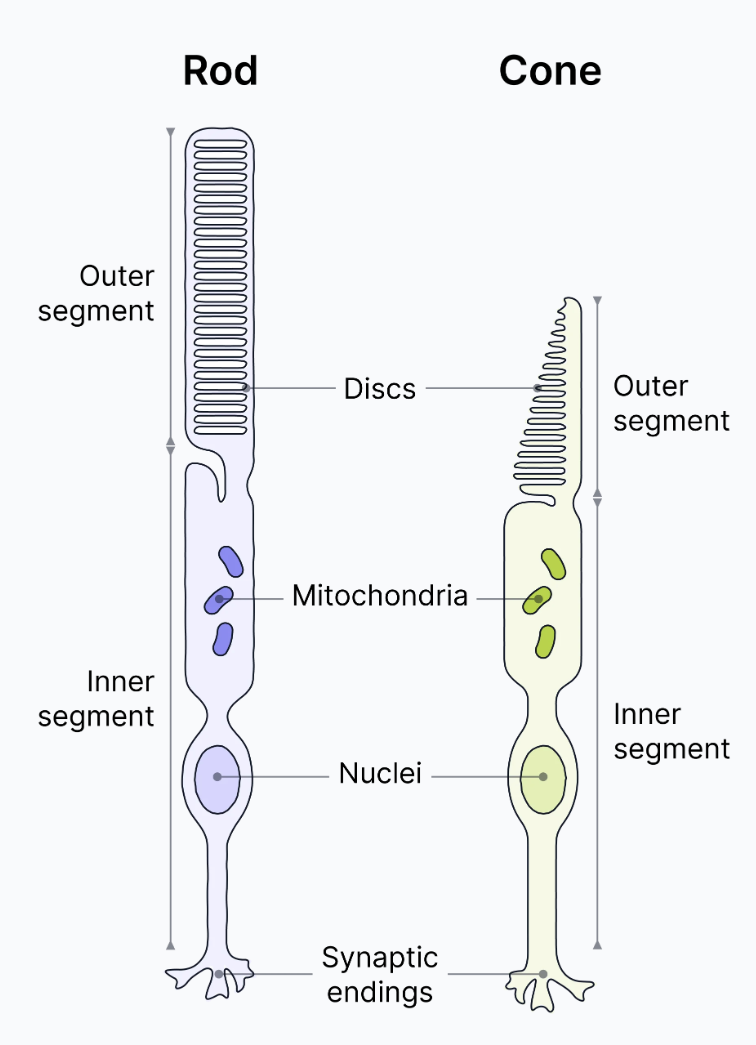
What are the two types of photoreceptor cells in the human eyes?
Rod & cone cells:
they form synapses with bipolar neurones, which in turn, synapse with ganglion cells
the axons of the ganglion cells cover the inner surface of the retina & eventually form the optic nerve that leads to the brain
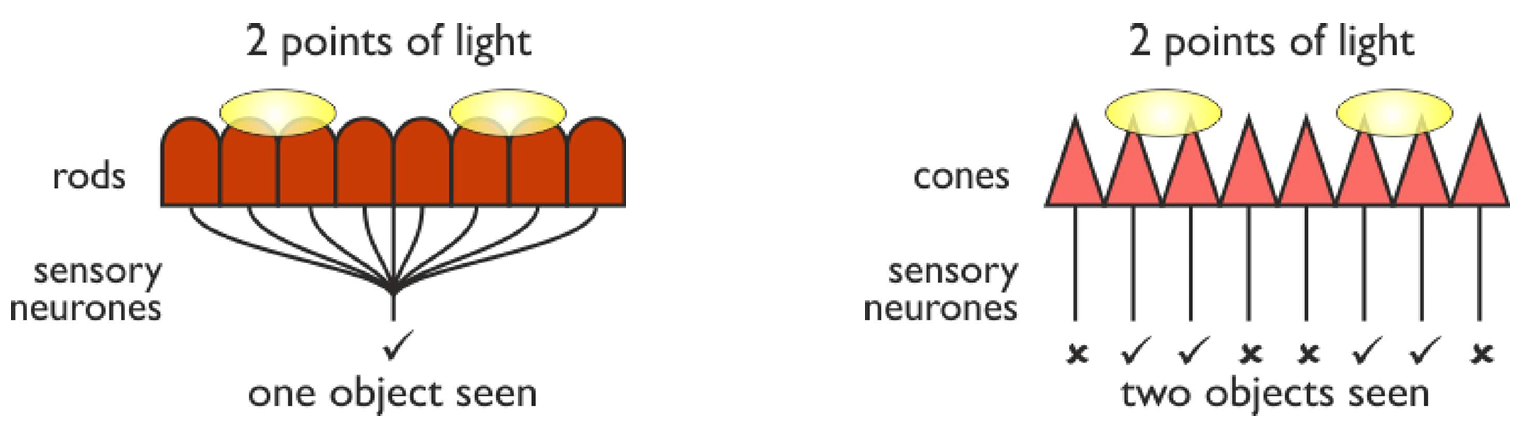
each cone cell is connected to one bipolar neurone, while rod cells are connected in groups to a single bipolar neurone (retinal convergence)
What types of pigment do rod & cone cells contain?
Rod cells contain rhodopsin & cone cells contain iodopsin:
when these pigments absorb light energy, they get broken down → the breakdown products initiate a sequence of events that leads to a generator potential
the generator potential ultimately leads to an action potential in a sensory neurone of the optic nerve
What is the difference in sensitivity (ability to detect low light intensity) between rod & cone cells?
Rod cells:
high, due to a high concentration of rhodopsin & retinal convergence (one photon per rod will sum to cause an action potential)
used for night vision
Cone cells:
low, due to a lower concentration of rhodopsin & no retinal convergence (one photon per cone is not enough to cause an action potential)
requires bright light, so work best in the day
What is the difference in acuity (ability to resolve fine detail) between rod & cone cells?
Rod cells: poor, due to high density in periphery of retina & retinal convergence
Cone cells: high, due to high density in fovea & 1:1 connections with bipolar neurones
(fovea = centre of retina → receives highest light intensity)
What is the difference in colour vision between rod & cone cells?
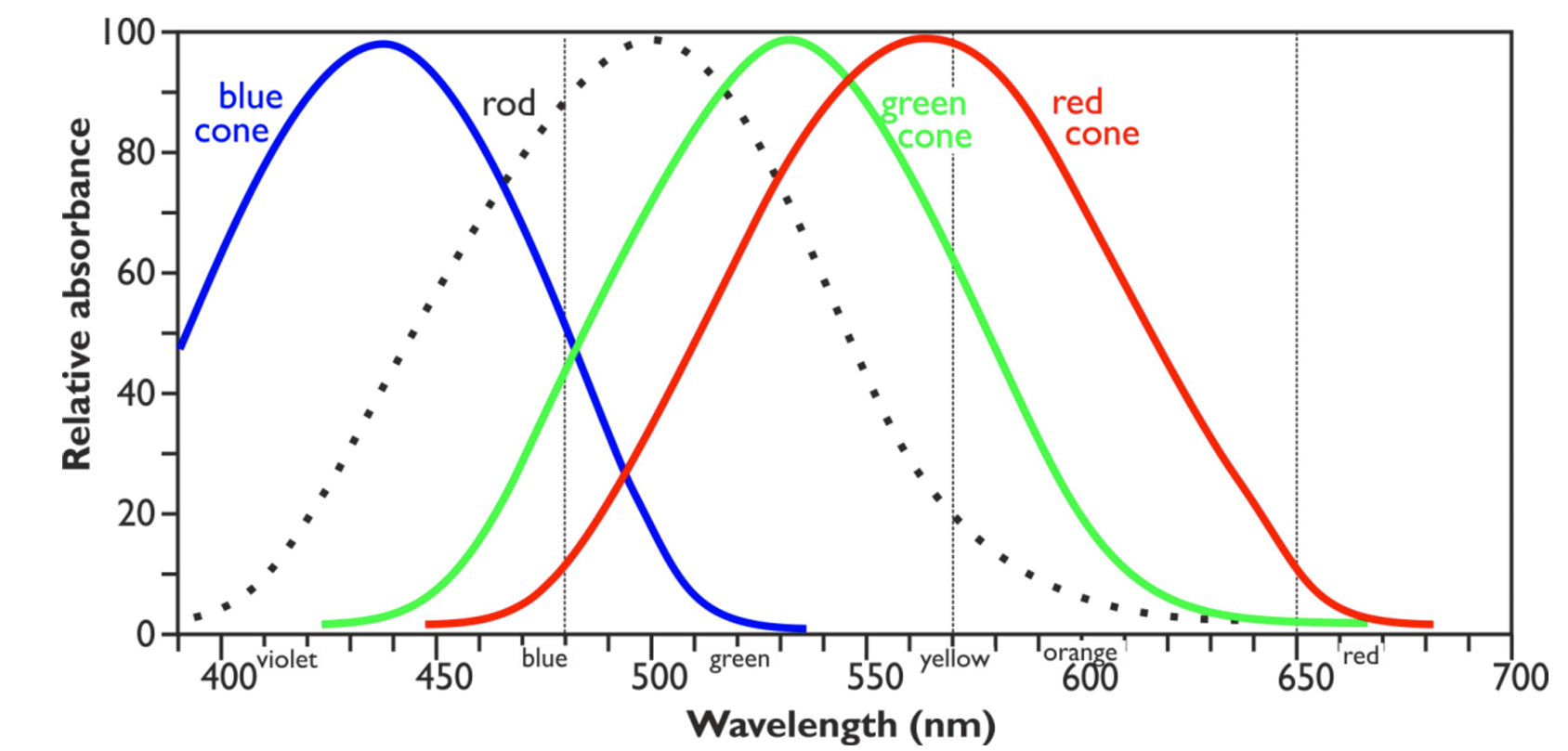
Rod cells: cannot distinguish between different wavelengths of light (only produce images in black & white)
Cone cells: sensitive to different wavelengths of light & allows us to perceive images in full colour
3 different types of cone cell → each one separately responds to wavelengths of red, blue & green light
cone cells are not sensitive to low light intensity, explaining why we cannot see colours at night
What is the difference in distribution between rod & cone cells?
Rod cells: only found at the peripheries of the retina, where light intensity is low
Cone cells: concentrated at the fovea & its concentration diminishes the further away from the fovea
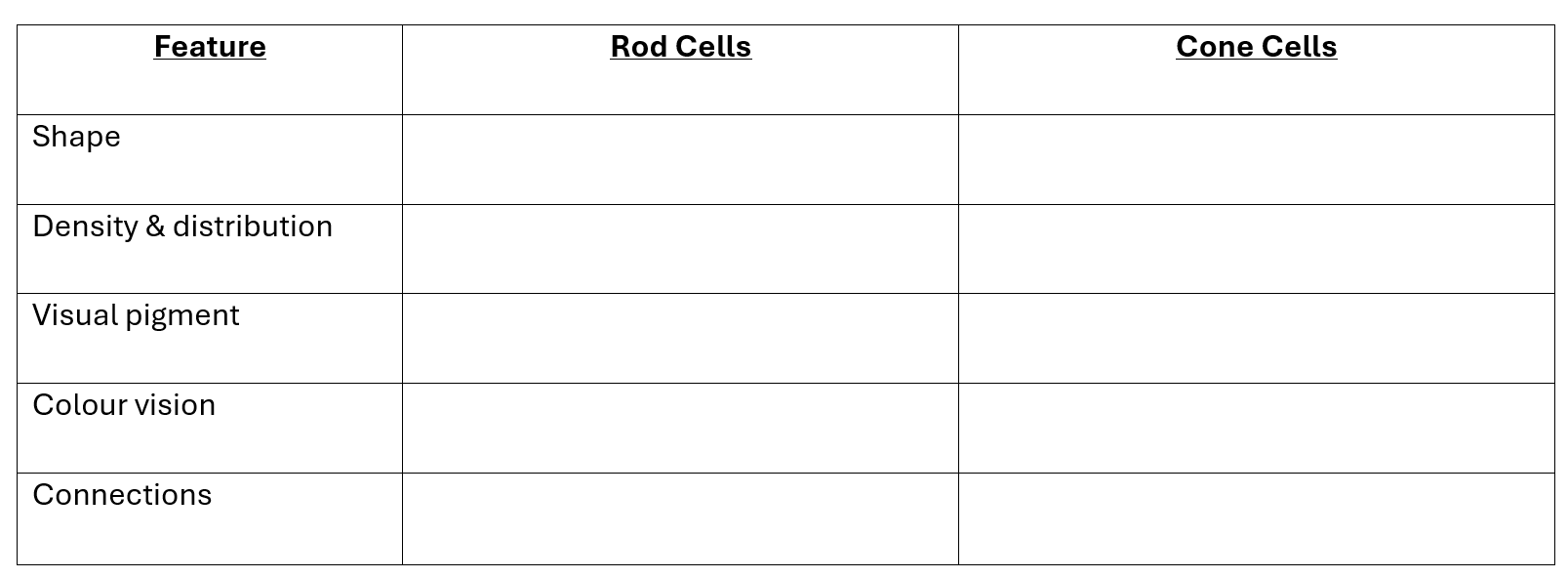
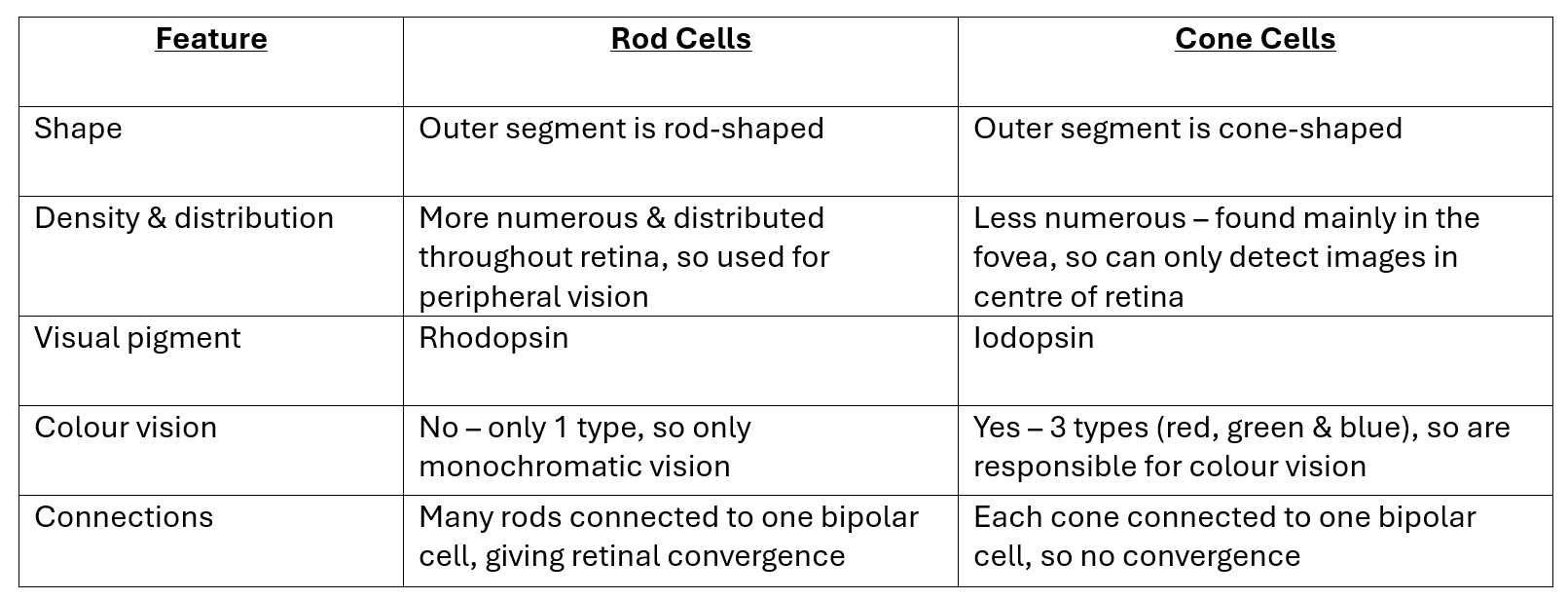
Complete this table
What is visual transduction?
The process by which light initiates a nerve impulse in the retina:
photoreceptor cells contain hundreds of membrane disks, which each hold thousands of molecules of rhodopsin
rhodopsin is a trans-membrane protein, made up of opsin surrounding a small molecule, called retinal
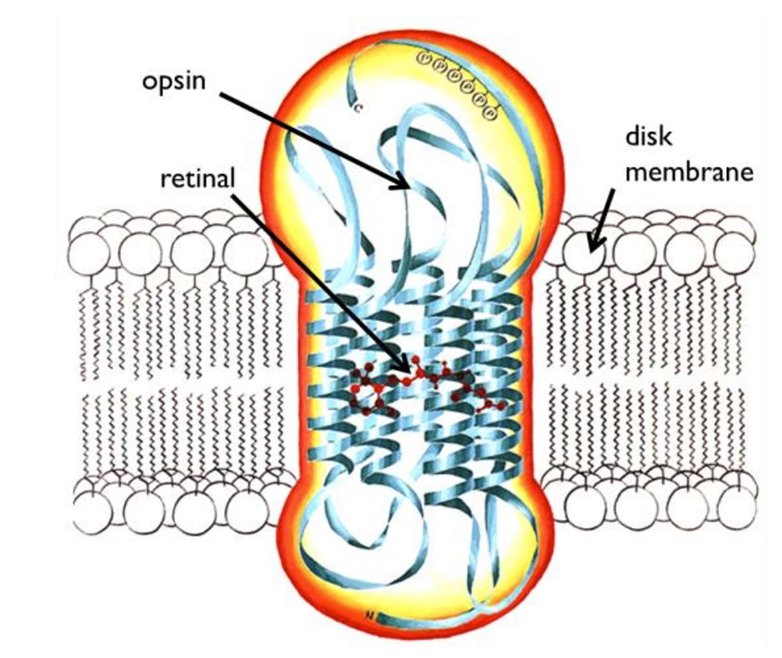
What is retinal?
Light-sensitive & can exist in two isomeric forms (cis & trans):
in the dark, retinal is in the cis form, but when it absorbs a photon of light, it quickly switches to the trans form, in a process called bleaching
rhodopsin with trans retinal changes shape to an unstable form that dissociates into opsin & free retinal → the opsin initiates a cascade of chemical reactions in the rod cell that eventually cause an action potential to the brain
(how to remember the difference: cis = “myst”erious → dark; so trans must be the opposite)
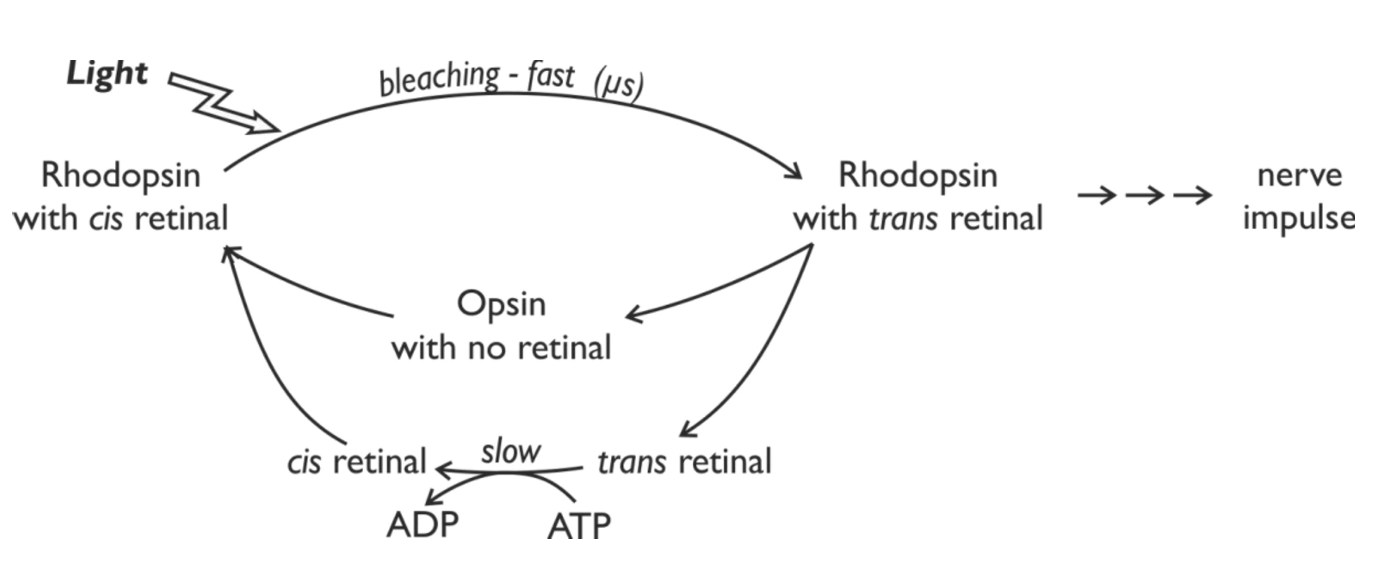
Why are people initially blind when they walk from sunlight to a dark room?
The reverse reaction (trans to cis retinal) requires ATP & several enzyme reactions & is very slow, taking a few minutes
In the light, almost all of the retinal was in the trans form & it takes some time to convert enough into cis retinal to turn off the nerve impulse
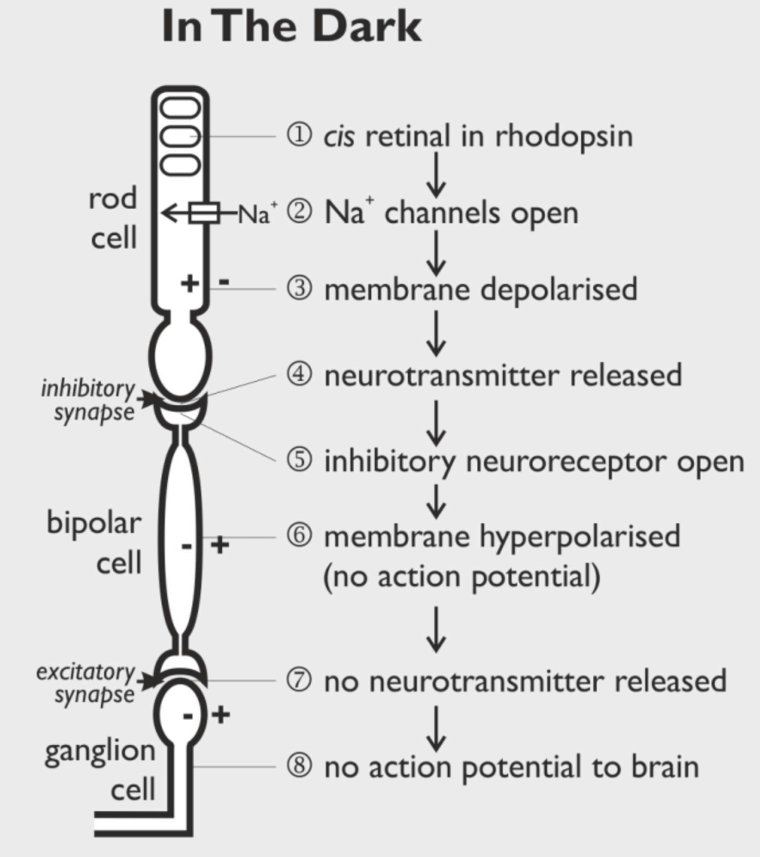
Why do rod cells not generate action potentials in the dark?
In the dark, the Na+ ion channels are open, so Na+ ions diffuse in & the rod cell is depolarised, releasing a neurotransmitter at its synapse
However, the synapse with the bipolar cell is an inhibitory synapse, so the neurotransmitter stops the bipolar cell generating its own nerve impulses, meaning there are no impulses to the brain
Why do rod cells generate action potentials in the light?
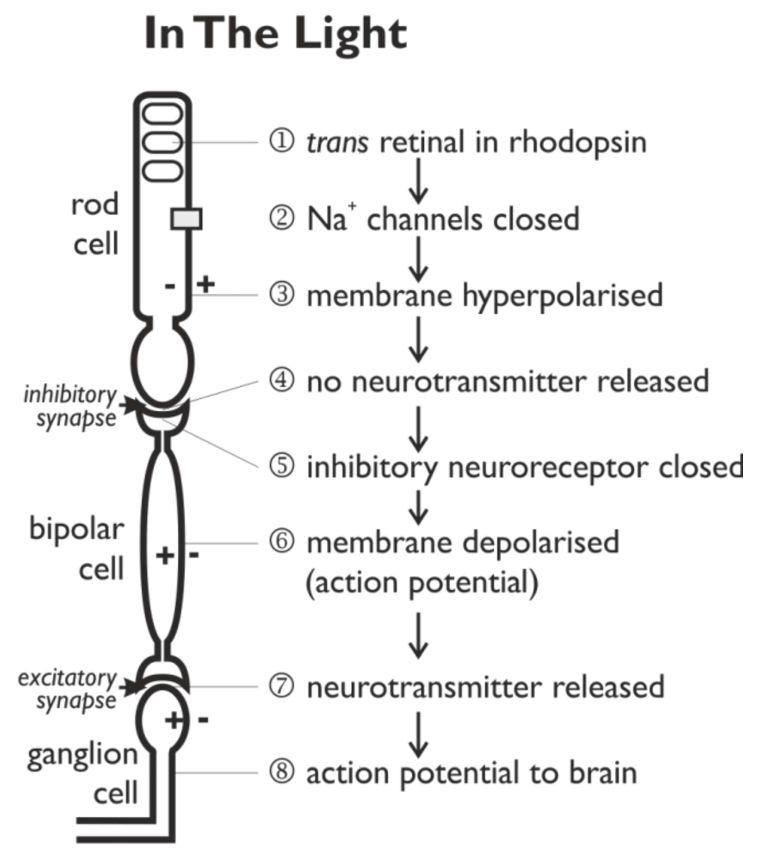
In the light, rhodopsin with trans retinal initiates a cascade of chemical reactions in the rod cell that close the Na+ ion channels
Na+ ions stop diffusing in, causing a hyperpolarisation (build up of Na+ ions outside, so inside is negative). If enough Na+ ion channels close, the hyperpolarisation reaches a threshold & the inhibitory synapse is switched off
The bipolar cell now generates an action potential, which is transmitted to the ganglion cell & so, to the brain