Psych memory&learning&sleep
 Call Kai
 Learn
Learn Practice Test
 Spaced Repetition
 Match
Match Flashcards
 Knowt Play
1/26

There's no tags or description
Looks like no tags are added yet.
Name | Mastery | Learn | Test | Matching | Spaced | Call with Kai | Chat |
|---|
No analytics yet
Send a link to your students to track their progress
27 Terms
Sensory information Function+Capacity+Duration
function/to be noted:
entry point for sensory information in its raw form
filters out unnecessary information
stores information long enough so that we perceive the world as continuous
we are not consciously aware of most info in sensory memory
when one PAYS ATTENTION to the sensory info → STM
Capacity:
vast, potentially unlimited
Duration:
momentary — about 0.2 - 4 seconds
Short-term-memory Function+Capacity+Duration
Function:
receives information from sensory information from sensory memory and transfers information to and from LTM
Where we manipulate sensory memory or retrieve information from LTM
Where all conscious perceiving, feeling, thinking, reasoning, and other mental processes take place
Maintains information in conscious awareness for immediate use
Capacity:
7± 2 (5-9) items or pieces of information
Duration:
temporary — 18 - 20 seconds, possibly up to 30 seconds
longer if renewed (maintenance rehearsal for working memory)
Long-term-memory Function+Capacity+Duration
Function:
information storage for re-access and use at a later time when needed
Capacity:
Vast, potentially unlimited
Duration:
potentially permanent
some information may be lost of inaccessible over time
indefinite
Iconic memory (only sensory memory)
Funtion:
exact replica of VISUAL information
Duration:
0.3 - 0.5 seconds
Capacity:
potentially unlimited, vast
Echoic memory (sensory memory only)
Function:
exact replica of auditory information
Duration:
3 - 4 seconds
Capacity:
potentially unlimited, vast
when information enter STM
it can be retained
occurs when manipulating or rehearsing information
it can be discarded
Happens if the information is not encoded, used or consciously rehearsed
it can be encoded to LTM for storage
explicit memory
occurs when information can be CONCIOUSLY or INTENTIONALLY retreived and stated. → ‘knowing that’
tends to be expressed as words or symbols and is easily verbalised
subcategories:
semantic memory
memory of facts, wordly knowledge, eg. knowing what ANZAC stands for
Episodic memory
memory of specific events or personal experiences
Implicit memories
does NOT require conscious or intentional retrieval
usually stored routins or emotional responses → the ‘how to’
subcategories
procedural memory
skills, habits or actions
coditioned emotional response
a LEARNED emotional reactions in response to a stmiulus or event that you have formed an association with.
typically negative, can be both
implicit because we CANNOT control the experience of fear or excitement when exposed to stimulus.
Hippocampus
formation, consolidation and retrieval of EXPLICIT MEMORIES
transfers new memories to relevant parts of the brain (neocortext) for permanent long-term storage.
interacts with neocortex when storing and retrieving long term explicit memories
links memories to emotions, can interact with amygdala when encoding LTMs (such as emotional responses)
Neocortex
STORING explicit memories, usually in areas relevant to specific sensory processing.
During retreival, different components of a memory are linked here.
Amygdala
formation and consolidation of implicit, EMOTIONAL-BASED memories mostly related to fear/agression (strong emotions)
can ENHANCE MEMORABILITY of an event from emotions experienced (when, where, how etc), encoded by the hippocampus.
Basal Ganglia
encode and consolidate IMPLICIT memories related to HABIT formation and PROCEDURAL sequences of movement
communicates with the neocortex and cerebellum, by receiving and sending messages to coordinate smooth movement without conscious thought or effort.
Cerebellum
encoding and storing of procedural memories of motor skills and simple reflexes (implicit memories), eg. eye blinking.
coordinates fine muscle movement
interacts with basal ganglia, and movement related areas of the neocortex to encode, store and retrieve long-term memories associated with habit formation, movement and simple reflexes.
Maintenance Rehearsal
Process of actively manipulating information so that it can be held in STM for longer
mental repetition of information
does not always lead to LTM retention
Elaborative rehearsal
Makes information memorable by actively associating it with information already in LTM
makes it more meaningful and memorable
therefore, more likely to store in LTM
generally, more effective than elaborative rehearsal
Autobiographical memory/events
Semantic and episodic memory stores different information but work together in forming and retrieving autobiographical memories
semantic and episodic memories link together to construct a complete narrative of an event
Supports a sense of self and is more constructive and integrative than episodic memory alone
imagined future thinking
mentally experiencing an event that might oocur in one’s personal future
semantic autobiographical + episodic autobiographical knowledge to construct a mental simulation of a hypothetical event
eg going to paris:
semantic: language spoken, location of paris
episodic: details of what you will do/who you will meet etc.
Alzheimer’s disease
neurodegenerative disease due to the progressive deteoriation of brain neurons, causing memory loss, decline in socicognitive skills + personality changes
form of dementia (most common form)
no diagnosis test, only accurate diagnosis can be made during autopsy
symptoms different for each person.
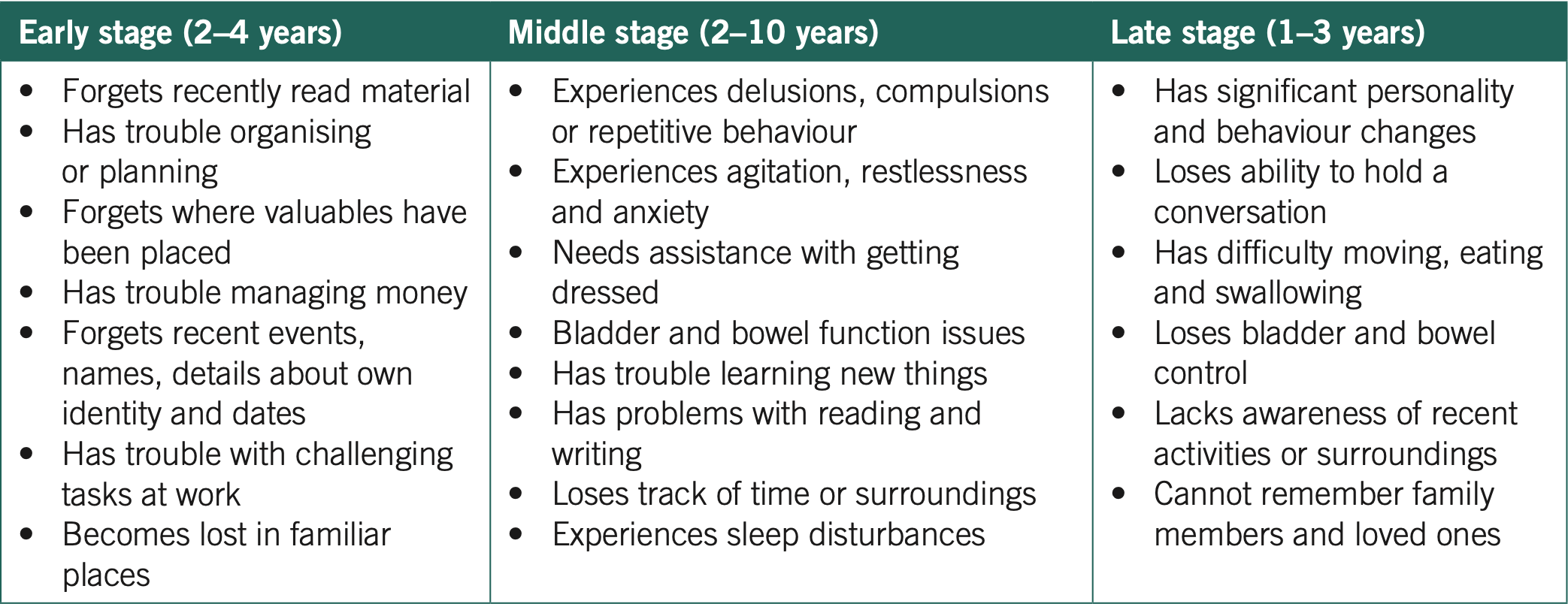
biological aspects of alzheimer’s disease
amyloid plaque build-up
proteins forming between synapses (OUTSIDE NEURONS) interferring with neural communication
Neurofibrillary tangles build-up
abnormal proteins WITHIN neurons that cause cell death
⇔ causes brain atrophy
amyloid plaque+neurofibrillary tangles buildup progressively damage neurons, which die, causing brain tissue shrinkage.
hippocampus 2. neocortex 3. cerebellum
Aphantasia
A CONDITION (not disease) where one cannot mentally visualise imagery.
trouble remember everyday things, imagining future events, episodic memories, reocgnising faces etc
visual cortex may be underactive
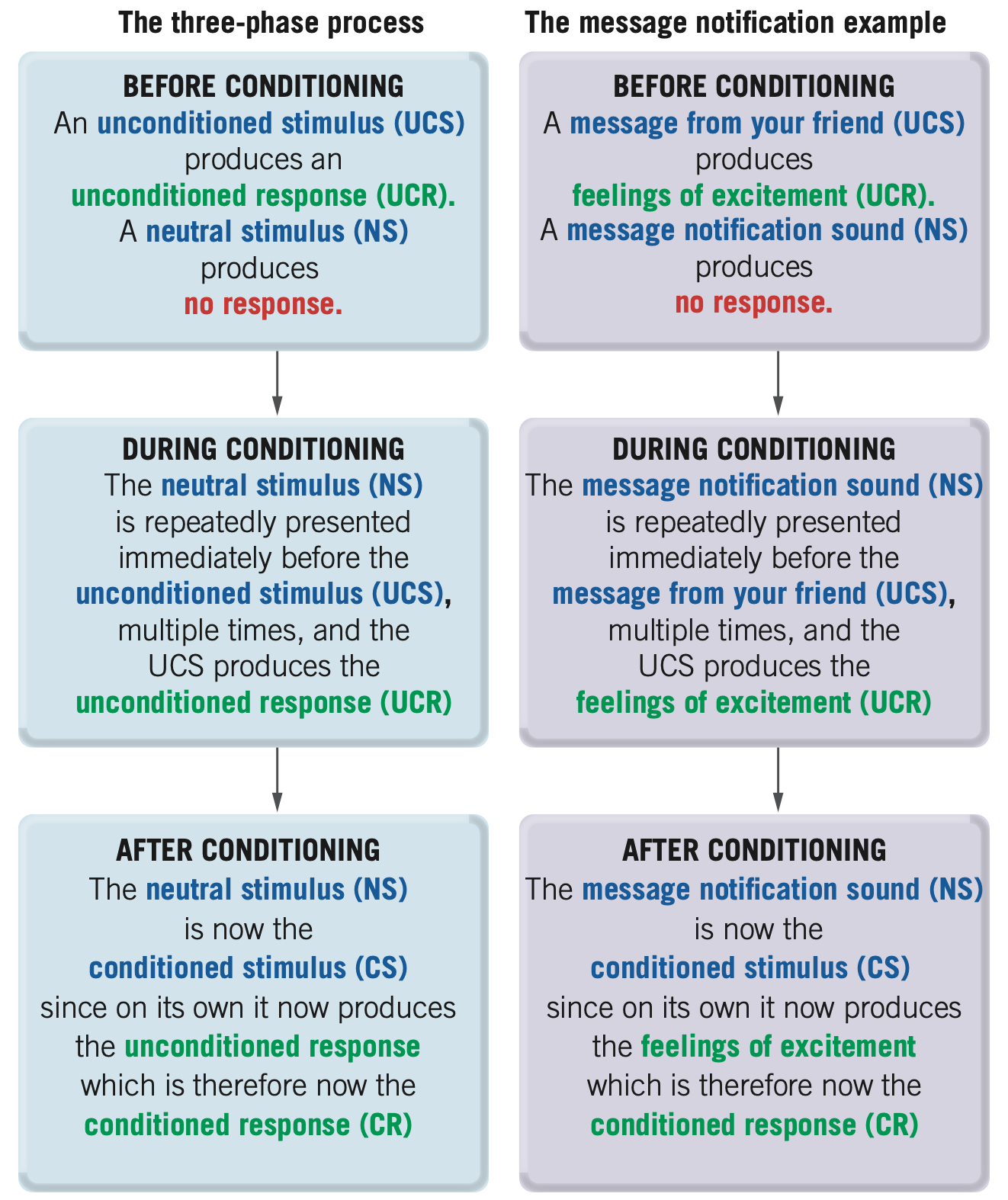
Classical conditioning
form of learning in which a previously neutral stimulus (NS) becomes associated with a naturally occuring stimulus, so that it triggers an AUTOMATIC LEARNED response
3 phase process:
before conditioning (1)
UCS produces UCR
a NS produces no response
During conditioning (2)
the NS is REPEATEDLY presented right before UCS
UCS produces the UCR
After conditioning (3)
The NS is now the CS alone, as it produces the UCR
in which, the UCR is now the CR.
Operant conditioning
A learning process in which the likelyhood of a VOLUNTARY behaviour occuring is determined by its consequence
Antecedent: any environmental stimulus that triggers an action
Behaviour: any action
Consequence: something that makes the behaviour more/less likely to happen again
Consequences:
Positive reinforment: + desirable stimulus
Negative reinforment: − UNdesirable stimulus
Positive punishment: + UNdesirable stimulus
Negative punishment: − desirable stimulus
Similarities and differences between operant and classical conditioning
similarities:
Both involve forming associations between stimuli/behaviors and consequences
Both types of learned behavior can disappear over time when the association is no longer reinforced or paired
Differences:
classical: involuntary, Operant: voluntary
classical: passive learning, Operant: active learning
Classical relies on the pairing of two stimuli (NS+UCS). Operant relies on reinforcement or punishment
Observational learning
Occurs when someone uses observation of another person’s actions and their consequences to guide their future actions
ARRMR
Attention→ actively observes ____
Retention→ mental representation od model’s ____
stored in LTM for later recall
Reproduction → physical, mental capabilities of ____ (be specific to case)
Imitation of the behaviour
Ability may be limited as responses depend on the individual having the right physical/intellectual ability to replicate the behaviour correctly
Motivation → ____ desire to ____
Reinforcement → ____ likelyhood of REPRODUCING behaviour
must outline consequences in response
method of loci
a mnemonic system that commits a familiar location or sequence of locations to memory, then visually links them with information that needs to be recalled
similarities and differences between oberservational learning & operant conditioning
Sim:
both active learning
dependent on consequence (reinforcement/punishment) for repetition of behaviour
Differences:
behaviourist approach for operants VS sociocognitive approach
must perform the behaviour first (operant) VS does not have to perform behaviour to learn (observational)
observational requires a model VS operant does not