Structures and functions of different types of biomolecules
 Call Kai
 Learn
Learn Practice Test
 Spaced Repetition
 Match
Match Flashcards
 Knowt Play
1/16

Earn XP
Description and Tags
carbohydrates, lipids, proteins, and nucleic acids
Name | Mastery | Learn | Test | Matching | Spaced | Call with Kai |
|---|
No analytics yet
Send a link to your students to track their progress
17 Terms
Biomolecule (Protein)
Protein (enzyme, hormone)
Protein Structure
Contains carbon (C), nitrogen (N), oxygen (O), hydrogen (H), and
possibly sulfur (S) atoms; made of amino acids; large and complex
Protein Function
Used to build cells; Structural molecule (like keratin in fingernails); enzyme, hormone, transport molecule (like hemoglobin in blood); contractions
Biomolecule (Lipids)
(fats, steroid, wax, oil, fatty acid)
Lipids Structure
Contains carbon(C), oxygen (O), hydrogen (H), and possibly other atoms: ratio of hydrogen (H) atoms to oxygen (O) atoms is high; insoluble (does not dissolve) in water
Lipids Function
Source of energy; cell membrane component; protective coating (like wax); chemical messenger (like cholesterol)
Carbohydrates (Biomolecule)
(Sugar, Starch)
Carbohydrates (structure)
Contains carbon (C), nitrogen (N), and hydrogen (H) atoms; ratio of hydrogen to oxygen atoms is 2:1
Carbohydrates (Function)
Source of energy (like glucose); structural molecule (cellulose)
Nucleic acid (biomolecule)
(DNA and RNA)
Nucleic Acids (Structure)
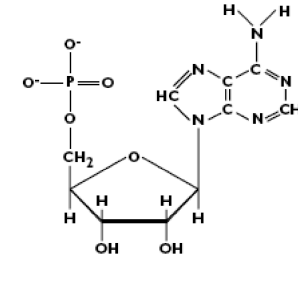
Contains a carbohydrate (sugar) group, phosphate group (PO4
-3), and a nitrogen base (adenine, thymine (in DNA only) or uracil (in
RNA only), cytosine, and guanine; very large and complex
Nucleic Acids (Function)
Carrier of genetic information and instructions of protein synthesis
Cells Use ATP from Biochemical energy for
Active transport, Movement, Photosynthesis, Protein Synthesis, Cellular respiration, and all other cellular reactions
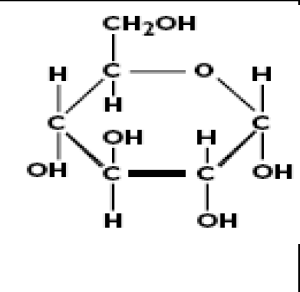
CARBOHYDRATE (Sugar – Glucose)
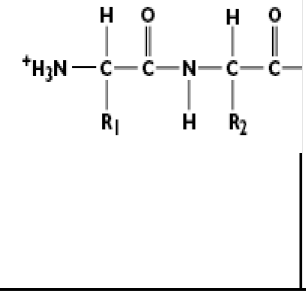
PROTEIN (One Amino Acid)
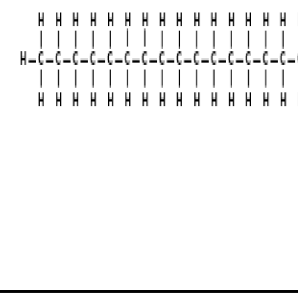
LIPID (Fat)
NUCLEIC ACID (One Nucleotide)