Ethics and Bias
 View linked note
 Call Kai
 Learn
Learn Practice Test
 Spaced Repetition
 Match
Match Flashcards
 Knowt Play
1/24

Earn XP
Description and Tags
human services exam 1
Name | Mastery | Learn | Test | Matching | Spaced | Call with Kai |
|---|
No analytics yet
Send a link to your students to track their progress
25 Terms
theory
thoughts and beleifs that influence our thinking
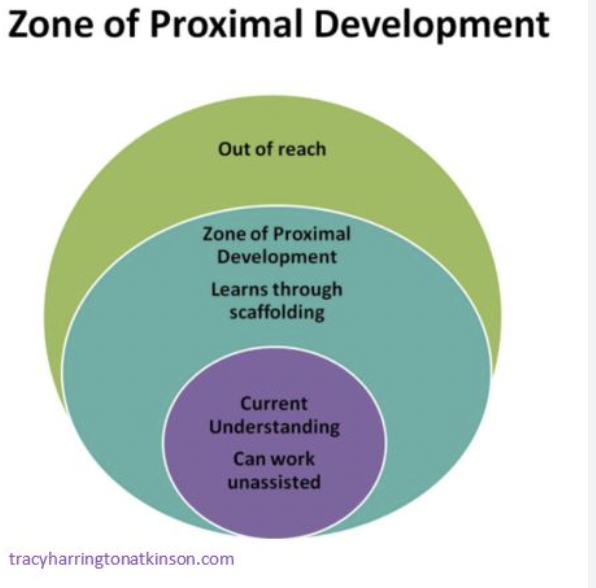
zone of proximal development
Meeting people where they are
deficits based approach
Focuses on disorders and abnormalities
Seeks to provide cure from an ‘expert’
Focuses on fixed characteristics and behaviors without regards to clients focus aspirations
strengths based approach
Seeks to identify competencies and abilities
Emphasizes clients well being
Validates clients past experiences but focuses on clients future and positive steps in the present
Believes that positive change is always possible when it aligns with a clients goals
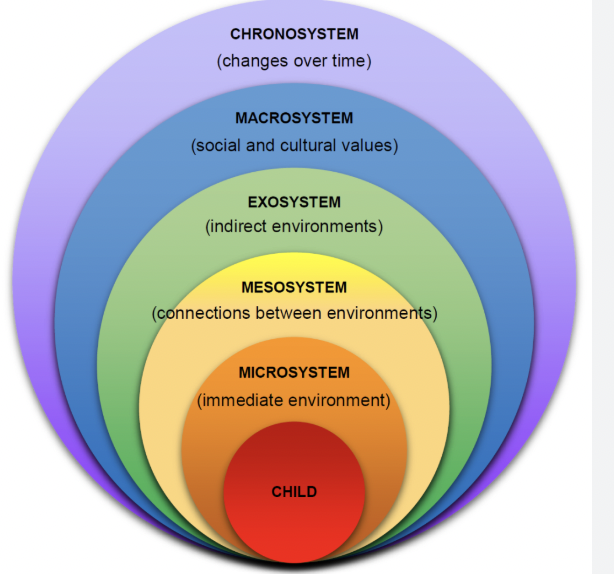
Brofenbrenners’s ecological system
Everything in our environment affects us
Microsystem = individual interactions, immediate environment
How individual interacts with family
Mesosystem = connections between microsystems
Child's academic progress depends on classroom and reinforcement at home
Exosystem = settings that indirectly impact an individual
Parents work schedule impacts how they show up for their child
Macrosystem = culture in which individual lives
High cultural standards of healthcare impact child's health
Chronosystem = changes over time
Evolution of gender roles
piagets stages of development
4 chronological and universal stages of development; this how children construct knowledge and ideas
Sensorimotor stage , 0-2
Trial and error experimentation with environment
Reflexes turns into intentional behavior
Object permanence : objects exist even if you don’t see them
Preoperational stage, 2-7
Ego-centric perspective (don’t understand others POV)
develop language, symbolic thinking (schemas)
Has not yet developed logic
Concrete operational stage, 7-12
Understanding others POV
Limited reasoning skills
Masters conservation
Formal operational 12-adulthood
Ability to think about abstract hypothetical ideas
Thinks about future and moral issues
erikons stages of development
Views each stage of life as experiencing a conflict in which one must resolve, personality development
Trust vs mistrust, 0-1
Infants learn to trust their caregivers to meet their basic needs or not
Autonomy vs shame and doubt, 1-3
Toddlers learns to develop a sense of control and independence
Initiative vs guilt, 3-6
Children assert control through directing play and social interactions
Industry vs inferiority, 6-12
Children develop a sense of pride in accomplishments and abilities
Identity vs role confusion, 12-18
Teens explore personal interests and sense of self
Intimacy vs isolation, 18-40
(Young) adults form intimate, loving relationships with others
Generativity vs stagnation, 40-65
Adults create or nurture things that will outlast them, contributing to society
Integrity vs despair, 65+
Seniors reflect on life and either feel a sense of fulfillment or regret
external barriers
Overall economy
Cost
Availability
Transportation
Language
Can apply to english - southern accents can sometimes lead to bias about intelligence
culture/identity
Different cultures have different attitudes about mental health
Predominantly white areas can be an area for people, this can be a barrier for POC who feel their HMS worker won't fully understand their struggles
Immigration status
internal barriers
Fear being judged/punished
Shame for not being able to solve your own problems
Fear of unknown
Distrust of HMS workers
Bias
thoughts and beliefs - prejudice in favor against one thing, person, or group
discrimination
actions, behaviors, rules/policies, disparate access and outcomes; may not be linked to explicit bias
in group
a social group an individual identifies with and feels a sense of belonging to
out group
any social group an individual does not identify with or belong to, and may view with resistance or opposition
empathy
Perspective talking
Staying out of judgement
Recognizing emotion in other people
Communicating recognition of that emotion
privilege
Access to resources that are only readily available to some people because of their social group membership; an advantage or immunity granted to or enjoyed by one group, above and beyond the common advantage of other groups
interactionality
The interconnected nature of social categorization as the apply to a given individual or group, regarded as creating overlapping and independent systems of discrimination or disadvantage (oppression)
equity
Not everyone needs the same resources to be equal
People are treated differently in order to achieve and equitable outcome
Goal is to make sure everyone hits the same goal
equality
Everyone deserves equal dignity - even if you give everyone the same opportunities there are still disadvantages in the way. Everyone is treated fair even if there is still a problem
Lets give everyone the same resources
liberation
Moving the obstacles out of the way so that there are no barriers to hitting the goal at all
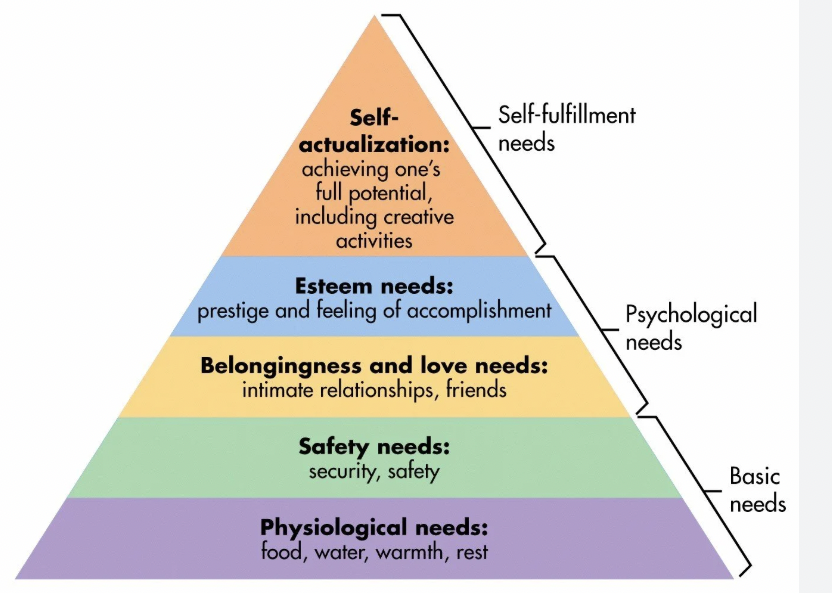
Maslows hierachy of needs
Maslow never presented them in a pyramid or linear pattern but it is usually presented as a pyramid
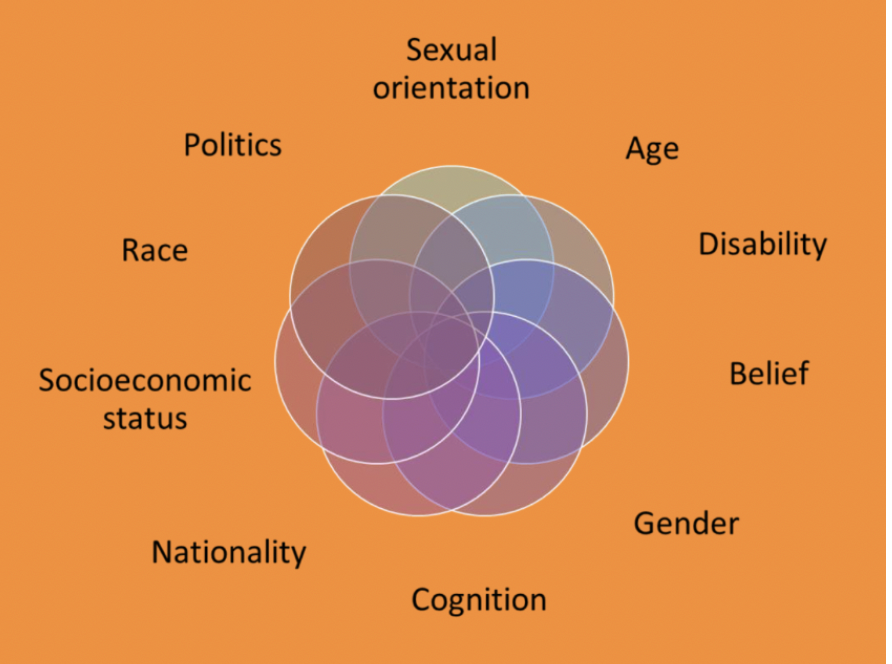
social category
a group of people who share common traits or characteristics but do not necessarily interact with one another
oppression
the systemic and institutionalized discrimination and mistreatment of one social group by another
clients rights
Ethical and human treatment
Competent service and best practices
Trust and honesty
Privacy/confidentiality
Respect and dignity
The right to self determination
Informed consent
Right to receive or refuse services
Right to choose free of coercion
education/prevention
approach aims to address the root causes of social issues, build resilience, and empower people with the knowledge and resources to thrive.
advocacy/policy change
fundamental components of human services careers, extending the professional mission beyond one-on-one assistance to create large-scale, sustainable social change. By addressing systemic issues, human service professionals champion the rights of marginalized groups and work to reform policies that perpetuate inequality.