15 need-to-know antibiotics
 Call Kai
 Learn
Learn Practice Test
 Spaced Repetition
 Match
Match Flashcards
 Knowt Play
1/14

There's no tags or description
Looks like no tags are added yet.
Name | Mastery | Learn | Test | Matching | Spaced | Call with Kai |
|---|
No analytics yet
Send a link to your students to track their progress
15 Terms
Vancomycin
TARGET: inhibits cell wall synthesis by binding to alanine precursors
ADMINISTRATION: Staphyloccus aureus by injection,
or Clostridium difficile in the GI tract, where it is not absorbed
CLASS: glycopeptide (odd complex class, peptide modified carbohydrate)
Amoxicillin/Ampicillin
TARGET: acts as an irreversible inhibitor of the enzyme transpeptidase, which is needed by bacteria to make the cell wall
ADMINISTRATION: oral, IV, intramuscular
CLASS: penicillin group of beta-lactam; aminopenicillin family
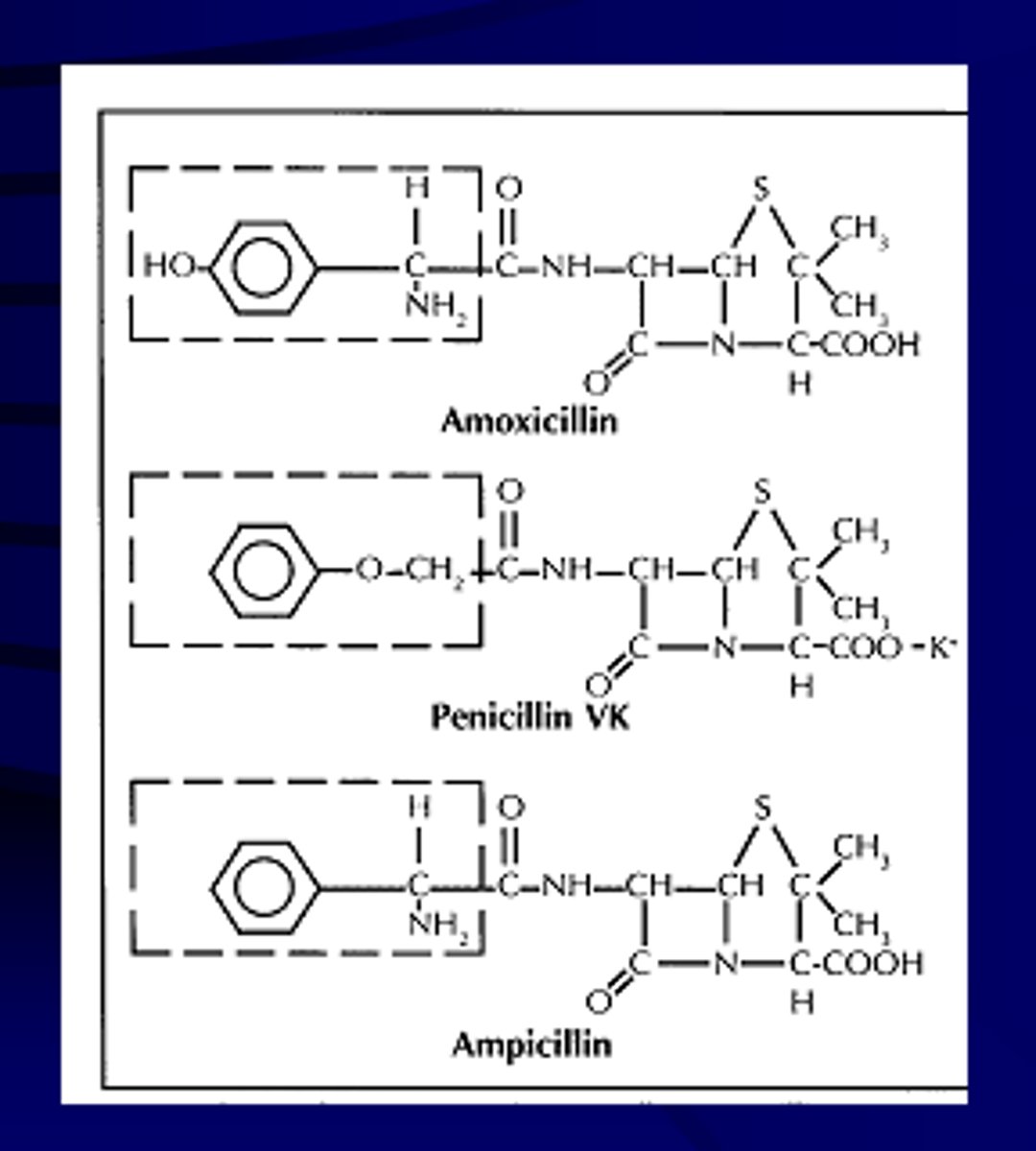
Penicillin G (benzyl) vs V
TARGET: cell wall synthesis: decoy molecule resembles the AAs in the side chains of peptidoglycan, so an enzyme that cross-links instead binds to these drugs instead of the normal AA side chain (competitive inhibitor); D-ala transpeptidation blocked (drugs mimic D-ala-ala bridge)
ADMINISTRATION: IV, oral, intramuscular (injected is #1 in dentistry due to narrow spectrum)
G = IV
V = by mouth
CLASS: B-lactams
*Penicillin G AKA benzylpenicillin was first discovered
*Penicillin V (VK) AKA phenoxymethylpenicillin
Augmentin
Amoxicillin & clavulanic acid combo drug
*clavulanic acid is a B-lactamase inhibitor
Trimethoprim
TARGET: nucleic acid inhibitor; works by blocking folate metabolism through inhibiting dihydrofolate reductase thereby inhibiting purine and pyrimidine synthesis
ADMINISTRATION: oral
CLASS: other (usually paired with Sulfonamide, important in facial injuries, readily enters CSF for meningitis)
Sulfamethoxazole
combination of two antibiotics: sulfamethoxazole and trimethoprim
Ciprofloxacin (Levofloxacin)
TARGET: nucleic acid synthesis inhibitors; inhibit DNA gyrase, thus blocking DNA replication
ADMINISTRATION: By mouth, intravenous, topical (ear drops, eye drops) (Dr. G specifically mentioned orally)
CLASS: fluoroquinolones (2nd generation)
Nalidixic Acid
TARGET: nucleic acid synthesis inhibitors; inhibit DNA gyrase, thus blocking DNA replication
ADMINISTRATION: oral
CLASS: fluoroquinolones (1st generation)
Metronidazole
TARGET: DNA inhibitor; gets metabolized by anaerobic bacteria into a very active nitrogen radical that attacks and modifies everything around it, DNA damage results in cell death
ADMINISTRATION: by mouth, topical, rectal, IV, vaginal
CLASS: nitroimidazoles
*antibiotic and antiprotozoal medication
Rifampicin
TARGET: prevents initiation of RNA synthesis at first phospho-diester bond; inhibits bacterial DNA-dependent RNA synthesis by inhibiting bacterial DNA-dependent RNA polymerase
ADMINISTRATION: oral, IV
CLASS: rifamycin derivatives, which is a subclass of anamycins
Streptomycin
TARGET: protein synthesis inhibition; Anti-30S ribosomal subunit
ADMINISTRATION: intramuscular, intravenous (carbohydrate structure would cause it to be digested if ingested)
CLASS: Aminoglycosides
Tetracycline/Tigecycline
TARGET: inhibits protein synthesis: inhibits aminoacyl RNA-binding; inhibits peptidyl transfer by blocking peptidyl transferase site
ADMINISTRATION: oral
CLASS: tetracyclines (new glycylcyclines- Tigecycline)
Azithromycin
TARGET: protein synthesis inhibition; binds the 23S rRNA of the 50S subunit, inhibits chain translocation
ADMINISTRATION: oral, intravenous, eye drop
CLASS: macrolides
*top-used antibiotic
Erythromycin
TARGET: protein synthesis inhibition; binds the 23S rRNA of the 50S subunit, inhibits chain translocation
ADMINISTRATION: oral
CLASS: macrolide
*#2 used dental antibiotic for when patient has allergy to B-lactams
Clindamycin
TARGET: protein synthesis inhibitor by inhibiting ribosomal translocation,[56] in a similar way to macrolides. It does so by binding to the 50S rRNA of the large bacterial ribosomesubunit
ADMINISTRATION: By mouth, topical, IV, intravaginal
CLASS: lincosamides
*reserve for bone infections, careful use, lower dose