Unit 3 FULL
 Call Kai
 Learn
Learn Practice Test
 Spaced Repetition
 Match
Match Flashcards
 Knowt Play
1/149

There's no tags or description
Looks like no tags are added yet.
Name | Mastery | Learn | Test | Matching | Spaced | Call with Kai |
|---|
No analytics yet
Send a link to your students to track their progress
150 Terms
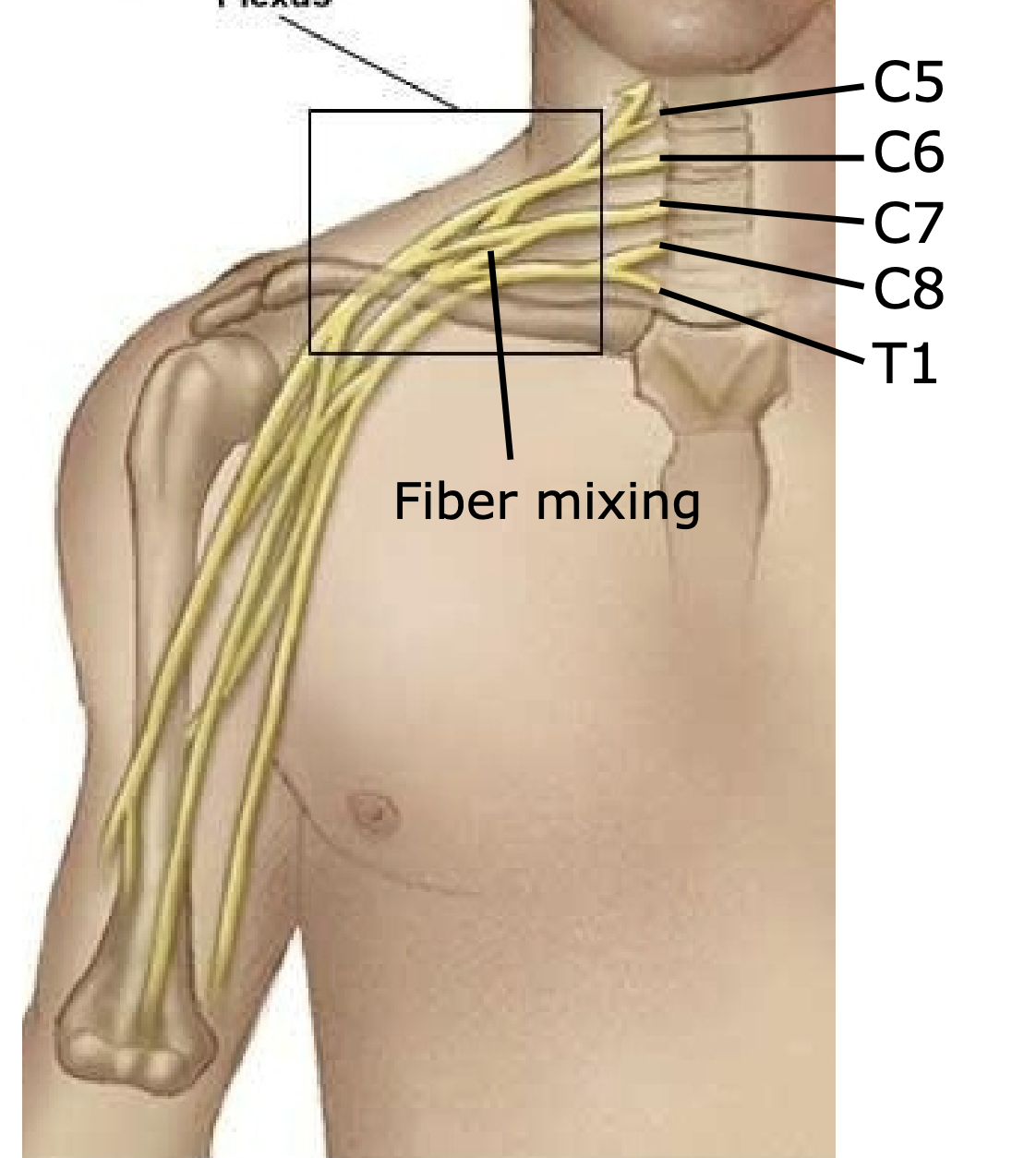
The Brachial Plexus consists of spinal nerves from __.
C5-8+T1
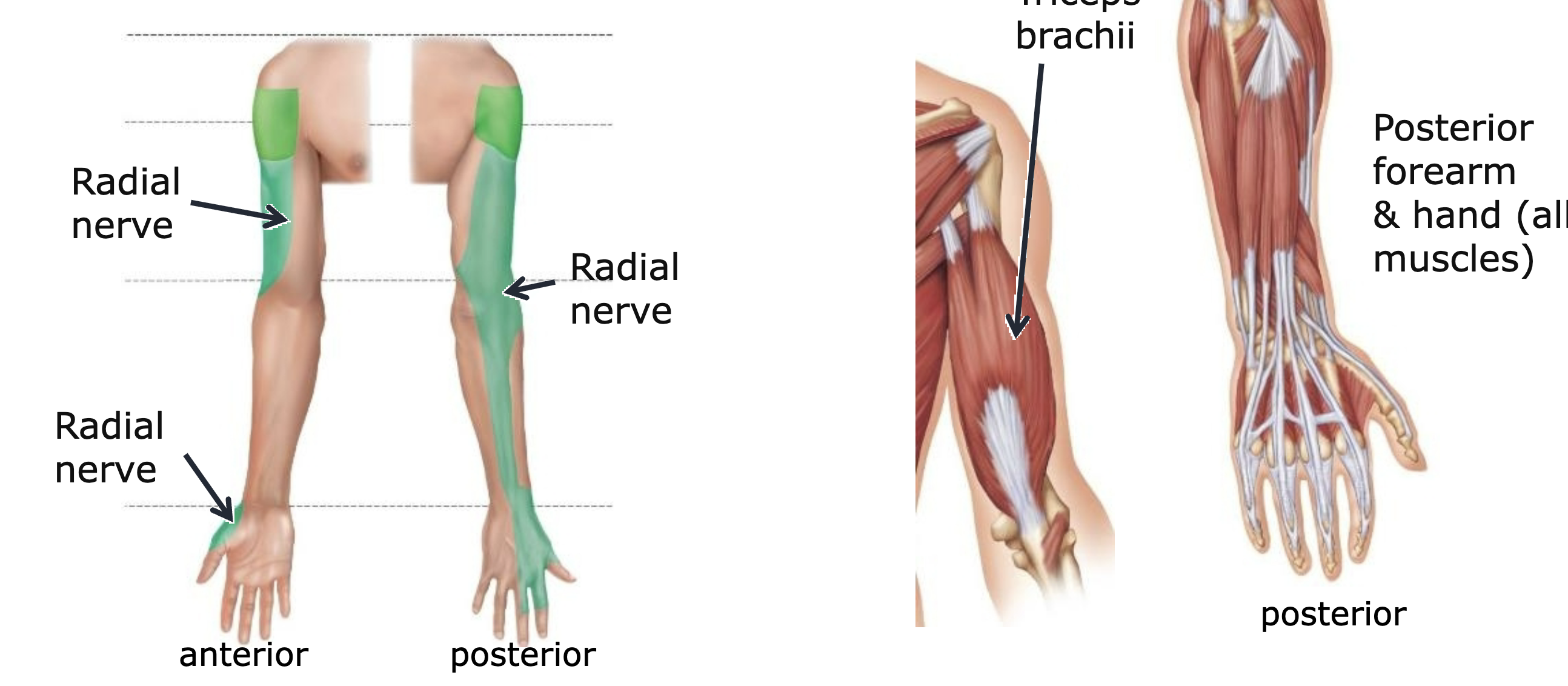
The __ nerve innervates the extensor compartment of the arm.
(trcieaps, posterior forearm and hand)
Radial
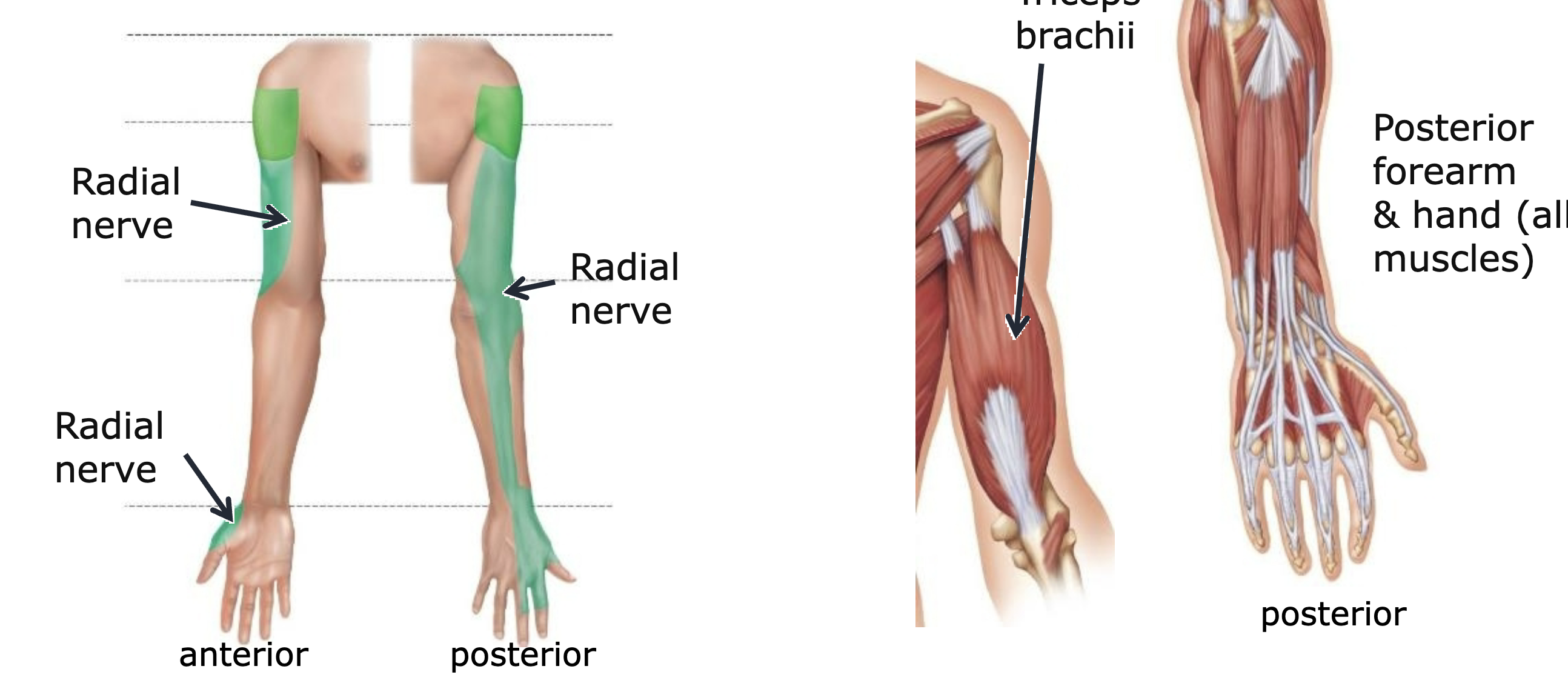
The action of the Axillary nerve is to __ the arm.
abduct, flex, extend, laterally rotate
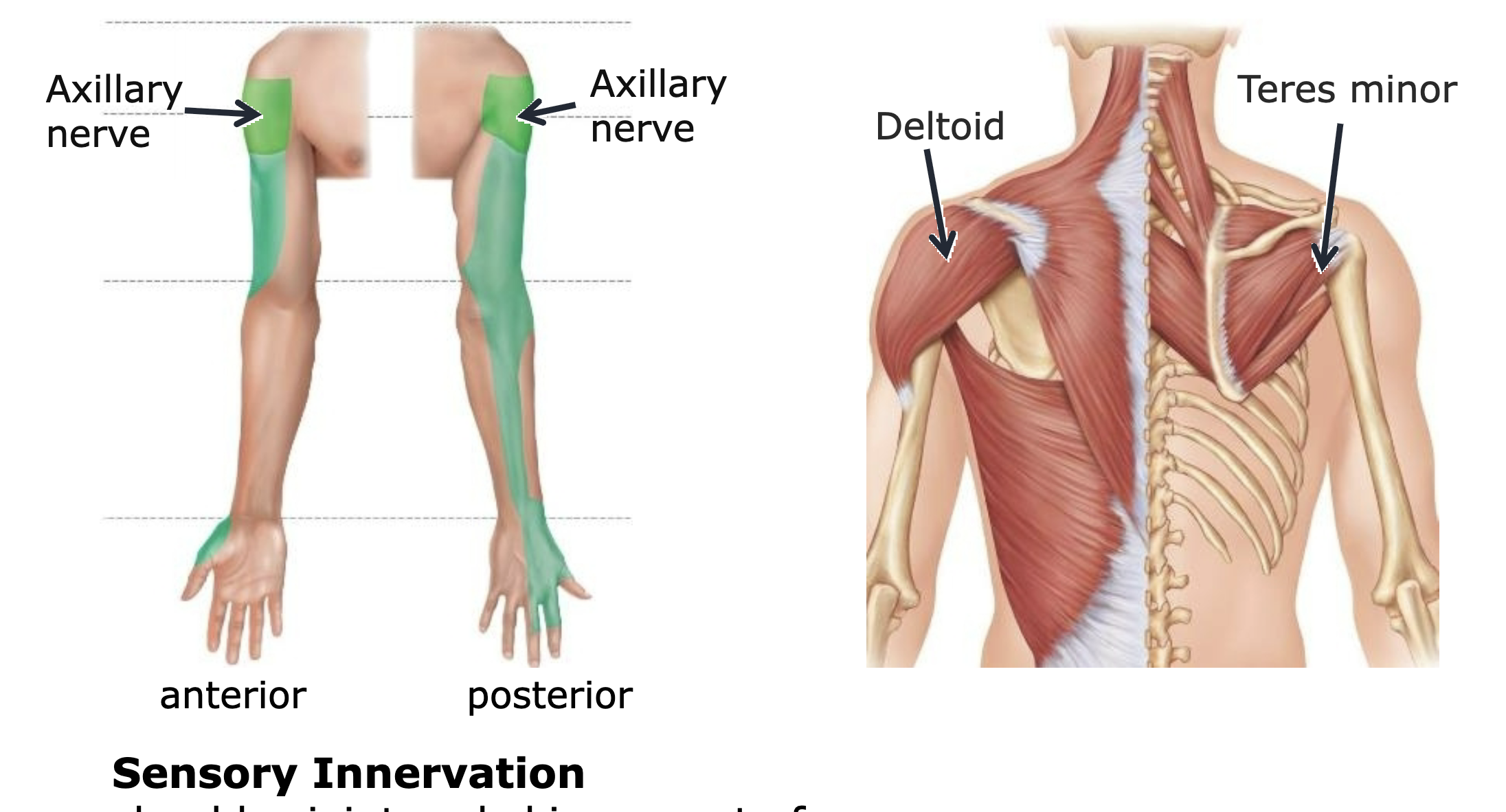
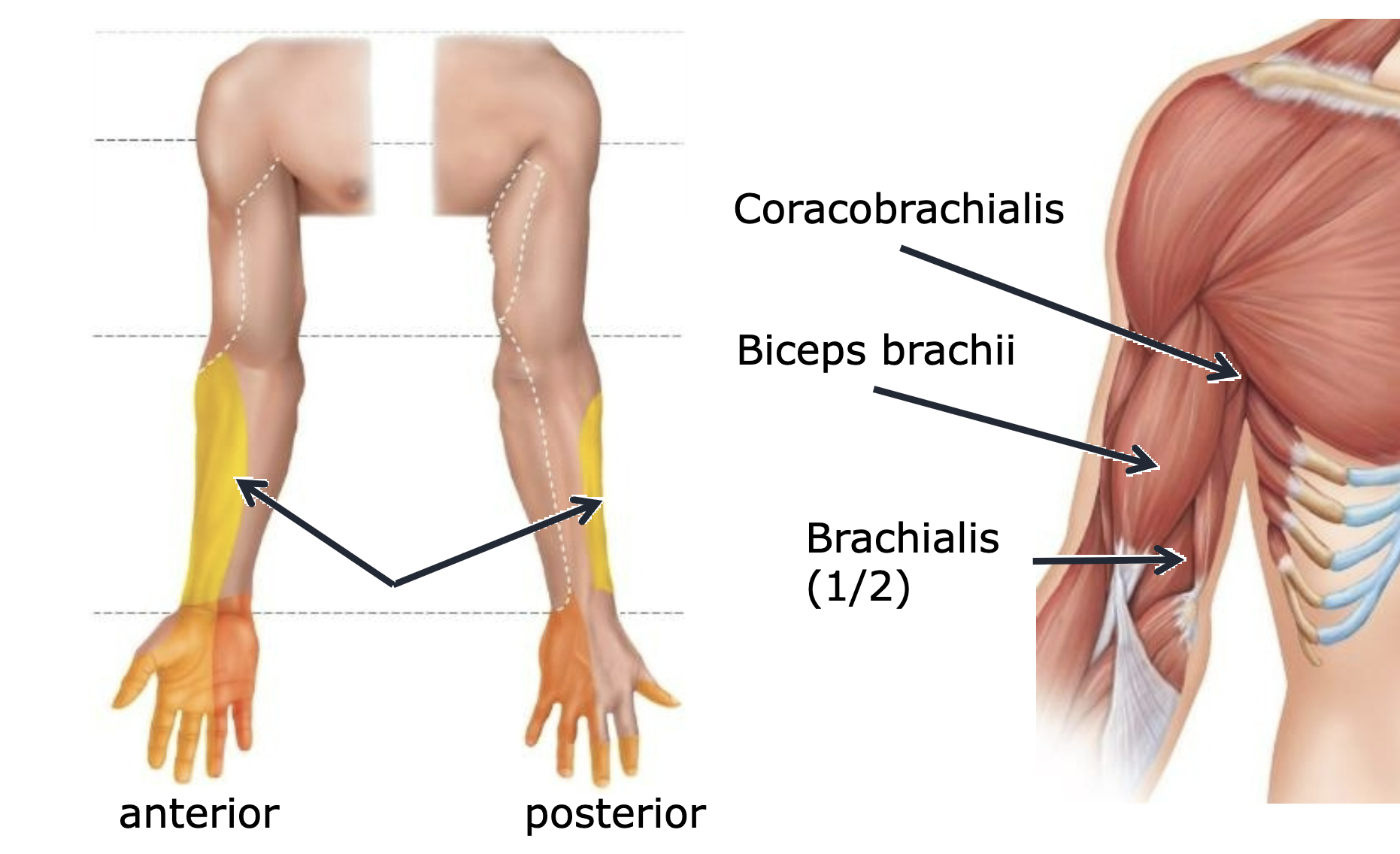
The Musculocutaneous nerve is responsible for flexing the ___, ____, and _____.
coracobracialis, biceaps brachi, and ½ of brachialis
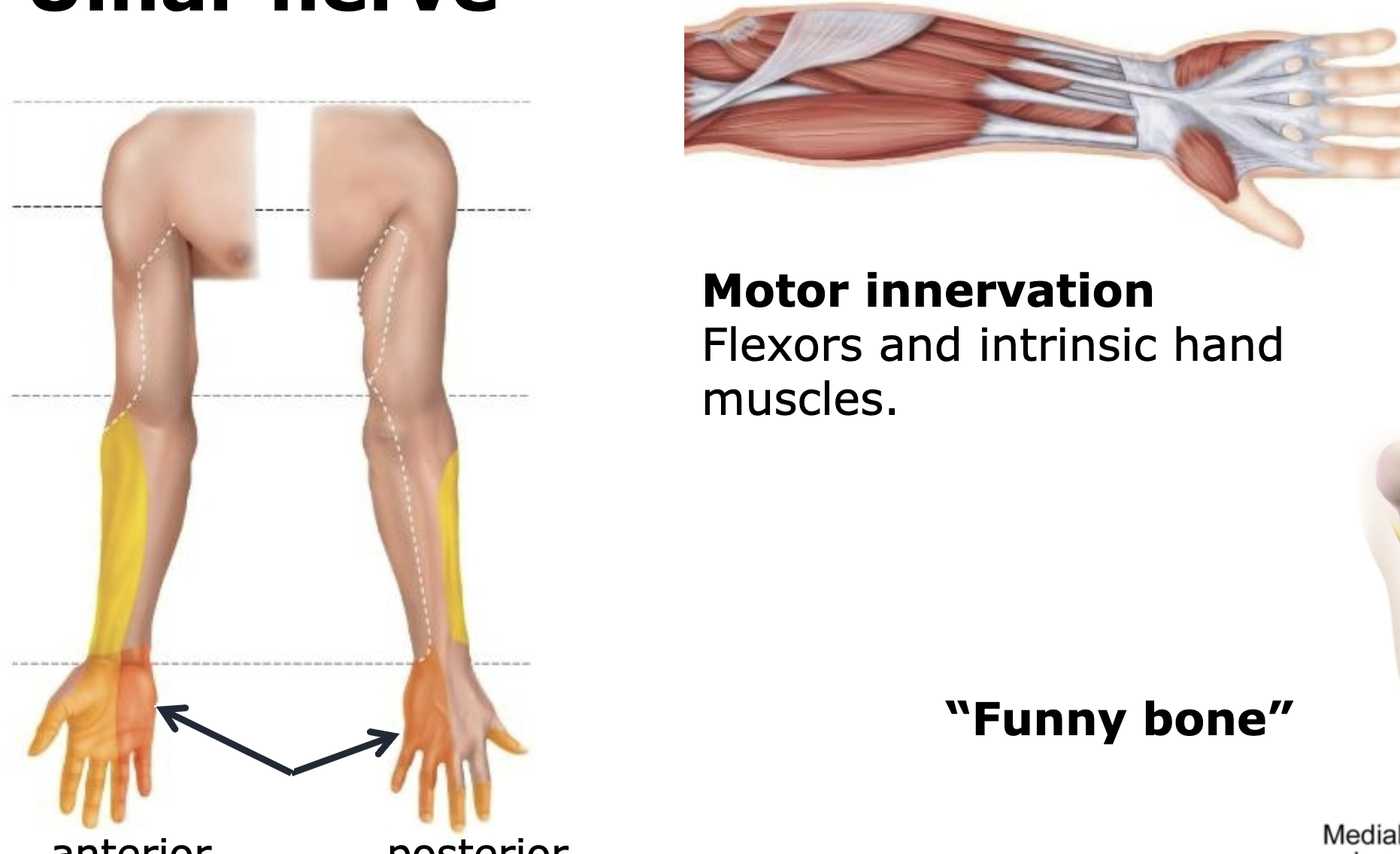
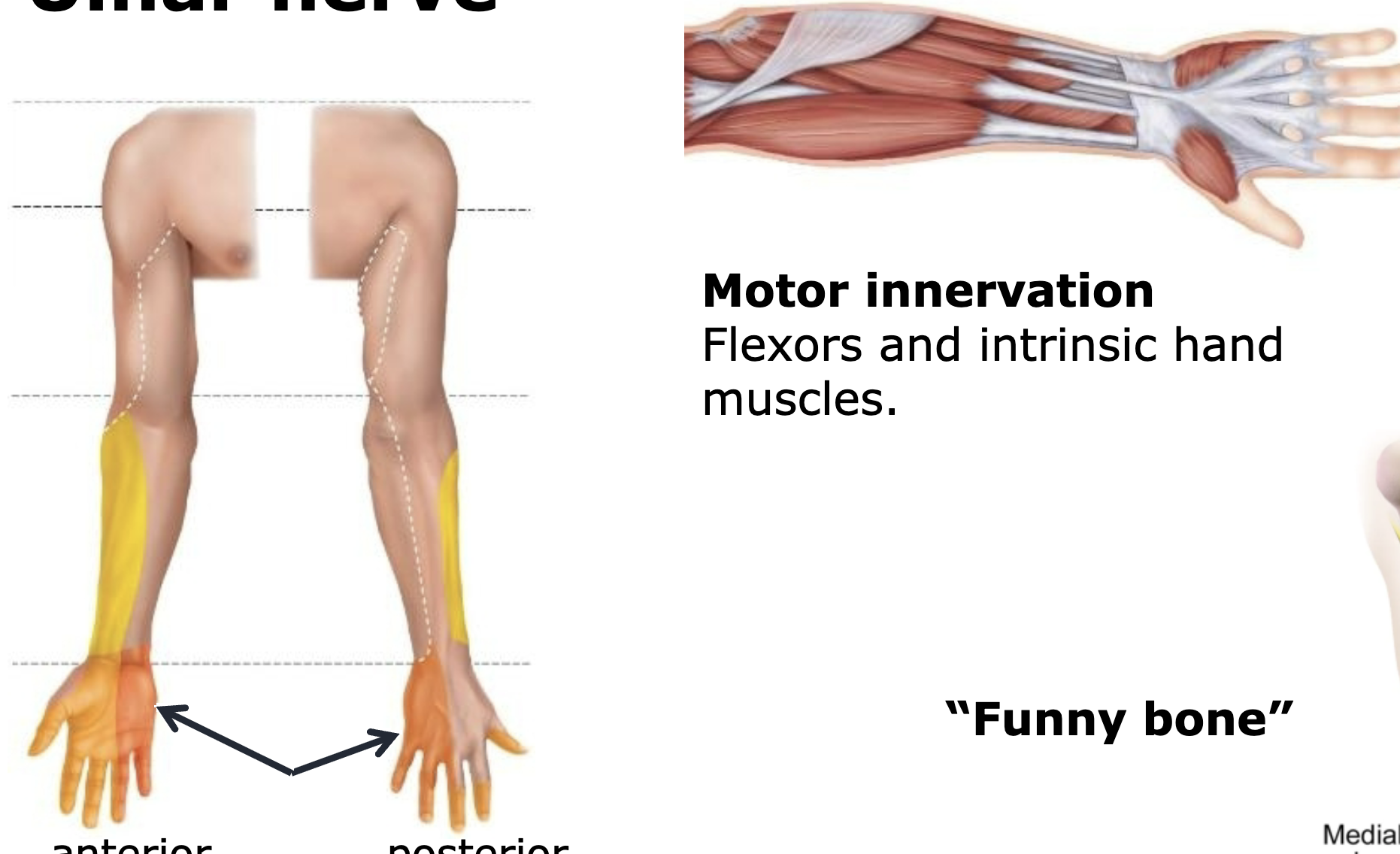
The Ulnar nerve innervates the ____ , ____, and ____
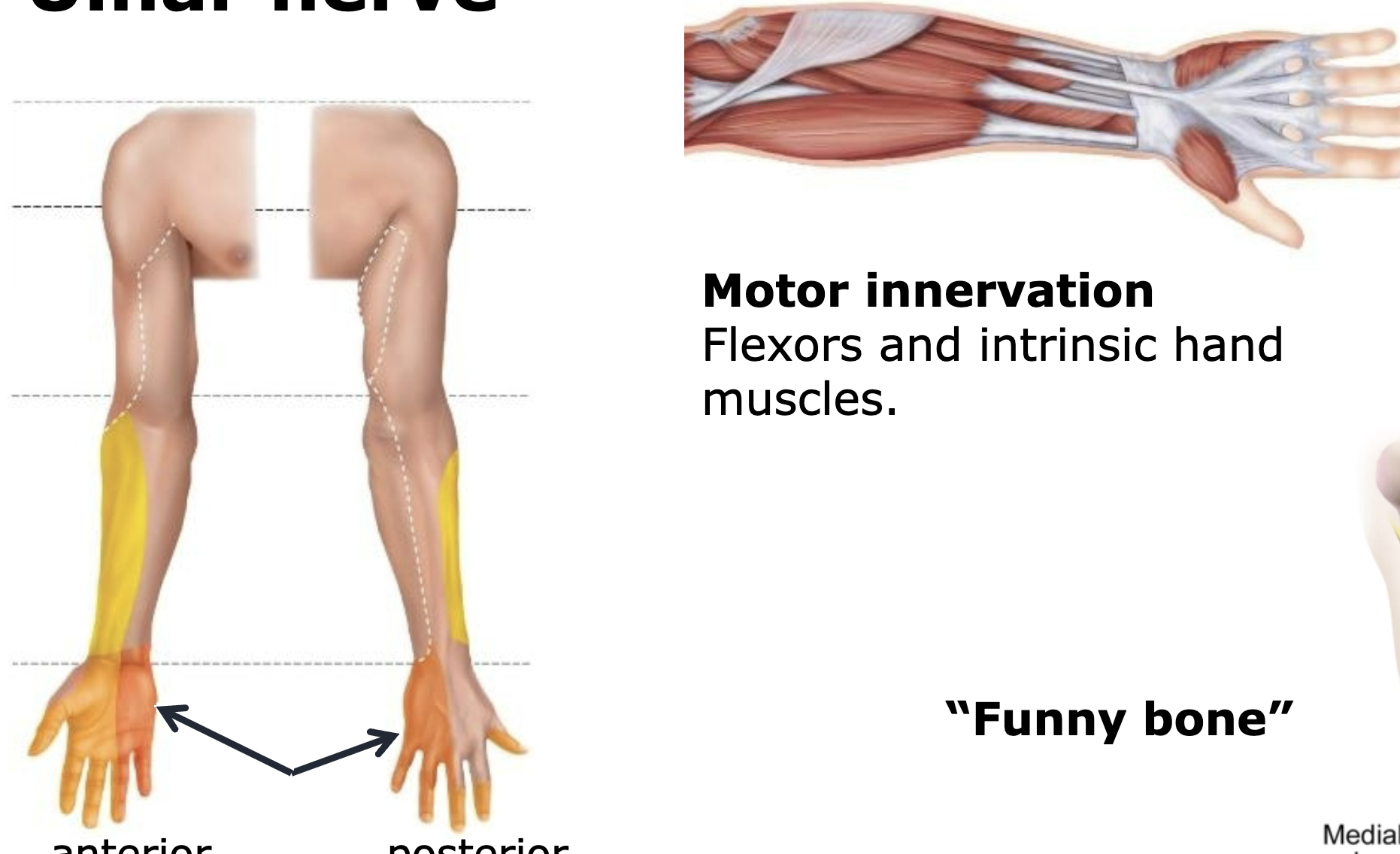
Flexors, intrinsic hand muscles
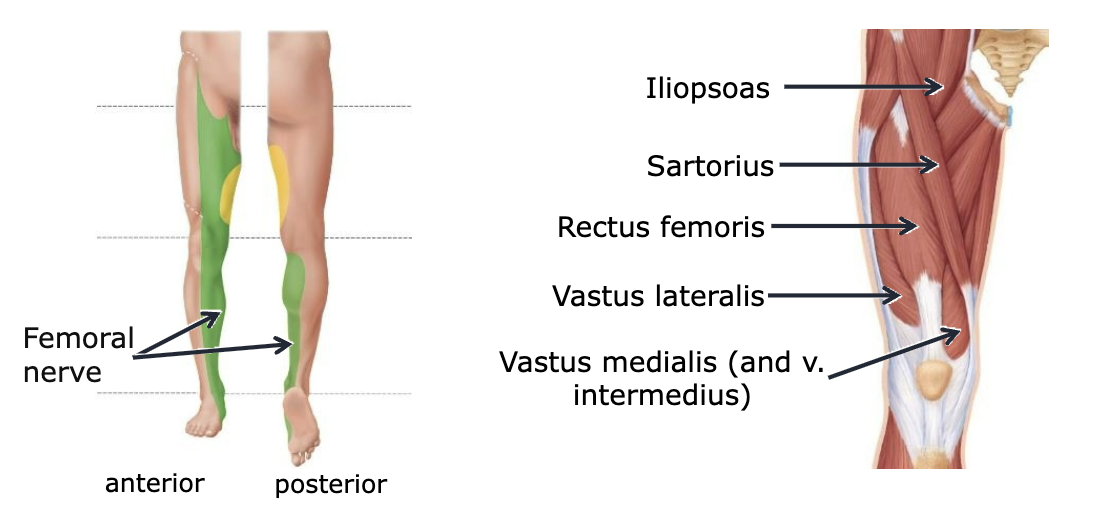
The Femoral nerve originates from the __ Plexus.
Lumbosacral
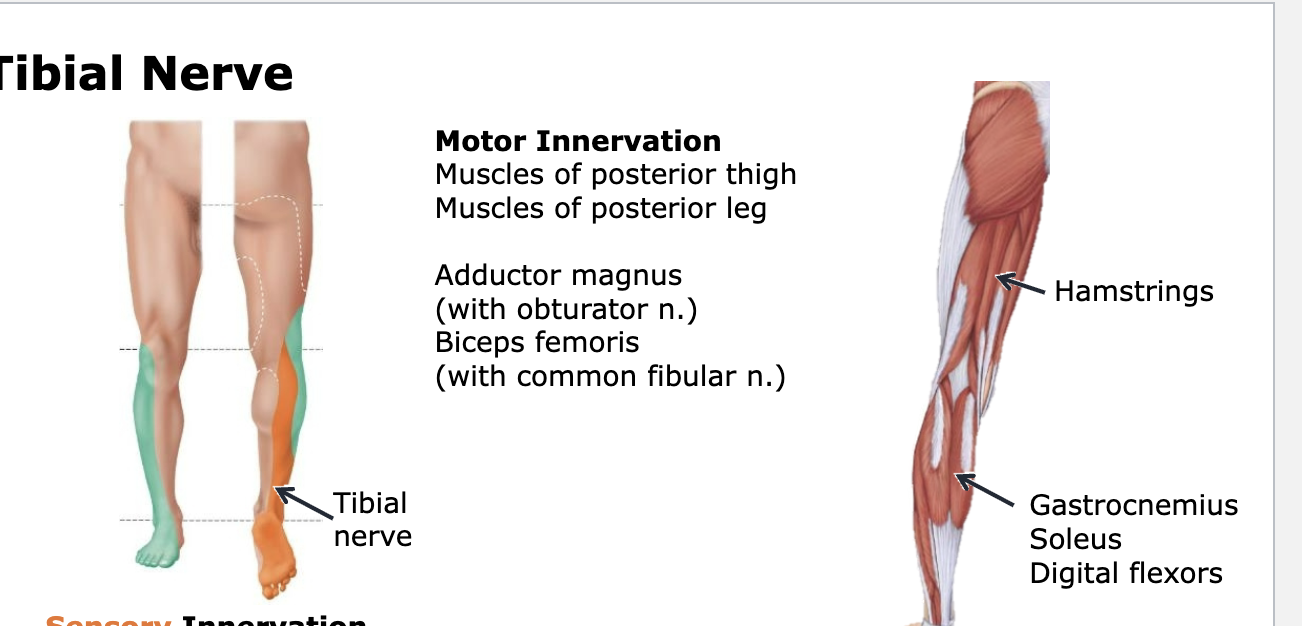
The action associated with the Tibial nerve is to __ the leg.
flex
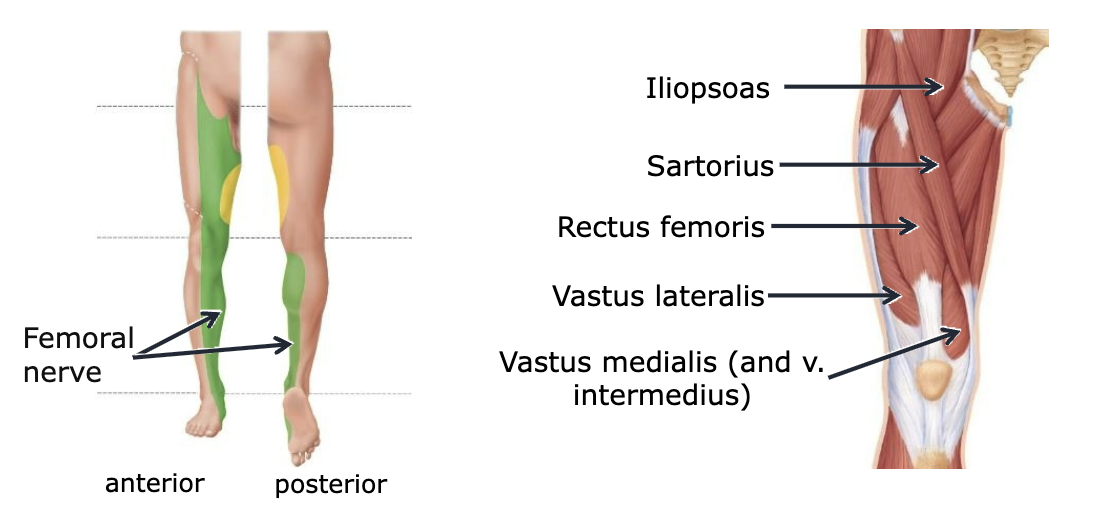
The Anterior compartment of thigh is innervated by the __ nerve.
Femoral
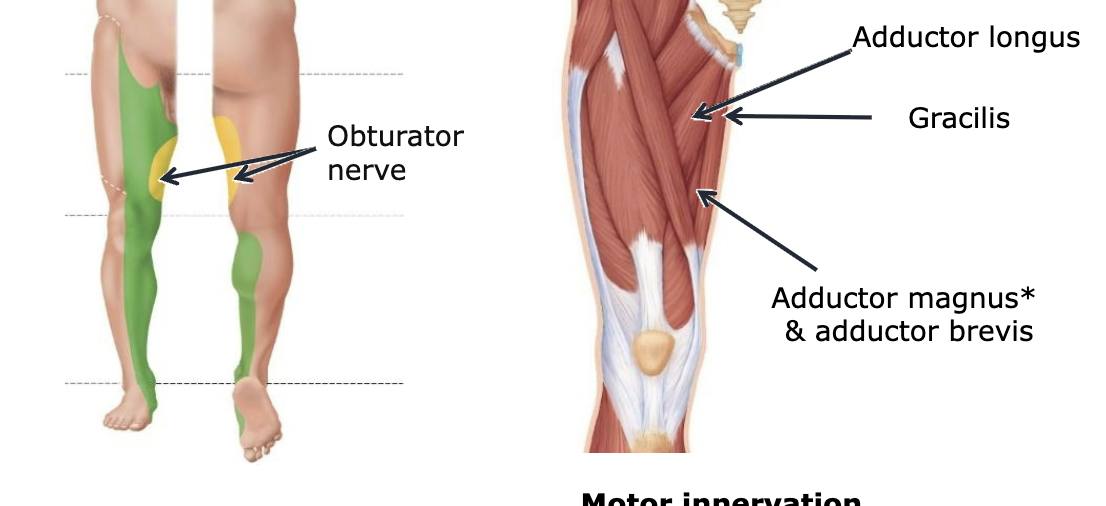
The __ nerve is responsible for adducting the thigh.
Obturator
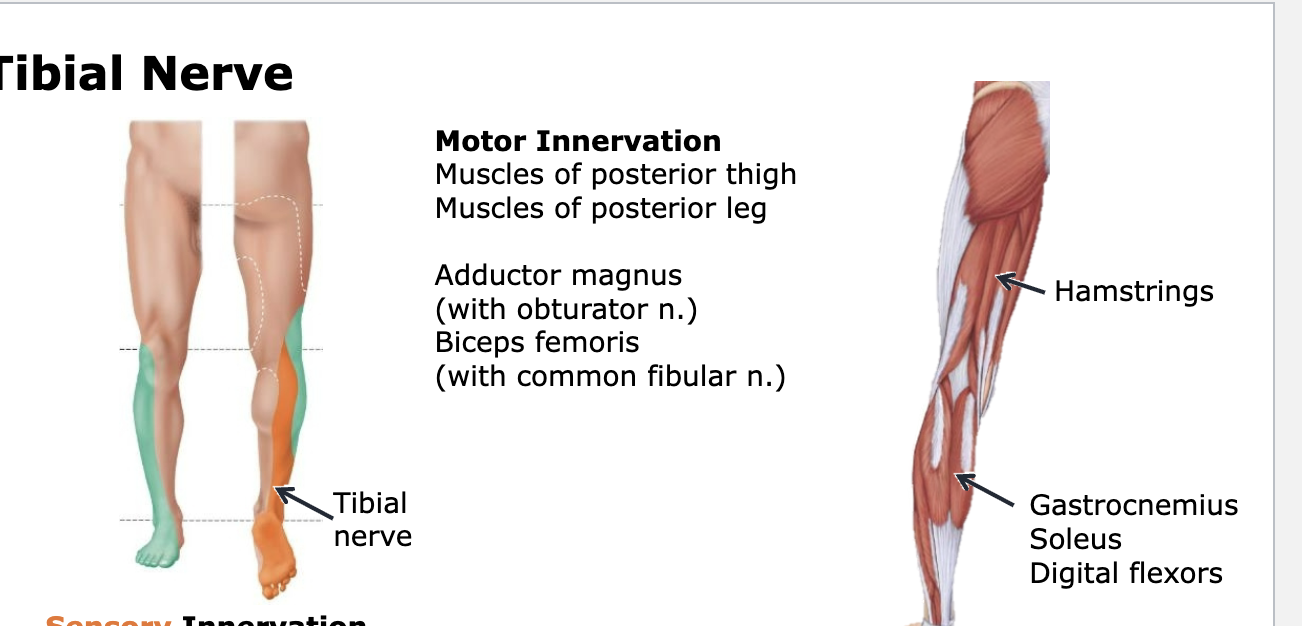
The Posterior compartment of thigh and leg is innervated by the __ nerve.
Tibial
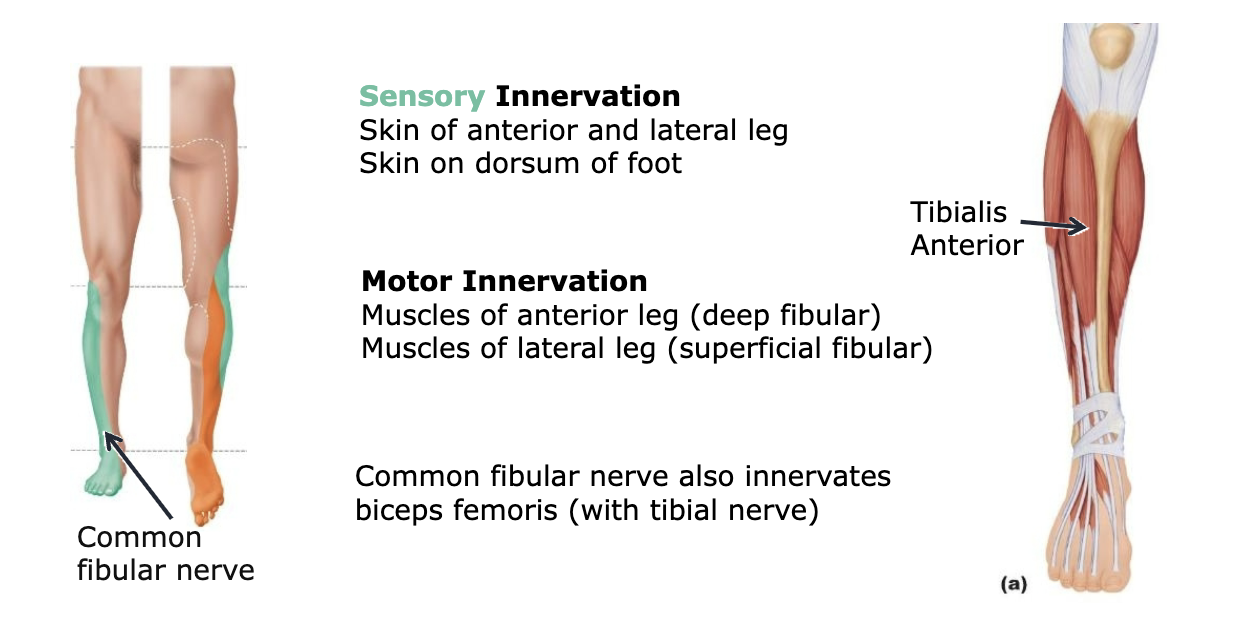
The Common fibular nerve is also known as __.
common peroneal
The Pudendal nerve is responsible for muscles of the __.
perineum
Breathing is a primary function of the __ nerve.
Phrenic
Intercostal nerves innervate __ muscles for breathing.
intercostal
The Autonomic Nervous System includes the __ trunk.
Sympathetic
Gray matter in the spinal cord is responsible for __ processing.
sensory
In the context of spinal nerves, the ventral root carries __ signals.
motor
The __ ramus carries both sensory and motor fibers.
Ventral/Dorsal
Specialized nerve endings in the skin help in the sensation of __.
pressure
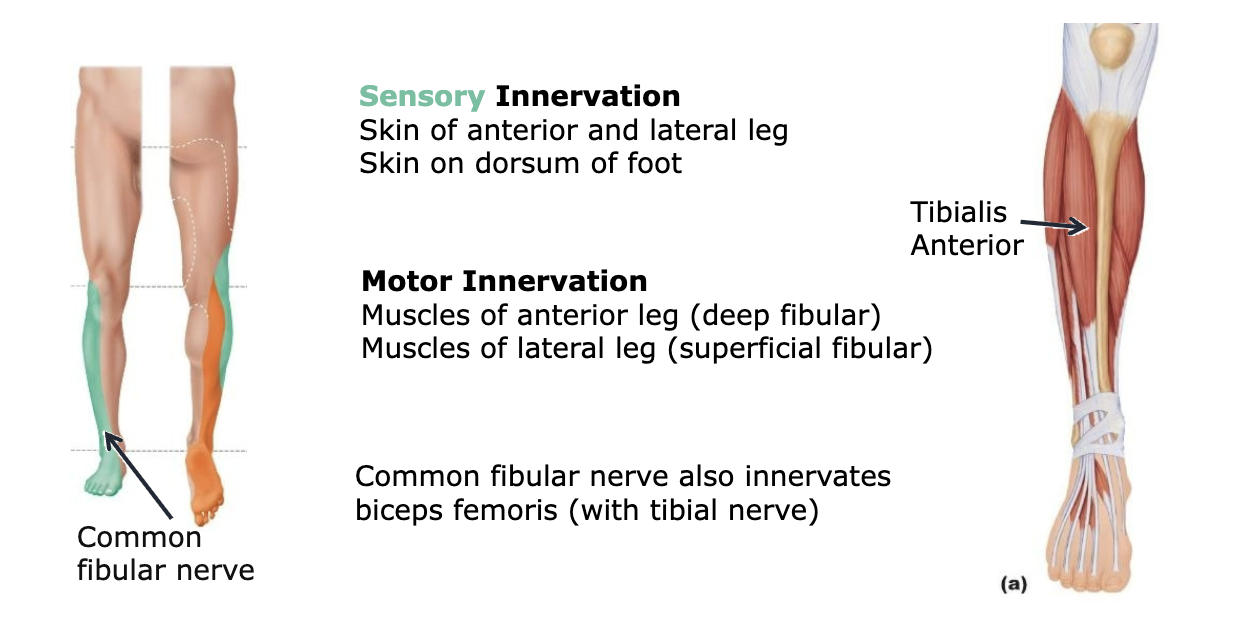
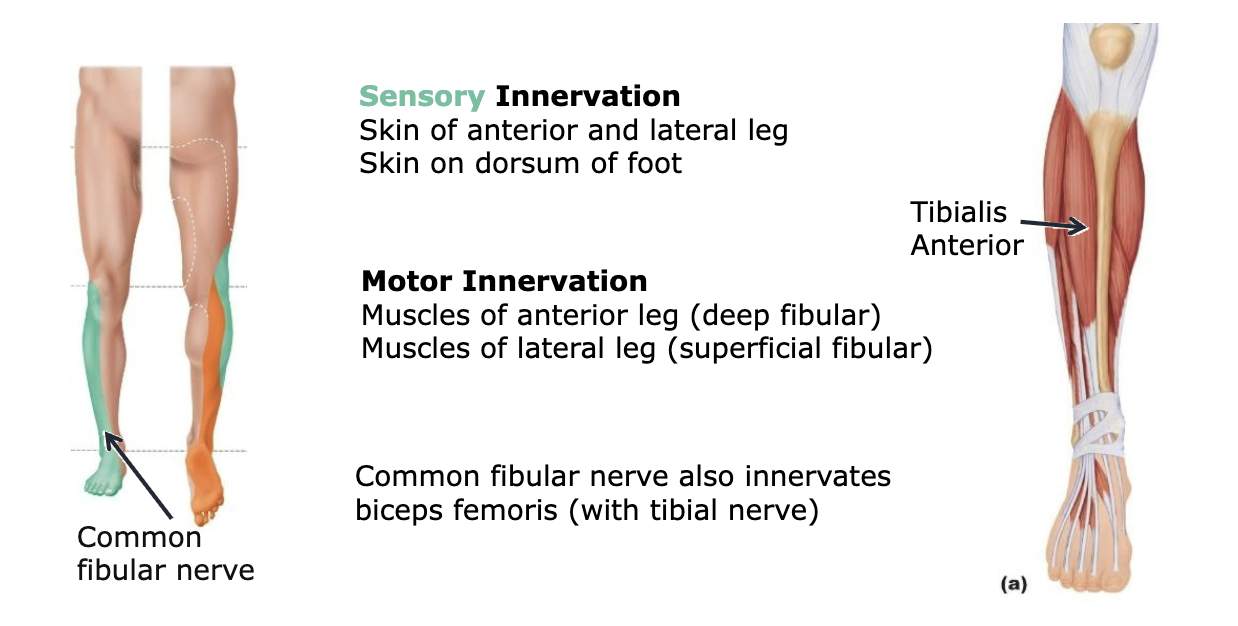
The area of sensory innervation for the Common fibular nerve includes the __ foot.
dorsal
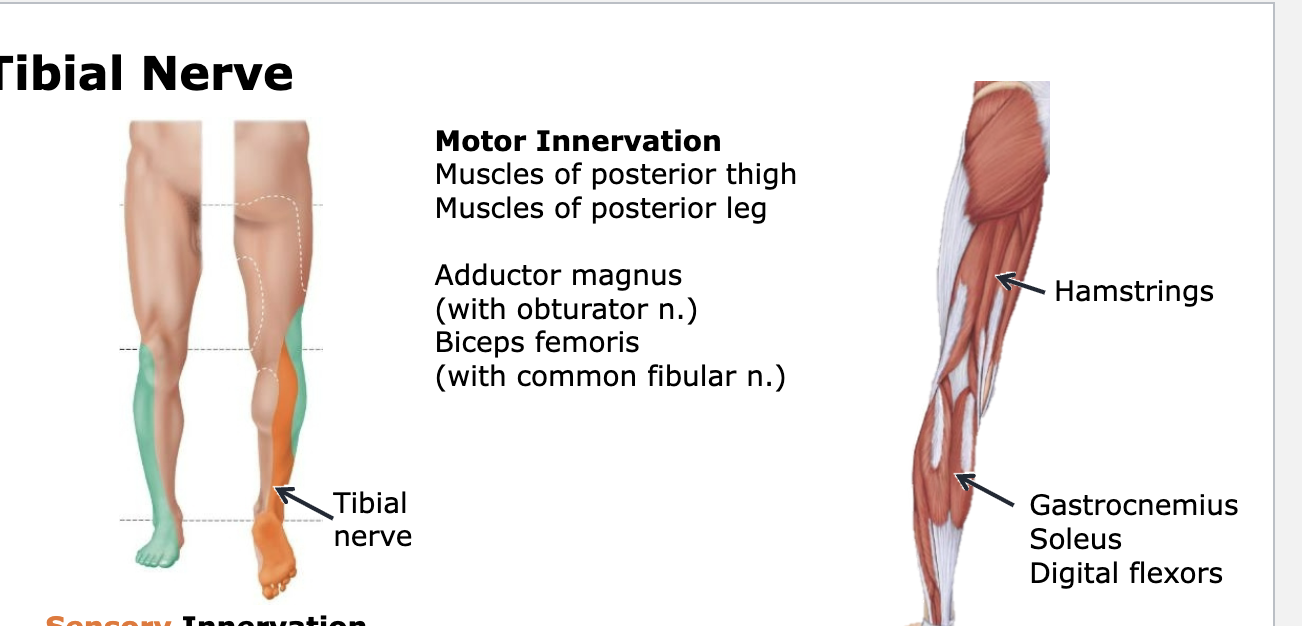
The primary action of the Tibial nerve is to __ the foot.
plantarflex
Pudendal nerve assists in __ of the pelvic floor.
support
The action of the Ulnar nerve includes moving the __ muscles.
hypothenar
Muscles responsible for erection are innervated by the __ nerve.
Pudendal
The main action of the Median nerve includes flexing the wrist and __.
digits
The __ is a structure highlighted in the study of autonomics in this laboratory.
Sympathetic trunk
Cervical plexus is nerves ____
C1-C4
The lumbar plexus is spinal nerves ____
L1-L4
the sarcal plexus is _____
L4-S4
Lumbosarcal
Combined (L1-S4)
The phrenic nerve is nerves ____
C3-C5
Muculocutaneous provides sensory info from…
lateral forearm
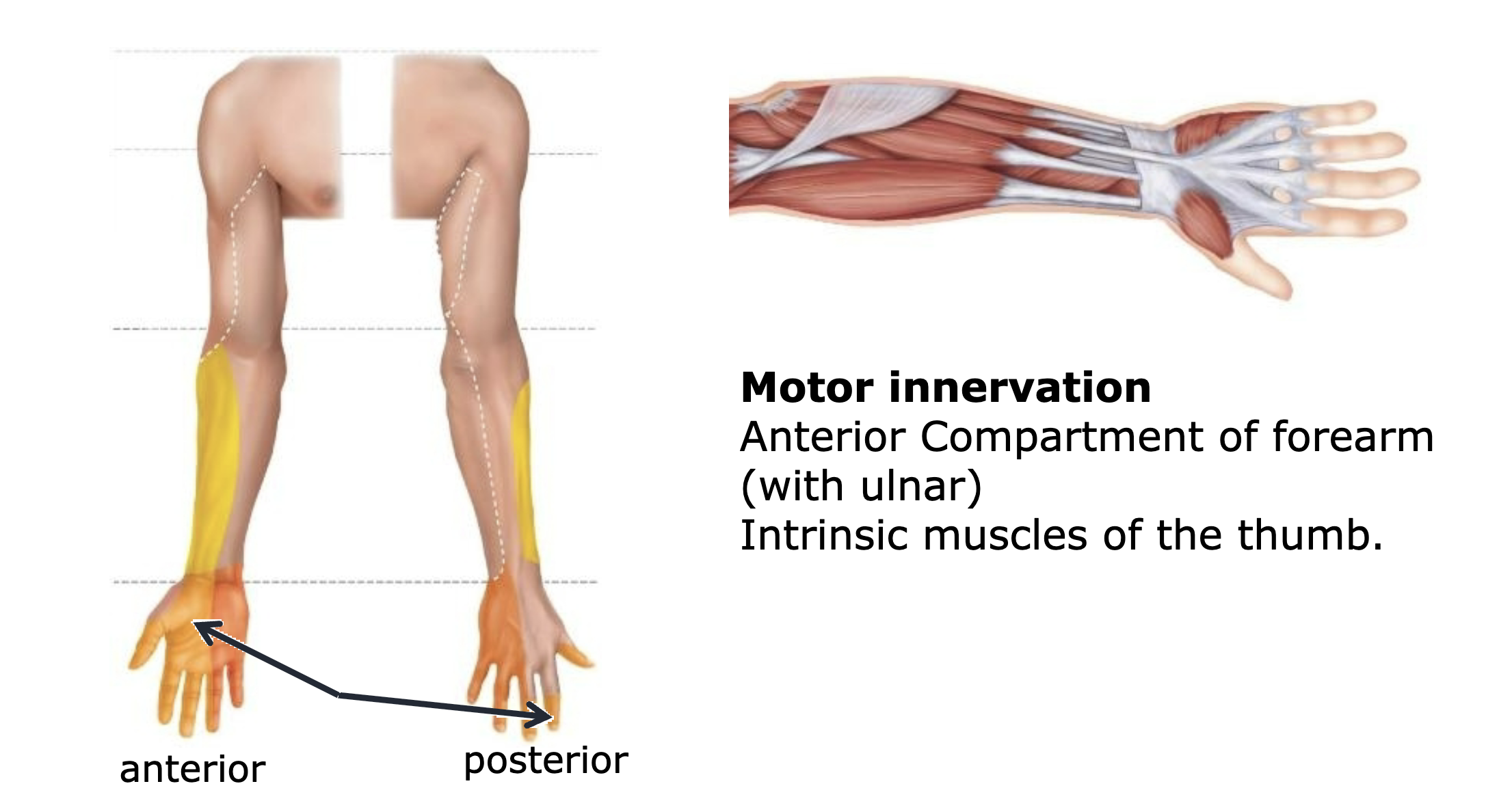
Ulnar sensory
Skin of medial hand, Digit 5, and medial side of digit 4
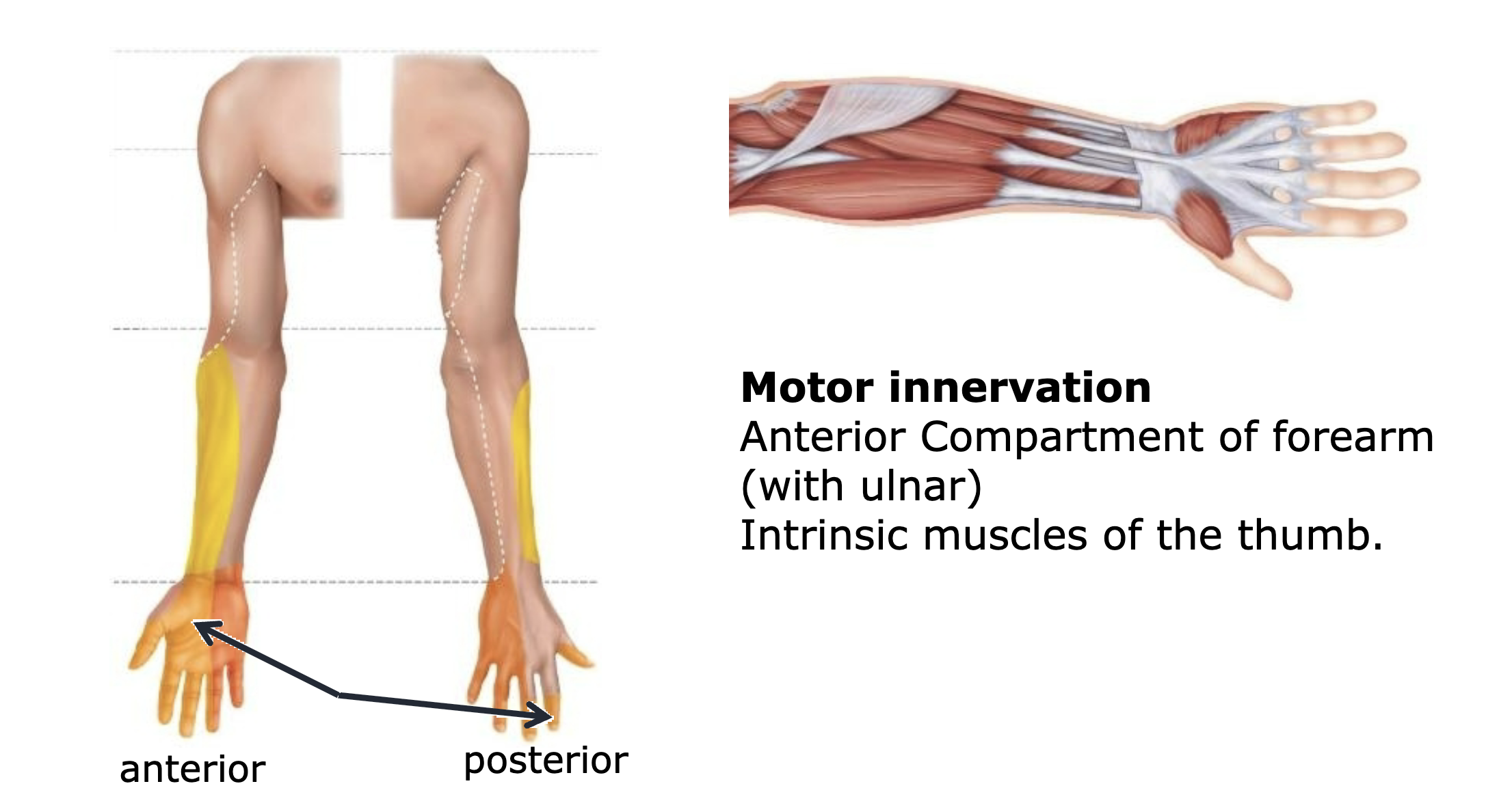
median nerve sensory
skin of lateral arm and palm, including digits 1-3 and half of digit 4.
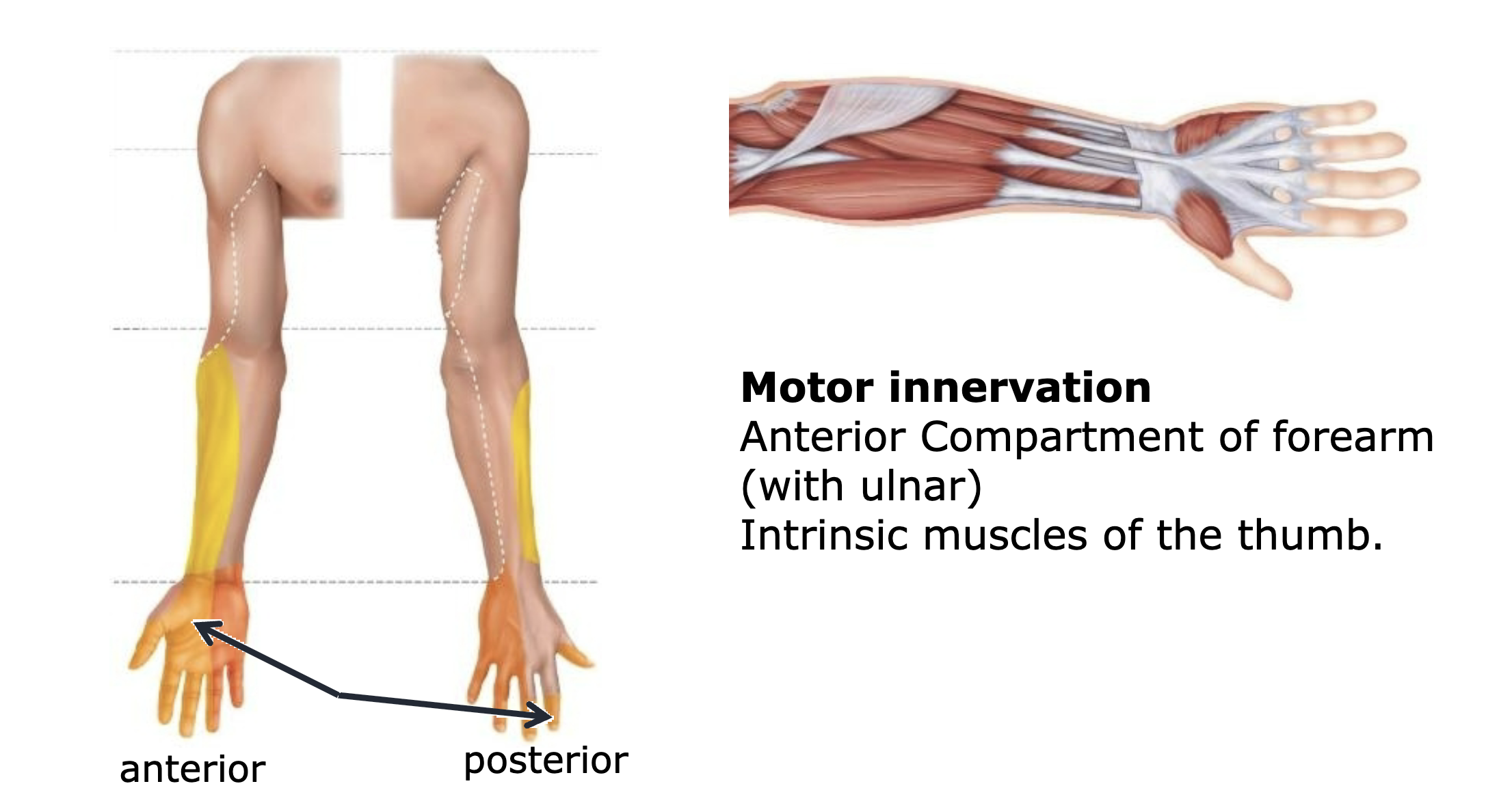
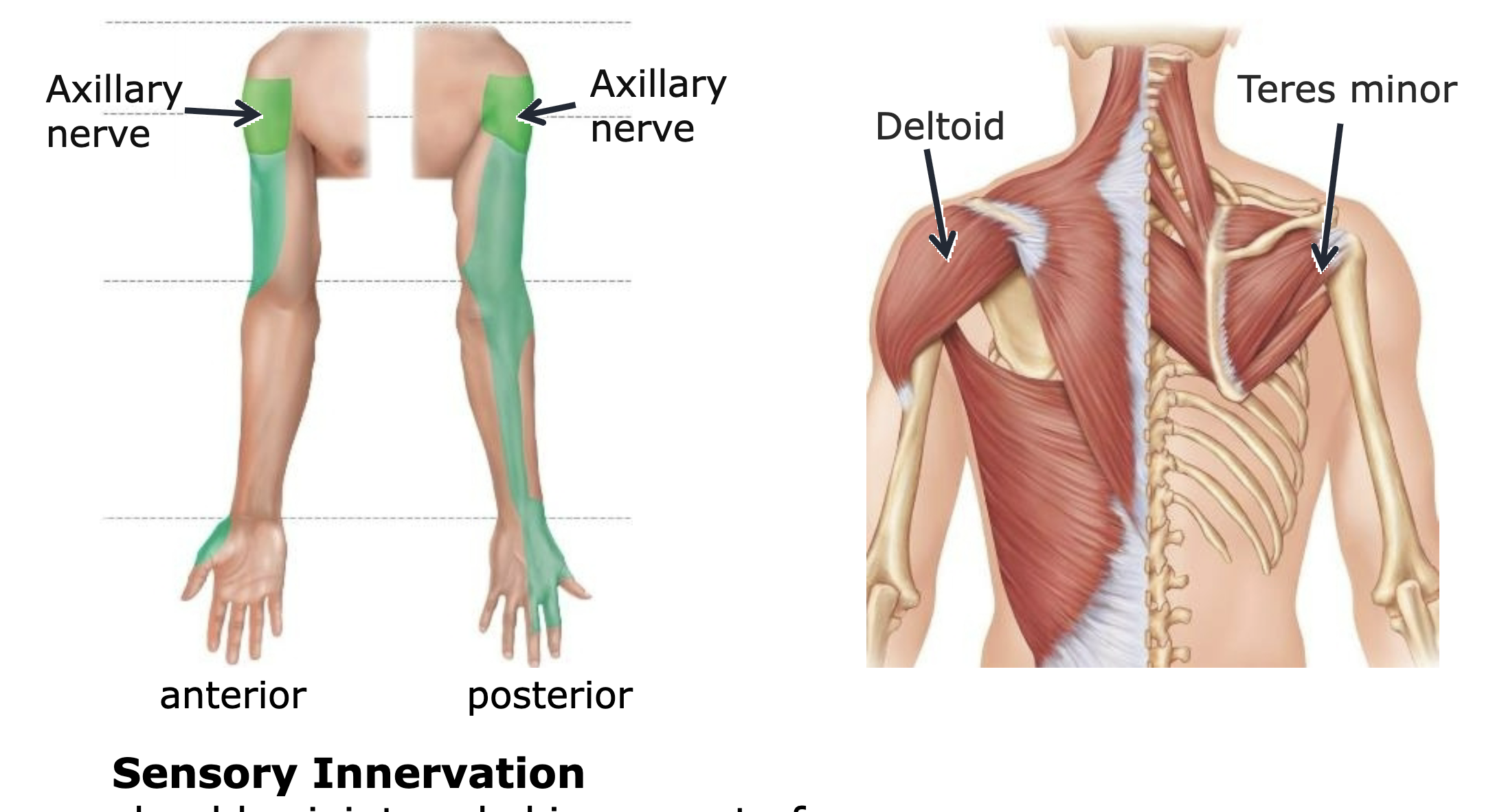
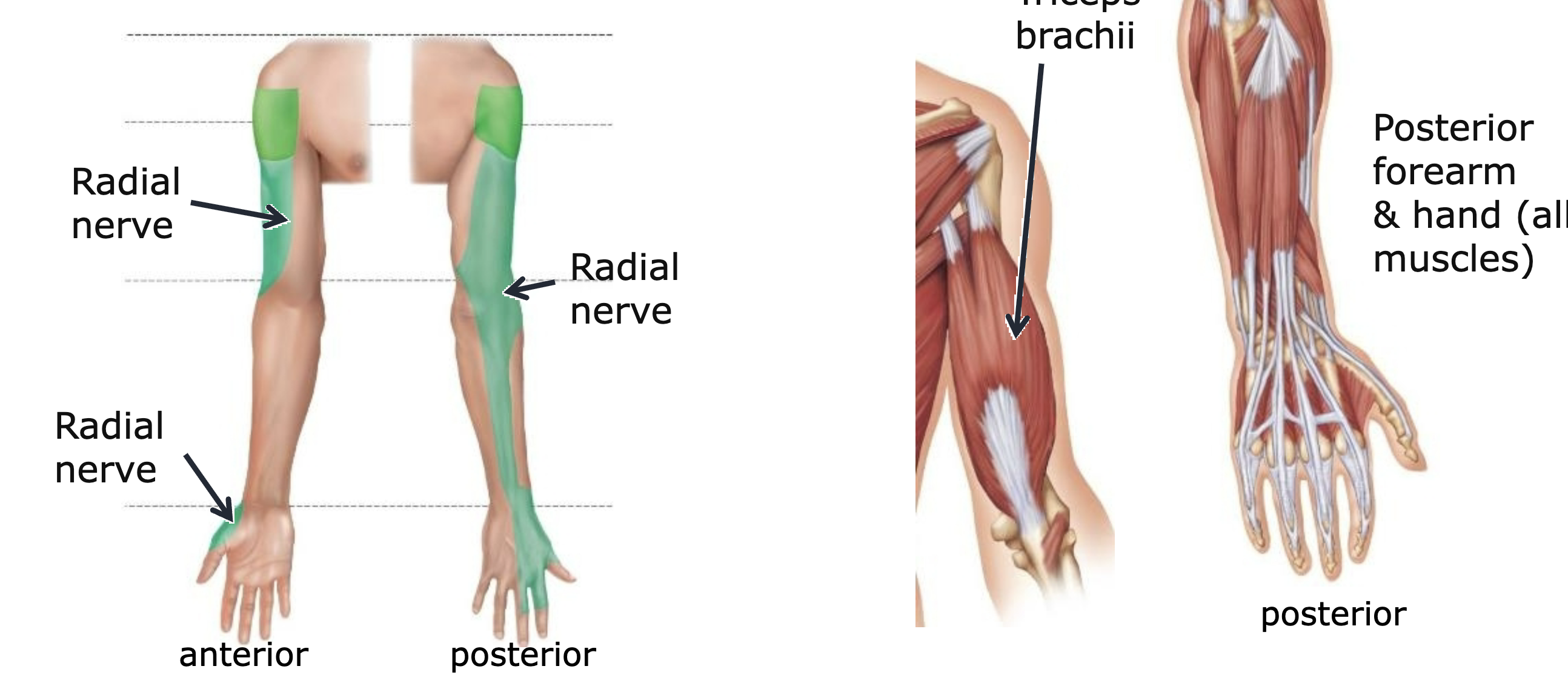
axillary nerve sensory
shoulder joint+ deltoid
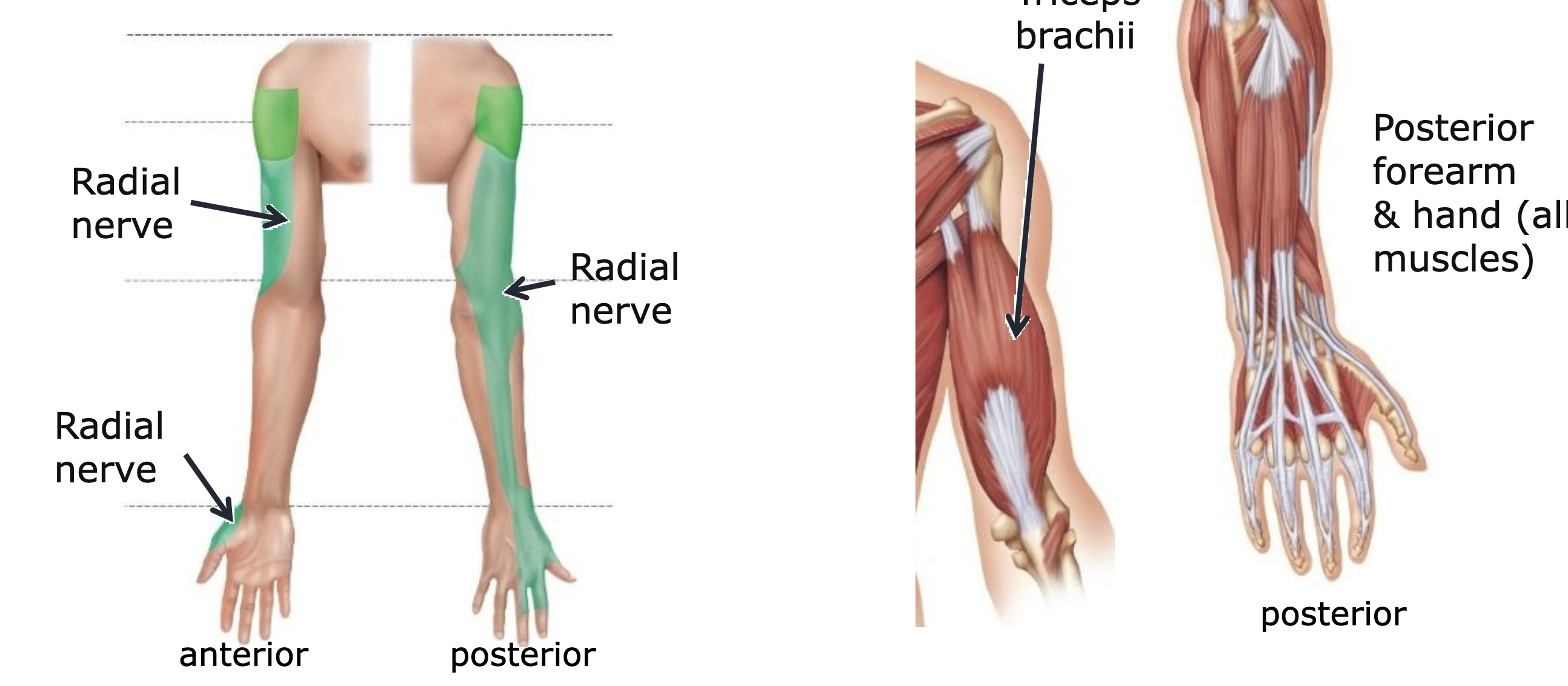
radial nerve sensory
skin over dorso-lateral arm, forearm, + hand
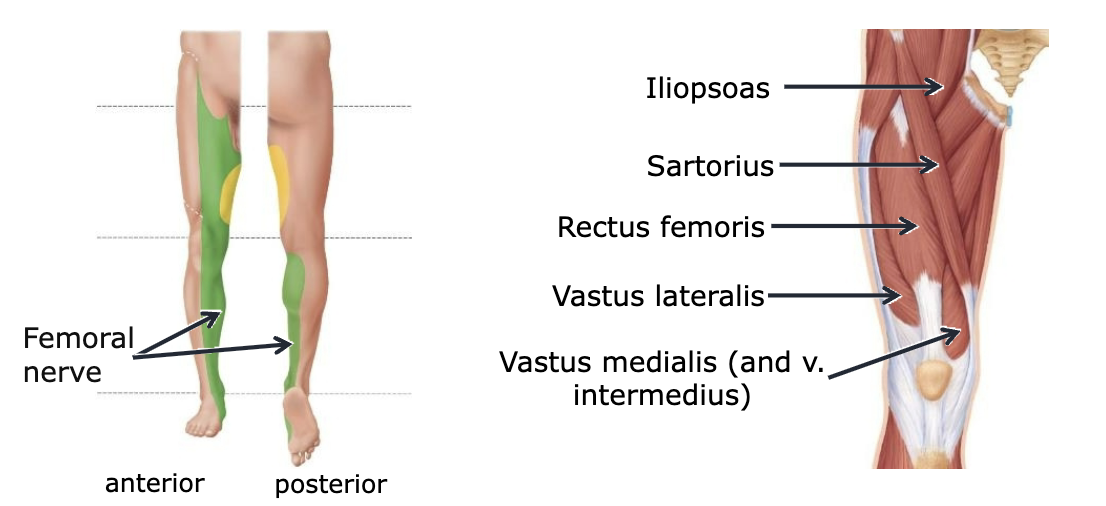
Femoral nerve sensory
skin of anterior thigh and medial leg
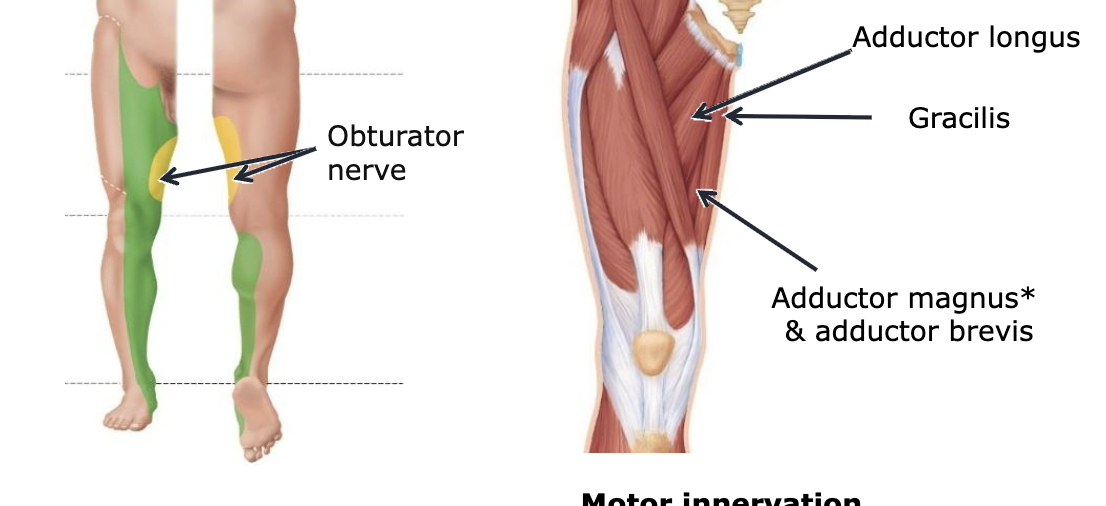
Obturator nerve sensory
skin of medial thigh
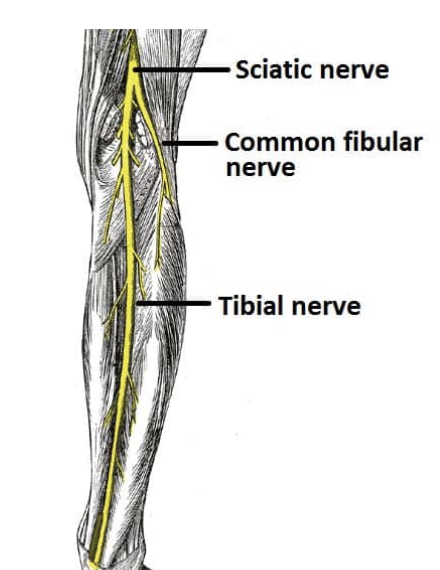
Siatic nerve split to be
tibial and common fibular nerves.
Pudendal nerve sensory
skin of perineum and external genitalia
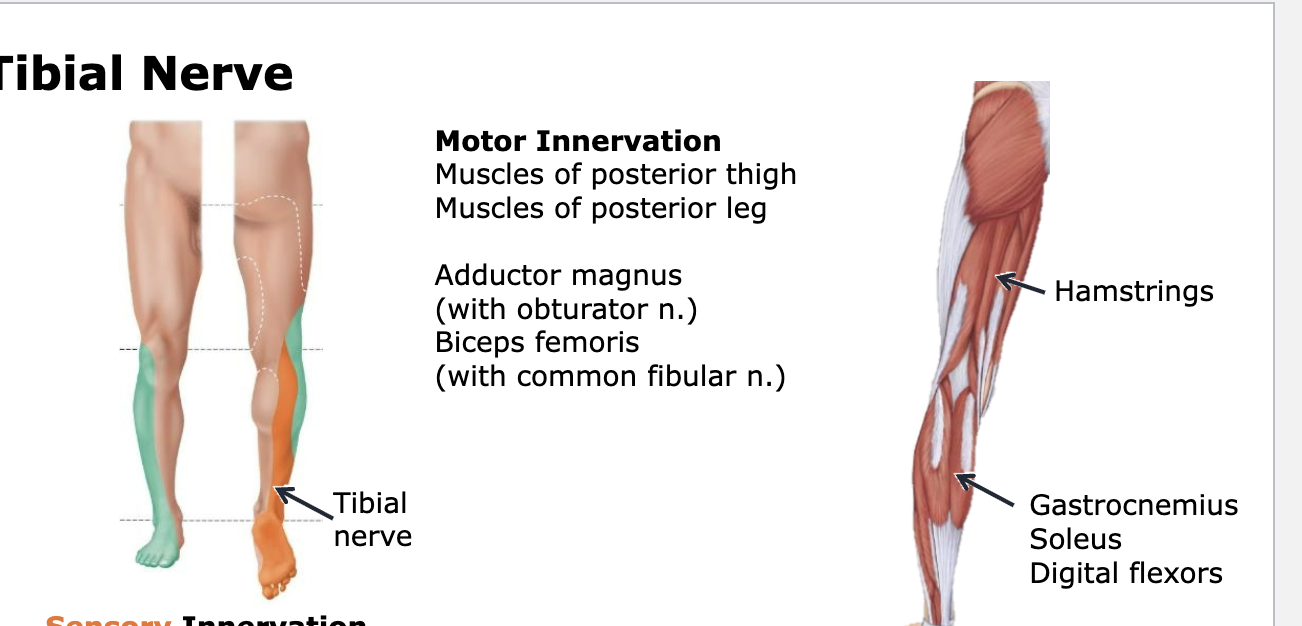
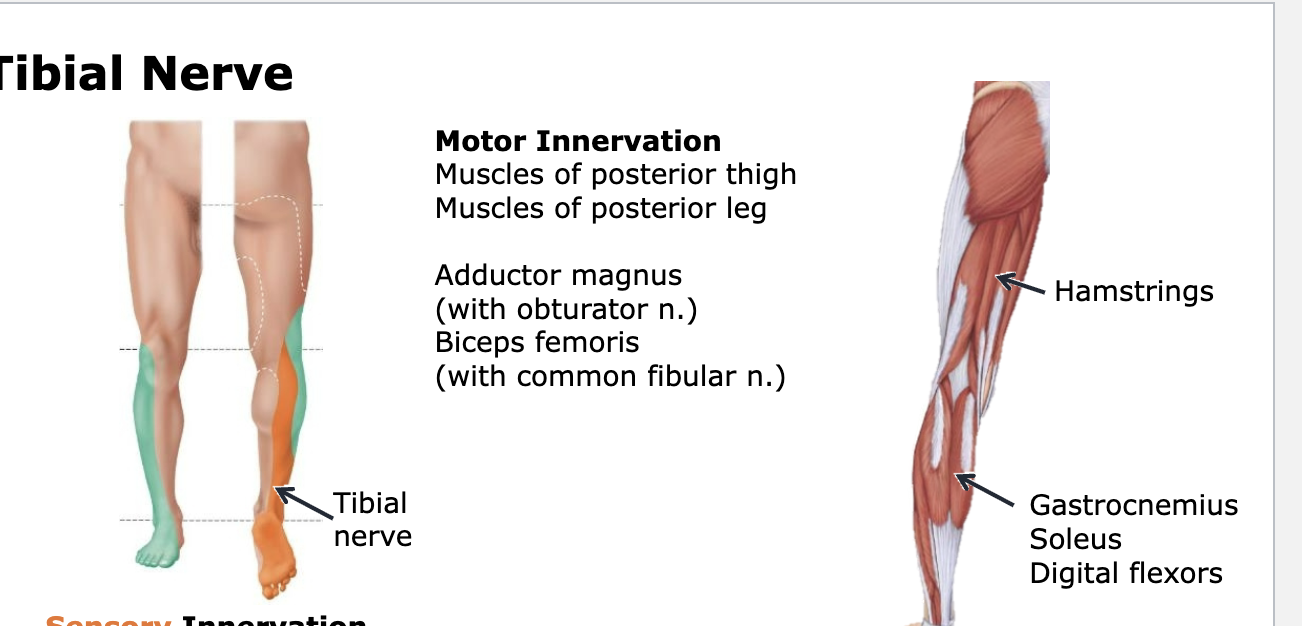
tibial nerve sensory
skin of the posterior-lateral leg and sole of the foot
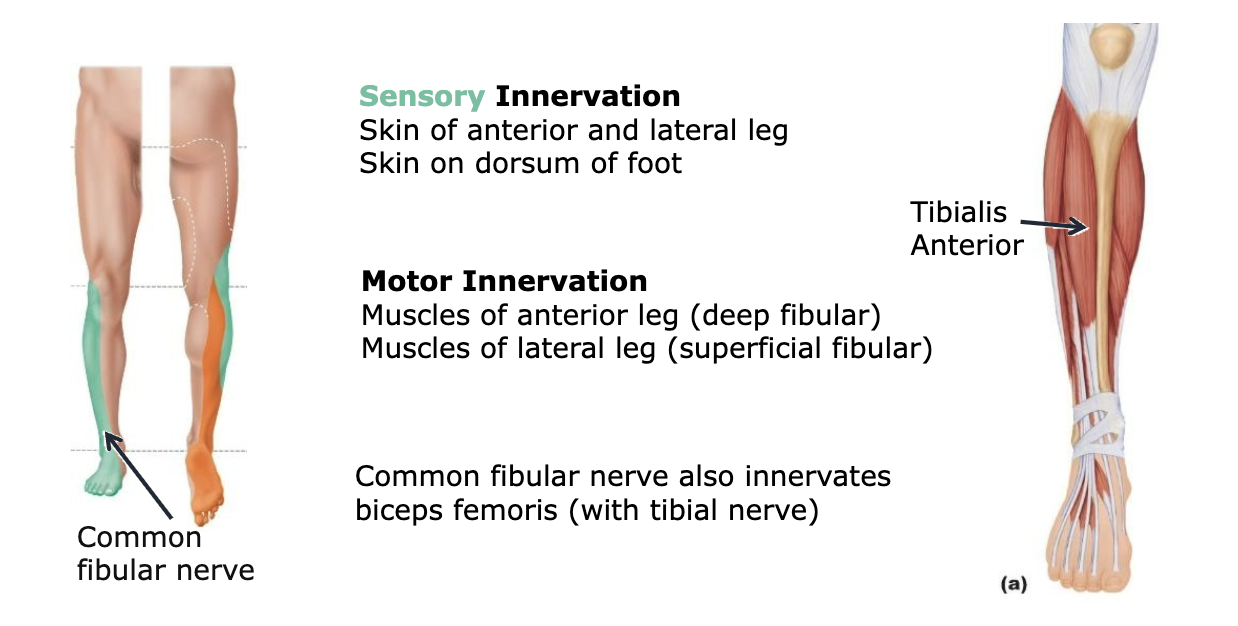
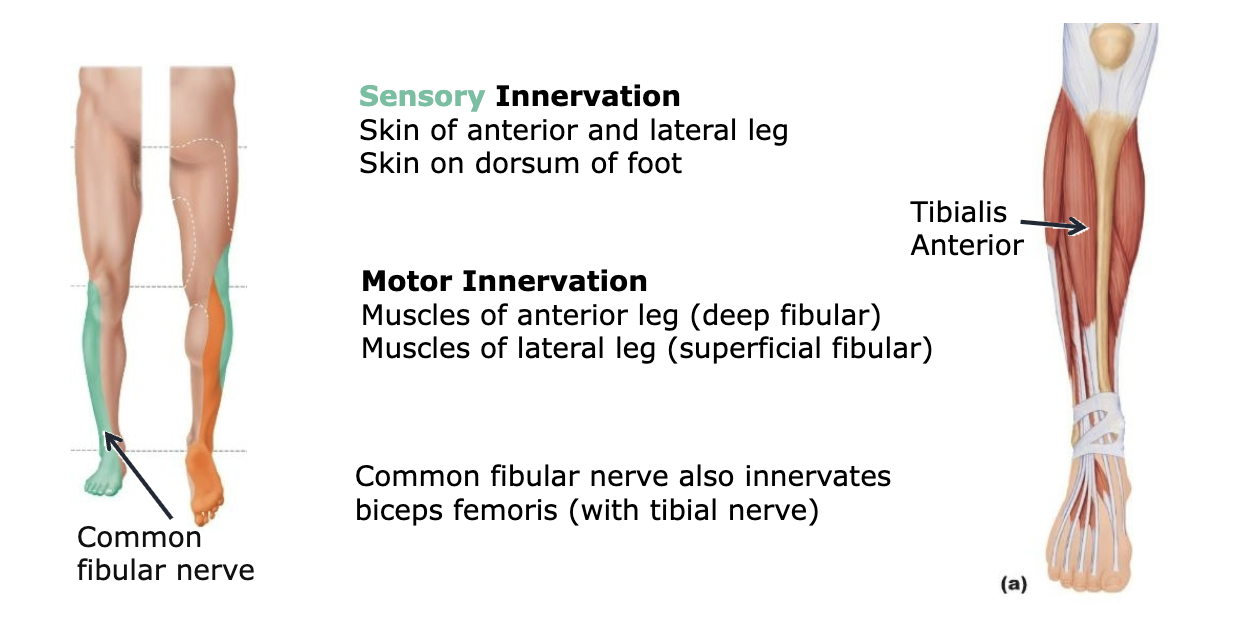
fibular nerve sensory
skin of the anterior and lateral leg, as well as the dorsum of the foot.
musculocutaneous nerve sensory
skin of the lateral forearm
the adductus mangnus is intervated by both the ____nerve and the ______ nerve
obturator nerve and tibial nerve
The biceps femoris are innervated by the _____ nerve and the ____ nerve .
fibular and Tibial
Carpal Tunnel involved the _____ nerve
median
Wrist drop involves the _____ nerve
radial
When you can not add/abbduct you fingers, the _____ is most likley damaged
ulnar
“funny bone”
Ulnar
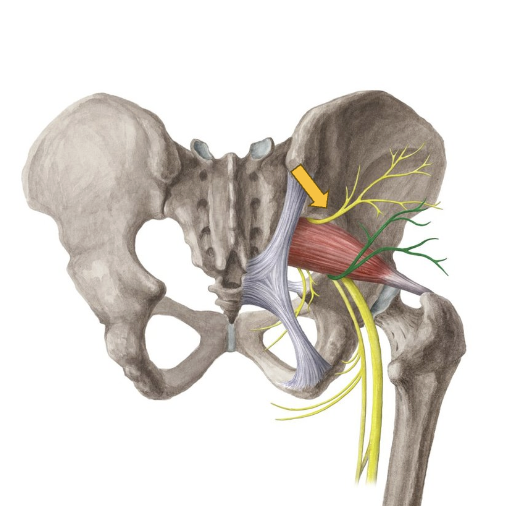
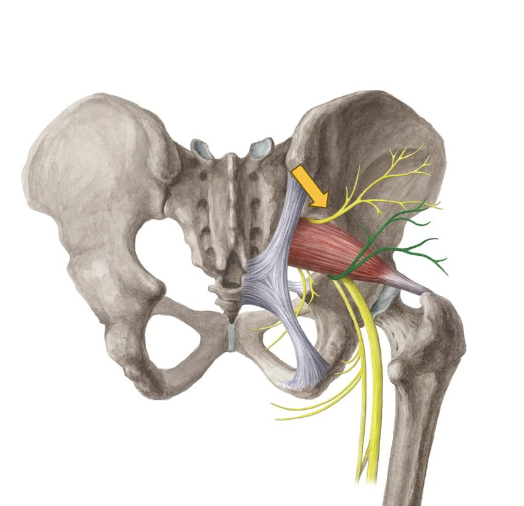
The superior gluteal nerve (yellow) innervates…
Gluteus medius and minimus +thigh abduction
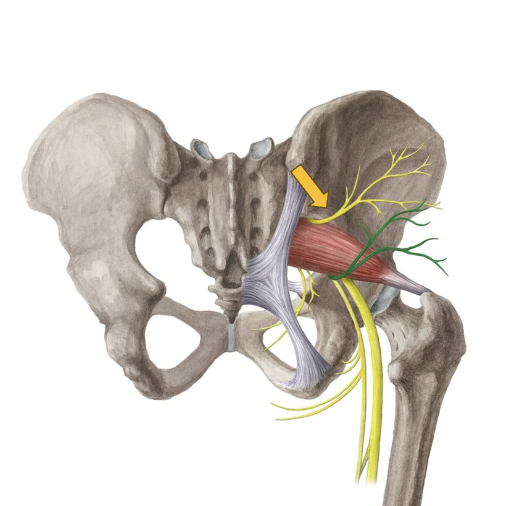
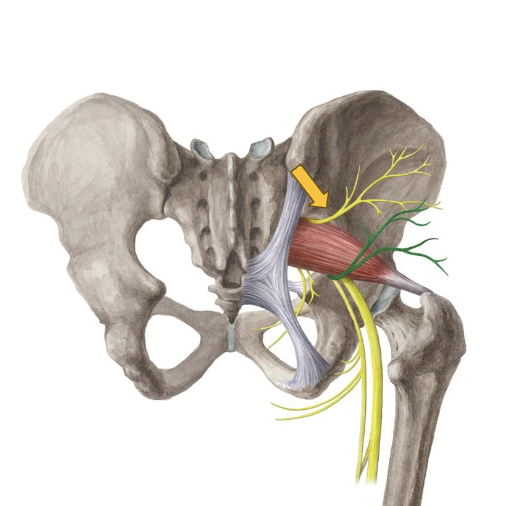
The inferior gluteal nerve (green) innervates…
gluteus maximus and thigh extension
Damage to the femoral nerve can cause…
walking problems, knee buckles
damage to the tibial nerve can cause
shuffling gait, difficulty w/ plantar flexing
damage to the fibular nerve can cause…
foot drop
I
Olfactory
II
Optic
III
Oculomotor
IV
Trochlear
V
Trigeminal
VI
Abducens
VII
Facial
VIII
Vestibulocochlear
IX
Glossopharyngeal
X
Vagus
XI
Spinal Accessory
XII
Hypoglossal
I sensory (oflactory)
Smell
II sensory (optic)
Vision
V sensory (trigeminal)
Sensory for face, mouth cavity, nasal cavity, and 2.3 of tongue (not taste)
VII sensory (facial)
anterior 2/3 of tongue
VIII sensory (vestibulocochlear)
hearing and equilibrium
IX sensory (glossopharyngeal)
general taste , posterior 1/3 of tongue
X sensory (vagus)
visceral, most thoracoabdominal viscera (automatic functions)
III motor (oculomotor)
moves eyes
IV motor (trochlear)
moves eye
V motor (trigeminal)
madible
VI motor (abducens)
eye movement
VII motor (facial)
somatic:facial expressions
visceral:salivary glands and lacrimal glands
IX motor (glossopharyngeal)
somatic:stylophar
X motor (vagus)
somatic: muscles of the pharynx and larynx
visceral: heart and digestive tract functions
XI motor (spinal accessory)
move trapezius and sternicomastoid
XII motor (hypoglossal)
move tongue
I origin (olfactory)
olfactory epithelium
II origin (optic)
retina
III origin (oculomotor)
midbrain
IV origin (trochlear)
midbrain
V origin (trigeminal)
Pons
VI origin (abducens)
pons
VII origin (facial)
pons
VIII origin (vestibulocochlear)
inner ear—> brain stem and pons
IX origin (glossopharyngeal)
medulla oblongata
X origin (vagus)
medulla oblongata
XI origin (spinal accessory)
rootlets at cervical spinal cord
XII origin (hypoglossal)
medulla oblongata
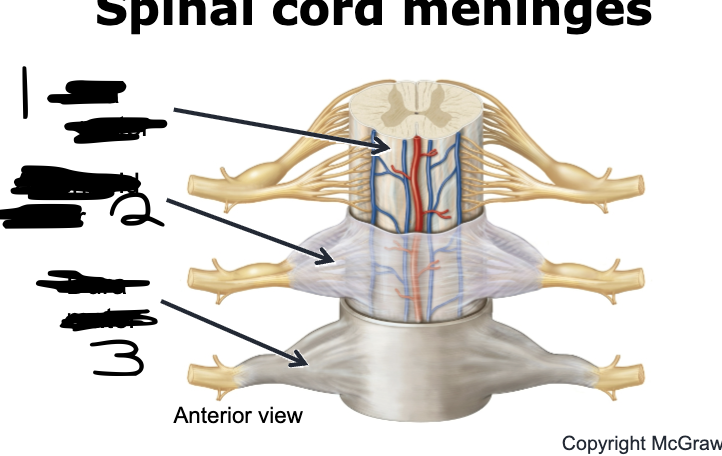
Dura mater
3
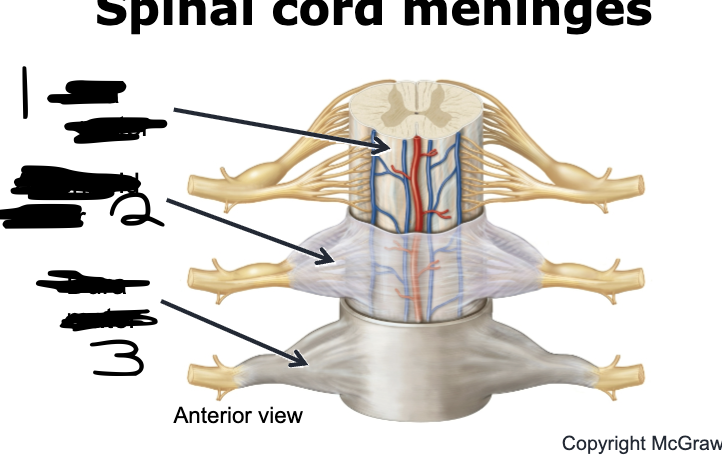
Arachnoid mater
2
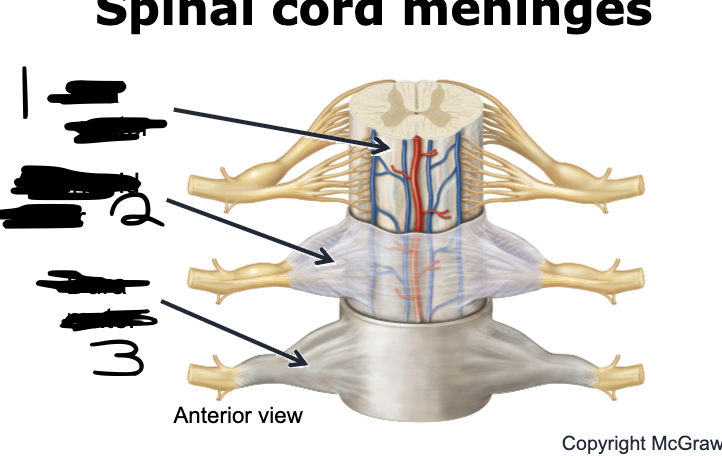
Pia mater
1
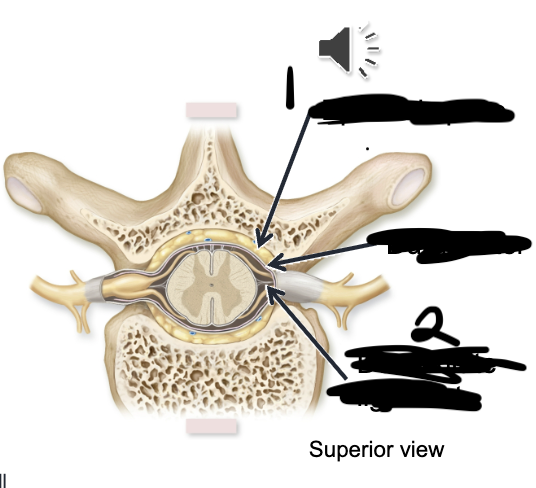
Epidural/extradural space (around spinal cord only)
1-Filled with fat and veins
Subarachnoid space
space for CSF
Arachnoid granulations
between dura matter and subarachnoid space in skull